






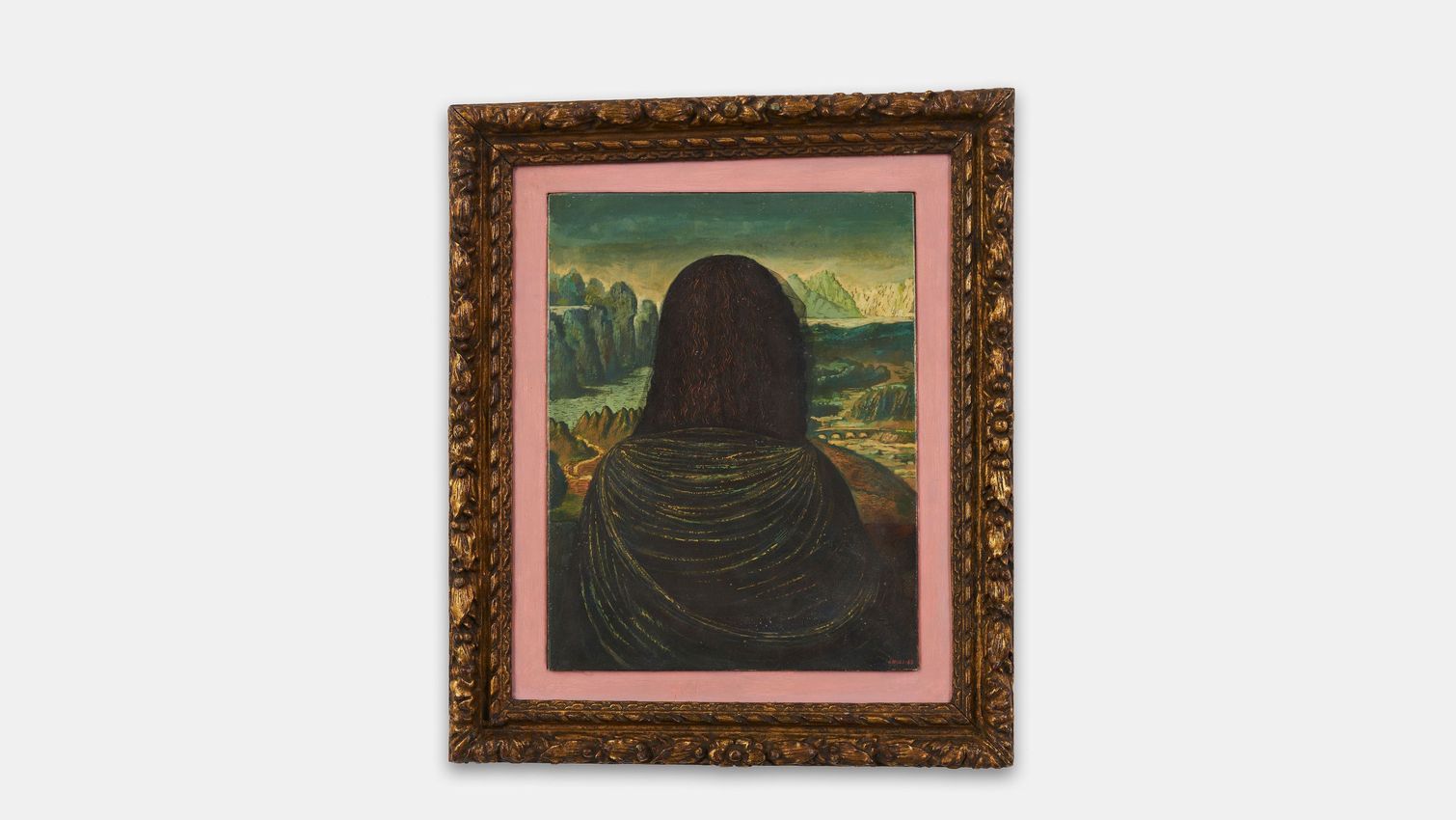
DOMENICO GNOLI
1933-1970, ItalyItalian painter and stage designer Domenico Gnoli built a brief but extraordinarily focused practice around the scrutiny of everyday objects, rendering cropped details of clothing and furniture. In 2026, Lévy Gorvy Dayan opened The Adventure of Domenico Gnoli in New York, marking the largest exhibition of his paintings in the United States in more than five decades.
Early life and Training
Born in Rome into a family deeply embedded in the arts, Gnoli was the son of art historian Umberto Gnoli and a mother who was a painter and ceramist. This environment, combined with studies in engraving under Carlo Alberto Petrucci from his mid-teens, gave him a strong technical grounding; by around 1950, he was already exhibiting drawings at Galleria La Cassapanca in Rome. After a brief period studying stage design at the Accademia di Belle Arti in Rome in 1952, he left to work as an actor with the Compagnia Pilotto-Carraro Miserocchi, an immersion in theatre that would lead directly to his career in scenography.
Theatre, Illustration, and an International Career
Gnoli’s contact with theatre quickly translated into commissions to design sets for major productions, including Shakespeare’s As You Like It at London‘s Old Vic Theatre in 1955, directed by Robert Helpmann. In 1956, he travelled to New York for his first solo exhibition in the United States at Sagittarius Gallery, and he settled in the city the following year, working as a sought-after illustrator for magazines such as Vogue and Sports Illustrated.
Mature Painting: detail, texture, and atmosphere
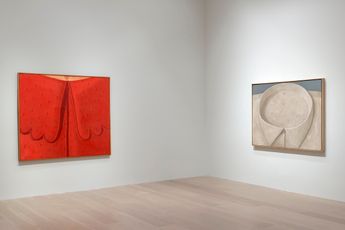
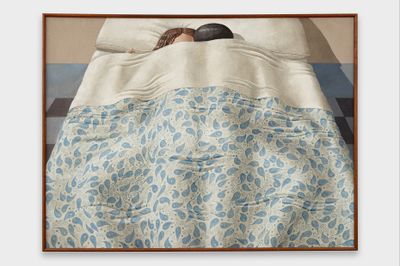
At the beginning of the 1960s, Gnoli shifted his focus more towards painting, developing a mature language by 1964 that would occupy the last years of his life. His paintings focus on everyday objects—shirts, ties, beds, sofas, hairlines—isolated, enlarged, and tightly cropped so that they verge on abstraction while remaining insistently concrete. The scalloped hem of a blouse, the knot of a necktie, or the wrinkle of a patterned bedspread are rendered at monumental scale, their minutiae transformed into charged motifs that record the manners and surfaces of postwar bourgeois life. To achieve their distinctive material presence, Gnoli mixed sand and marble debris into his pigments, producing encrusted, fresco-like surfaces that counter the cool illusionism of his trompe-l’œil effects and recall early Renaissance painting.
Although his work has often been discussed alongside Pop Art because of its graphic clarity, fascination with personal appearance, and focus on the objects of consumer society, Gnoli’s painting remains marked by European traditions, from Surrealism and metaphysical painting to magical realism. His canvases, with their abrupt cropping and suspended fragments of daily life, suggest a slow, almost cinematic gaze; they isolate moments that feel poised on the edge of drama or loss, secretive and uncanny rather than celebratory.
Recognition, Legacy, and The Adventure of Domenico Gnoli
Gnoli’s late paintings were quickly recognised: in 1968 his work appeared in Documenta IV in Kassel and at the Venice Biennale, as well as in exhibitions at the Palais des Beaux-Arts in Brussels and the Kestner-Gesellschaft in Hanover. In 1963 he married sculptor Yannick Vu, and the couple lived between Rome and the town of Deià in Mallorca during the final years of his life. He died of cancer in 1970 in his thirties—shortly after his first exhibition at Sidney Janis Gallery in New York.
Despite the brevity of his career, Gnoli’s reputation has grown steadily, culminating in a major retrospective at Fondazione Prada, Milan, in 2021–22 and in 2026, The Adventure of Domenico Gnoli at Lévy Gorvy Dayan. Staged in collaboration with his widow Yannick Vu, his sister Mimì Gnoli, and major private collections, the New York exhibition gathers paintings alongside drawings, etchings, notebooks, letters, and ephemera from the years 1965 to 1969.
Domenico Gnoli FAQs
Who was Domenico Gnoli?
Domenico Gnoli (1933–1970) was an Italian painter and stage designer from Rome, known for meticulously detailed, tightly cropped images of everyday objects and bodies.
What is Domenico Gnoli best known for in his art?
Domenico Gnoli is best known for paintings that enlarge and isolate details of clothing, hair, beds, sofas, and other familiar objects, creating still, “non-eloquent” images with an uncanny, poetic charge.
How did Domenico Gnoli begin his career?
Domenico Gnoli started as an illustrator and set and costume designer, working internationally for theatre and for magazines such as Sports Illustrated and Life before fully arriving at his mature style as a painter in 1964.
How did Dominico Gnoli describe his relationship to everyday objects?
Dominico Gnoli wrote that his themes came from “familiar situations, everyday life,” and that because he did not “actively intervene against the object,” he could experience “the magic of its presence”.
What is The Adventure of Domenico Gnoli?
The Adventure of Domenico Gnoli is a 2026 survey exhibition of the artist’s work at Lévy Gorvy Dayan in New York featuring paintings, drawings, etchings, notebooks, letters, and ephemera from the height of his career (1965–1969).
Ocula | 2026













Explore and Follow Artists Shaping Contemporary Art
A respected voice in contemporary art discourse.
Focusing on ambitious storytelling and insightful art-world commentary. Ocula Magazine publishes in-depth interviews, critical essays and timely analysis on the artists, exhibitions and ideas driving the global art world.
Learn more about Ocula Magazine
Showcasing the best of the art world.
Ocula partners with galleries from around the world to highlight their artists, artworks and exhibitions. Gallery membership is by application and invitation, with each member vetted by an independent panel.
Learn more about Ocula Membership
Specialises in the sale of major artworks.
Led by a team with deep ties to the world’s leading auction houses, galleries and collectors. Ocula’s advisory team offers bespoke services to high-net-worth clients from around the world who are looking to acquire the best of contemporary and modern art.
Learn more about our team and services