





Fair Necessities: Six Standout Works in Frieze and TEFAF New York
Save to My Ocula
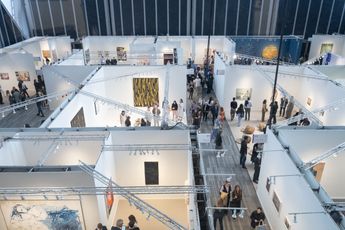
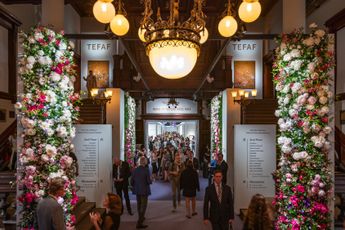
As two of the world’s biggest art fairs open their doors in New York this week, Ocula Advisor Rory Mitchell picks out the best and most intriguing works.
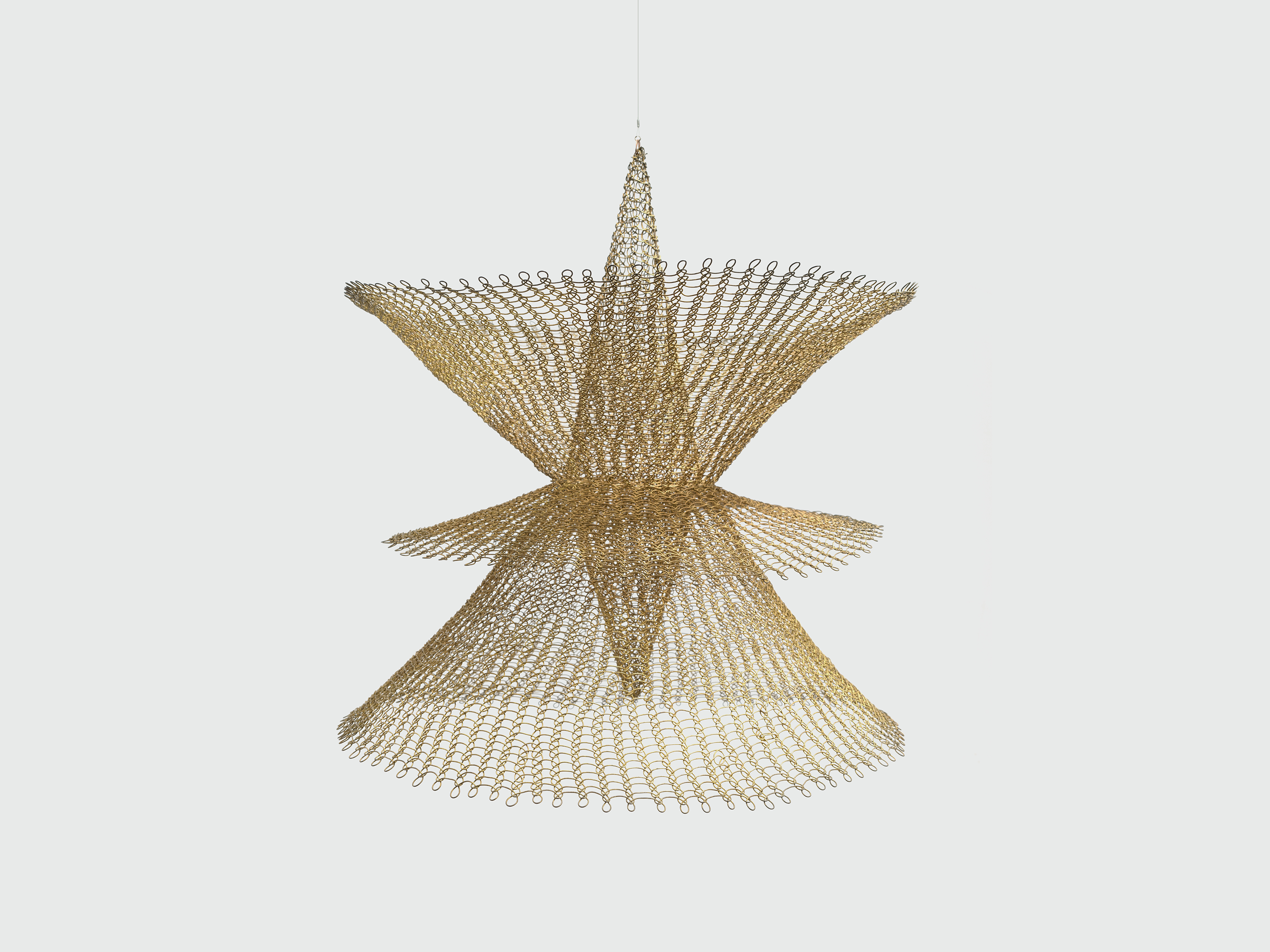
Ruth Asawa at David Zwirner, TEFAF
David Zwirner presents a solo booth of Ruth Asawa, a Californian artist who studied under Josef Albers at Black Mountain College. Her process has been described as ‘knitting without needles’: she used a crocheting technique, interlinking copper wire to make these fragile, bulbous structures that float in space; their transparency allows the air itself to feel part of the medium.
Asawa has definitely been given her due more recently; her solo booth coincides with a major retrospective that recently opened at San Francisco Museum of Modern Art, and will later this year travel to MoMA New York.
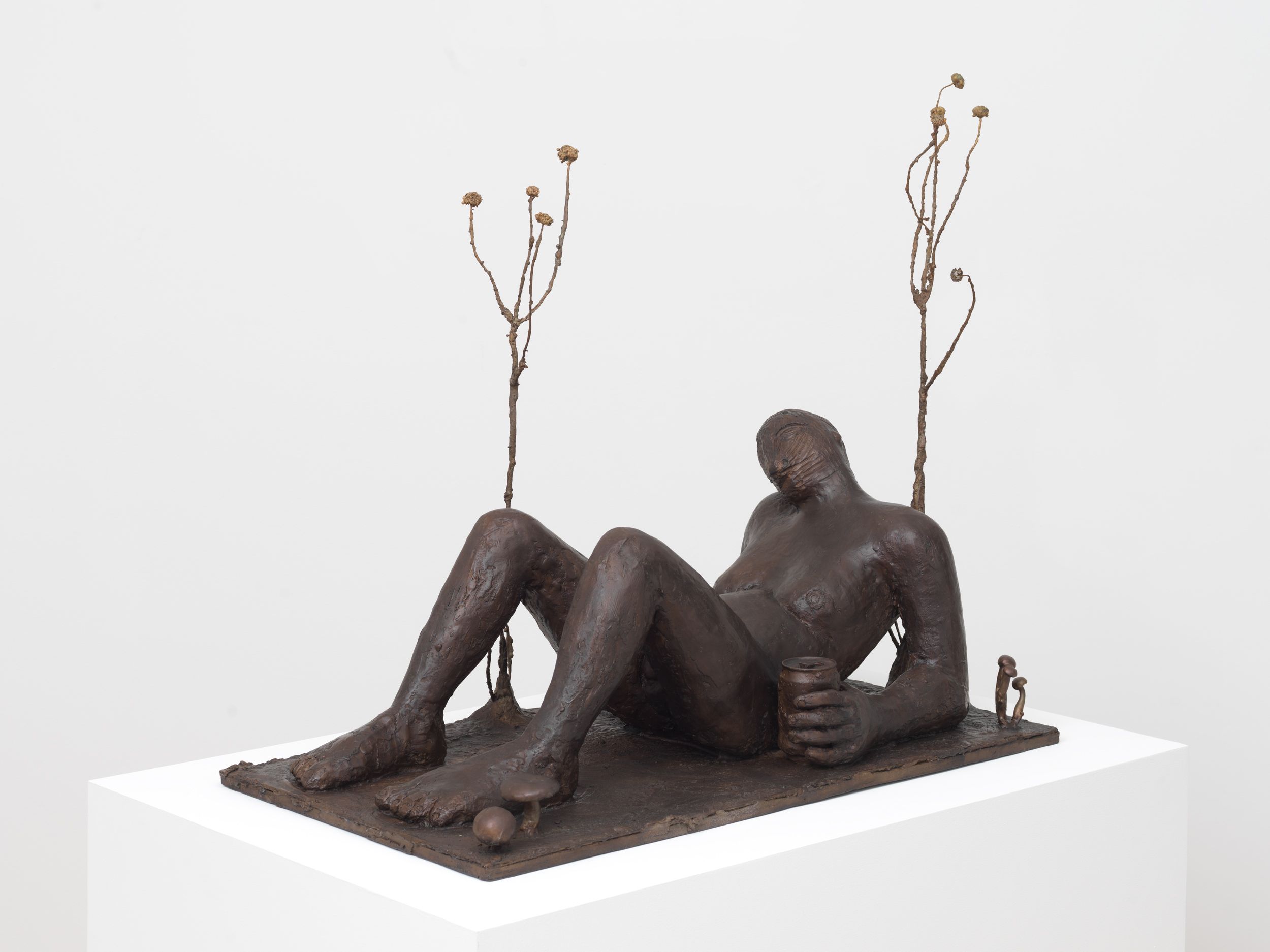
Nicole Eisenman, Maquette: Sketch For a Fountain (Reclining Figure) (2018) at Anton Kern Gallery, Frieze
I love this maquette by Nicole Eisenman. Though it’s only around a metre long, it has the quality of something much more monumental, like her installation on the rooftop of the Whitney Museum as part of the Biennial in 2019, which featured similar figures on a big scale. Eisenman creates quite specific characters with slightly strange heads; they’re very unique to her. This one reminds me of Henry Moore’s reclining figures, but gone are the smooth, sexy contours; instead you have a rough surface on a figure lying back with a can of beer in a park.
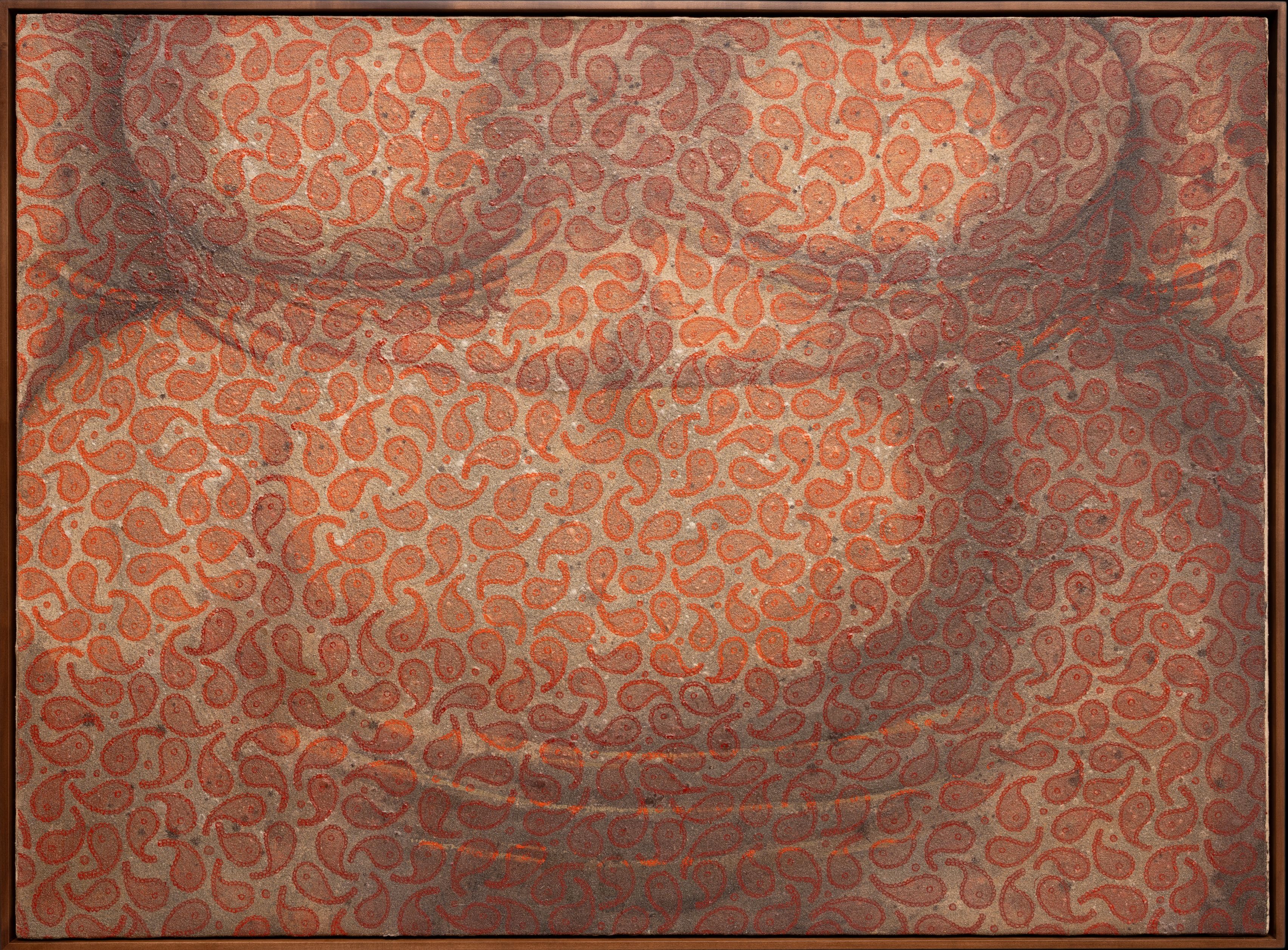
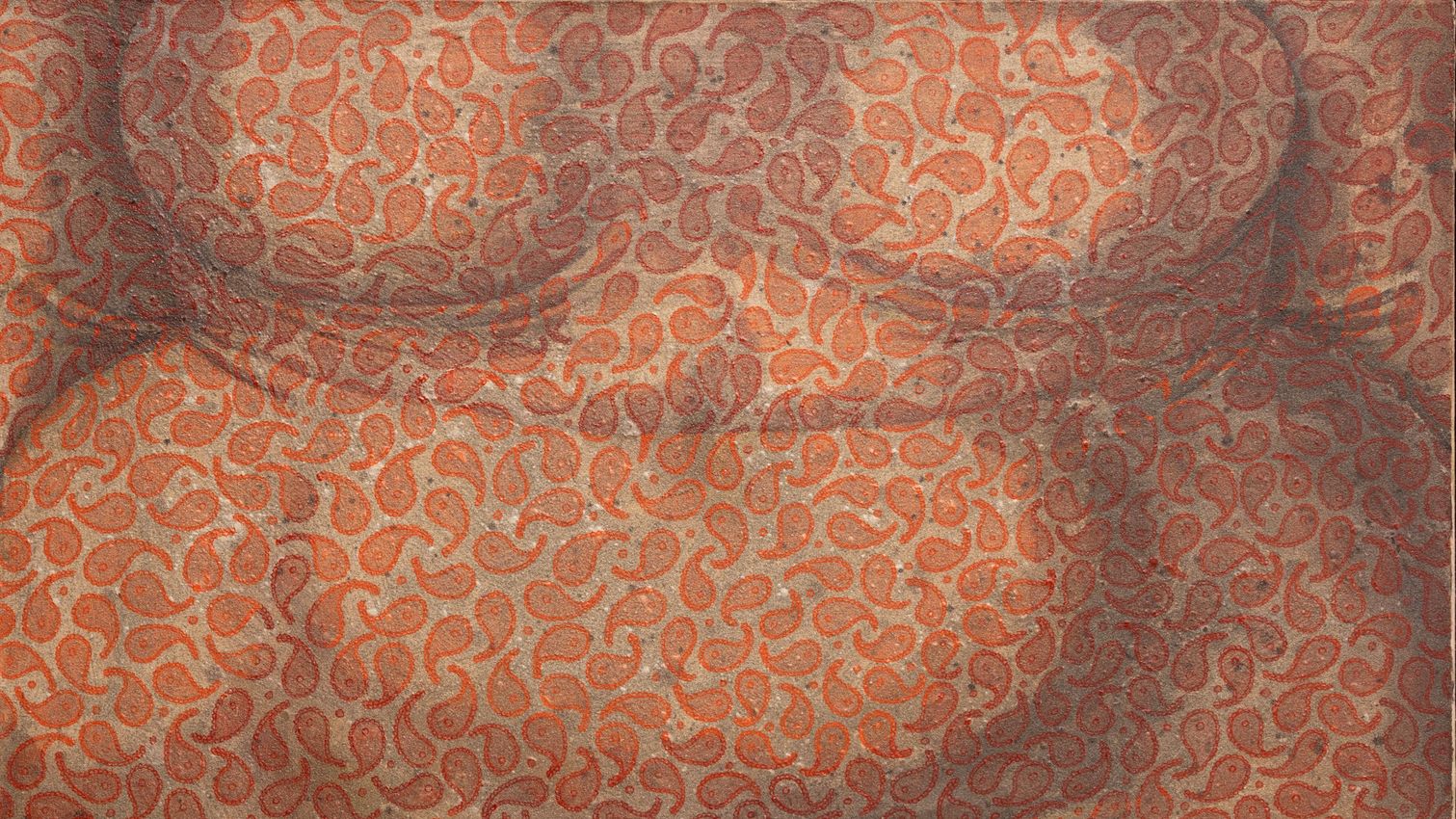
Domenico Gnoli, La Robe Rouge (1964) at Paul Coulon, TEFAF
Domenico Gnoli was an Italian painter and stage designer who was born in Rome and later moved to New York City, where he died in 1970 at the tender age of 36. I really loved his figurative, slightly surrealist paintings that were included in the Venice Biennale last year.
La Robe Rouge depicts the mid-section of a woman. I love the way he covers the canvas with this flat pattern—almost Matisse-like—and skilfully moulds this very voluptuous form through the paint.
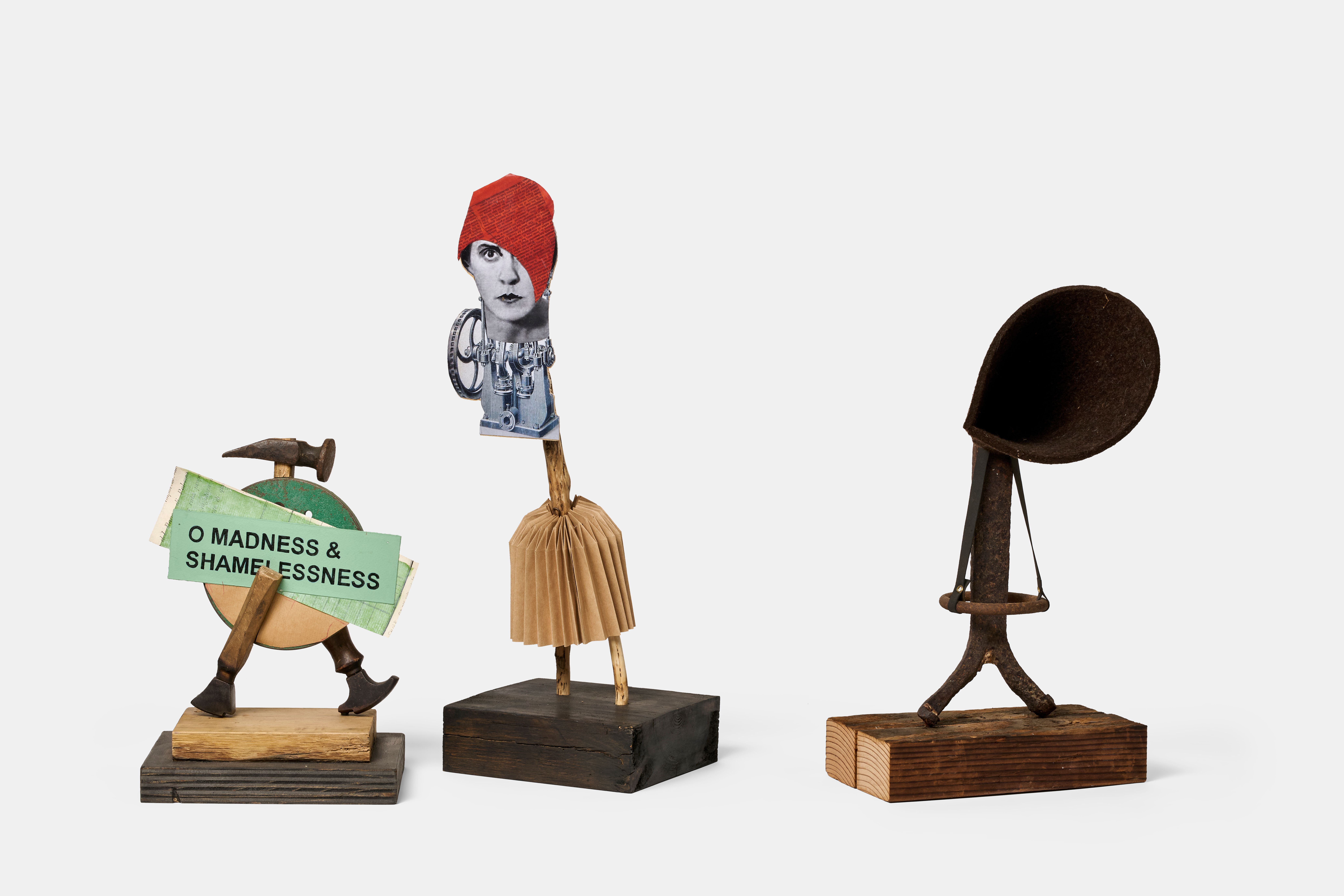
William Kentridge and Greta Goiris, Trio (Voice, Lili, Madness & Shamelessness) (2024) at Goodman Gallery, Frieze
Goodman Gallery presents little sculptures by the South African artist William Kentridge and Greta Goiris. Kentridge had an amazing show at the Royal Academy in London in 2022 and will be showing new sculptures at the Yorkshire Sculpture Park this summer.
These little pieces were made with Goiris, who is a costume designer, and include his trademark use of text. They resemble the little characters that pop up in his drawings and animated films, which are splendid, too. Some of them remind me of Picasso’s sculptures; others look more surreal.
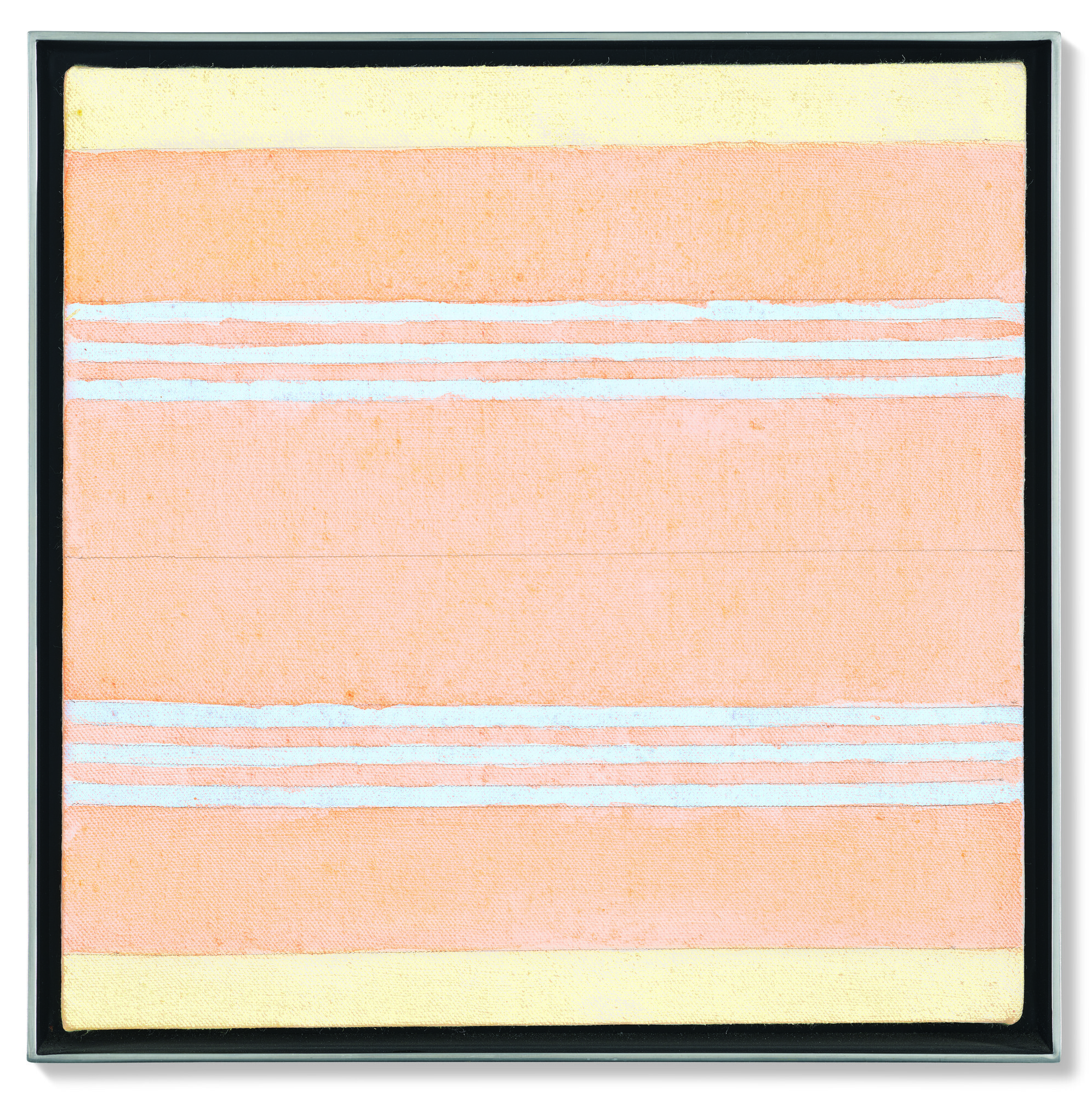
Agnes Martin, Untitled (2003) at Ben Brown Fine Arts, TEFAF
This is a lovely little gem by Agnes Martin, painted in the year before she died. Martin was known for her economical use of colour, so I do like it when we see the odd ravishing pop of blue appear in her paintings, and that little pencil line dissecting the painting in two, nodding to the horizon and landscape and sky.
Martin once described painting as ‘a world without objects, without interruption . . . or obstacle. It is to accept the necessity of . . . going into a field of vision as you would cross an empty beach to look at the ocean.’ When you look at this painting, with those lush, blue lines stretching across the horizon, it may be an ocean.
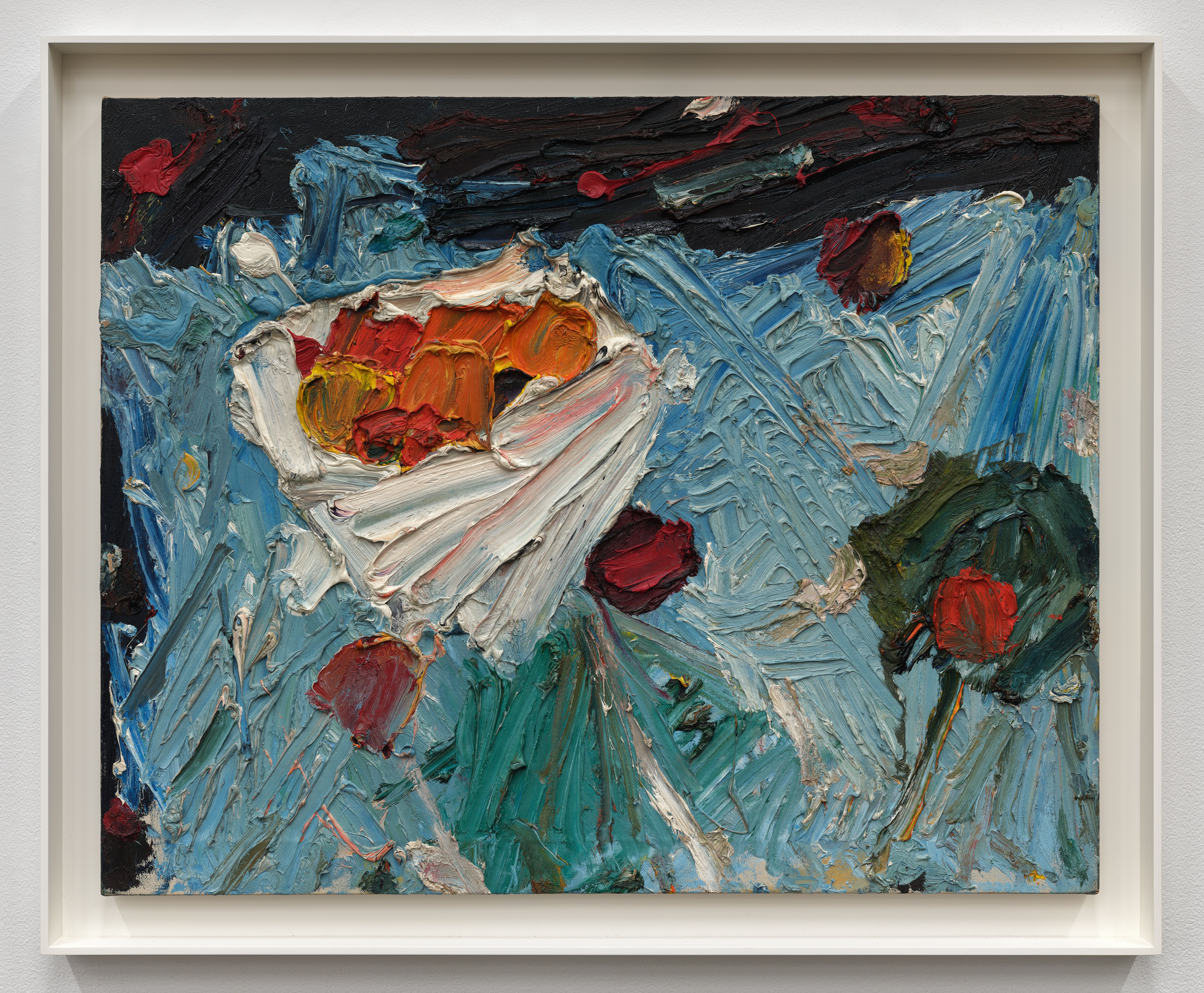
Manoucher Yektai, Blue Table (1960) at Karma, Frieze
Manoucher Yektai was a Persian American artist of the New York School. I love his work—there’s often a very thick application of impasto. There’s a great photo of the artist wielding a brush, standing over a canvas laid down on the floor. Abstract expressionism is clearly present in this work, with all of the physicality and gesture that we see in de Kooning and Pollock, who were his contemporaries in New York.
Yektai studied in Paris when he was younger, just after the Second World War. You can see there’s an attention to colour, form, and still life composition, which is perhaps more closely aligned with French artists like Cézanne and Bonnard, who were a big influence. —[O]
Main image: Domenico Gnoli, La Robe Rouge (1964) (detail). Acrylic and sand on canvas. 97.2 x 129.5 cm. Courtesy Paul Coulon.



A respected voice in contemporary art discourse.
Focusing on ambitious storytelling and insightful art-world commentary. Ocula Magazine publishes in-depth interviews, critical essays and timely analysis on the artists, exhibitions and ideas driving the global art world.
Learn more about Ocula Magazine
Showcasing the best of the art world.
Ocula partners with galleries from around the world to highlight their artists, artworks and exhibitions. Gallery membership is by application and invitation, with each member vetted by an independent panel.
Learn more about Ocula Membership
Specialises in the sale of major artworks.
Led by a team with deep ties to the world’s leading auction houses, galleries and collectors. Ocula’s advisory team offers bespoke services to high-net-worth clients from around the world who are looking to acquire the best of contemporary and modern art.
Learn more about our team and services