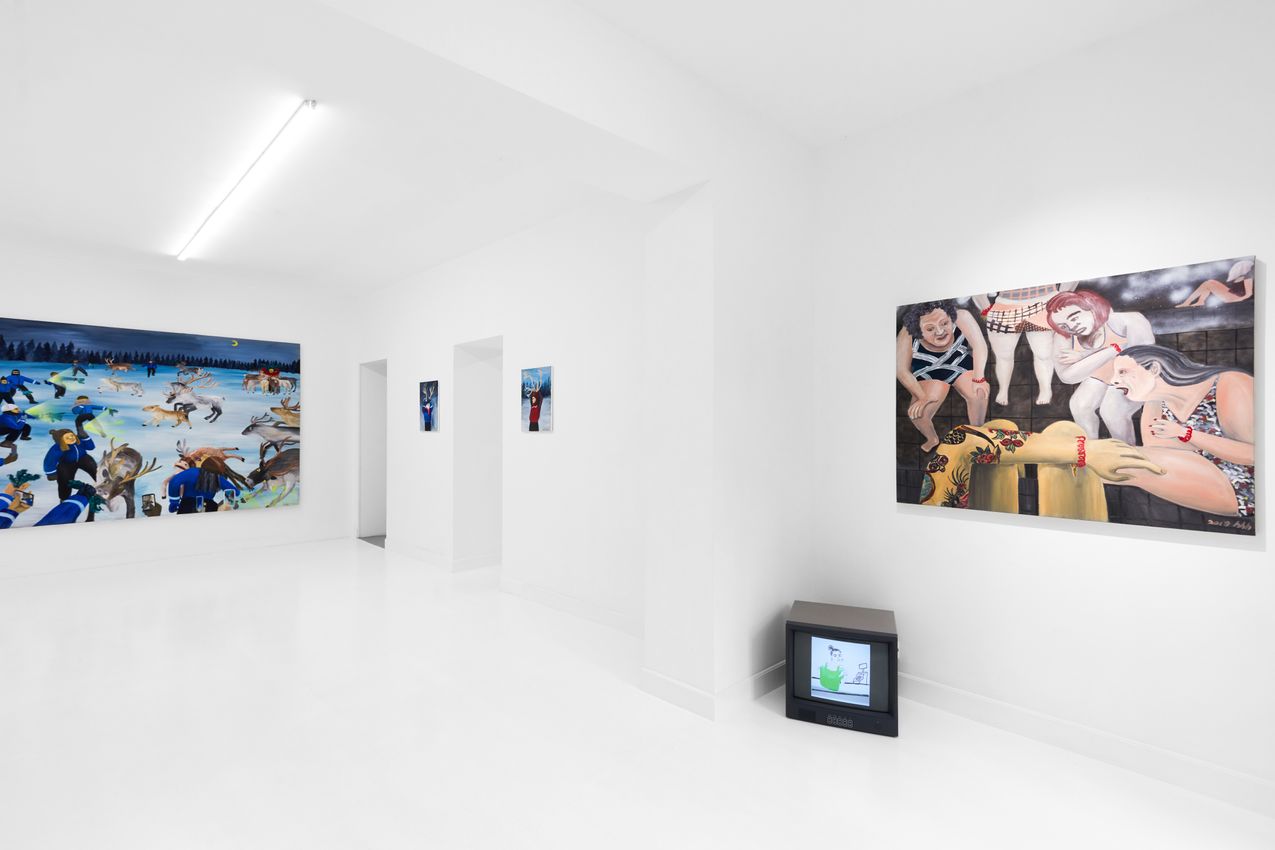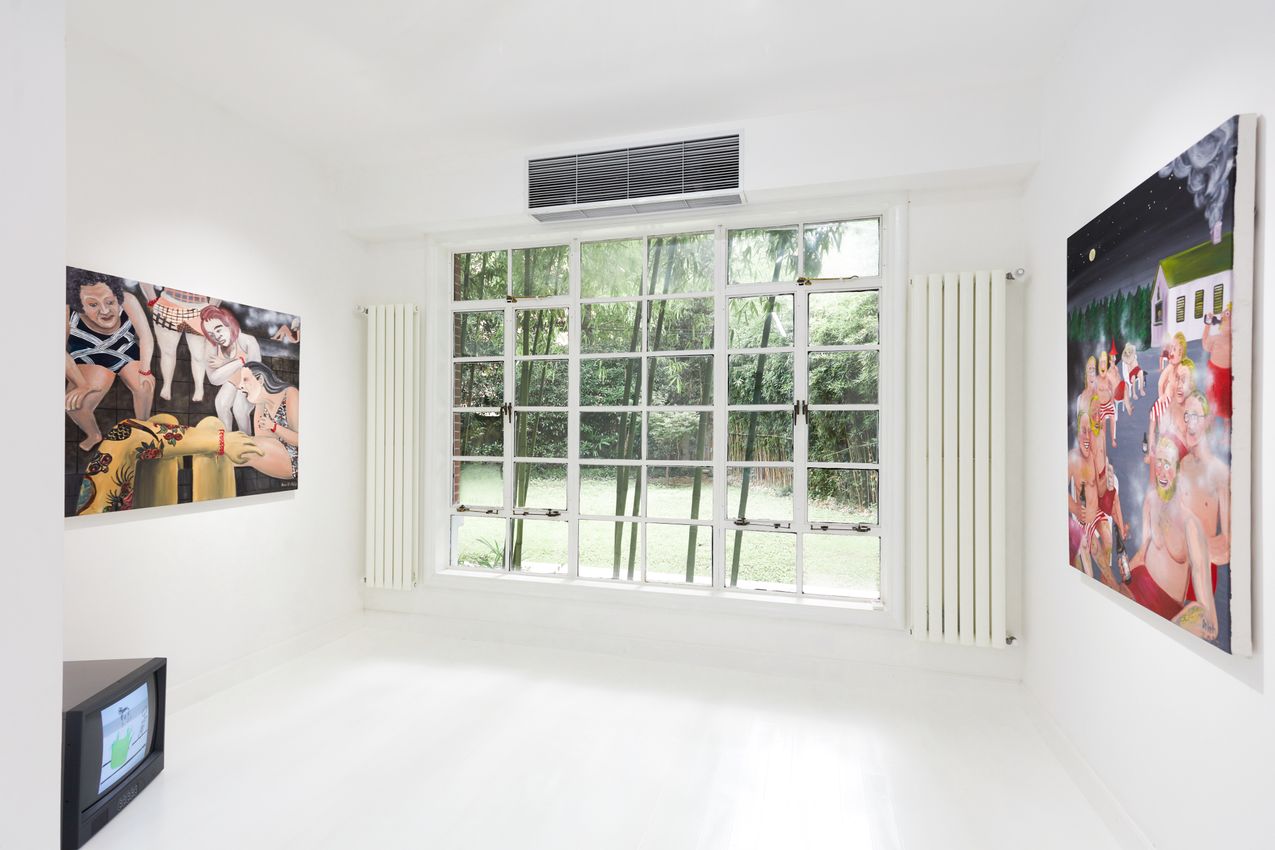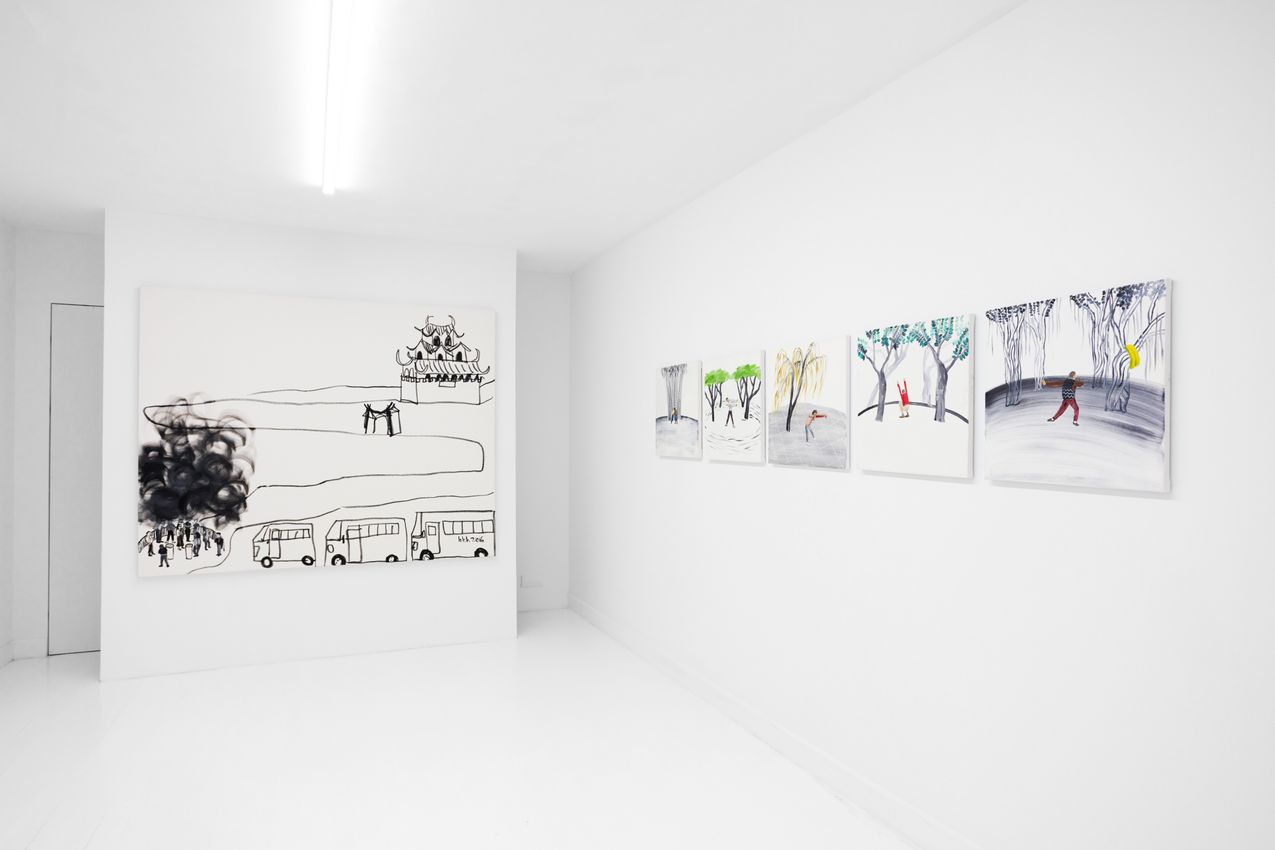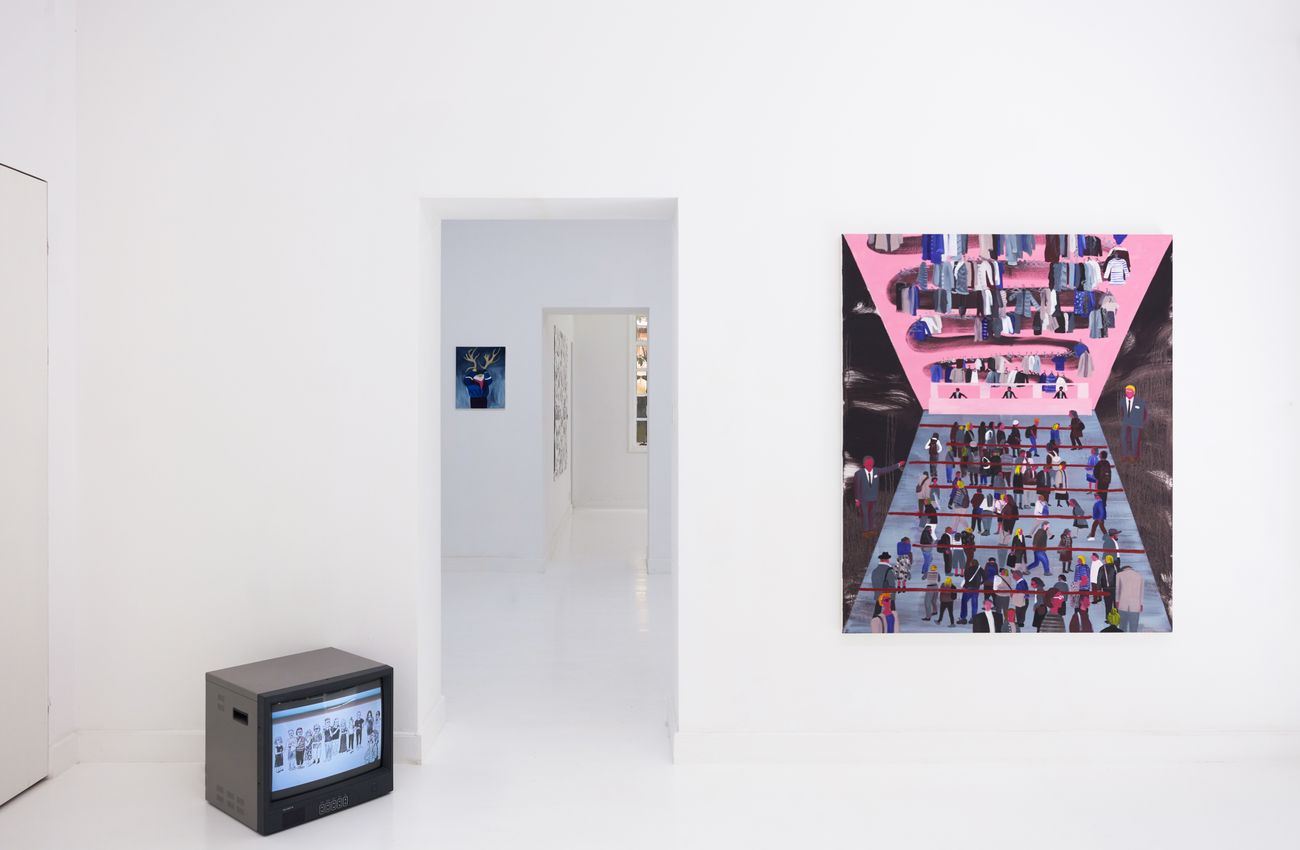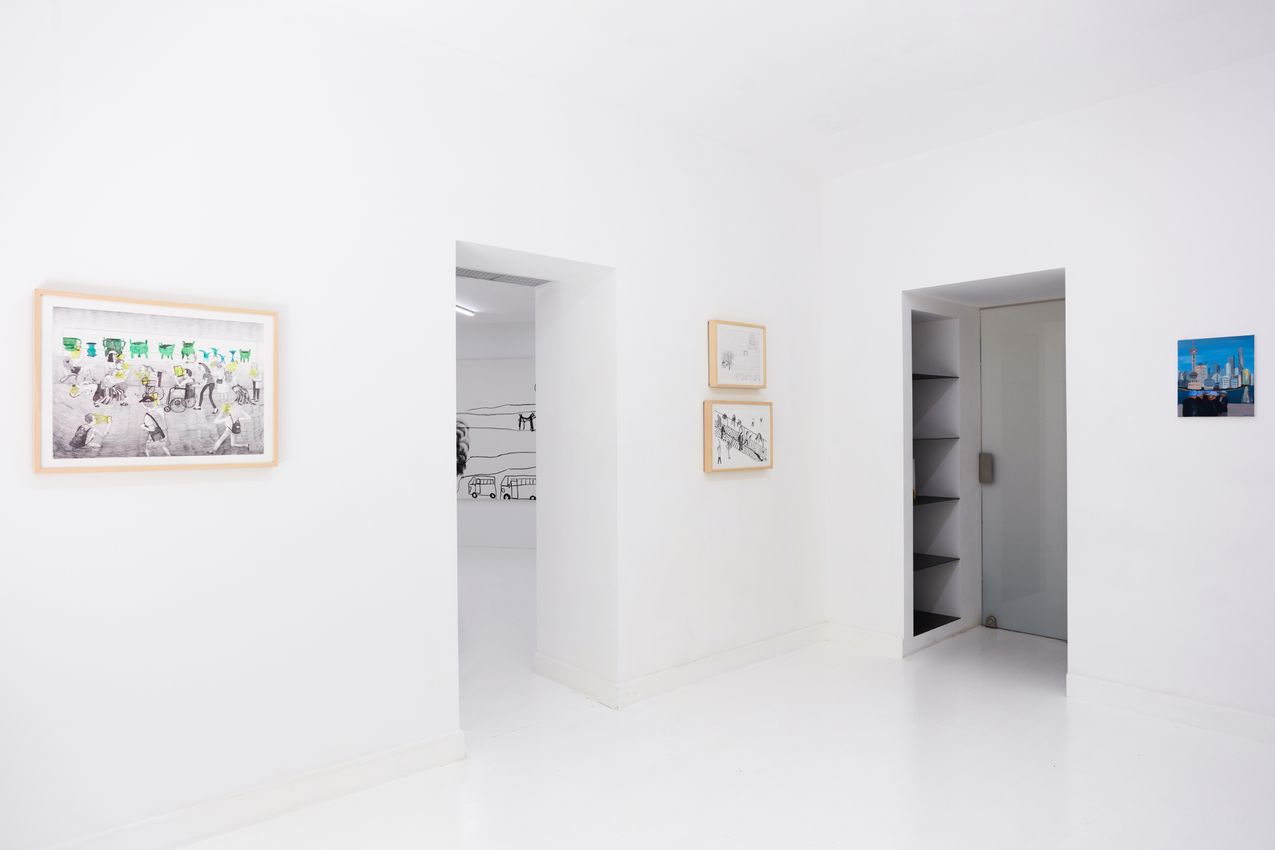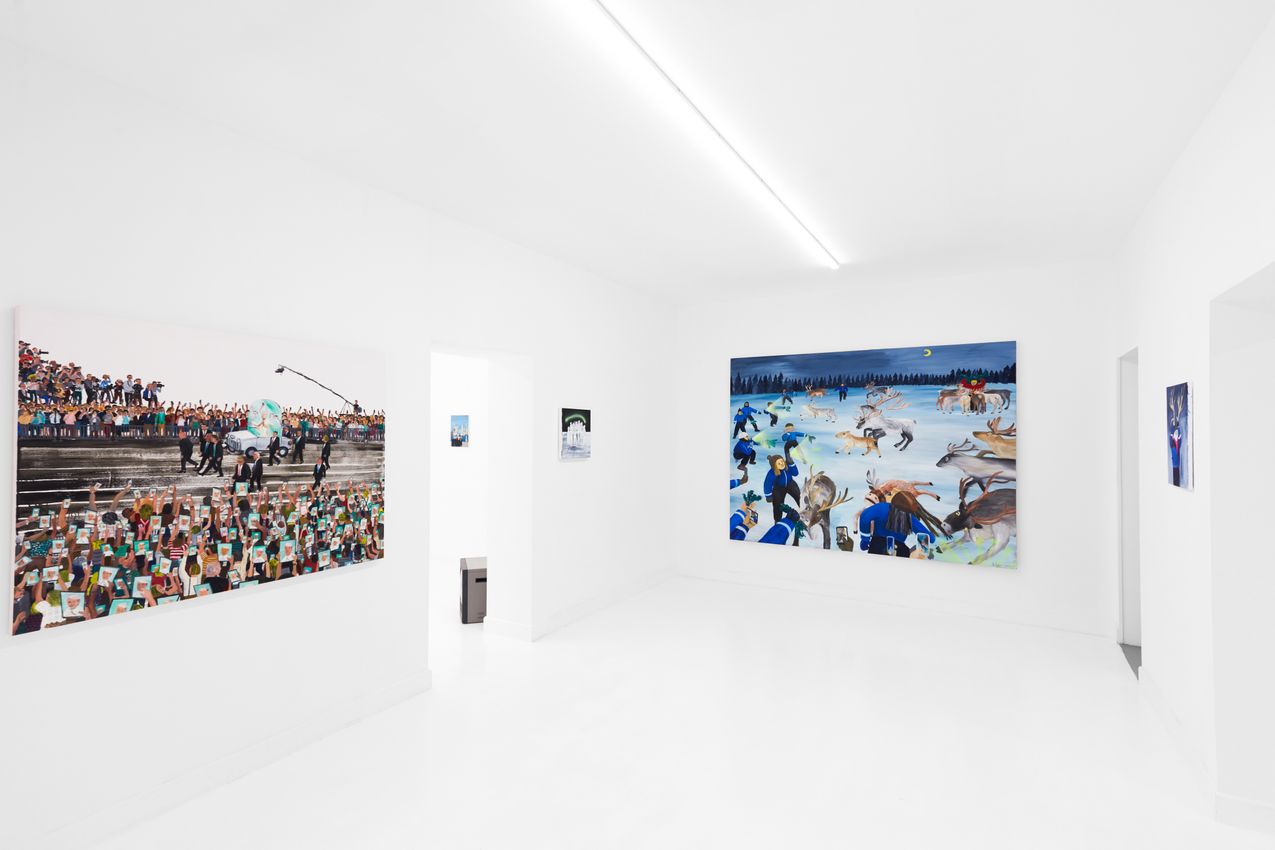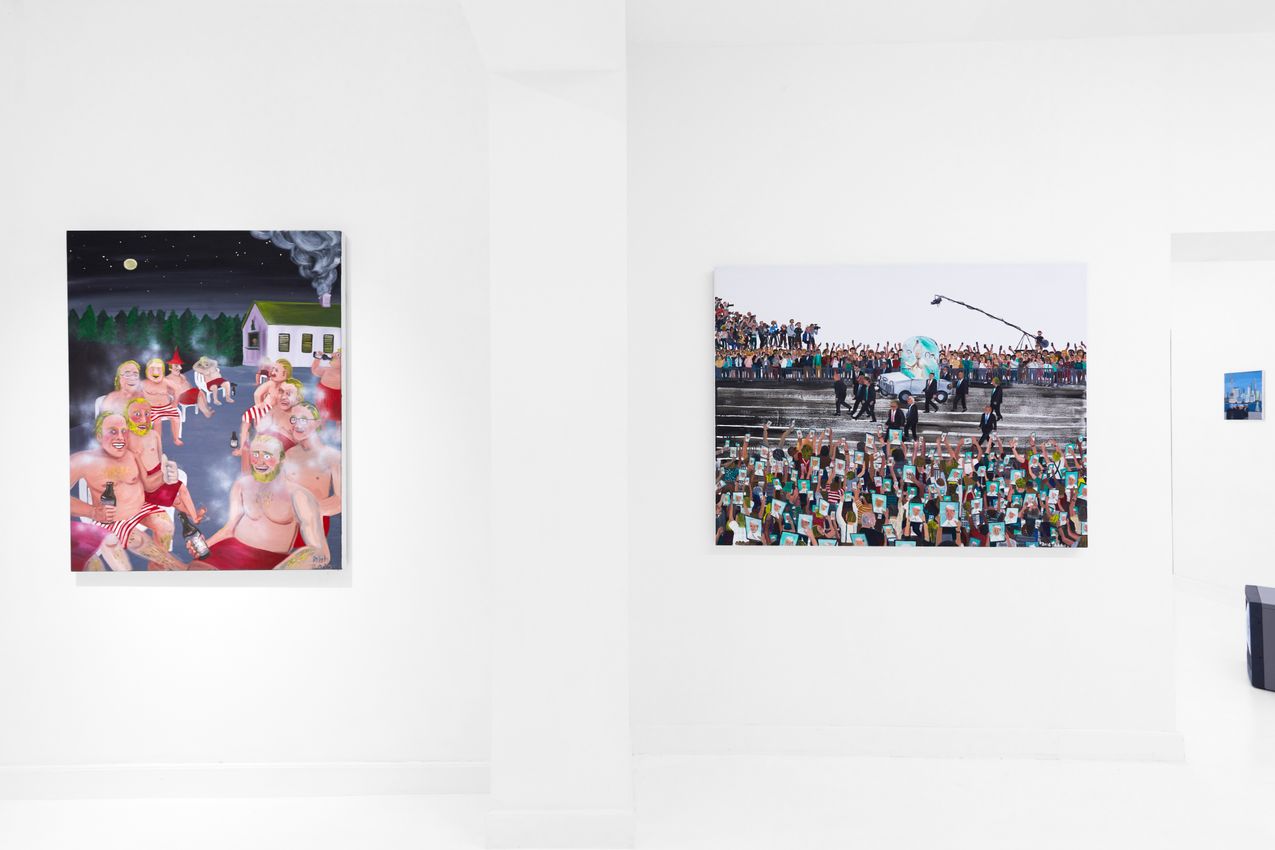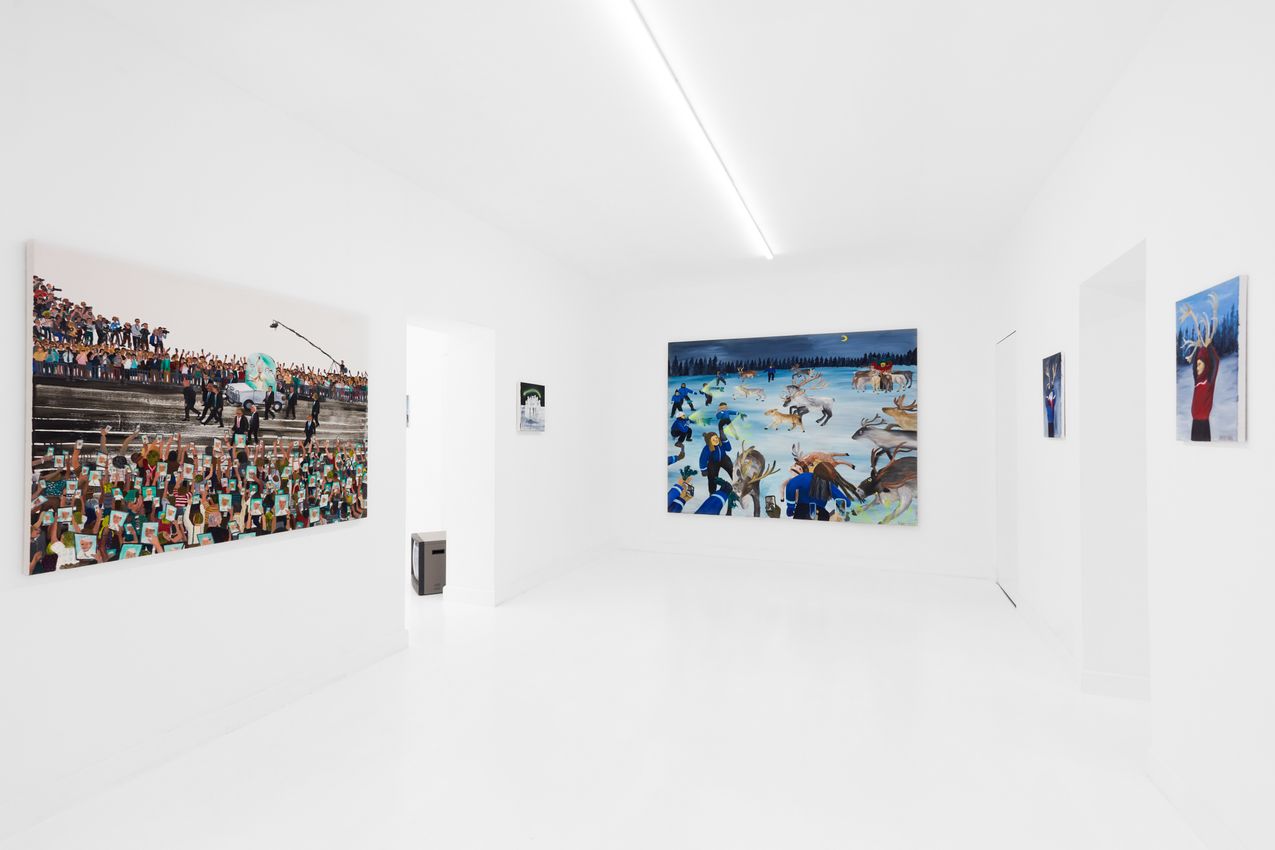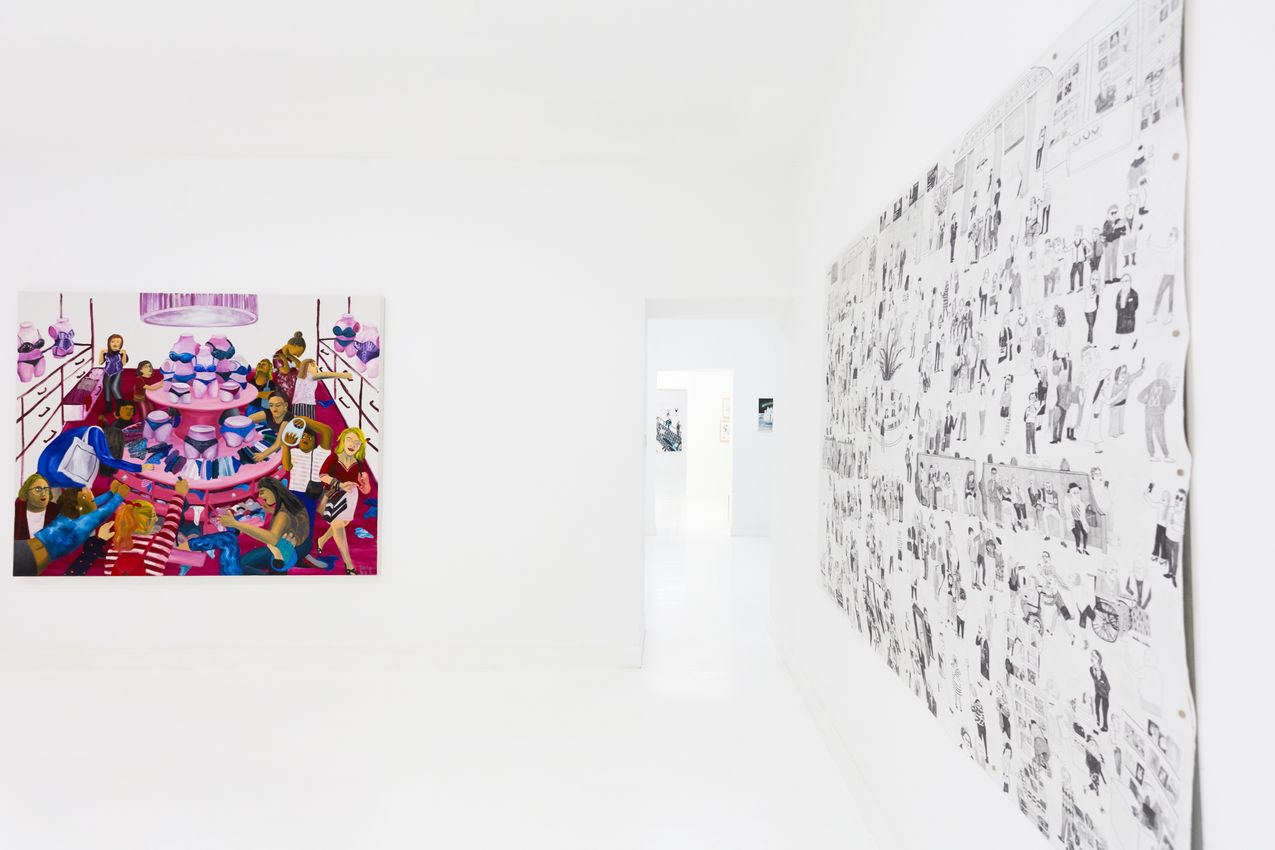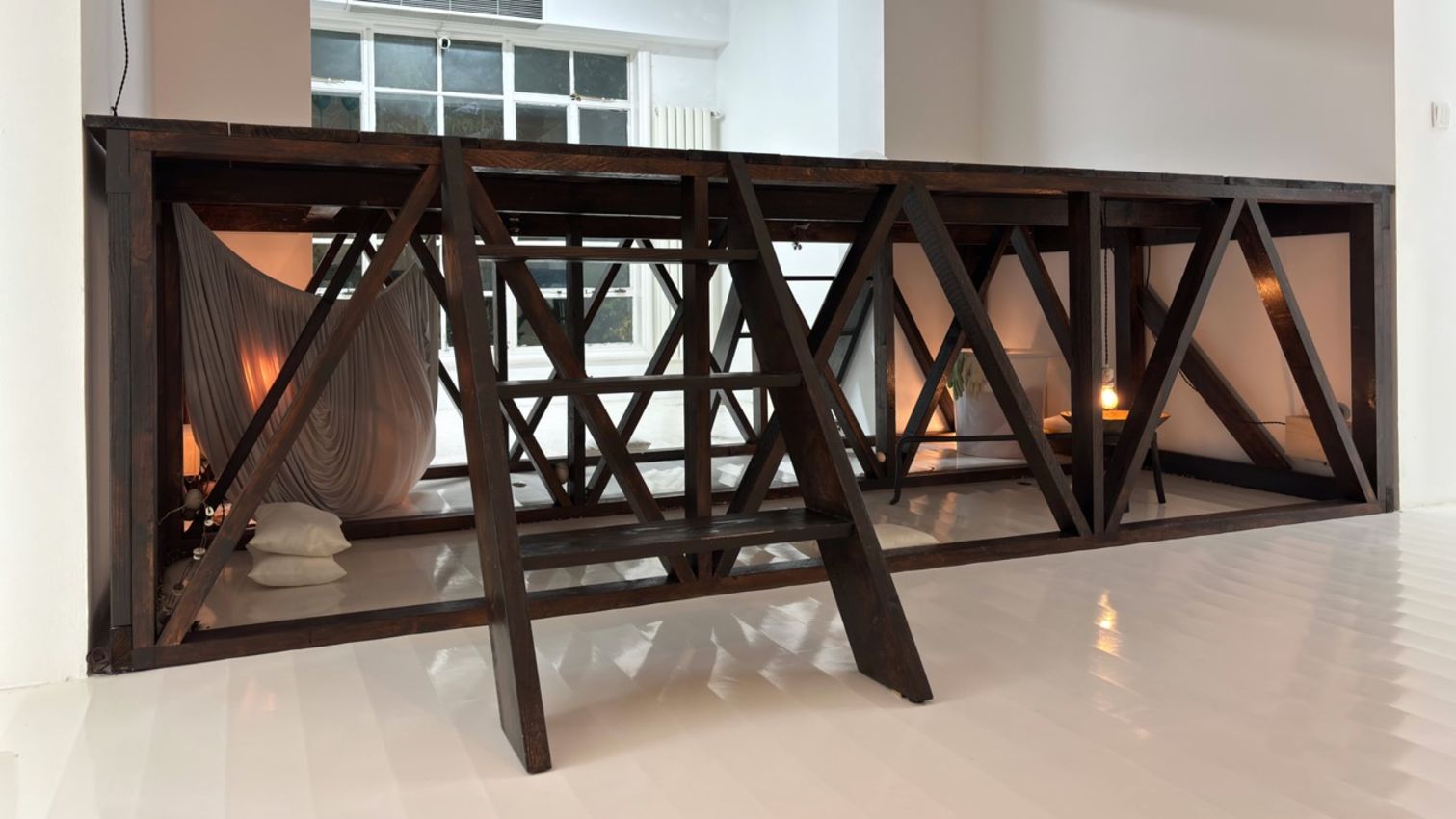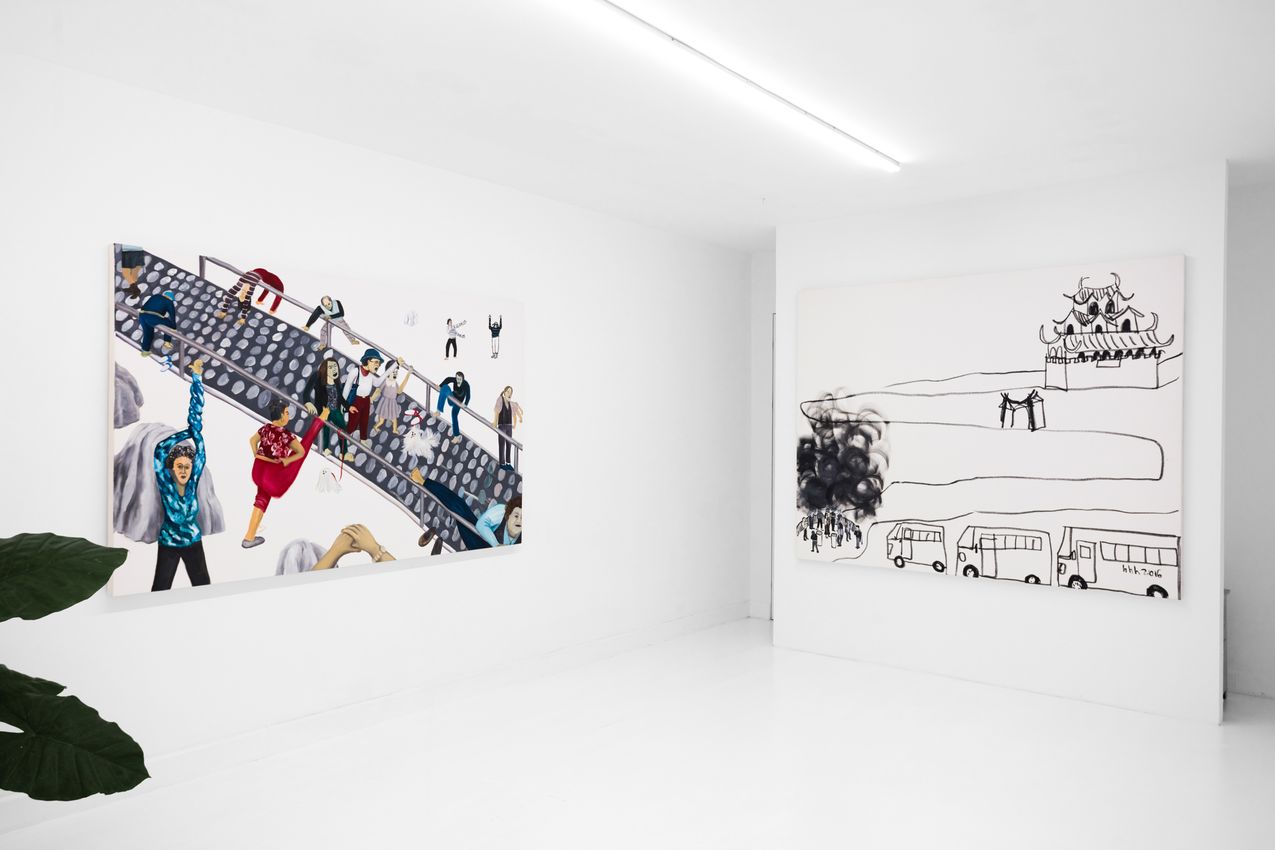
Capsule Shanghai is delighted to present The Common Places, New York-based artist Huang Hai Hsin‘s first solo exhibition in Shanghai. The exhibition brings together a cohesive, yet diverse body of work from the most recent phase of the artist’s long investigation into various aspects of the human character and behaviours.
An avid observer of people and situations, Huang’s sharp, trained eye allows her to grasp the odd and bizarre aspects hidden behind apparent normality or the mundanities of everyday life. The most striking aspects of the latter are translated into sketches, paintings, and video installations, media all present in this show and used by the artist in a fresh and profound way.
Through her work, Huang seems to willingly put herself in the ‘in-between’ zone that divides, yet blurs the roles of actor and spectator. In any case, she doesn’t act as a typical third-person narrator, but rather as someone who discovers reality and tries to capture it as if it were a live-stream, the plot unfolding before her eyes, and indeed, the viewer’s eyes.
Despite their varied subjects and objects, each work affords the viewer a fresh perspective on these familiar scenarios that, as the title suggests, are ‘common’ because we’ve all experienced them, these public, communal and popular places. However, when seen through the lens of classical rhetoric, the title seems to play with the larger meaning of the word ‘commonplace’: something appearing so unquestionably evident and trivial that perhaps it warrants further investigation to explore new perspectives. Huang’s new angle doesn’t stress the idea of a place as a site with value per se, but on how an ordinary site is transformed into a sight by activating its genius loci–the people. With their unconscious and spontaneous yet surreal behaviours, they traverse, inhabit, or just happen to engage with certain spaces or situations, attracting the artist’s attention and turning out to be the key element that makes a place unique. Therefore, despite their light-heartedness and freshness, Huang’s works are more sociologically charged than architecturally relevant. Her work is a visual metaphor for a broader scope that starts well before the artwork and goes far beyond it: humanity itself.
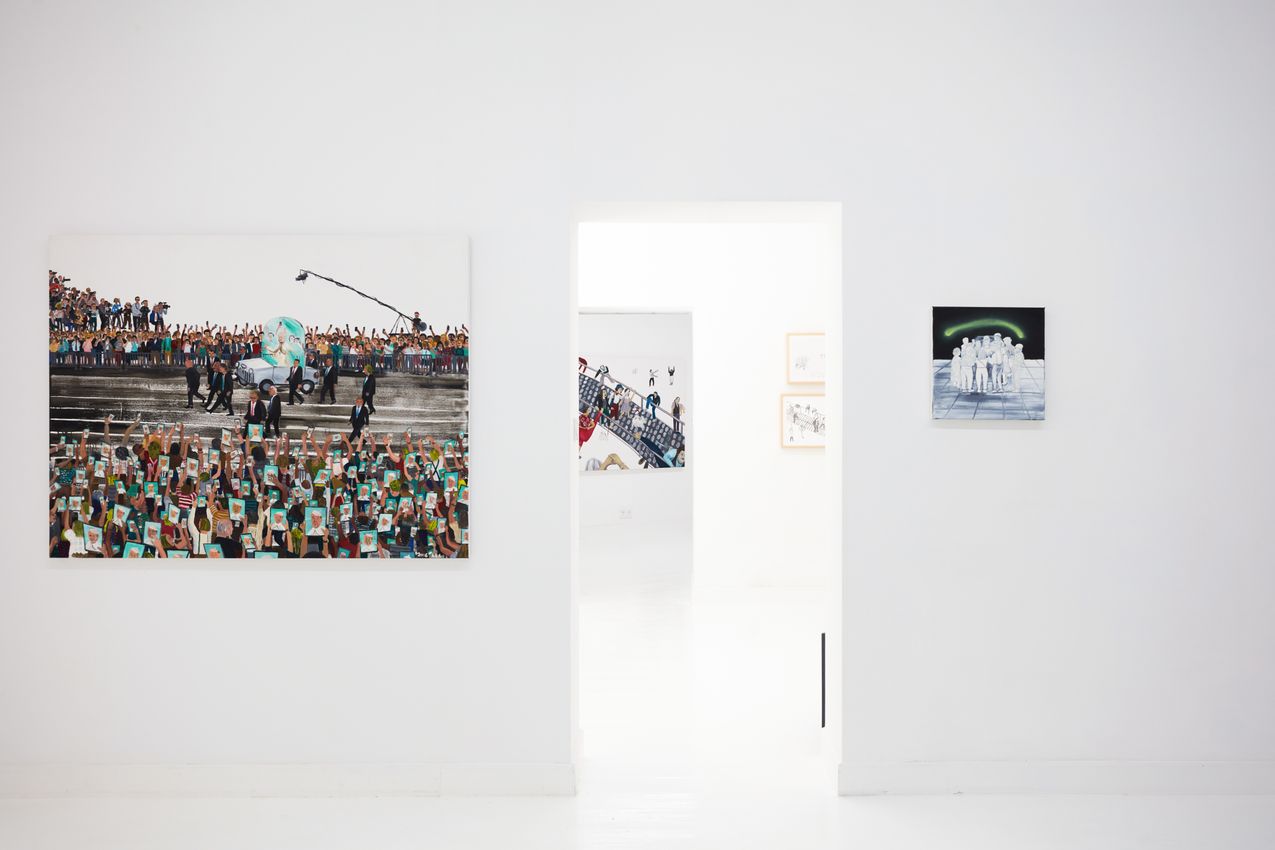
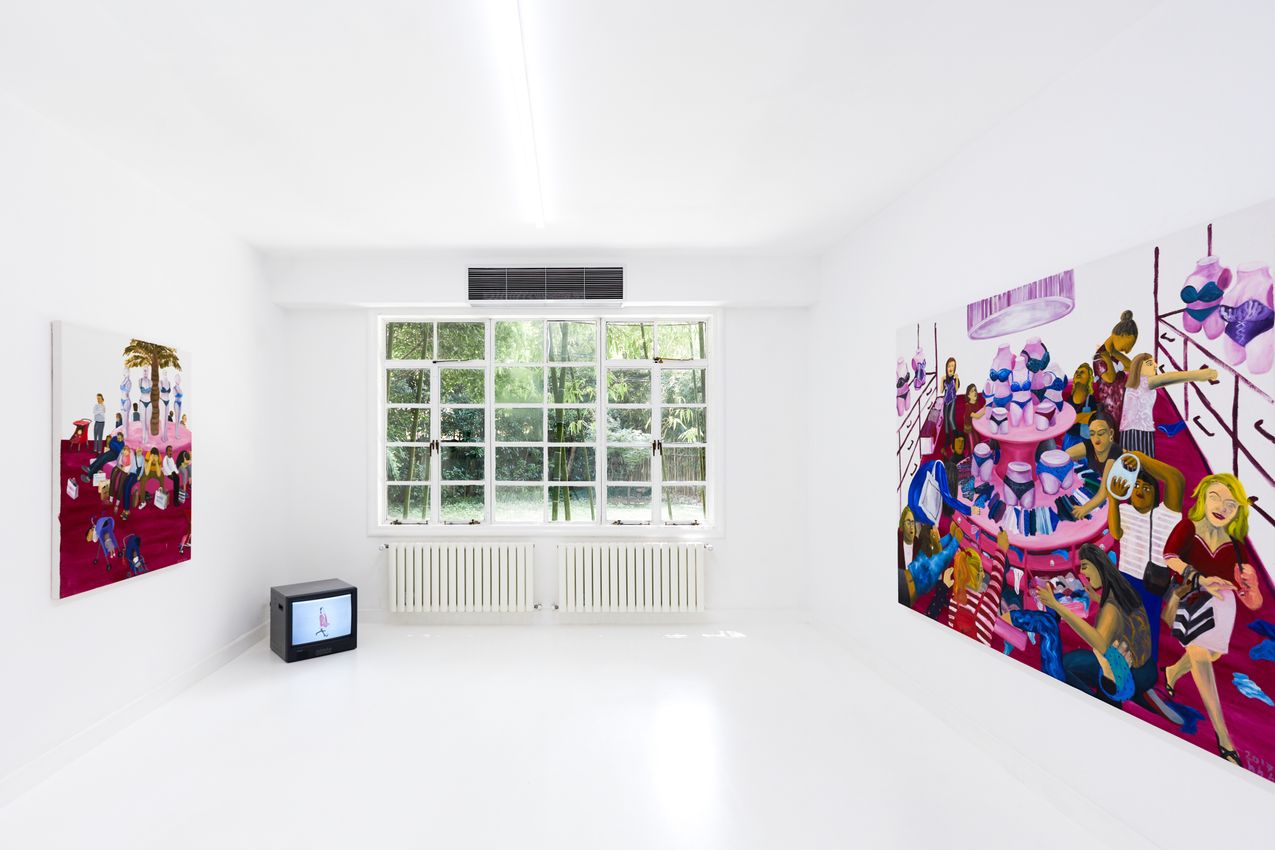
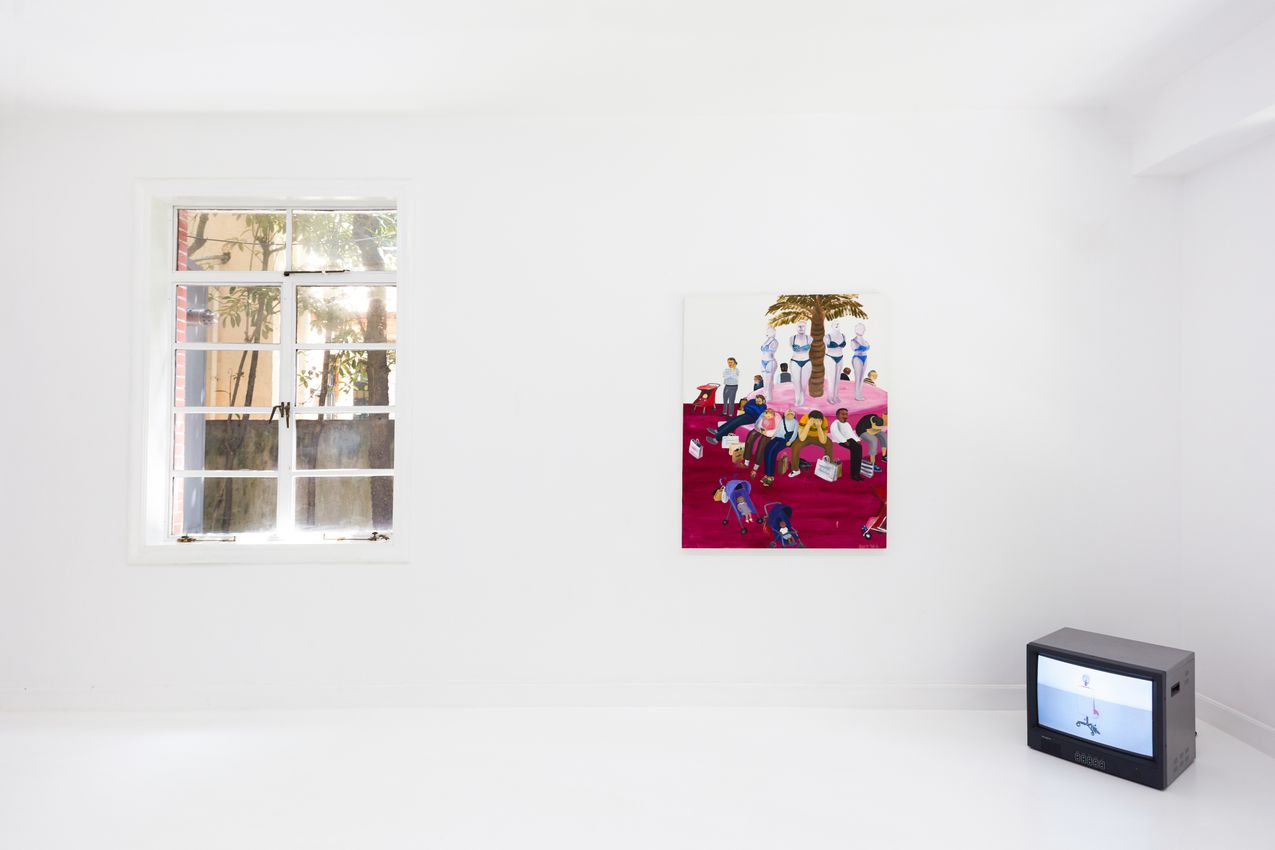
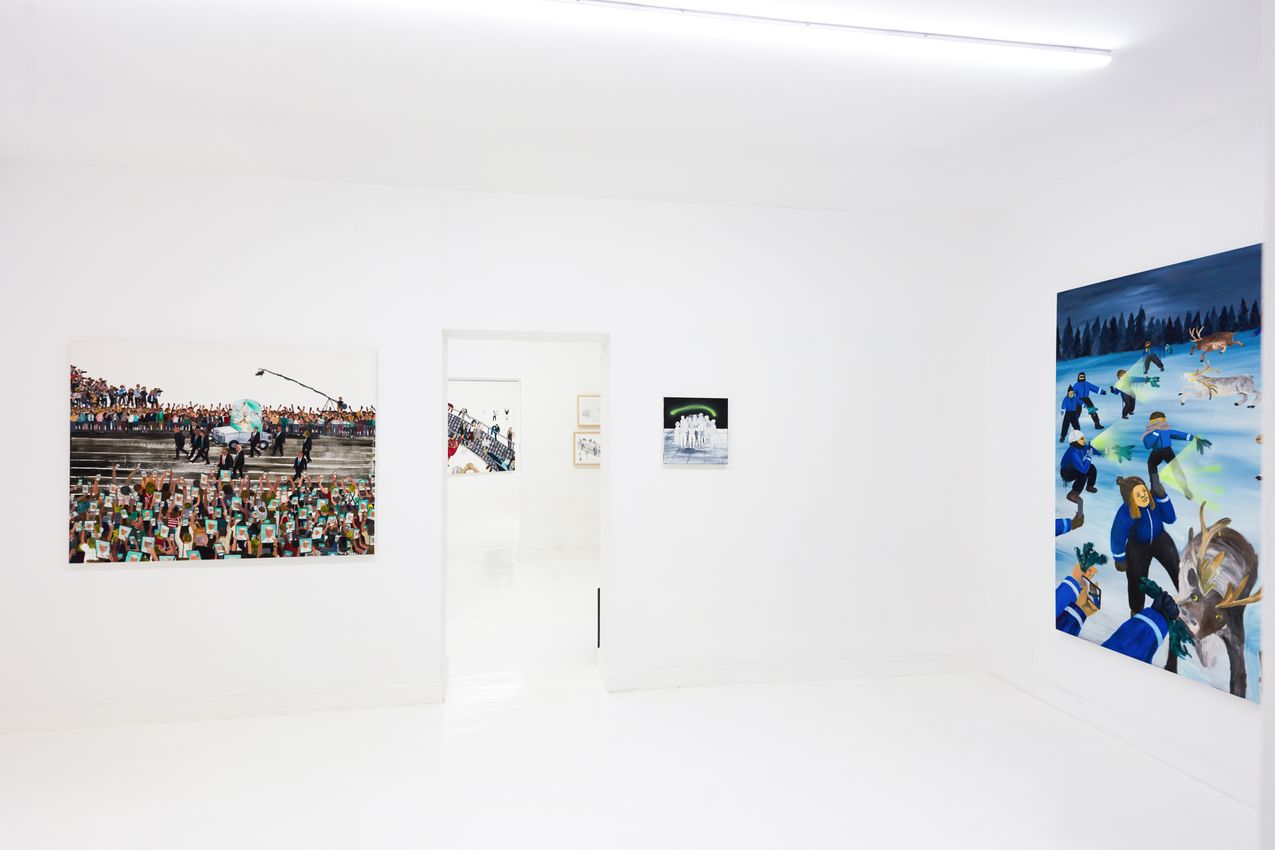
A few leitmotifs recur in the show: public spaces such as parks, museums and shopping malls–more specifically, public places and spaces that often draw crowds. Perhaps another hidden theme is that of culture or the perception of culture through the lens of stereotype. For instance, the works devoted to Da-an Forest Park in the artist’s native Taipei; the halls of the museums all over the world that the artist has visited, especially the Met and the MoMA; crowds in public spaces in moments of collective frenzy (whether ‘sacred’ as in her record of Pope St. Francis’ visit to New York in 2015, or ‘profane’ as in her depiction of excited female crowds shopping at Victoria’s Secret); the works inspired by her 2016 residency in Finland at Arteles Creative Residency Program depicting typical Scandinavian scenes of saunas and reindeer (I have been to North Pole, 2017).
Each work is populated by figures that are larger than life. Take the elderly people exercising with such vigor and agility that they seem to be performing on a stage (Da-an Forest Park, 2018). Or museum goers that verge on being caricatures (Power of Kongo, 2016); ordinary people inadvertently using iconic artworks as a backdrop for their self- spectacle and often narcissistic antics (The MET #2, 2016). Here, the extraordinary is not represented by the masterpieces on view, but by the reactions and actions of the viewers that literally activate the compositions. The iconic dimension meets the ordinary one, the high and the low co-exist; viewers are invited not to judge, but to enjoy these moments of exhibitionism that create a kind of derailment.In the current art world that arguably takes itself too seriously, artists like Huang Hai-Hsin are truly a breath of fresh air. Her remarkable and distinct ironic sensibility are a gift, as is her sharpness of wit. By creating micro-clichés, she challenges bigger ones, and presents the viewer with an alternative version of reality, which is more real than it seems. In this process, she has the rare gift of amusing people, and amusing herself.
Hai-Hsin Huang was born in Taipei in 1984 and received her BA degree from National Taipei University of Education in 2007. In 2009 she received a MFA from The School of Visual Arts in New York. She currently lives and works in Brooklyn, New York. Huang has held solo shows at Capsule Shanghai (Shanghai, China), the Museum der bildenden Künste (MdbK) (Leipzig, Germany), ISE Cultural Foundation (New York, USA), VT Art Salon, Aura Gallery Taipei (Taipei), Gallery 456 (New York, USA), and group shows at the Herzliya Museum of Contemporary Art (Herzliya, Israel), the Kyoto Cultural Center (Kyoto, Japan), the Kuandu Museum of Fine Arts (Taipei), the Herbert F. Johnson Museum of Art (Ithaca, USA) and Capsule Shanghai (Shanghai, China). Huang’s work has been collected by multiple private and public collections, including the White Rabbit Collection, Sydney, Australia, the Taipei Fine Arts Museum, Taipei and the National Taiwan Museum, Taichung. She was artist in residence at the PILOTENKUECHE (Leipzig, Germany).
Press release courtesy Capsule Shanghai. Text: Manuela Lietti.
Huang Hai-Hsin’s works explore images indicative of contemporary life, particularly banal everyday life scenes that reveal an ambiguous atmosphere between humour and horror. She takes inspiration from ordinary family photos, tourists at attractions sites, people-watching at museums and the routine disaster drills. In her work, most aspects of life have the potential to be ridiculous, absurd, awkward, funny and meaningless all at once.


Established in late 2016 by Italian gallerist and long-time influential figure of the Shanghai art scene Enrico Polato, Capsule Shanghai is a self-described ‘gallery and art laboratory’ based in Shanghai’s central Xuhui District. Situated on the first floor of a picturesque 1930s garden house in the idyllic greenery of the former French Concession, the gallery works primarily with emerging Chinese and international artists who push the boundaries of contemporary art. Its special focus has been on artists who have personally and professionally migrated between regions, creating unique trans-national and trans-regional links.

A respected voice in contemporary art discourse.
Focusing on ambitious storytelling and insightful art-world commentary. Ocula Magazine publishes in-depth interviews, critical essays and timely analysis on the artists, exhibitions and ideas driving the global art world.
Learn more about Ocula Magazine
Showcasing the best of the art world.
Ocula partners with galleries from around the world to highlight their artists, artworks and exhibitions. Gallery membership is by application and invitation, with each member vetted by an independent panel.
Learn more about Ocula Membership

Specialises in the sale of major artworks.
Led by a team with deep ties to the world’s leading auction houses, galleries and collectors. Ocula’s advisory team offers bespoke services to high-net-worth clients from around the world who are looking to acquire the best of contemporary and modern art.
Learn more about our team and services