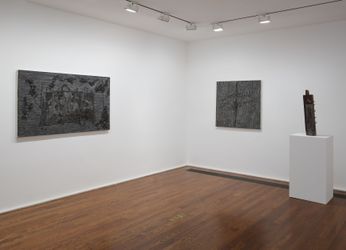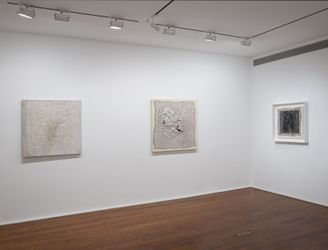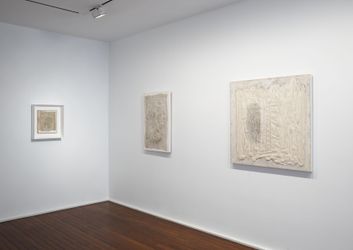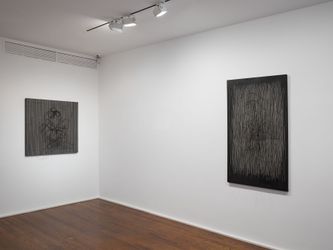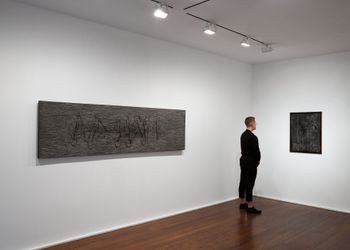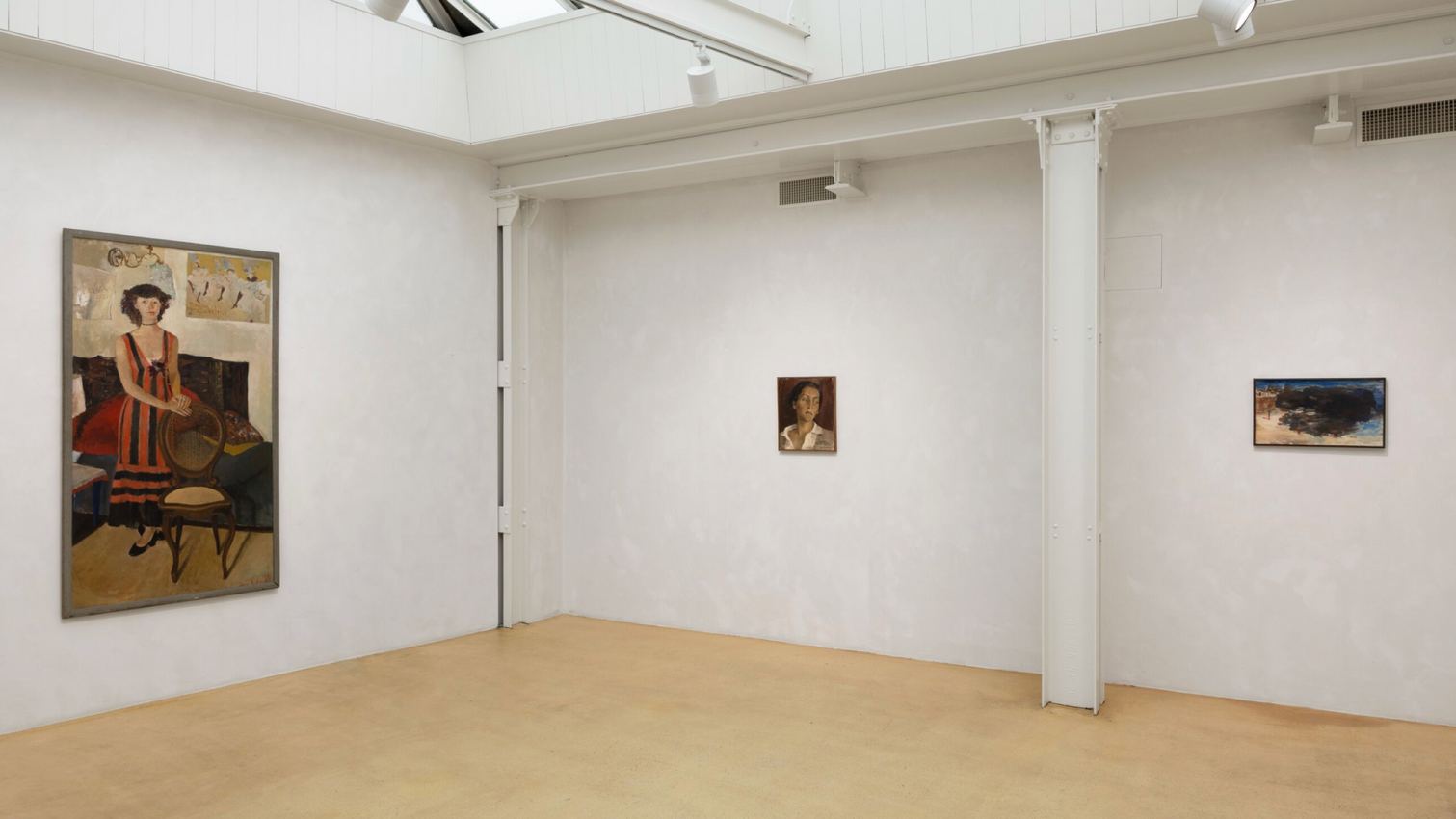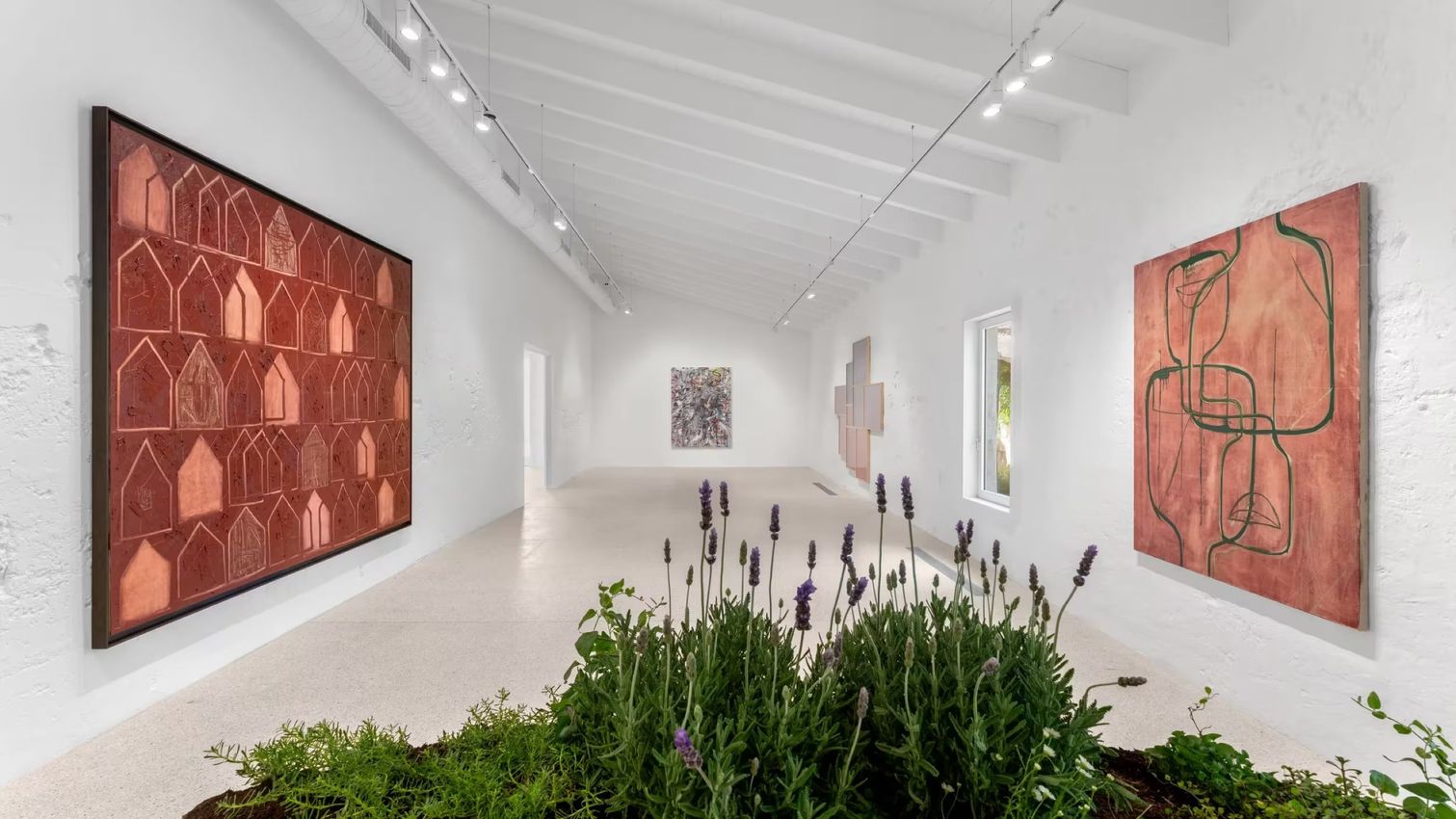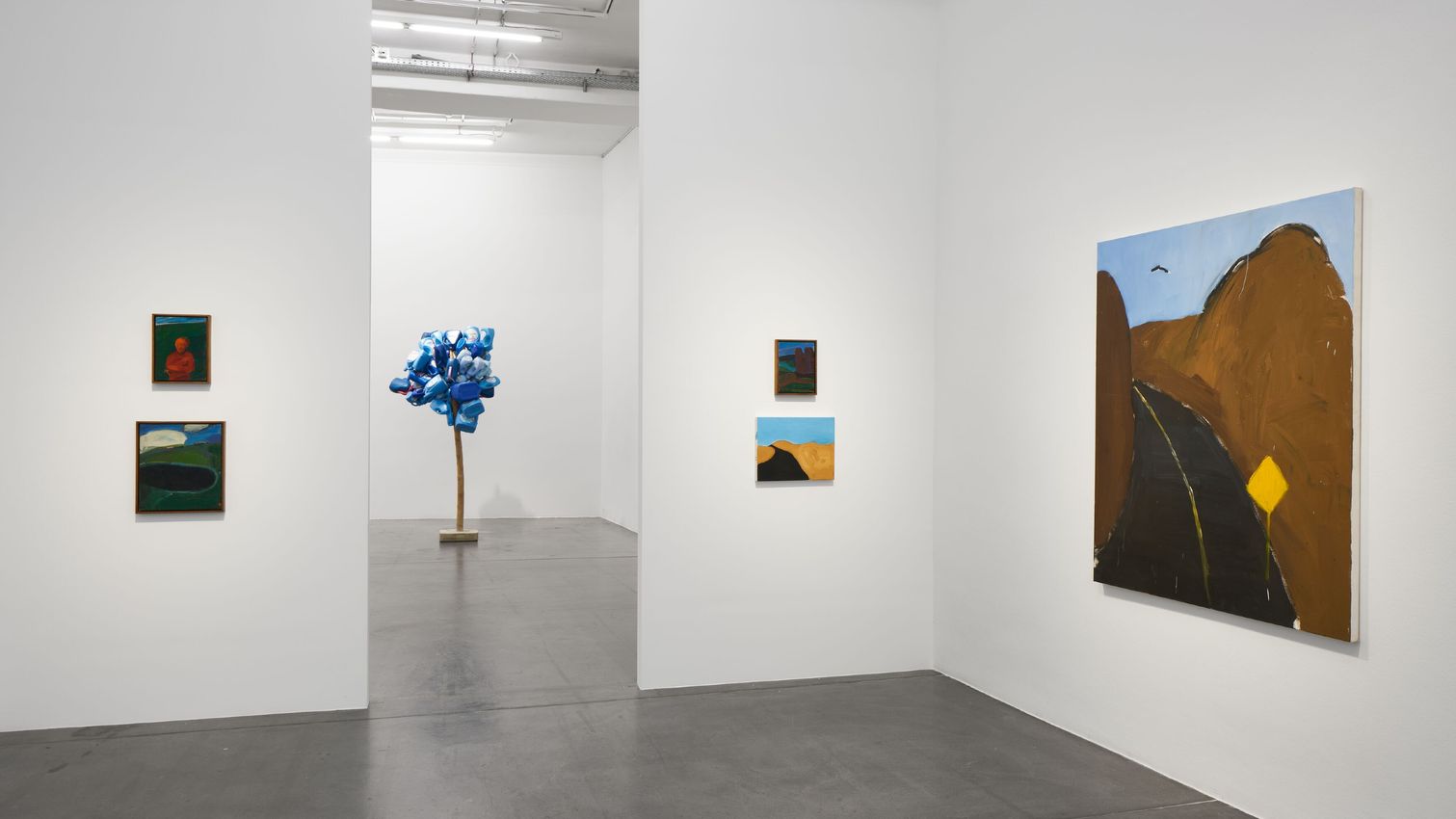
Renowned as art history’s leading kinetic artist, Soto explored the dematerialisation, or ‘disintegration’ of the art object, breaking new ground while anticipating conceptual strategies to come. Hauser & Wirth is pleased to present Soto Vibrations 1950 – 1960, the first exhibition to focus on the critical first decade of the artist’s life in Paris, curated by Jean-Paul Ameline. A believer in art historical evolution, Soto built upon the work of artistic masters that preceded him in order to challenge figurative tradition via abstraction and repetition. Imbued with vibration and movement, Soto’s early works constitute a breakthrough in his output, laying crucial groundwork for his later kinetic works and the uniquely fluid style that shaped his artistic vocabulary.
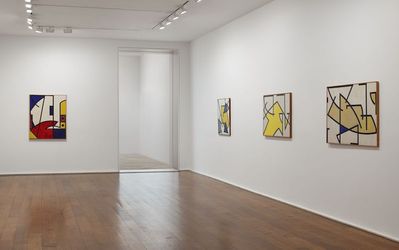
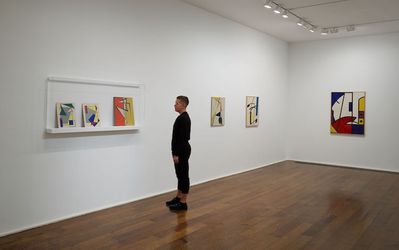
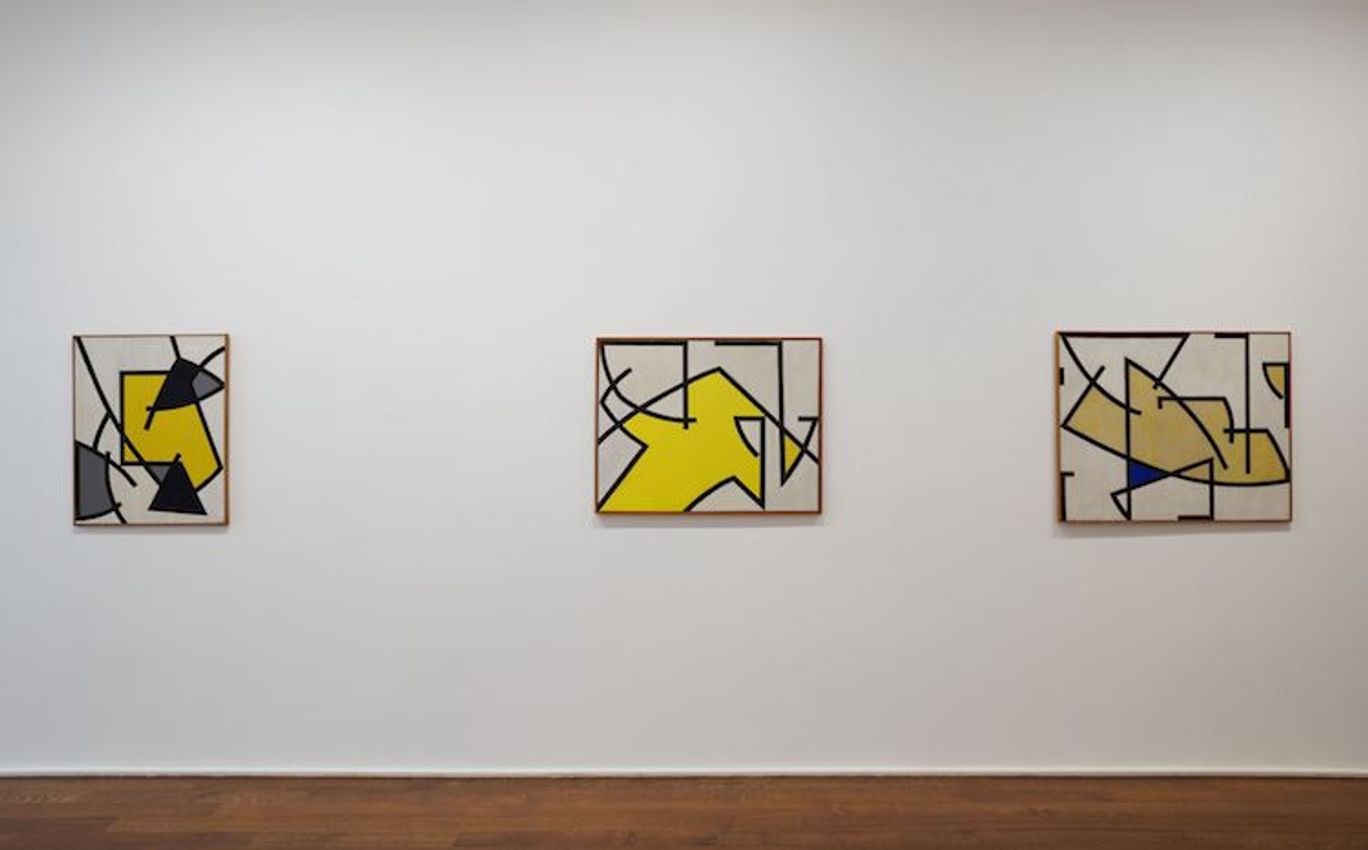
The exhibition opens with Soto’s Compositions dynamiques, a series of ten paintings made during his initial year in Paris. First exhibited in the summer of 1951 at the influential Salon des Réalités Nouvelles, an annual showcase that presented a wide range of abstract art, these works reveal Soto’s earliest investigation of geometric abstraction, driven by a subversion of formal compositional principles in painting. Building upon the neoplastic language pioneered by Piet Mondrian, Soto developed his compositions by adhering to a self-imposed, gridded format and a limited colour scheme of yellows, reds, blues, and greens. Through his art, Soto wanted to engage viewers as active participants in the process of perception and experimented with the serial repetition of colour and geometric forms in an effort to create optical vibrations and what he referred to as ‘the displacement of the viewer.’ As a result, these experimental, serialised paintings convey a sense of depth through an overlay of bright shapes and black delineations, and serve as the foundation of Soto’s trajectory.
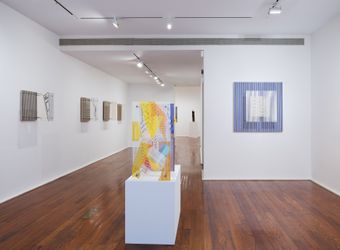
Bridging the first and second floors of the gallery is a focused body of work that signals another evolution in Soto’s practice as he begins to experiment in the use of translucent materials. From 1954 to 1957, Plexiglas would become the artist’s primary material. Works such as Points blancs sur points noirs (1954) characterise a radical departure from conventional two-dimensional painting while furthering Soto’s preoccupation with the perception of light, space, and volume, an interest inspired by László Moholy-Nagy’s earlier application of paint on transparent grounds. Duchamp’s influence is equally observed in Soto’s Espiral series, which finds its precedent in Rotary Demisphere (Precision Optics), created three decades earlier. ‘Based upon the work of these artists,’ Soto stated, ‘I began to construct a world, telling myself that I must make use of all the elements they had set forth, but whose implications they had not fully explored.’ These implications of optical vibrations and the displacement of the viewer are exemplified in Espiral con rojo (1955), which enacted a seminal shift in his development of kinetic art. Soto exhibited these works for the first time in 1955, alongside Alexander Calder and Duchamp.
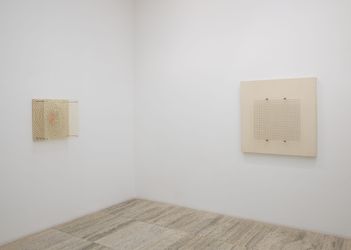
Furthering his experimentation as the decade progressed, Soto simplified his palette to black and white and began incorporating the use of wire after 1957, arranging painted metal into gridded forms against streaked backgrounds, or as found in El juego de la luz (1959), animating a surface of vertical lines through the dynamic juxtaposition of a gestural wire relief, effectively ‘drawing in space.’ These later works unfold onto the third floor of the gallery, where we find Soto extending into the irregular gestures and materials commonly associated with Art Informel, integrating found materials, putty, plaster, and fabrics into his practice. As made visible in Vibración blanca (1960), and other works from the Vibration series, Soto’s desire to break with the stability of forms was an enduring aspect of his oeuvre, one that thrived and then surpassed his seminal Parisian period, heralding his place in the history of avant-garde and kinetic art.
On the occasion of Soto Vibrations 1950 – 1960, Hauser & Wirth Publishers is pleased to release an accompanying exhibition catalogue, featuring a text by the exhibition’s curator, Jean-Paul Ameline.


Hauser & Wirth was founded in 1992 in Zurich by Iwan Wirth, Manuela Wirth and Ursula Hauser, who were joined in 2000 by Partner and Vice President Marc Payot. A family business with a global outlook, Hauser & Wirth has expanded over the past 26 years to include outposts in Hong Kong, London, New York, Los Angeles, Somerset and Gstaad. The gallery represents over 70 artists and estates who have been instrumental in shaping its identity over the past quarter century, and who are the inspiration for Hauser & Wirth’s diverse range of activities that engage with art, education, conservation and sustainability.

A respected voice in contemporary art discourse.
Focusing on ambitious storytelling and insightful art-world commentary. Ocula Magazine publishes in-depth interviews, critical essays and timely analysis on the artists, exhibitions and ideas driving the global art world.
Learn more about Ocula Magazine
Showcasing the best of the art world.
Ocula partners with galleries from around the world to highlight their artists, artworks and exhibitions. Gallery membership is by application and invitation, with each member vetted by an independent panel.
Learn more about Ocula Membership

Specialises in the sale of major artworks.
Led by a team with deep ties to the world’s leading auction houses, galleries and collectors. Ocula’s advisory team offers bespoke services to high-net-worth clients from around the world who are looking to acquire the best of contemporary and modern art.
Learn more about our team and services