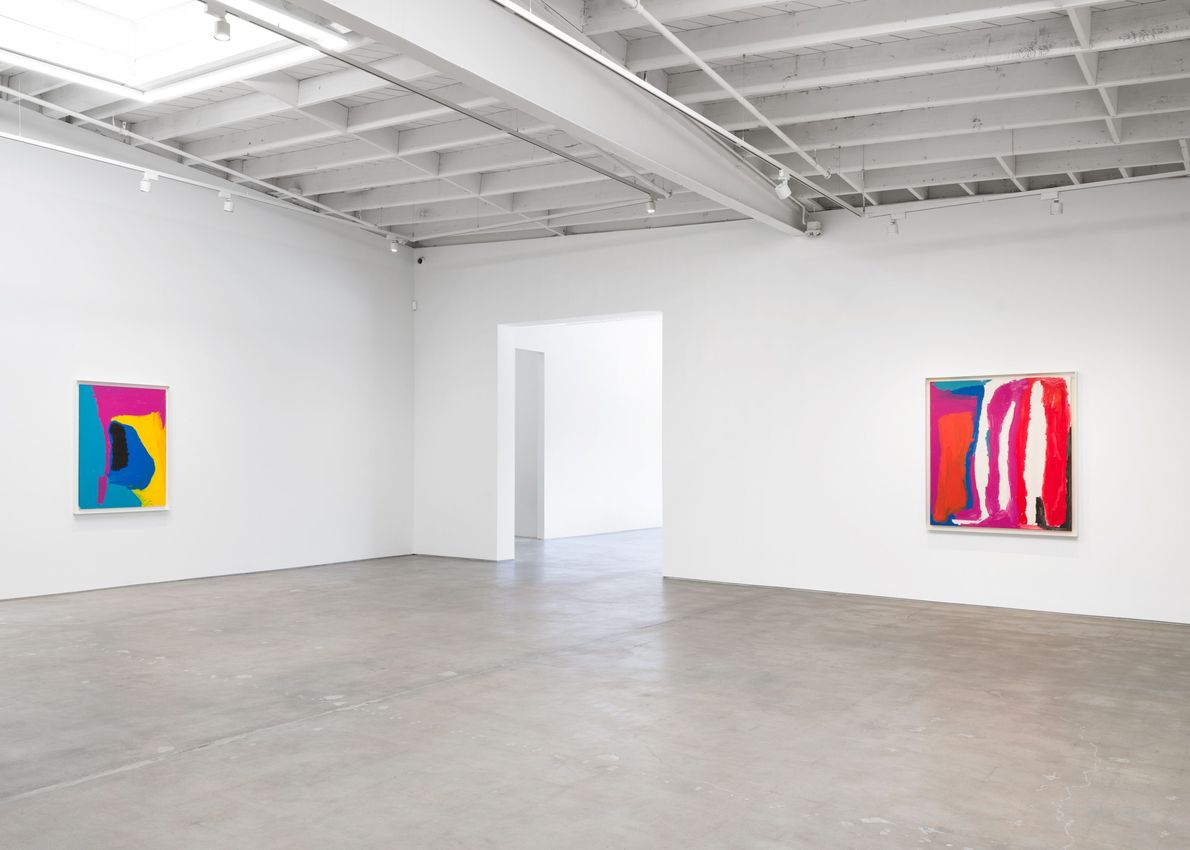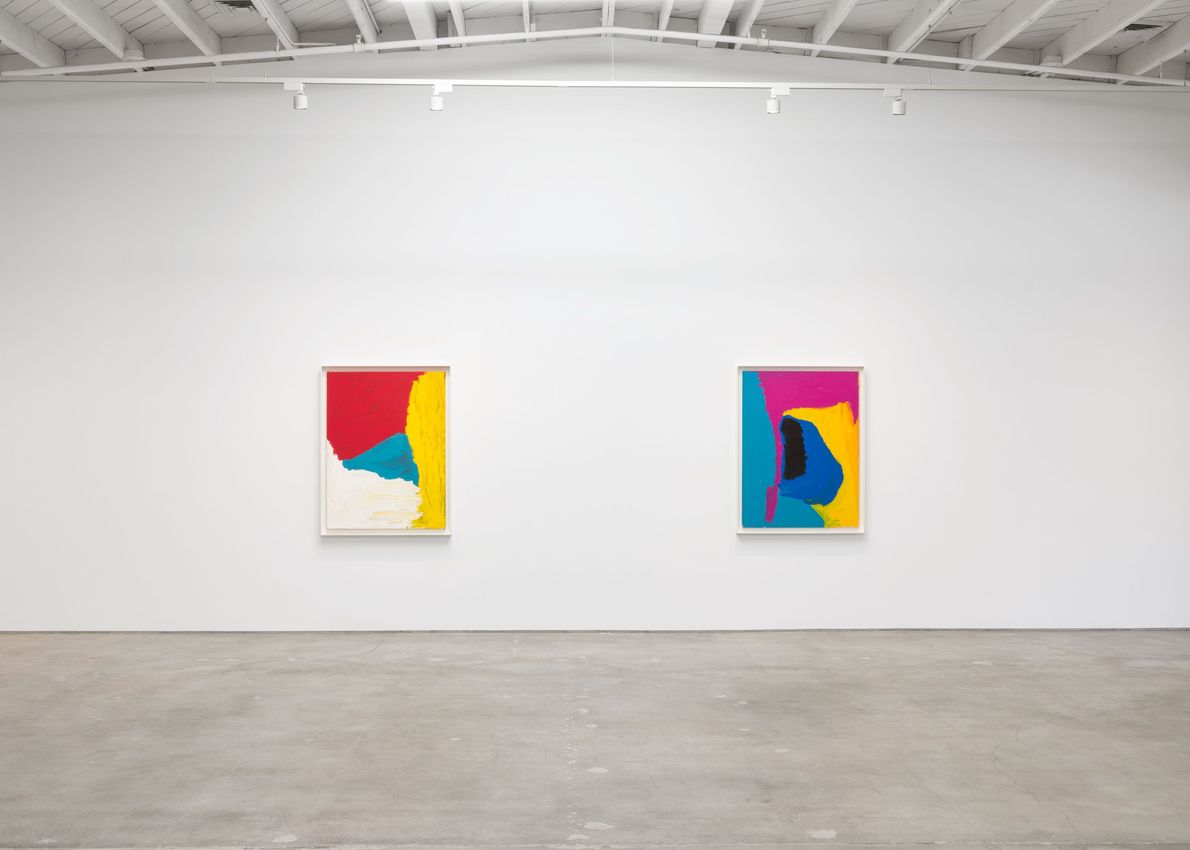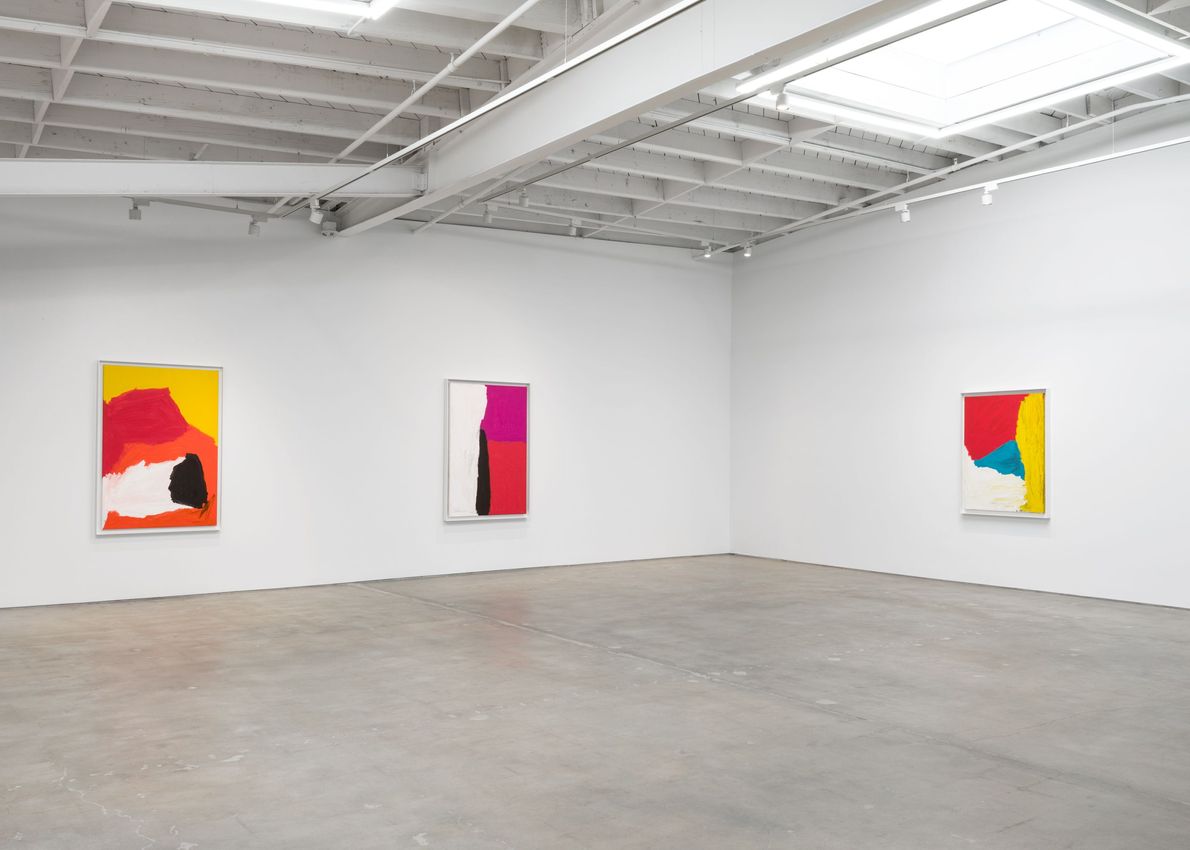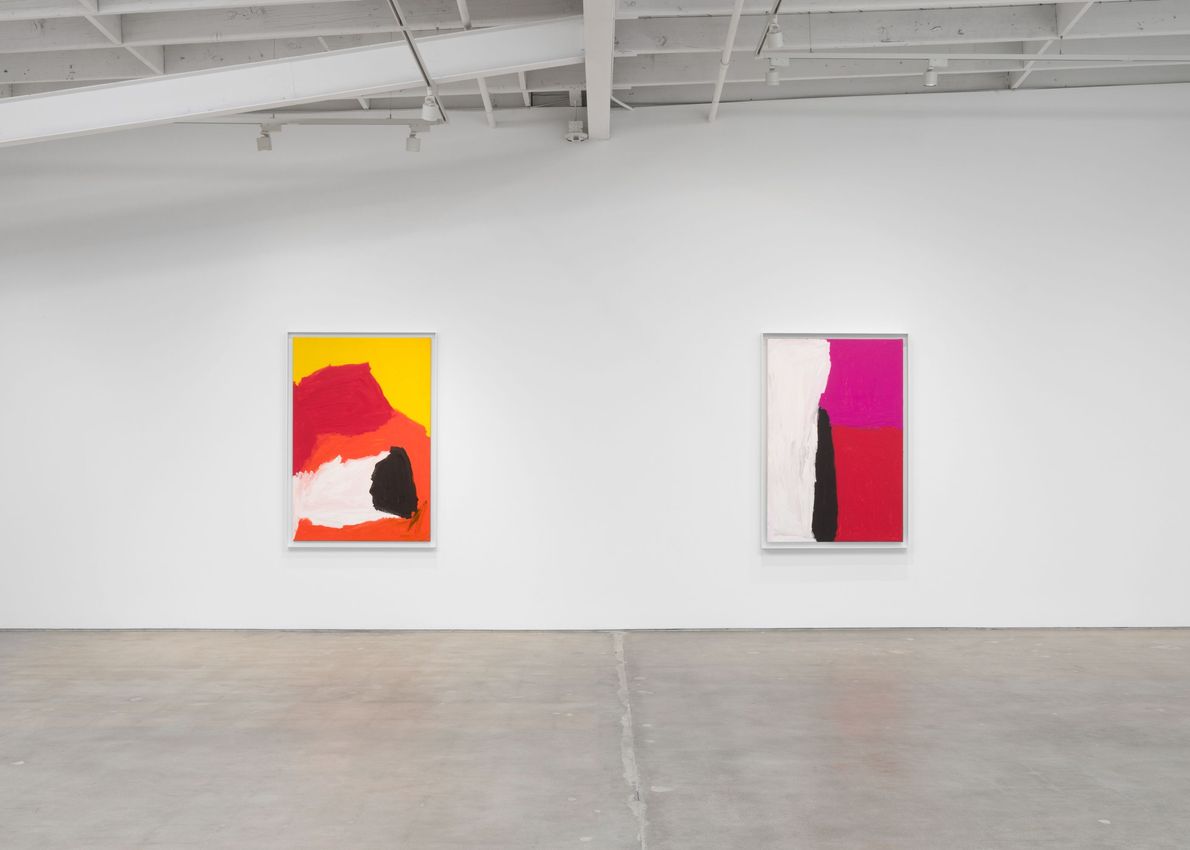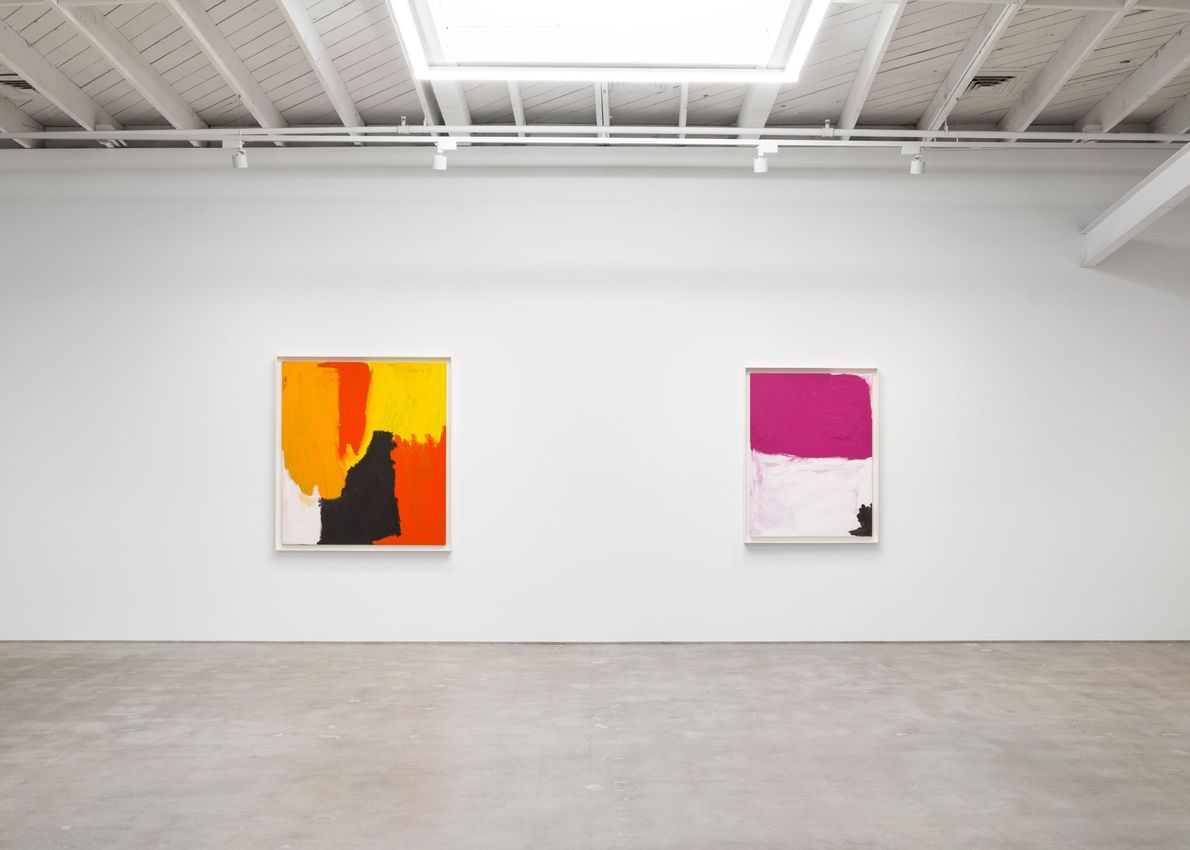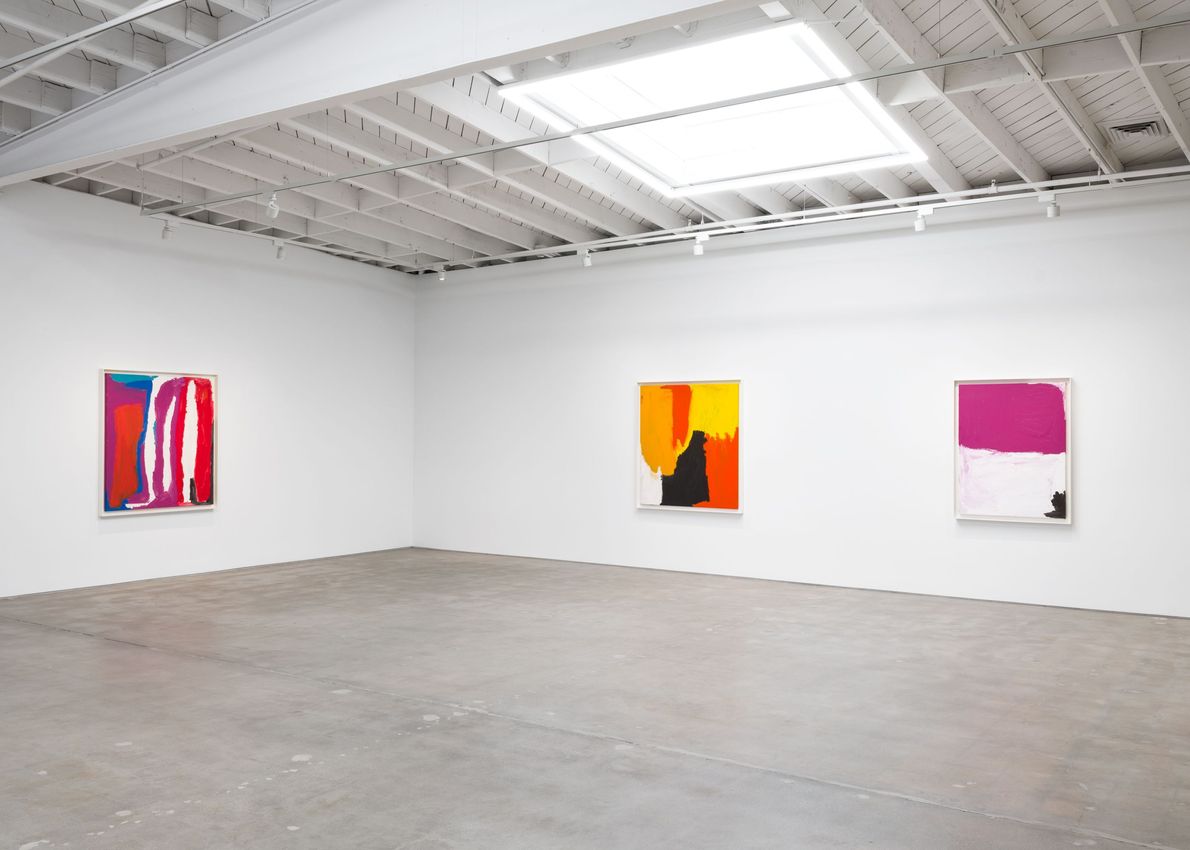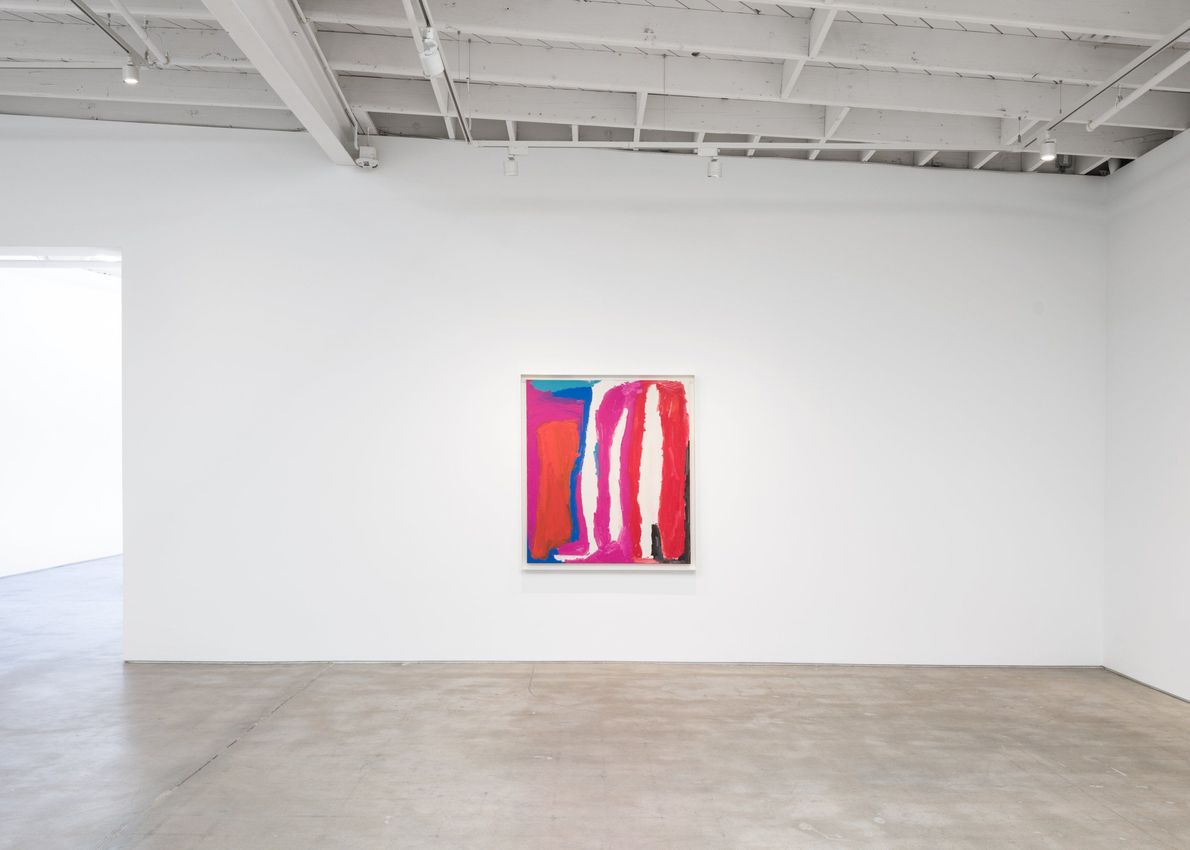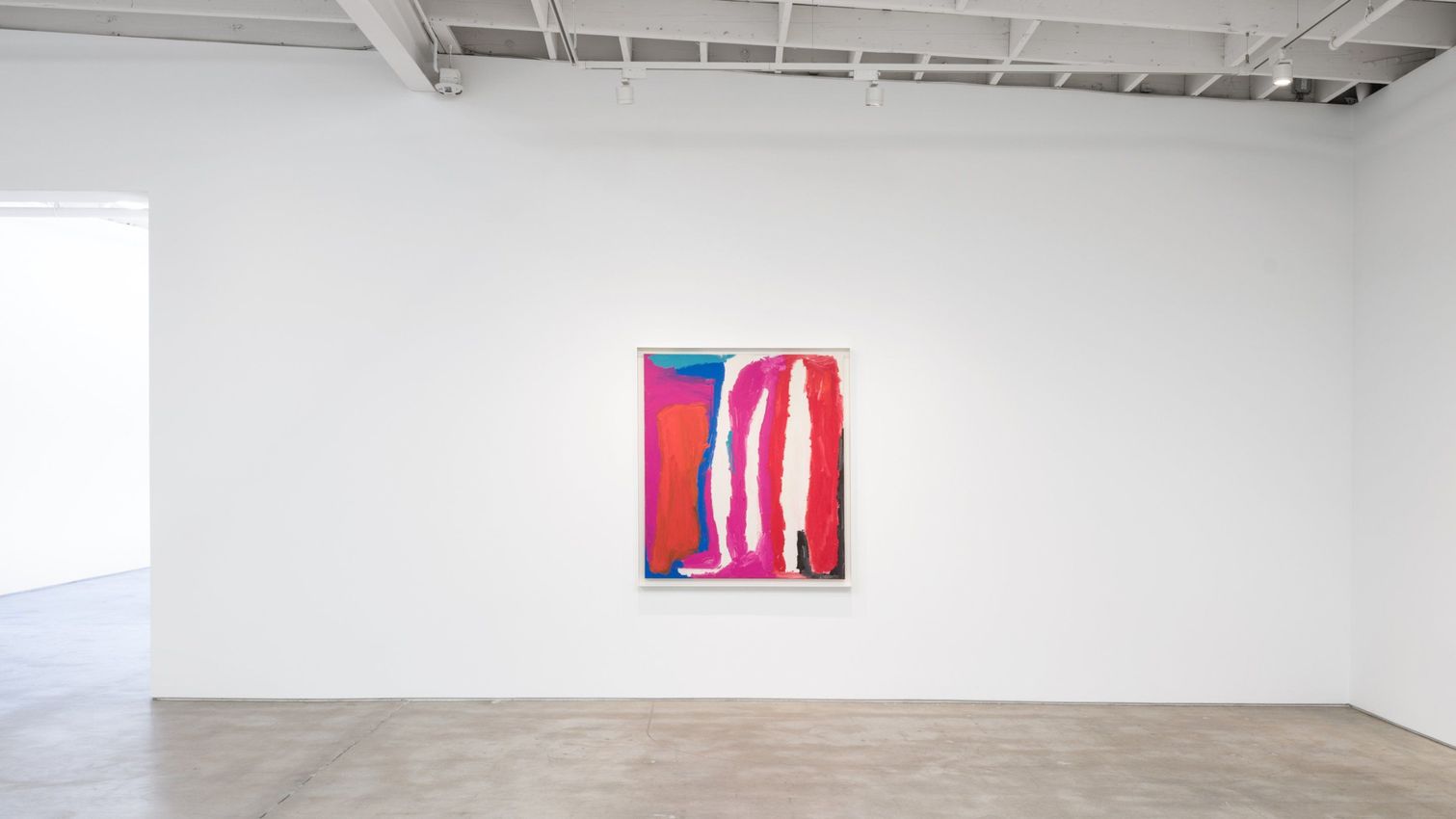
Mirdidingkingathi Juwarnda Sally Gabori (b. c. 1924; d. 2015) transformed memories of her birthplace—Bentinck Island, Australia—into gestural, textured abstractions. She began painting in 2005 around the age of eighty one, spending the last decade of her life making prismatic compositions that radically expand the landscape genre. Gabori and the rest of the Aboriginal Kaiadilt population had been dispossessed of their home in 1948; from Mornington Island, the site of their displacement, she retraced the emotional and topographical contours of Bentinck—in her words, “a story place out to sea.”
Gabori’s approach evokes the concept of chorography: locales described through their qualities rather than quantitatively measured, an art of place. This sensibility situates her in a contemporary lineage of painters who treat the landscape expressionistically, using the tools of abstraction to convey the intertwined affective charges and sociopolitical histories of place. Like Richard Mayhew or Julie Mehretu, for example, Gabori’s paintings trace a contested terrain through colors and forms that do not map cleanly onto cartographic or photographic representations of place. Within this tradition, however, she is notable for how her work centers her own subjectivity, both formally and in its subject matter. Working wet on wet, the artist mixed directly on her canvases, her palpable marks indexing her own gestures as they were made. In the intimately titled My Country (2009), each wisp of magenta eddying into white invites the viewer to retrace the motions of Gabori’s hand as she envisioned the land.
Kaiadilt conventions intimately link people and place, as their birth “Countries,” as they are known, become part of their names—Gabori focused largely on sites on Bentinck with connections to her family. In King Alfred’s Country (2006), which represents the area of the island associated with Gabori’s brother, forms nestled inside each other evoke the stone networks of fish traps built by the Kaiadilt across the face of the island. Titled after the area where her husband, who was known as Dibirdibi, was born, Dibirdibi Country (2009) abstracts the saltpans, mangrove thickets, and mud flats of the northeastern coast of Bentinck into color fields. As the island transforms over the course of a year, its shorelines and riverbanks incurring and receding as the wet season turns to dry, so did her representations of its Countries. In a second Dibirdibi Country, made the same year, the landscape and her palette have shifted. Forms distributed around the edges of the canvas lend the painting a swirling, centrifugal force that draws the eye to the heart of the composition. A cool-toned underpainting complicates later passes of scorching oranges and reds, providing glimpses of the past embedded in the present.
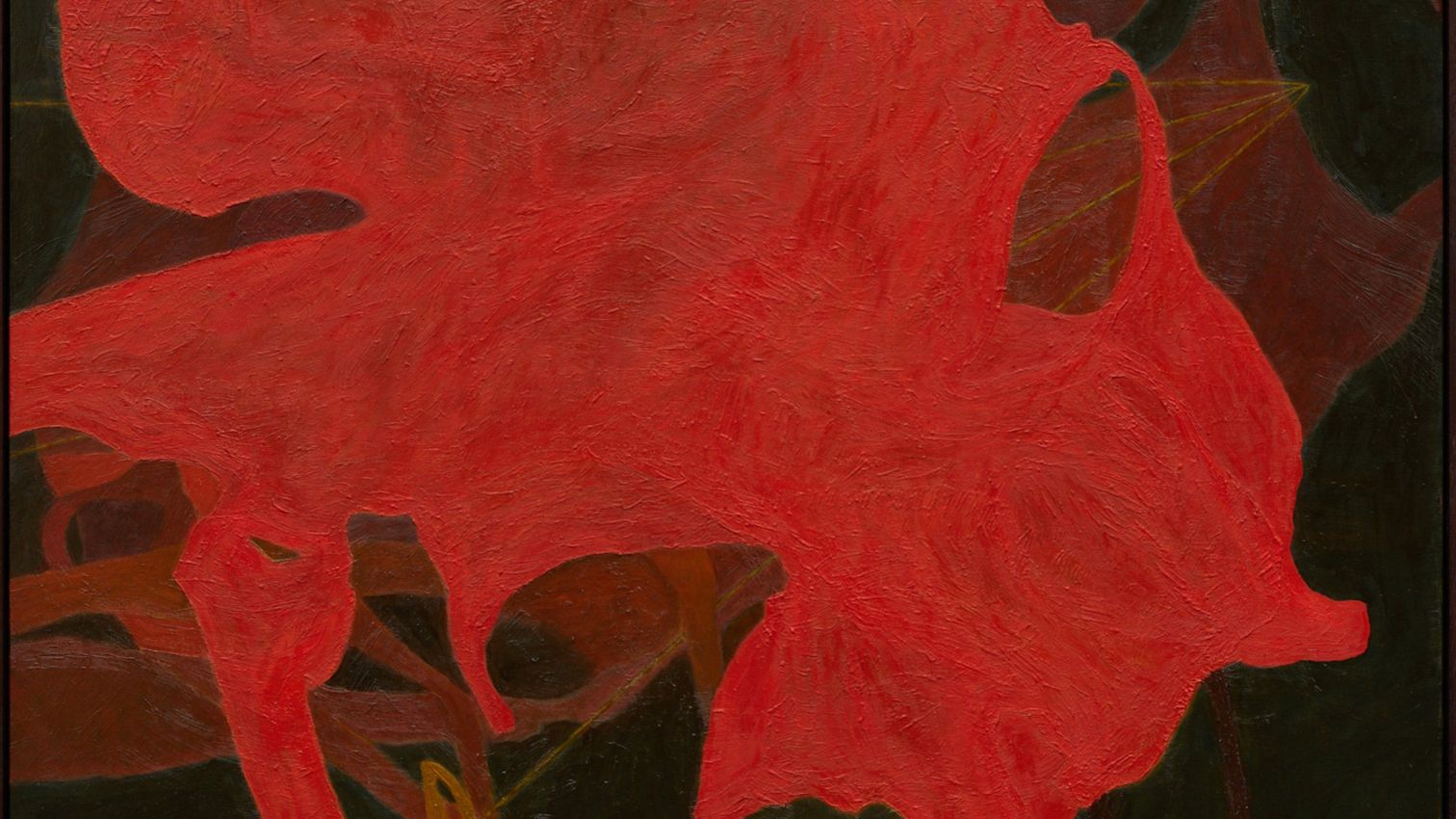
In Gabori’s work, color is never fixed to one particular object or terrain, but is rather a fugitive force of emotion and recollection. Etel Adnan, another painter of abstract landscapes, meditated in 1986: “there is no possession of color, only the acceptance of its reality. And if there is no possibility for the possession of color, there is no possession at all.” The anticolonial undercurrent of Gabori’s paintings—that borders are porous rather than fixed, existing only in the mind and not embedded within the land itself—surfaces in her use of abstraction to convey what empiricism cannot. Working within the space of memory between Bentinck and Mornington and the countless years between the loss of her homeland and the initiation of her practice, Gabori created an oeuvre that prompts us to see the landscape as an ever-changing terrain of experience and affect.


A respected voice in contemporary art discourse.
Focusing on ambitious storytelling and insightful art-world commentary. Ocula Magazine publishes in-depth interviews, critical essays and timely analysis on the artists, exhibitions and ideas driving the global art world.
Learn more about Ocula Magazine
Showcasing the best of the art world.
Ocula partners with galleries from around the world to highlight their artists, artworks and exhibitions. Gallery membership is by application and invitation, with each member vetted by an independent panel.
Learn more about Ocula Membership

Specialises in the sale of major artworks.
Led by a team with deep ties to the world’s leading auction houses, galleries and collectors. Ocula’s advisory team offers bespoke services to high-net-worth clients from around the world who are looking to acquire the best of contemporary and modern art.
Learn more about our team and services