




ALEX KATZ
b. 1927, United StatesEmerging in the 1950s in New York at the height of Abstract Expressionism, Alex Katz developed a distinctive style that proposed a return to representational art. Katz’s portrait and landscape paintings, characterised by flattened subjects and a bright colour palette, capture the sense of now—a state of being in the moment.
Background
Born and raised in New York, Alex Katz studied the theories and styles of Modernism at The Cooper Union between 1946 and 1949. After graduating, he attended the Skowhegan School of Painting & Sculpture in Maine, where the artist developed his longstanding interest in the landscape.
Alex Katz’s Portraits
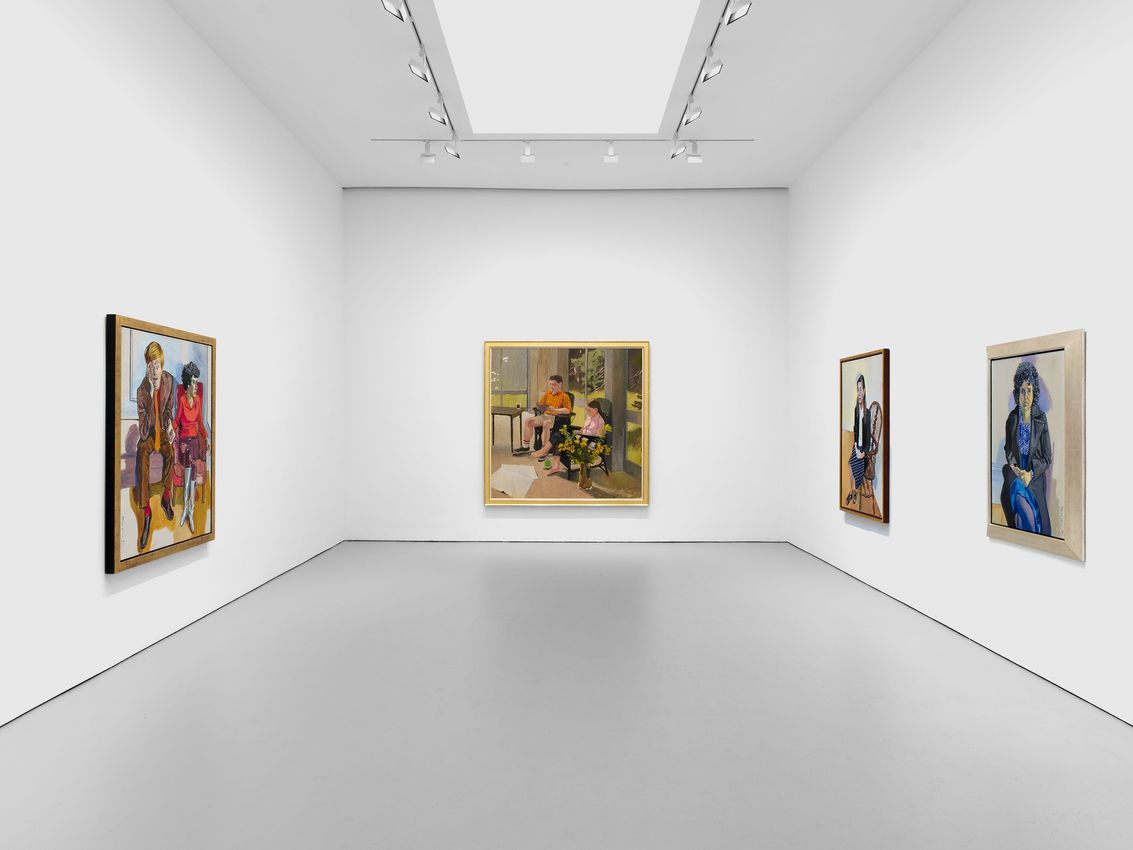
Among frequent sitters of Alex Katz’s portraits were his friends from the New York School of artists and poets, such as Rudolph Burckhardt, Jane Freillicher, Fairfield Porter, Frank O’Hara, and James Schuyler. Katz typically painted on small Masonite panels, employing the monochrome backgrounds that later came to characterise his work.
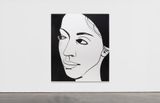
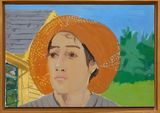
Portraits of Ada—Alex Katz’s wife, whom he has painted more than 200 times—show an evolution of the artist’s practice. Ada (1957)—his first portrait of her—depicts a young woman with a cool demeanour seated against a white background. In the iconic The Black Dress (1960), Ada appears six times inside an interior, each time wearing the same dress but taking a different pose. Blue Umbrella (1972) focuses on Ada’s face in the rain, her hair covered in a headscarf.
Alex Katz’s Sculptures
Alex Katz’s cut-out sculptures, which he began in 1959, were first made from canvas, then later painted directly on pieces of cut wood. Later, they evolved into shaped metal sheets, such as One Flight Up (1968): a group portrait of 37 people at a cocktail party. The work is not a conventional portrait on canvas, but instead a gathering of painted panels that have each been trimmed to reflect the silhouette of their respective figure.
Alex Katz’s Landscapes
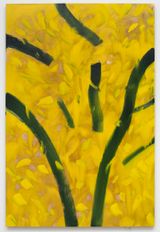
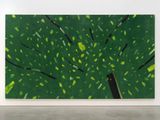
The landscape has also been a recurring subject in Alex Katz’s work since the late 1980s. In what he describes as ‘environmental’ paintings, the artist conveys a sense of a space that envelops through his emphasis on light and the passage of time in a day and through the seasons. His landscape paintings have been presented in solo exhibitions such as Quick Light, Serpentine Galleries, London (2016), and Alex Katz Under the Stars: American Landscapes 1951–1995, MoMA PS1, New York (1998).
Rising acclaim with increasing institutional attention
In 1959, Katz began to garner wider critical attention with a solo exhibition at Tanager Gallery, New York. However, the artist found most of his success in Europe. In New York, his first major retrospective exhibition was only held in 1986 at the Whitney Museum of American Art. In a 2018 interview with The New Yorker, Katz attributed his late recognition in New York to his idiosyncratic style, which is neither strictly Pop art nor acutely realistic, saying that he ‘never fit in’.
Influences
Advertising, mass media, and the fashion industry of the 1960s onward have had a lasting impact on Alex Katz’s paintings, not only in their focus on close-ups of faces but also in their increasingly monumental scale.
In 1977, Katz presented 23 large-scale portraits of women on a billboard in New York’s Times Square. Coca-Cola Girls, his 2018 solo exhibition at London‘s Timothy Taylor, revolved around paintings depicting women in white bathing suits against red backgrounds that allude to the brand’s signature colour.
Alex Katz Solo Exhibitions include:
- Alex Katz: Gathering (Whitney Museum of American Art, New York, 2023)
- Alex Katz: Maine Observer (Museum of Fine Arts, Boston, 2022)
- Alex Katz: Color & Light (Museum of Contemporary Art, Los Angeles, 2021)
- Focus On: Alex Katz (Dallas Museum of Art, Texas, 2019)
- ARTIST ROOMS: Alex Katz (Tate Liverpool, Liverpool, 2018)
- Alex Katz at the Met (The Metropolitan Museum of Art, New York, 2015)
- Brand-New & Terrific: Alex Katz in the 1950s (Colby College Museum of Art, Maine, 2015)
- Alex Katz (National Portrait Gallery, London, 2010
Alex Katz FAQs
Who is Alex Katz?
Alex Katz is an American figurative artist born on July 24, 1927, in Brooklyn, New York. He is best known for his large-scale, simplified paintings of family, friends, and landscapes that fuse realism with abstraction. Katz’s work, which began exhibiting in the early 1950s, is recognized for its bold use of flat color planes, clean contour lines, and an economy of detail that imbues his subjects with a timeless presence.
What is distinctive about Alex Katz’s painting style?
Alex Katz is known for his flat color planes, simplified contours, and the synthesis of realism and abstraction that convey immediacy and elegance.
Who are the subjects of Alex Katz’s portraits?
Alex Katz’s portraits often depict friends, family members, and cultural figures, capturing their presence with minimal detail but strong emotional resonance.
Who is Alex Katz’s wife?
Alex Katz’s wife, Ada Katz (née Del Moro), has been a central figure and enduring muse in his artistic practice since they met in 1957 and married in 1958. Katz has painted 100s of portraits of Ada, depicting her in a highly stylised, minimalist manner that emphasises flat planes of color, clean lines, and an elegant economy of detail. Ada’s influence on Katz’s work is significant, as she not only shaped much of his portraiture but also inspires the enduring exploration of presence and identity that defines much of his oeuvre.
How has Alex Katz contributed to contemporary art?
By bridging abstract expressionism and figurative realism, Alex Katz has innovated portraiture and landscape painting, influencing generations of artists.
Where can I see Alex Katz’s artwork?
Alex Katz’s works are held in major collections worldwide, including The Museum of Modern Art, New York; Tate Modern, London; and the Centre Pompidou, Paris. His paintings are regularly exhibited at Pace Gallery in New York and London, which represents him internationally.
Ocula | 2023

Explore Alex Katz's Exhibitions On Now



View Alex Katz's Artworks





































Alex Katz in Ocula Magazine












Explore and Follow Artists Shaping Contemporary Art
A respected voice in contemporary art discourse.
Focusing on ambitious storytelling and insightful art-world commentary. Ocula Magazine publishes in-depth interviews, critical essays and timely analysis on the artists, exhibitions and ideas driving the global art world.
Learn more about Ocula Magazine
Showcasing the best of the art world.
Ocula partners with galleries from around the world to highlight their artists, artworks and exhibitions. Gallery membership is by application and invitation, with each member vetted by an independent panel.
Learn more about Ocula Membership
Specialises in the sale of major artworks.
Led by a team with deep ties to the world’s leading auction houses, galleries and collectors. Ocula’s advisory team offers bespoke services to high-net-worth clients from around the world who are looking to acquire the best of contemporary and modern art.
Learn more about our team and services