Press Release

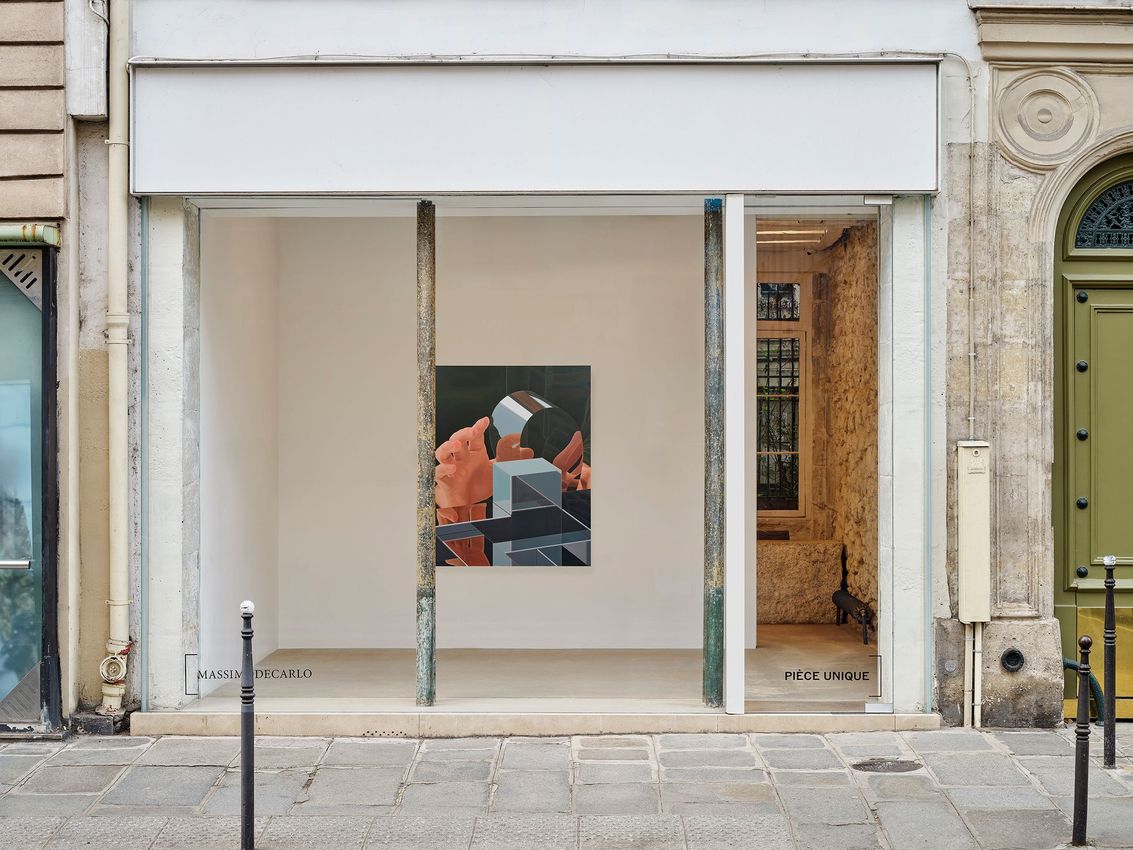
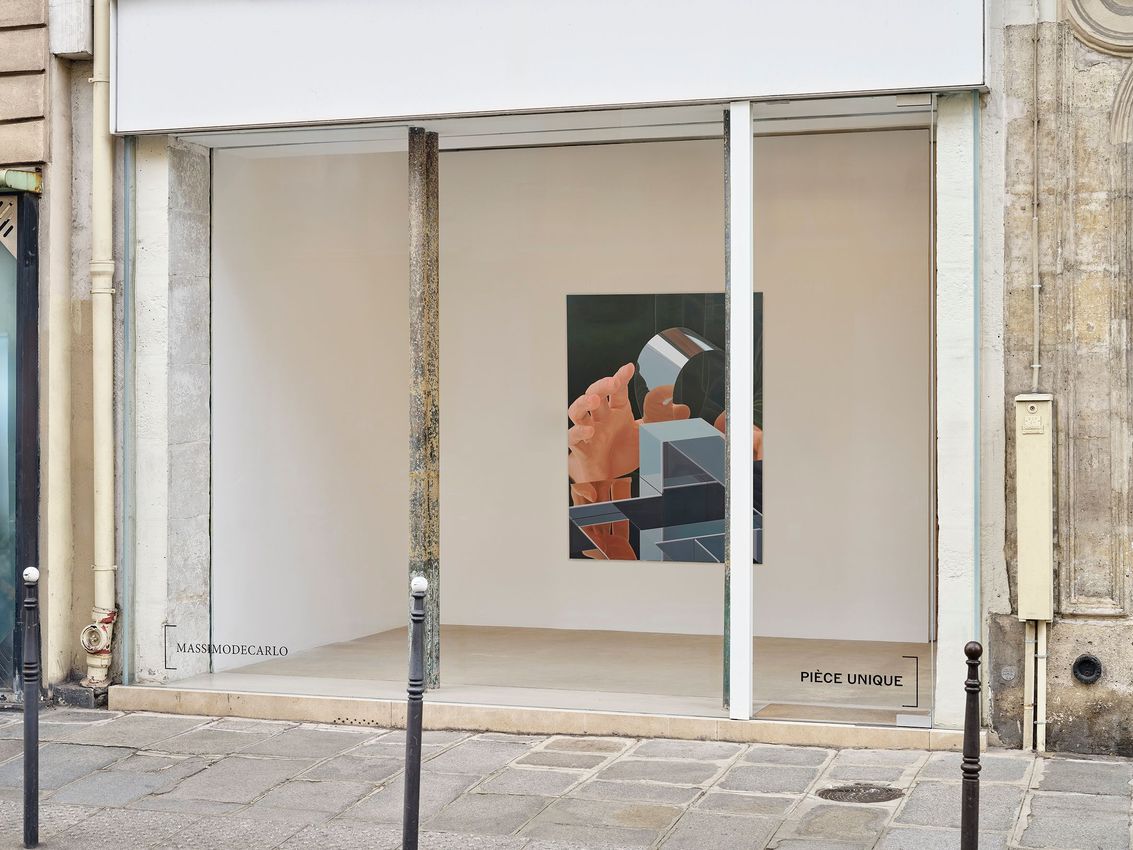
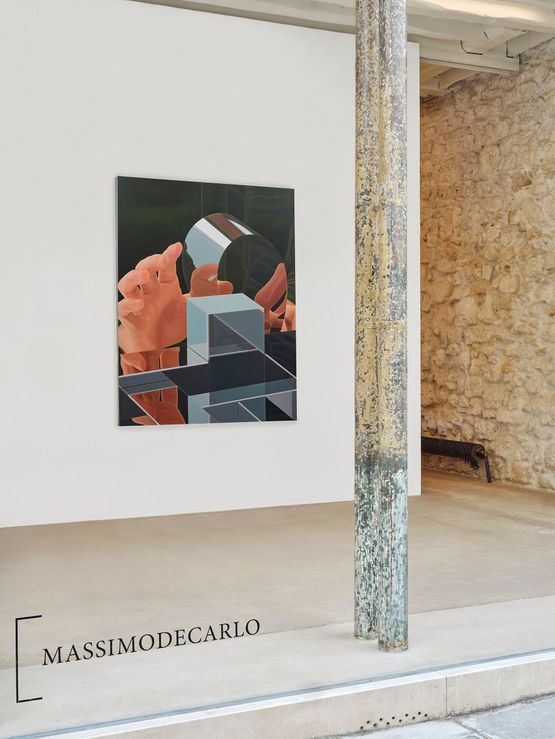
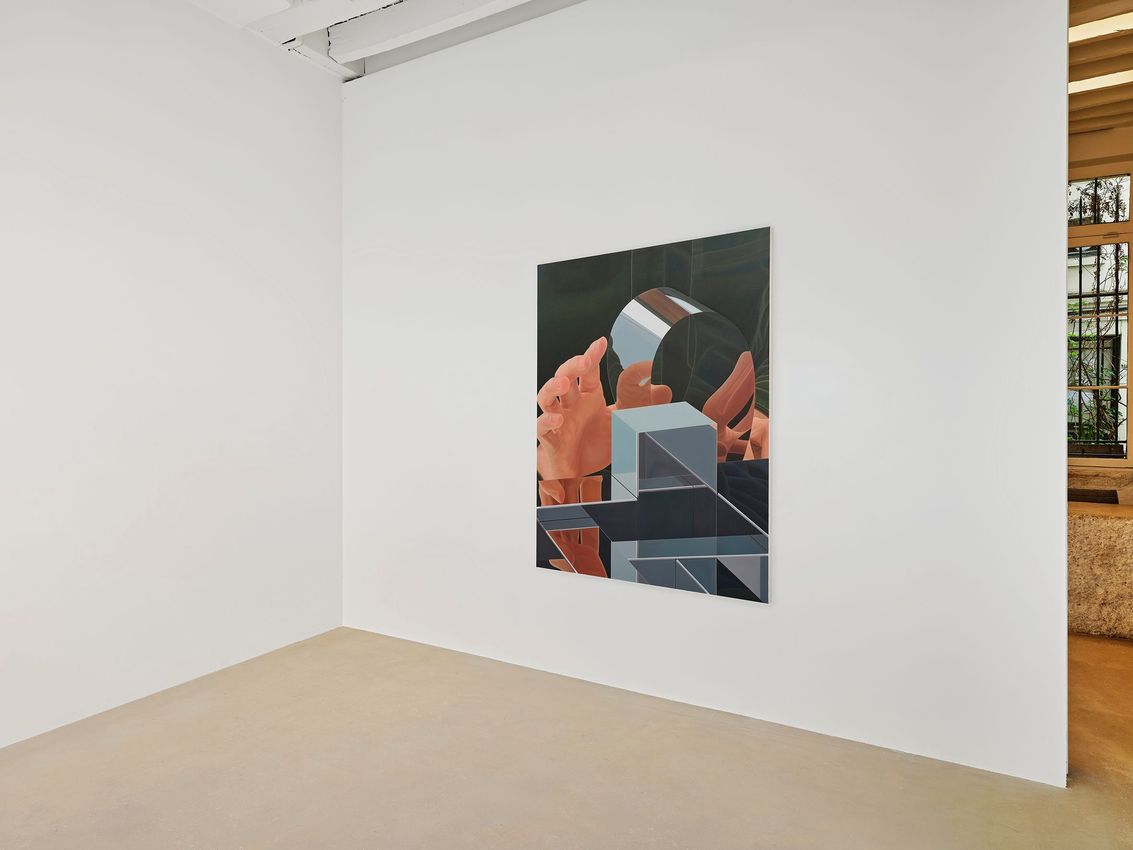
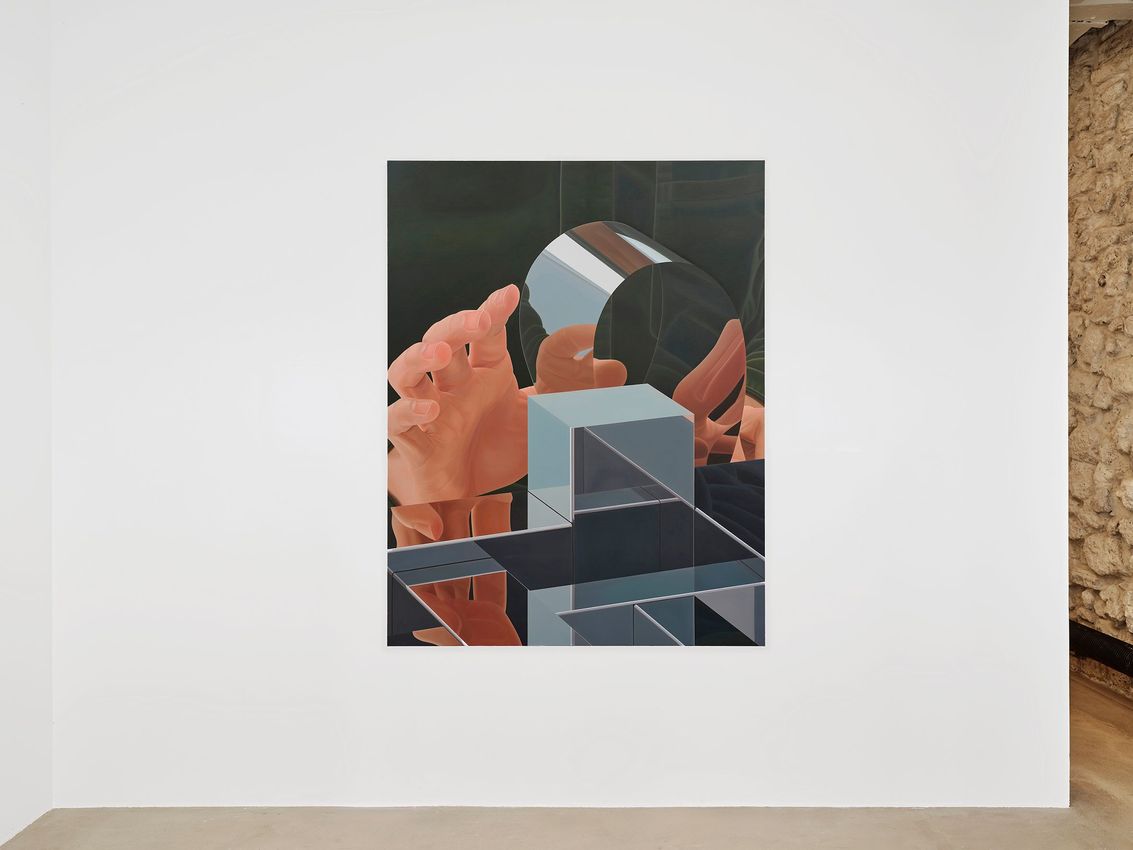
In Liang Hao’s paintings, hands enter from the canvas’s edge and move toward the center: reaching, pinching, folding, hovering, holding back. They touch animal teeth, fossilized coral, aluminum foil, elastic bands, books, and reflective geometric cubes. Their gestures do not complete an action in any ordinary sense. They do not produce, repair, measure, or possess. They test.

The exhibition title Essayer, a French verb meaning “to try,” names this suspended state. To try is to test: to approach without certainty, to measure a distance, to attend to a tension, to weigh the pressure between fingers and object. The experimental hand in Decentralized, the divining hand in Essayer, the playful hand in Elasticity, and the devotional hand in Orchid all belong to this minor, unstable verb.

These hands hold a volume of energy at the brink of contact. Behind them lies the painter’s invisible hand, whose labor is buried beneath a highly controlled surface: a surface of many surfaces, built through repeated layering. Early layers are not simply covered; they remain beneath, and clean edges hold the evidence of what has been erased.

This logic is inseparable from Liang’s use of chiaroscuro. Since painting learned to use shadow to give bodies weight, shadow has carried more than an optical task. It has staged revelation, secrecy, psychological depth, and the limits of visibility. In Liang’s construct, shadow is neither theatrical nor absent. It is the condition from which the visible is drawn out.

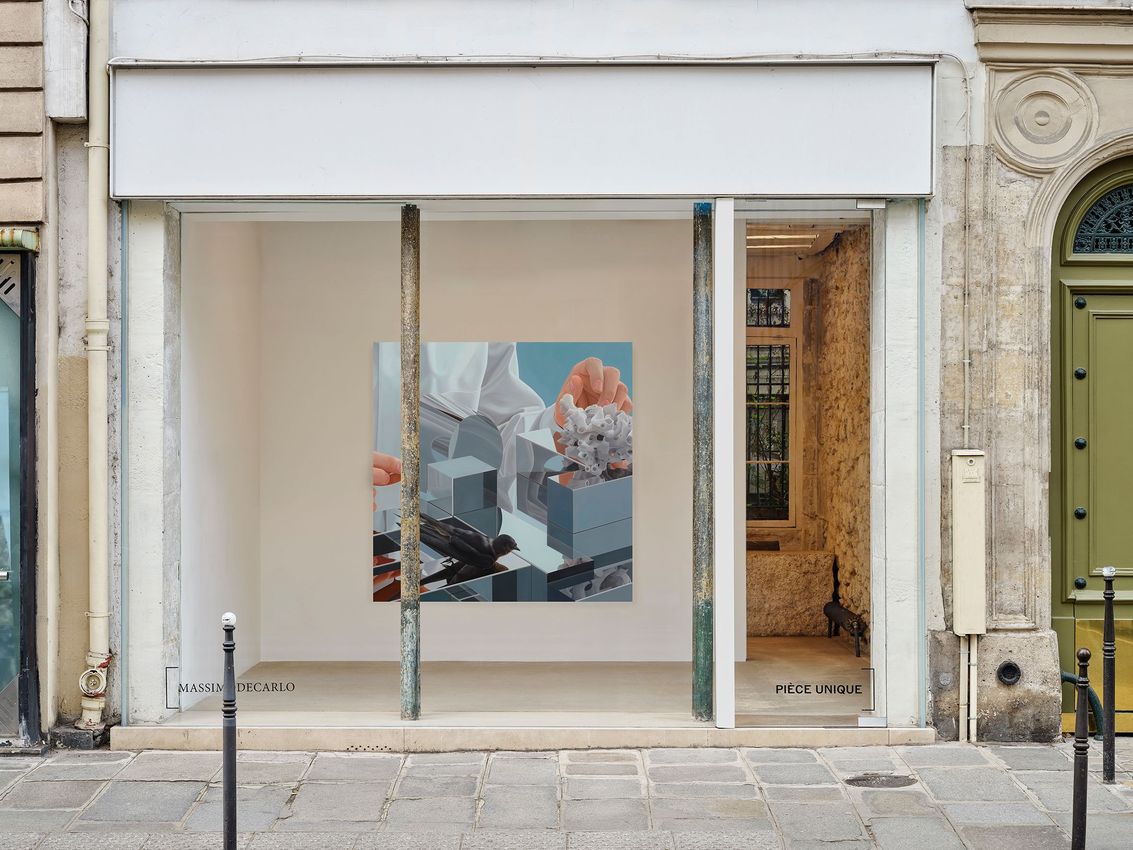
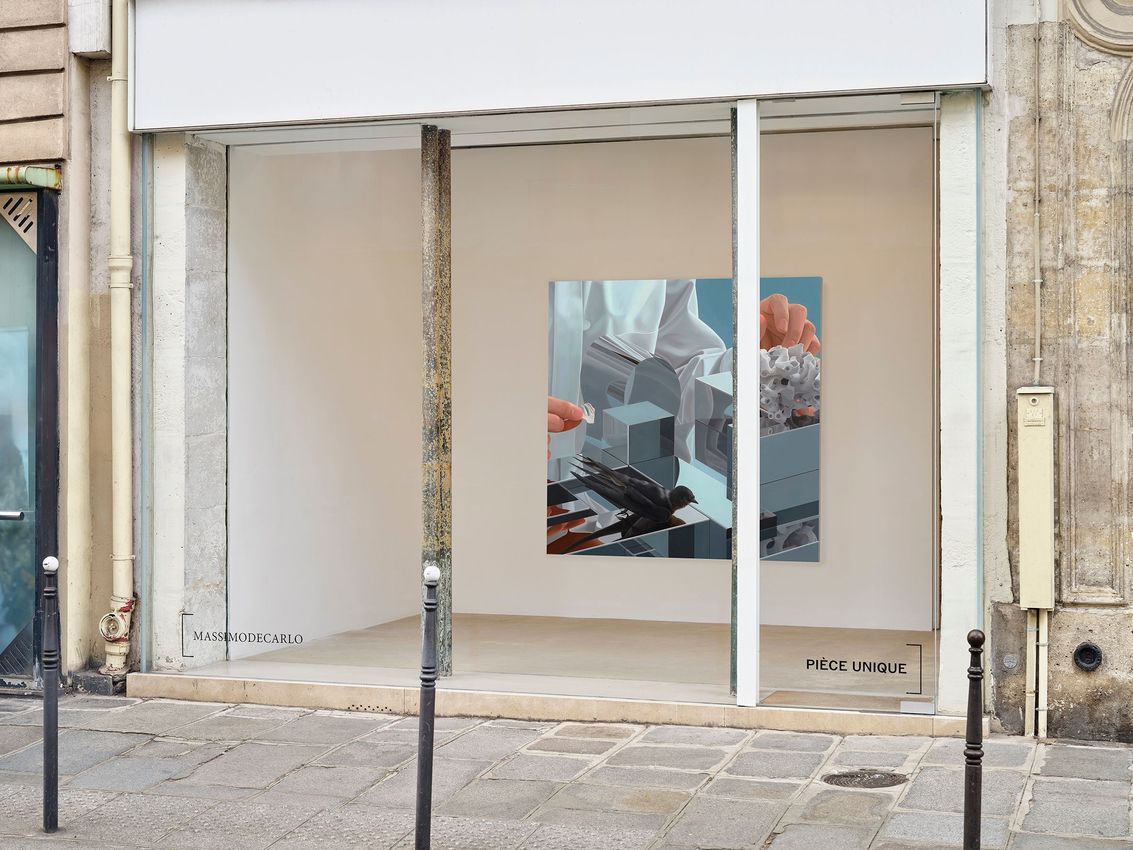
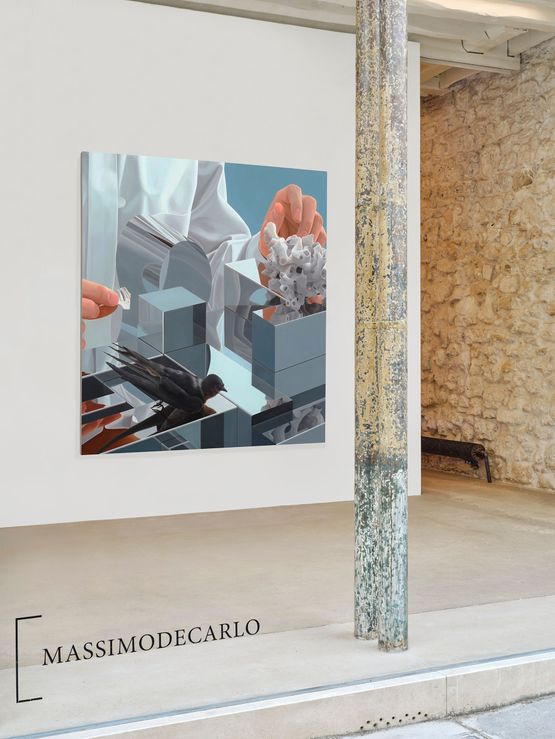
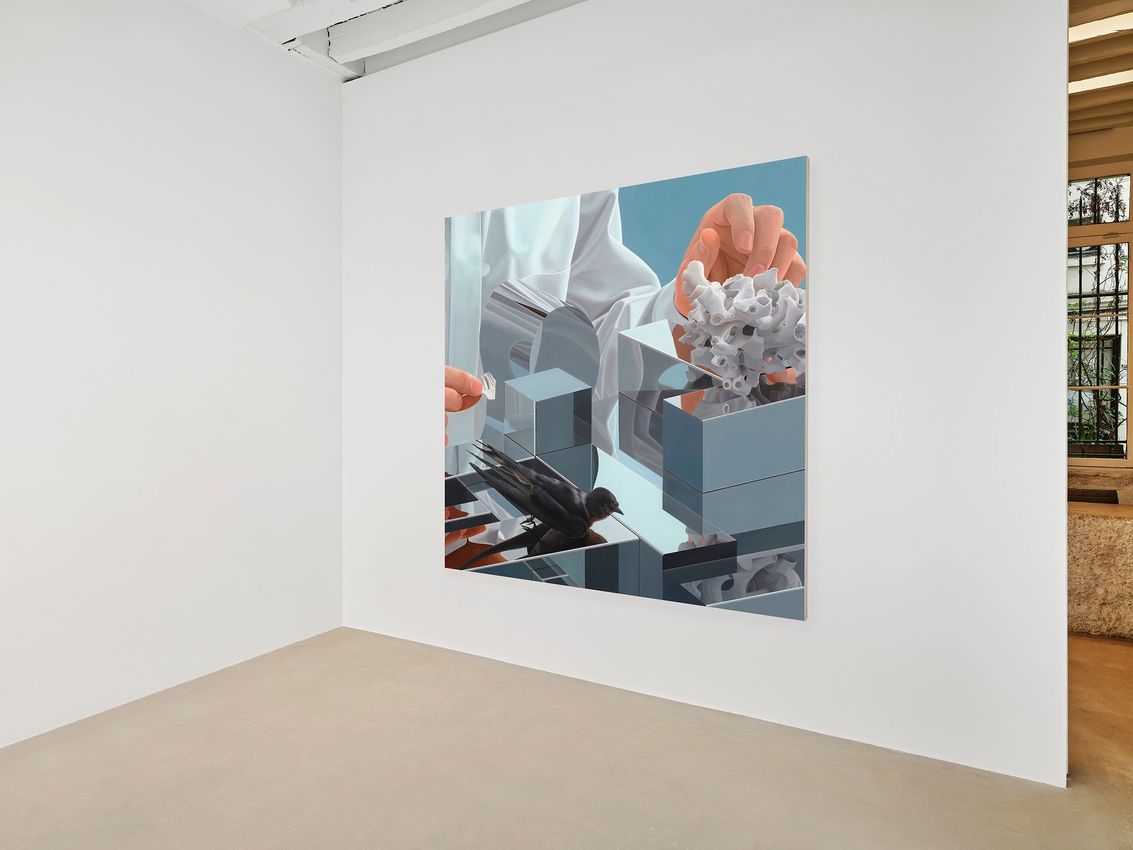
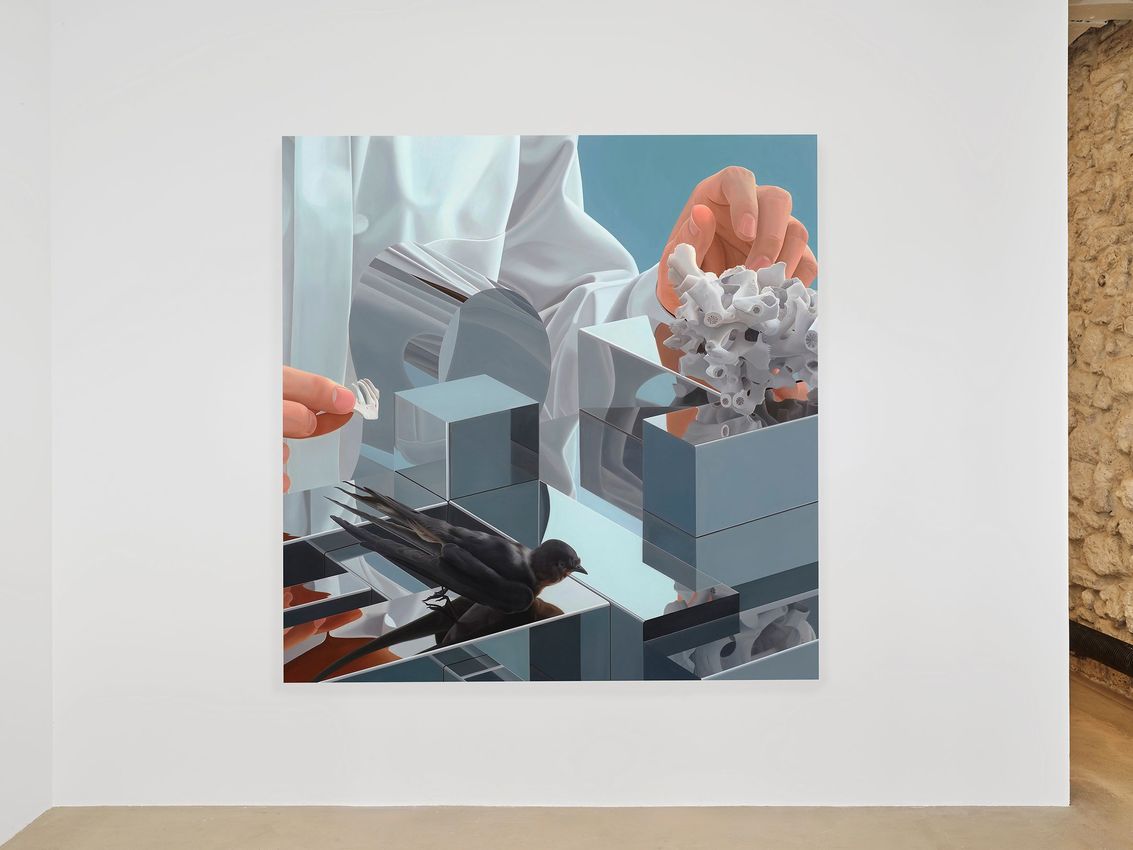
In Essayer, the deep green field of drapery forms a tenebrist construction from which the hands, reflective arch, and geometric planes emerge. Even the brightest surface does not dispel darkness; it casts another shadow, bending vision back into uncertainty and disorientation. In Decentralized, light is cooler and more evenly distributed: white cloth, a pale blue airy backdrop, mirrored planes, coral, and skin rise at once. Yet shadow remains decisive. It cuts through the swallow’s body, deepens the mirrored surfaces, and gathers in the folds where white turns grey. The work decentralizes not only vision, but painterly labor itself.

In Elasticity, the scale contracts to fit between the fingers. A hand holds an animal tooth while an elastic band stretches across the image, turning the gesture into a game of endurance and risk. If the hand resists too strongly, the tooth may fall; if it yields, the sharpened edge may return against the skin. Here, testing becomes sustained tension: a minor action held at the threshold of release and play.

In Orchid, the hand takes the posture of applying gold leaf. The Chinese character “兰” appears on the red spine of a book. It is a plant, and also a common element in Chinese names. Here, language loosens from communication and becomes line, a devotional gesture, and the color red. The material quality of the character’s font approaches that of Liang’s fossils: a form carrying memory through its surface.

– Yuan Fuca, writer and curator

Courtesy MASSIMODECARLO.

Read More

Installation Views

About the Artist

Liang Hao 梁浩 (b. 1988, Guangdong Province) currently lives and works in Shanghai. He graduated from the Painting Department of the Academy of Arts and Design at Tsinghua University, Beijing, in 2012. His practice focuses on painting while extending to other media. He is interested in the dynamics between the hand, gaze and mind, reconsidering the technicality of the hand and the affects that flow through it by constructing illusions of technical production and making references to images in art history or texts.

View Artist Profile

Also Exhibiting at MASSIMODECARLO

About the Gallery

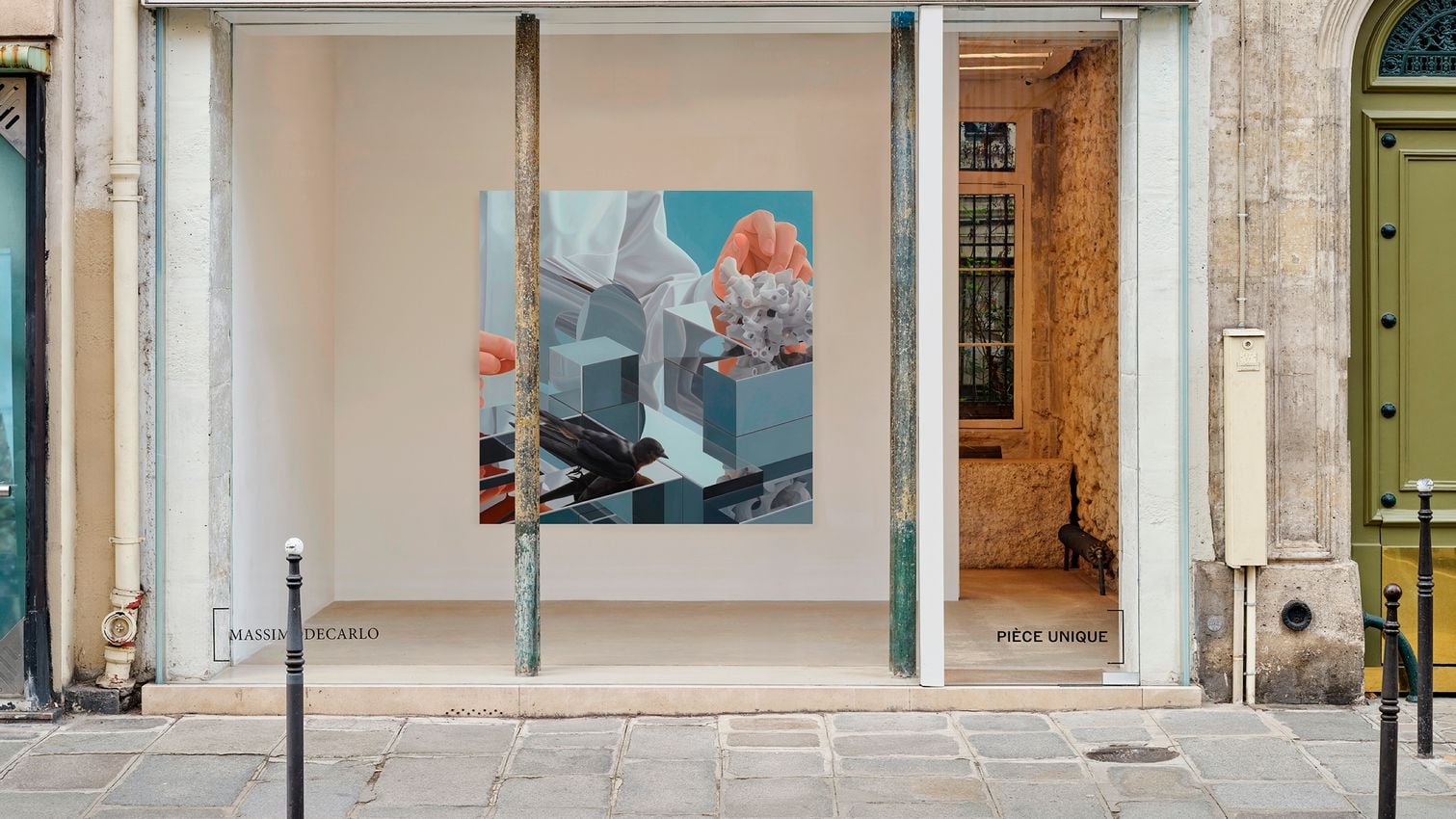
MASSIMODECARLO Pièce Unique opened in a historical building at 57 Rue de Turenne on February 2021. It has been renovated by acclaimed Japanese architect Kengo Kuma in collaboration with PiM.studio Architects. MASSIMODECARLO Pièce Unique offers a flexible, dynamic, and upbeat program of single-work exhibitions, visible day and night through its glass window. The gallery is born from the purchase of the “Pièce Unique” brand, an adventurous space by iconic gallerist Lucio Amelio that he opened in Paris in 1989 designed with Cy Twombly. MASSIMODECARLO Pièce Unique will respect and recast into the 21st Century the legacy of this historical project, renewing its original idea, infusing a new perspective, and offering an alternative exhibition model for the contemporary art system.
View Gallery Profile
Address
57 Rue de Turenne
Paris
France
Opening Hours
Tuesday – Saturday
11am – 7pm
(1)
Paris 57 Rue de Turenne
MASSIMODECARLO Pièce Unique
57 Rue de Turenne, Paris, France
+33 1 4449 0524

Opening hours
Tuesday – Saturday
11am – 7pm
The art world in focus