





SUBODH GUPTA
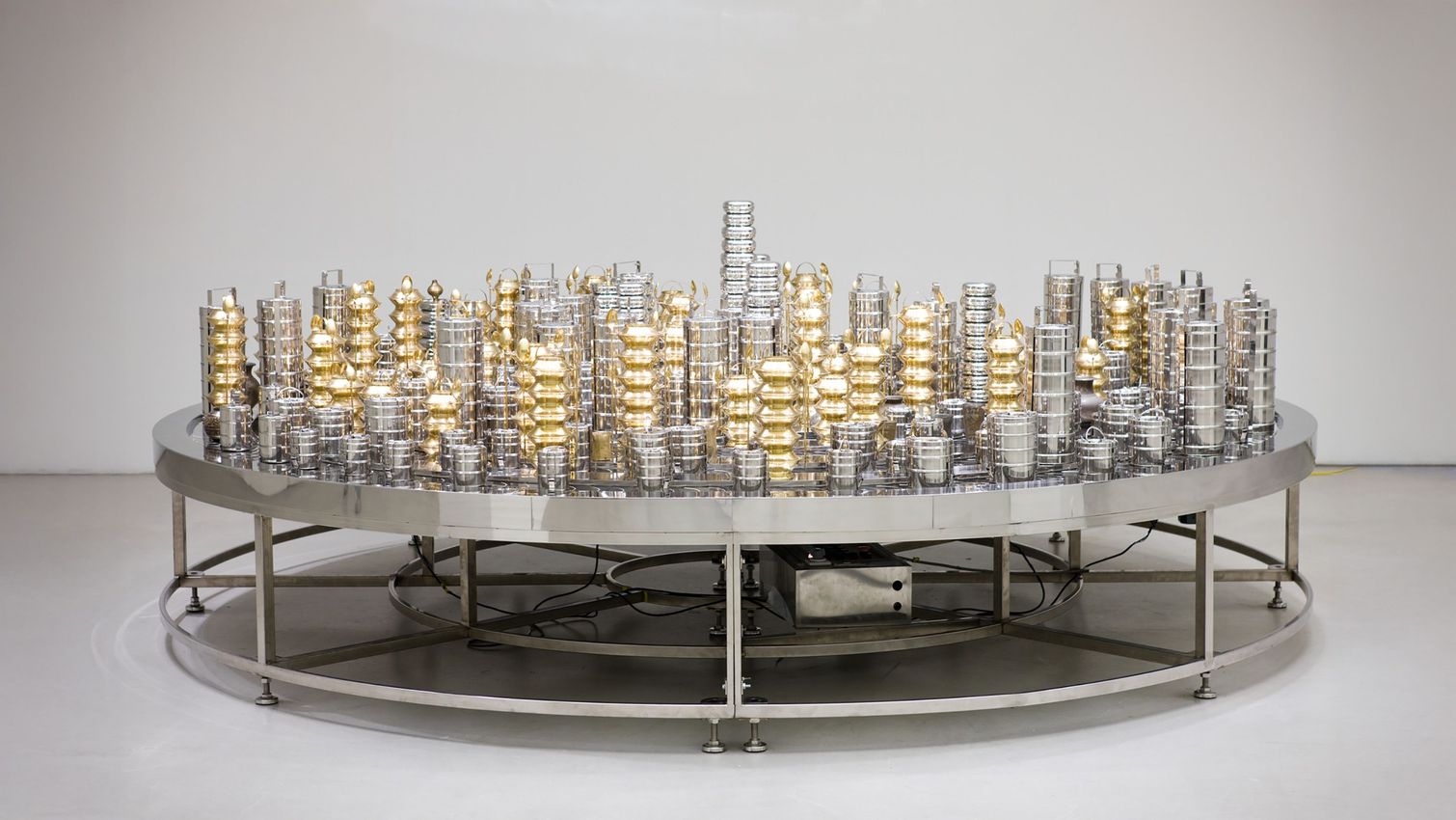
b. 1964, IndiaSubodh Gupta is one of India’s most internationally recognised contemporary artists, celebrated for transforming everyday objects into monumental artworks that explore themes of migration, identity, and the complexities of modern India. Best known for his large-scale sculptures and installations made from mass-produced steel kitchen utensils, Gupta’s art has been exhibited at major museums and biennales worldwide, including the Venice Biennale and Tate Modern.
As Gupta explained in an interview with Ocula Magazine, ‘I always find working with unconventional spaces to be exciting, as the work takes on a life and form of its own in the space. Also, the fact that it was a film studio was also of course very close to my heart. I’ve always been close to performance, as I started out in street theatre before I became an artist and my work often has a strong performative element.’
Early Years
Born in 1964 in Khagaul, Bihar, Subodh Gupta trained as a painter at the College of Art and Craft in Patna. He moved to Delhi in the late 1980s, where he began to develop his multidisciplinary approach. Gupta’s early experiences in rural India and his background in street theatre have deeply influenced his art, which frequently draws on the materials and rituals of everyday Indian life. He now lives and works in Gurgaon, near Delhi.
Subodh Gupta Artworks
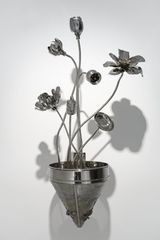
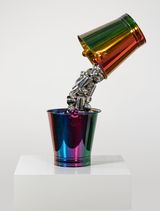
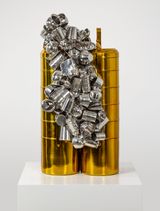
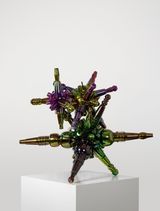
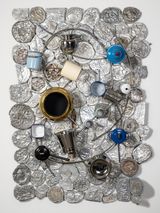
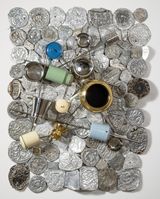
Subodh Gupta’s contemporary art practice is defined by his use of familiar objects—especially stainless-steel utensils, tiffin boxes, and milk pails—to create sculptures and installations that speak to collective memory and social transformation. Gupta’s works often reflect on the movement of people and goods, the flux of tradition and modernity, and the shared experiences of domestic life in India.
Assemblage and Stainless-Steel Sculptures
Gupta’s breakthrough came with his assemblages of kitchen utensils, which he began making in the late 1990s. Works such as Very Hungry God (2006), a monumental skull constructed from stainless steel pots and pans, and Line of Control (2008), a giant mushroom cloud made from utensils, have become icons of contemporary Indian art. These sculptures are both playful and profound, referencing globalisation, consumption, and the universality of domestic rituals.
Performance and Sound
Gupta’s art frequently incorporates performative and sonic elements, drawing on his background in theatre. In works like Jootha (2005), the sound of utensils being washed becomes part of the installation, while Still Life Juggler (2008) explores the aural dimension of everyday objects. Gupta has described his fascination with sound: ‘Sound is also something that I’ve been fascinated with and tried to capture in many of my works: the sounds of utensils falling or being washed... I have two works in this show that are exploring this element, but not with a pre-recorded sound as I have done in the past, but rather with the sound being produced by the work itself: a ‘live’ sound in some sense.’
Light, Space, and Recent Works
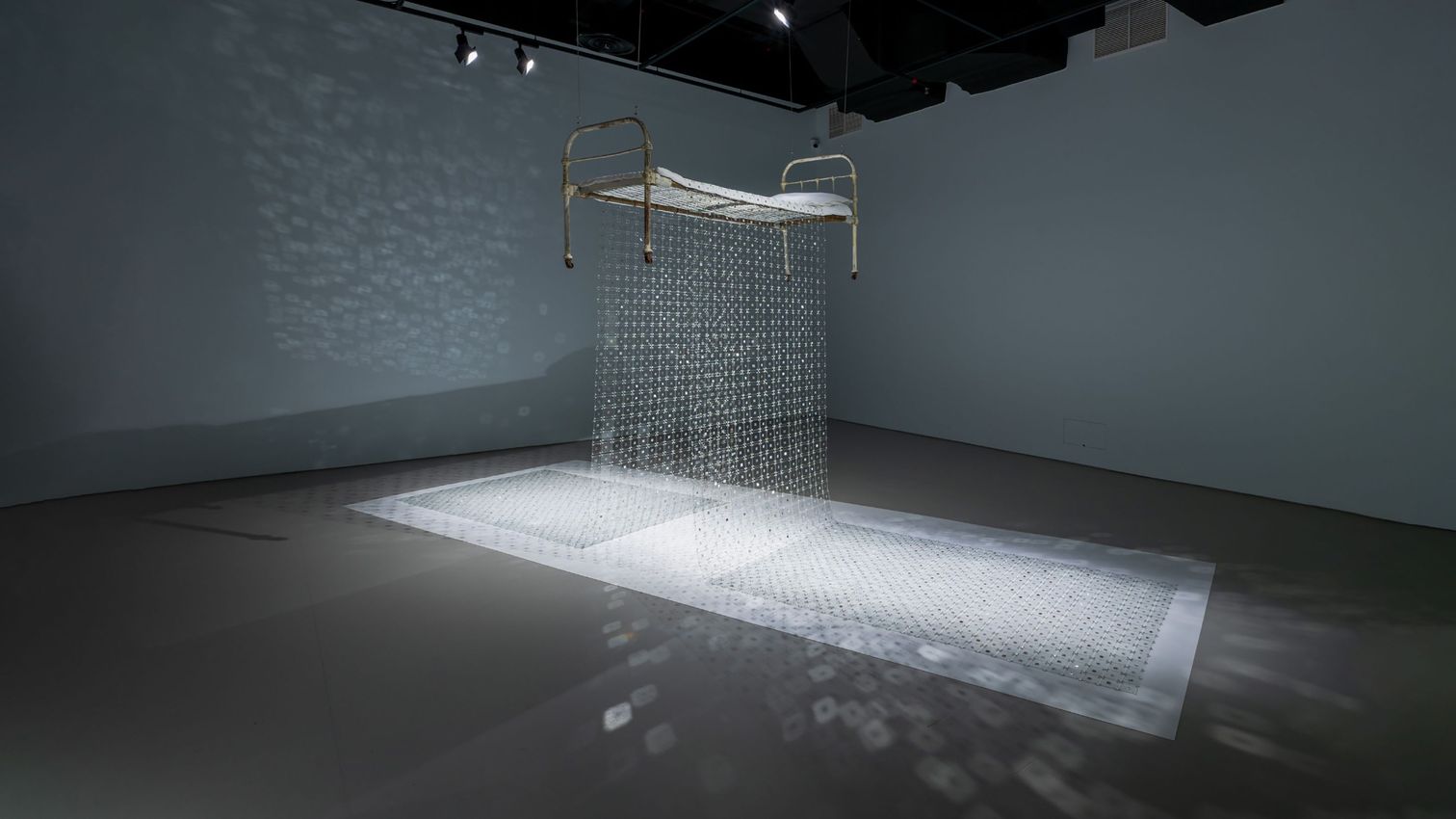
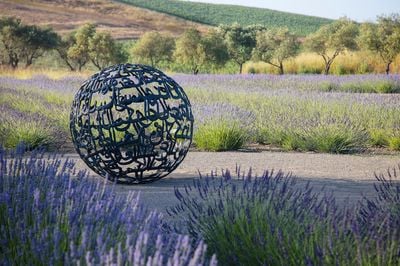
Gupta continues to experiment with new materials and technologies. In Birth of a Star (2016), a stainless-steel sphere is cinched by a band of LED light, while Krodh (Rage) (2016) uses an electromagnet to create a kinetic, sound-producing installation. His 2016 exhibition Anhad/Unstruck at Famous Studio in Mumbai showcased these innovations, featuring interactive and performative elements that implicate the viewer and the surrounding environment. As Gupta told Ocula Magazine, ‘A lot of them are light, there’s a lot of delicate calibration—even the paintings have lights.
Select Public Commissions
- Line of Control, Kiran Nadar Museum of Art, New Delhi
- Ray, Victoria and Albert Museum, London
- When Soak Becomes Spill, National Gallery of Modern Art, New Delhi
- Permanent installations in public and private collections worldwide
Select Awards and Accolades
- Chevalier dans l’Ordre des Arts et des Lettres, Government of France
- National Award, Lalit Kala Akademi, India
- Works held in major collections including Tate Modern, London; Centre Pompidou, Paris; Kiran Nadar Museum of Art, New Delhi; and Queensland Art Gallery, Brisbane
Exhibitions
Subodh Gupta has been the subject of both solo exhibitions and group exhibitions at important institutions. Below is a selection of important exhibitions.
Solo Exhibitions
- Adda / Rendez-vous, Galleria Continua, San Gimignano (2023)
- Anhad/Unstruck, Famous Studio, Mumbai (2016)
- Seven Billion Light Years, Hauser & Wirth, Somerset (2015)
- Everything is Inside, National Gallery of Modern Art, New Delhi (2014)
- Invisible Reality, MMK Museum für Moderne Kunst, Frankfurt (2014)
- Faith Matters, PinchukArtCentre, Kyiv (2010)
- Common Man, La Monnaie, Paris (2008)
Group Exhibitions
- Venice Biennale, Venice (2015, 2011, 2009, 2005)
- Indian Highway, Serpentine Gallery, London (2008)
- Chalo! India: A New Era of Indian Art, Mori Art Museum, Tokyo (2008)
- Paris-Delhi-Bombay, Centre Pompidou, Paris (2011)
- Everything That’s Not Me, Kiran Nadar Museum of Art, New Delhi (2019)
Subodh Gupta FAQs
Where can I see Subodh Gupta’s artworks?
Subodh Gupta’s works are in the permanent collections of major museums such as Tate Modern in London, Centre Pompidou in Paris, Kiran Nadar Museum of Art in New Delhi, and Queensland Art Gallery in Brisbane. His public sculptures can be seen at the Kiran Nadar Museum of Art and Victoria and Albert Museum, London.
What are the main themes in Subodh Gupta’s contemporary art?
Subodh Gupta’s art explores migration, identity, the transformation of everyday objects, and the intersection of tradition and modernity. His use of familiar materials like stainless steel utensils connects personal memory with collective experience.
How did Subodh Gupta become known as an artist?
Subodh Gupta first gained recognition for his assemblages of kitchen utensils in the late 1990s and early 2000s. Works such as Very Hungry God and Line of Control established him as a leading voice in contemporary Indian art.
Has Subodh Gupta received any major awards or recognitions?
Subodh Gupta has received the Chevalier dans l’Ordre des Arts et des Lettres from the French government and the National Award from Lalit Kala Akademi, India. His works are held in leading international collections.
Are there any interesting facts about Subodh Gupta?
Subodh Gupta began his creative career in street theatre before becoming an artist, and performance remains a key influence in his work. He often incorporates sound and live elements into his installations.
How do you pronounce Subodh Gupta’s name?
Subodh Gupta is pronounced ‘soo-BOHDH GOOP-tah’.
Ocula | 2025


View Subodh Gupta's Artworks




























Explore and Follow Artists Shaping Contemporary Art
A respected voice in contemporary art discourse.
Focusing on ambitious storytelling and insightful art-world commentary. Ocula Magazine publishes in-depth interviews, critical essays and timely analysis on the artists, exhibitions and ideas driving the global art world.
Learn more about Ocula Magazine
Showcasing the best of the art world.
Ocula partners with galleries from around the world to highlight their artists, artworks and exhibitions. Gallery membership is by application and invitation, with each member vetted by an independent panel.
Learn more about Ocula Membership
Specialises in the sale of major artworks.
Led by a team with deep ties to the world’s leading auction houses, galleries and collectors. Ocula’s advisory team offers bespoke services to high-net-worth clients from around the world who are looking to acquire the best of contemporary and modern art.
Learn more about our team and services