



Press Release

The late Otto Piene, a founding member of the influential postwar art collective ZERO, consistently explored evolving notions of the material and immaterial in his work. Monika Sprüth and Philomene Magers are pleased to present a solo exhibition at the Berlin gallery that showcases a selection of Piene’s Fire Paintings alongside his final ceramic works. Both bodies of work explore the element of fire and its creative potential, which the artist began experimenting with as early as 1959 and continued throughout his entire career.

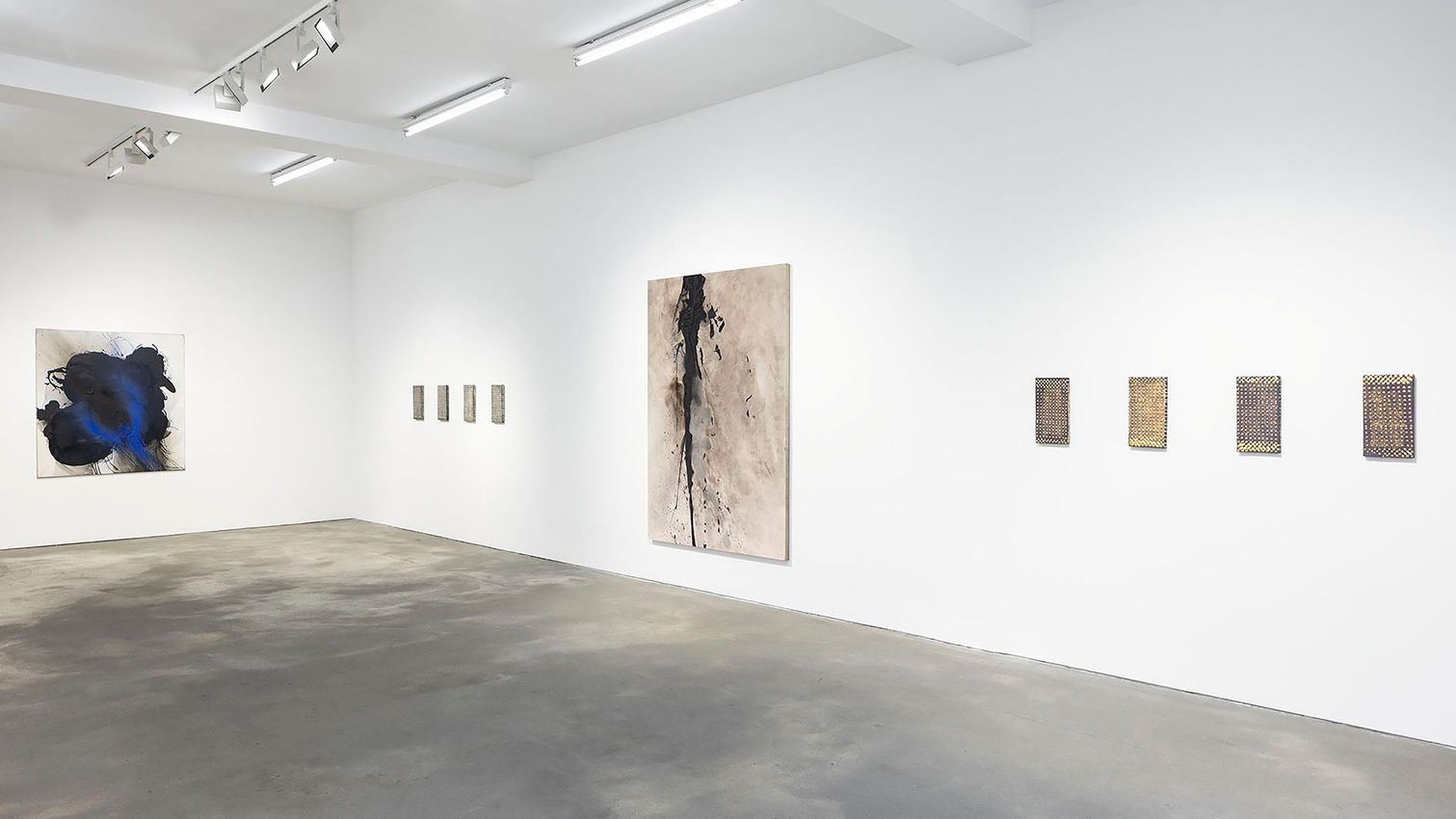
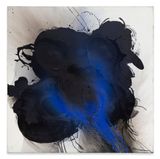
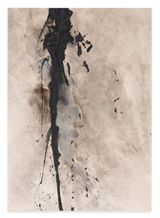
Images of alchemistic transformation, Piene’s Fire Paintings push the boundaries of the medium by harnessing the archaic power of fire. Rooted in his fascination with light, they exist on the perilously fine line between destruction and creation: burning a layer of pigments and a fixative on the canvas and manually shifting it, Piene lets chance invent organic forms that record the movement of the flames. In Blue Black Coalition (1983/90), for example, the impact and trace of fire has translated into the melding of blues and blacks—as the title aptly suggests—and heavily textured areas of blistered paint. In the subtler Japanese (1974–75), remnants of smoke and billowing traces of soot expand the painting’s surface.

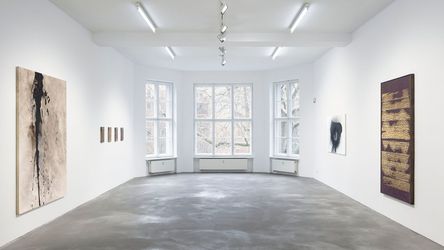
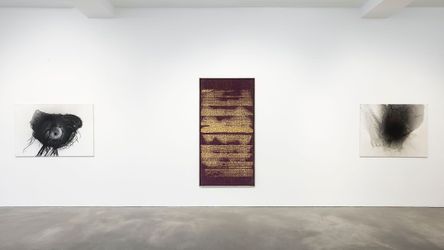
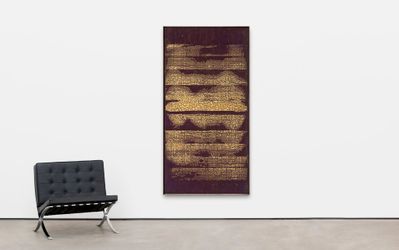
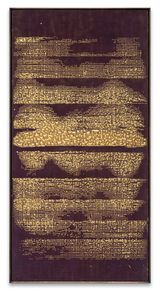
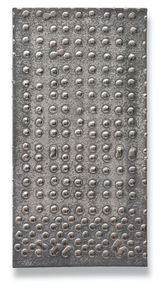
Piene’s daring experiments with flames are echoed in the firing process used to achieve his “rasterised” ceramic works of later years. Revisiting the systematic approach of his earliest Raster Paintings, these wall works were created by pressing metallic glazes through perforated screens onto clay prior to being fired, introducing an element of unpredictability. The subsequent firing resulted in a range of unexpected effects, including oxidation that disrupts the otherwise shimmering relief surfaces. In the untitled small-scale series made during Piene’s last creative period in 2014, roughly parallel rows of platinum and gold dots fuse in certain places into amoebic-like forms. In Gold Coast (2009)—one of the largest pieces of its kind— horizontal bands of varying raster dot density suggest the glistening waves of a specific locale. Gold, often associated with the perfection of all matter, is viewed as emblematic of the sun, whereas silver signifies the moon, and platinum is thought of as a harmonious amalgamation of both gold and silver in alchemical theories. Concerned with energy and sensory perception, these vibrating works examine the conditions of light and patterning which guide the eye’s movement across their grids.

The exhibition offers a glimpse into the innovative techniques Piene employed to produce pioneering artworks of enduring relevance. Through the dynamic interplay of fire, light, colour and movement, these works reflect the explicitly positive message that permeates his œuvre: art should contribute to cultivating a peaceful and sustainable world. This hopeful vision of interconnectedness remains profoundly pertinent in contemporary discourse on both art and global issues.

Otto Piene (1928–2014). Selected solo exhibitions include Museum Tinguely, Basel (2024), Museum Haus Konstruktiv, Zurich (2020), Fitchburg Art Museum (2019), Tehran Museum of Contemporary Art (2015), Neue Nationalgalerie, Berlin (2014), ZKM Museum für Neue Kunst, Karlsruhe (2013) and MIT List Visual Arts Center, Cambridge (2011). Selected group exhibitions include Tate Modern, London (2024), Schirn Kunsthalle, Frankfurt (2023), Yayoi Kusama Museum, Tokyo (2020), Gropius Bau, Berlin, Stedelijk Museum, Amsterdam (both 2015), The Solomon R. Guggenheim Museum, New York (2014), Venice Biennale (1971, 1967) and Documenta 6, 3 and 2 (1977, 1964, 1959).

Read More

Installation Views

About the Artist

A founder of the 1960s Dusseldorf-based Group Zero, Otto Piene is best known for his paintings made with smoke and fire. Called Rauchbilder (smoke pictures), Piene applied solvent to pigmented paper and lit it on fire, developing images in the residual soot. Piene also created outdoor figures made from smoke that floated overhead—what he coined as Sky Art—including Olympic Rainbow, a project created for the ill-fated 1972 Summer Olympics in Munich. For nearly 20 years, Piene served as the director of the Center for Advanced Visual Studies at the Massachusetts Institute of Technology, and in 2008, with Heinz Mack and Mattijs Visser, he co-founded the International ZERO Foundation to archive documents, projects, and images produced by the famous Dusseldorf collective.

View Artist Profile

Also Exhibiting

About the Gallery

Sprüth Magers has expanded from its roots in Cologne (Germany) to become an international gallery dedicated to exhibiting the very best in groundbreaking modern and contemporary art. With galleries located in Berlin Mitte, London’s Mayfair and the Miracle Mile in Los Angeles–as well as an office in Cologne and an outpost in Hong Kong–Sprüth Magers retains close ties with the studios and communities of the German and American artists who form the core of its roster.

View Gallery Profile
Address
Oranienburger Straße 18
Berlin
Germany
Opening Hours
Tuesday - Saturday
11am - 6pm
(1)
Berlin Oranienburger Straße 18
Sprüth Magers
Oranienburger Straße 18, Berlin, Germany
+49 302 888 4030
http://www.spruethmagers.com

Opening hours
Tuesday - Saturday
11am - 6pm
The art world in focus
