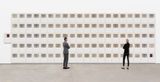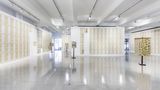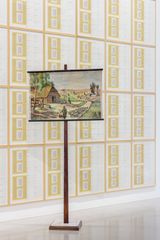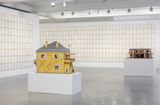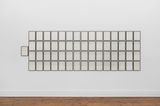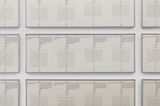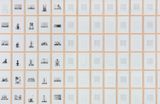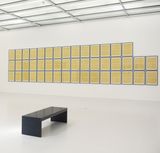




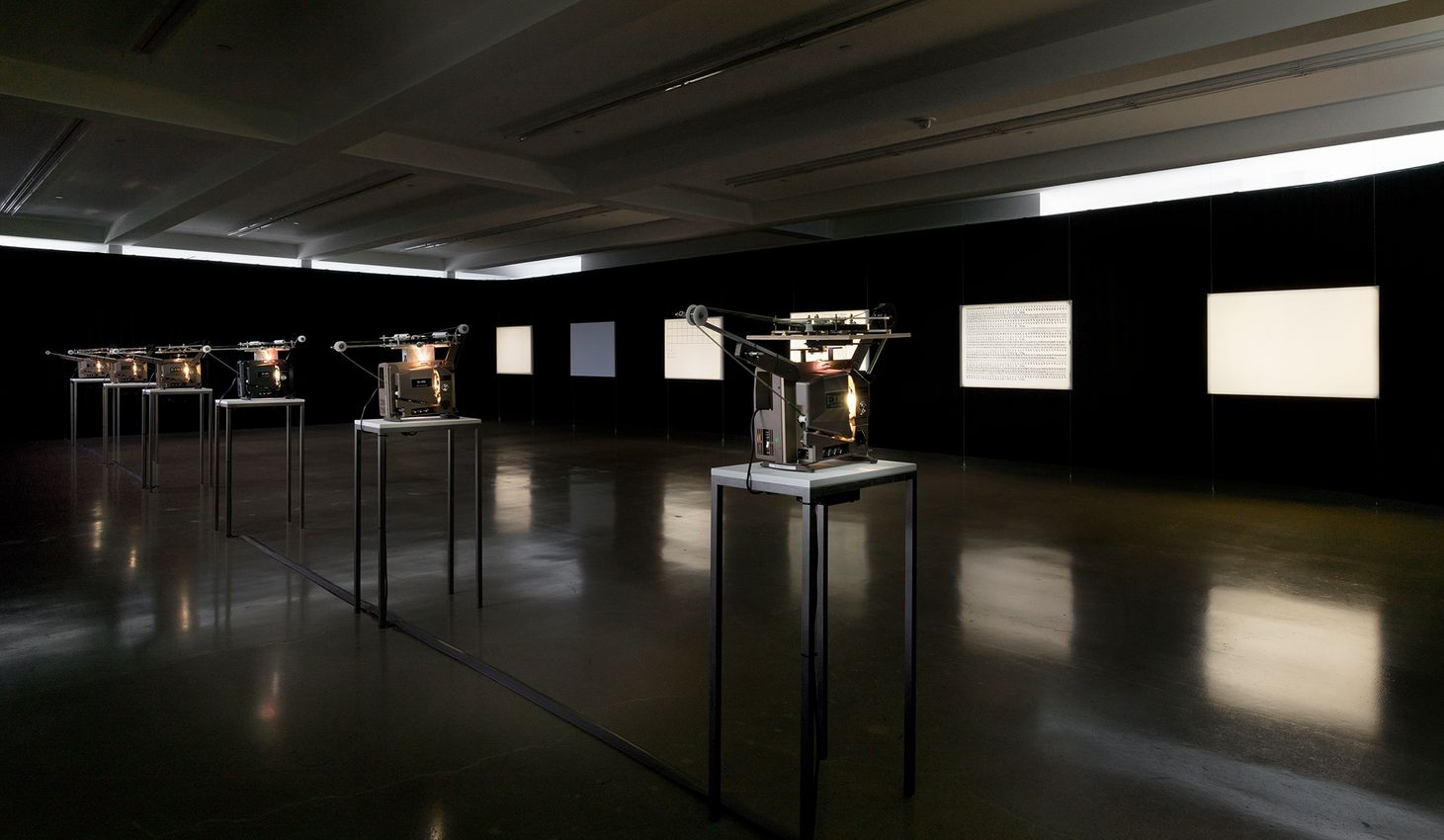
Hanne Darboven’s first film work, Six Books on 1968, was presented for the first time in 1969 on the occasion of her solo exhibition at the Städtisches Museum, Mönchengladbach, Germany. The work comprises six 16mm films based on the six books in which Darboven recorded her date calculations of the year 1968 for her major work Six Books on 1968.
Sprüth Magers is pleased to show the original version of this iconic piece at the Los Angeles gallery with a room-sized installation of six 16mm projectors, creating a cinematic and time-based orchestration of the year 1968.
Hanne Darboven is recognised for her ambitious body of idiosyncratic work that operates at the limits of representation. Her works often form monumental installations that knit together mathematical procedure, historical and cultural artefact, and autobiographical documentation in an attempt to record subjective and objective perceptions of time via a conceptually coherent visual system. Darboven’s unwavering dedication to the representation of time began in earnest in the late 1960s after a stint in New York where she met conceptual artists Joseph Kosuth, Carl Andre and Sol LeWitt. Upon returning to her native Hamburg, she developed a formula for date calculations that would go on to structure her ensuing time-based works. Darboven’s early mathematical calendars were arranged in gargantuan wall installations that sought to quantify time in space. She explained her mathematical interpretation of time as a stance against social or political co-optation: unlike words, numbers refer to nothing beyond themselves, and it was this sovereignty that was so appealing to the artist. She described her methodology as “writing without describing” and transcribing the passage of time became a meditative process that she applied herself to with the regularity of office labour. Towards the end of the 1970s, Darboven began to punctuate her numerical tableaux with a variety of materials that grappled with themes such as the Enlightenment, mass media, technological progress, religion, politics, and the arts. Her use of photographs, postcards, objects from her studio, and quotations of texts ranging from Classical philosophy to the Frankfurt School, marked a shift in her practice from the abstract documentation of time toward a narrative interweaving of cultural and personal history.
Sprüth Magers has expanded from its roots in Cologne (Germany) to become an international gallery dedicated to exhibiting the very best in groundbreaking modern and contemporary art. With galleries located in Berlin Mitte, London’s Mayfair and the Miracle Mile in Los Angeles–as well as an office in Cologne and an outpost in Hong Kong–Sprüth Magers retains close ties with the studios and communities of the German and American artists who form the core of its roster.

A respected voice in contemporary art discourse.
Focusing on ambitious storytelling and insightful art-world commentary. Ocula Magazine publishes in-depth interviews, critical essays and timely analysis on the artists, exhibitions and ideas driving the global art world.
Learn more about Ocula Magazine
Showcasing the best of the art world.
Ocula partners with galleries from around the world to highlight their artists, artworks and exhibitions. Gallery membership is by application and invitation, with each member vetted by an independent panel.
Learn more about Ocula Membership

Specialises in the sale of major artworks.
Led by a team with deep ties to the world’s leading auction houses, galleries and collectors. Ocula’s advisory team offers bespoke services to high-net-worth clients from around the world who are looking to acquire the best of contemporary and modern art.
Learn more about our team and services