






CATHERINE OPIE
b. 1961, United StatesCatherine Opie (1961) is a leading American photographer known for conceptually driven portraiture and landscape photography that explores queer identity, community, and contemporary American life. Her practice has been the subject of major institutional exhibitions, from the mid‑career survey Catherine Opie: American Photographer at the Solomon R. Guggenheim Museum, New York (2008) to recent retrospectives such as Catherine Opie: To Be Seen at the National Portrait Gallery, London (2026).
Early life and Education
Opie was born in Sandusky, Ohio, and developed an interest in photography from an early age. She received a BFA from the San Francisco Art Institute in 1985 and an MFA from the California Institute of the Arts (CalArts) in 1988. Based in Los Angeles since the late 1980s, she has taught in the Department of Art at the University of California, Los Angeles, where she became a professor of photography. Opie has also served on the boards of the Museum of Contemporary Art, Los Angeles, the Andy Warhol Foundation for the Visual Arts, and the Mike Kelley Foundation for the Arts, underscoring her central role in American contemporary art.
Practice and Key themes
Across portraiture, studio photography, and landscape and architectural photography, Opie investigates how individuals and communities inhabit space, and how images shape ideas of American identity and the “American dream.” Her photographs examine gender, sexuality, family, class, and citizenship, making queer lives and other marginalised communities visible within a visual language that draws on the history of painting and photography.
Initially inspired by documentary photographers such as Lewis Hine—whose work on child labour she encountered as a child—Opie has worked with a diverse range of communities including lesbian families, leather and BDSM subcultures, high school football players, surfers, and political crowds. Across these projects, she consistently explores how communities form, how they are represented, and how they intersect with the social and political landscape of the United States.
Portraiture and queer communities
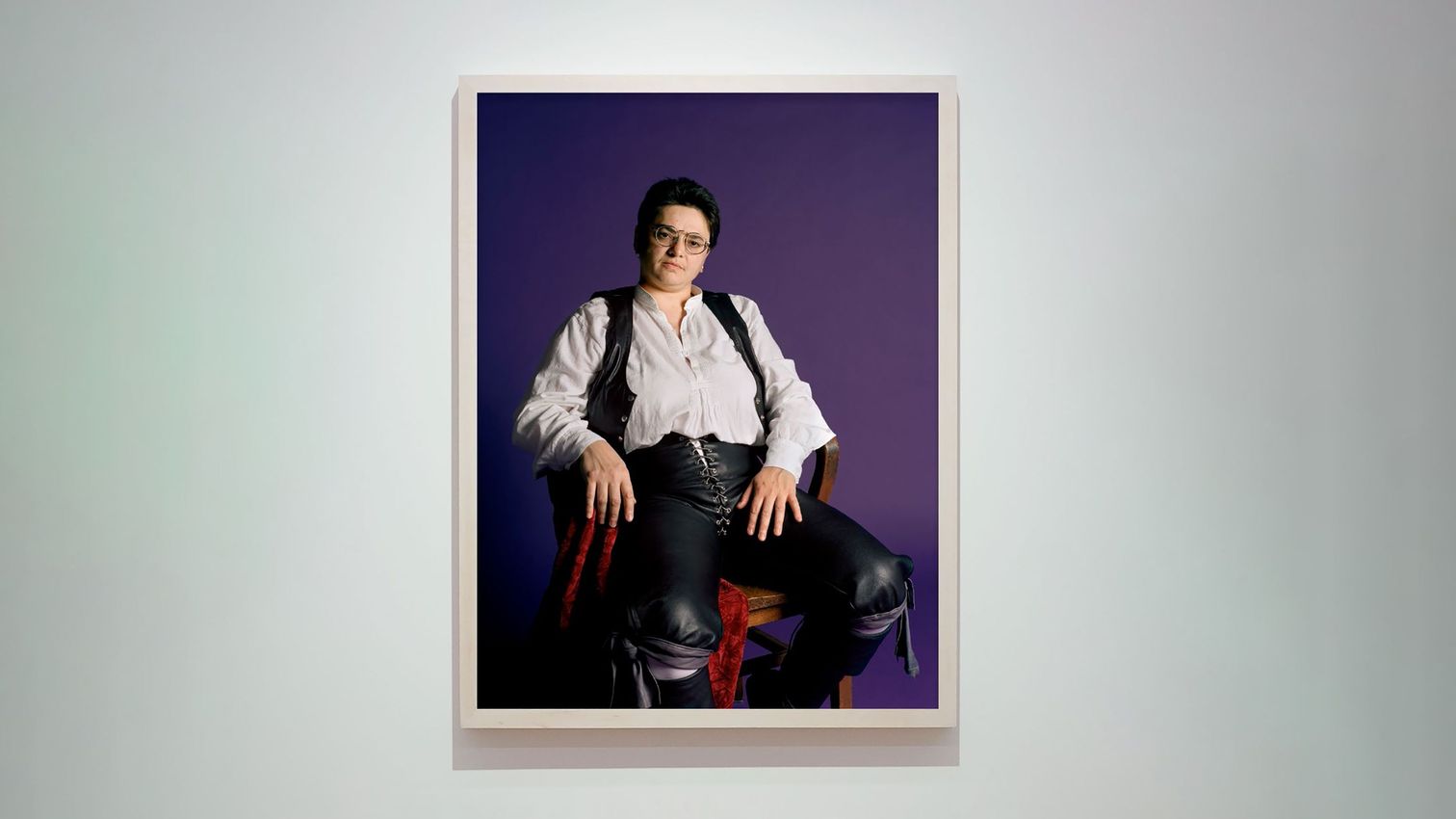
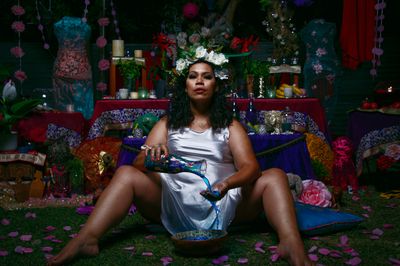
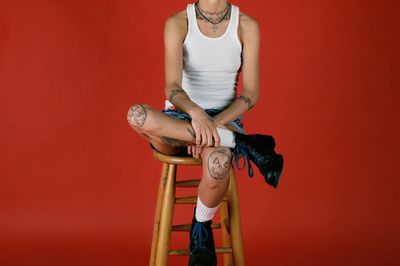
Opie first came to prominence in the early 1990s with studio portraits of gay, lesbian, transgender, and leather‑dyke communities in Los Angeles and San Francisco, a body of work that redefined queer portraiture. Often staged against saturated monochrome backdrops and composed frontally, these photographs use the formal conventions of Renaissance painting and traditional studio portraiture to present queer and trans bodies with dignity, intimacy, and power.
Throughout her career, Opie has drawn from her immediate surroundings—family, friends, and collaborators—to respond to wider debates around LGBTQ+ visibility and rights. Reacting against the homophobic campaigns of US politician Jesse Helms in the early 1990s, she created Being and Having (1991) and Portraits (1993–1997), presenting butch lesbians, drag kings, cross‑dressers, and trans masculine sitters in luminous colour, with direct gazes and carefully staged poses that recall painters such as Hans Holbein. In these portraits of queer communities, Opie uses classical portrait conventions to create a visual archive of people often excluded from mainstream media and art history.
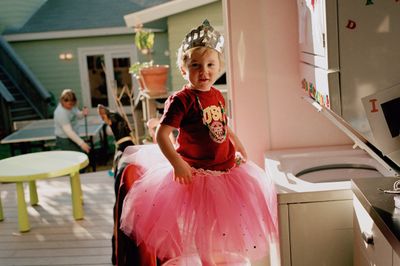
Alongside portraits of friends and the broader LGBTQ+ community, Opie has produced extended series on quintessential American subjects, including high school football players, adolescent skaters, surfers on the Pacific coast, and crowds at the 2008 United States presidential inauguration. Projects such as 700 Nimes Road (2012–14), photographed in the Bel‑Air home of Elizabeth Taylor, build portraits through domestic interiors: closets, furnishings, and arrangements of personal objects stand in for the sitter, reflecting on celebrity, privacy, and the mythology of Hollywood.
Self‑portraits
Opie’s self‑portraits from the mid‑1990s are among the most discussed works in contemporary queer photography. Self‑Portrait/Cutting (1993) and Self‑Portrait/Pervert (1994), both exhibited in the 1995 Whitney Biennial, depict the artist with her face turned away or masked, her skin marked by incised drawings: a childlike outline of a house and family in one, the word “Pervert” in ornate script in the other.
These photographs stage the tension between Opie’s desire for a family and her identity as a queer participant in the leather community, confronting stereotypes around sexuality, motherhood, and deviance. The works have been interpreted in critical writing as a kind of “coming out” that underpins Opie’s broader approach to portraiture—foregrounding vulnerability, self‑determination, and the right of queer subjects to define their own image.
Landscapes and American spaces
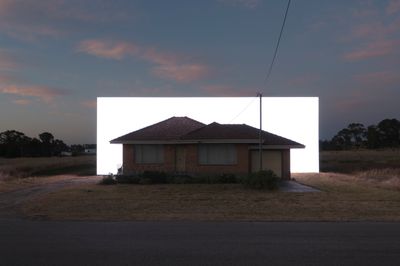
Landscape, seascape, and cityscape have been central to Opie’s practice since the early 1990s, when she began photographing Los Angeles freeways, mini‑malls, and urban infrastructure. Series such as Freeways (1994–95), Icehouses (1995–96), and Surfers (2003) explore the built and natural environments that frame American life, often using fog, distance, and seriality to push documentary photography towards abstraction.
Her exploration of contemporary Americanness extends to bodies of water and contested landscapes, including Fall, Winter, Spring, Summer (Lake Michigan) (2004–05), in which she photographs the same horizon across four seasons, and swamp images from the American South. In the large‑scale work My Shore (2022), shown in the exhibition To Your Shore From My Shore and Back Again at Lehmann Maupin Seoul, Opie assembled sunrise and sunset photographs taken in 2009 from a container ship traveling between Korea and California; presented in a continuous sequence, the images collapse geographic distance and suggest a shared, global shoreline.
Recent work continues to address national parks, mountain ranges, and sites of protest and civic ritual, expanding Opie’s examination of how American spaces—both urban and wilderness—are shaped by power, history, and environmental change.
Exhibitions
Catherine Opie has presented major solo exhibitions and participated in key group shows at museums and galleries worldwide.
Select solo exhibitions
- 2026 – Catherine Opie: To Be Seen, National Portrait Gallery, London
- 2026 Catherine Opie: Genre/Gender/Portraiture_, Museu de Arte de São Paulo (MASP), São Paulo
- 2019 – Catherine Opie, Museum of Contemporary Art Cleveland, Cleveland
- 2019 – Catherine Opie, Marciano Art Foundation, Los Angeles
- 2017 – Keeping an Eye on the World, Henie Onstad Kunstsenter, Høvikodden
- 2016 – Catherine Opie: O, Los Angeles County Museum of Art, Los Angeles
- 2011 – Catherine Opie: Empty and Full, Institute of Contemporary Art, Boston
- 2008 – Catherine Opie: American Photographer, Solomon R. Guggenheim Museum, New York
Select gallery exhibitions
- 2025 – Catherine Opie: A Study of Blue Mountains, Lehmann Maupin, New York
- 2022 – To Your Shore From My Shore and Back Again, Lehmann Maupin, Seoul
- 2020 – Rhetorical Landscape, Regen Projects, Los Angeles
Select group exhibitions
- 2021 – Picturing Motherhood Now, Cleveland Museum of Art, Cleveland
- 2020 – Masculinities: Liberation through Photography, Martin‑Gropius‑Bau, Berlin
- 2019 – Implicit Tensions: Mapplethorpe Now, Solomon R. Guggenheim Museum, New York
- 2018 – Scripted Reality: The Life and Art of Television, Museo Jumex, Mexico City
Collections
Opie’s photographs are held in numerous public collections, including:
- Museum of Contemporary Art, Los Angeles
- Los Angeles County Museum of Art, Los Angeles
- Museum of Modern Art, New York
- Solomon R. Guggenheim Museum, New York
- Whitney Museum of American Art, New York
- San Francisco Museum of Modern Art, San Francisco
- Tate, London
- Walker Art Center, Minneapolis
These holdings underscore her position as one of the most influential contemporary photographers of her generation, and a key figure in queer photography and the representation of American communities and landscapes.
Awards
Opie’s contributions have been recognised with a number of major awards and fellowships, including:
- 2019 – Guggenheim Fellowship, Photography, John Simon Guggenheim Memorial Foundation
- 2009 – President’s Award for Lifetime Achievement, Women’s Caucus for Art
- 2006 – United States Artists Fellowship
- 2004 – Larry Aldrich Award
- 2003 – CalArts Alpert Award in the Arts
Current practice
Opie lives and works in Los Angeles. She continues to work across portraiture, domestic and urban interiors, and landscape, she remains a central figure in contemporary photography, exploring how images can document and reimagine the politics of visibility, belonging, and community in the United States and beyond.
Catherine Opie FAQs
Who is Catherine Opie?
Catherine Opie is an American photographer born in 1961 in Sandusky, Ohio, best known for her influential portrait and landscape photography that explores queer identity, community, and contemporary American life.
What is Catherine Opie known for in contemporary photography?
Catherine Opie is known for large‑scale colour photographs that combine conceptual rigor with a documentary sensibility, focusing on LGBTQ+ communities, American social life, and the built and natural environments of the United States.
What are Catherine Opie’s most famous works?
Some of Catherine Opie’s most recognised works include the self‑portraits Self‑Portrait/Cutting (1993) and Self‑Portrait/Pervert (1994), the series Being and Having (1991) and Portraits (1993–1997), as well as landscape‑based series such as Freeways, Icehouses, Surfers and Fall, Winter, Spring, Summer (Lake Michigan).
How does Catherine Opie’s work engage with queer identity and LGBTQ+ communities?
Catherine Opie’s portraits foreground queer, transgender, and leather/BDSM communities using the visual language of classical portraiture, offering images of dignity, intimacy, and self‑determination that challenge stereotypes and expand representations of LGBTQ+ lives.
What is significant about Catherine Opie’s self‑portraits?
Catherine Opie’s self‑portraits from the 1990s use the body as both subject and surface, combining scarification, costume, and pose to explore desire, family, and outsider status, and are frequently cited as landmark works in queer and feminist art.
How does Catherine Opie photograph landscapes and American spaces?
Catherine Opie photographs freeways, mini‑malls, shorelines, ice houses, surfers, and national parks in a restrained, often serial style that blurs documentary and abstraction, using landscape to question ideas of Americanness, belonging, and environmental change.
Where has Catherine Opie exhibited her work?
Catherine Opie has held major solo exhibitions at the Solomon R. Guggenheim Museum in New York, Los Angeles County Museum of Art, the Institute of Contemporary Art in Boston, Henie Onstad Kunstsenter in Norway, the Museum of Contemporary Art Cleveland, the Marciano Art Foundation in Los Angeles, and the National Portrait Gallery in London, among others.
Which museums hold Catherine Opie’s photographs?
Catherine Opie’s work is included in the collections of institutions such as the Museum of Modern Art and the Whitney Museum of American Art in New York, the Solomon R. Guggenheim Museum, the San Francisco Museum of Modern Art, the Los Angeles County Museum of Art, the Museum of Contemporary Art Los Angeles, Tate in London, and the Walker Art Center in Minneapolis.
What awards has Catherine Opie received?
Catherine Opie’s honours include a Guggenheim Fellowship in Photography, the CalArts Alpert Award in the Arts, the Larry Aldrich Award, a United States Artists Fellowship, and the President’s Award for Lifetime Achievement from the Women’s Caucus for Art.
Where did Catherine Opie study photography?
Catherine Opie earned her BFA from the San Francisco Art Institute and her MFA from the California Institute of the Arts (CalArts), both influential centres for experimental photography and conceptual art.
Has Catherine Opie taught at universities?
Yes. Catherine Opie has taught in the Department of Art at the University of California, Los Angeles, where she became a professor of photography and influenced generations of younger artists.
Which galleries represent Catherine Opie?
Catherine Opieis represented by Regen Projects in Los Angeles, Lehmann Maupin in New York, Hong Kong, and Seoul, and Thomas Dane Gallery in London.
How does Catherine Opie’s work relate to the history of portraiture?
Catherine Opie’s portraits consciously reference Renaissance and early modern painting, particularly in their lighting, frontal compositions, and attention to costume and pose, while centring queer and non‑normative subjects traditionally excluded from the canon.
Why is Catherine Opie important in contemporary art?
Catherine Opie is regarded as a key figure in contemporary photography for expanding the possibilities of portraiture and landscape, creating a sustained visual record of queer communities and American life, and influencing both museum practice and younger artists.
Where does Catherine Opie live and work?
Catherine Opie lives and works in Los Angeles, California, where much of her work on community, architecture, and the urban landscape has been developed.
Ocula | 2026

Recently Exhibited



Works Elsewhere













Catherine Opie in Ocula Magazine







Explore and Follow Artists Shaping Contemporary Art
A respected voice in contemporary art discourse.
Focusing on ambitious storytelling and insightful art-world commentary. Ocula Magazine publishes in-depth interviews, critical essays and timely analysis on the artists, exhibitions and ideas driving the global art world.
Learn more about Ocula Magazine
Showcasing the best of the art world.
Ocula partners with galleries from around the world to highlight their artists, artworks and exhibitions. Gallery membership is by application and invitation, with each member vetted by an independent panel.
Learn more about Ocula Membership
Specialises in the sale of major artworks.
Led by a team with deep ties to the world’s leading auction houses, galleries and collectors. Ocula’s advisory team offers bespoke services to high-net-worth clients from around the world who are looking to acquire the best of contemporary and modern art.
Learn more about our team and services