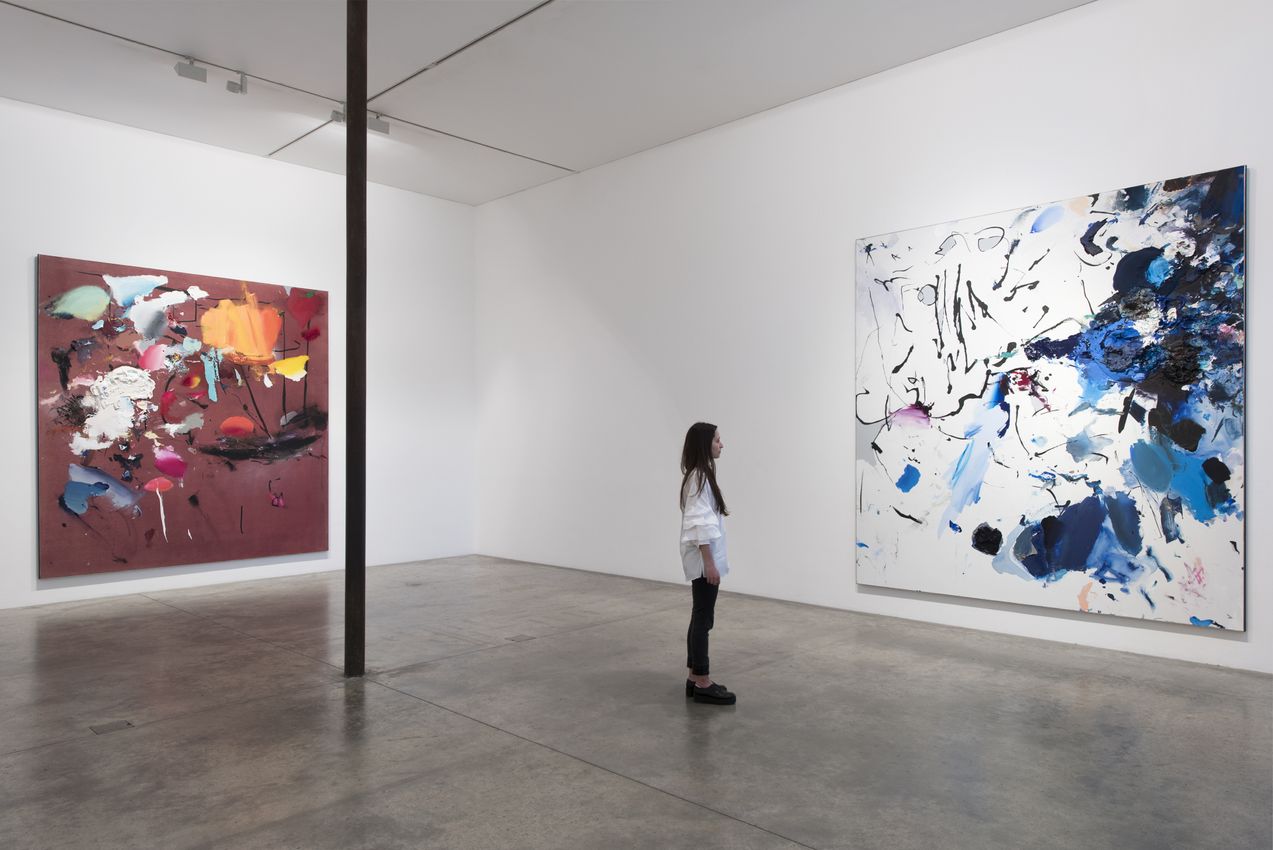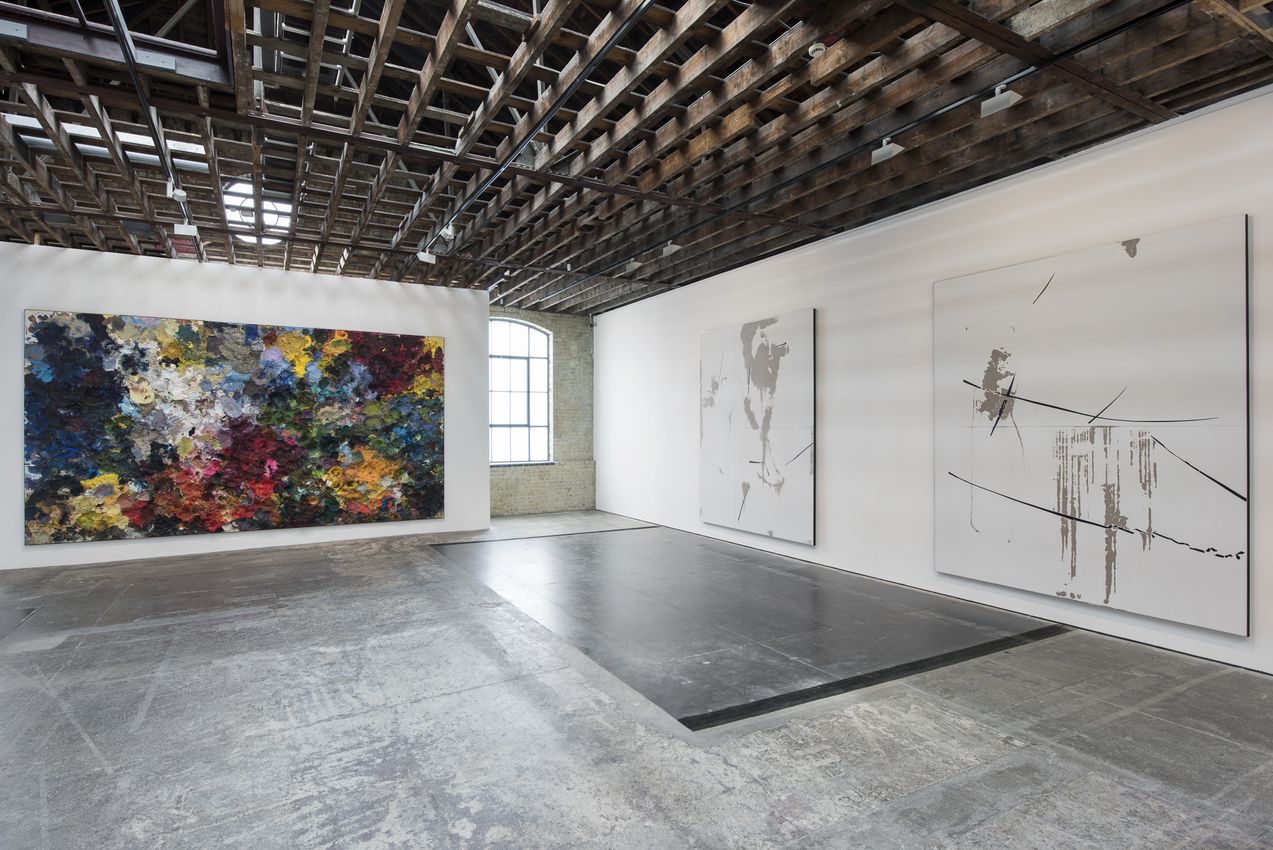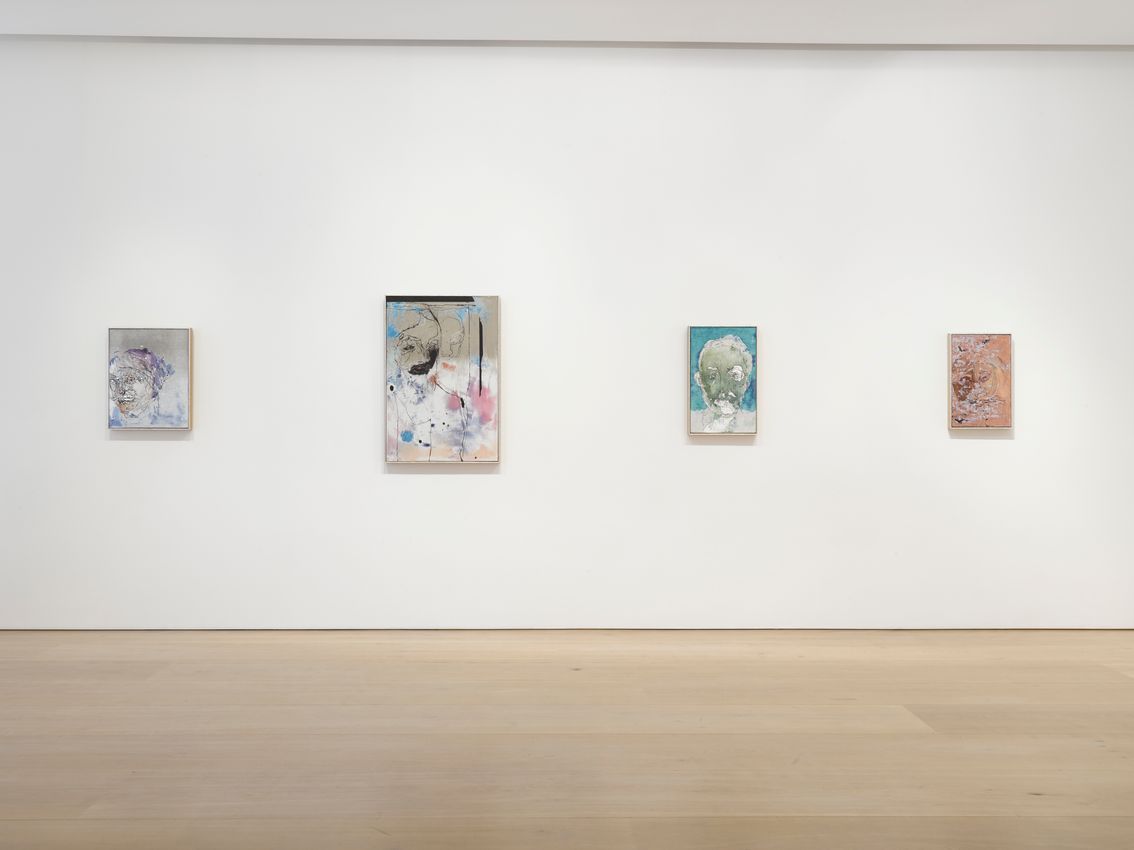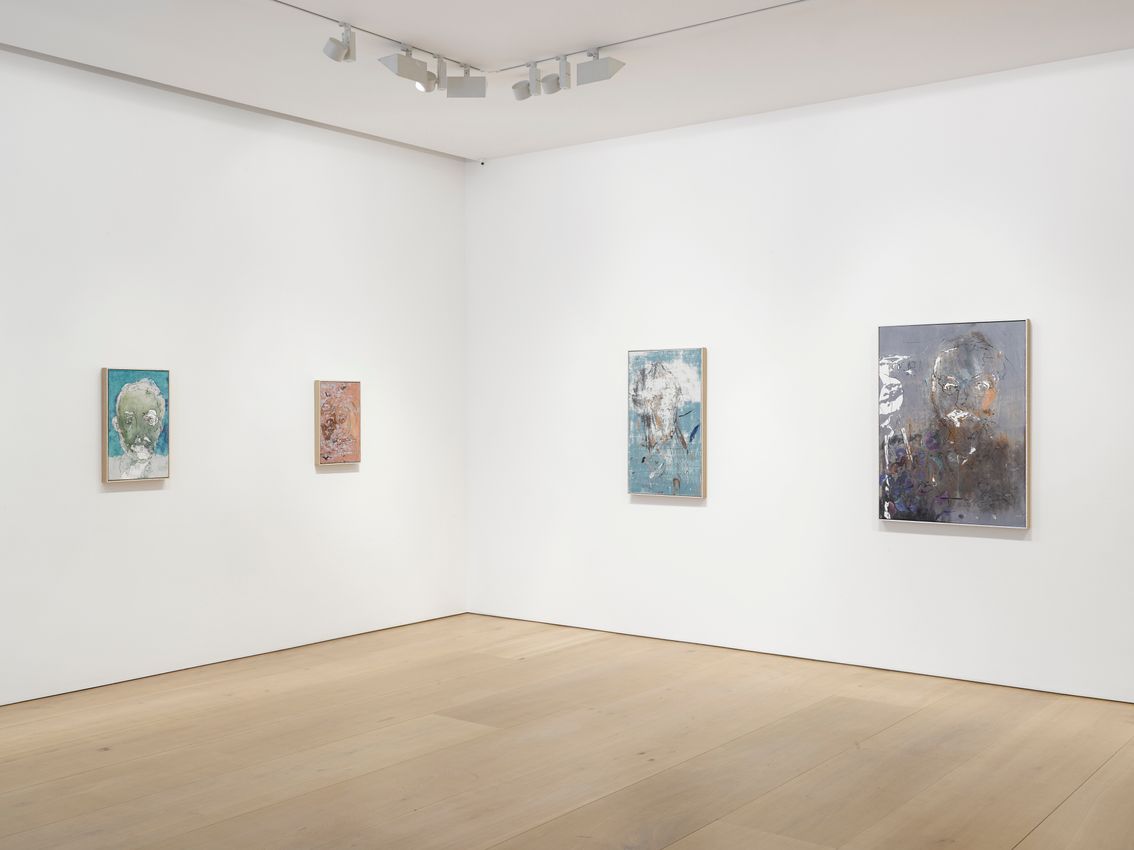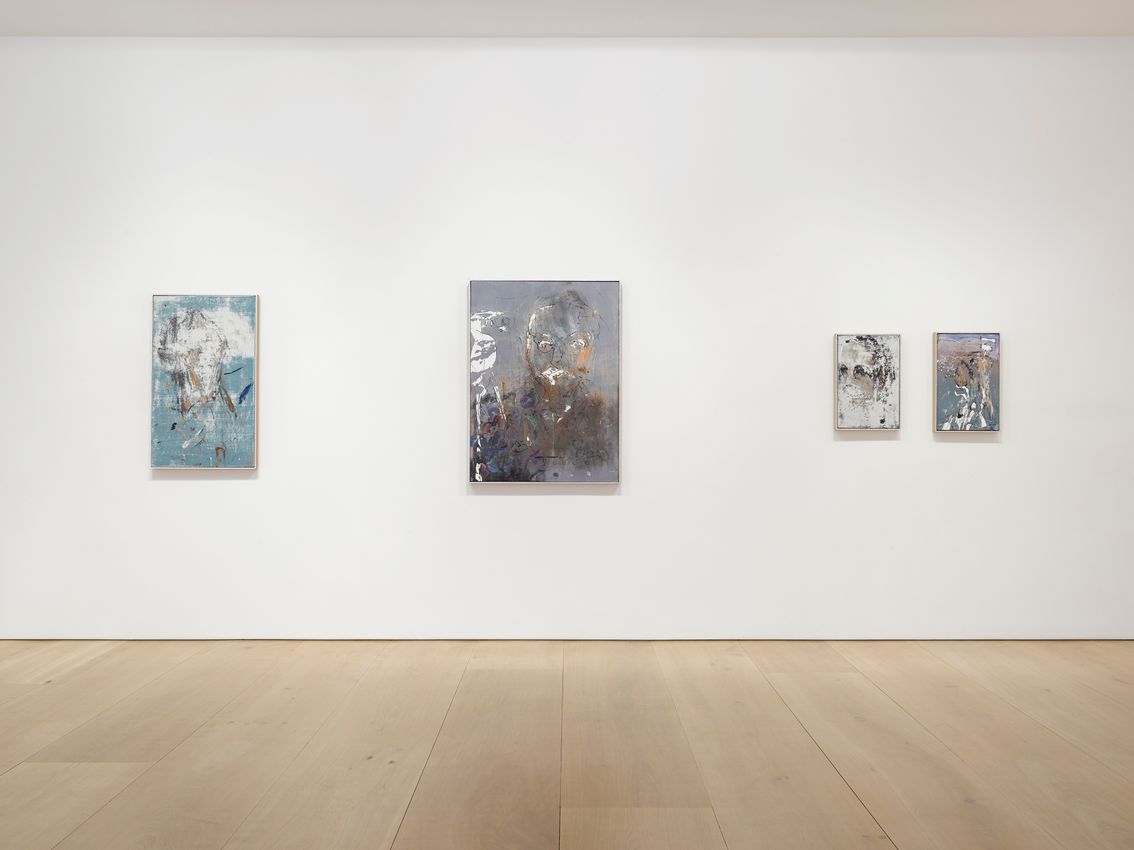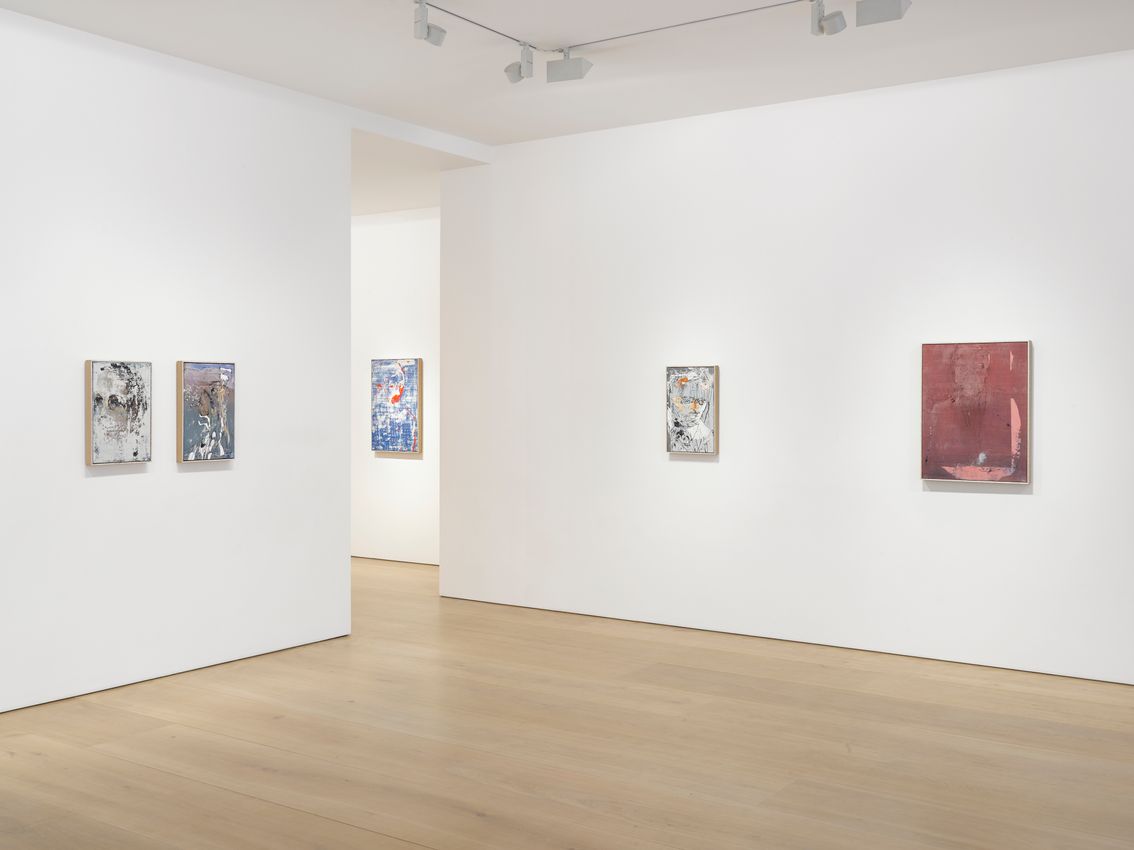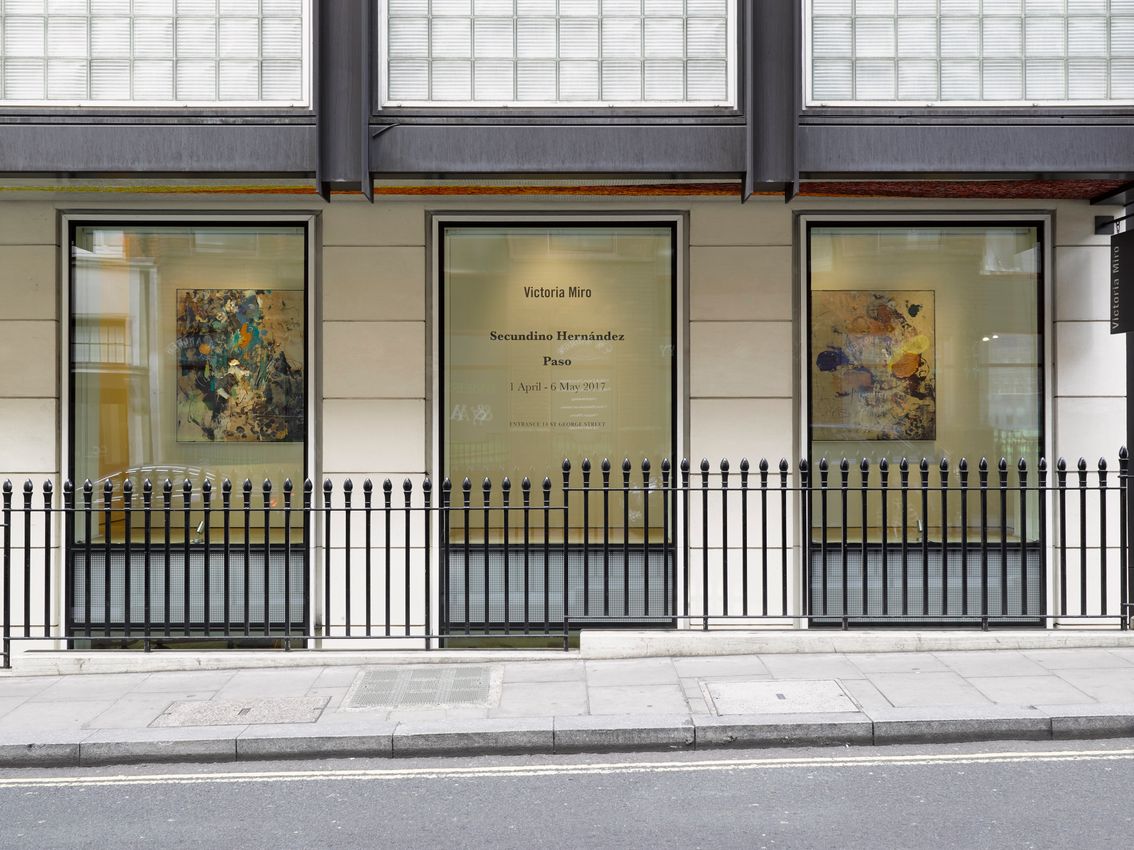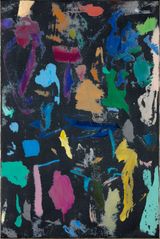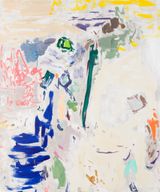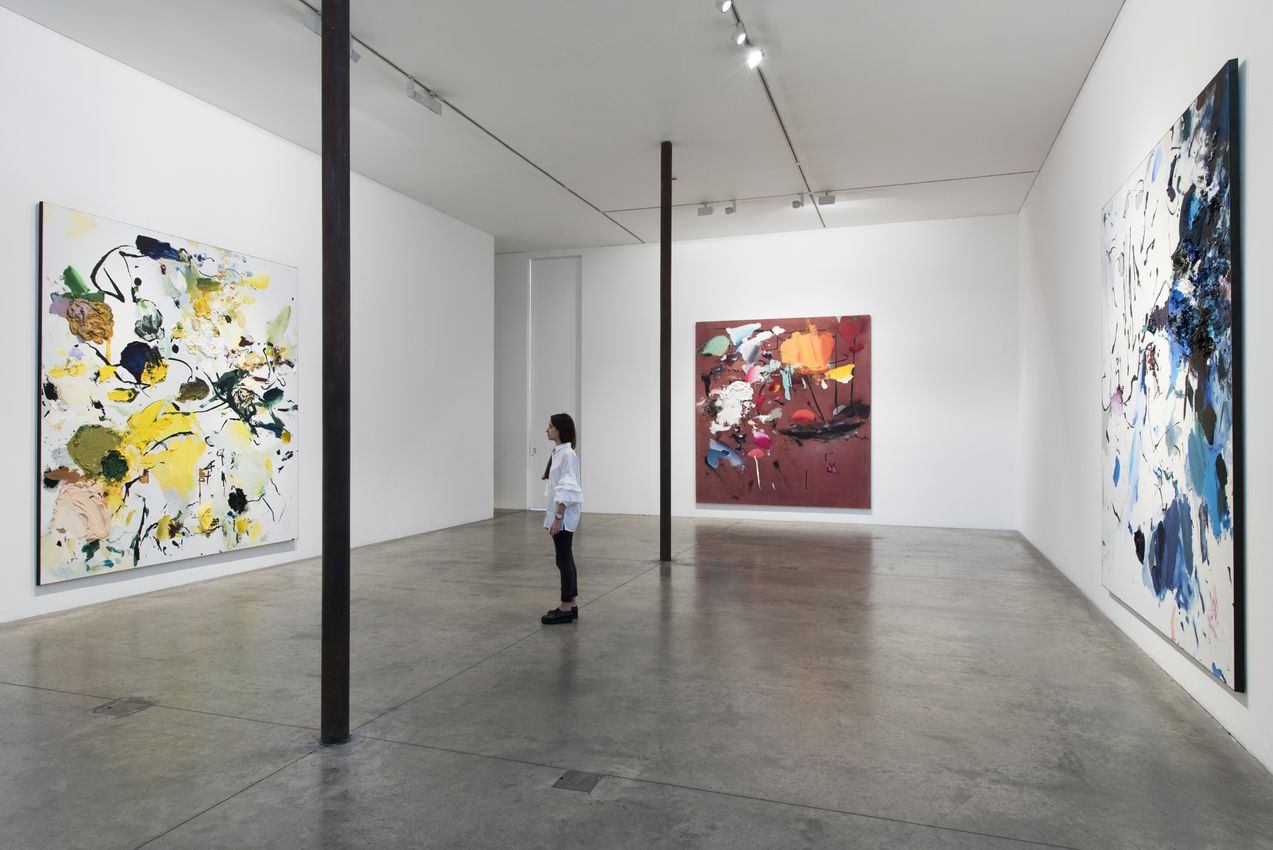
Secundino Hernández’s second solo exhibition at Victoria Miro takes place across gallery locations at Wharf Road and Mayfair and features works made especially for the galleries, including abstract paintings and a new series of figurative works. New large-scale abstract paintings will be on display at Wharf Road.
Meaning ‘step’, the exhibition title, Paso, refers to a series of movements through abstraction and figuration. At Wharf Road, Hernández will show abstract paintings that continue his investigation into gesture and form while extending the innovative techniques of accumulation and removal for which he has become widely known.
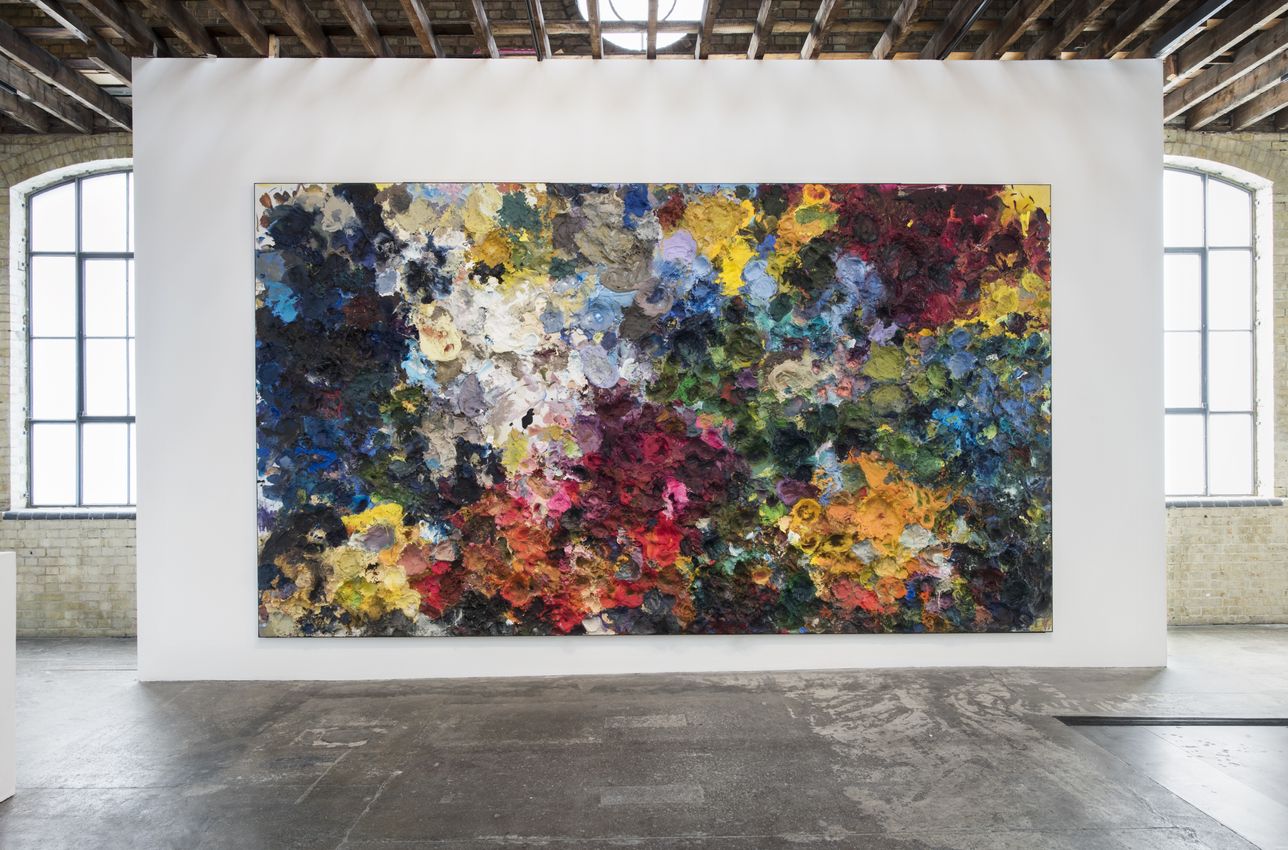
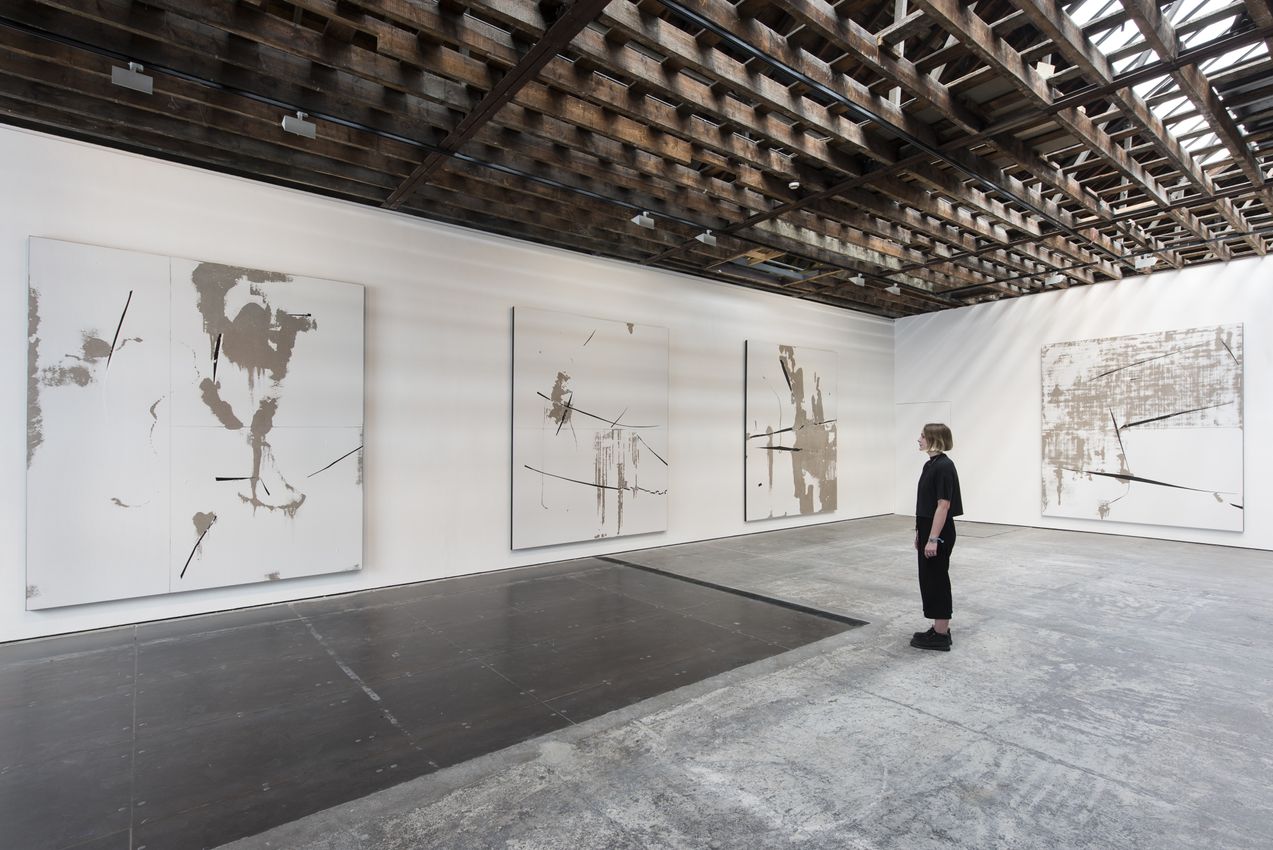
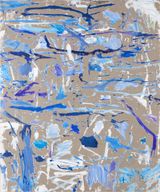
Dramatic contrasts of colour and scale inform displays in the ground and first floor galleries. In the ground floor gallery, a series of large-scale gestural canvases based around the primary colours, red, yellow and blue, find their apparent opposite in a monochrome ‘palette’ work. In contrast, the first floor gallery features ostensibly monochrome paintings, energised through linear dynamism and derived in part from a process of removing paint with a pressure washer. Almost archaeological in nature, this method involves the artist erasing pigment to expose the canvas beneath. The resulting ‘wash’ paintings have a dramatic, exploratory quality and openly display the triumphs and struggles of the artist’s practice. Discussing the tension between calculation and spontaneity in these works, Hernández says: “When the works succeed I don’t see geometric shapes any more. I see a dance between pictorial languages and a balance between something which is very much under control and something else which is accidental.” They find their opposite in a monumental, richly coloured painting, the largest example of a Hernández ‘palette’ work to date. Created through a highly visceral accumulation of pigment, the palette works, which the artist refers to as being “like a diary of everyday life in the studio”, are like extended versions of the functional artist’s palette, expanded in scale and through the duration of their making. Secundino Hernández’s second solo exhibition at Victoria Miro takes place across gallery locations at Wharf Road and Mayfair and features works made especially for the galleries, including abstract paintings and a new series of figurative works. New large-scale abstract paintings will be on display at Wharf Road.
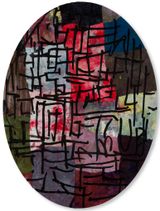
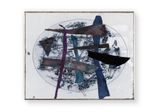
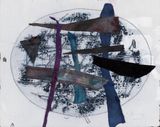
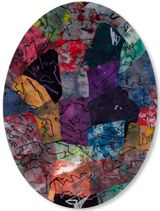
In a new body of works on display at Victoria Miro Mayfair, figurative forms are conjured from a dynamic interplay of lines and marks. Hernández thinks of these works as “invented portraits” – modelled not on specific individuals but analytical of techniques, such as chiaroscuro, used to delineate and describe a figure in space. For the artist, the process of “making and unmaking” these works speaks metaphorically of how identity is forged through time: “We are all constructed from these broken moments. We continue, we fall, and we continue again.”
Together, the works in the exhibition reveal an extended consideration of process and image, and the expanded scope of the artist’s pictorial language.
Born in 1975 in Madrid, where he currently lives and works, Hernández has held recent solo exhibitions at institutions including the Yuz Museum, Shanghai (2015) and Maison Louis Carré, Bazoches-sur-Guyonne, France (2014). His work is in numerous institutional and private collections including National Museum of Wales, Cardiff, UK; Auckland Art Gallery, New Zealand; The Rubell Family Collection, Miami, USA; Museo Municipal de Madrid, Spain; Kunstdepot Göschenen, Switzerland; and the Art Gallery of Ontario, Canada.
An accompanying catalogue, published by Victoria Miro, will include an essay by Oliver Basciano and a conversation between the artist and Martin Coomer.
Secundino Hernández’s diverse and energetic painting practice resists easy characterisation. His work features intricately structured compositions that mix strong linear elements and rich bursts of colour. Some canvases feature abstracted, atomised forms, while others have more densely overlaid imagery in which it is possible to discern figurative elements.


A respected voice in contemporary art discourse.
Focusing on ambitious storytelling and insightful art-world commentary. Ocula Magazine publishes in-depth interviews, critical essays and timely analysis on the artists, exhibitions and ideas driving the global art world.
Learn more about Ocula Magazine
Showcasing the best of the art world.
Ocula partners with galleries from around the world to highlight their artists, artworks and exhibitions. Gallery membership is by application and invitation, with each member vetted by an independent panel.
Learn more about Ocula Membership

Specialises in the sale of major artworks.
Led by a team with deep ties to the world’s leading auction houses, galleries and collectors. Ocula’s advisory team offers bespoke services to high-net-worth clients from around the world who are looking to acquire the best of contemporary and modern art.
Learn more about our team and services