Press Release

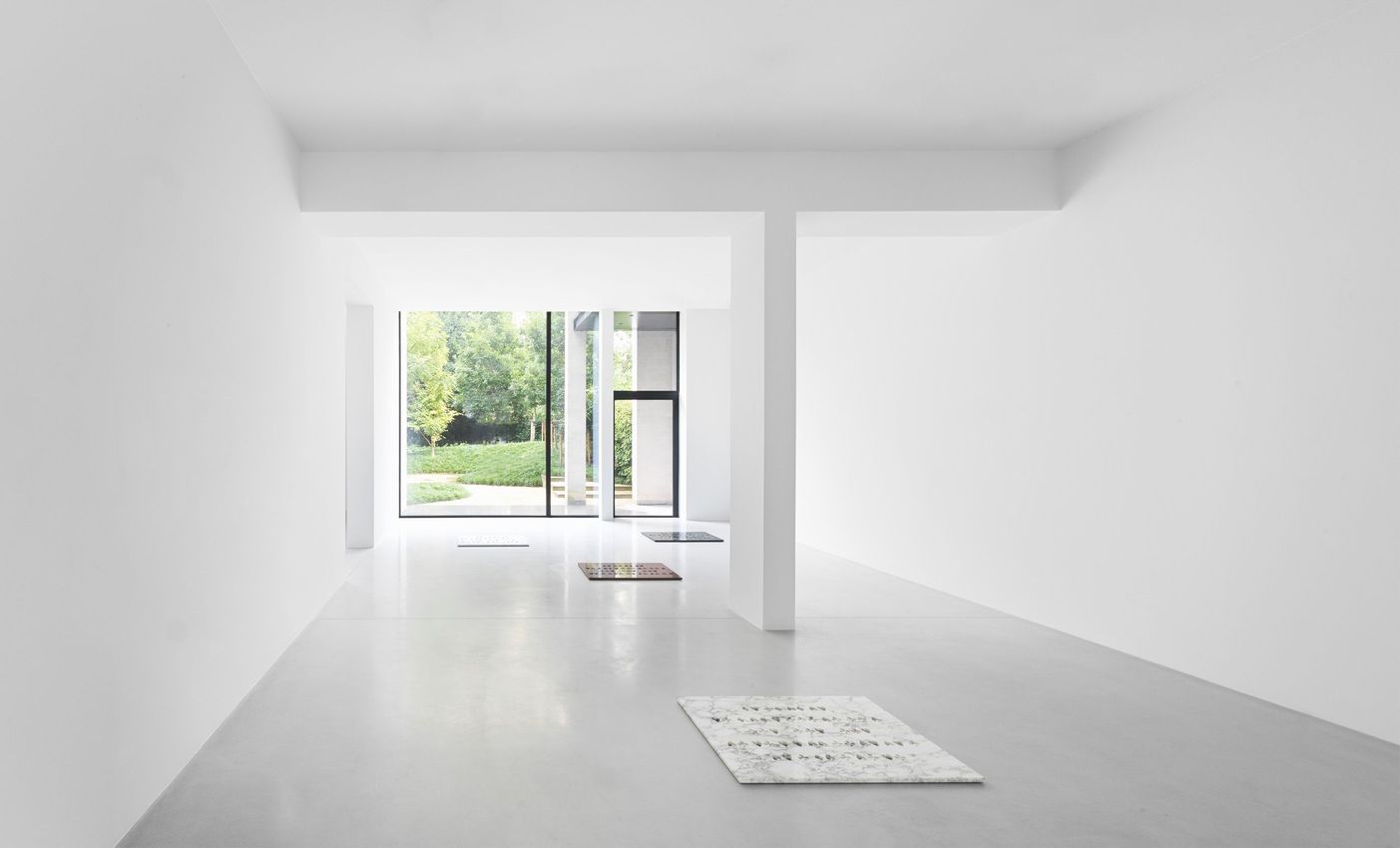
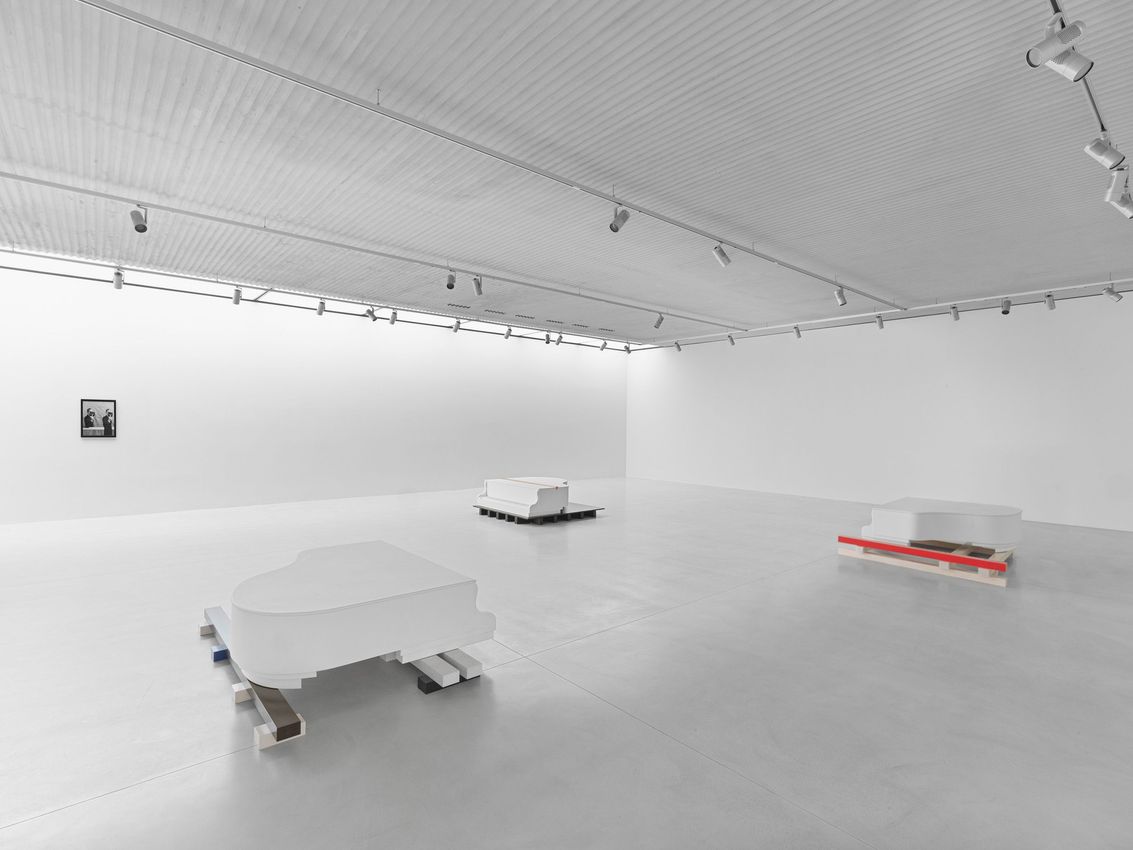
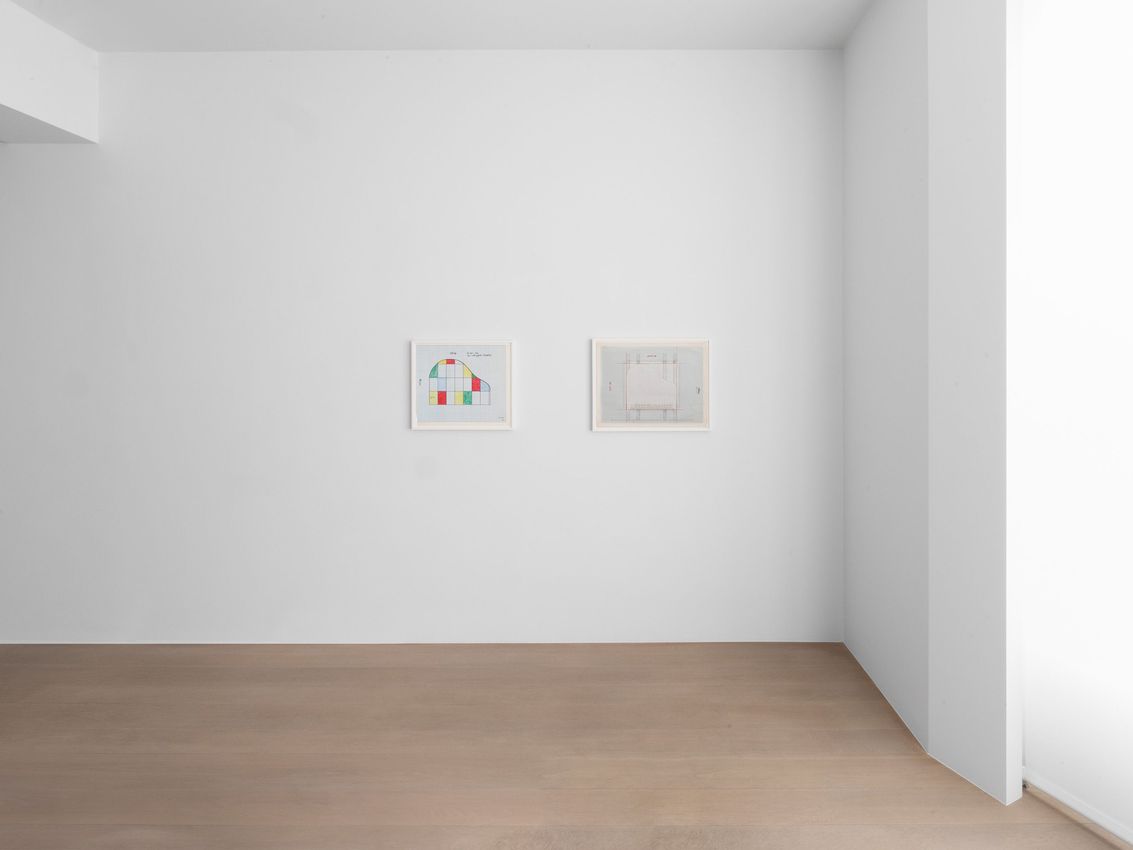
In 2009, a survey exhibition of Jan Vercruysse at Museum M Leuven brought renewed attention on an artist who had not only dominated the Belgian art scene but had also been at the centre of the reinvention of sculpture in the 1980s and 1990s. Despite being sidelined by the return of figurative painting and hindered by his own exacting temperament, Vercruysse’s work — ranging from poetry and photography to intricate sculptural forms — retains the same enigmatic allure it did three decades ago. From his early Atopies and Tombeaux to his later works like the coded marble poems (Places), legless silent pianos (M/M), and garden projects (Labyrinth and Pleasure Gardens), Vercruysse’s art continues to be as strange, opaque, and captivating as ever.

Two years later, when Barbara Gladstone invited me to curate an exhibition for her gallery in New York, I chose to invite Vercruysse, hoping to bring his work back into an international conversation, but also to give back to an artist who had been instrumental in my early days in the art world.

Vie d’Artiste is that project’s second chapter, unfolding after Vercruysse’s passing and a decade since his last exhibition at Xavier Hufkens. This chapter focuses on his work as a portrait of the artist, something that was difficult to realise while Vercruysse was alive and was still making work.

I met Jan Vercruysse when I was 19 years old. The first time I saw him, he was drinking a marc de Bourgogne at L’Archiduc, a bar where, along with other members of the artistic scene of the time, we would spend many drunken nights in the years to come. He was introduced to me as Belgium’s most important artist. His poise, style, wry sense of humour, erudition, and sophistication mesmerised me. He resembled Jan Van Eyck’s Man in a Red Turban, as if the faces of men from Ghent or Bruges hadn’t changed in over 500 years. We struck up a conversation and over time, he became a sort of mentor, introducing me to a world of references ranging from Mallarmé, Nietzsche, and Bruce Nauman to Pessoa and Giorgio Agamben. Lili Dujourie, Franz West, Thomas Schütte, and Juan Muñoz were his friends and companions in the reinvention of sculpture in Europe in the ‘80s and ‘90s. Together, they composed the first aesthetic landscape where I discovered how philosophy, aesthetics, literature, poetry, politics, and life converged in ever-evolving forms. There were many actors on that stage, from curators like Carolyn Christov-Bakargiev, Suzanne Pagé, and Harald Szeemann, to gallerists like Joost Declercq, Lisson, and Durand-Dessert, and writers like Alain Cueff and Pier Luigi Tazzi. To Jan, art was a way of life that encompassed everything—from what you ate, drank, and wore, to how you spent your time.

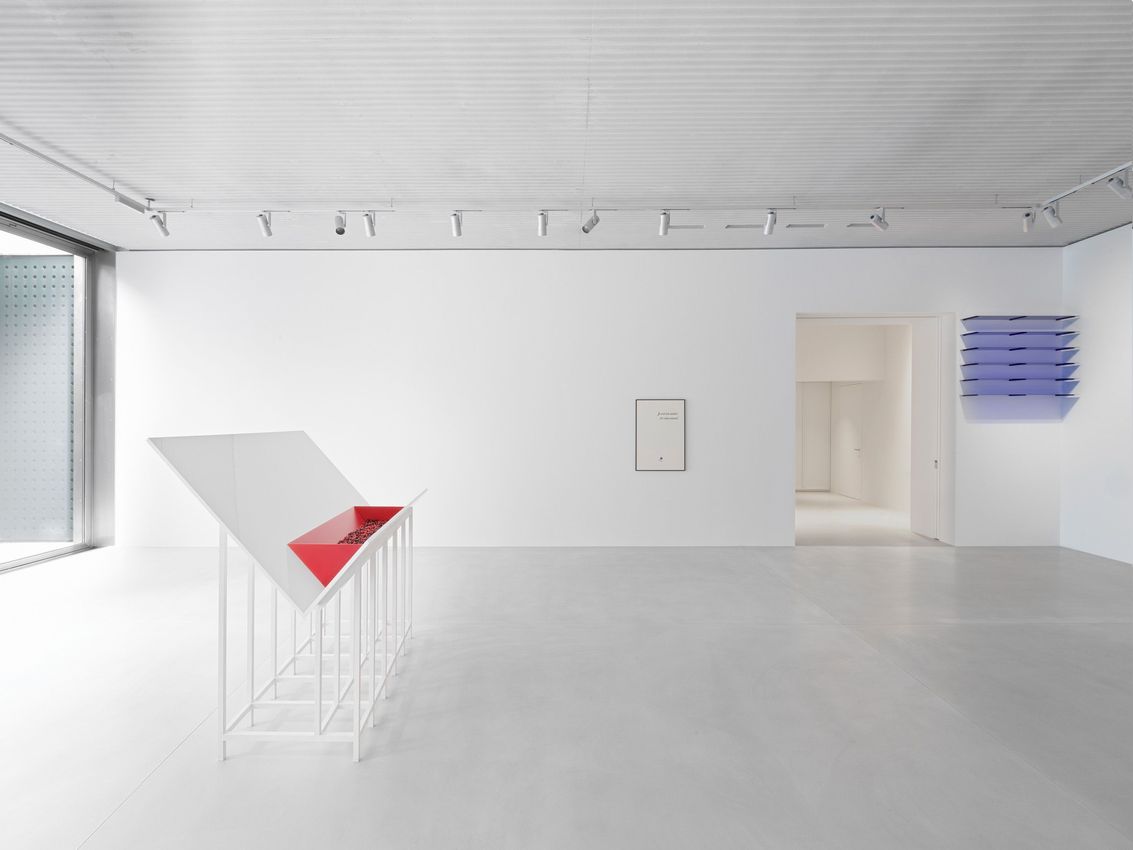
Vie d’Artiste, Vie de Prince, Vie de Chien is an early silkscreen (1976) that could be read as a manifesto for Jan’s life, one of total commitment to his work, regardless of the costs or rewards. He had a passion for languages and an ambiguous relationship with his Belgian and Flemish identity. He rarely used Dutch in his work, but he had a deep appreciation for the evocative power of foreign languages such as French, Italian, and English, with which he enjoyed playing. I chose two other editions: Je veux bien finir mes jours comme Nietzsche [I want to live out my days like Nietzsche], or Je est un autre et vous aussi [I is another, and so are you) as another form of self-portraits. Together with his photographic self-portraits, they express the artist’s inability to engage with the everyday, choosing instead to live within an artificial realm of art and shifting identities. In his photographic self-portraits, he is often seen hiding behind masks or playing chess in front of theatrical backgrounds, existing in one mise-en-scène at a time.1

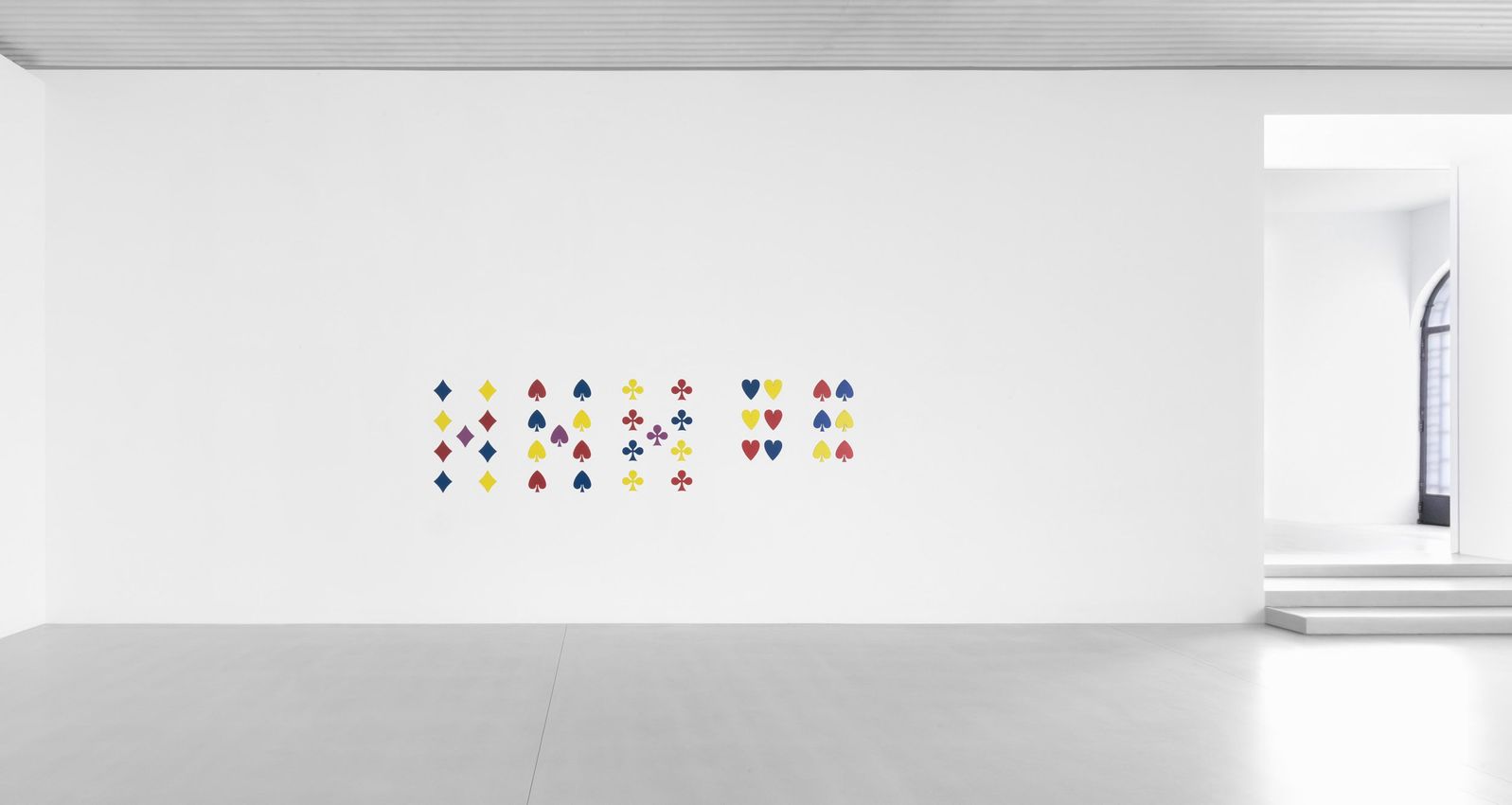
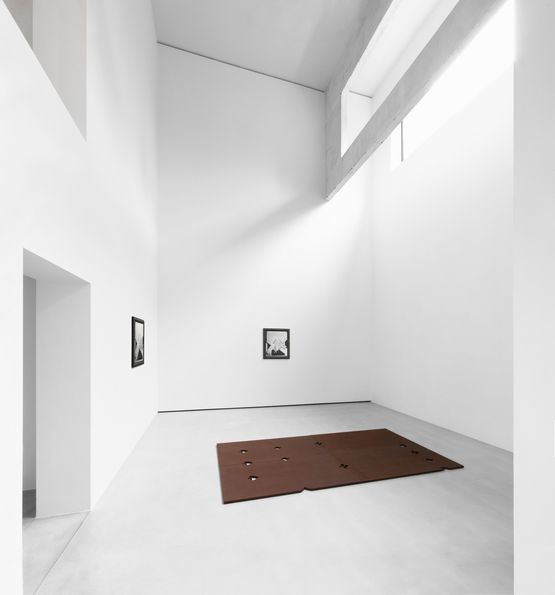
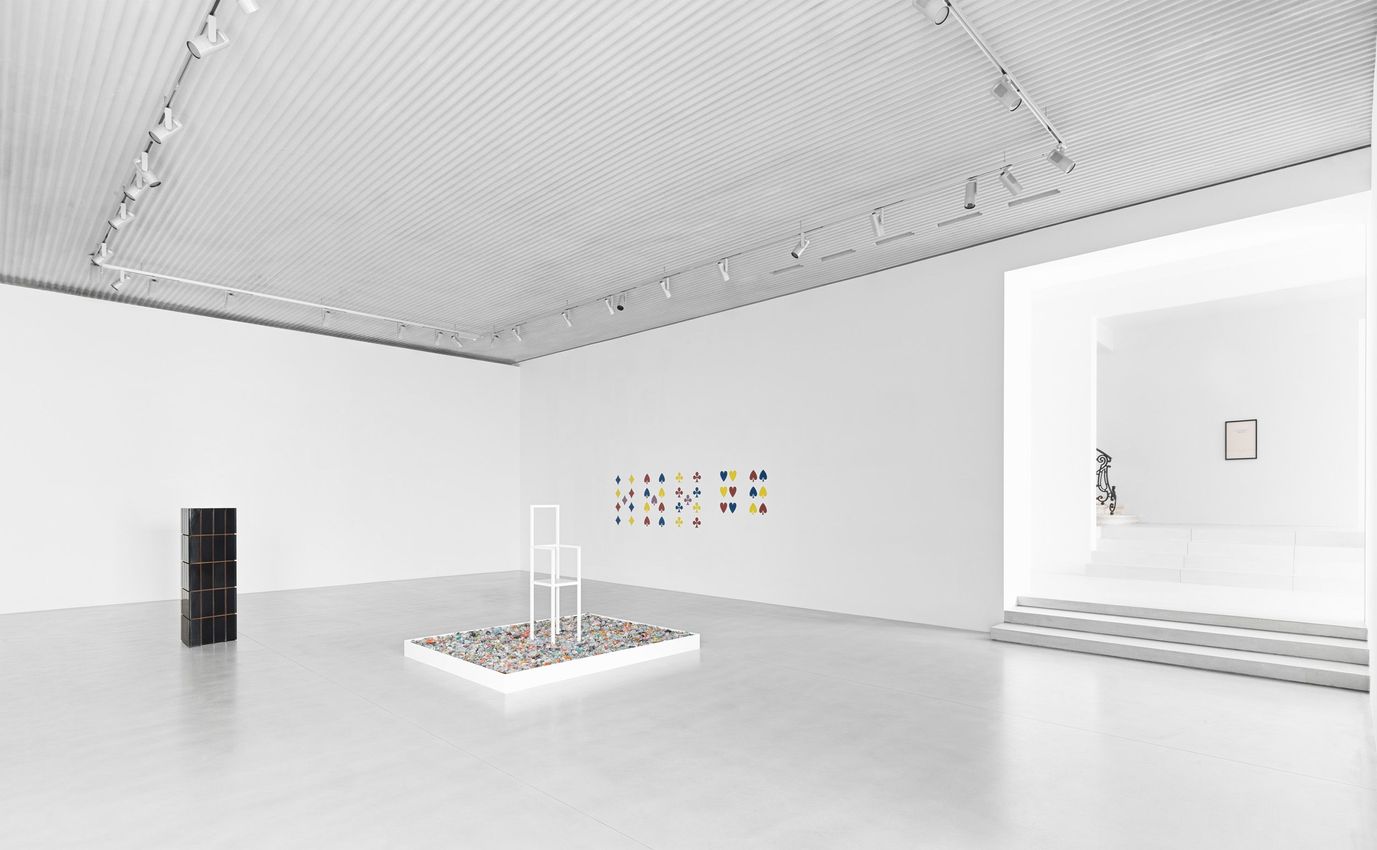
There was a line by Fernando Pessoa that Jan liked to quote: I would have liked to be a simple soul, a man of limited or lofty ambitions, married to the daughter of my washerwoman (‘The Book of Disquiet’). Vercruysse’s work is deeply marked by melancholia — a perverse longing for what is past and can never be again, or for what will never be at all. His art gives sculptural form to a feeling more often expressed in music or poetry. From his first monumental and solemn Tombeaux (a tomb but also a poem to celebrate the dead) or Atopies (simultaneously a non-site and the absence of utopia), Vercruysse moves towards more playful works that integrate tropes such as playing cards, labyrinth, glass marbles or music. He introduces colour, coded languages and deadpan humour. I believe that this prolific period has not yet received the attention it deserves. It represents the other side of the coin: a celebration of earthly pleasures—the things that make life bearable when happiness is unattainable.

There are many stones left unturned if we want to fully understand Vercruysse’s work and his place in history. His mannerism, dandyism, and preciousness might seem like they belong to a bygone era—one still connected to the 19th century, when poetry and literature were paramount. In other words, Vercruysse provides us access to a space of sophistication that might otherwise be lost.

¹A brilliant essay on the topic: A. Pereira Rodriguez, “The Last Flemish Primitive : Jan Vercruysse’s self-fashioning of artisthood and national identity,” ARTS, vol. 11, no. 1, 2022.— Anne Pontégnie, Brussels, 2024

An exhibition focussed on Jan Vercruysse’s Labyrinth & Pleasure Gardens and the Tombeaux series will be on view at the van Buuren Museum, Brussels, from 5 September to 17 November 2024.

Read More

Installation Views

About the Artist

The art of Jan Vercruysse is based on the autonomy of the artwork and the sovereignty of the artist, and can be read as a reflection upon the ability of art to function in a contemporary context and according to its own conditions. It is an art that questions our interaction with it; an art that investigates the way we see and understand it in today’s visually overcrowded world; and an art that seeks to find, and to define, its own philosophical place within a rapidly evolving world. According to Jan Vercruysse, art no longer has a place in this world. As a result, he seeks, through his work, a new place for art and new conditions in which to work. His earliest photographic works recreated historical subjects, such as self-portraits, still lifes and mythological scenes. Gradually, he evolved a sculptural vocabulary of narrow rooms, empty frames and bases without objects. The sacred spaces created by Vercruysse in these works are known as Chambres or Tombeaux and represent the artist’s last-ditched attempts to create art that refers only to itself. His later works, such as plaster pianos, blue Murano glass musical instruments and bronze and ceramic turtles, achieve a perfect equilibrium between conceptual conviction and aesthetic concerns, and also reflect a real pleasure of making.

View Artist Profile

Also Exhibiting at Xavier Hufkens

About the Gallery
Xavier Hufkens is one of Europe’s leading galleries for contemporary art. Located in Brussels, the gallery maintains a diverse exhibition programme with solo exhibitions of the gallery artists as well as group exhibitions and special projects. The gallery deals in a distinctive combination of painting, drawing, sculpture, photography, video and installation-based work.

The origins of the gallery date back to 1987, when Xavier Hufkens opened a gallery space in an un-refurbished warehouse in the neighbourhood of the South Station (Midi) in Brussels. During the early years, the focus of the gallery was upon mid-career and emerging artists and the gallery is known for having introduced some of the most influential contemporary artists to Brussels at a time when they were still relatively unknown. British sculptor Antony Gormley, who is still affiliated with the gallery, Felix Gonzalez-Torres and Rosemarie Trockel all showed in Belgium for the first time with Xavier Hufkens (Gormley in 1987; Gonzalez-Torres in 1991 and Trockel in 1993).

In 1992, the gallery moved to a 19th-century townhouse at 6 rue Saint-Georges, close to the Avenue Louise. Completely renovated by Belgian architects Paul Robbrecht, Hilde Daem and Marie-José Van Hee, the house quickly gained a reputation for being not just one of the most beautiful contemporary art spaces in the Belgian capital, but also one of the most interesting. The expanded exhibition programme coincided with the additional representation of a number of established artists from Belgium and abroad, including Richard Artschwager, Thierry De Cordier and Jan Vercruysse. In 1997, Hufkens expanded the gallery further by annexing the adjacent building and a number of new artists joined the gallery, including Louise Bourgeois, Roni Horn and Thomas Houseago.

A second space in the same street, at 107 rue Saint-Georges, opened in spring 2013. Located in the Galerie Rivoli, a mixed-use commercial development from the 1970s, the new gallery space was designed by Swiss architect Harry Gugger, who was previously in partnership with Herzog and De Meuron. Slegten & Toegemann, Brussels, managed the project. A third space opened in spring 2020, located at 44 Rue Van Eyck, designed by architect Bernard Dubois.

An eclectic but very clear vision underpins all of the gallery’s activities: ‘The definition of the gallery was established from the start. The common thread, then and now, is quality over and above everything else, which I find more intellectually challenging than a forced definition. From the early days I juxtaposed established artists such as Michelangelo Pistoletto with someone like Felix Gonzalez-Torres when he was totally unknown. Today I still mix my work: I have no problem showing Malcolm Morley … alongside Robert Ryman, or Willem de Kooning.’ [Xavier Hufkens in The Art Newspaper, Issue 220, January 2011, published online: 20 January 2011]

Xavier Hufkens represents some thirty artists from different generations. He was part of the six-member selection committee for Art Basel during seven years and also participates in up to five international Arts Fairs annually. The gallery has partnerships with the estates of Louise Bourgeois, Willem de Kooning, Robert Mapplethorpe and Alice Neel.
View Gallery Profile
Address
6 rue St-Georges
St-Jorisstraat
Brussels
Belgium
Opening Hours
Tuesday – Saturday
11am – 6pm
(1)
Brussels 6 rue St-Georges
Xavier Hufkens
6 rue St-Georges, St-Jorisstraat, Brussels, Belgium

Opening hours
Tuesday – Saturday
11am – 6pm
The art world in focus