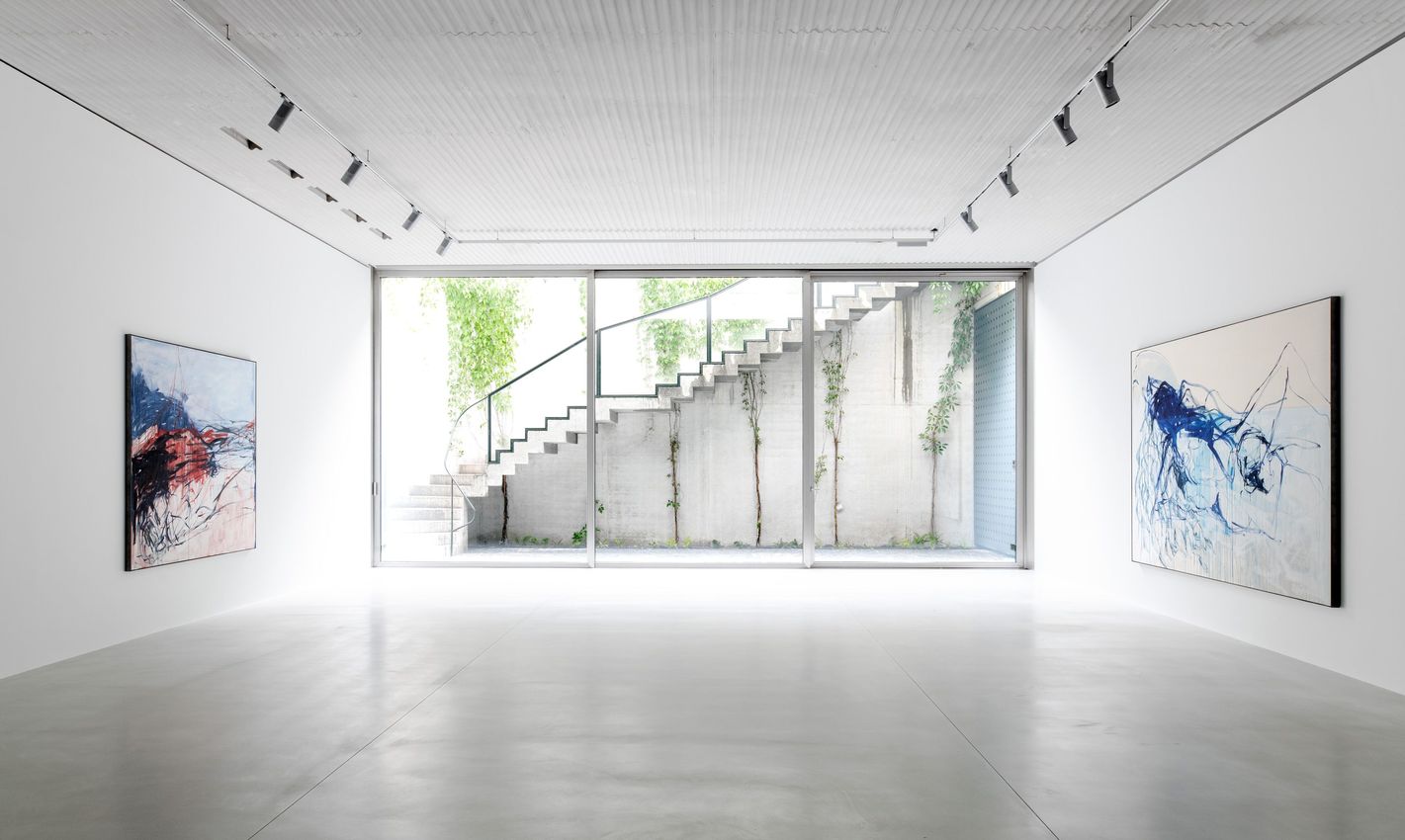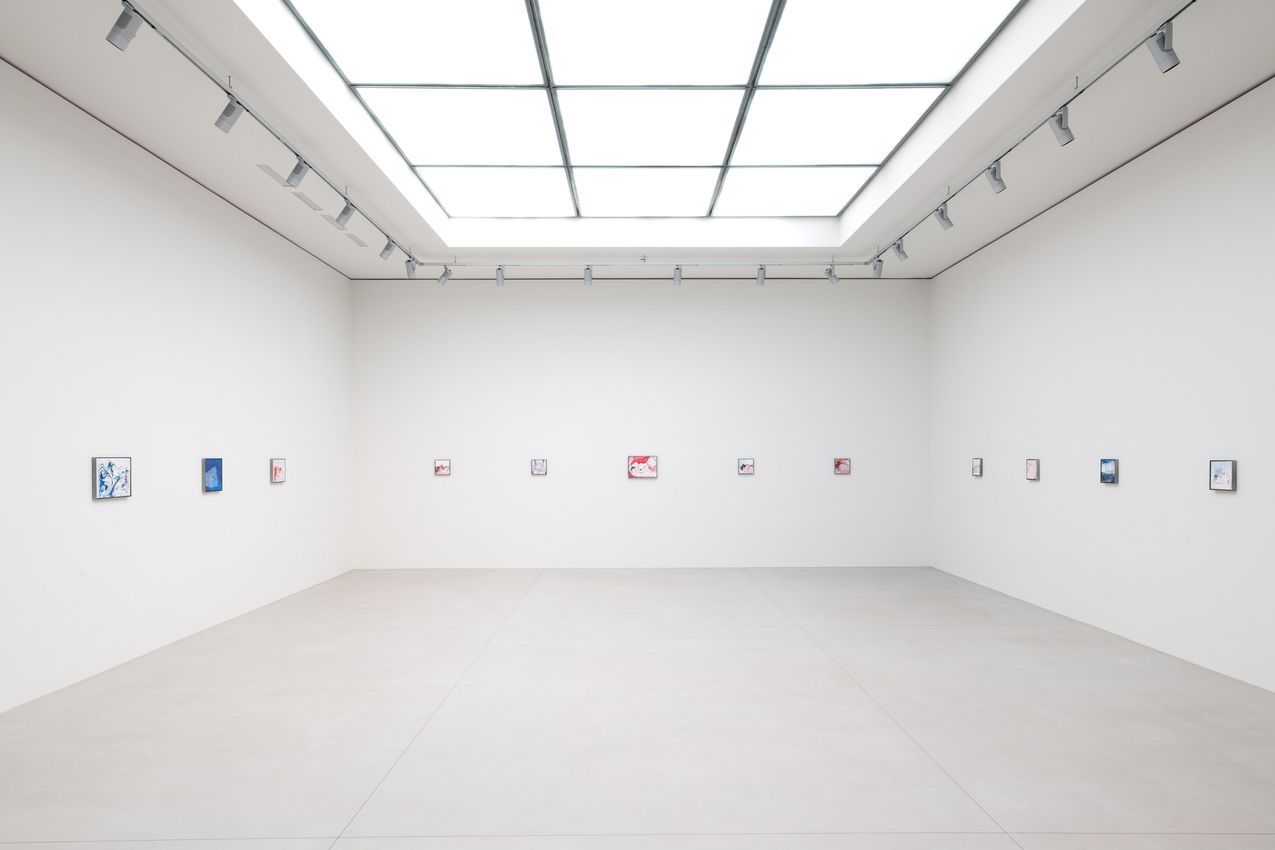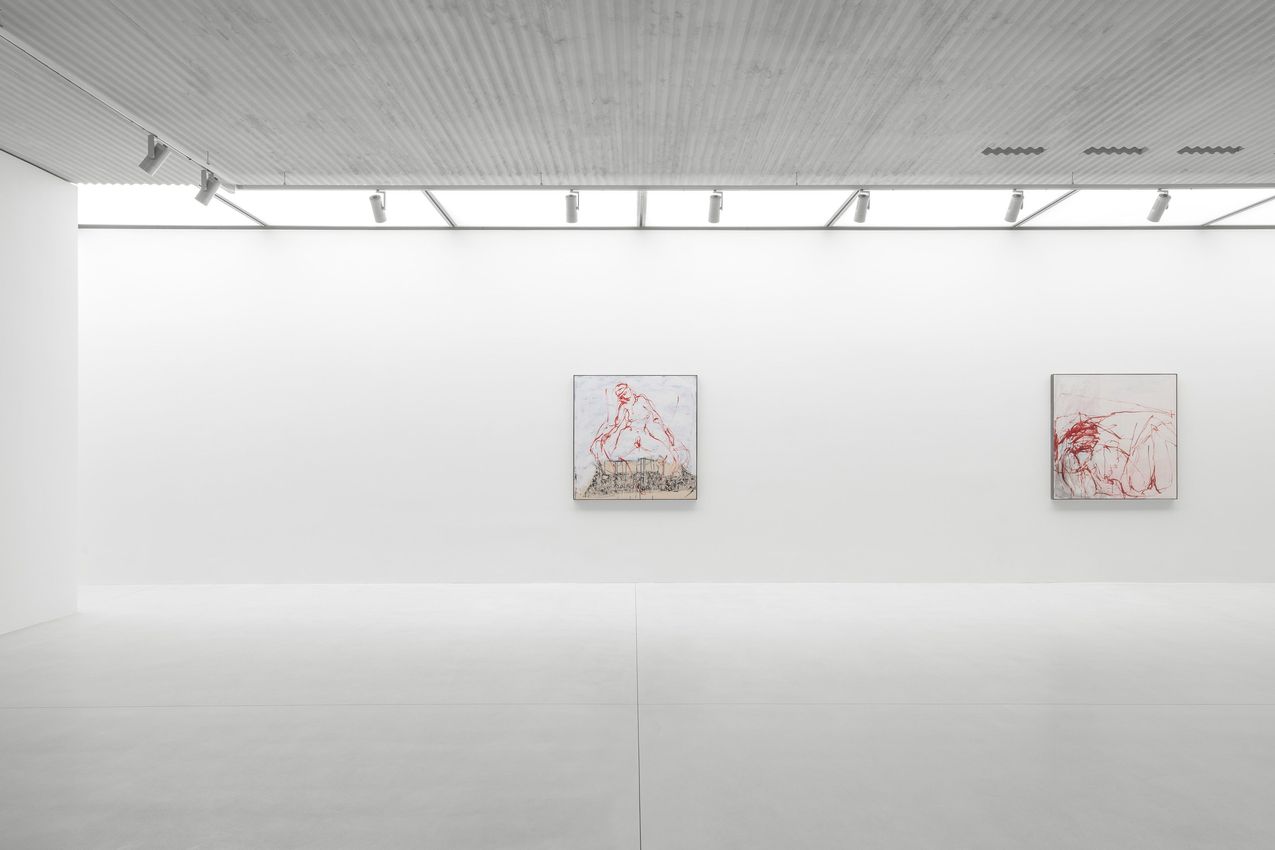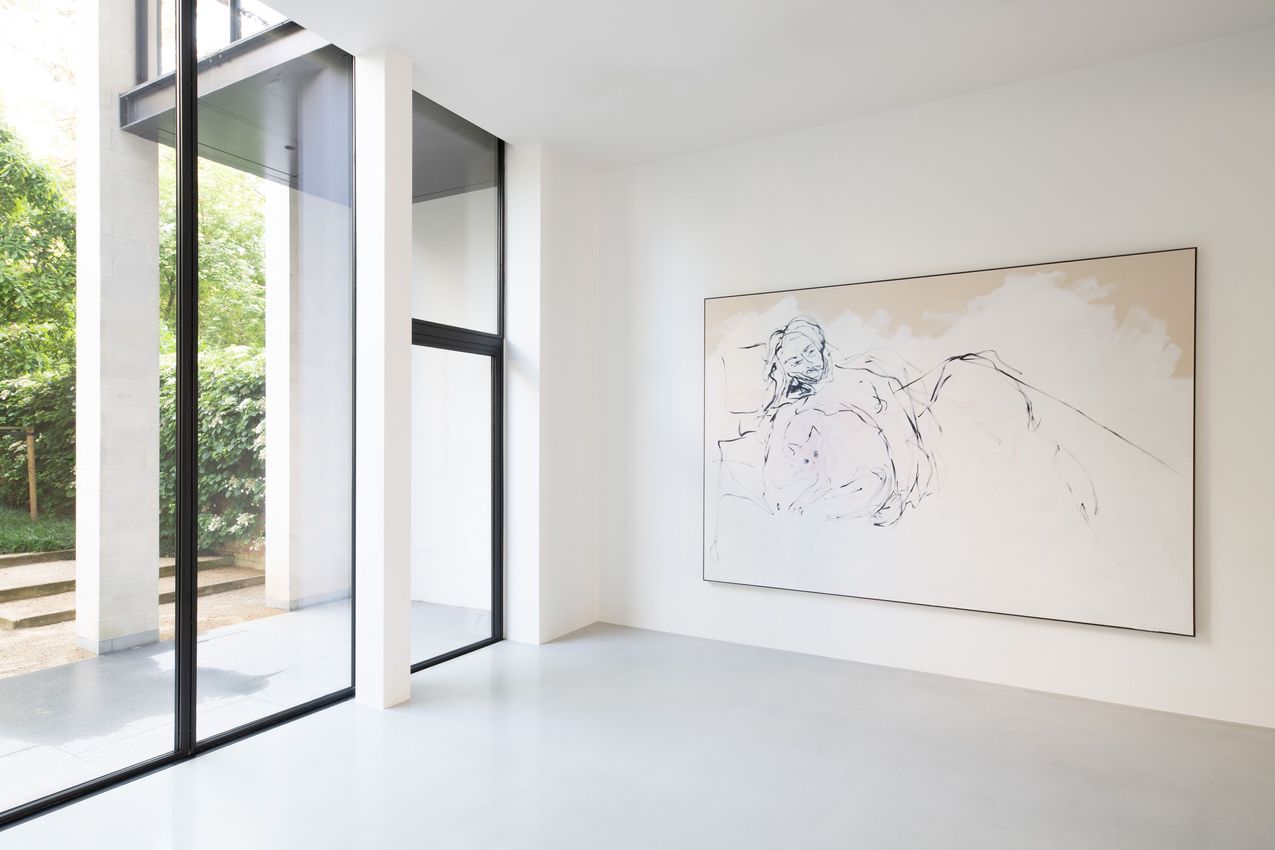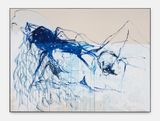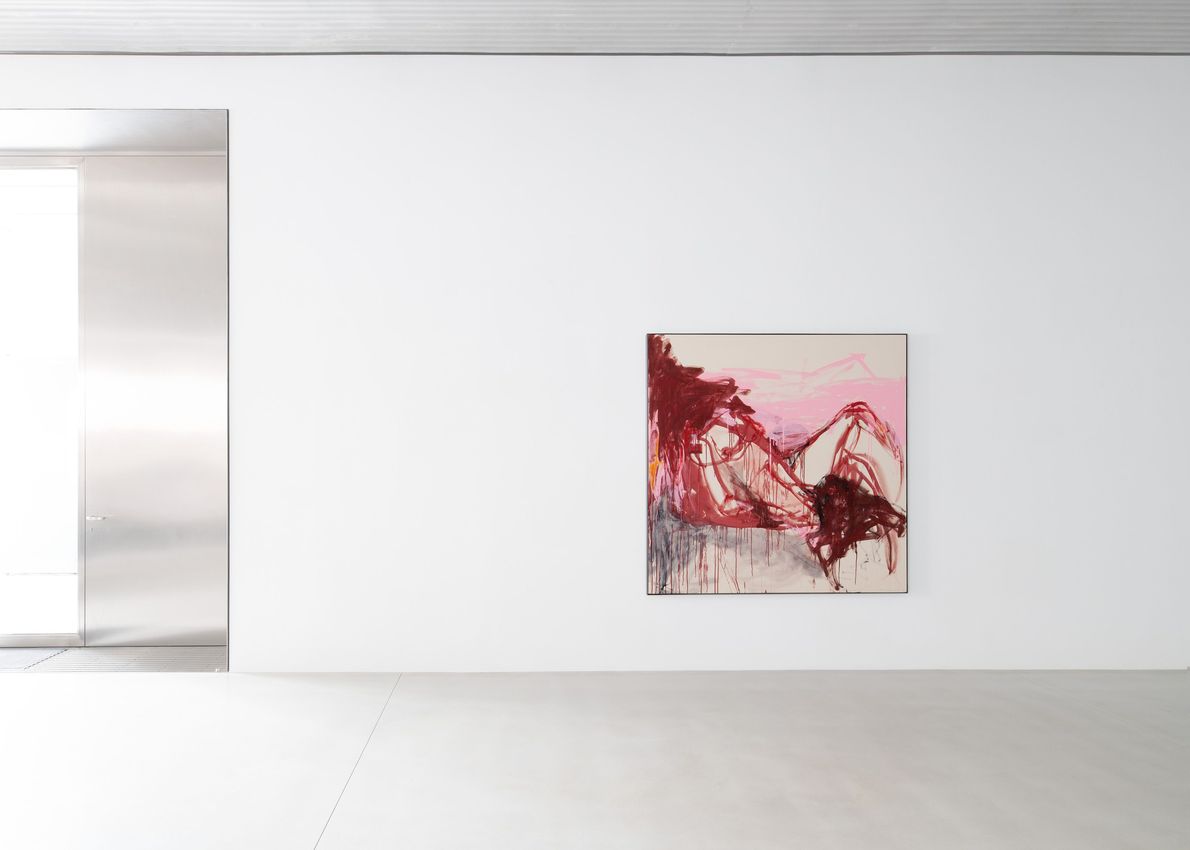
Tracey Emin’s new exhibition with the gallery revolves around a seminal theme in her oeuvre—love in all its many guises. In a new series of paintings, ranging from the intimately scaled to the monumental, Emin explores the intricacies of the human emotions, revealing a profound understanding of our innermost workings. Gestural brushstrokes and bold use of colour evoke intimacy of the human body and its emotions laid bare. While Emin’s commitment to painting has remained steadfast throughout her career, recent years have seen a renewed focus on this core element of her art. This revived attention is evident as she immerses herself deeper into the realm of painting, infusing her art with her personal experiences of love and mortality.
Love permeates Tracey Emin’s entire body of work. It transcends mere emotion, manifesting as both a physical act and a mental state. It can be felt as much by the body as by the mind. Emin shows love in its myriad form—from the wondrous to the painful, the obsessive to the elusive. Central to these paintings is the symbiotic relationship between love and time, exploring its past, present, and future manifestations. You Loved Me—Then and I Fucking Loved You capture moments of nostalgia and longing, rooted in the past, while Kissing, Lust and A Feeling embody the immediacy of the present. Please Keep Loving me echoes a sentiment of enduring hope, reflecting Emin’s belief in the resilience and continuity of love.
Inextricably linked to the ideas of love and time, however, is death. While not a subject that Emin has ever shied away from in her work—she created a poignant series of paintings about the loss of her mother, for example—it is one that acquires a deeply personal meaning in the context of her recent, life-threatening illness. There’s nothing Left of her, and I Melted away both attest to this confrontation with mortality. In I watched Myself die and come alive, we see the artist on a table in a domestic setting, watched over by a shrouded figure. The work is a clear allusion to resurrection: staring death in the face and returning to life. The work has a dream-like quality: a table can have a homely or surgical function; it is not clear if the spectral figure belongs to the constructed reality or the subconscious.
Dreams and sleep, and their antitheses—nightmares and insomnia—are also weaved through the exhibition, alongside the ghosts of past masters. Her painting The Nightmare, for example, echoes the Swiss artist Henry Fuseli’s work of the same name from 1781: a dark incubus atop a pale, supine woman. The image reflects Emin’s deep engagement with art history, as seen in previous works inspired by Edvard Munch. From My Bed (1998) to Insomnia Room (2019), the artist’s nocturnal hours, both good and bad, invariably seep into her work. Several paintings in the exhibition, including I Kept Dreaming, Night Time, and Sleeping with my eyes open extend this trajectory. Water also makes its presence felt, both in the myriad shades of blue that can be seen in the paintings, but also as a motif. It embodies various symbolic interpretations, serving as a symbol of purity and renewal (I wanted to be clean) to one of fear and anxiety (I Kept Drowning).
Most of the works in the exhibition depict the artist—either alone or entwined with another—in a prone position: in a bed, on a table, a chaise longue or sofa. Emin has frequently depicted beds in her work, presenting them as places with both positive and negative connotations: they can be sites of pain and pleasure, or dreams and torments. They remind us of home, but also of hospitals and convalescence. They are where we are born and, traditionally, where we die. But in four vertical self-portraits, the artist is not in repose but erect, facing the viewer. Entitled This is Me, Always A Mirror, You could drink me and I Felt So Much Older, they hint at a process of emotional realignment and acceptance. With the same linear quality as the faces she created for the doors of the National Portrait Gallery in London, Emin’s self-portraits show the artist looking out of the frame and into the world.
Tracey Emin (b. 1963, London) lives and works between London, the South of France and Margate, UK. In 2023, she opened an eponymous foundation and art school in Margate, which offers residencies to emerging international artists and stages exhibitions. Recent public commissions include The Doors (2023), a set of bronze doors for the National Portrait Gallery, London; The Mother (2022), a large outdoor bronze for the Munch Museum, Oslo; and I Want My Time With You (2018), a large neon work for St Pancras Station, London.
Recent solo exhibitions include the Munch Museum, Oslo (2021); the Royal Academy of Arts, London (2020); Musée d’Orsay, Paris (2019); Château La Coste, Aix-en-Provence, France (2017); Leopold Museum, Vienna (2015); Museum of Contemporary Art, Miami, Florida (2013); Museo de Arte Latinoamericano de Buenos Aires (2012); Turner Contemporary, Margate, UK (2012); Hayward Gallery, London (2011); Kunstmuseum Bern, Switzerland (2009); Scottish National Gallery of Modern Art, Edinburgh (2008); Centro de Arte Contemporáneo, Malaga, Spain (2008); Art Gallery of New South Wales, Sydney (2003); and Stedelijk Museum, Amsterdam (2002).
Tracey Emin represented Great Britain at the 52nd Venice Biennale in 2007. In 2012, she was appointed Commander of the Most Excellent Order of the British Empire for her contributions to the visual arts.
Over a career spanning some two decades, Tracey Emin has produced a body of work that encompasses all forms of artistic expression, including painting, print-making, drawing, film, photography, installations, appliqué, sculpture and neon text. Although Emin first rose to prominence as part of the so-called generation of Young British Artists (YBA), the highly autobiographical nature of her work set it apart from the general artistic trends of the 1980s and 1990s. Emin is well known for her frank, confessional style and for transforming her inner emotional and psychological world – personal experiences, memories and feelings – into art that is both intimate yet profoundly universal. Her candid but unsentimental disclosure of personal trauma and crises, as well as aspects of her love life, have often led to controversy. Works such as Everyone I Have Ever Slept With 1963–1995 (destroyed in the Momart fire, 2004) and her 1999 Turner Prize exhibit entitled My Bed (currently on loan to Tate Modern) are two cases in point. Tracey Emin was elected to the Royal Academy in 2007, the same year that she represented Great Britain at the 52nd Venice Biennale. Emin was appointed Professor of Drawing at the Royal Academy in 2011 and a Commander of the Order of the British Empire (CBE) in 2013.


A respected voice in contemporary art discourse.
Focusing on ambitious storytelling and insightful art-world commentary. Ocula Magazine publishes in-depth interviews, critical essays and timely analysis on the artists, exhibitions and ideas driving the global art world.
Learn more about Ocula Magazine
Showcasing the best of the art world.
Ocula partners with galleries from around the world to highlight their artists, artworks and exhibitions. Gallery membership is by application and invitation, with each member vetted by an independent panel.
Learn more about Ocula Membership

Specialises in the sale of major artworks.
Led by a team with deep ties to the world’s leading auction houses, galleries and collectors. Ocula’s advisory team offers bespoke services to high-net-worth clients from around the world who are looking to acquire the best of contemporary and modern art.
Learn more about our team and services