



Press Release

Xavier Hufkens is delighted to announce the representation of leading Chinese artist Zhang Enli (b. 1965) and his inaugural exhibition with the gallery. In this presentation, the varied facets of the artist’s erudite and lyrical practice are brought to the fore in a thoughtful and representative selection of works spanning both gallery spaces.

Zhang Enli is a painter whose oeuvre has gradually developed from visual interpretations of everyday objects to abstraction. Interested in the morphology of painting and its relationship to space, he works in both two and three dimensions and often creates works directly on the surfaces of walls or cardboard structures. In recent years, he has made a series of immersive, site-specific environments known as ‘space paintings’ that push the boundaries of his chosen medium. Uniting this diverse yet coherent oeuvre are the enduring themes of memory and emotion, which the artist frequently explores in relation to his experience of growing up in rural China and the present-day reality of his life in Shanghai.

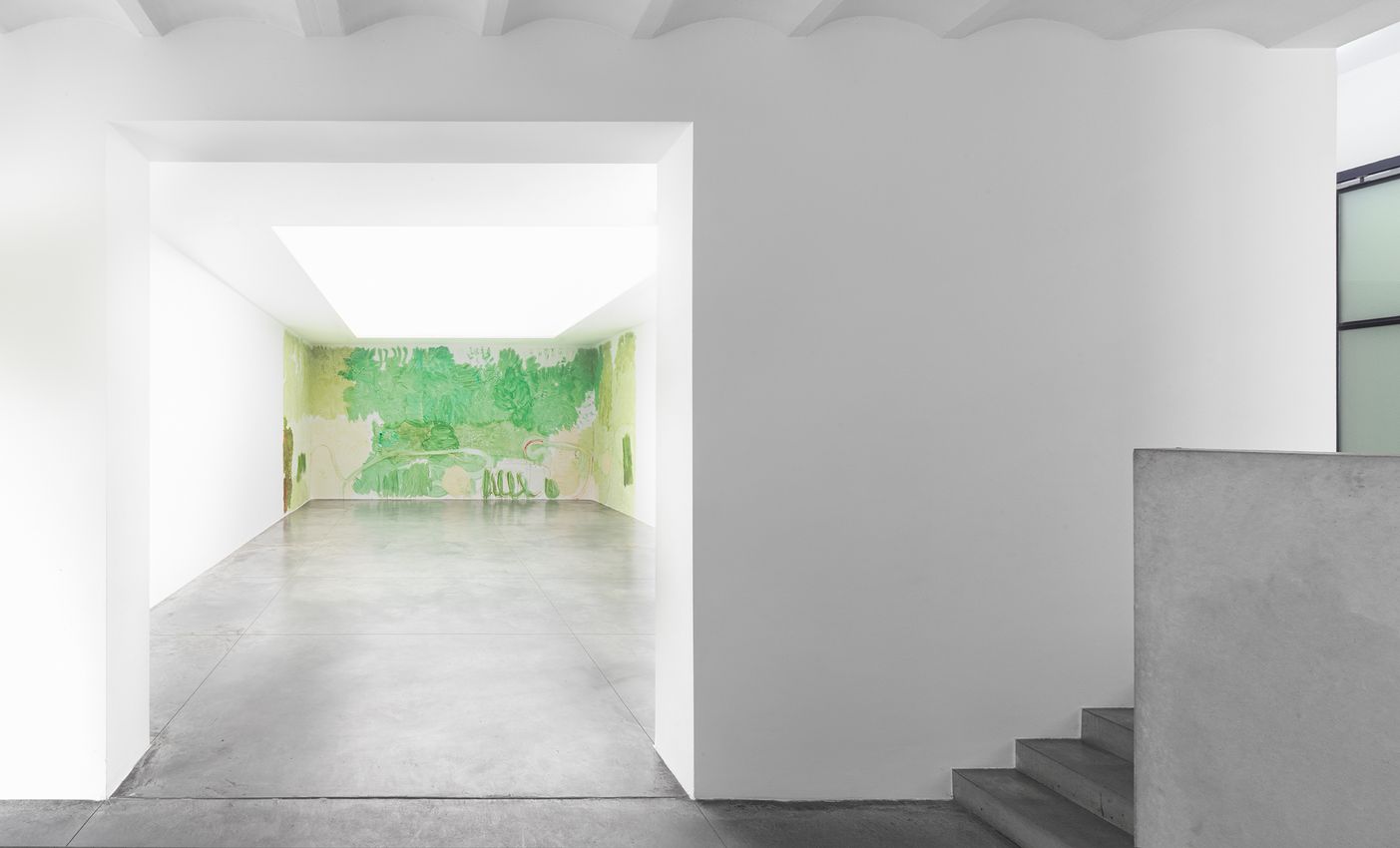
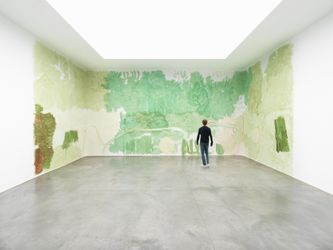
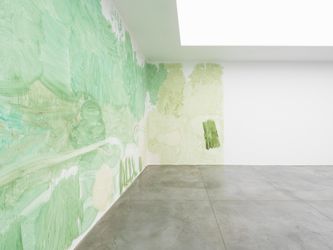
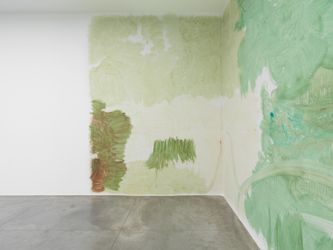
The exhibition opens in the main gallery with a large mural. This practice typifies Zhang Enli’s intuitive and spatial approach, but also serves as an introduction to his distinctive painterly style. The artist is known for his mastery of thinly applied pigments, which he manipulates using rapid and fluid brushstrokes. Moving from section to section, he adds semi-transparent layers to the wall but never allows texture to accumulate: the end result appears as an indivisible part of the architectural surface while retaining the vestiges of the physical gestures behind its creation.

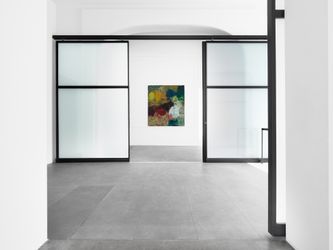
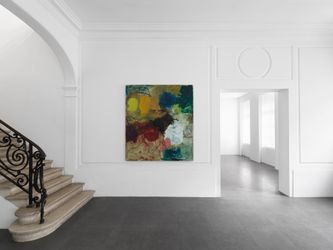
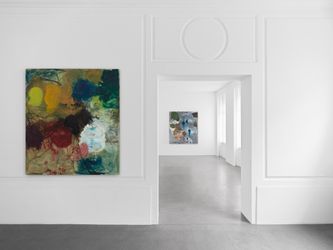
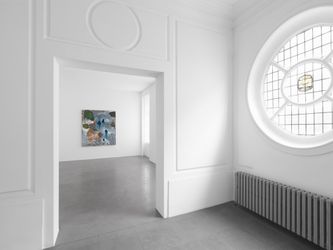
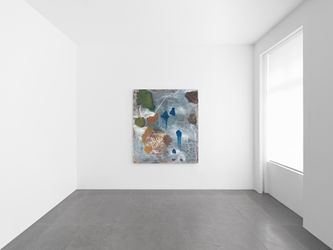
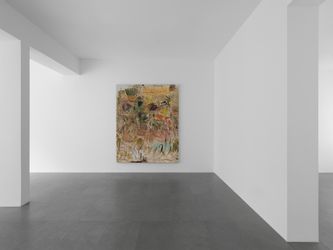
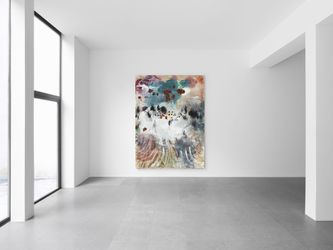
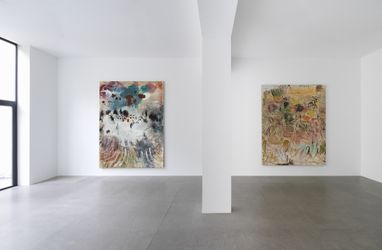
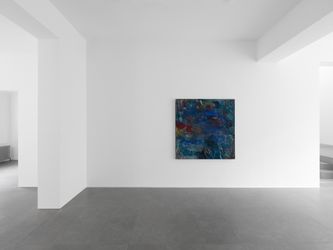
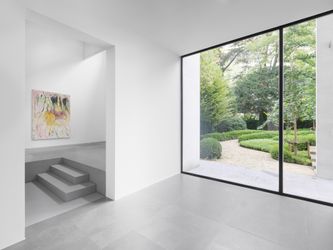
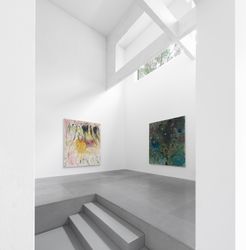
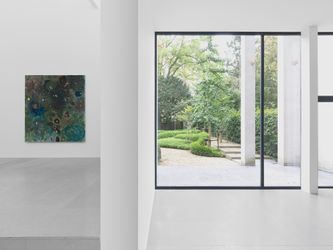
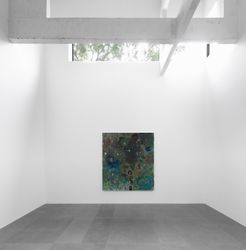
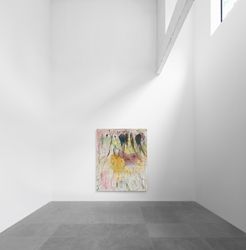
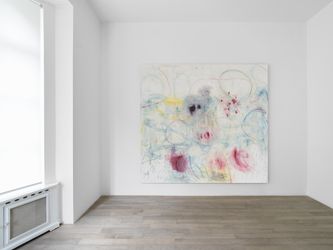
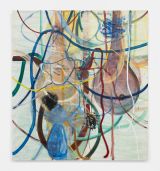
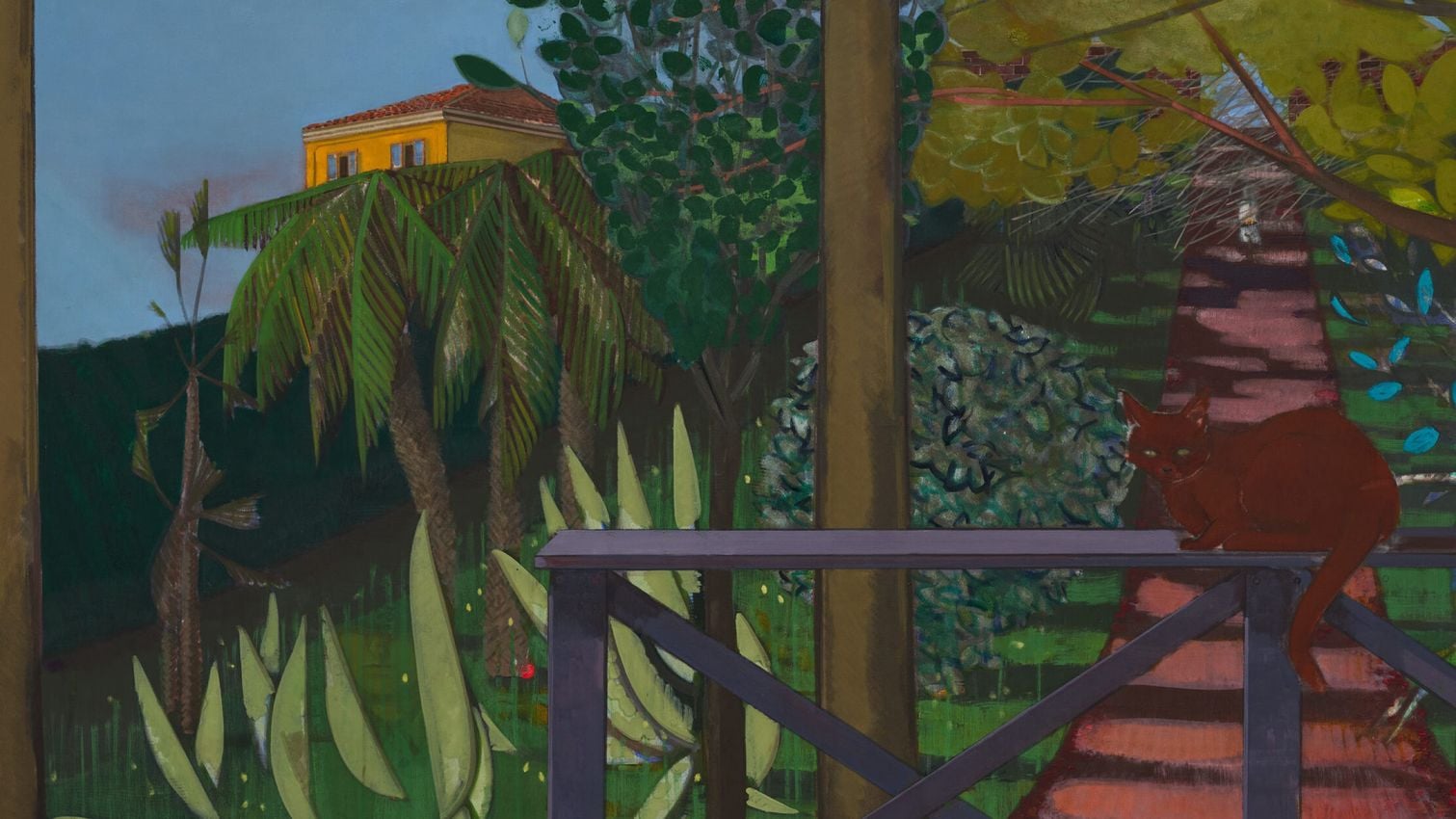
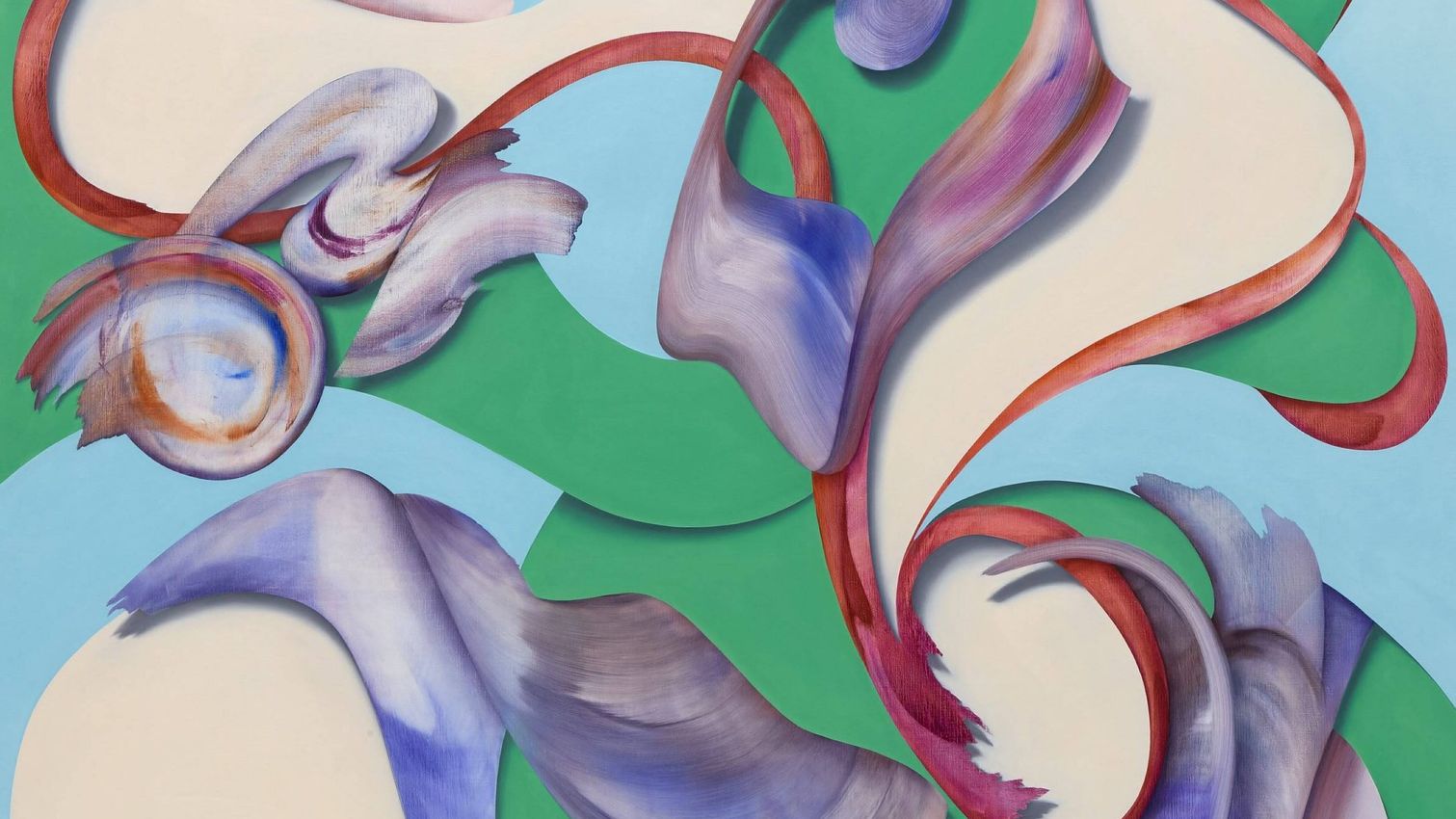
In the adjacent rooms, Zhang Enli presents a series of oil paintings that form a dynamic contrast to the mural. Like much of the artist’s abstract work, the canvases stem from his interest in human perception and the subconscious. They are directly related to memory and the ever-fluctuating relationship between past and present. More specifically, the artist investigates the fleeting moments in which traces of bygone events, places and impressions make themselves felt in contemporary day-to-day life. Though invisible and elusive, these sensations are intensely palpable and form the springboard for his explorations of colour and composition. Just as his life has embraced two diametrically opposed worlds-the rural/traditional and the urban/hyper-modern-so too is his technique indebted to both Western and Eastern artistic conventions. The gestural brushwork and sparsely applied paint, both of which are evocative of classical Chinese painting, feel worlds apart from the hard-edged urbanism of twenty-first century Shanghai. This is also true of the colour palette, which seems to have a greater affinity with early twentieth-century modernism than the loud colours one might associate with the bustling metropolis today. These delicate qualities imbue the oil paintings with an air of otherworldliness, as though they emanate from a more distant time and place.

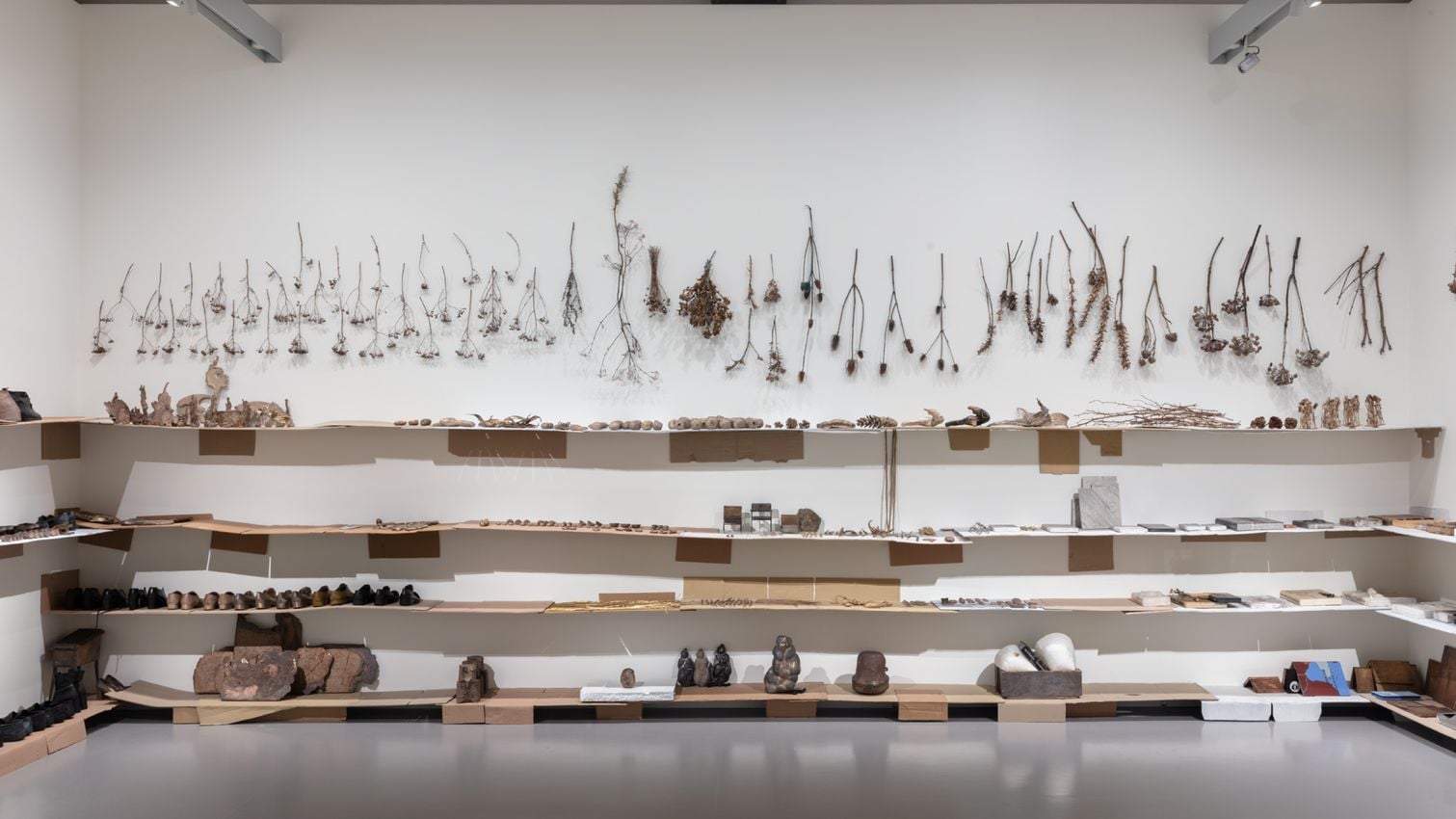
The second space is dominated by a monumental tower made of painted cardboard boxes. These in situ objects have long featured in Zhang Enli’s practice, either as the subjects of paintings or as part of actual physical structures. For the artist, cardboard boxes are humble, friendly and often overlooked items. He utilises them here to create a sculptural form, allowing painting to escape the confines of a two-dimensional canvas. This self-assembled ‘three-dimensional painting’ is as unpretentious as it is ingenious, and a tour de force in terms of scale and execution, echoing the verticality and architectural parameters of the gallery space.

The nearby ‘apartment’ series of paintings are based on impressions derived from spartan rooms occupied by the artist in various corners of Shanghai and at different stages of his life. They touch upon the notion of transition and evolution, both on a personal level and in terms of the city’s own meteoric development. While the ‘old’ Shanghai that the artist first encountered in the 1990s has disappeared beneath the weight of a futuristic megalopolis, Zhang Enli alludes once again to the meshing and merging of past and present. In this sense, the apartment series correlates socio-economic progress to different types of accommodation, and a fight for survival that often plays out across the city. From the chaos of the urban sprawl, dominated by some of the tallest buildings in the world, he distils a serene emptiness, devoid of all detail and lacking any human presence.

Zhang Enli (b. 1965, Jilin Province in China) lives and works in Shanghai. He graduated from the Arts & Design Institute of Wuxi Technical University, China in 1989. Selected solo exhibitions include Zhang Enli, K11 Foundation, Shanghai, China (2019), Bird Cage: a temporary shelter, Galleria Borghese and the Uccelliera, Rome, Italy (2019), Gesture and Form, Firstsite, Colchester, England (2017); Zhang Enli, Moca, Taipei, Taiwan (2015); Landscape, Museo d’Arte contemporanea di Villa Croce, Genoa, Italy (2013); and Space Painting, ICA, London, England (2013).

Read More

Installation Views

About the Artist

Zhang Enli’s lyrical works on canvas are often inspired by seemingly ordinary objects, which can range from cardboard boxes to pieces of string, or aspects of everyday life, such as urban structures or landscape features. In such works, Enli strives to capture the immaterial and essential qualities of the object, such as the implications of weight, transparency, softness or flexibility. Enli is also known for pushing the boundaries of painting by creating site-specific sculptures that play with the historical echoes of their surroundings or across the interiors of specially constructed wooden pavilions. Known as ‘space paintings’, these immersive installations take their cue from psychological and emotional experiences, such as childhood memories or the sights and sounds of specific places. The scale of these works and the vitality of the individual brushstrokes invite the viewer to contemplate both the physical nature of the creative process and the artist’s relationship to the space. His distinctive style—fluid, spontaneous and gestural—draws on both Eastern and Western painterly traditions. The flowing lines are reminiscent of traditional Chinese brush painting, for example, whereas visible grid lines point to the Renaissance technique of ‘squaring up’ a motif for enlargement and transfer to the canvas. Enli is a master of colour and light, preferring to work in thin washes of paint and clear, crystalline colours with dark contrasts. His lightness of touch lends his oeuvre an ethereal, harmonious and deeply evocative quality.

View Artist Profile

Also Exhibiting at Xavier Hufkens

About the Gallery
Xavier Hufkens is one of Europe’s leading galleries for contemporary art. Located in Brussels, the gallery maintains a diverse exhibition programme with solo exhibitions of the gallery artists as well as group exhibitions and special projects. The gallery deals in a distinctive combination of painting, drawing, sculpture, photography, video and installation-based work.

The origins of the gallery date back to 1987, when Xavier Hufkens opened a gallery space in an un-refurbished warehouse in the neighbourhood of the South Station (Midi) in Brussels. During the early years, the focus of the gallery was upon mid-career and emerging artists and the gallery is known for having introduced some of the most influential contemporary artists to Brussels at a time when they were still relatively unknown. British sculptor Antony Gormley, who is still affiliated with the gallery, Felix Gonzalez-Torres and Rosemarie Trockel all showed in Belgium for the first time with Xavier Hufkens (Gormley in 1987; Gonzalez-Torres in 1991 and Trockel in 1993).

In 1992, the gallery moved to a 19th-century townhouse at 6 rue Saint-Georges, close to the Avenue Louise. Completely renovated by Belgian architects Paul Robbrecht, Hilde Daem and Marie-José Van Hee, the house quickly gained a reputation for being not just one of the most beautiful contemporary art spaces in the Belgian capital, but also one of the most interesting. The expanded exhibition programme coincided with the additional representation of a number of established artists from Belgium and abroad, including Richard Artschwager, Thierry De Cordier and Jan Vercruysse. In 1997, Hufkens expanded the gallery further by annexing the adjacent building and a number of new artists joined the gallery, including Louise Bourgeois, Roni Horn and Thomas Houseago.

A second space in the same street, at 107 rue Saint-Georges, opened in spring 2013. Located in the Galerie Rivoli, a mixed-use commercial development from the 1970s, the new gallery space was designed by Swiss architect Harry Gugger, who was previously in partnership with Herzog and De Meuron. Slegten & Toegemann, Brussels, managed the project. A third space opened in spring 2020, located at 44 Rue Van Eyck, designed by architect Bernard Dubois.

An eclectic but very clear vision underpins all of the gallery’s activities: ‘The definition of the gallery was established from the start. The common thread, then and now, is quality over and above everything else, which I find more intellectually challenging than a forced definition. From the early days I juxtaposed established artists such as Michelangelo Pistoletto with someone like Felix Gonzalez-Torres when he was totally unknown. Today I still mix my work: I have no problem showing Malcolm Morley … alongside Robert Ryman, or Willem de Kooning.’ [Xavier Hufkens in The Art Newspaper, Issue 220, January 2011, published online: 20 January 2011]

Xavier Hufkens represents some thirty artists from different generations. He was part of the six-member selection committee for Art Basel during seven years and also participates in up to five international Arts Fairs annually. The gallery has partnerships with the estates of Louise Bourgeois, Willem de Kooning, Robert Mapplethorpe and Alice Neel.
View Gallery Profile
Address
6 rue St-Georges
St-Jorisstraat
Brussels
Belgium
Opening Hours
Tuesday – Saturday
11am – 6pm
(1)
Brussels 6 rue St-Georges
Xavier Hufkens
6 rue St-Georges, St-Jorisstraat, Brussels, Belgium

Opening hours
Tuesday – Saturday
11am – 6pm
The art world in focus
