





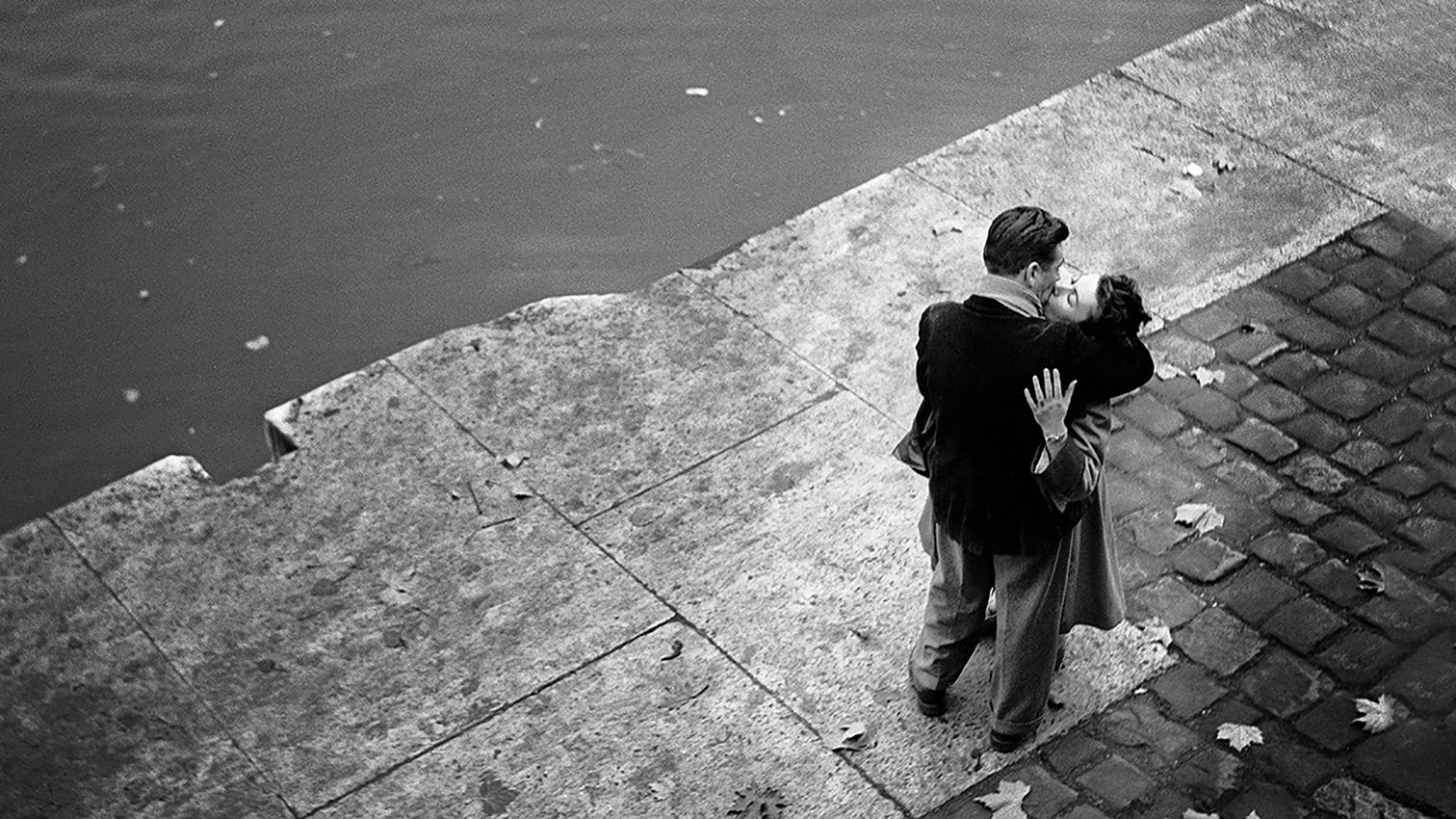
ED VAN DER ELSKEN
1925-1990, NetherlandsEd van der Elsken was a Dutch photographer and filmmaker best known for his raw, intimate street photography and photobooks that weave together documentary, fiction, and autobiography. Working primarily in black-and-white, and later in colour, he photographed lovers, marginal youth cultures, and everyday city life in places such as Paris, Amsterdam, Tokyo, and Hong Kong, and is widely regarded as a major figure in 20th-century photography. Landmark publications including Love on the Left Bank (1956) and Sweet Life (1966) are frequently cited as key works that reshaped the language of the photobook and influenced generations of documentary and diaristic photographers. Major surveys such as Ed van der Elsken — Camera in Love (2017—2018)—presented at the Stedelijk Museum Amsterdam, Jeu de Paume, Paris, and Fundación MAPFRE, Madrid, have further consolidated his reputation as a central reference point for contemporary documentary and street photography.
In 2026, the exhibition Ed van der Elsken: Up Close—opening at the Rijksmuseum on 19 June 2026 before travelling to the Nederlands Fotomuseum, the Stedelijk Museum Amsterdam, and Leiden University Libraries—will further foreground the scope of Van der Elsken’s work and legacy. Bringing together photographs from major Dutch collections and incorporating additional film material from the EYE Film Museum, this multi-institutional project underscores the continuing relevance of his images and moving-image experiments for understanding postwar visual culture and contemporary photographic practice.
Early life and Career
Born in Amsterdam in 1925, Van der Elsken came to photography in the late 1940s as part of a postwar generation exploring new documentary and humanist approaches to the medium. In 1950 he moved to Paris on the advice of photographer Emmy Andriesse and found work at Pictorial Service, the darkroom used by the then newly founded Magnum Photos, where he printed for Henri Cartier-Bresson and Robert Capa. Immersed in the bohemian milieu of Saint-Germain-des-Prés, he began photographing friends, parties, bars, and cramped apartments, building the body of work that would become Love on the Left Bank.
From the 1960s onwards Van der Elsken increasingly returned to the Netherlands, using Amsterdam as a stage while continuing to travel widely across Europe, Africa, and Asia. Over four decades he published more than 20 photobooks and made numerous films and slide works, often editing image and sound with an improvisational rhythm that echoed his restless, on-the-move way of working.
Works, Series and Methods
Van der Elsken’s breakthrough photobook Love on the Left Bank (1956), developed with the encouragement of Edward Steichen, has often been described as a photographic novel. Combining staged and candid images with a loose narrative about young bohemians in postwar Paris, the book follows the character Ann—who was in fact Australian artist and dancer Vali Myers—through cafés, bars, and streets on the Left Bank, capturing a romantic yet unsentimental image of youth, desire, and alienation at the dawn of European youth culture. Shot in grainy, high-contrast black-and-white with tilted perspectives, the work blurred distinctions between reportage and fiction and is widely credited with expanding what documentary photography and narrative photobooks could be.
Across subsequent titles, Van der Elsken continued to push the possibilities of the photobook. Bagara (1958) records village life, hunting, and ritual in Central Africa, while Jazz (1959) translates the atmosphere of Amsterdam’s Concertgebouw—where he photographed musicians including Chet Baker, Miles Davis, Louis Armstrong, Duke Ellington, and Sarah Vaughan—into a visually syncopated sequence often described as a kind of ‘visual score’. The ambitious travel epic Sweet Life (1966) draws together portraits, street scenes, and landscapes from journeys around the world, while Amsterdam (1979), Adventures in the Countryside (1980), and Discovering Japan (1988) connect his own movements and relationships to broader social and cultural landscapes. Printed in high-contrast tones with bold layouts, these books set exuberant celebrations of life against scenes of hardship and social tension, underlining his fascination with the contradictions of everyday experience rather than neutral reportage.
Largely self-taught, Van der Elsken was known for favouring emotional charge over technical polish. Working predominantly with natural light, he embraced blur, grain, off-kilter framing, and the accidents of handheld shooting as integral to a subjective, physically involved way of seeing. His photographs are rarely formally pristine, but they pulse with a distinctive emotional intensity that has made his work enduringly influential.
From black and white photography to colour
From the late 1960s, colour became increasingly central to Van der Elsken’s work, particularly in series made in Amsterdam, Tokyo, and other cities. Photographs such as Girl in the subway, Tokyo (1981) use saturated colour, flash, and close framing to intensify psychological tension and the sense of being pressed into the crowd. In parallel he produced film and slide pieces that frequently incorporated his own voice-over, reflecting on both his subjects and his role behind the camera and further dissolving the line between observation and participation. His final film, Bye (1990), a 1 hour 48 minute self-portrait made after he was diagnosed with incurable prostate cancer and completed only months before his death in December 1990 at the age of 65, follows the progress of his illness in diary-like fashion and culminates with his on-screen farewell—‘Show the world who you are’—a line that has come to encapsulate his defiant ethos.
Themes and Context
Across his oeuvre, Van der Elsken’s work explores youth, love, and sexuality alongside social marginality and the performance of identity in public space. He repeatedly sought out people living at the edges of mainstream society—bohemians, punks, gang members, and lovers—whom he depicted with a mixture of empathy and confrontation that avoided both detachment and sentimentality. Described in numerous articles as the enfant terrible of Dutch photography, he developed a gritty, unconventional style that has influenced later generations of photographers known for diaristic and subcultural work, including Larry Clark, Nan Goldin, and Wolfgang Tillmans.
His practice, which combined street photography, personal narrative, and occasional staging, sits within broader postwar documentary traditions while also anticipating the subjective, self-reflexive approaches to photography that emerged from the 1970s onward. Van der Elsken’s interest in sequence and montage meant he was less concerned with producing isolated iconic images than with building cumulative, rhythmically structured experiences across books and films. This emphasis contributed to his relative marginalisation in earlier museum histories oriented towards single prints but has become increasingly resonant in contemporary art’s interest in informal, hybrid, and process-based practices.
Exhibitions, Collections and Recognition
During his lifetime and posthumously, Van der Elsken’s photographs and films have been widely exhibited in museums and photography institutions. Solo and group exhibitions have taken place at the Rijksmuseum, Amsterdam (2018 and 2020), Nederlands Fotomuseum, Rotterdam (2010, 2019), Stedelijk Museum Amsterdam (1966, 1991, 2017), Jeu de Paume, Paris (2017), Fundación MAPFRE, Madrid (2018), Foam, Amsterdam (2005), The Metropolitan Museum of Photography, Tokyo (2003), and many other venues. The major retrospective Ed van der Elsken — Camera in Love at the Stedelijk in 2017, curated by Hripsimé Visser and co-organised with Jeu de Paume and Fundación MAPFRE, brought together more than 200 photographs alongside book dummies, contact sheets, and film excerpts, offering the most extensive overview of his work in a quarter century.
The Stedelijk Museum Amsterdam holds the largest institutional collection of Van der Elsken’s photographic prints and has played a central role in presenting his work. In 2019 the Rijksmuseum and Nederlands Fotomuseum jointly acquired his complete work archive, enabling detailed research into his working process from his early decision to become an independent photographer through to the projects he pursued while documenting his own final illness. Building on this research, the multi-venue exhibition Ed van der Elsken: Up Close opens at the Rijksmuseum on 19 June 2026 before travelling to Nederlands Fotomuseum, the Stedelijk Museum Amsterdam, and Leiden University Libraries, presenting both well-known images and previously unseen photographs, contact sheets, notes, book designs, and film fragments drawn from collections including the EYE Film Museum.
Van der Elsken’s work is held in major public collections such as the Stedelijk Museum Amsterdam and Nederlands Fotomuseum and continues to be revisited in gallery exhibitions at venues including Annet Gelink Gallery and Howard Greenberg Gallery.
Ed van der Elsken FAQs
What is Ed van der Elsken best known for?
Ed van der Elsken is best known for his innovative street photography and photobooks that merge documentary, fiction, and autobiography. Works such as Love on the Left Bank (1956) and Sweet Life (1966) are regarded as landmarks that expanded the possibilities of documentary photography and narrative photobooks and influenced later generations of socially engaged and diaristic photographers.
What themes does Ed van der Elsken explore in his work?
Van der Elsken’s work explores youth, love, sexuality, and the lives of people on the margins of society, from bohemians in 1950s Paris to street cultures in Amsterdam, Tokyo, and elsewhere. He is particularly interested in how individuals perform their identities in public, often using close-up framing, grain, and direct gazes to convey a sense of intimacy and confrontation.
How did Ed van der Elsken influence contemporary photography?
Through his gritty visual style, narrative photobooks, and willingness to stage or direct scenes, Van der Elsken broadened the language of documentary photography and helped legitimise more subjective, personal approaches to the medium. Photographers such as Larry Clark, Nan Goldin, and Wolfgang Tillmans have been linked to his focus on subcultures, intimacy, and everyday life, and his books remain touchstones for artists working with narrative and diaristic forms.
Where can I see Ed van der Elsken’s work?
Van der Elsken’s photographs are held in major public collections including the Stedelijk Museum Amsterdam and Nederlands Fotomuseum, Rotterdam. In 2026, the multi-venue retrospective Ed van der Elsken: Up Close at the Rijksmuseum, Nederlands Fotomuseum, the Stedelijk Museum Amsterdam, and Leiden University Libraries offers an extensive overview of his work, bringing together iconic images, previously unseen material, and film excerpts from Dutch museum and archive collections. His work is regularly featured in museum exhibitions and photography festivals internationally, while galleries such as Annet Gelink Gallery in Amsterdam and Howard Greenberg Gallery in New York continue to show both classic images and lesser-known colour series; key photobooks remain available in facsimile and reprint editions.
What is Van der Elsken’s photo book Love on the Left Bank about?
Van der Elsken’s Love on the Left Bank is a photographic novel set in 1950s Paris that follows the fictional character Ann and her circle of bohemian friends in Saint-Germain-des-Prés. Combining staged and documentary photographs with narrative text, the book portrays love, freedom, and disillusionment among a postwar youth culture and is celebrated for its cinematic sequencing, gritty style, and role in redefining documentary photography and the photobook form.
Ocula | 2026

Explore and Follow Artists Shaping Contemporary Art
A respected voice in contemporary art discourse.
Focusing on ambitious storytelling and insightful art-world commentary. Ocula Magazine publishes in-depth interviews, critical essays and timely analysis on the artists, exhibitions and ideas driving the global art world.
Learn more about Ocula Magazine
Showcasing the best of the art world.
Ocula partners with galleries from around the world to highlight their artists, artworks and exhibitions. Gallery membership is by application and invitation, with each member vetted by an independent panel.
Learn more about Ocula Membership
Specialises in the sale of major artworks.
Led by a team with deep ties to the world’s leading auction houses, galleries and collectors. Ocula’s advisory team offers bespoke services to high-net-worth clients from around the world who are looking to acquire the best of contemporary and modern art.
Learn more about our team and services