





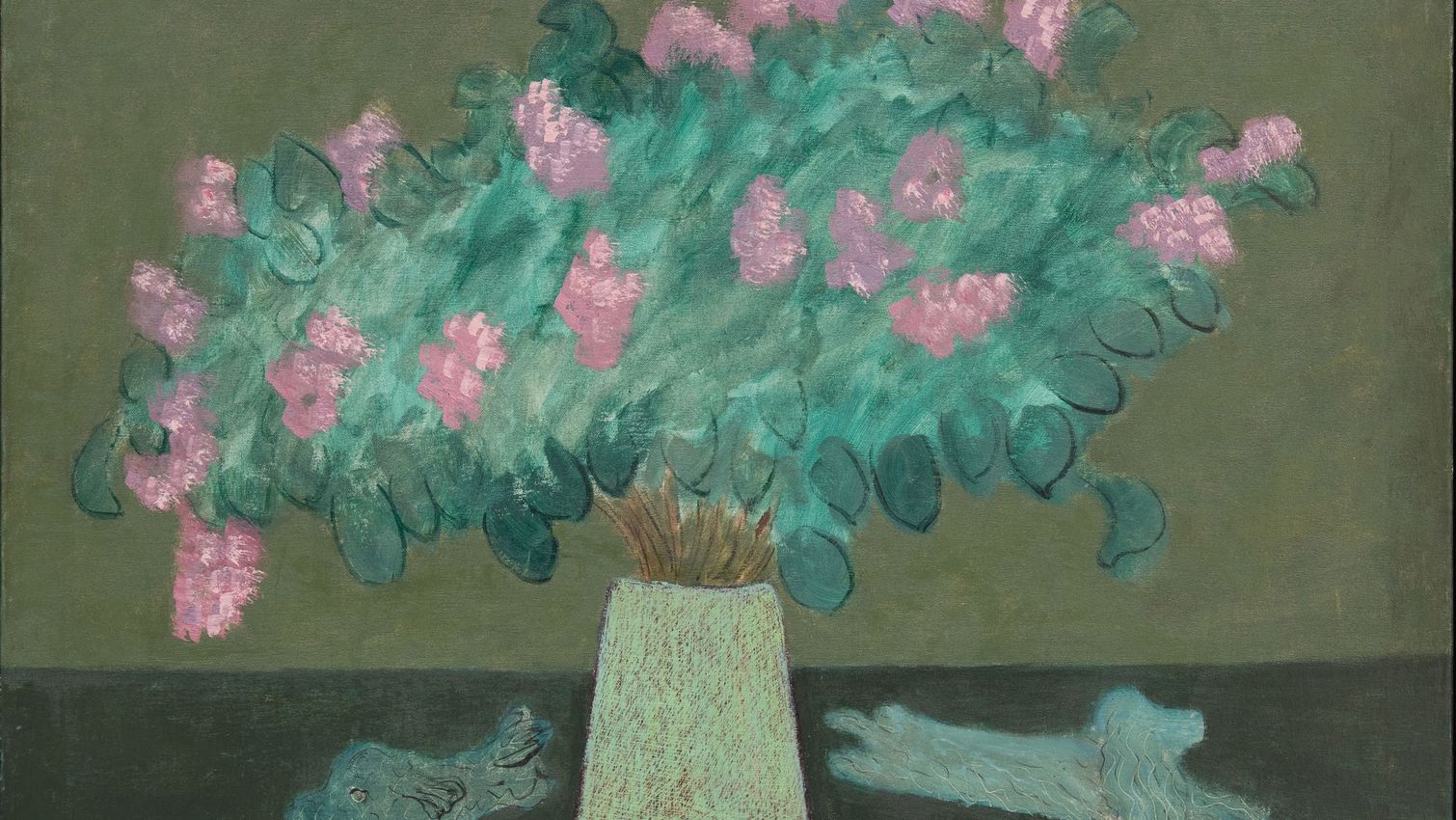
MILTON AVERY
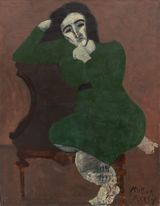
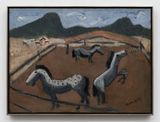
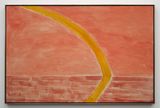
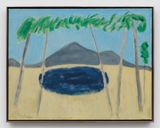
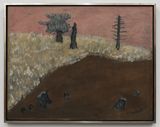
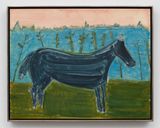
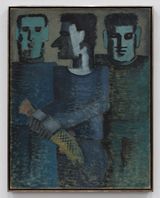
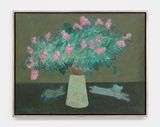
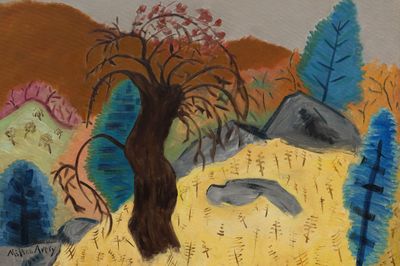
1885-1965, United StatesOne of the most influential artists of the twentieth century, Milton Avery (1885 - 1965) is celebrated for his luminous paintings of landscapes, figures and still lifes, which balance distillation of form with free, vigorous brushwork and lyrical colour.
Born in Altmar, New York, in 1885, Milton Avery moved with his family to Hartford, Connecticut in 1905. After studying at the Connecticut League of Art Students, he worked a succession of night jobs in order to paint during the daytime. Avery moved to New York in 1925 and in 1926 married Sally Michel, whose earnings as an illustrator enabled him to concentrate more fully on painting. His first exhibition in New York was in 1927, though it was not until 1935 that he had his first one-man exhibition, at the Valentine Gallery, New York. In 1944 his first solo museum exhibition opened at the Phillips Memorial Gallery, Washington, DC. In 1952 he visited Europe for the first time, travelling to London, Paris and the French Riviera. A retrospective exhibition opened at the Whitney Museum of American Art, New York, in 1960; a second retrospective was held at the Whitney Museum of American Art in 1982. In 1962 Milton Avery: Painting 1930-1960 by Hilton Kramer, the first monograph on Avery, was published. Milton Avery died on 3 January 1965 in New York, aged 79.
Avery pursued an independent and steadfast course throughout his career. Always drawing imagery from the world around him, in particular the landscapes and people he loved, his art is as intimate and accessible as it is towering in its ambition and achievement. With his focus on simplified forms and use of colour as a primary means of expression, in the 1930s he profoundly influenced and won the devotion of fellow artists including future abstract expressionists Mark Rothko, Adolph Gottlieb and Barnett Newman. Rothko in particular admired the “gripping lyricism” of Avery’s work. However, while seeking to express an idea in its simplest form, Avery never sought pure abstraction for himself. Above all, he is an artist who resists categorisation. “I never have any rules to follow,” he stated in 1952, “I follow myself.”
Avery’s work is represented in museums and private collections worldwide, including: Albright-Knox Art Gallery, Buffalo, NY; Art Institute of Chicago, IL; Hirshhorn Museum and Sculpture Garden, Washington, DC; Los Angeles County Museum of Art, CA; Metropolitan Museum of Art, NY; Museum of Fine Arts, Boston, MA; Museum of Modern Art, NY; National Gallery of Art, Washington, DC; National Gallery of Australia, Canberra; Philadelphia Museum of Art, PA; The Phillips Collection, Washington, DC; San Francisco Museum of Modern Art, CA; Smithsonian American Art Museum, Washington, DC; Tate, London; Thyssen-Bornemisza Museum of Art, Madrid, Spain; Walker Art Center, Minneapolis, MN; Whitney Museum of American Art, NY; Yale University Art Gallery, New Haven, CT.
Courtesy Victoria Miro

Works at Victoria Miro




Recently Exhibited



Works Elsewhere












Explore and Follow Artists Shaping Contemporary Art
A respected voice in contemporary art discourse.
Focusing on ambitious storytelling and insightful art-world commentary. Ocula Magazine publishes in-depth interviews, critical essays and timely analysis on the artists, exhibitions and ideas driving the global art world.
Learn more about Ocula Magazine
Showcasing the best of the art world.
Ocula partners with galleries from around the world to highlight their artists, artworks and exhibitions. Gallery membership is by application and invitation, with each member vetted by an independent panel.
Learn more about Ocula Membership
Specialises in the sale of major artworks.
Led by a team with deep ties to the world’s leading auction houses, galleries and collectors. Ocula’s advisory team offers bespoke services to high-net-worth clients from around the world who are looking to acquire the best of contemporary and modern art.
Learn more about our team and services