





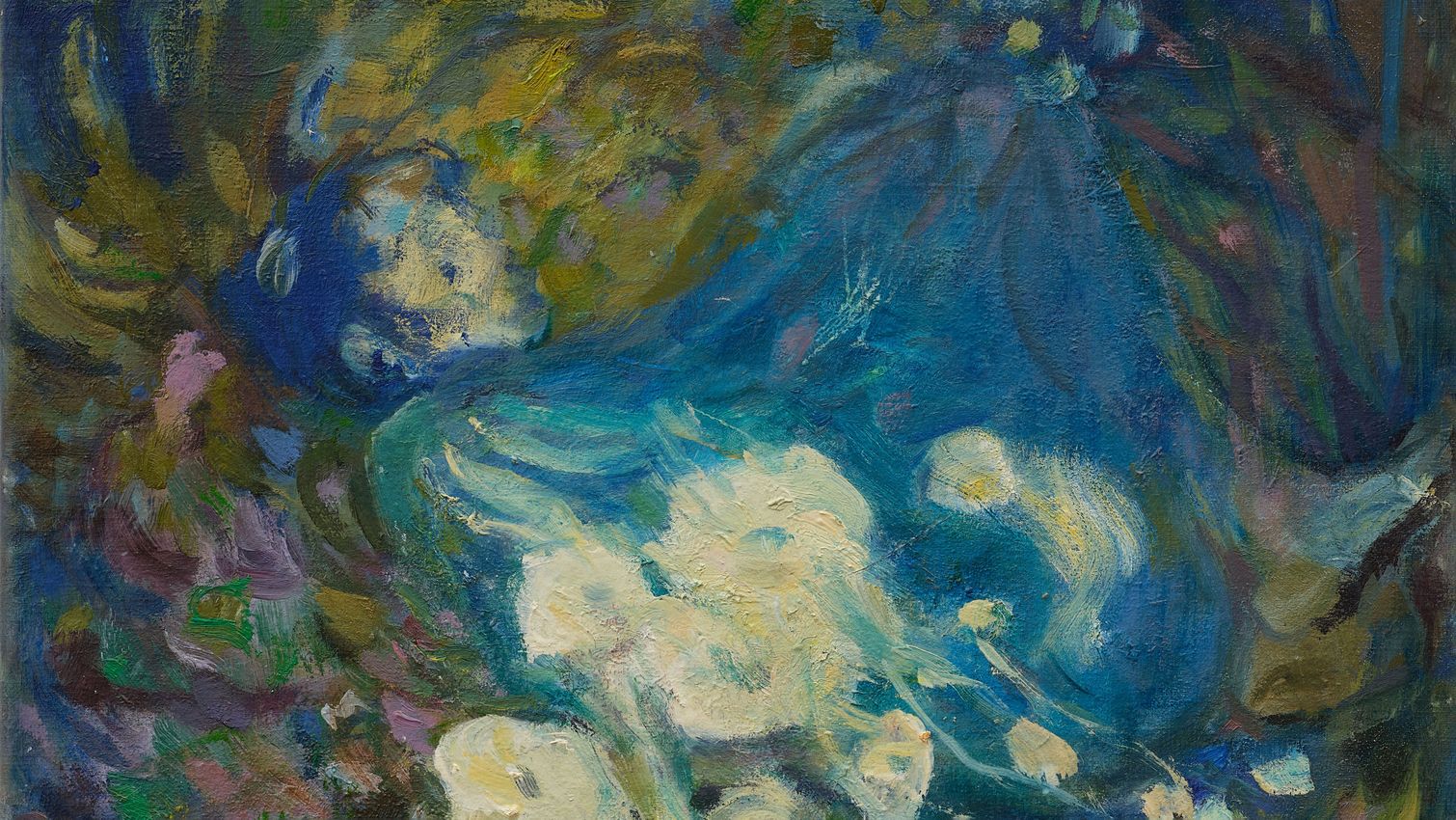
SÉRAPHINE PICK
b. 1964, New ZealandSéraphine Pick is one of Australasia’s leading contemporary painters, celebrated for her psychologically charged, dreamlike compositions that explore memory, identity, and the human psyche. Working in oil, watercolour, and mixed media, she blends figuration and abstraction to create worlds that feel both intimate and surreal.
Born in Kawakawa, Northland (in the Bay of Islands), New Zealand, Pick emerged in the 1990s as part of the ‘Pencilcase Painters’ from the University of Canterbury’s Ilam School of Fine Arts—alongside Shane Cotton, Bill Hammond, and Saskia Leek—developing a visual language rooted in personal symbolism and art-historical reference. Her work gained wider recognition after being featured in the opening credits of Oscar-winning director Jane Campion’s BBC TV series Top of the Lake.
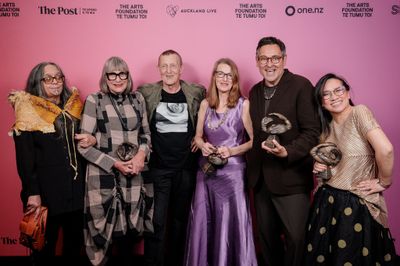
Pick’s achievements have been marked by several major honours, including the 2025 Arts Foundation Te Tumu Toi Laureate Award, which recognised her exceptional contribution to visual art in New Zealand and named her as one of eight artists honoured that year. Her paintings are held in significant public collections, including Auckland Art Gallery Toi o Tāmaki, Christchurch Art Gallery Te Puna o Waiwhetū, the Museum of New Zealand Te Papa Tongarewa, and the National Gallery of Victoria.
Early Life
In 1987, Pick graduated from the School of Fine Arts at the University of Canterbury with a Bachelor of Fine Arts (Painting) in 1987. In 1991, this was followed by a teaching diploma from the Christchurch College of Education (now part of the University of Canterbury).
‘Pencil case Painters’ & Personal Iconography (Late 1980s–1990s)
Pick’s early work is associated with the ‘Pencil case Painters’, a group of Ilam graduates that includes Shane Cotton, Tony de Latour, Peter Robinson, Bill Hammond, and Saskia Leek. Each worked in an expressive yet whimsical style akin to doodling. They took inspiration from pop culture, graffiti, post-modernism, and the punk aesthetic sensibility emerging among American artists at the time. Writing about Pick’s work of the 1990s, curator Lara Strongman notes that ‘Pick frequently incorporated renditions of talismanic objects from her childhood (red boots, party dresses, paper-bag masks, iron bedframes) in earlier works, leading her practice to be viewed misleadingly as autobiographical’.
In 1994, Pick received the Olivia Spencer Bower Award, providing her with the financial freedom to concentrate entirely on painting. In the following year, she moved to Wellington to take up the Rita Angus Residency (1995). These two awards had a significant impact on Pick’s artwork, with the time away from her secondary career as a teacher allowing her greater development as an artist. In 1999, she was also awarded the prestigious Frances Hodgkins Fellowship at the University of Otago.
While Pick’s earlier work drew upon Medieval and pre-Renaissance imagery alongside naive art and pop culture references, by the mid-1990s, she had moved towards creating deeply personal ‘dreamscapes’, populating her paintings with symbolic domestic objects such as beds, dresses, and suitcases—floating surreally across richly textured surfaces. Speak (1996), now in the Chartwell Collection, epitomises this period with its floating, symbolic figures and dreamlike atmosphere. Through these floating domestic objects, these dark scenes highlight how memory injects significance into everyday objects.
Development: Psychological Narratives & Figure (Late 1990s–2000s)
Travels to Europe in the mid-90s transformed Pick’s practice as she encountered the continent’s rich art history. Pick began painting more sensual forms in greens, blues, warm pinks, and browns, which she applied thickly to the canvas to create almost sculptural images and figures. Over time, the painting surface flattened, with the figurative elements pushing up against the picture plane.
Over the years, Pick’s art has continued to evolve, as dark tableaus in oil have given way to more complex works. The artist once stated in an interview, ‘I keep changing. I don’t sit still for long.’ Yet while bright colours, sinuous lines, and a free pointillist style have worked their way into her practice, elements of tonal and psychological darkness remain. In the House (2002, Christchurch Art Gallery) explores the domestic uncanny through emotionally resonant, spectral compositions, while Sea of Love (2009) traverses complex themes of human relationships played out in a dark, blue-toned void.
Painting in the Internet Age
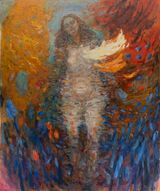
Since 2013, Séraphine Pick has been mining the internet for inspiration in her exploration of a universal human experience. Thematic Google image searches launch the artist into visual explorations of popular culture, group dynamics, collective consciousness, and ideas of belonging. Pick’s practice also evolved to foreground the female figure set in ambiguous psychological spaces, rendered with lush palettes and incised lines.
Pick’s ‘drunk paintings’, seen in her 2013 solo show Wankered Again at Michael Lett, Auckland reflects the darker aspects of an expansive online archive of drunk teens’ antics. Her ‘White Noise’ (2015) series was spawned from a Google search for crowds that led to images of hippie music festivals from the 1960s and 1970s. Material experimentation emerged more strongly during this period, expanding the range of media and scale of her work.
Latest Practice: 2020s–2025
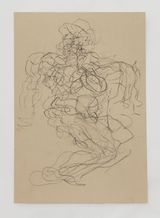
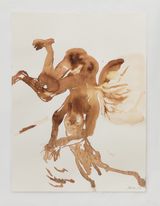
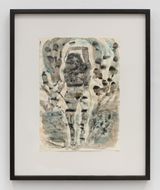
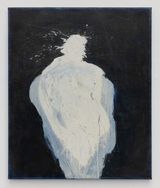
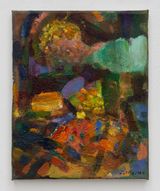
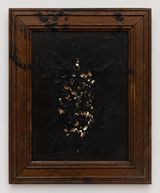
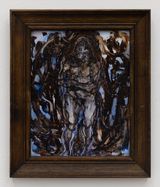
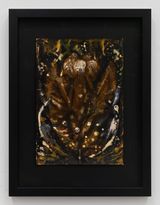
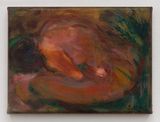
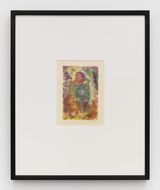
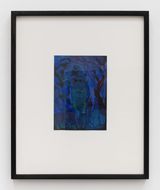
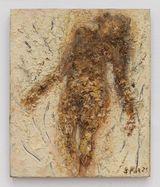
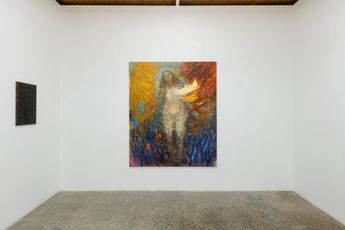
Pick’s body of work has continued to evolve. Works presented in the exhibition Paintings at Michael Lett, Auckland (23 July–23 August 2025) were characterised by vivid, acid-bright colour palettes combined with subtle tonal shifts, and fluid oil washes interlaced with incised, and web-like lines. Figures are positioned in ambiguous states between presence and spectral absence, evoking tensions inherent in digital-age identity. Pairing (2025) and Mind Lag (2025) exemplify her continued exploration of psychological space and digital mediation.
Selected Solo and Group Exhibitions
- Paintings — Michael Lett, Auckland (2025)
- Rider Instinct — Te Uru Waitākere Contemporary Gallery, Auckland (2024)
- Coloured Mud (with Jaime Jenkins) — Michael Lett, Auckland (2021)
- Pages of Mercury (group) — City Gallery Wellington (2022)
- White Noise (survey) — The Dowse Art Museum, Lower Hutt (2015)
- Tell Me More (survey) — Christchurch Art Gallery Te Puna o Waiwhetū (2009)
Public Collections
Pick’s work is held in many major public and private collections, including:
- Auckland Art Gallery Toi o Tāmaki
- Christchurch Art Gallery Te Puna o Waiwhetū
- Museum of New Zealand Te Papa Tongarewa
- National Gallery of Victoria
Awards and Residencies
- Olivia Spencer Bower Foundation Art Award (1994)
- Rita Angus Artist Residency (1995)
- Frances Hodgkins Fellowship, University of Otago (1999)
- In 2025, the Arts Foundation Te Tumu Toi announced Pick as one of eight artists recognised for exceptional achievement in their fields.
Séraphine Pick FAQs
What themes define Séraphine Pick’s work?
Seraphine Pick’s paintings traverse memory, subconscious states, and the effect of digital culture on identity, often referencing private and societal anxieties through motifs of domestic objects and the human figure.
How has Seraphine Pick’s practice evolved?
She has moved from memory-infused, symbolic dreamscapes and autobiographical objects to a focus on psychological exploration, digital imagery, and material experimentation; notably, her recent work investigates the nature of presence and absence in the digital era.
Where can I see Seraphine Pick’s latest work?
Seraphine Pick’s latest body of work can be viewed at galleries representing her, for example in 2025, her work was featured at Michael Lett, Auckland, in the 2025 exhibition Paintings. Pick’s work is also accessible in Australia, where she is represented by Station Gallery.
Has Serphine Pick received major awards?
Seraphine Pick has received numerous awards, including the Olivia Spencer Bower Foundation Art Award (1994), Rita Angus Artist Residency (1995), and Frances Hodgkins Fellowship (1999). In 2025, the Arts Foundation Te Tumu Toi announced Pick as one of eight artists recognised for exceptional achievement in their fields.
Does Séraphine Pick work in media besides painting?
Seraphine’s practice has expanded in recent years to include ceramics and mixed media, as seen in her collaborative project ‘Coloured Mud’ with Jaime Jenkins.
Ocula | 2025

View Séraphine Pick's Artworks




















Explore Séraphine Pick's Exhibitions









Explore and Follow Artists Shaping Contemporary Art
A respected voice in contemporary art discourse.
Focusing on ambitious storytelling and insightful art-world commentary. Ocula Magazine publishes in-depth interviews, critical essays and timely analysis on the artists, exhibitions and ideas driving the global art world.
Learn more about Ocula Magazine
Showcasing the best of the art world.
Ocula partners with galleries from around the world to highlight their artists, artworks and exhibitions. Gallery membership is by application and invitation, with each member vetted by an independent panel.
Learn more about Ocula Membership
Specialises in the sale of major artworks.
Led by a team with deep ties to the world’s leading auction houses, galleries and collectors. Ocula’s advisory team offers bespoke services to high-net-worth clients from around the world who are looking to acquire the best of contemporary and modern art.
Learn more about our team and services