





SUBODH GUPTA
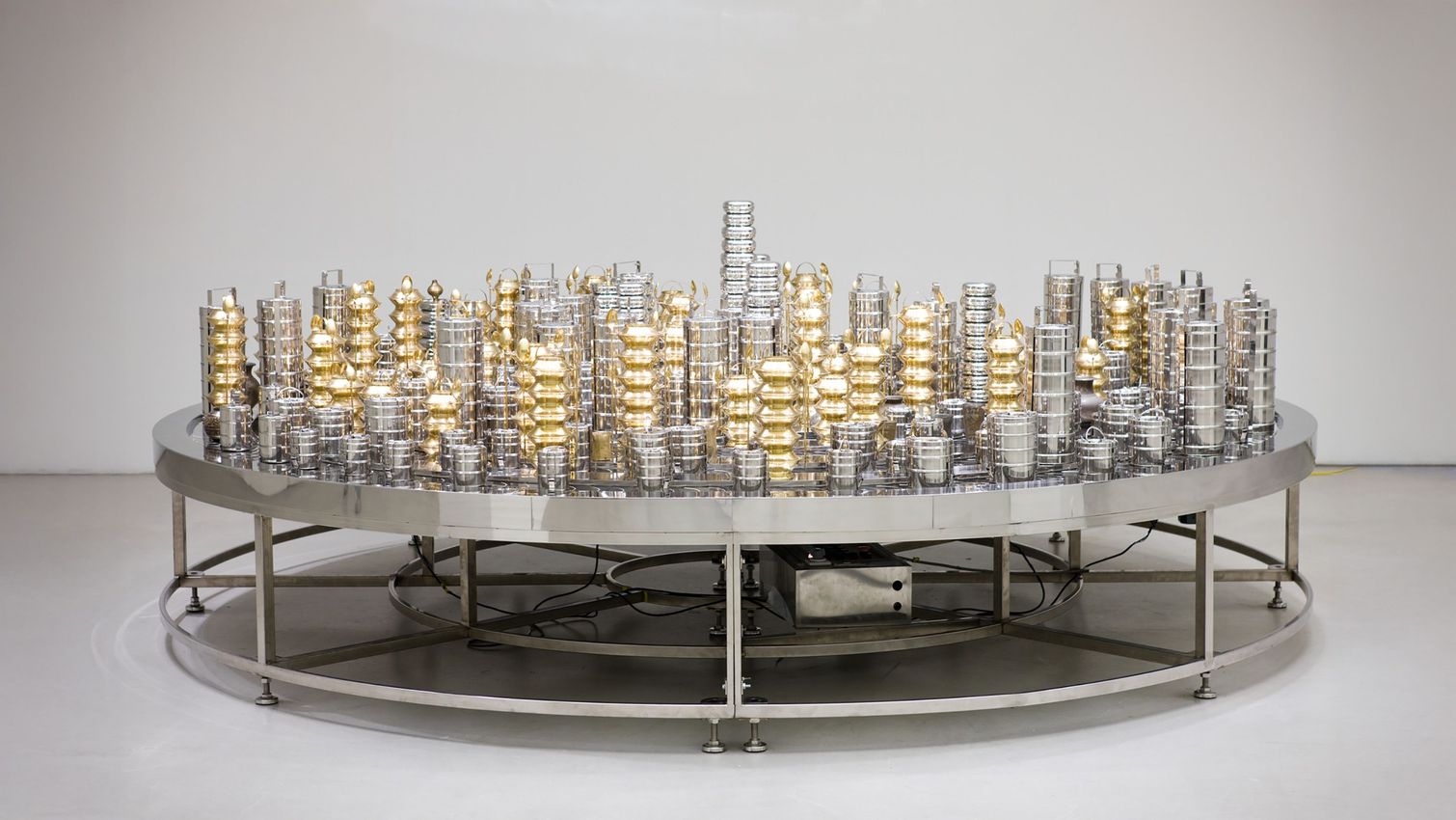
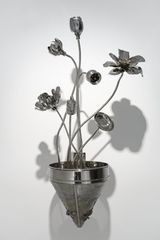
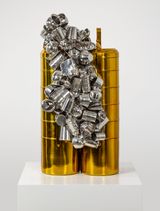
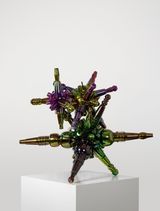
b. 1964, IndiaSubodh Gupta’s sculpture incorporates everyday objects that are ubiquitous throughout India, such as steel tiffin lunch boxes, thali pans, bicycles and milk pails. From such ordinary items the artist produces breathtaking sculptures that reflect on the economic transformation of his homeland. His works investigate the sustaining and even transformational power of the everyday.
Gupta has long explored the effects of cultural translation and dislocation through his work, demonstrating art’s ability to transcend cultural and economic boundaries. His ideas have taken shape in a variety of different media, from film, video and performance to steel, bronze, marble, and paint, which Gupta employs for both their aesthetic properties and as conceptual signifiers carrying a wealth of connotations. The mass-produced objects that have played such a prominent role in his art offer an ambiguous symbolism: while they are seen by those in the West as exotic and representative of Indian culture, to those in India they are common items that are used daily in almost every household, from the poorest to the most wealthy. Gupta harnesses these varying associations and, in the process, makes his materials subjects in their own right.
In recent years Gupta has shifted his attention from mass produced stainless steel objects to found objects. He is fascinated by the traces left on these objects by their previous owners, turning them from inanimate utensils into items charged with stories of lives lived, visualised by scratches and dents. Through them, viewers can detect what anthropologist and writer Bhrigupati Singh describes as ‘the patterns we create through our diurnal scrapings, the marks we leave night and day, through rise and fall, joy and sorrow, on the surfaces of our ordinary domestic vessels that journey with us, sometimes for years. What we discover in the process are intricately crafted pieces of the cosmos.’
Before his education as a visual artist, Gupta, who is passionate about film, was a street theatre actor. The artist’s change of residence from his native village to a major urban centre is in a way an allegory of today’s India. The growing middle class that migrated from villages to large cities is eagerly clearing the path for change and the dominance of global capitalist culture. Gupta is interested in what inevitably disappears in the process of such change.
Courtesy Hauser & Wirth

Works at Hauser & Wirth



Recently Exhibited

Works Elsewhere

















Explore and Follow Artists Shaping Contemporary Art
A respected voice in contemporary art discourse.
Focusing on ambitious storytelling and insightful art-world commentary. Ocula Magazine publishes in-depth interviews, critical essays and timely analysis on the artists, exhibitions and ideas driving the global art world.
Learn more about Ocula Magazine
Showcasing the best of the art world.
Ocula partners with galleries from around the world to highlight their artists, artworks and exhibitions. Gallery membership is by application and invitation, with each member vetted by an independent panel.
Learn more about Ocula Membership
Specialises in the sale of major artworks.
Led by a team with deep ties to the world’s leading auction houses, galleries and collectors. Ocula’s advisory team offers bespoke services to high-net-worth clients from around the world who are looking to acquire the best of contemporary and modern art.
Learn more about our team and services