





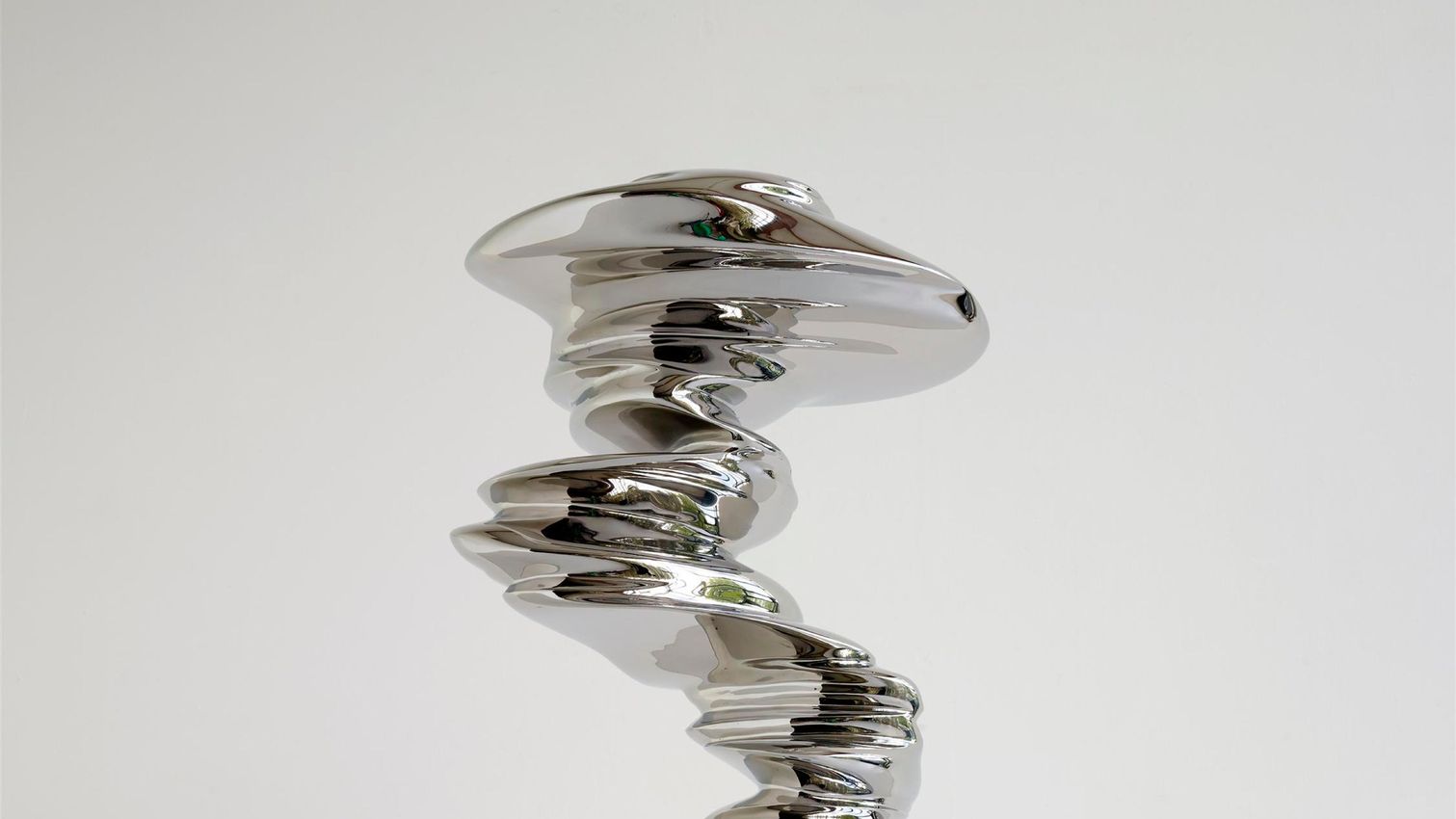
TONY CRAGG
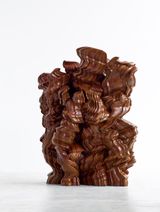
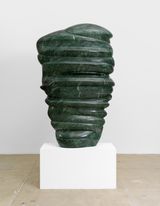
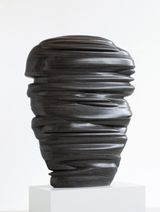
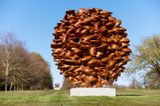
b. 1949, United KingdomTony Cragg is one of Britain’s foremost sculptors. Constantly pushing to find new relations between people and the material world, he works with stone, wood, glass, aluminium, cast bronze and cast iron, and found objects, from plastic consumer goods to rubbish from the streets. His early stacked works present a taxonomical understanding of the world, and he has said that he sees manmade objects as “fossilized keys to a past time which is our present”. So too, the witty floor and wall arrangements of objects that he started making in the 1980s blur the line between manmade and natural landscapes: they create an outline of something familiar, where the contributing parts relate metaphorically to the whole. Cragg originally trained as a scientist and had a job as a lab technician at the National Rubber Producers Research Association, 1966–68, an experience that is reflected in his vigorous approach to material. He has said, “I see a material or an object as having a balloon of information around it”, 1992, and he pummels this aura in different ways across two broad bodies of work – Early Forms and Rational Beings. The Early Forms explore the possibilities of distorting everyday vessels such as vases or plastic bottles, morphing into and around themselves. The Rational Beings sculptures take the outline of a human gesture or profile as starting point for exuberant improvisations on natural processes.
Tony Cragg was born in Liverpool, UK in 1949 and has lived and worked in Wuppertal, Germany since 1977. He has a BA from Wimbledon School of Art, 1973, and an MA from the Royal College of Art, 1977. Among many major solo shows he has exhibited at CAFA Museum in Beijing, 2012, the Scottish National Gallery, Edinburgh, 2011, Tate Gallery Liverpool, UK, 2000, Museo Nacional Centro de Arte, Reina Sofia, Madrid, 1995, Stedelijk van Abbemuseum, Eindhoven, 1991, and Tate Gallery, London, 1988. He represented Britain at the 53rd Venice Biennale in 1988 and in the same year was awarded the Turner Prize at the Tate Gallery, London. He has been a Professor at Ecole Nationale Superieure des Beaux Arts, Paris, 1999–2009, and Professor at Kunstakademie, Dusseldorf, 2009 – present. He was made a CBE in 2003, elected a Royal Academician in 1994; received the Praemium Imperiale for Sculpture, Tokyo, 2007, and he was Awarded the 1st Class Order of Merit of the Federal Republic of Germany, 2012.
Courtesy Lisson Gallery

Recently Exhibited



Exhibiting Elsewhere

Works Elsewhere






Tony Cragg in Ocula Magazine








Explore and Follow Artists Shaping Contemporary Art
A respected voice in contemporary art discourse.
Focusing on ambitious storytelling and insightful art-world commentary. Ocula Magazine publishes in-depth interviews, critical essays and timely analysis on the artists, exhibitions and ideas driving the global art world.
Learn more about Ocula Magazine
Showcasing the best of the art world.
Ocula partners with galleries from around the world to highlight their artists, artworks and exhibitions. Gallery membership is by application and invitation, with each member vetted by an independent panel.
Learn more about Ocula Membership
Specialises in the sale of major artworks.
Led by a team with deep ties to the world’s leading auction houses, galleries and collectors. Ocula’s advisory team offers bespoke services to high-net-worth clients from around the world who are looking to acquire the best of contemporary and modern art.
Learn more about our team and services