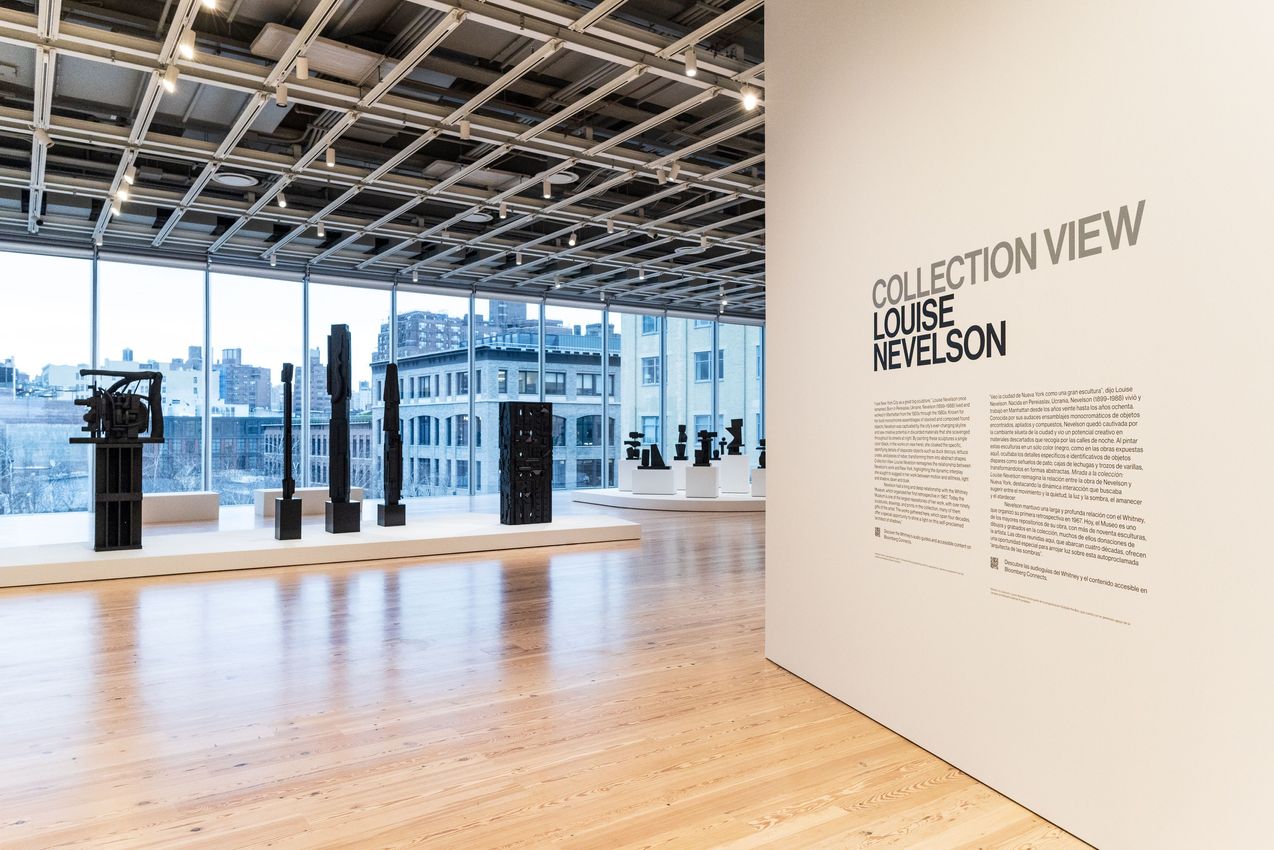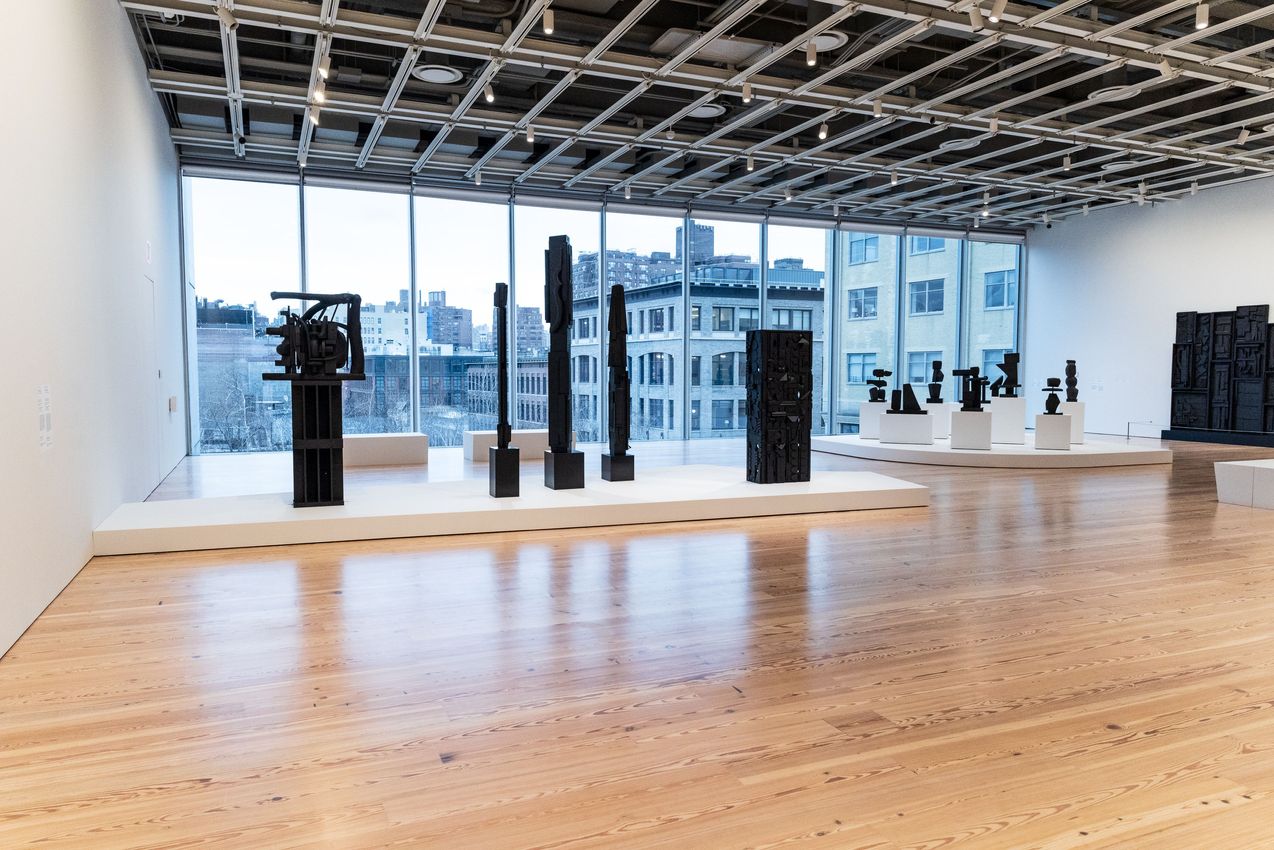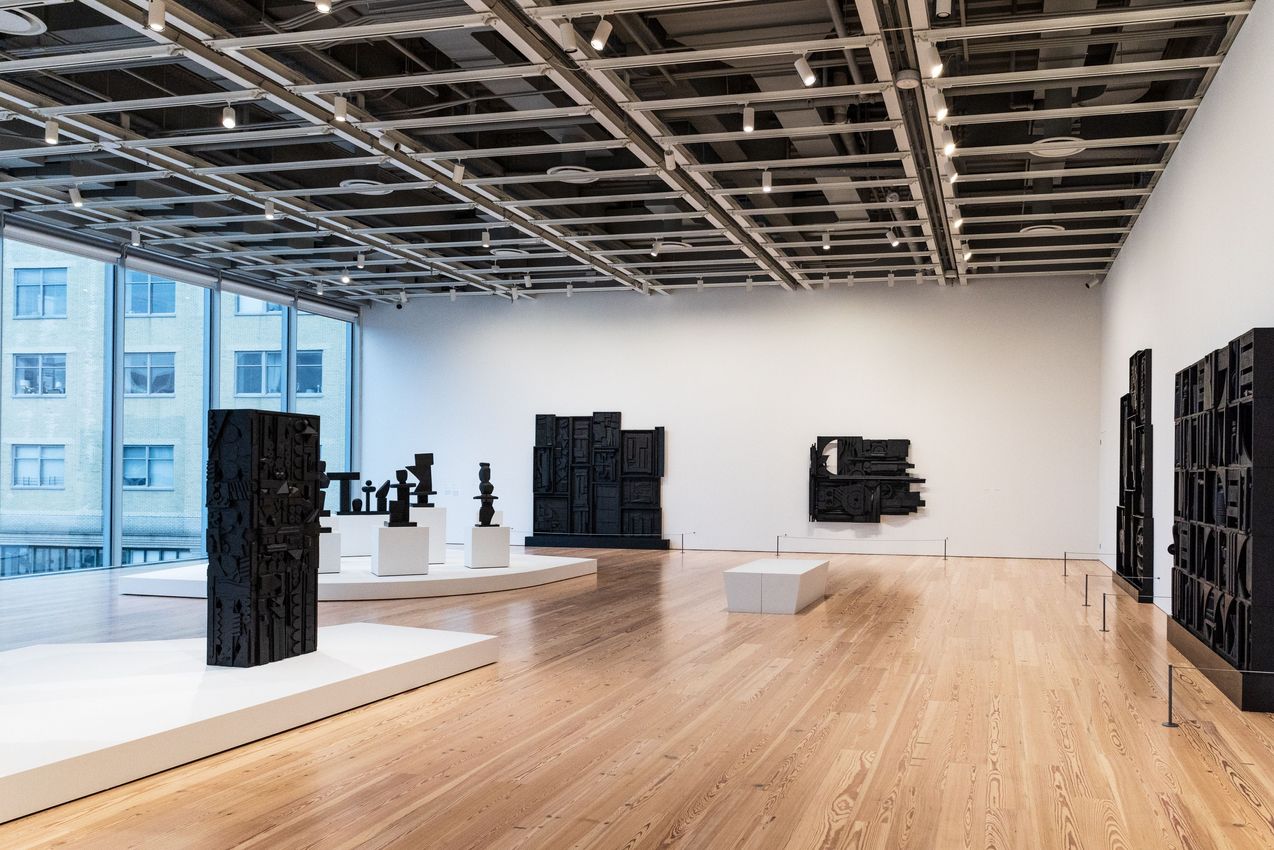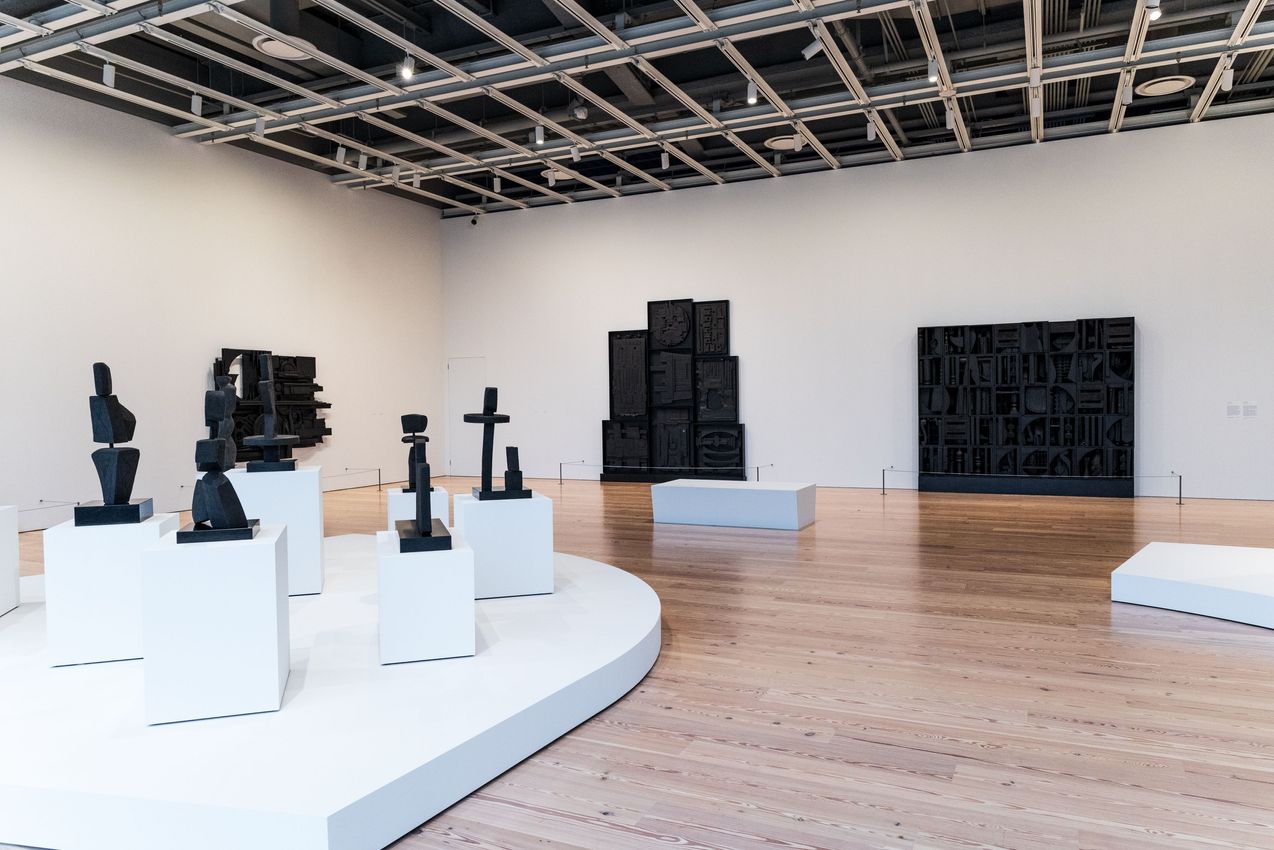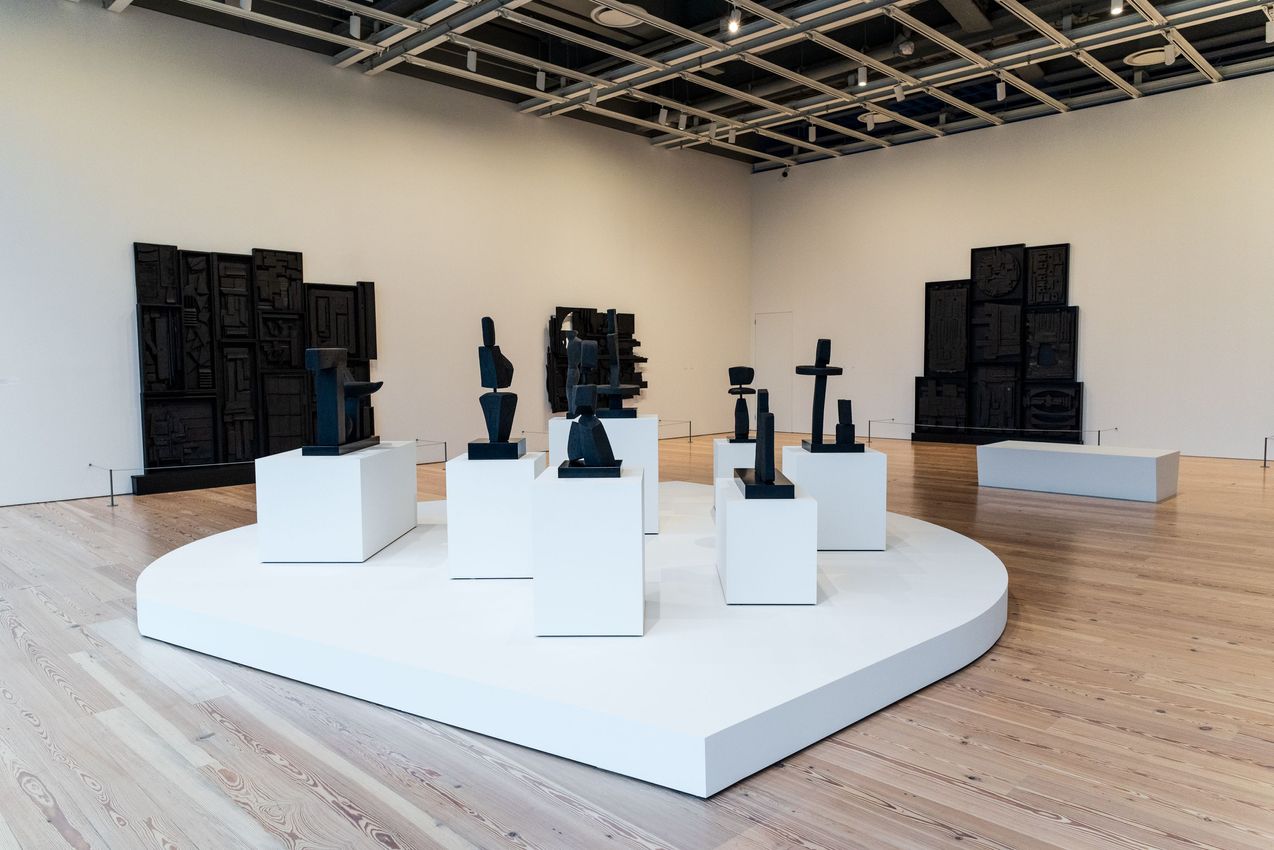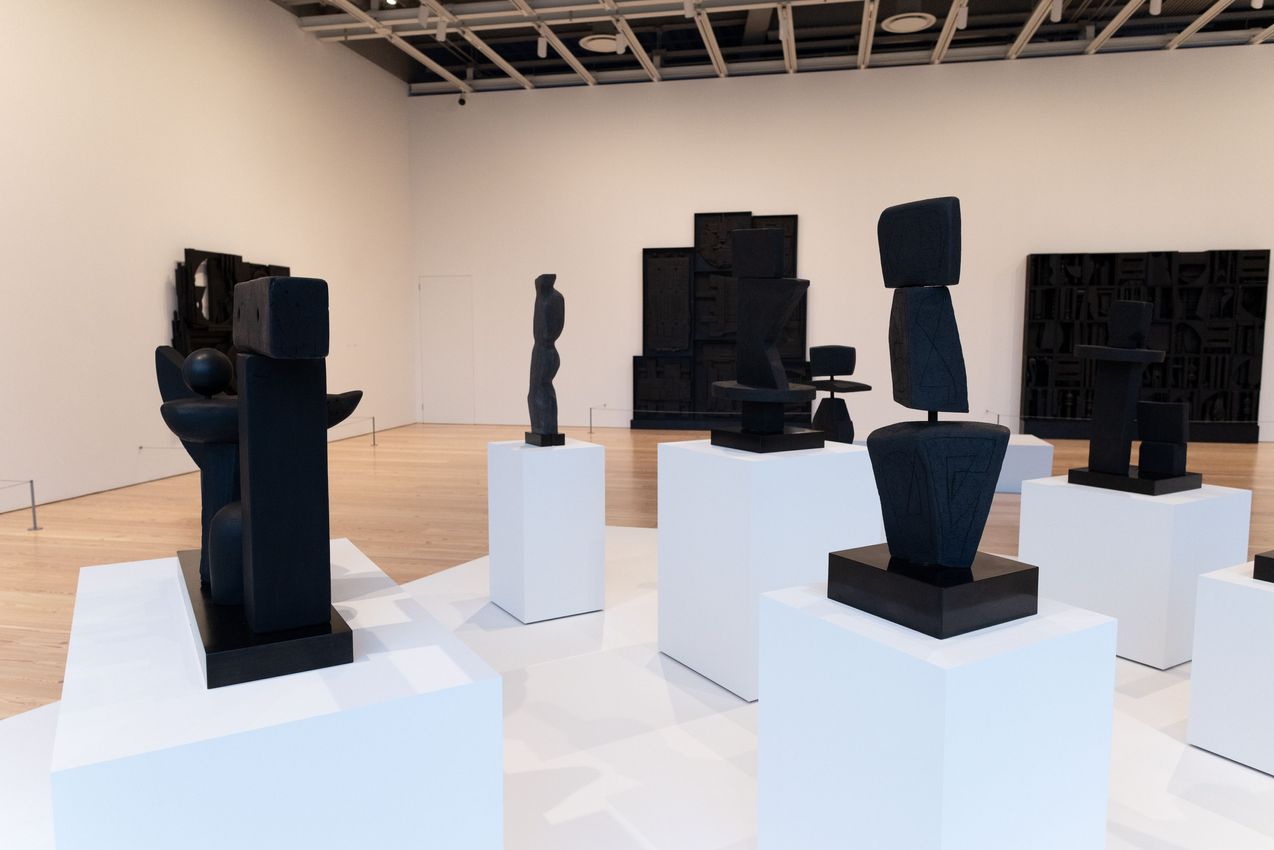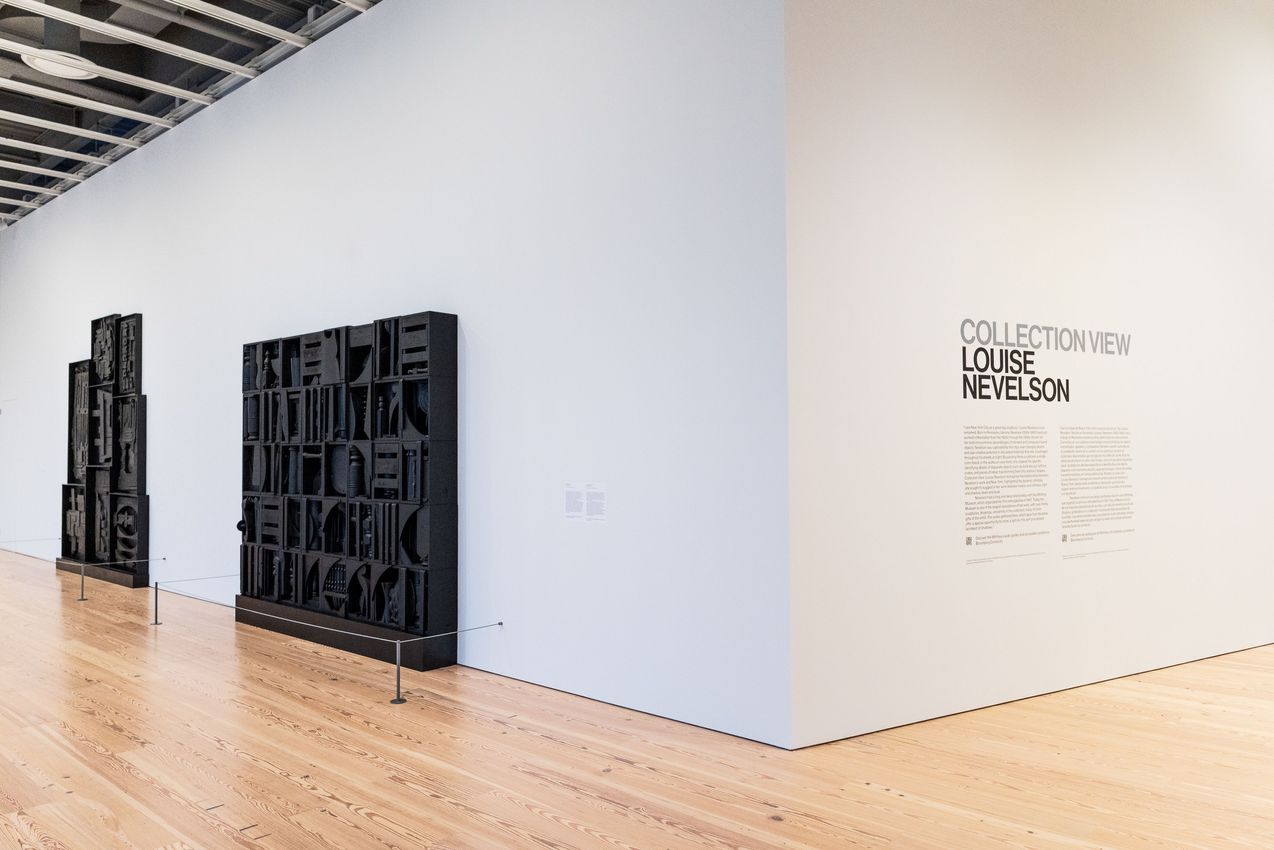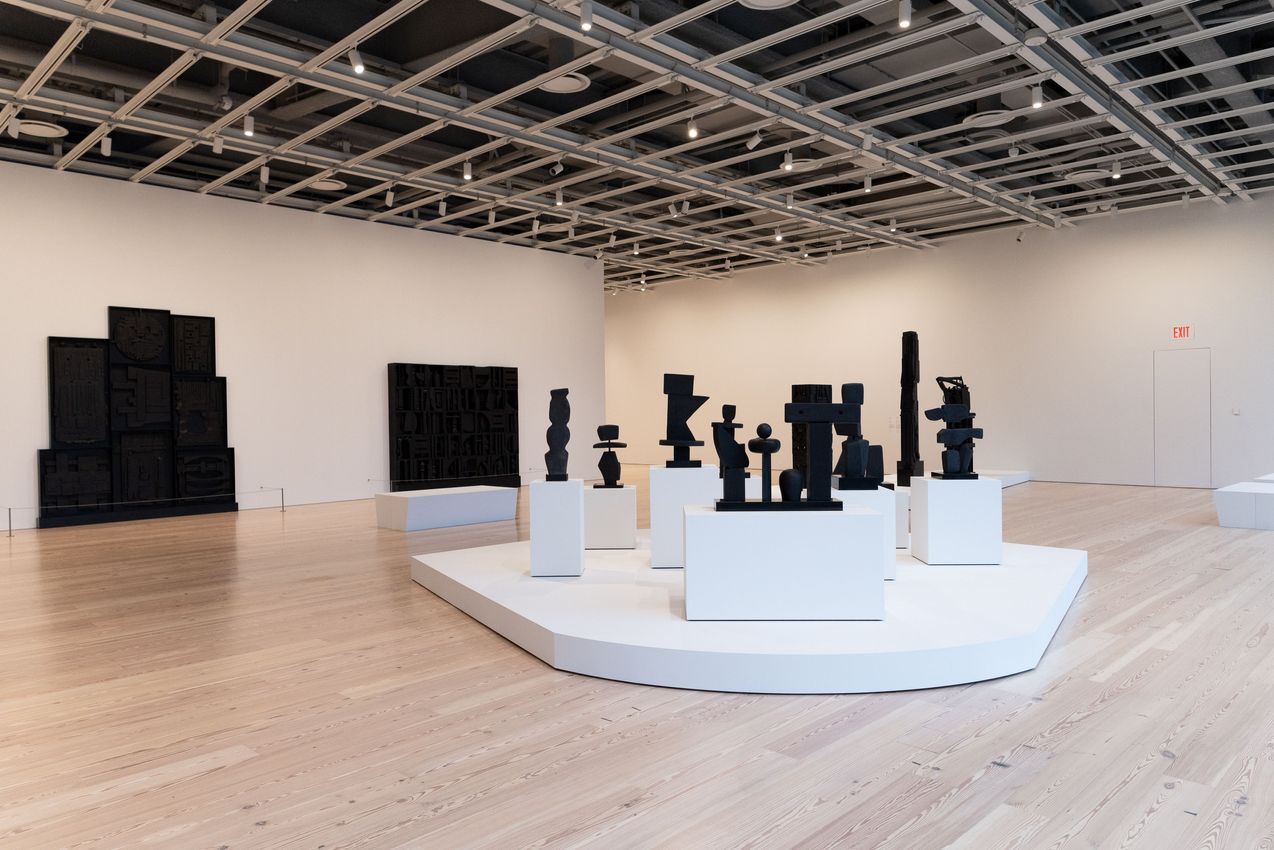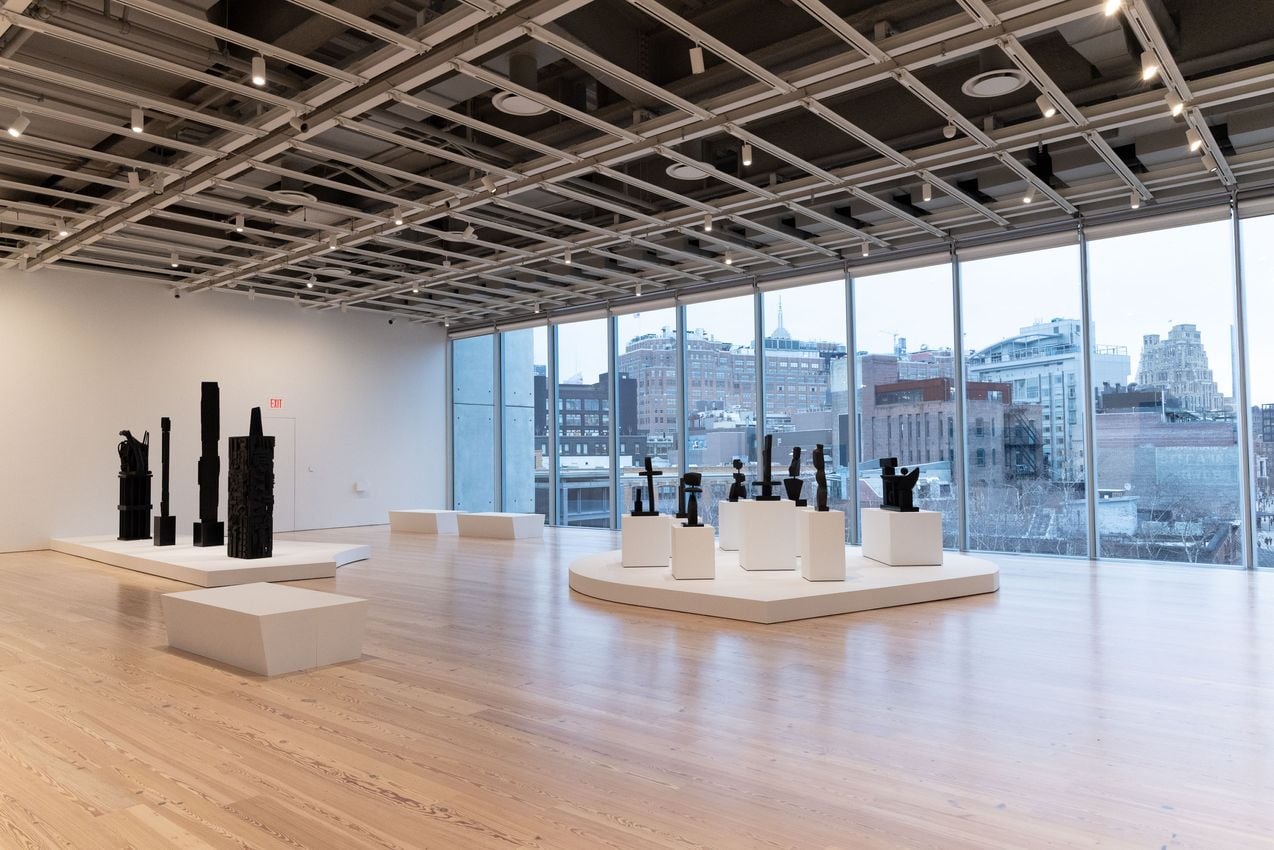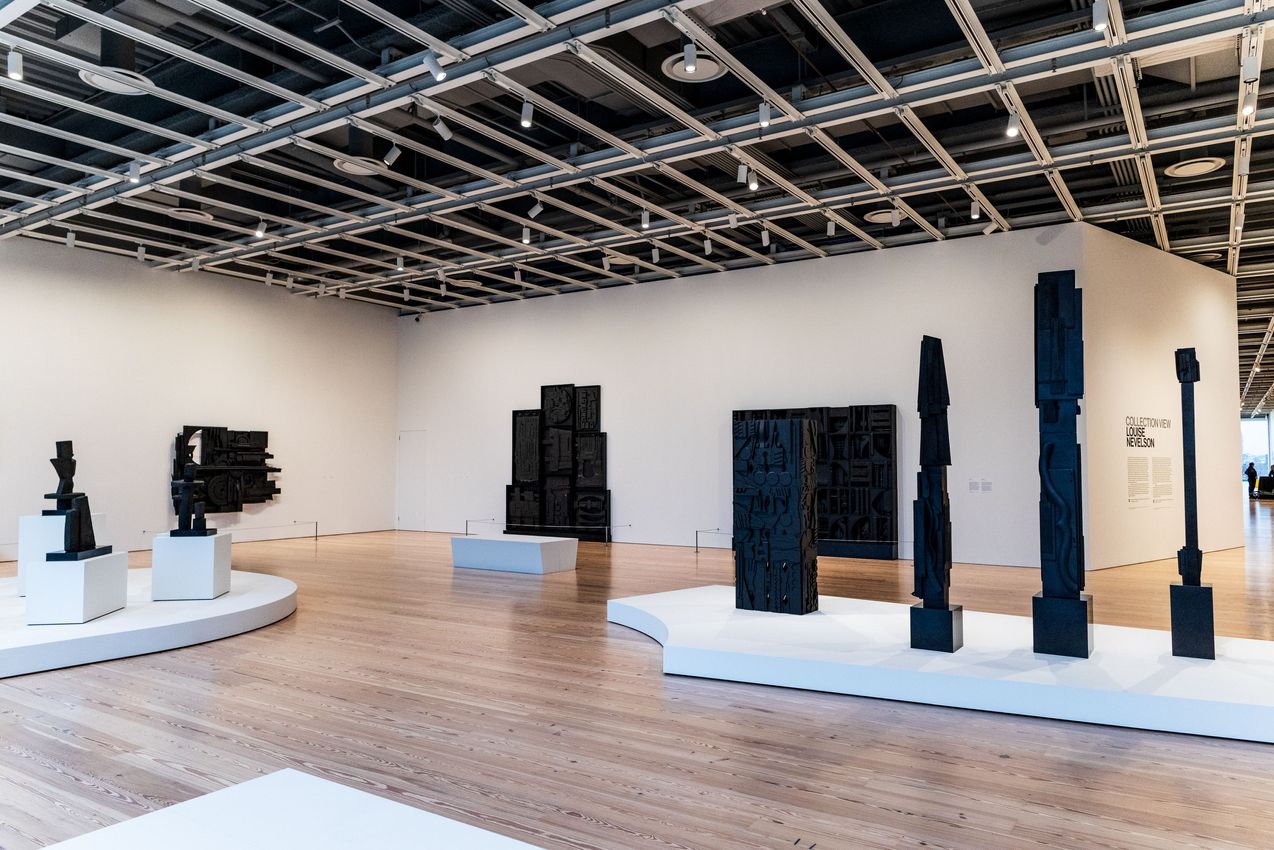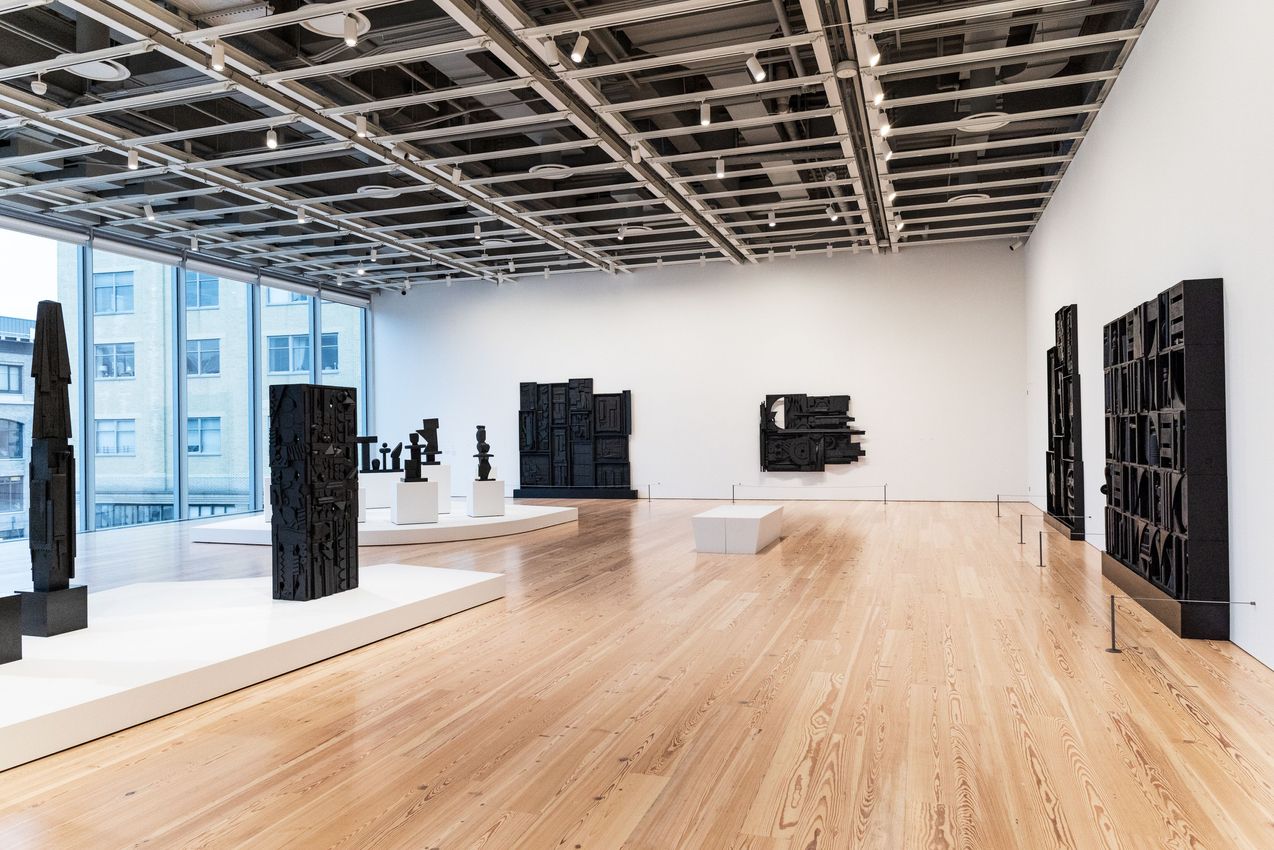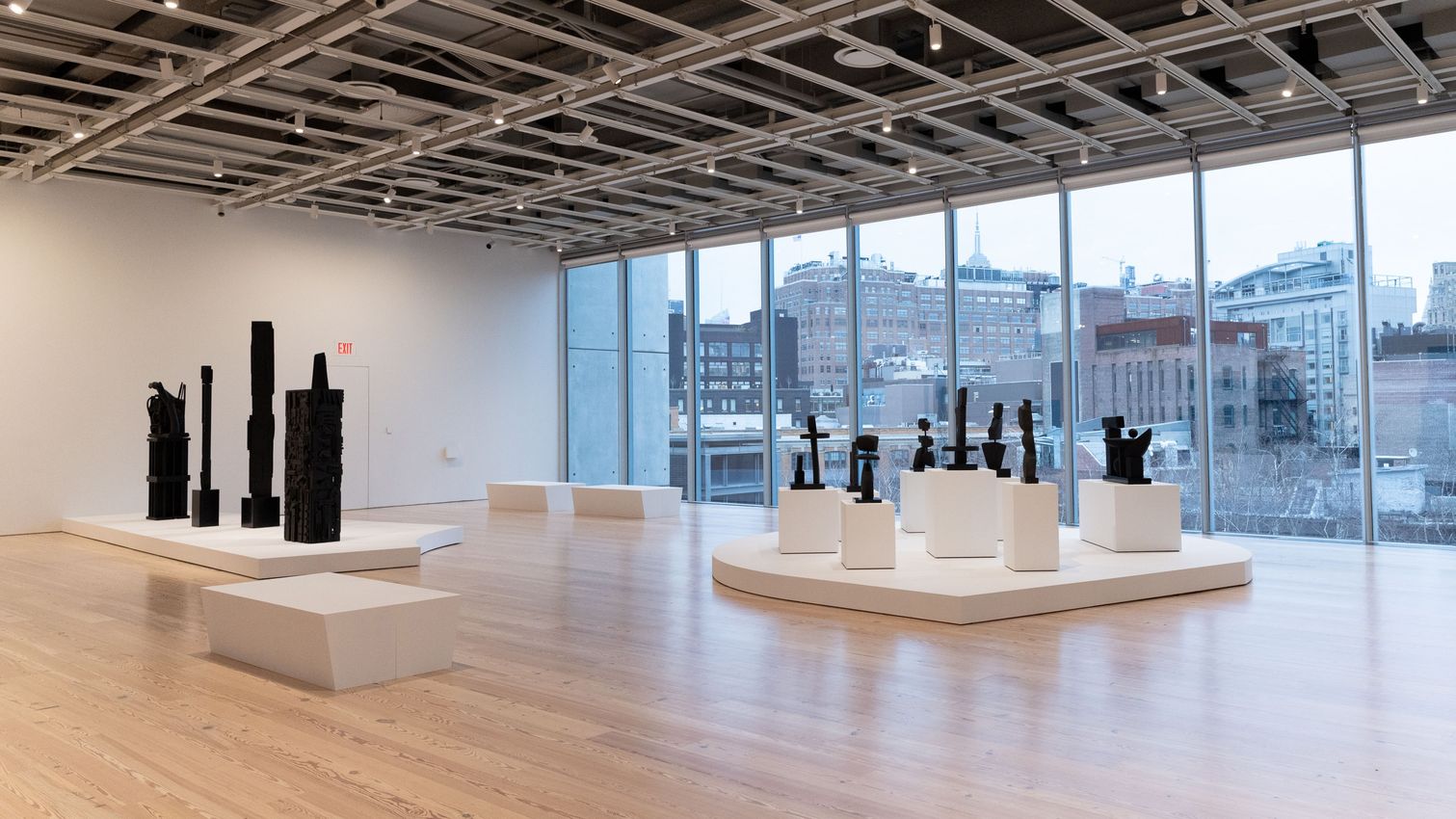
“I see New York City as a great big sculpture,” Louise Nevelson once remarked. Born in Pereiaslav, Ukraine, Nevelson (1899–1988) lived and worked in Manhattan from the 1920s through the 1980s. Known for her bold monochrome assemblages or stacked and composed found objects, Nevelson was captivated by the city’s ever-changing skyline and saw creative potential in discarded materials that she scavenged throughout its streets at night. By painting these sculptures a single color (black), she cloaked the specific, identifying details of disparate objects such as duck decoys, lettuce crates, and pieces of rebar, transforming them into abstract shapes. Collection View: Louise Nevelson reimagines the relationship between Nevelson’s work and New York, highlighting the dynamic interplay she sought to suggest in her work between motion and stillness, light and shadow, dawn and dusk.
Nevelson had a long and deep relationship with the Whitney Museum, which organized her first retrospective in 1967. Today the Museum is one of the largest repositories of her work, with over ninety sculptures, drawings, and prints in the collection, many of them gifts of the artist. The works gathered in this exhibition, which span four decades, offer a special opportunity to shine a light on this self-proclaimed “architect of shadows.”
Collection View: Louise Nevelson is organized by Kim Conaty, Nancy and Steve Crown Family Chief Curator, with Roxanne Smith, Senior Curatorial Assistant, and Antonia Pocock, Curatorial Assistant.
Collection View: Louise Nevelson is part of Outside the Box programming, which is supported by a generous endowment from the Jacques and Natasha Gelman Foundation.
Louise Nevelson (b. 1899, Kiev; d. 1988, New York), a leading sculptor of the twentieth century, pioneered site-specific and installation art. She is recognized for her sculptures comprised of discarded furniture and other wood elements found in the area surrounding her studio.
The Whitney Museum of American Art is a landmark cultural institution located in New York‘s vibrant Meatpacking District, at 99 Gansevoort Street. Designed by renowned architect Renzo Piano, the museum’s striking asymmetrical structure integrates cutting-edge architecture with sweeping skyline views and direct access to the High Line, making it an essential destination for anyone interested in American art and culture.

A respected voice in contemporary art discourse.
Focusing on ambitious storytelling and insightful art-world commentary. Ocula Magazine publishes in-depth interviews, critical essays and timely analysis on the artists, exhibitions and ideas driving the global art world.
Learn more about Ocula Magazine
Showcasing the best of the art world.
Ocula partners with galleries from around the world to highlight their artists, artworks and exhibitions. Gallery membership is by application and invitation, with each member vetted by an independent panel.
Learn more about Ocula Membership

Specialises in the sale of major artworks.
Led by a team with deep ties to the world’s leading auction houses, galleries and collectors. Ocula’s advisory team offers bespoke services to high-net-worth clients from around the world who are looking to acquire the best of contemporary and modern art.
Learn more about our team and services