





Taliban Image Ban Takes Hold in Afghanistan
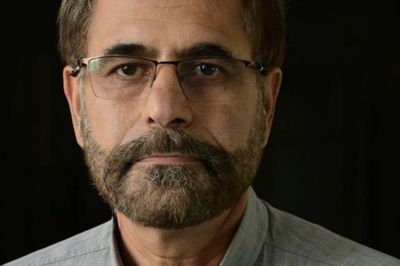
Rahraw Omarzad. Courtesy the artist. Photo: Ali Omid.

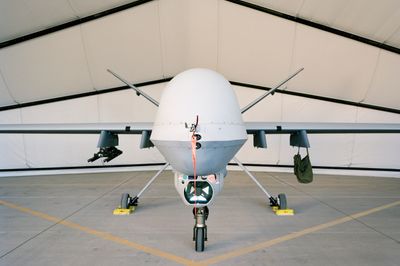
Media in several Afghan provinces have stopped sharing photos and videos of sentient beings in observance of a new morality law issued by the Taliban on 21 August.
Artists were already forbidden from depicting living beings in their work, an interpretation of Sharia, or Islamic law, that Rahraw Omarzad, director of Kabul’s now-shuttered Center for Contemporary Arts Afghanistan (CCAA), takes issue with.
‘In Islam, art and the depiction of living beings are not prohibited unless they are created for the purpose of worship,’ he said. ‘If it were forbidden in Islam, then why hasn’t it been banned in other Islamic countries?’
Now, he said, ‘not only are images banned from being broadcast, but news that is against the Taliban government is also prohibited.’
’[The ban] effectively conceals the daily events, the oppression, torture, and the numerous political, legal, and human rights violations by the Taliban in Afghanistan from the eyes of the world,’ he continued.
The Taliban ruled Afghanistan from 1996 to 2001 before being overthrown by America after 9/11. Upon their return to power in 2021, they assured journalists they would respect human rights, but only ‘within our frameworks of Sharia’.
When the Taliban resumed rule, Omarzad said ‘more than 3,000 girls and women were immediately barred from continuing their art education. The number of hours dedicated to art subjects in universities has been reduced, while the teaching of religious subjects has increased.’
‘In general, portraying living creatures and figurative art has been prohibited in artistic works,’ he said. ‘The use of musical instruments and dancing has been completely declared as haram.’
United Nations Human Rights experts said the articles of the new Law on the Promotion of Virtue and Prevention of Vice were ‘disturbingly similar to the Taliban’s draconian rule in the 1990s and provide further evidence that the group has not moderated its approach since its return to power.’
Omarzad taught fine art at Kabul University from 1991, later establishing organisations that support young artists and women. In 2021, he fled to Turin, Italy, with the support of Castello Di Rivoli Museum Contemporary Art Museum.
He has since settled in Frankfurt, Germany. From there, he operates the Center for Contemporary Arts Afghanistan in Exile, an extension of the former CCAA in Kabul. The organisation mainly seeks to support artists in Afghanistan, offering them a bridge to the outside world.
‘Artists are not only facing security threats, but they are also under severe economic threats, which not only affect them but also threaten their children and families,’ Omarzad said. ‘However, so far, no organisation within Afghanistan has taken any action to support artists.’
‘Recently, the Goethe-Institute’s initiative to establish The Afghan Cultural Fund (ACF) has been a positive step,’ he said. ‘Although this initiative is still very limited, there is hope that it will expand and strengthen. We also expect similar actions from other countries around the world.’ —[O]
Main image: Rahraw Omarzad. Courtesy the artist. Photo: Ali Omid.



A respected voice in contemporary art discourse.
Focusing on ambitious storytelling and insightful art-world commentary. Ocula Magazine publishes in-depth interviews, critical essays and timely analysis on the artists, exhibitions and ideas driving the global art world.
Learn more about Ocula Magazine
Showcasing the best of the art world.
Ocula partners with galleries from around the world to highlight their artists, artworks and exhibitions. Gallery membership is by application and invitation, with each member vetted by an independent panel.
Learn more about Ocula Membership
Specialises in the sale of major artworks.
Led by a team with deep ties to the world’s leading auction houses, galleries and collectors. Ocula’s advisory team offers bespoke services to high-net-worth clients from around the world who are looking to acquire the best of contemporary and modern art.
Learn more about our team and services