





Yayoi Kusama, Avant-Garde Pioneer and Commercial Superstar, Dies at 97

Kusama creating paintings for her My Eternal Soul series in her studio, 2014. © Yayoi Kusama.
Yayoi Kusama, whose painted nets, soft sculptures and mirrored rooms made repetition one of contemporary art’s most recognisable languages, has died aged 97. Her studio announced that she died in a Tokyo hospital on 14 August, having continued to paint and explore “forever love and eternal soul” until her final days.
Across seven decades, Kusama pursued what she called “self-obliteration”: the dissolution of the individual within endlessly repeating patterns. Yet few artists became more individually recognisable. Her dots and pumpkins travelled from paintings and unauthorised performances to museums, boutiques and auction rooms, while Kusama fashioned a persona that survived neglect, institutional rediscovery and global celebrity.
David Zwirner, whose gallery has represented Kusama since 2013, said: “It’s been one of the great privileges of my professional life to have been able to represent Yayoi Kusama’s extraordinary art.”
He added: “Her steadfast message of love and peace has now reached millions of admirers around the globe. At the time of her passing, Kusama was, without a doubt, the most famous living artist in the world.”
The power of repetition
Born in Matsumoto in 1929, Kusama experienced hallucinations as a child, including flowers and patterns engulfing her surroundings. Art became a means of recording and containing them. After studying nihonga painting in Kyoto, she rejected its conservative hierarchies and moved to New York City in 1957.
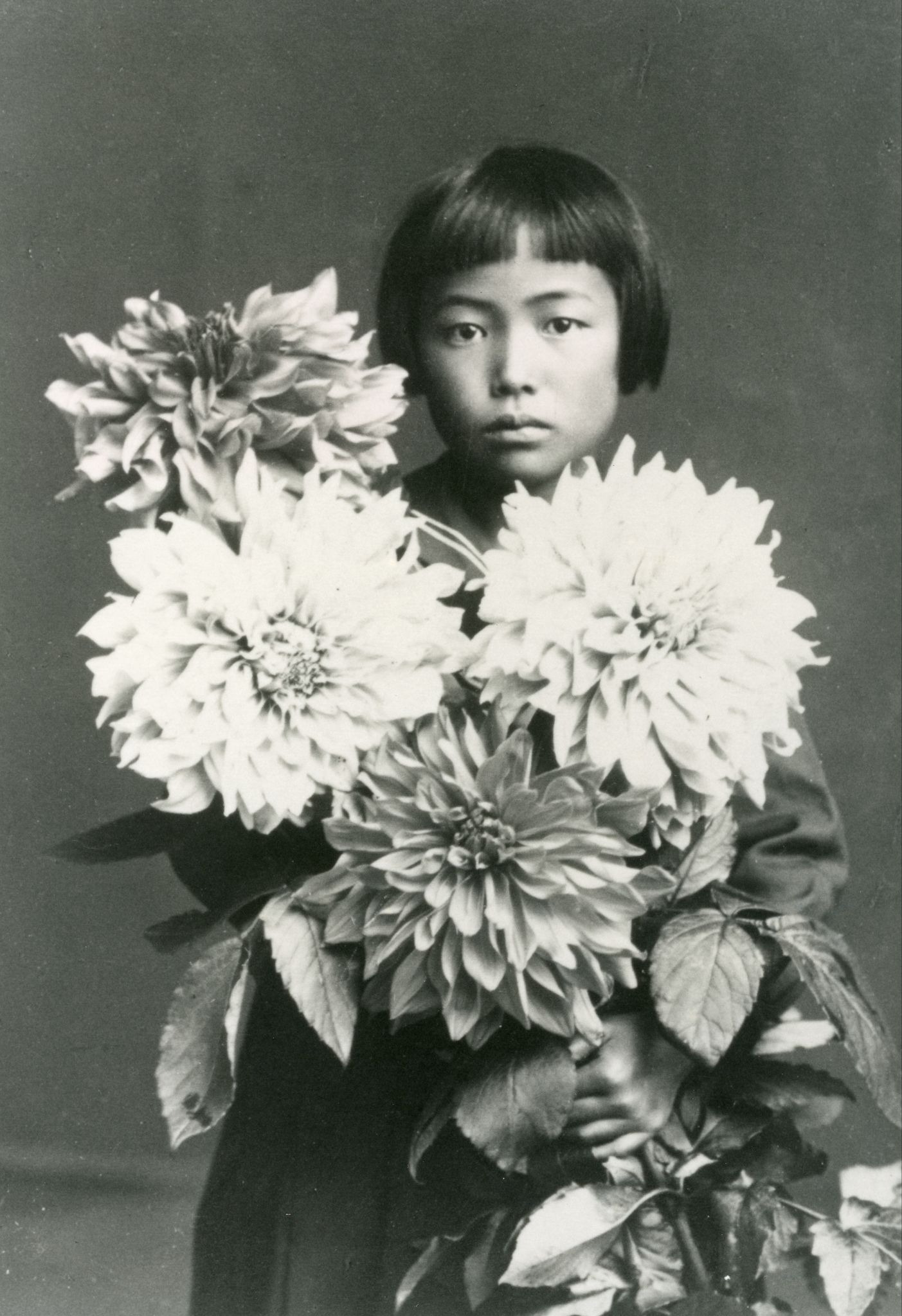
There, she developed her “Infinity Net” paintings: expansive surfaces covered with repeated arcs that appeared simultaneously microscopic and cosmic. She subsequently carried repetition into furniture covered with sewn phallic forms, mirrored environments and public happenings addressing sexuality and the Vietnam War.
Kusama nevertheless struggled for recognition in an American art world dominated by white men. She accused peers including Claes Oldenburg and Andy Warhol of appropriating her ideas.
In 2002’s Infinity Net: The Autobiography of Yayoi Kusama, she described Warhol’s Cow Wallpaper (1966), made three years after her room-covering One Thousand Boats Show, as “a very clear appropriation or imitation of my work”. She similarly maintained that Accumulation No 1 (1962) anticipated Oldenburg’s soft sculptures—an accusation that New York’s Museum of Modern Art MoMA has acknowledged, while noting that it remains “open to debate”.
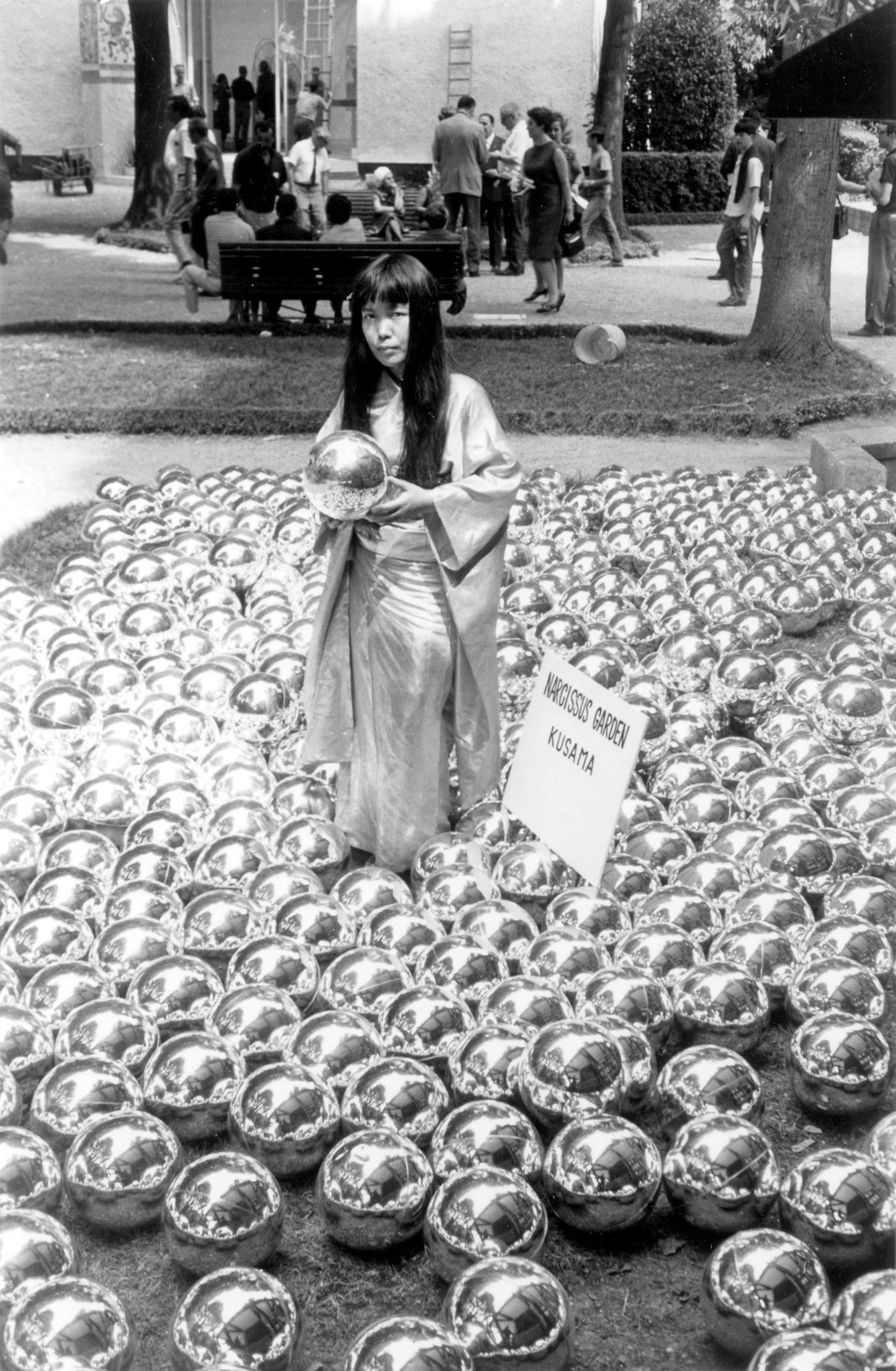
Kusama’s unauthorised presentation of Narcissus Garden at the 1966 Venice Biennale addressed similar tensions. Kusama arranged 1,500 reflective spheres outside the Italian Pavilion and attempted to sell them for two dollars each beneath a sign declaring “Your Narcissism for Sale”. Biennale officials stopped her, but the work’s convergence of spectatorship, self-image and commerce anticipated how her art would later circulate.
Returning to Japan in 1973 did not end Kusama’s practice, though international accounts often describe the period as one of disappearance. She continued writing fiction and poetry and making paintings, collages and sculptures. In 1977, she voluntarily entered a psychiatric hospital in Tokyo, working from a nearby studio.
Kusama’s representation of Japan at the 1993 Venice Biennale marked her institutional re-emergence. Major retrospectives followed, while her “Infinity Mirror Rooms” became a global museum phenomenon, their popularity amplified first by the growing convergence of contemporary art and fashion, and later by social media. Yet the mirrored dissolution of the spectator originated decades earlier, with her 1965 installation Phalli’s Field.
Kusama became both avant-garde pioneer and commercial superstar. The repetition through which she sought to lose herself also made her work infinitely reproducible across paintings, environments, commodities and images. Her career showed how an artist might arrive too early, be written out, and return so completely that recognition itself threatens to obscure what had finally been recognised.






A respected voice in contemporary art discourse.
Focusing on ambitious storytelling and insightful art-world commentary. Ocula Magazine publishes in-depth interviews, critical essays and timely analysis on the artists, exhibitions and ideas driving the global art world.
Learn more about Ocula Magazine
Showcasing the best of the art world.
Ocula partners with galleries from around the world to highlight their artists, artworks and exhibitions. Gallery membership is by application and invitation, with each member vetted by an independent panel.
Learn more about Ocula Membership
Specialises in the sale of major artworks.
Led by a team with deep ties to the world’s leading auction houses, galleries and collectors. Ocula’s advisory team offers bespoke services to high-net-worth clients from around the world who are looking to acquire the best of contemporary and modern art.
Learn more about our team and services