





The Top 8 Shows to See in Paris Through the Winter
Save to My OculaFrom Precious Okoyomon’s biting take on cuteness to playful artist copies of masterpieces from the Louvre, our editors select exhibitions to catch during Art Basel Paris and beyond.
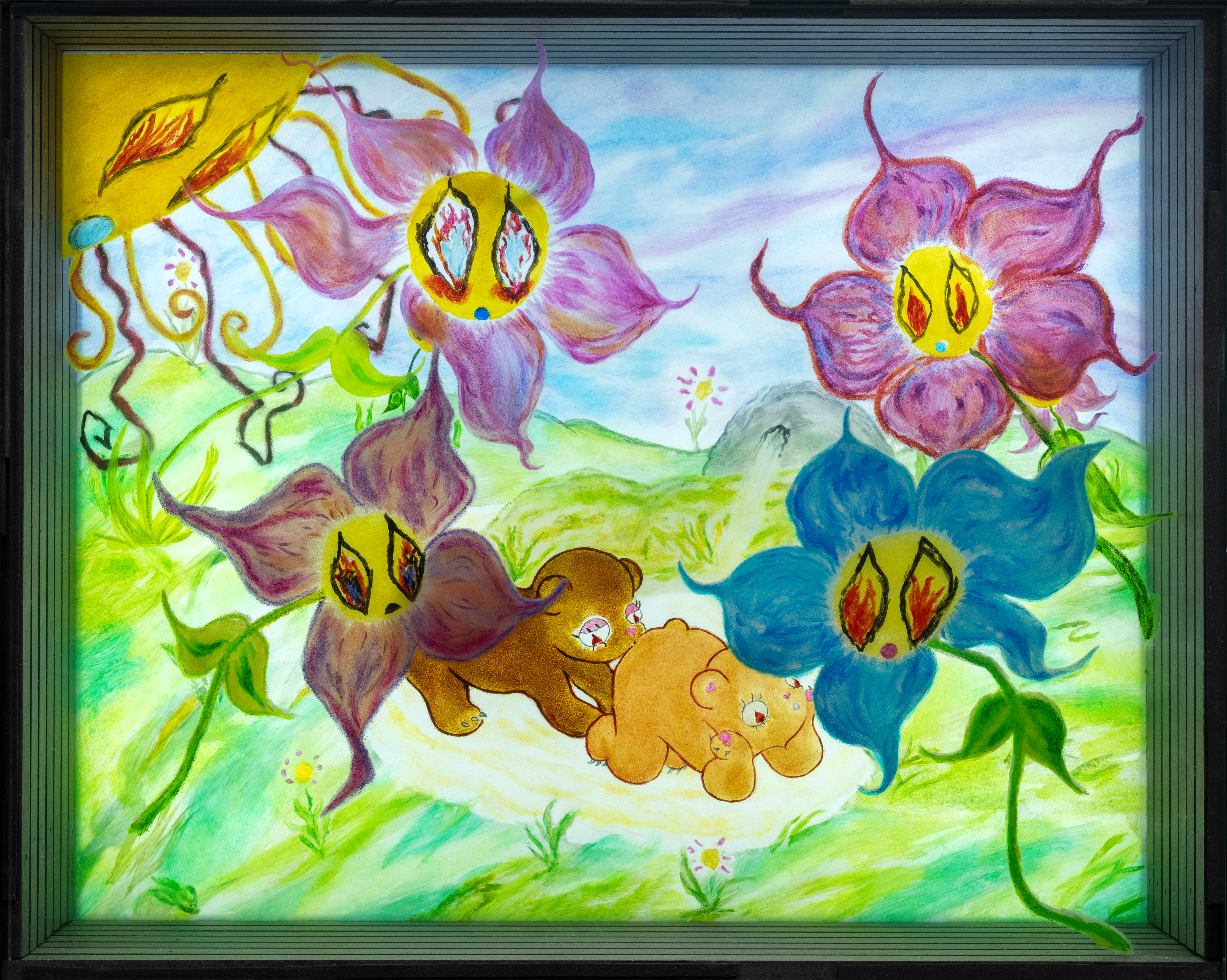
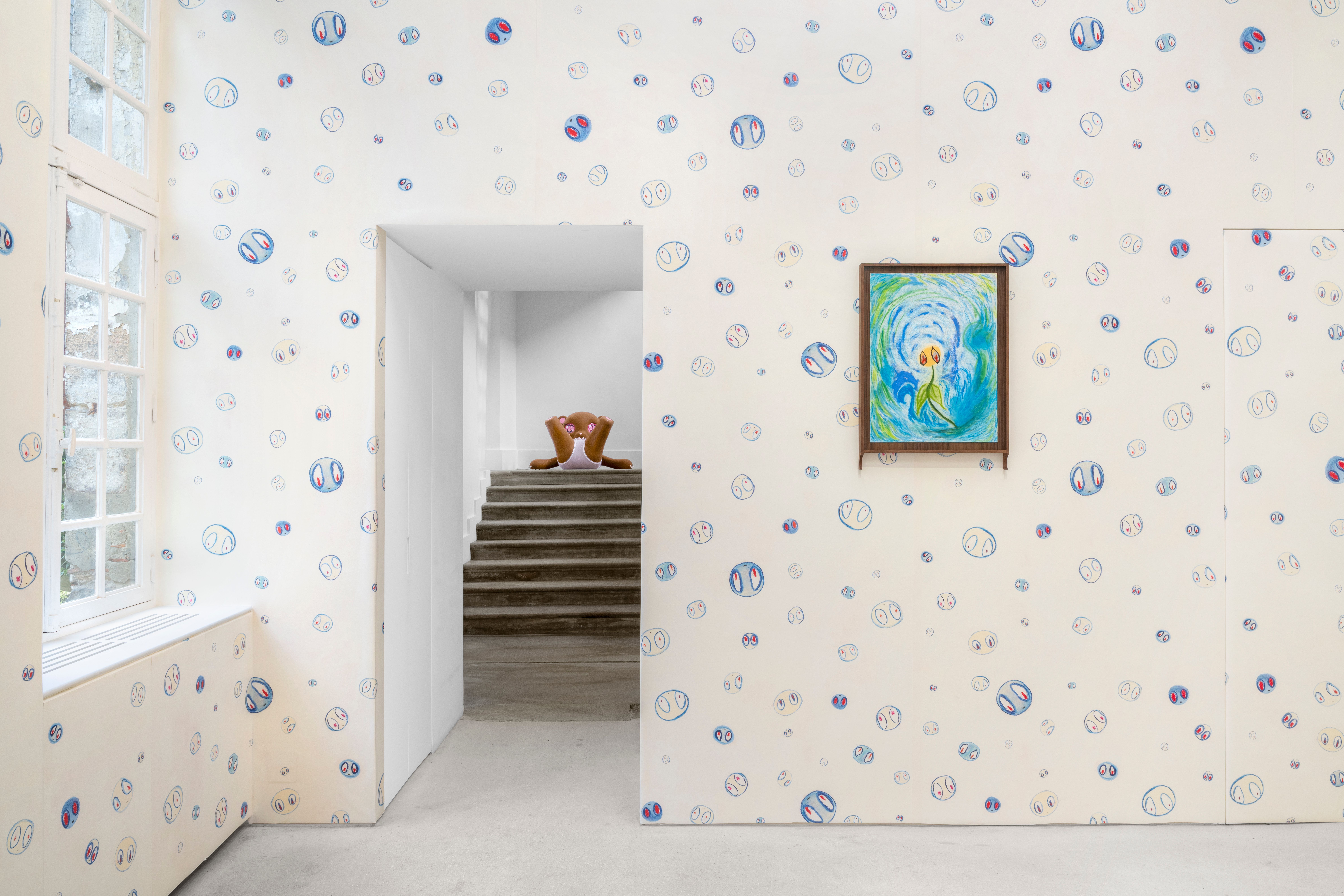
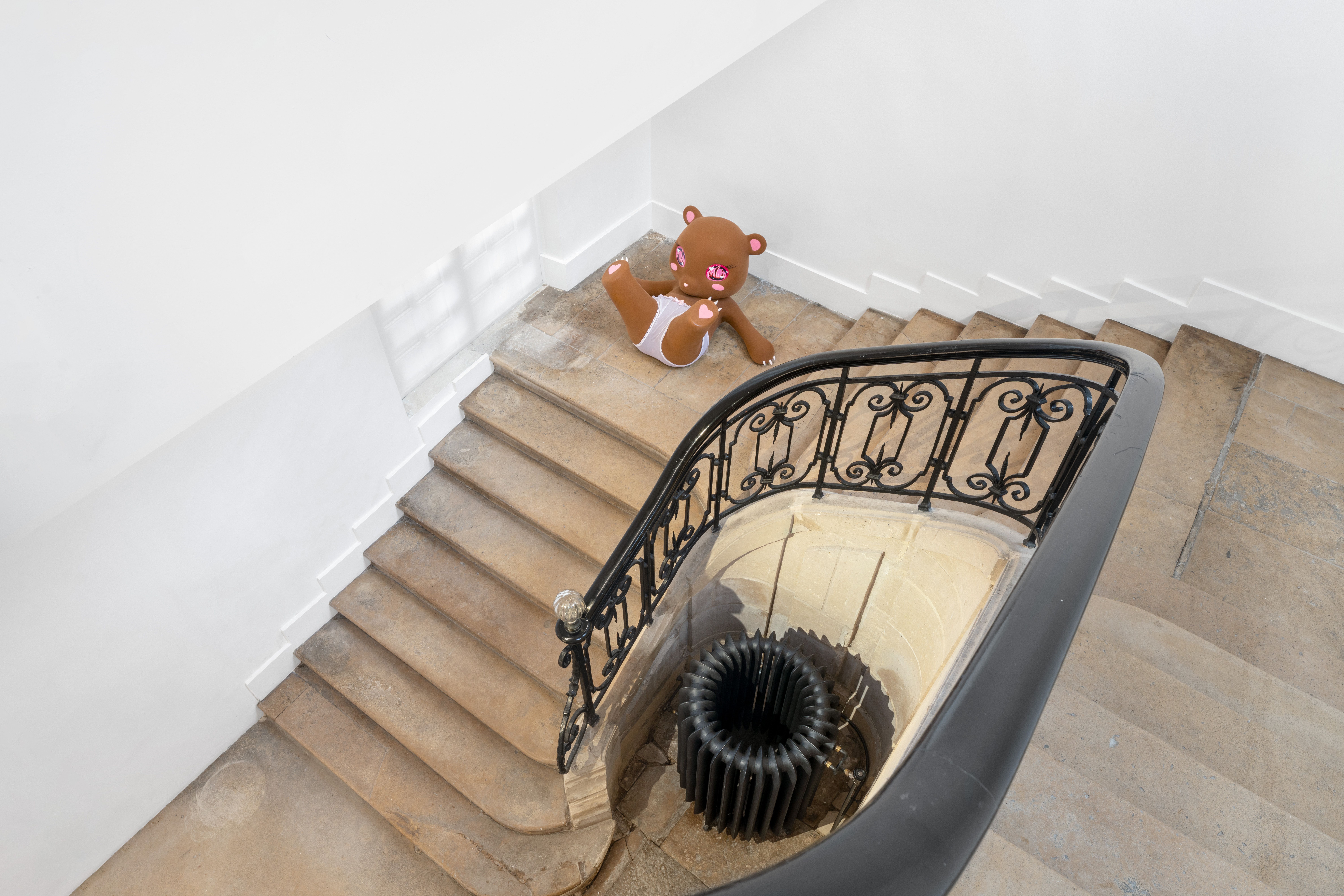
Precious Okoyomon, It’s important to have ur fangs out at the end of the world (20 October 2025–17 January 2026) at Mendes Wood DM
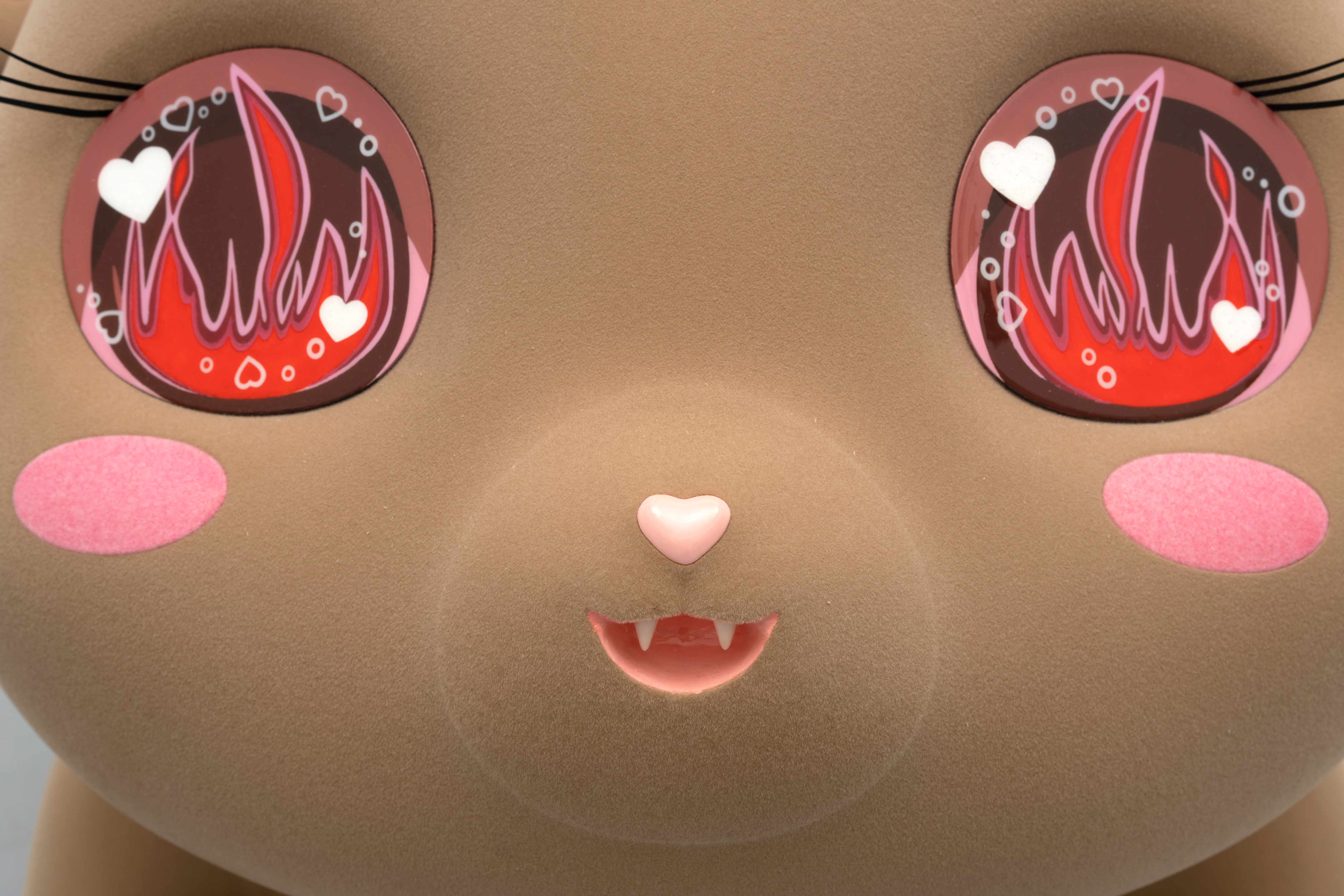
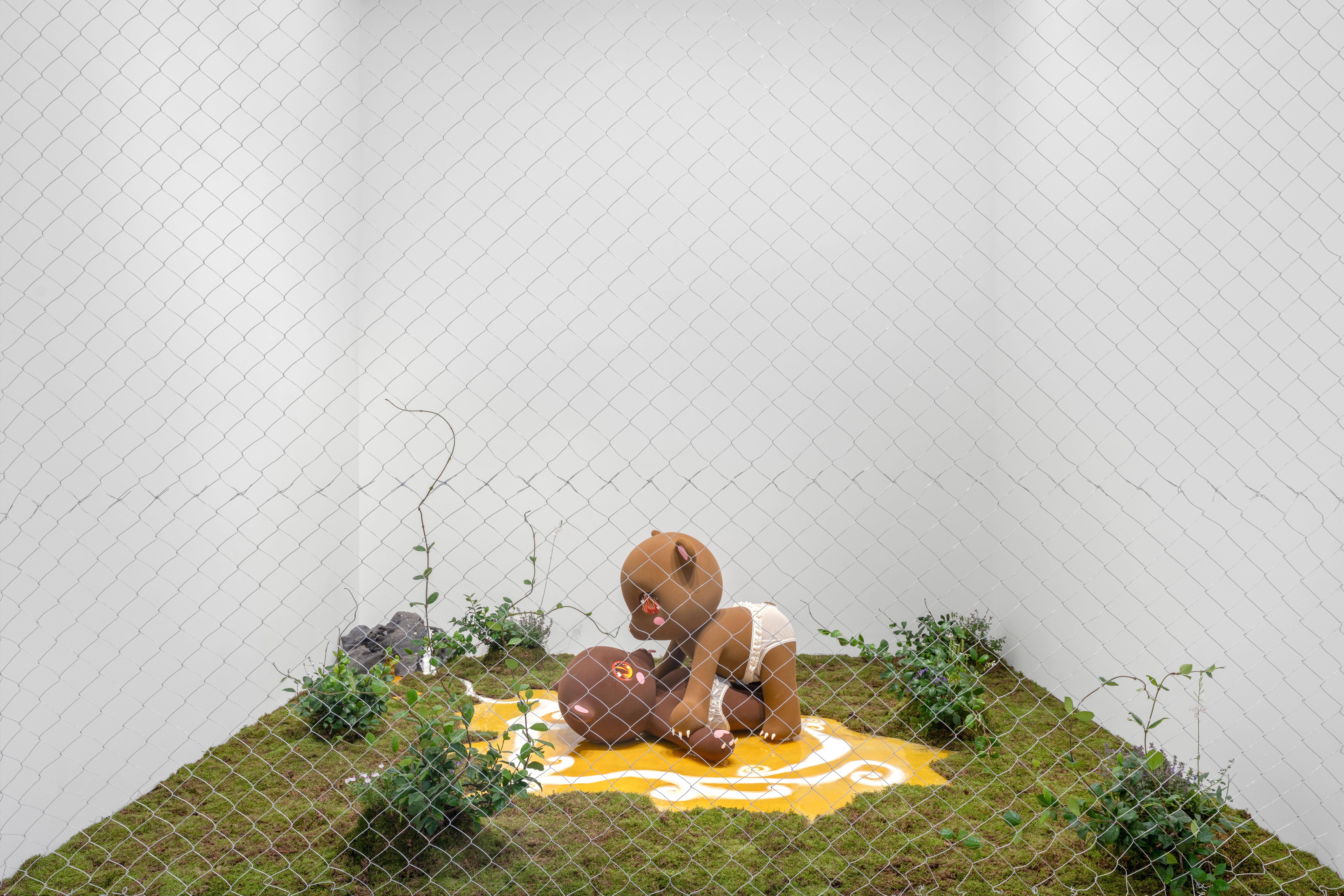
‘Cuteness is its own violence.’ Cribbing a line from Precious Okoyomon’s poem ‘It’s Dissociating Season’ (2017), one can take comfort in the notion that the slutty bears and sad-eyed flowers (many conspicuously plucked of their petals) on view in It’s important to have ur fangs out at the end of the world can bite back. For this show, the U.S. artist has created an immersive world replete with custom-made, bubble-strewn wallpaper that references philosopher Peter Sloterdijk’s concept of humans as ‘fundamentally sphere-creating beings who construct intimate, protective spaces—literal and symbolic—to shelter themselves’. And in Okoyomon’s world, along with fangs, it’s also important to have ur tails out: the stars of this show are the artist’s stuffed toy bear sculptures, who copulate wearing see-through ouvert knickers so that their knobby tails have some breathing room. – Aimee Walleston
Copyists (14 June 2025–2 February 2026) at Centre Pompidou-Metz
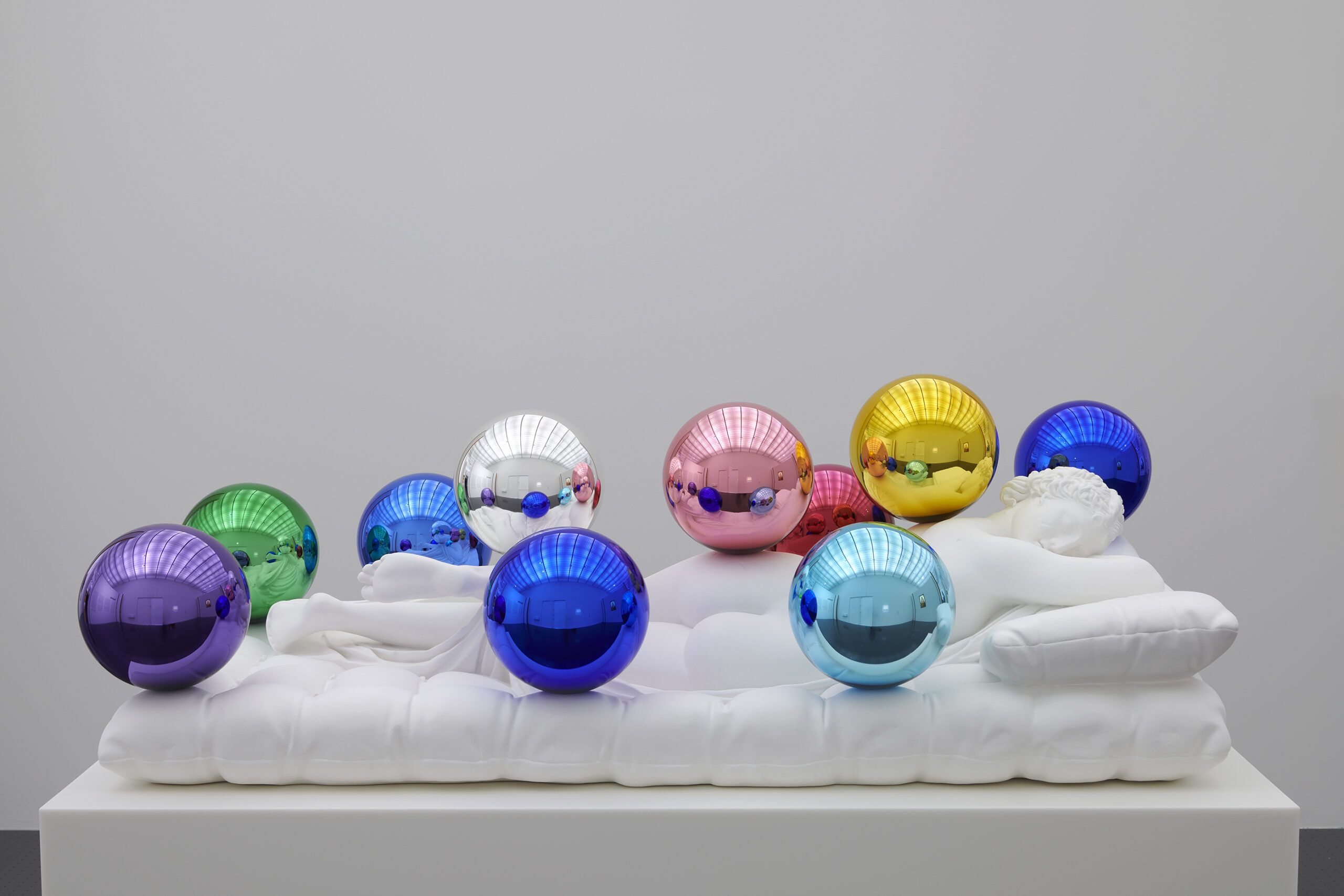
The Pompidou in Paris might have closed in a shower of fireworks orchestrated Cai Guo-Qiang but the institution’s various outposts across France remain open, ideal for those seeking respite from the Art Week fray. In Metz, group exhibition Copyists feels particularly pointed following the recent Louvre jewellery theft, which exposed the museum’s vulnerability. 100 artists have been commissioned to replicate Louvre works, offering some insight into what that fragility entails. The exhibition spans Jeff Koons’ no-brainer pop reproductions and some dull mimicry of masterpieces, yet at its core lie conceptually rigorous interventions probing how the world’s first public museum intersects with pressing sociopolitical questions. A brief glimpse among other standout works: Georges Adéagbo enlists his longtime copyist to remake the Louvre’s Delacroix collection, juxtaposing Algerian coloniality and Western democracy side-by-side. Claire Fontaine evokes Mona Lisa as a target of environmental activism, while the artist’s Brickbats (2025) deploys a single brick—evoking protest and vandalism—camouflaged under book jackets reproducing Delacroix’s Liberty Leading the People (1830), one of the most copied paintings in the show. Here, the copy originates not from the artist but from a prominent book titled Women, The States and Revolution, a pointed inclusion that underscores the Louvre’s shifting role at the fraught intersection of democracy, populism, and cultural authority. – Zian Chen
Meriem Bennani, Sole Crushing (22 October 2025–8 February 2026) at Lafayette Anticipations
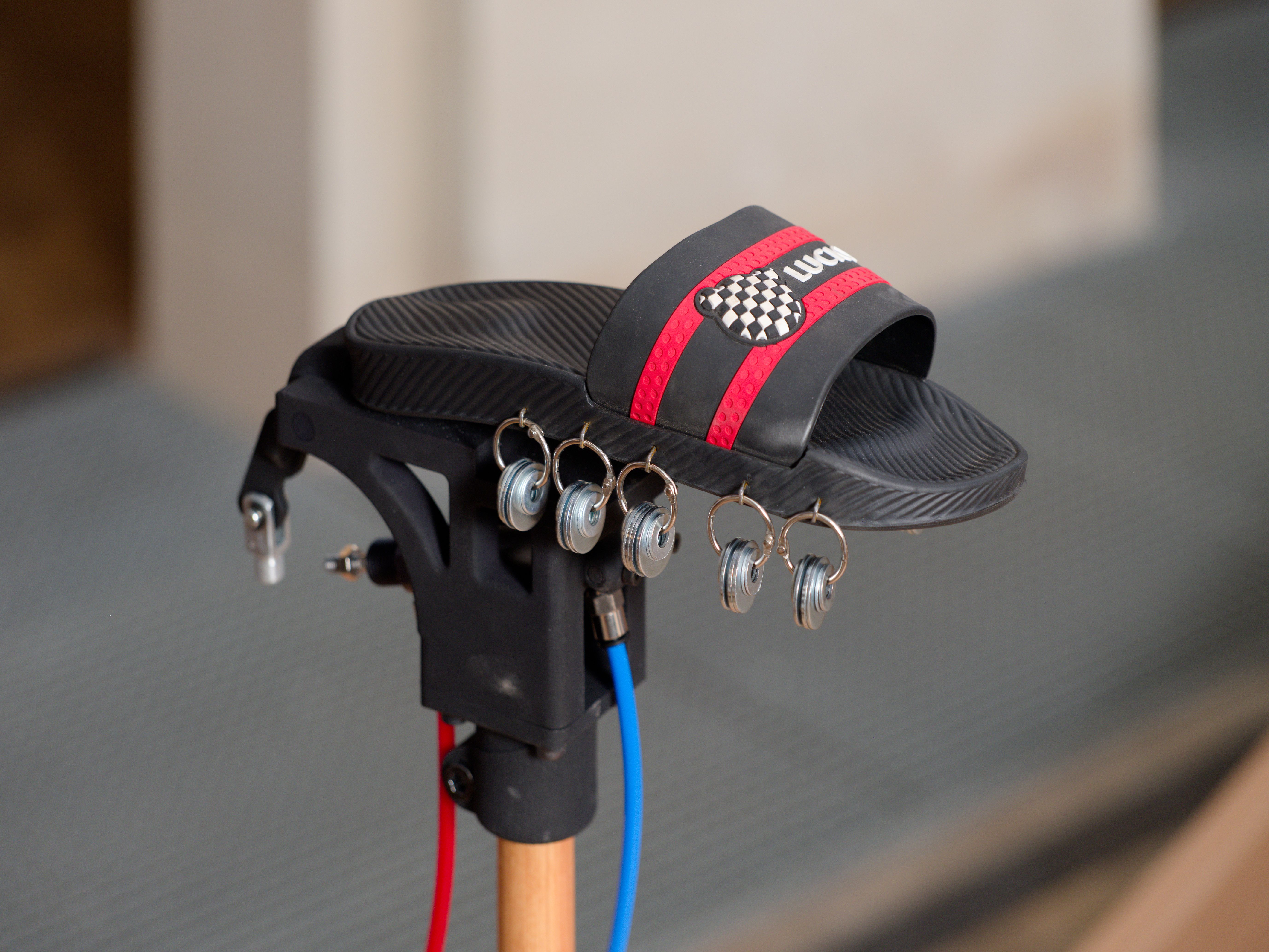
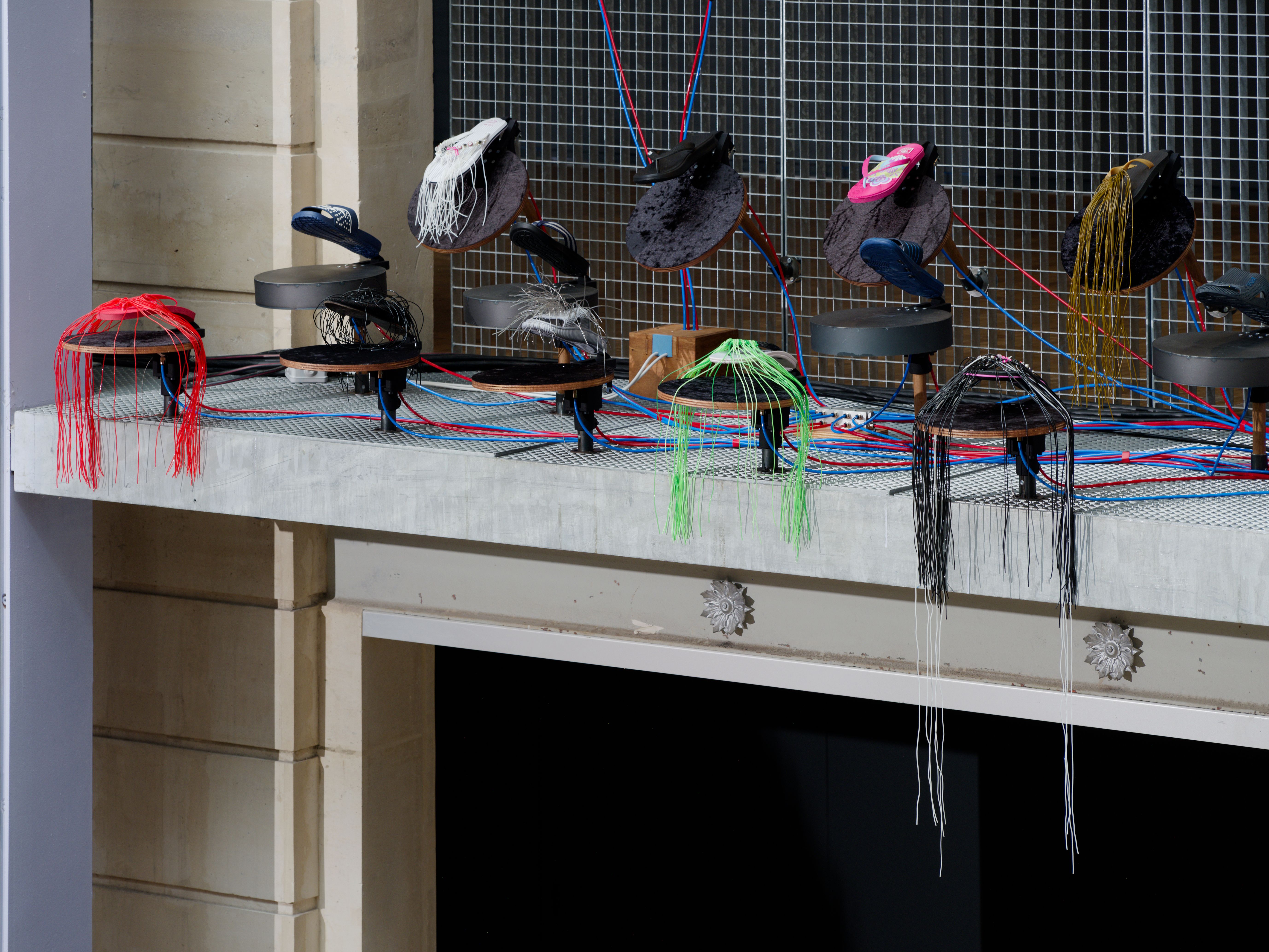
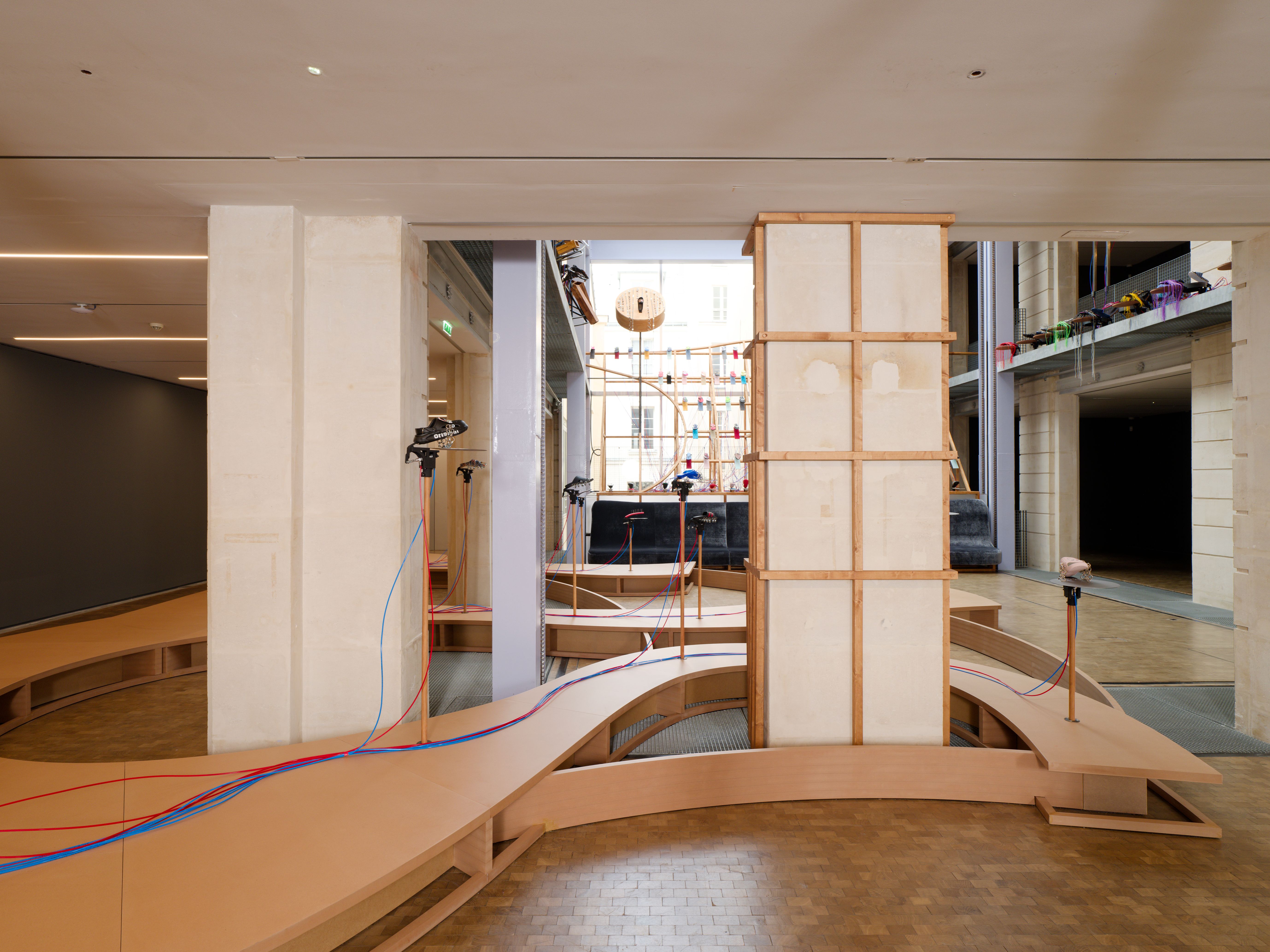
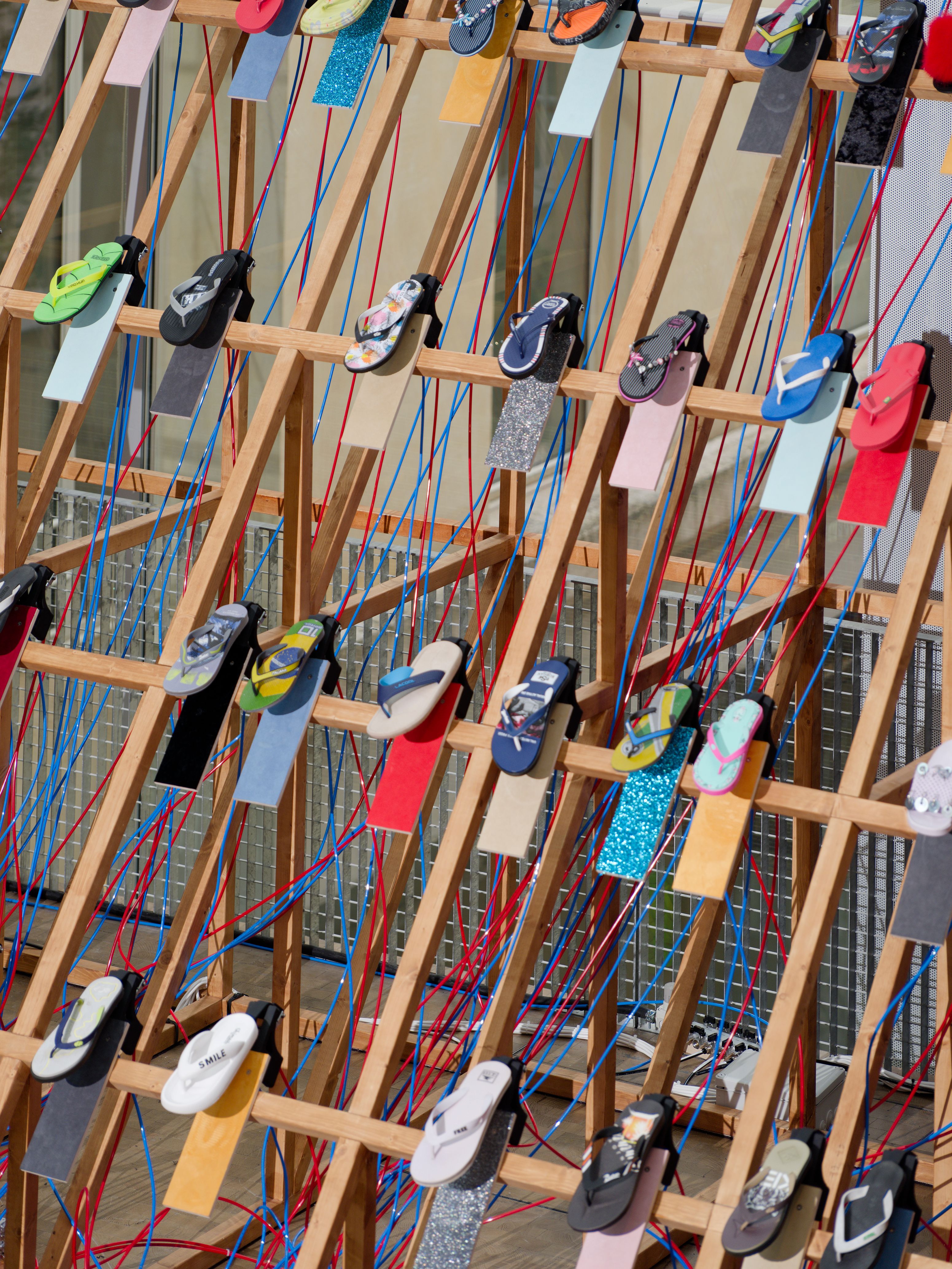
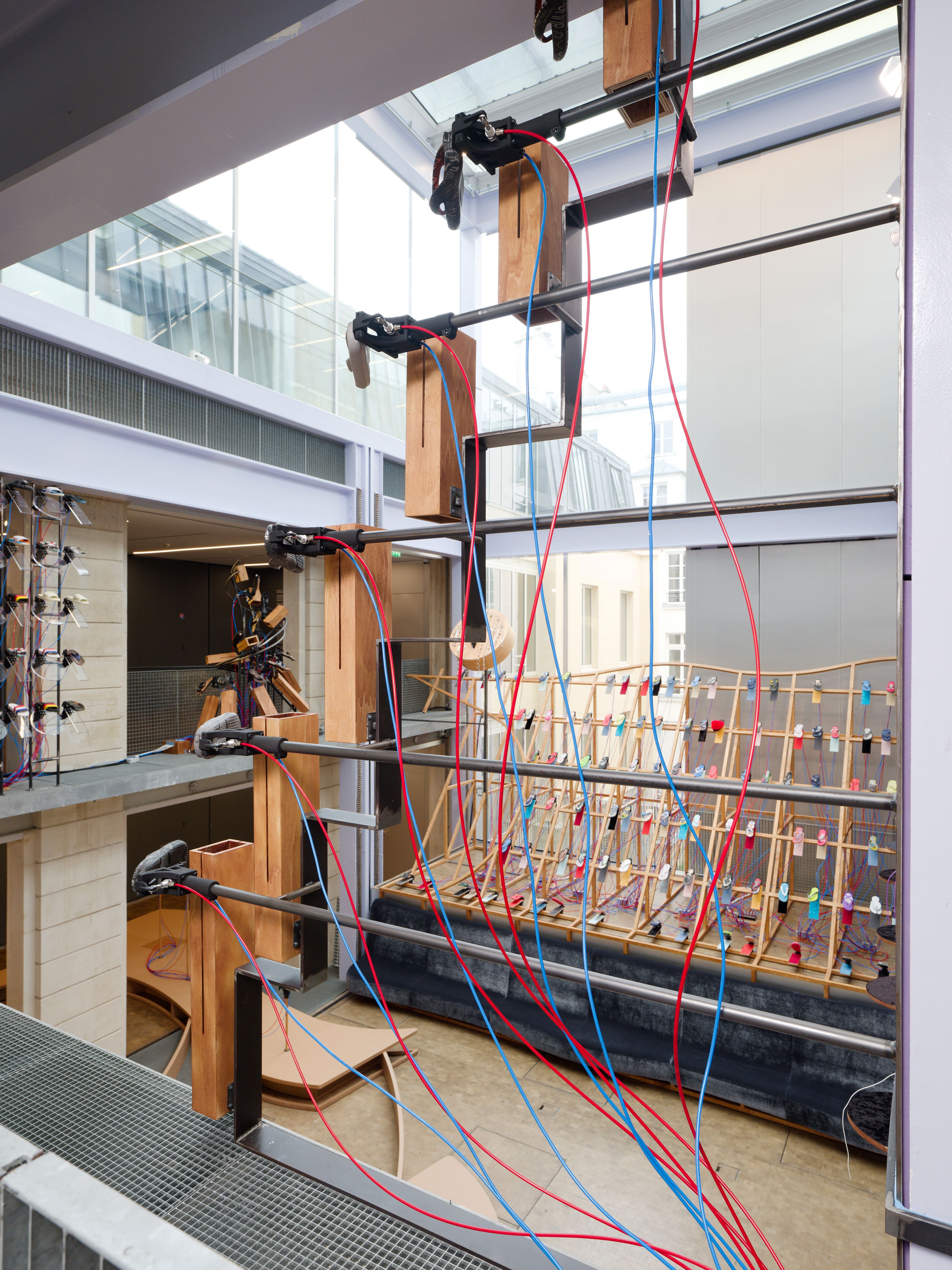
One tends to hear an approaching pair of flip-flops before they come into view, the distinctive ‘slip-slap’ tapping out a percussive beat to the gait of the wearer. If a single pair of the humble beach flats is a lone instrument in the wild, the summer just gone could be called something of a flip-flop symphony, at least if the streets of London were anything to go by. Declared the ‘hottest shoes of the summer’ by Vogue after the likes of Miu Miu, Alaia and Dior sent them down their runways, the flip-flop has seemingly ascended from throwaway item to cultural commodity. Cue the ‘slap, slap, slap’ of the vast, pulsating sound installation by New York-based artist Meriem Bennani at Lafayette Anticipations, in which almost 200 pairs of flip-flops and sliders have been wired up by the artist to strike, clack and echo against adjacent panels, bells and drums to a score composed by Cheb Runner (Reda Senhaji). The cumulative effect is less poolside chillout and more a surreal, noughties-infused wink at the cacophony of contemporary life in the digital age, in which individuality is increasingly drowned out by algorithm-fueled trends and the allure of the crowd. Set within the full height of the OMA-designed space, it is brilliantly absurdist, tongue-in-cheek, and, of course, extremely loud. – Louise Benson
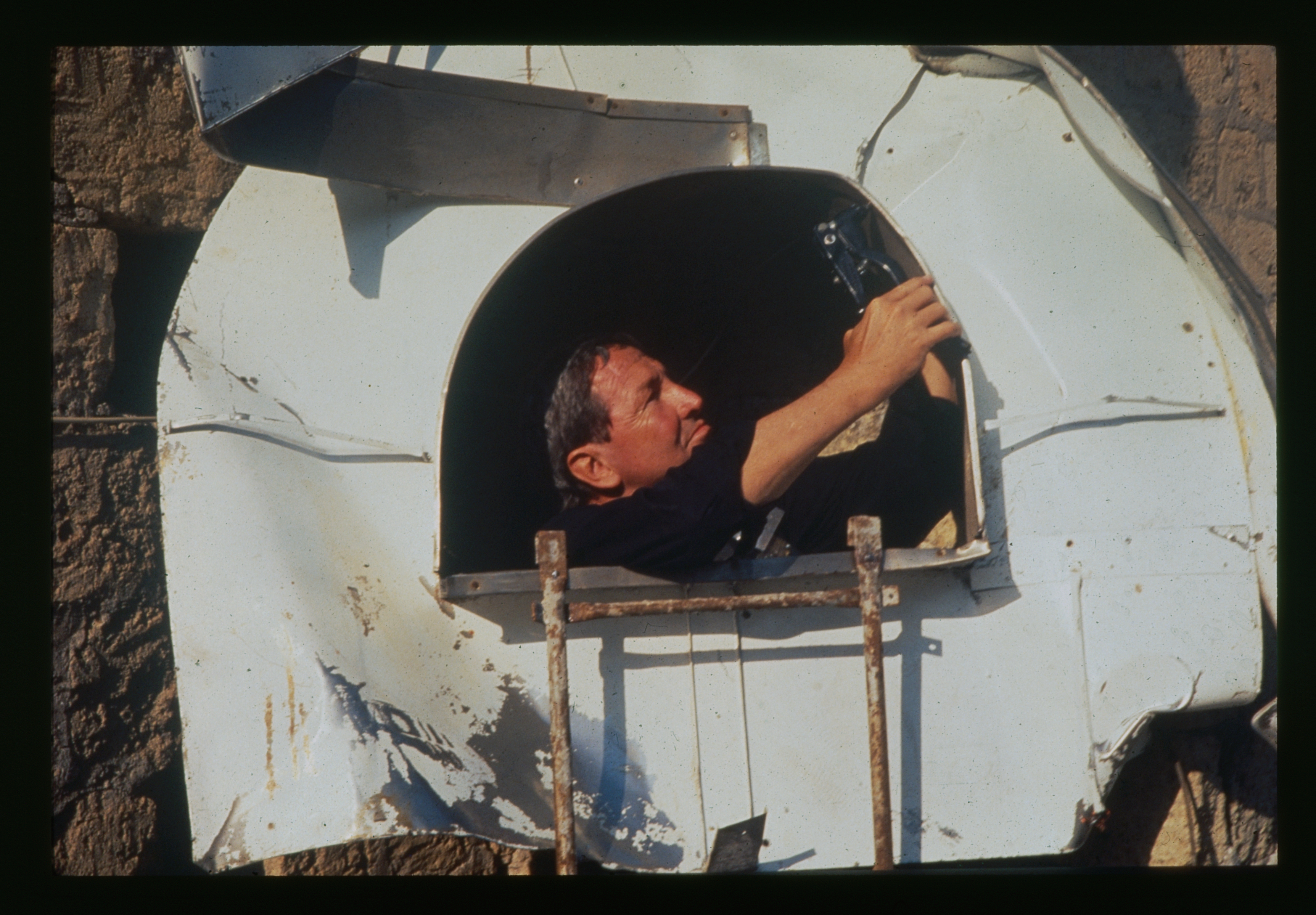
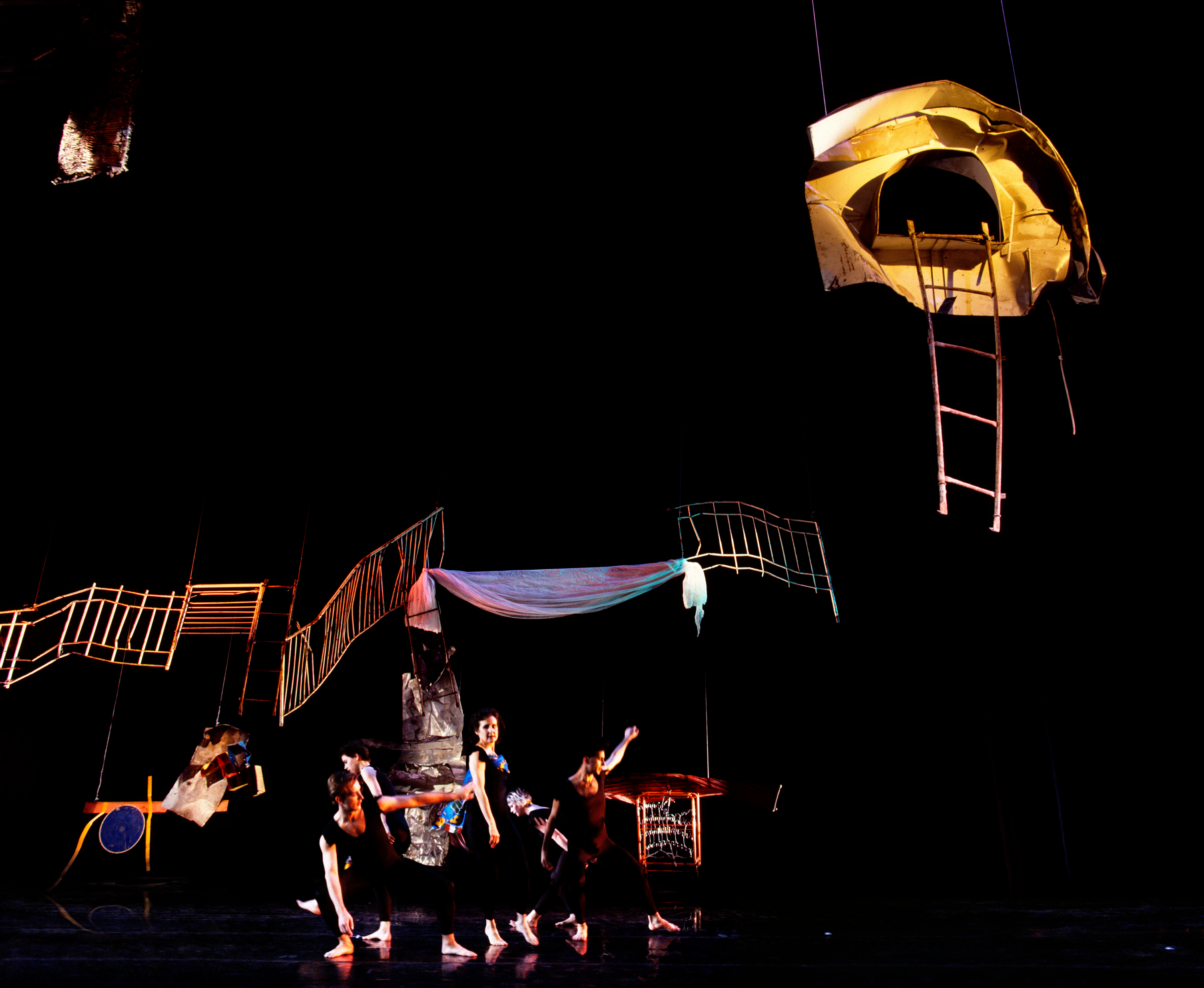
Robert Rauschenberg, Gluts (20 October–22 November 2025) at Thaddaeus Ropac
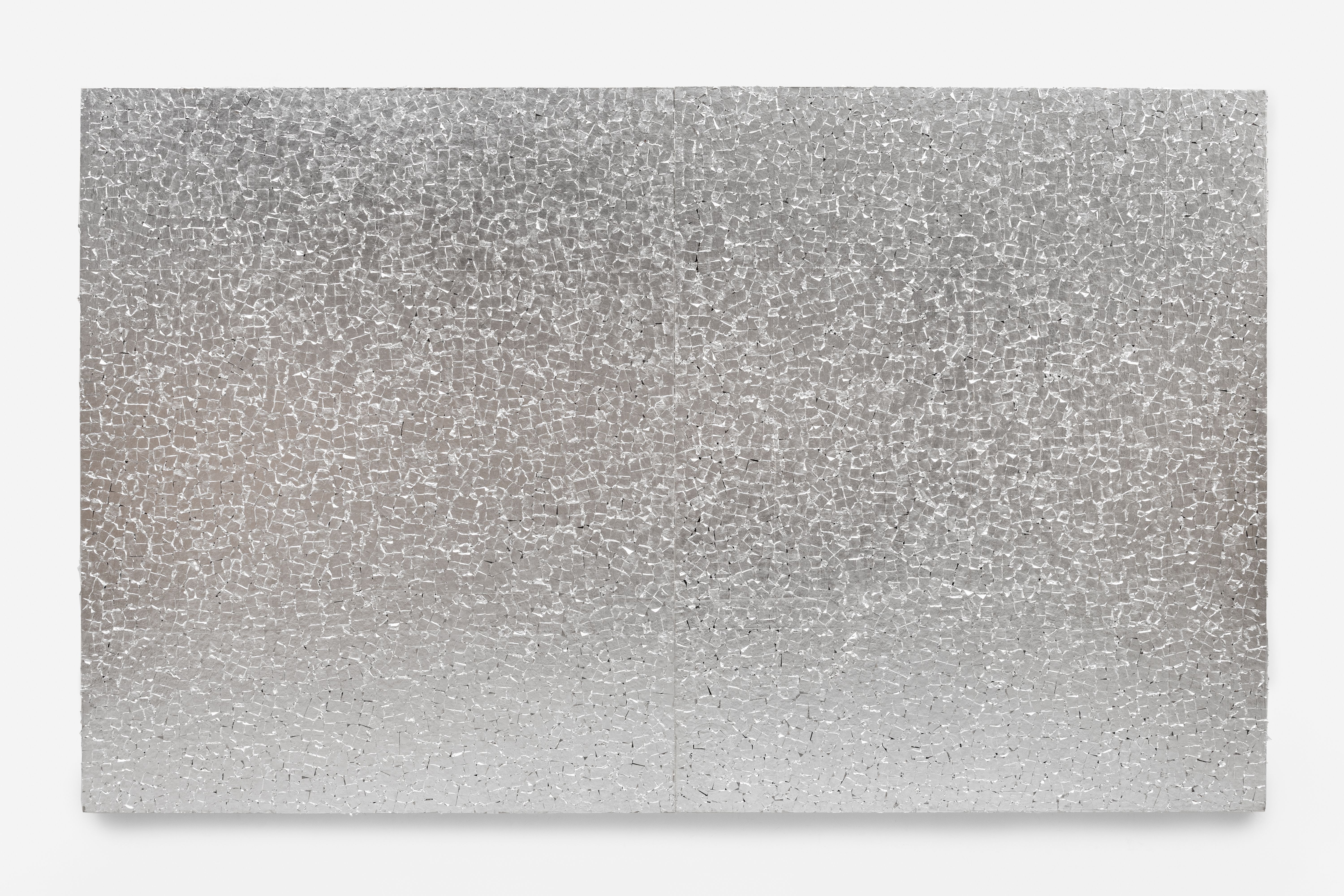
The etymology of the word ‘glut’ is the Latin gluttire: ‘to gulp down or swallow’. Shown for the first time in 15 years, in the first exhibition of the series ever held in France, Robert Rauschenberg’s ‘Gluts’ (named after the famous oil surplus of the 1980s) appear almost like human detritus that the Earth itself has gobbled down and then spat back up. Unlike the earlier ‘Combines’ series, these works are composed entirely of metal, freeing them from the artist’s signature canvas to exist purely as sculpture. Of the series, Rauschenberg remarked: ‘I simply want to present people with their ruins . . . I think of the Gluts as souvenirs without nostalgia.’ Transmogrifying our own bottomless need to produce and consume, the ‘Gluts’ mark time with a remorseless beauty. – Aimee Walleston
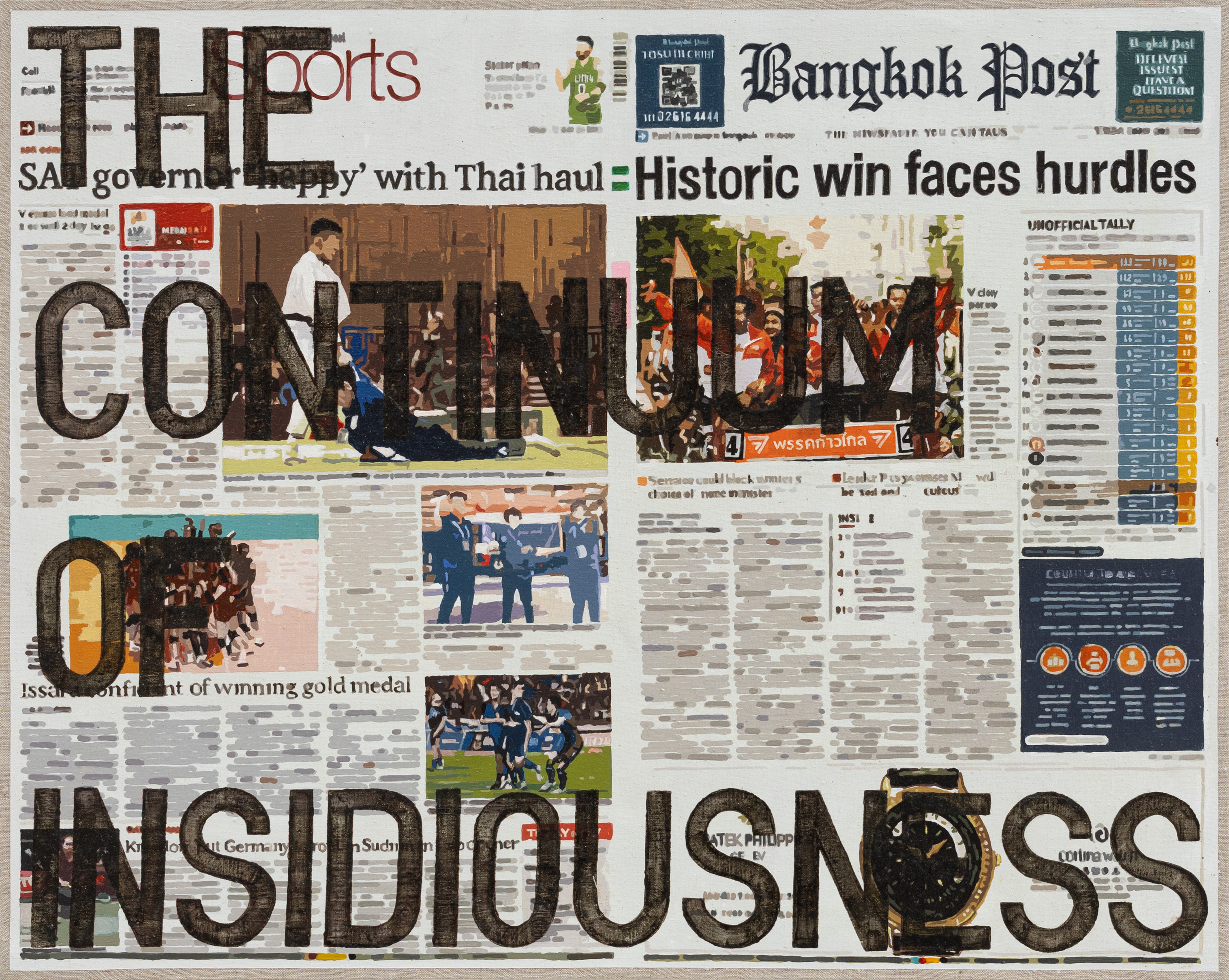
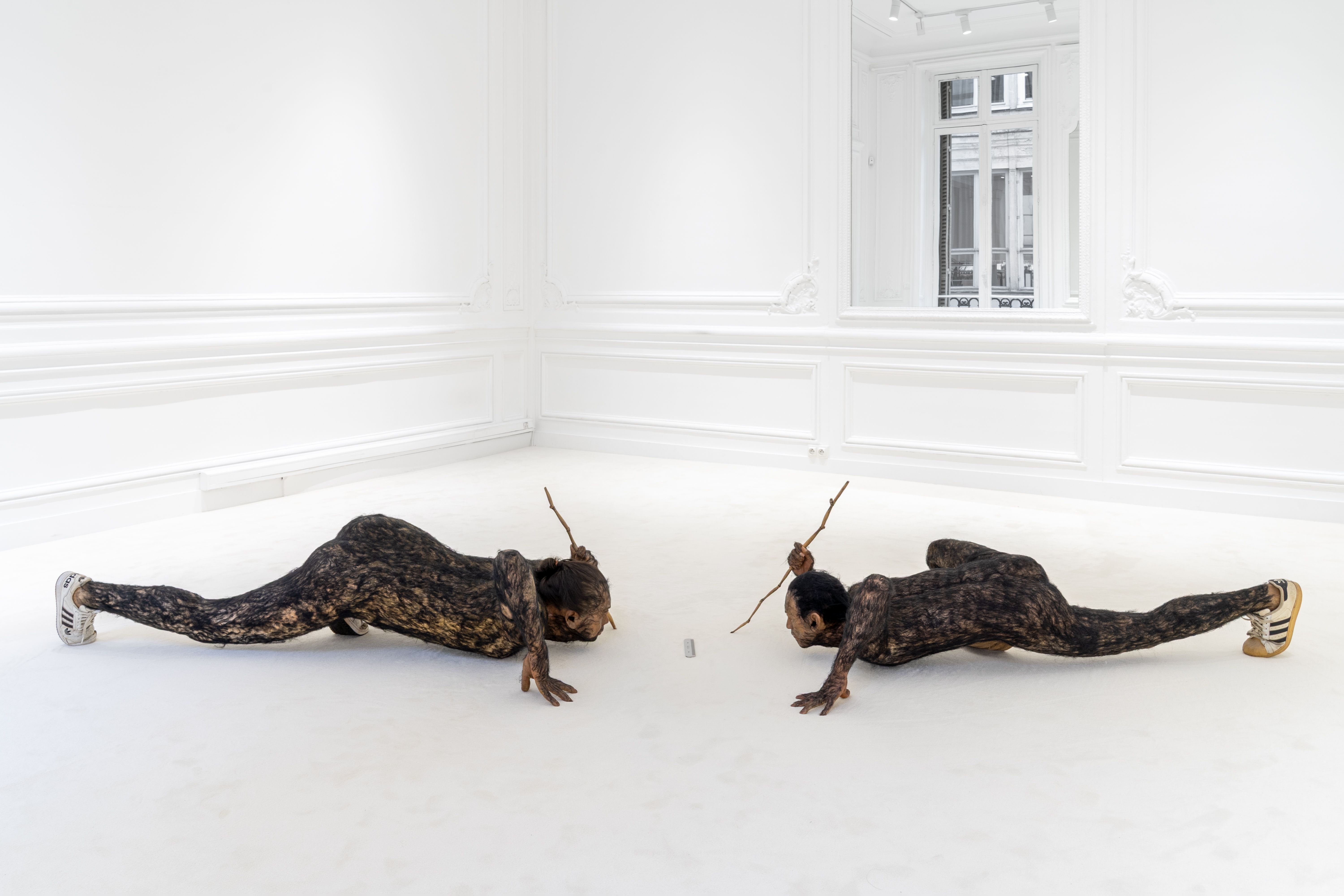
Rirkrit Tiravanija, IN ALIENS WE TRUST (20 October–22 November 2025) at Galerie Chantal Crousel
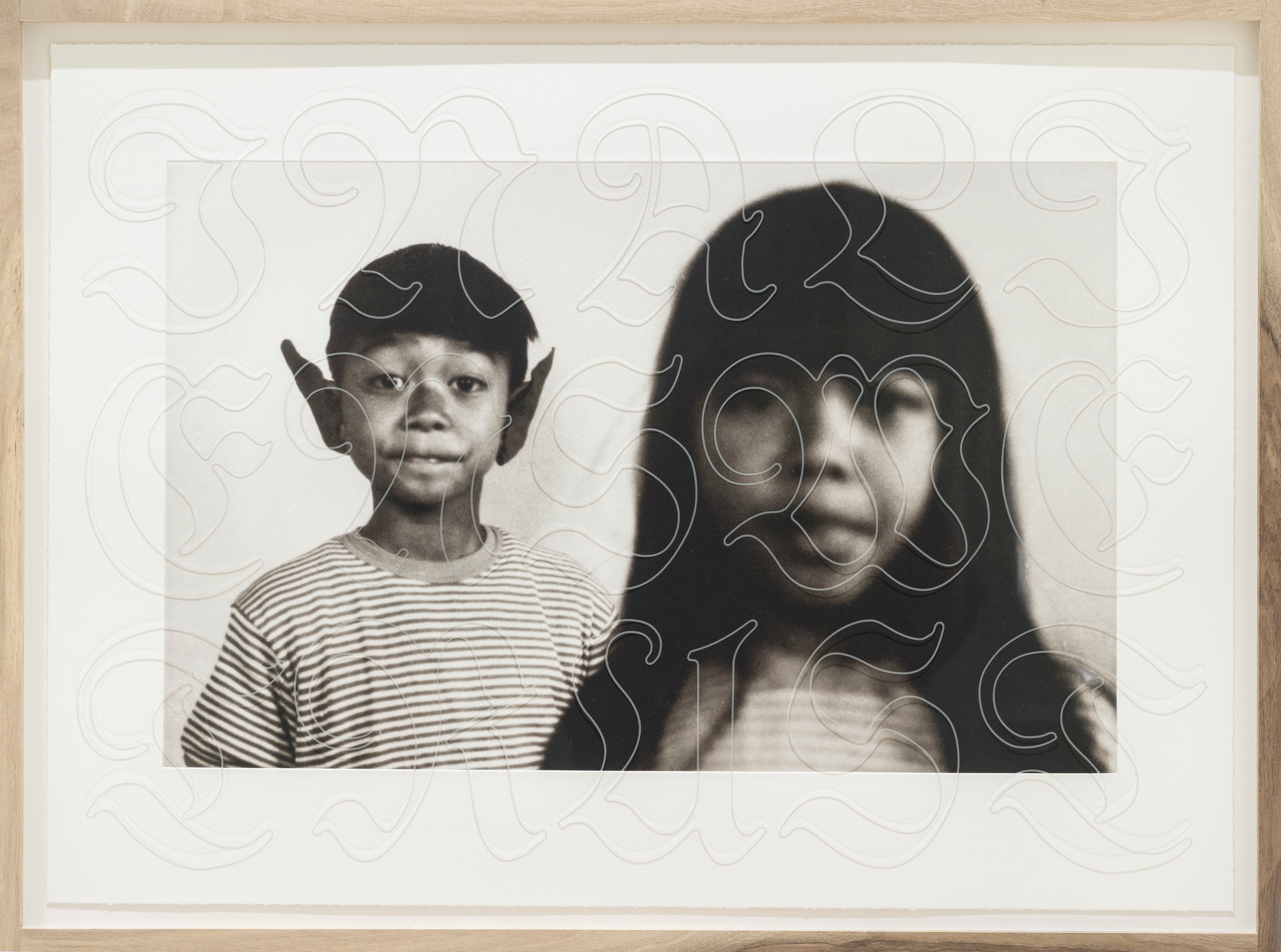
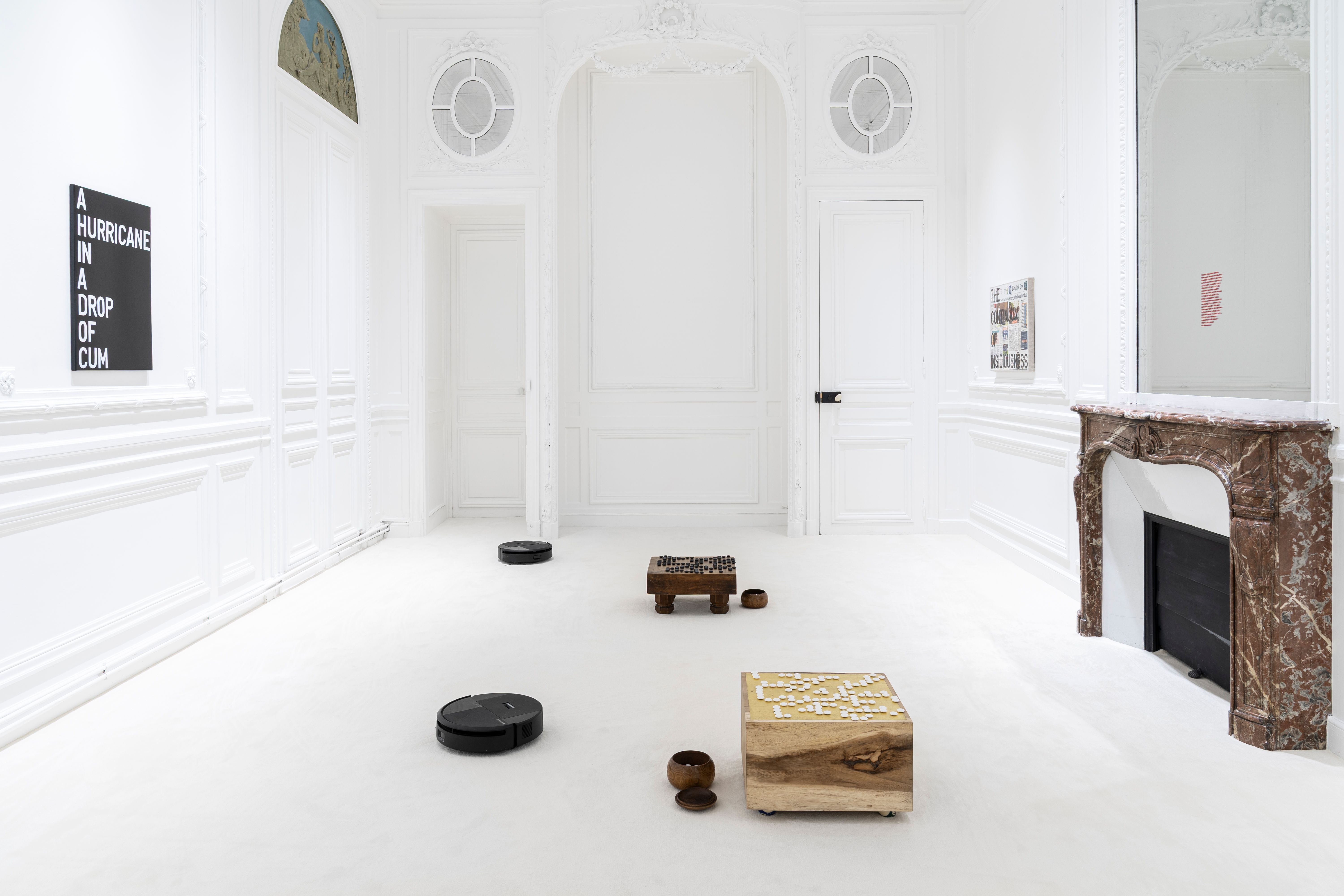
The latest exhibition by Rirkrit Tiravanija opened days after last week’s ‘No Kings’ anti-Trump demonstrations returned in force as millions gathered across the United States. It begs the question: in whom, or what, can the people place their faith? The Argentina-born Thai artist proposes an extraterrestrial alternative at Galerie Chantal Crousel, of which the absurd sculptural centrepiece is a pair of life-sized, hairy-bodied figures dressed in nothing but Adidas sneakers, each wielding a stick (or a primate’s tool?) in clenched fists, and staring fixedly at a steel comb on the ground (a replica of that conceived by Marcel Duchamp in 1916). It’s these visual non-sequiturs and conceptual riffs—whether material, linguistic, political, or art historical—that give Tiravanija’s presentation a curious, theatrical charge, which in the same breath resurfaces Cold War-era politics and draws parallels with the present day. Look out for the cameo by fellow artist Danh Vo, in the form of a custom frame by his father Phung Vo for Tiravanija’s archival family photograph. Made of walnut wood cultivated by Craig McNamara (son of Robert McNamara, defense secretary under John F. Kennedy and one of the architects of the Vietnam War) and etched with the words, ‘IN ALIENS WE TRUST’ in gothic type, the titular aphorism becomes the new declaration of independence. – Misong Kim
Minimal (8 October 2025–19 January 2026) at Bourse de Commerce – Pinault Collection
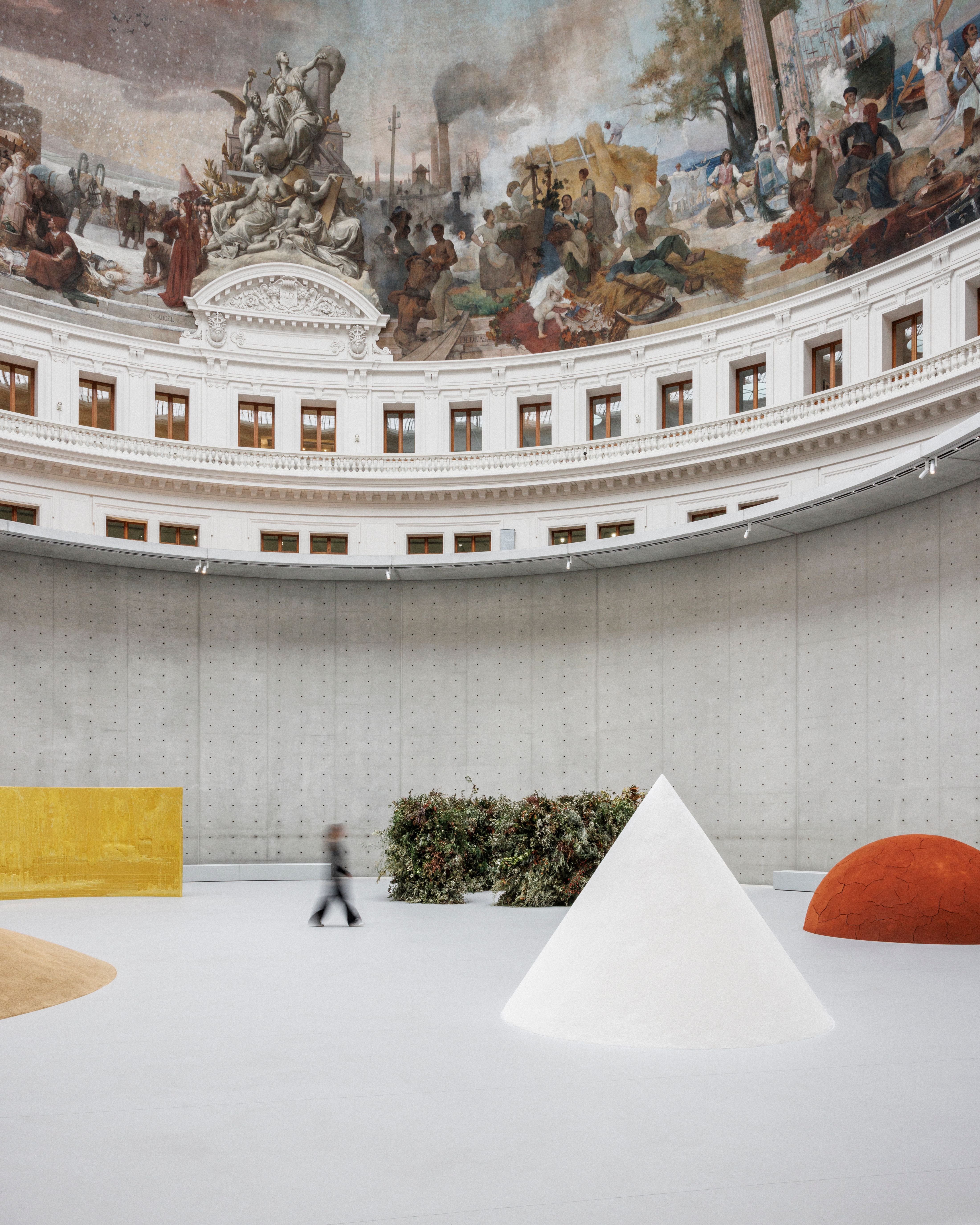
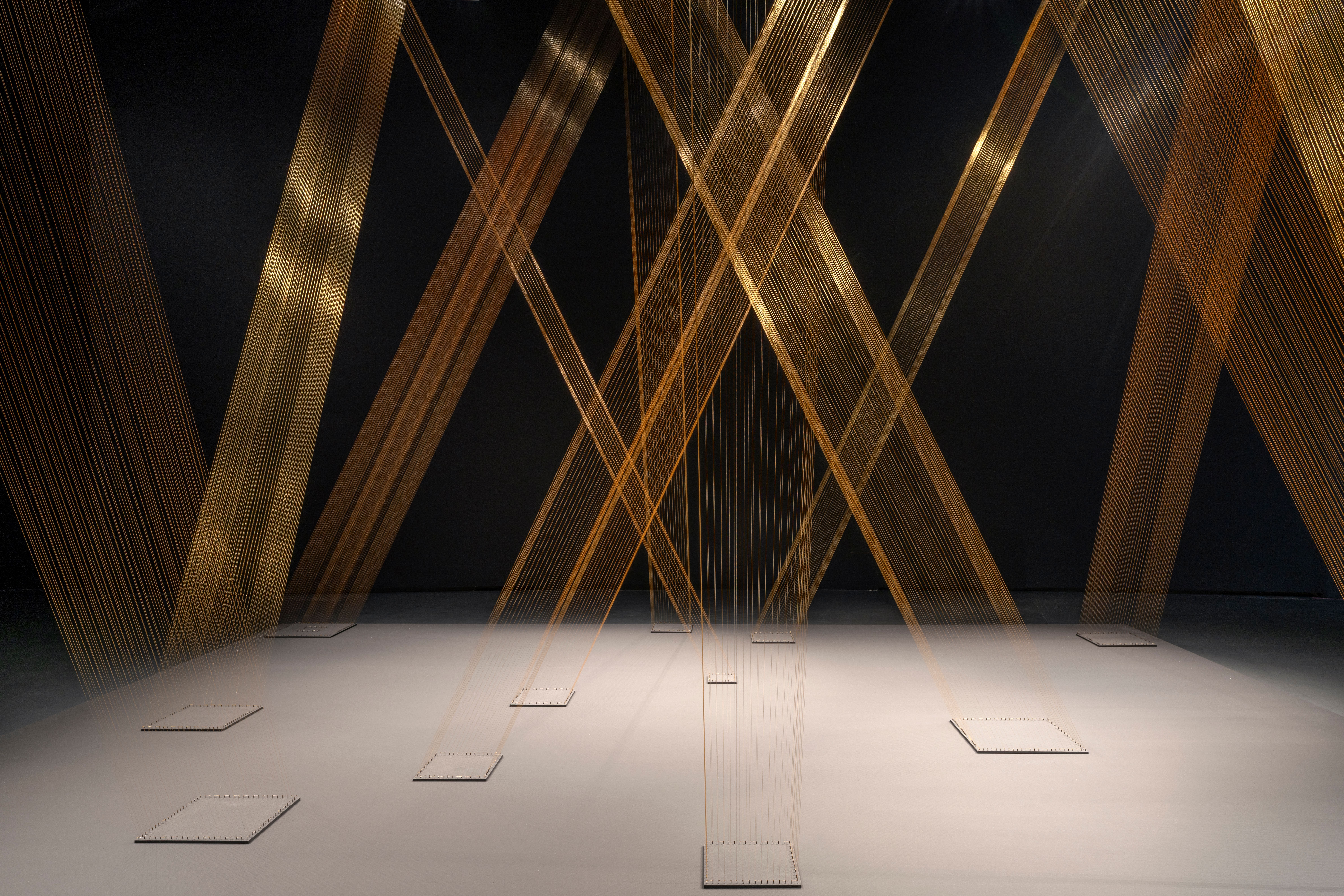
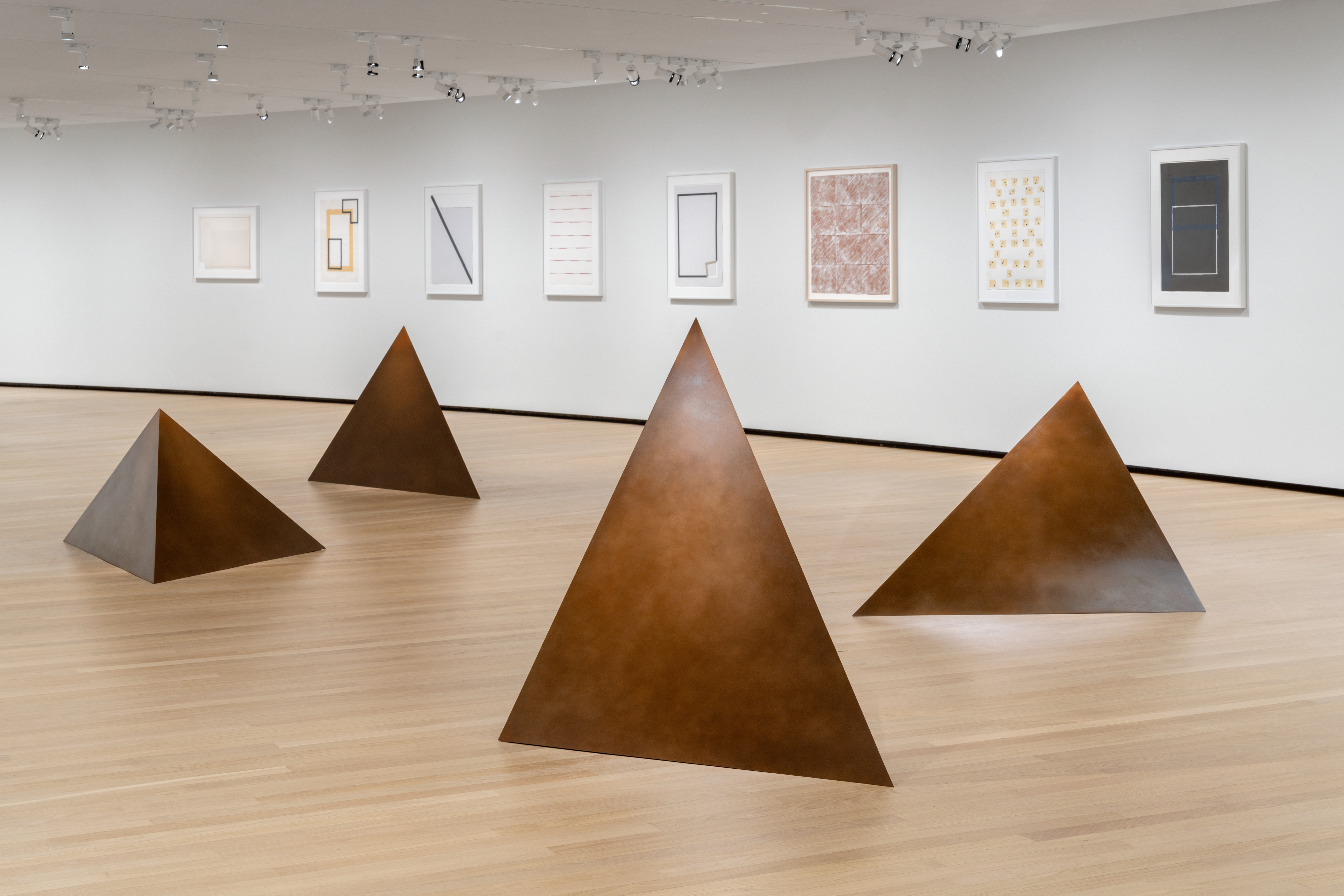
After last year’s well-received Arte Povera survey, the Bourse de Commerce turns to another movement that reshaped the 1960s. Audiences won’t say no to the big names: Dan Flavin’s neon tubes, Agnes Martin’s grids, Lygia Pape’s luminous wire constellations, or Meg Webster’s glowing domes of earth and salt. Come for an art history class if you like, but the exhibition treats Minimal art less as an -ism or a movement rooted in the U.S. than as a sensibility—a way of thinking about material and space that travelled across Brazil, Japan, and Europe. Curated by Jessica Morgan, director of Dia Art Foundation, the exhibition unfolds across seven chapters—light, grid, materialism, surface, monochrome, balance, and a special focus on Mono-ha—framing Minimalism, in her words, as ‘a way of being in relation to things’. – Shanyu Zhong
Pauline Boudry and Renate Lorenz, Right Body, Wrong Time (18 October 2025–10 January 2026) at Marcelle Alix
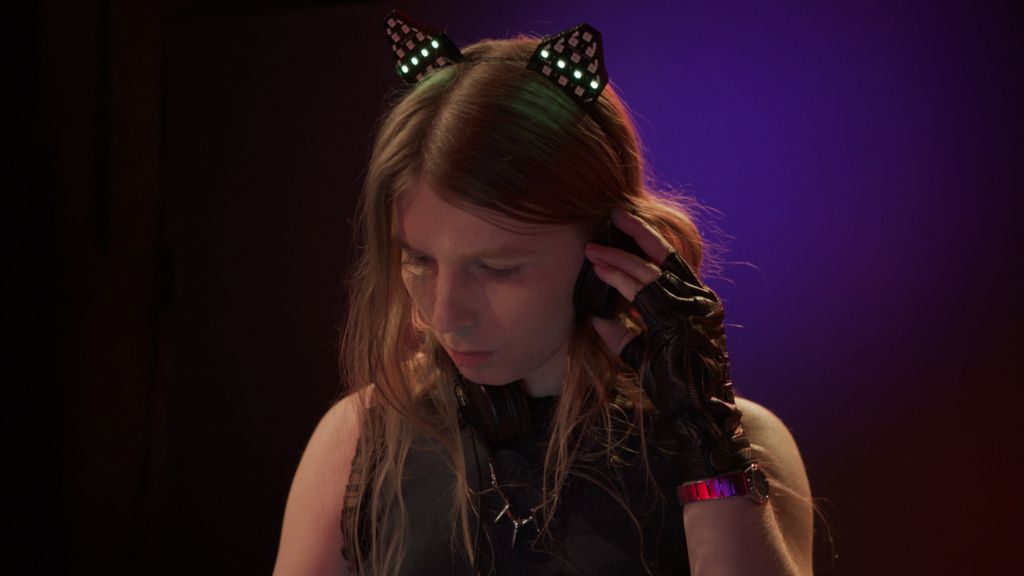
For a show that doesn’t shy away from our troubled contemporary moment yet still gives hope this season, head down to the basement of Marcelle Alix, where Berlin-based artist duo Pauline Boudry and Renate Lorenz turn resistance into something luminous. Their new work All the Things She Said (2025) invites queer icon and anti-war whistleblower Chelsea Manning to take to the DJ decks at Berlin’s oldest queer and trans club, SchwuZ. Manning (wearing elf ears) begins with an old-school, downtempo house set—a return to the sounds that once sustained her through imprisonment and a quiet homage to the queer resilience at the heart of house music. Around the film, the artist duo’s signature wig and chain pieces hang like tangible reminders that both music and these objects can serve as instruments of transformation and survival. In a season brimming with spectacle, this show’s hum is quietly restorative. If you can’t catch the video at its other premieres—MUAC in Mexico City, Istituto Svizzero in Rome, or Biennale Son in Sion—just pop over to Belleville. – Zian Chen
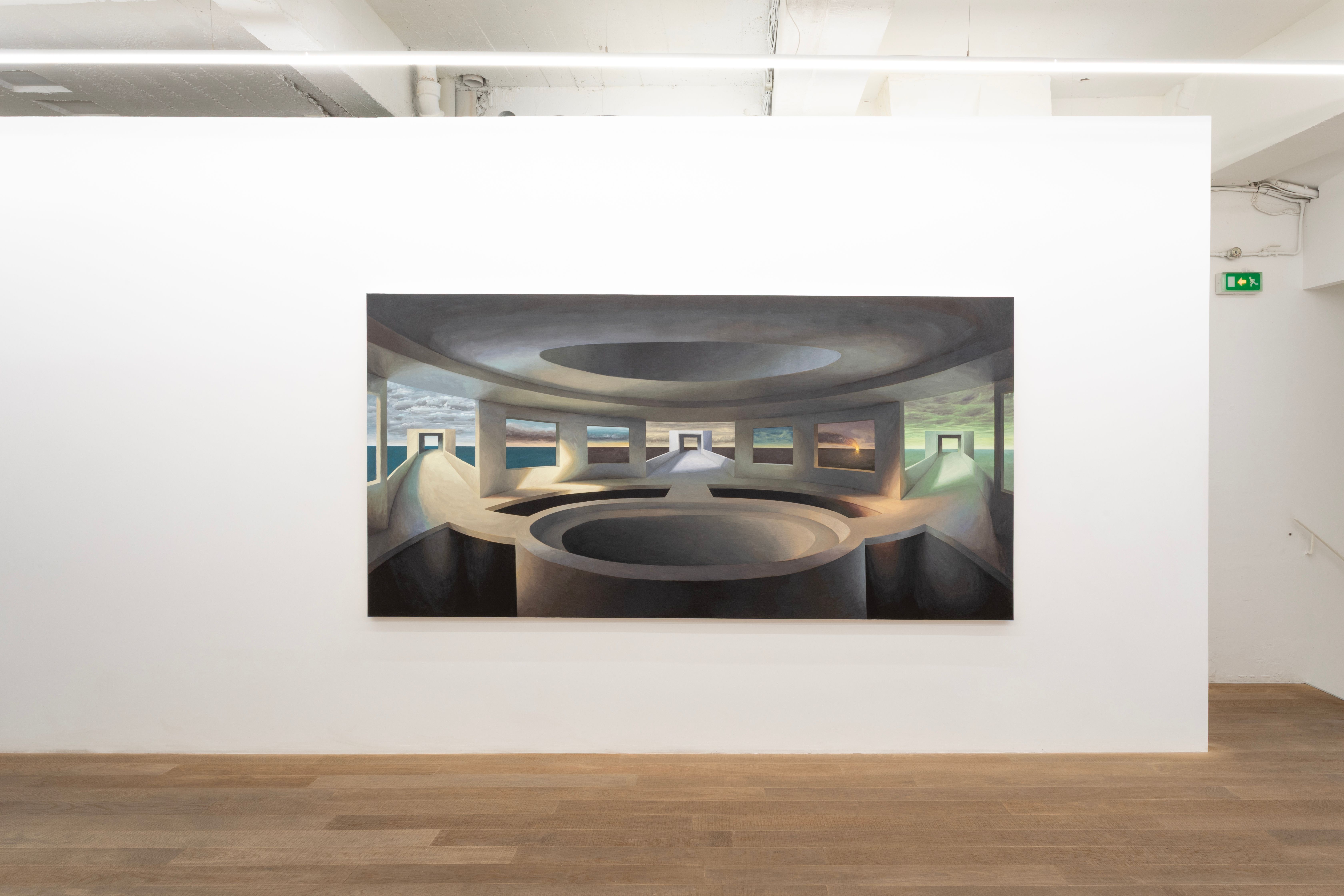
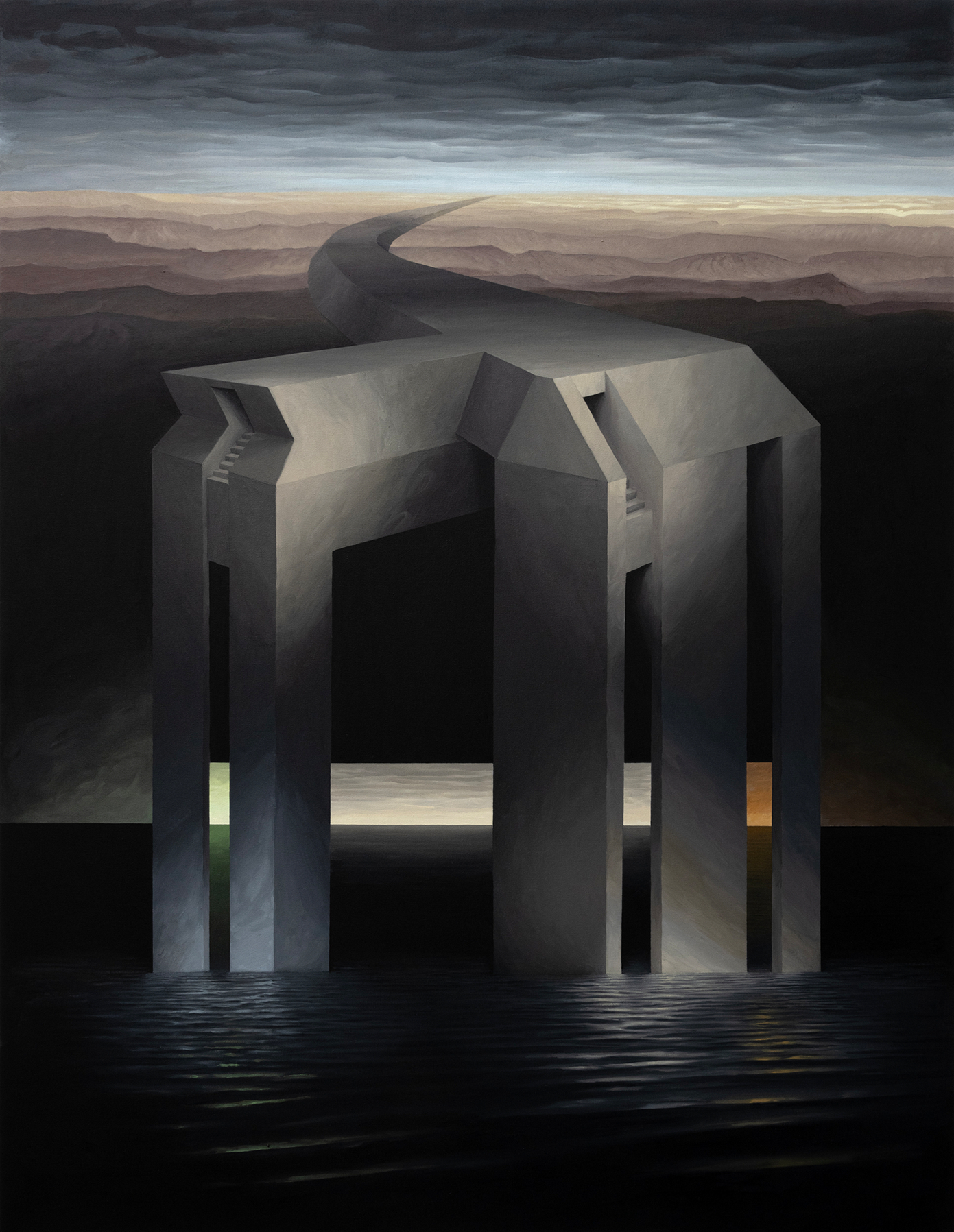
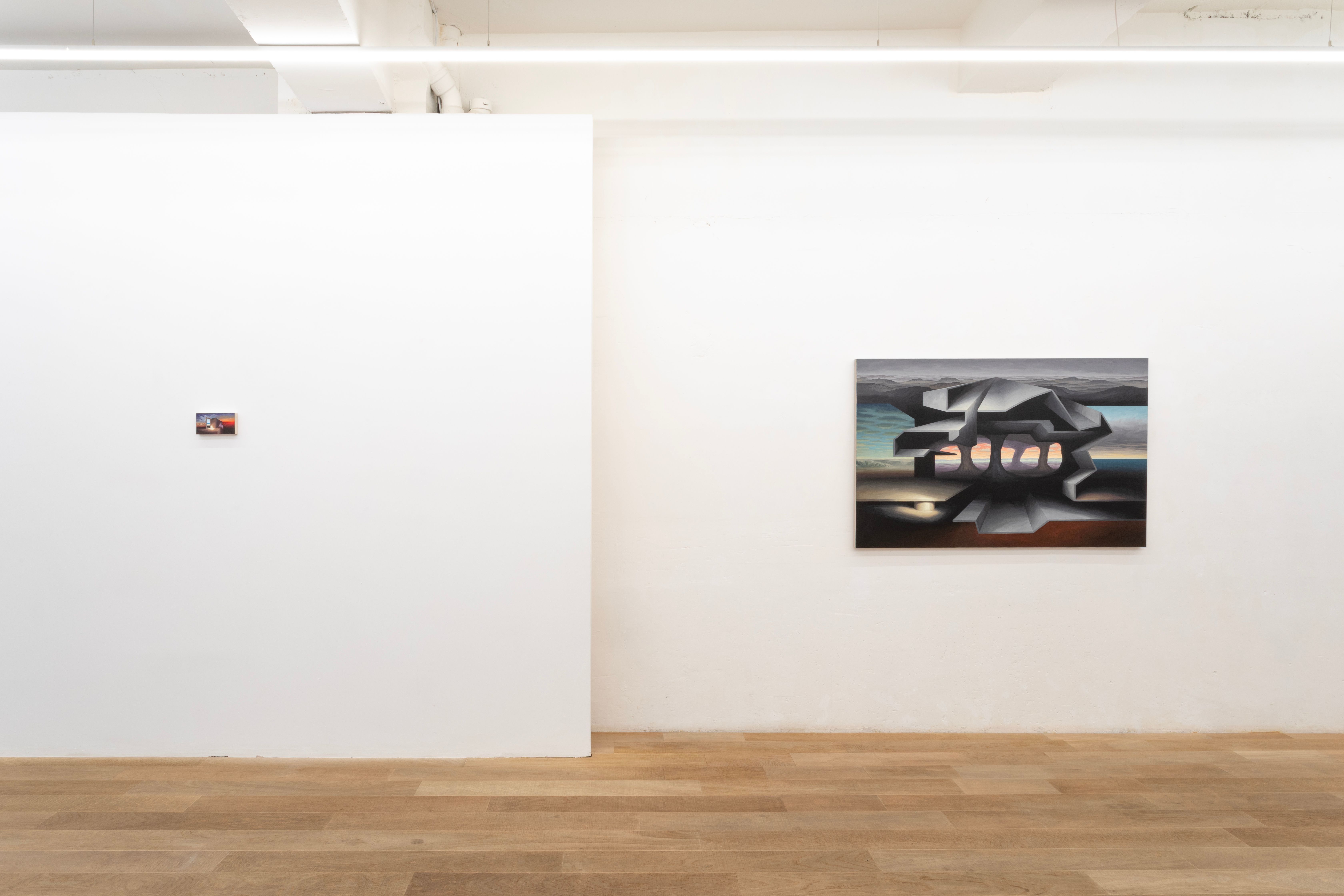
Louis Le Kim, Close to the Night (18 October–22 November 2025) at Galerie Sultana
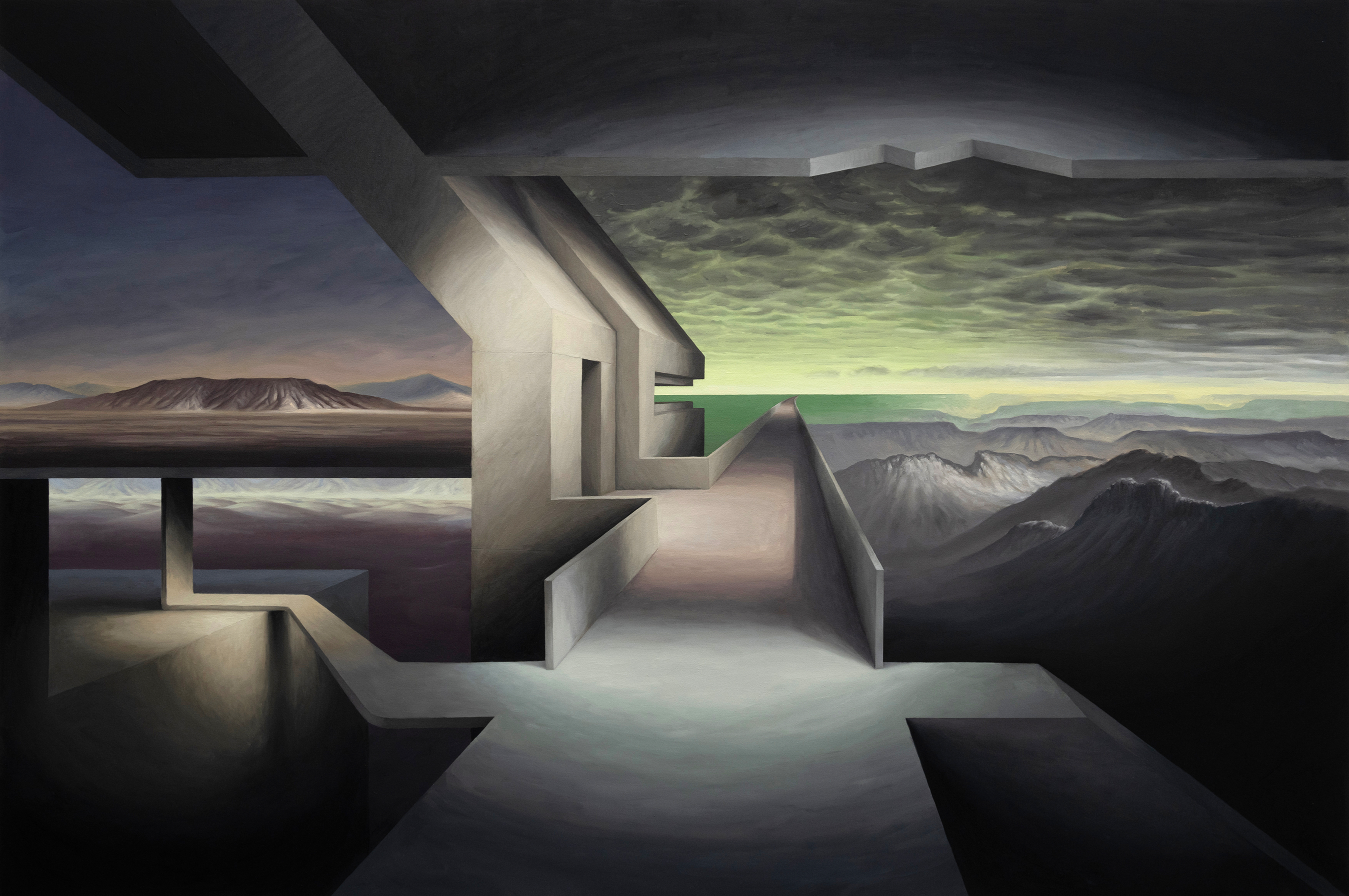
There is something oddly beguiling about the eerie contrast of the deserted, artificially lit space of the underground car park with the bustling, bright world above. Wandering among the manmade, concrete structure with only stationary cars for company, it is striking how one could be anywhere in the world at that moment, with no distinguishing features to localise the anonymous stairwells and pedestrian walkways. It is this (not altogether unpleasant) sensation of dislocation that infuses the work of French artist Louis Le Kim, whose first show of paintings at Galerie Sultana in Le Marais reveals concrete rotundas, ramps and bunkers devoid of human life. Set among sweeping natural landscapes, from dappled clouds to shimmering oceans and rugged mountain ranges, Le Kim builds a heightened sense of pathos melded with humour at the sheer, impossible majesty of it all. Part nod to French anthropologist Marc Auge’s term ‘non-place’, part Freudian dream sequence, part architectural fantasy, Le Kim’s world-building conveys a sense of teetering on the edge of a threshold. Open the door, he seems to say, and see what comes rushing in. – Louise Benson —[O]
Main image: Precious Okoyomon, Trauma slut (2025) (detail). Polyurethane, polyamide, flocking, acrylic paint, resin, clear, varnish, sillicone, synthetic ceramic, polyvinyl chloride foil, tulle, and lace. 62 x 58 x 100 cm. Courtesy the artist and Mendes Wood DM. Photo: Nicolas Brasseur.



A respected voice in contemporary art discourse.
Focusing on ambitious storytelling and insightful art-world commentary. Ocula Magazine publishes in-depth interviews, critical essays and timely analysis on the artists, exhibitions and ideas driving the global art world.
Learn more about Ocula Magazine
Showcasing the best of the art world.
Ocula partners with galleries from around the world to highlight their artists, artworks and exhibitions. Gallery membership is by application and invitation, with each member vetted by an independent panel.
Learn more about Ocula Membership
Specialises in the sale of major artworks.
Led by a team with deep ties to the world’s leading auction houses, galleries and collectors. Ocula’s advisory team offers bespoke services to high-net-worth clients from around the world who are looking to acquire the best of contemporary and modern art.
Learn more about our team and services