





A Timestamp on an Epochal Scale: Lee Bul’s Seoul Homecoming
‘There’s an intentional shuffling of time and space in these works,’ Lee says. ‘I’m trying to reveal something about our present moment.’ Save to My Ocula
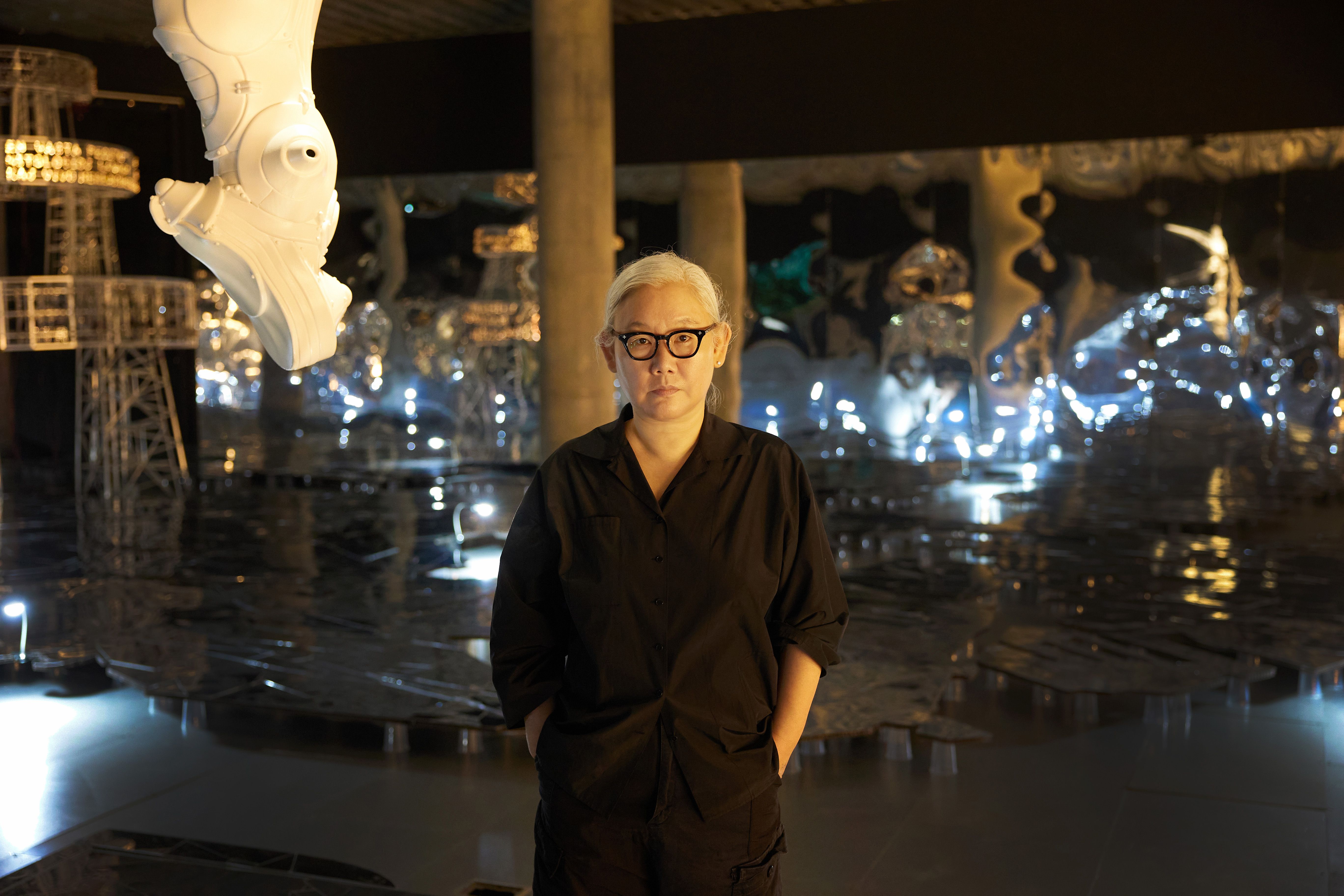
‘Every exhibition made up of existing works is an opportunity to re-orchestrate, like a conductor trying out different ways to interpret familiar music,’ Lee Bul tells Ocula. And this month, the Korean artist undertakes one of her largest compositions yet: a major retrospective at the Leeum Museum of Art. Lee Bul: From 1998 to Now (4 September 2025–4 January 2026) gathers around 150 works, tracing her practice from the late 1990s—when provocative performances gave way to her celebrated ‘Cyborg’ sculptures (1997–2011)—through to her recent ‘Perdu’ paintings (2016–ongoing), staged here in her hometown of Seoul.
Lee is one of the most celebrated artists working out of the city today. Born in 1964, she earned her BFA in sculpture at Hongik University in 1987, at a time when South Korea itself was in flux. That year, the June Democratic Uprising forced constitutional reforms, paving the way for the nation’s first direct presidential elections after decades of authoritarian rule. Rapid industrialisation followed, providing the backdrop for the beginning of Lee’s four-decade career, one defined by fractured visions of the human body, the utopian ambitions of modern architecture, and the fragility of technological progress in an anxious age.

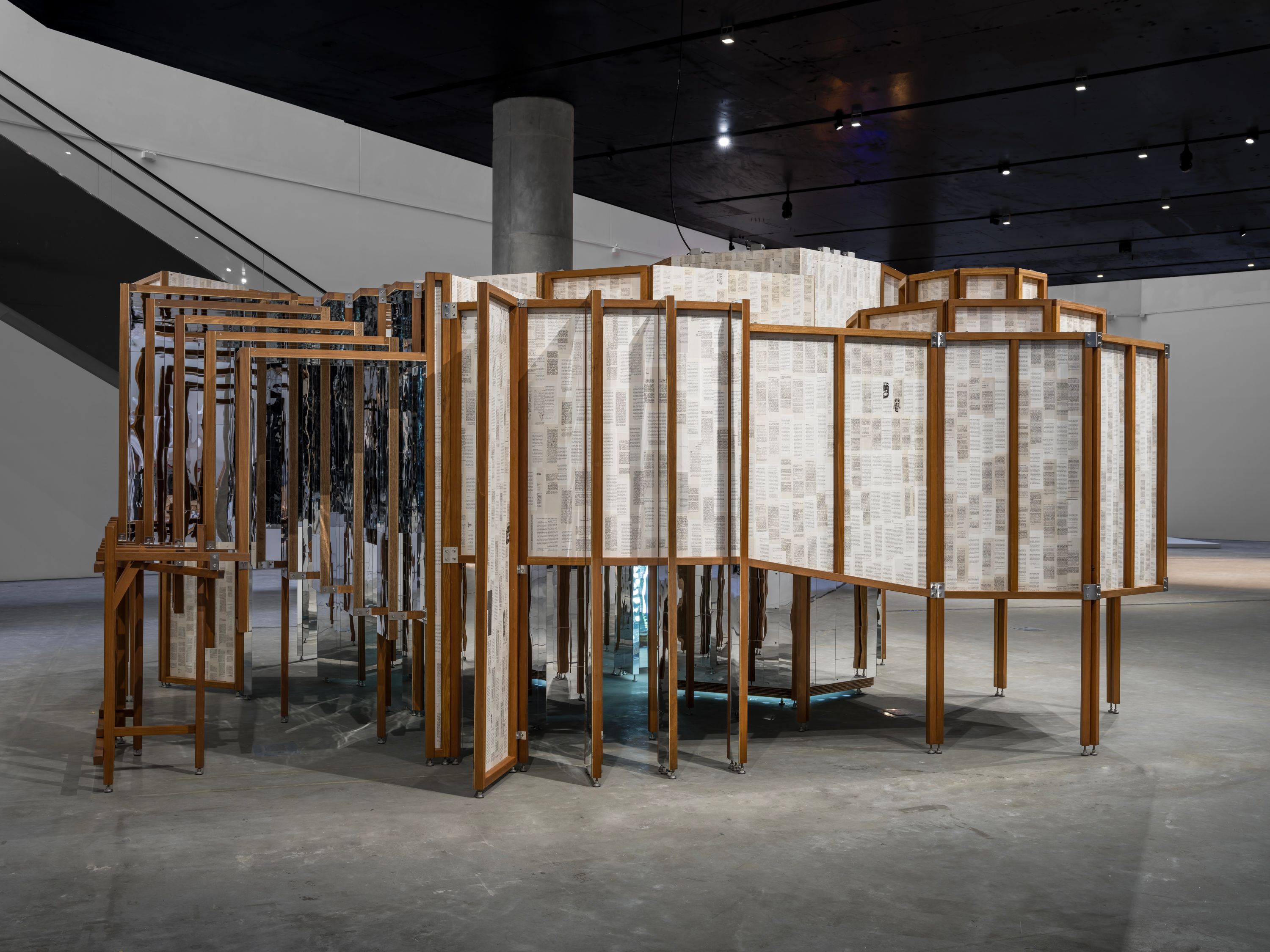
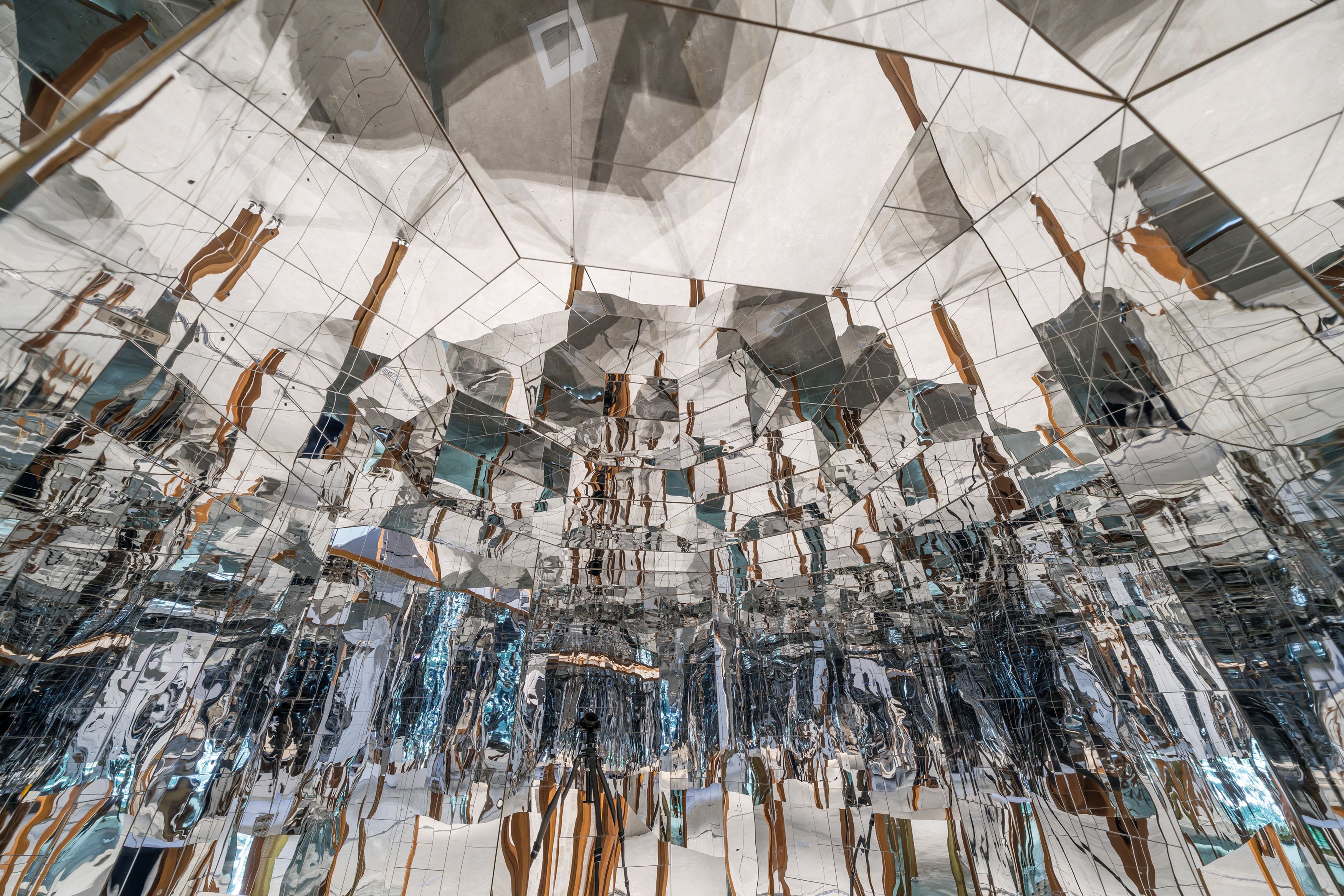
It was in this context that Lee first rose to international prominence with provocative works such as Majestic Splendor (1991), a garland of sequinned raw fish that was famously withdrawn from her 1997 Museum of Modern Art exhibition when it began to rot. Since then, she has become a central figure in both Korean and global contemporary art, with solo exhibitions at the National Museum of Modern and Contemporary Art, Seoul (2014), the Hayward Gallery, London (2018), the Seoul Museum of Art (2021), and MoMA, New York (1997). Earlier this year, it was announced that she would part ways with Lehmann Maupin and Thaddaeus Ropac—her longstanding representatives in the U.S. and Europe since 2007—to join Hauser & Wirth, which now co-represents her alongside the Seoul-based gallery BB&M.
‘There’s an intentional shuffling of time and space in these works,’ she says, returning to the show. ‘Of the past and the future, the real and the imaginary. Through this method, with references that are historical or even timeless, I’m trying to reveal something about our present moment.’
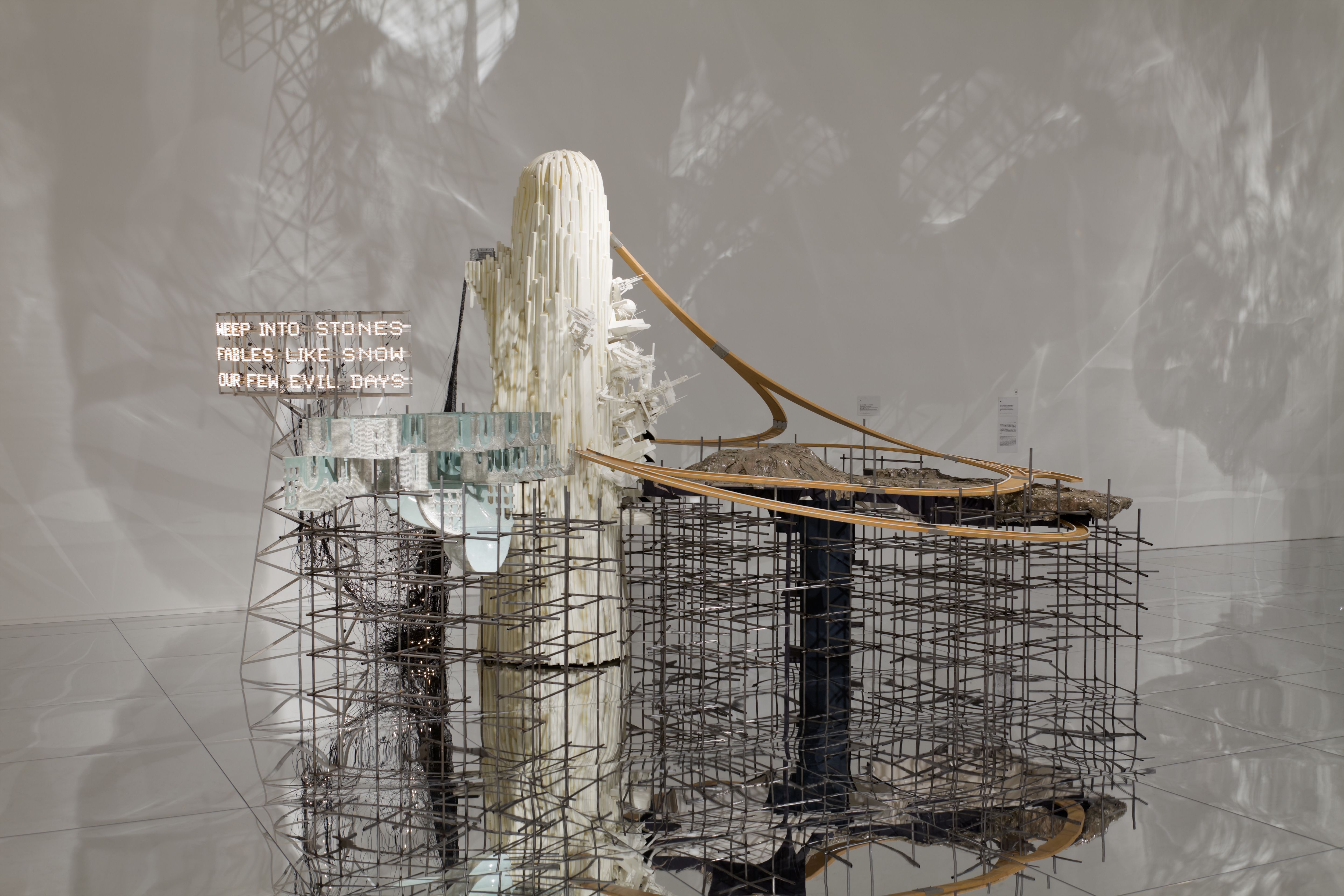
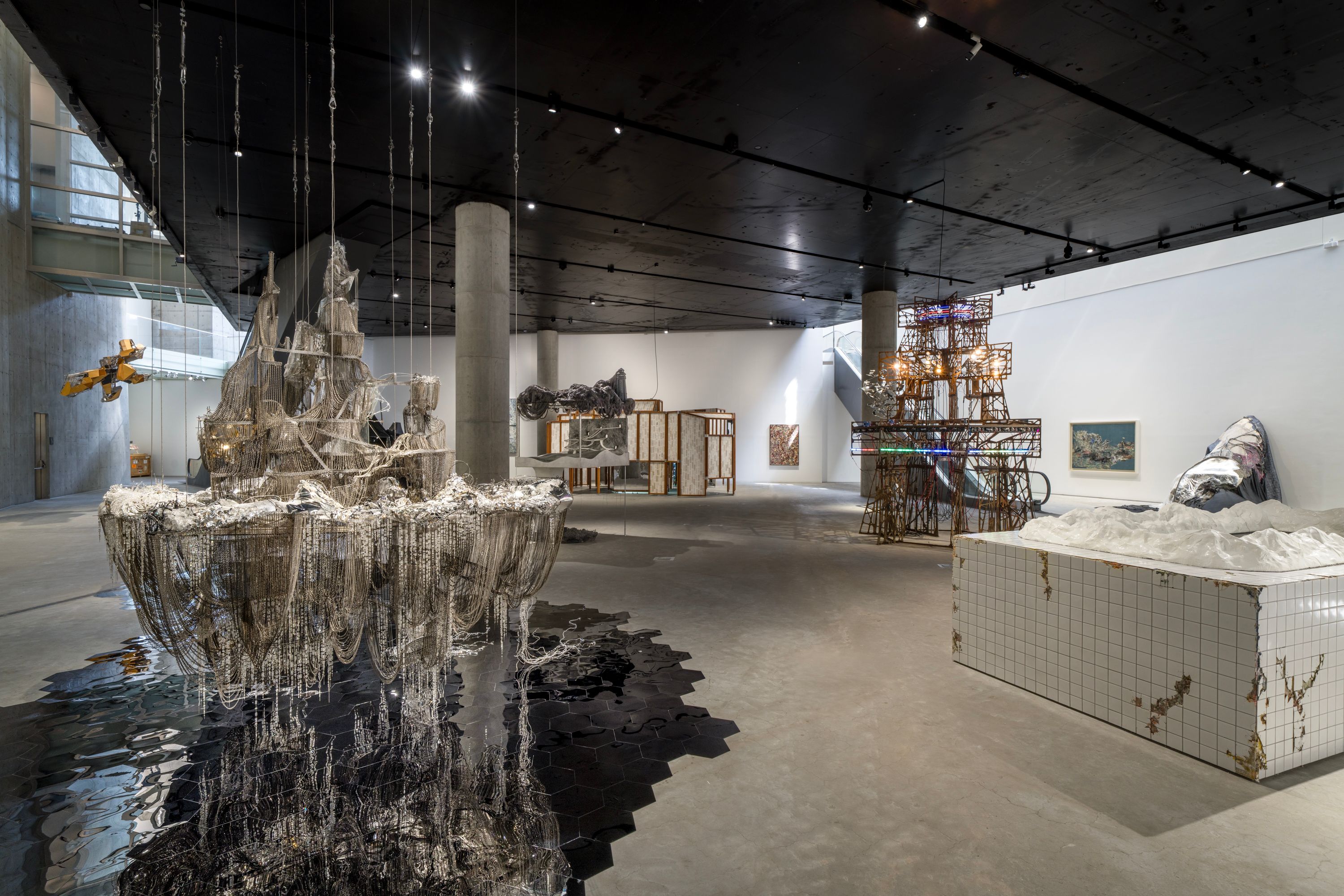
At the heart of the retrospective is the complete presentation of her ongoing ‘Mon grand récit’ series, begun in 2005. These immersive installations, drawings, and sculptures explore what she calls the ‘utopian shadows’ of modernist architecture—structures that once embodied utopian dreams and aspirations, yet which now stand as fragile monuments to modernity’s disillusionment. ‘At the risk of simplifying too much,’ Lee says, ‘I would say that with this body of work, “Mon grand récit”, I hope to induce a feeling of jamais vu—for the visitor to feel like they’re coming upon something never seen before, though it exists somewhere in our collective memory.’
Among the earliest and most emblematic works in the series, Mon grand récit: Because everything… (2005) stages a sprawling tabletop landscape where pink resin and white epoxy engulf models of an imagined city. The piece draws on Russian Constructivism, European landscape traditions, and Korea’s own turbulent modern history, while also echoing utopian projects such as Vladimir Tatlin’s unrealised Monument to the Third International (1920). Cutting across the terrain, a flashing LED sign interrupts with the phrase: ‘because everything / only really perhaps / yet so limitless’.
‘There are many fascinating elements about Tatlin’s tower,’ Lee says. ‘But I’m particularly drawn to how it functions as a symbol of hegemonic aspirations expressed through technological supremacy. Though unrealised, the iconic form resonates even today as we confront the advent of AI and all the thorny questions arising from this epochal technological shift.’
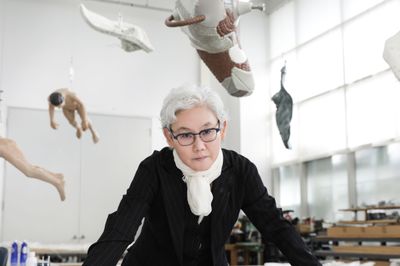
Alongside ‘Mon grand récit’, the exhibition revisits early series that first brought Lee international recognition. Unveiled at Seoul’s Art Sonje Center in 1998, following their presentation in the Guggenheim’s Hugo Boss Prize exhibition, her ‘Cyborg’ sculptures are floating figures, part machine and part organism, whose fragmented torsos are stripped of heads and limbs, and suspended in space. In fact, it was the rediscovery of her preparatory drawings for the ‘Cyborg’ series that partly inspired ‘Perdu’, also on view in Seoul. Combining mother-of-pearl, lacquer, and acrylic paint on wood panels, these paintings are perhaps the works most familiar to those on the commercial art circuit, thanks to their more intimate, collectable scale.
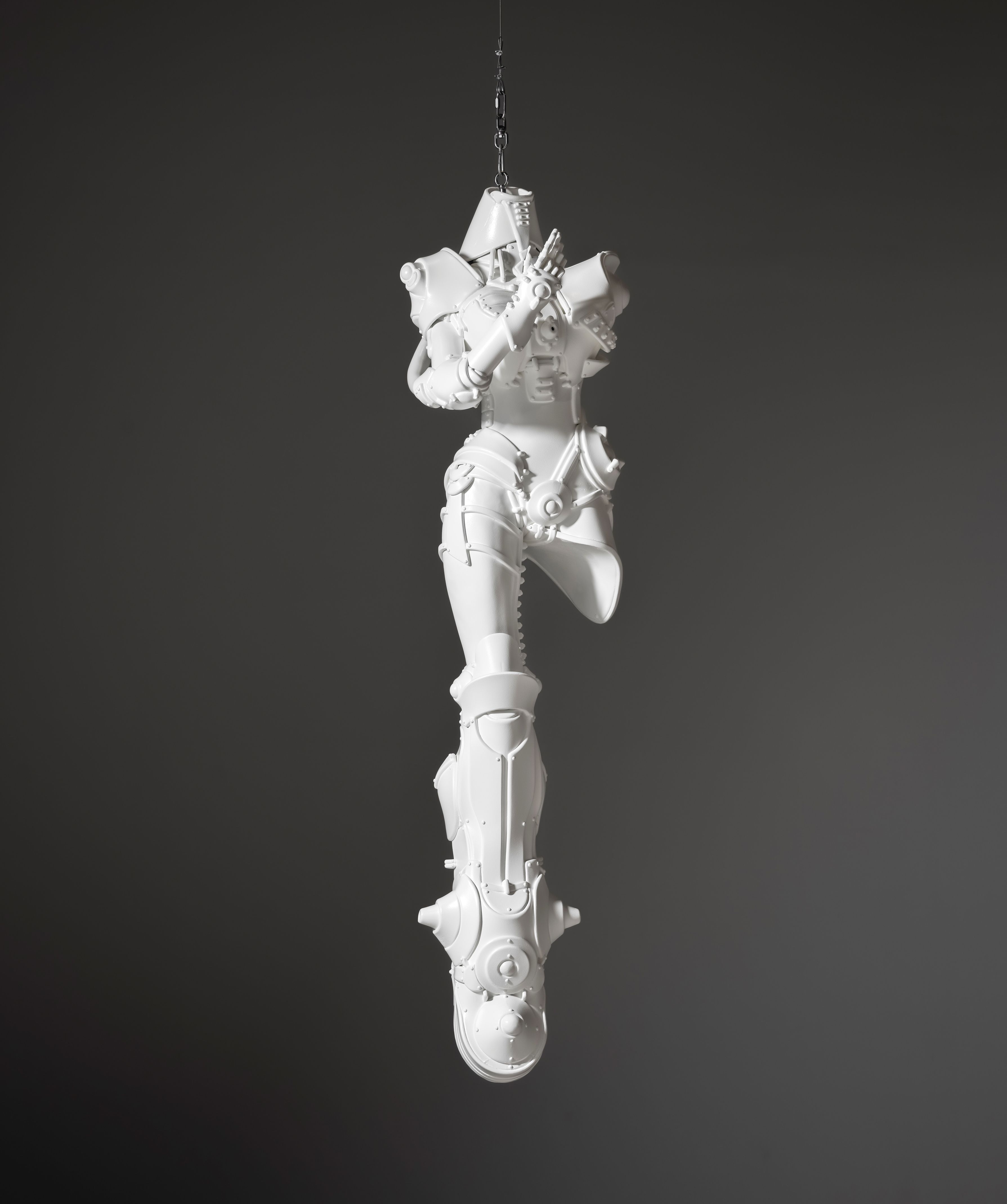
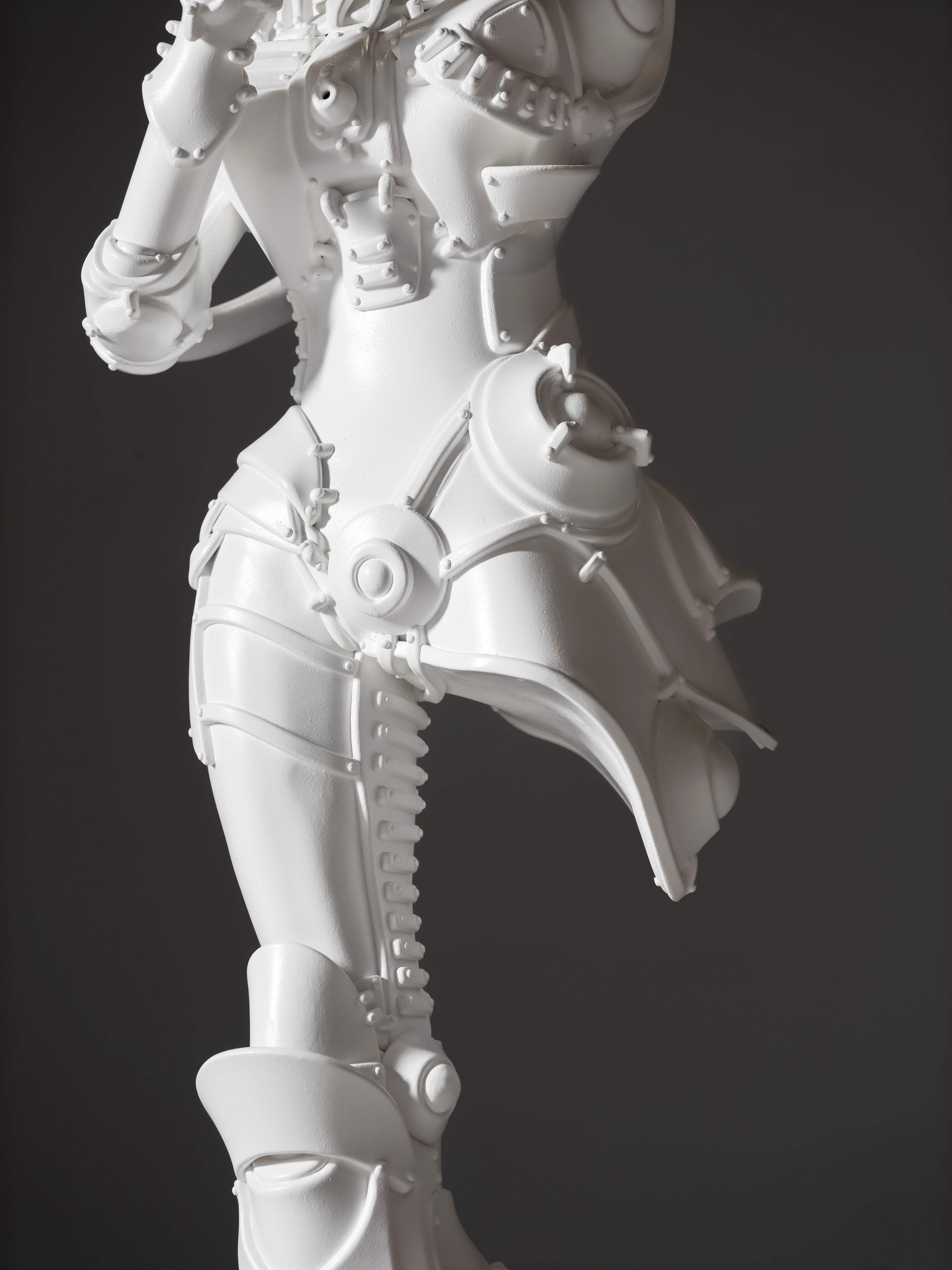
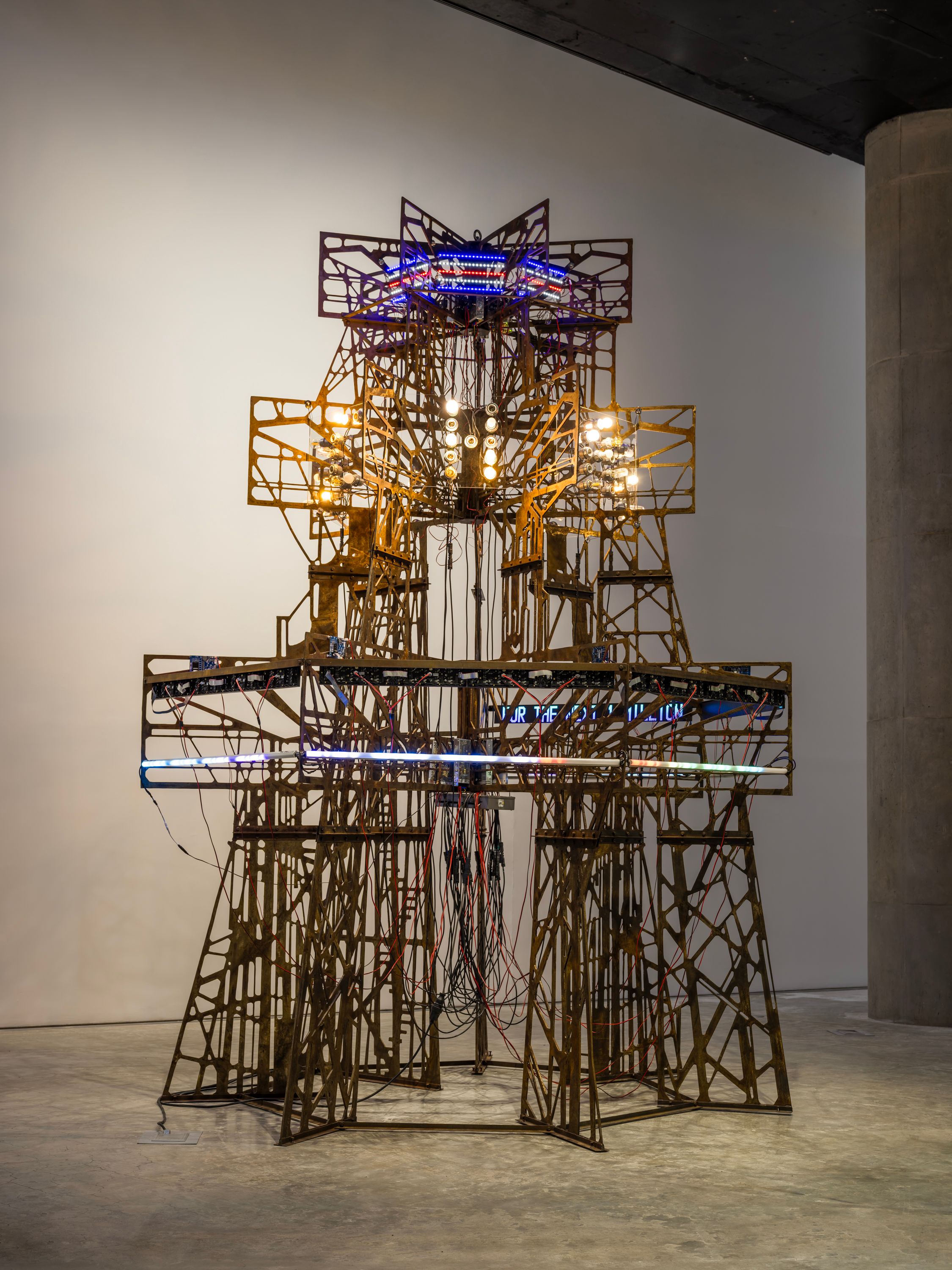
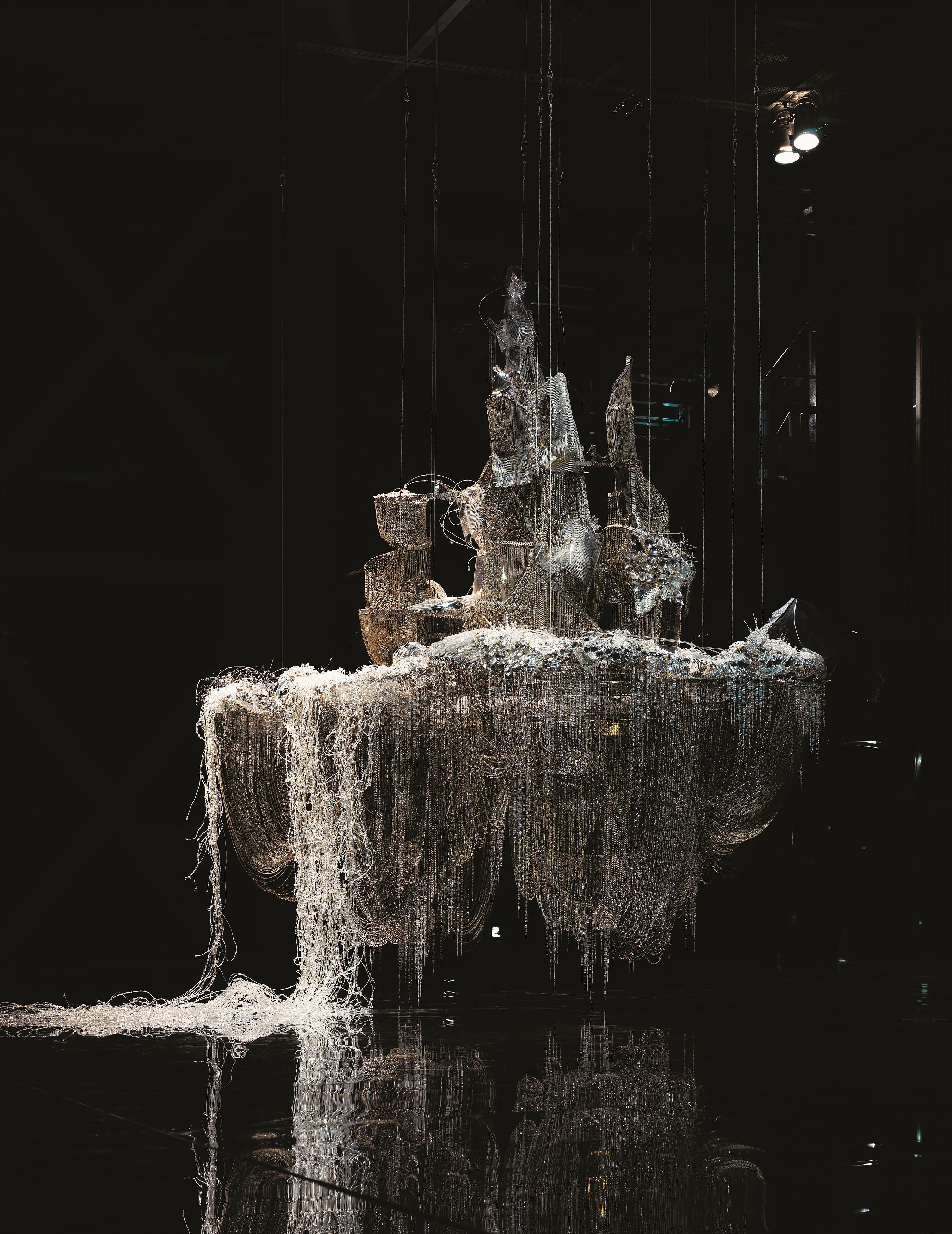
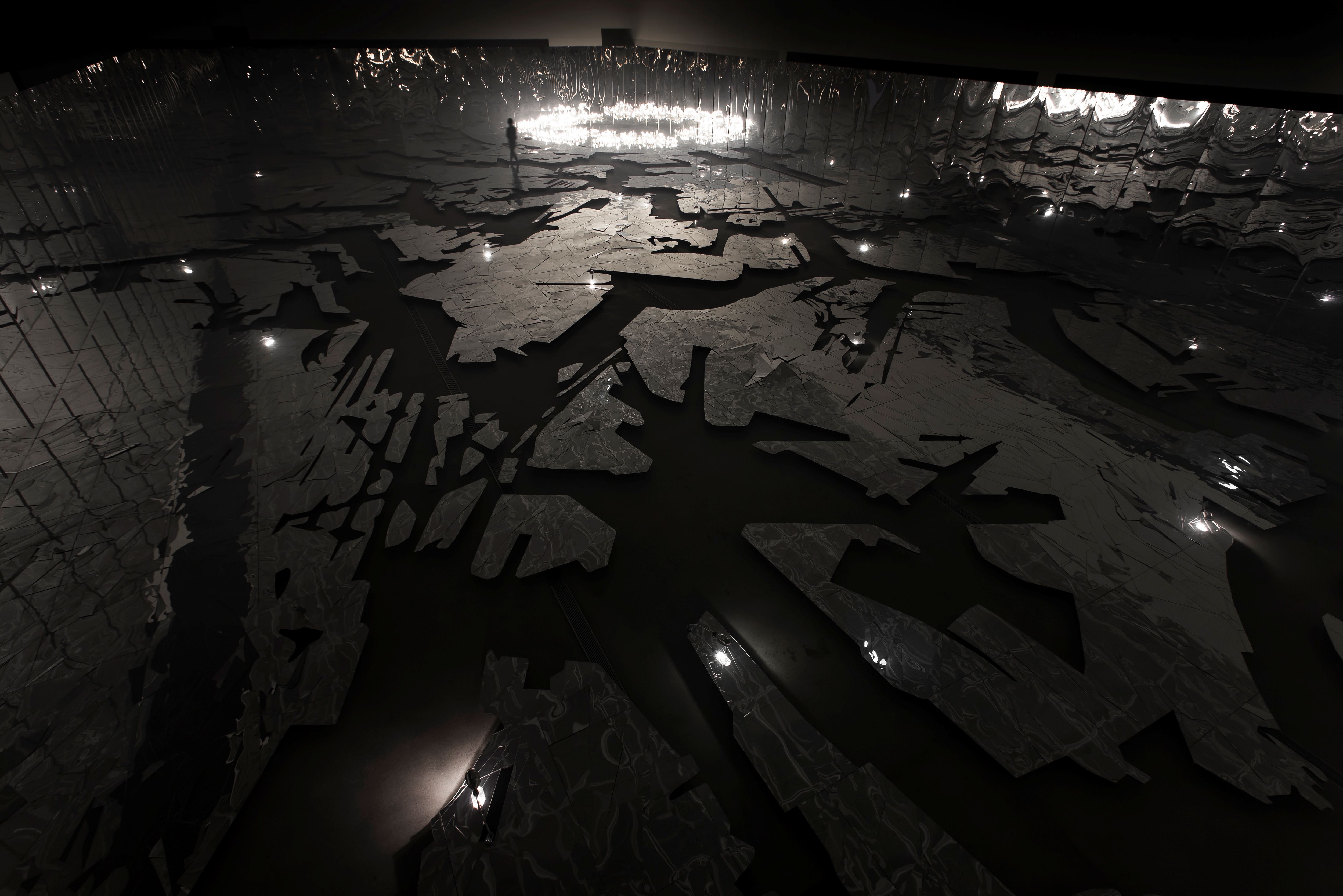
‘Both the “Cyborg” series and my current works exist on the same artistic plane,’ Lee says. ‘They explore the entanglement of technology not only with identity, whether individual or collective, but also in the overarching struggle for hegemony that both defines and deforms what civilisation looks like.’
Thankfully, Leeum is the ideal stage for it all. Operated by the Samsung Foundation of Culture, the museum opened in 2004 in Hannam-dong and has since mounted some of the most ambitious exhibitions to reach Seoul. Scale is often its calling card: Maurizio Cattelan’s 2023 exhibition—featuring his miniature Sistine Chapel—was his largest survey since his 2011 Guggenheim retrospective; Anicka Yi filled Leeum’s Frieze Seoul slot in 2024 with her most expansive presentation in Asia to date; and Pierre Huyghe, whose practice thrives on abundant space and resources—as anyone who saw his Punta della Dogana show in Venice will attest—has presented work at Leeum at a scale and complexity few institutions can pull off.
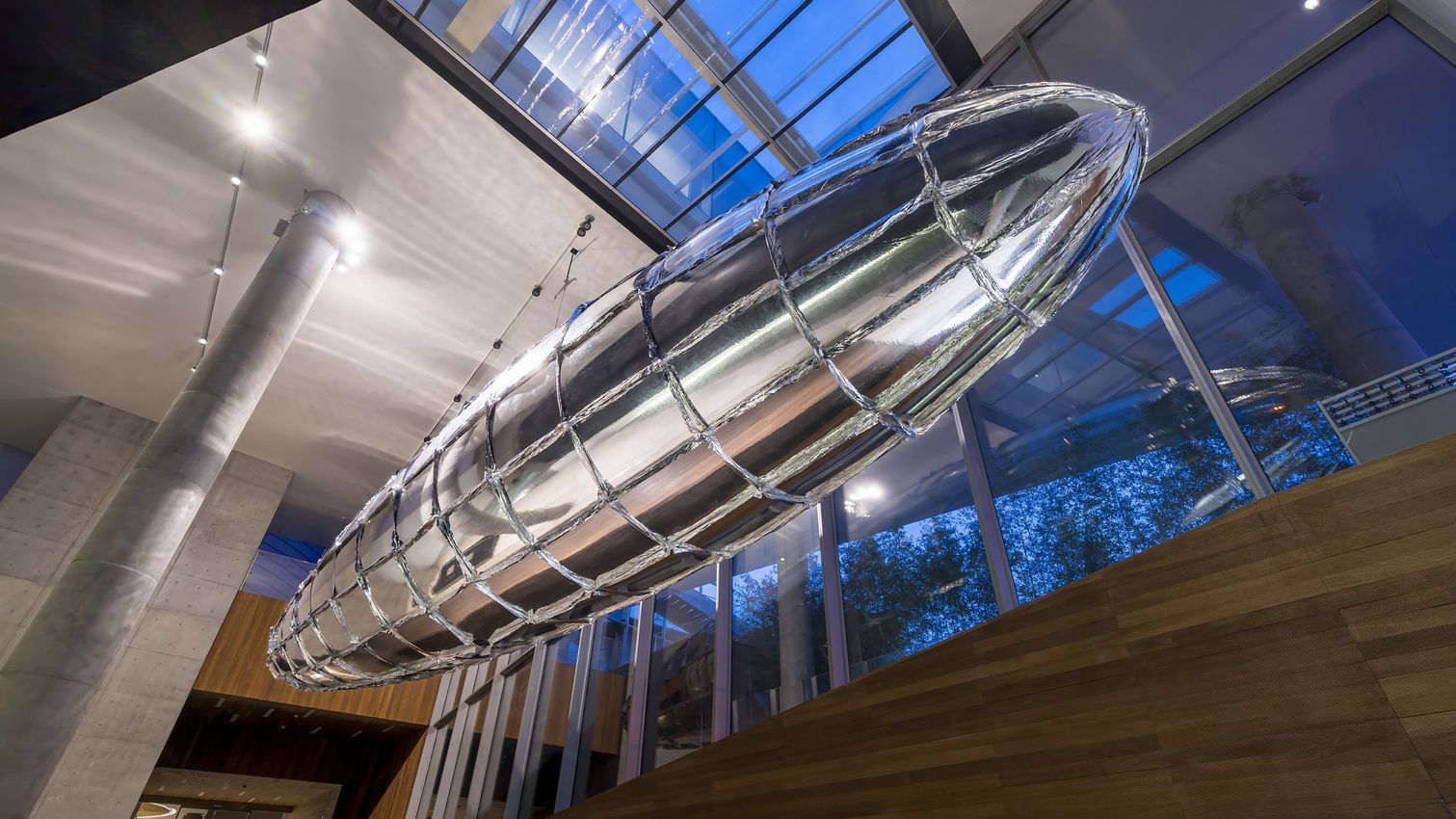
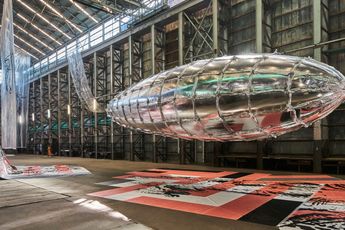
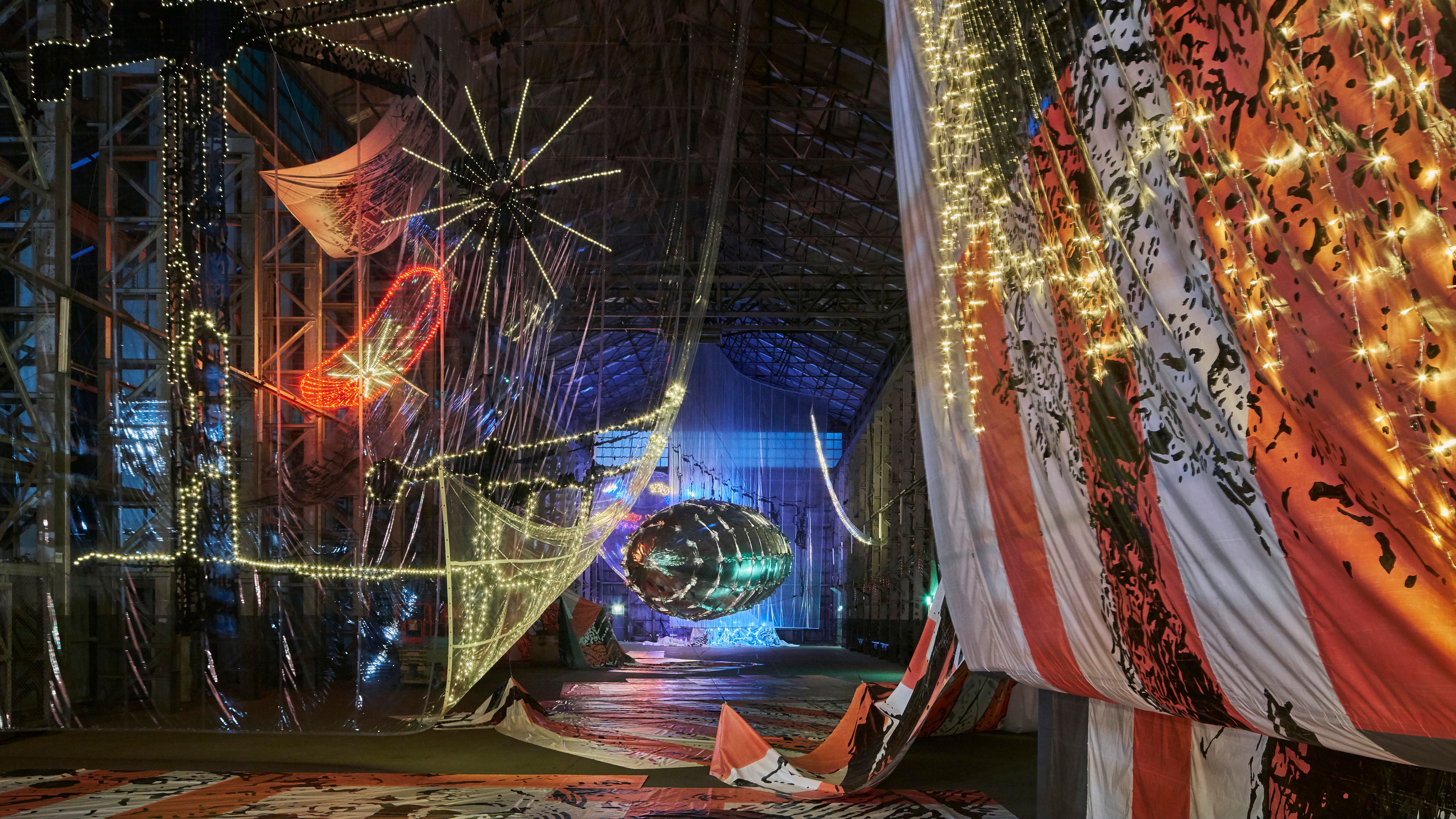
As with these predecessors, Lee’s installations demand space and technical precision. Her exhibition unfolds throughout Leeum’s Rem Koolhaas-designed galleries, where architecture itself becomes part of the dialogue. Willing to be Vulnerable (2015–2016), a ten-metre-long inflatable zeppelin in gleaming silver, appears entirely at home here: a starship moored inside the museum. Set alongside Koolhaas’ suspended concrete black box, it extends the building’s futuristic-industrial aesthetic.
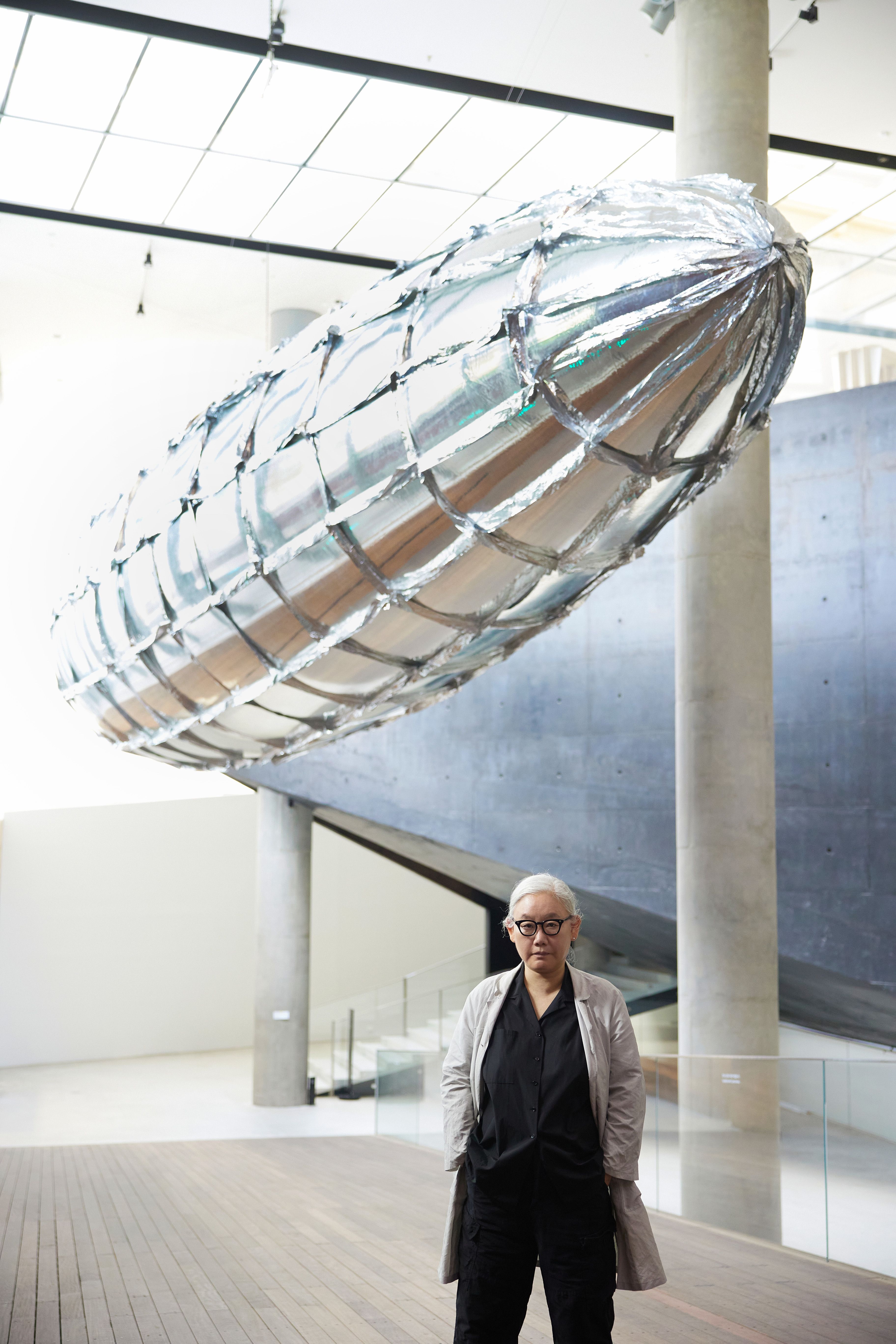
‘I tried to create a new story, a new context, while engaging with his architectural language, a dialogue in a sense,’ she says. ‘Whether this is successful or not is a question I leave entirely up to the audience.’
If Leeum provides the scale and ambition for Lee’s homecoming, her next stop is no less significant. In March 2026, the exhibition will travel to M+ in Hong Kong, where it will coincide with Art Basel Hong Kong. From there, it will embark on an international tour through 2027, reaching major institutions across the globe. But for now it’s Seoul’s turn: the grand opening, the homecoming, the city where it all began.
‘This may be the largest gathering of my major sculptural works, along with studies and macquettes, but most of it will be encountered for the first time by audiences in Korea, so I’m curious how they will respond.’ —[O]
Lee Bul: From 1998 to Now is on view at Leeum Museum of Art in Seoul from 4 September 2025 to 4 January 2026.
Main image: Lee Bul, Willing To Be Vulnerable – Metalized Balloon (2015–2016/2020). Fabric, PET film, air blower, electrical wiring. 300 x 1700 x 300 cm. Exhibition view: Lee Bul: From 1998 to Now, Leeum Museum of Art, Seoul (4 September 2025–4 January 2026). © Lee Bul. Courtesy the artist, BB&M, Hauser & Wirth, and Leeum Museum of Art. Photo: Jeon Byung-cheol.







A respected voice in contemporary art discourse.
Focusing on ambitious storytelling and insightful art-world commentary. Ocula Magazine publishes in-depth interviews, critical essays and timely analysis on the artists, exhibitions and ideas driving the global art world.
Learn more about Ocula Magazine
Showcasing the best of the art world.
Ocula partners with galleries from around the world to highlight their artists, artworks and exhibitions. Gallery membership is by application and invitation, with each member vetted by an independent panel.
Learn more about Ocula Membership
Specialises in the sale of major artworks.
Led by a team with deep ties to the world’s leading auction houses, galleries and collectors. Ocula’s advisory team offers bespoke services to high-net-worth clients from around the world who are looking to acquire the best of contemporary and modern art.
Learn more about our team and services