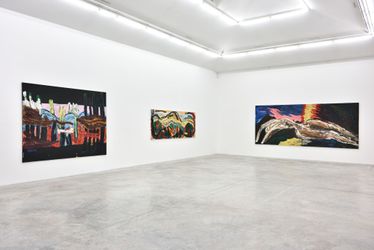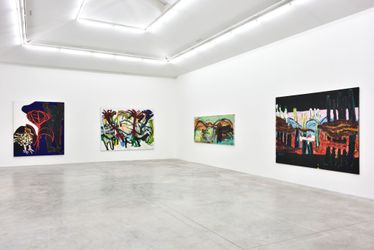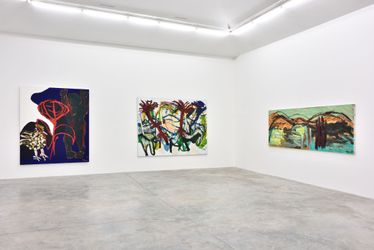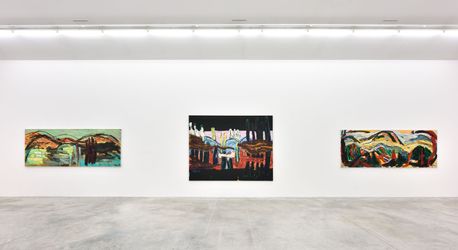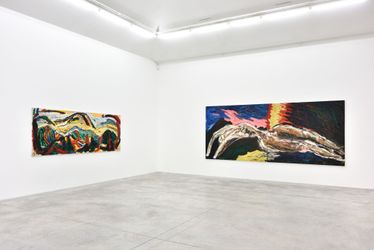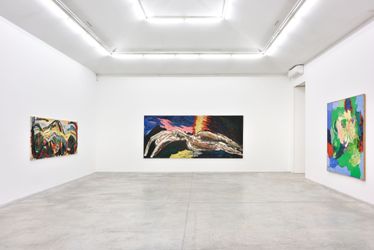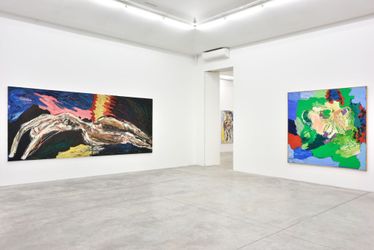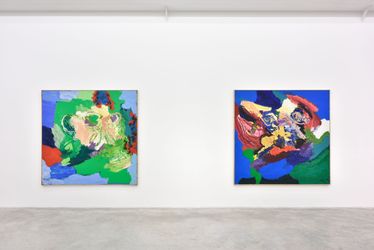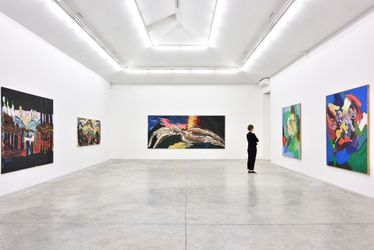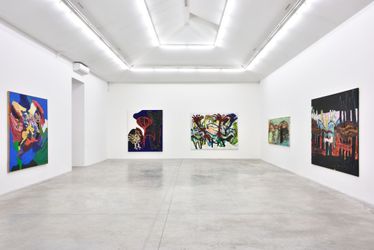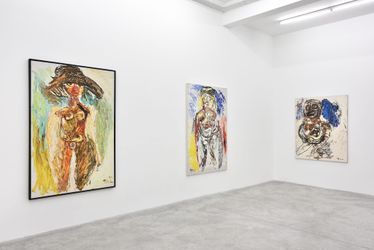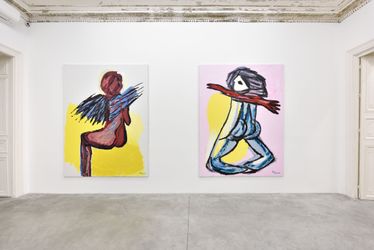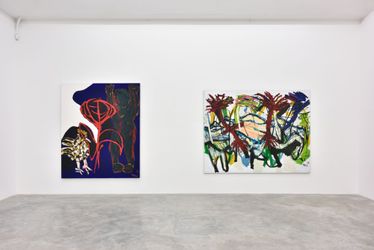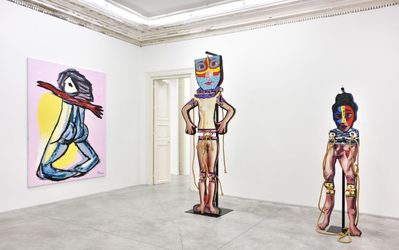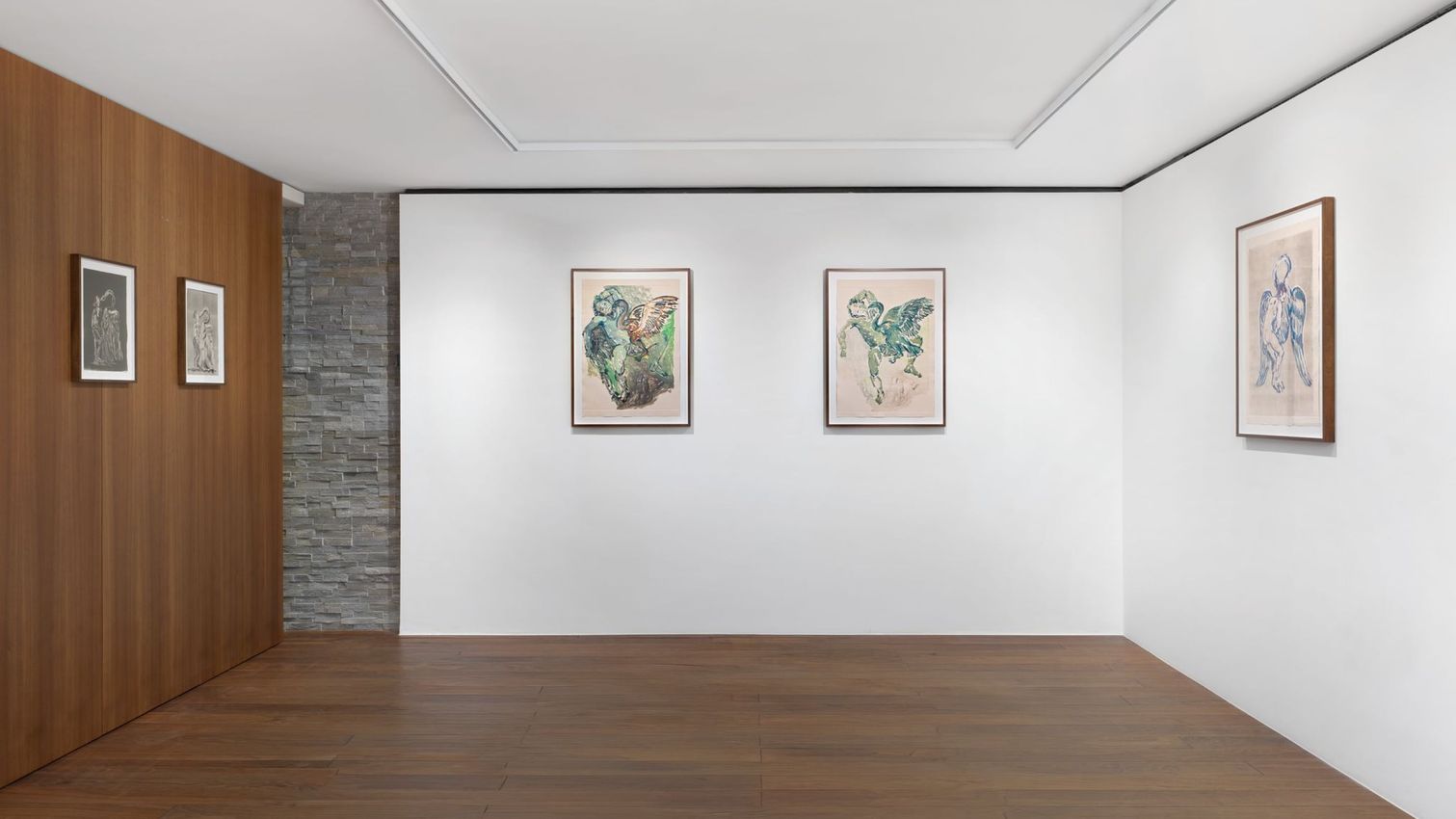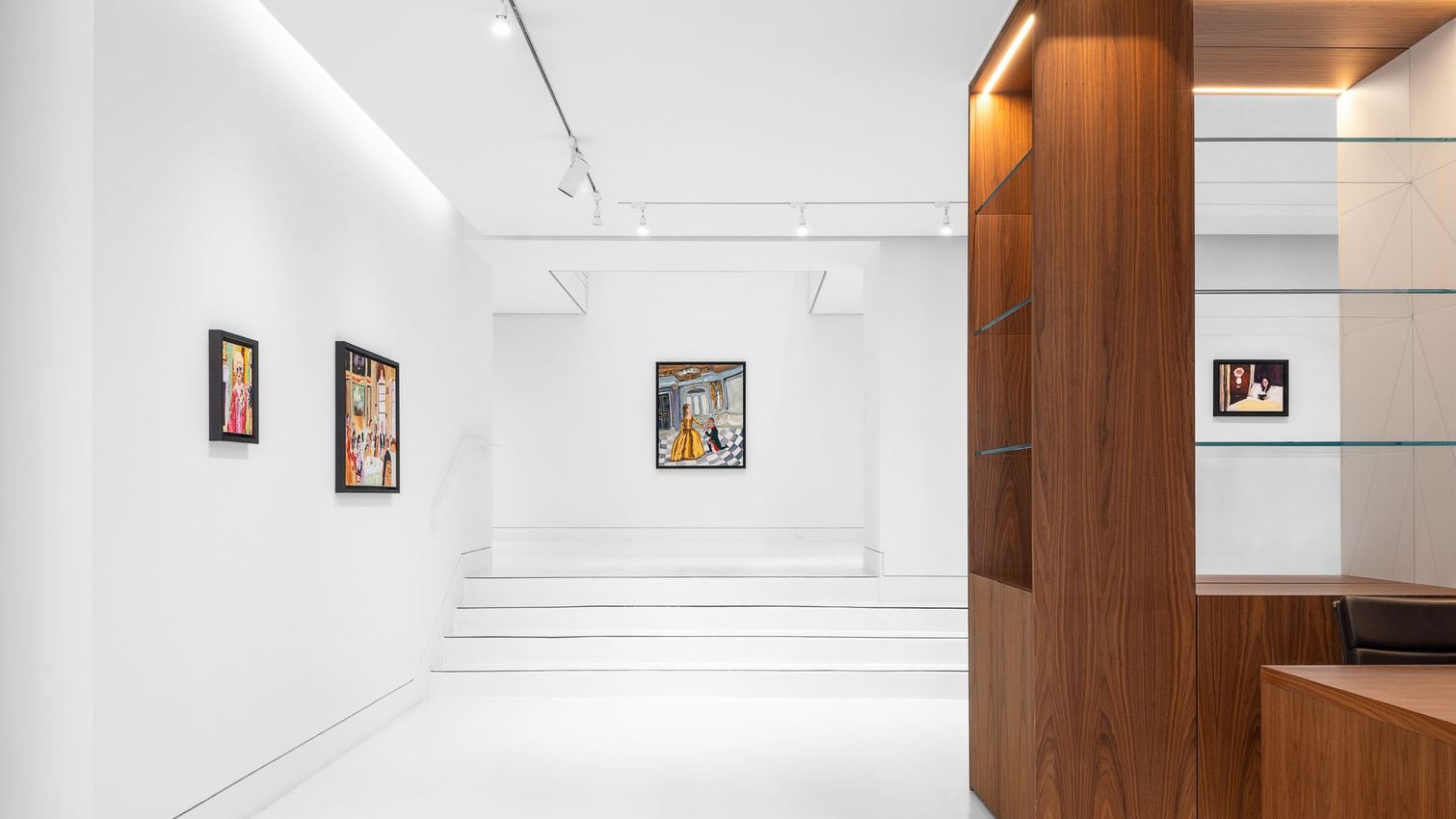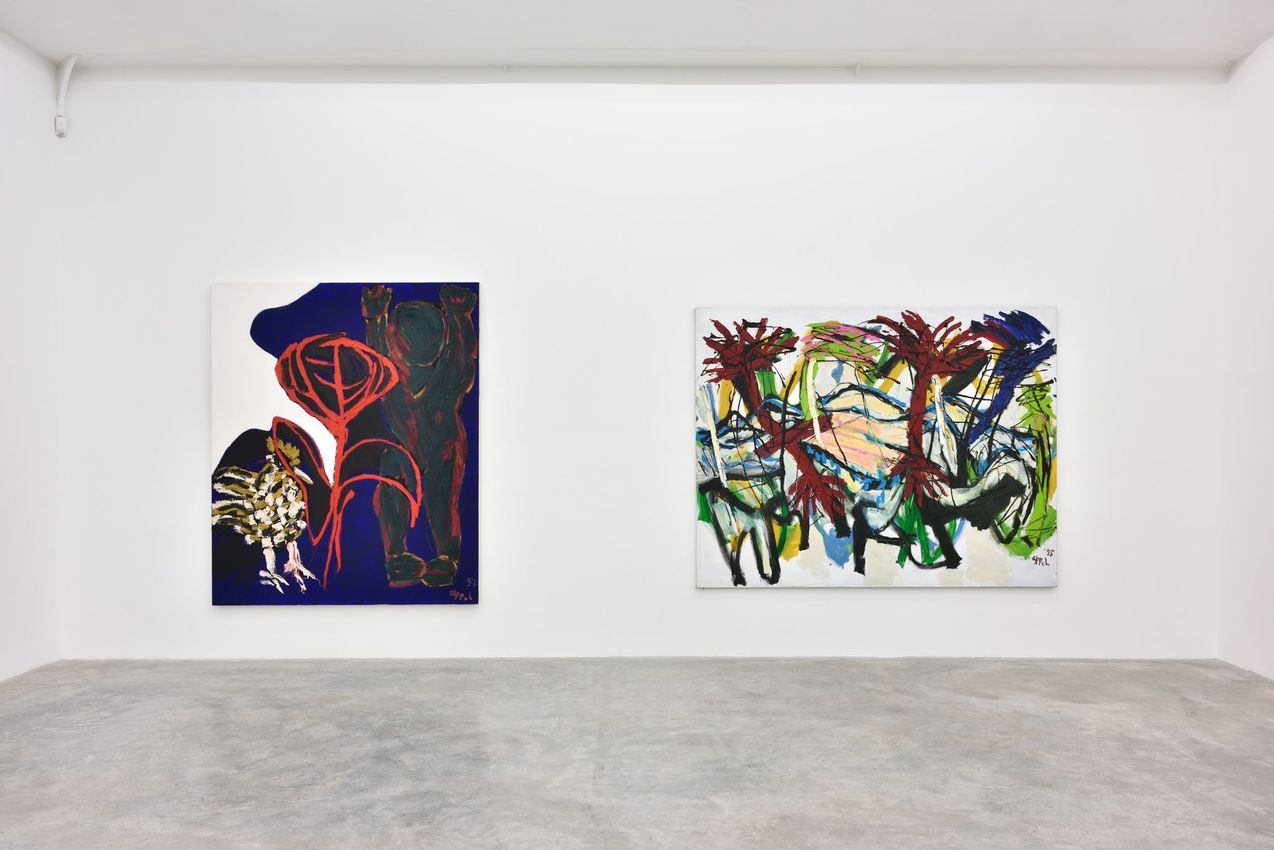
Almine Rech Paris is holding its first monographic exhibition dedicated to Karel Appel (1921–2006), from October 12 to November 16 2019.
Appel is often described as the most influential Dutch artist of the second half of the 20th century, which is only partly true: he was of course born in Amsterdam, but in 1950, at age 29, left the Netherlands never to return. He moved to Paris with Corneille, Constant and Asger Jorn who formed the nucleus of CoBrA, a fiercely European avant-garde group founded two years earlier. ‘Amsterdam was the city of my youth; Paris was that of my evolution. What I learned there beats all the rest,’ he later told writer Simon Vinkenoog.
Soon after settling in Paris, he visited an exhibition of drawings by patients of Sainte-Anne hospital for the mentally ill. He was deeply impressed by what he saw and covered the pages of the exhibition’s accompanying brochure, and its scientific descriptions of pathologies, with drawings. The resulting Psychopathological Notebook, part manifesto, part dictionary, was his own way, like Dubuffet, of inventing a pictorial language, his own form of Art brut. He kept the brochure with him all his life.
In 1952, Michel Tapié included him in his now legendary exhibition Un art autre and in the eponymous book. Of the now defunct CoBrA movement’s protagonists, Appel was the only one chosen by Tapié. This allowed him to associate with artists like Mathieu, Fautrier, Étienne-Martin, Riopelle, Sam Francis or Pollock and earned him his first New York exhibition at Martha Jackson’s in 1954. In 1957, he returned for a second show: from then on, the Parisian art world’s perception was that he had disappeared in the US, but he actually remained based in France until the mid-1970s.
Appel is often identified with CoBrA, although the movement itself only existed for a mere three years. A few German painters of the following generation, such as Baselitz or Lüpertz, were keen to free themselves from the orthodox abstract style of the 50s without fully returning to figuration: to them, Karel Appel’s work was a reference. Neither entirely abstract nor fully figurative, it stood somewhere in between. The ultimate example of this stance was of course Picasso, but he had already become a historical figure beyond young Appel’s reach when he first came to Paris: Édouard Pignon, a close friend of the master, conveyed the message. Appel had met him as early as 1947 when he first came to Paris with Corneille.
The crucial importance of Karel Appel’s formative years and artistic development in France had been all but forgotten until some ten years after his death, the Centre Pompidou–through an exhibition of drawings curated by Jonas Storsvé (2015), and the Musée d’art moderne de la ville de Paris, with a retrospective curated by Choghakate Kazarian (2017)–endeavoured to set the record right. The exhibition hosted by Almine Rech Gallery under Franz W. Kaiser’s curation follows in their footsteps. It focuses on two pervasive themes highly characteristic of Karel Appel’s work: the figure and the landscape.
Franz W Kaiser


Qualifying Karel Appel (1921–2006) as one of the internationally best renowned Dutch artists of the 20th century may be misleading, as he left the Netherlands already in 1950 for good to realise his long career predominantly between Paris and New York. In this perspective, he may be considered as truly international, not belonging to one particular country in the first place.


Almine Rech opened its doors on April 1st, 1997 in the 13th arrondissement in Paris. The gallery was founded on an axis of California Minimal, Perceptual art and Conceptual art, representing artists such as James Turrell, John McCracken and Joseph Kosuth.

A respected voice in contemporary art discourse.
Focusing on ambitious storytelling and insightful art-world commentary. Ocula Magazine publishes in-depth interviews, critical essays and timely analysis on the artists, exhibitions and ideas driving the global art world.
Learn more about Ocula Magazine
Showcasing the best of the art world.
Ocula partners with galleries from around the world to highlight their artists, artworks and exhibitions. Gallery membership is by application and invitation, with each member vetted by an independent panel.
Learn more about Ocula Membership

Specialises in the sale of major artworks.
Led by a team with deep ties to the world’s leading auction houses, galleries and collectors. Ocula’s advisory team offers bespoke services to high-net-worth clients from around the world who are looking to acquire the best of contemporary and modern art.
Learn more about our team and services