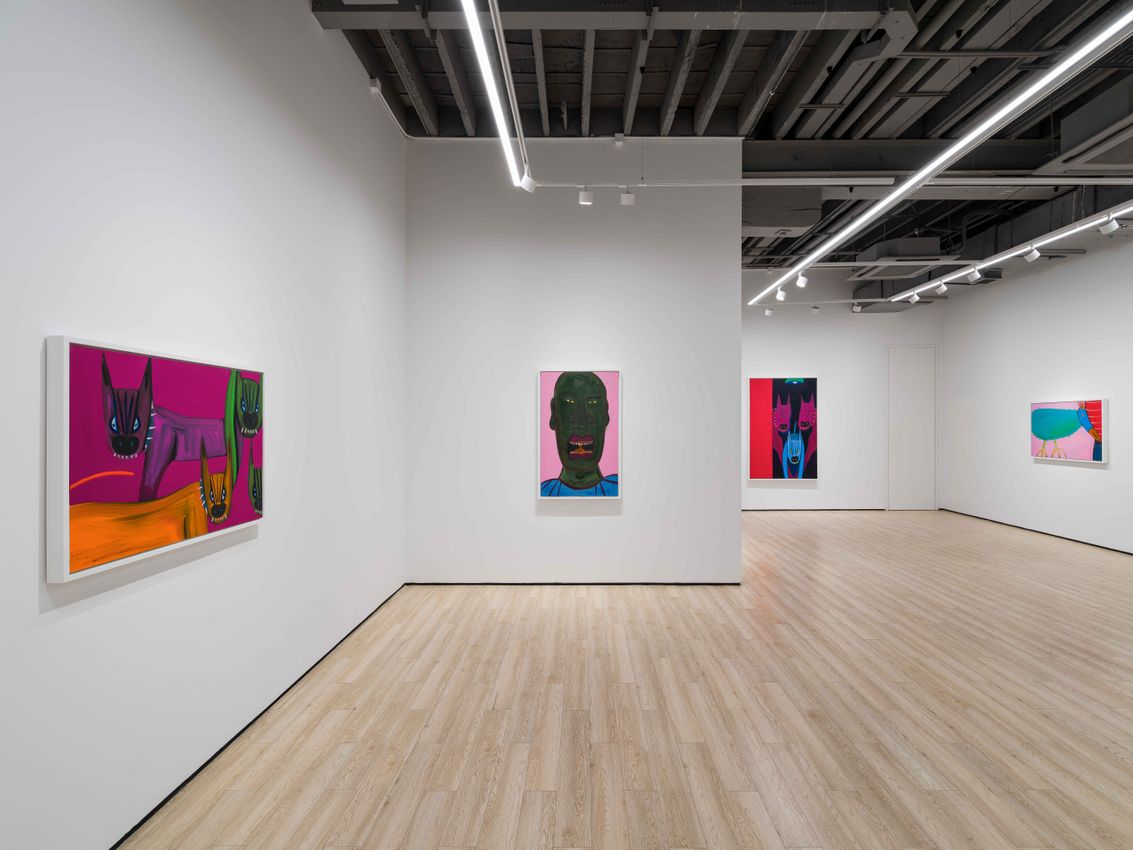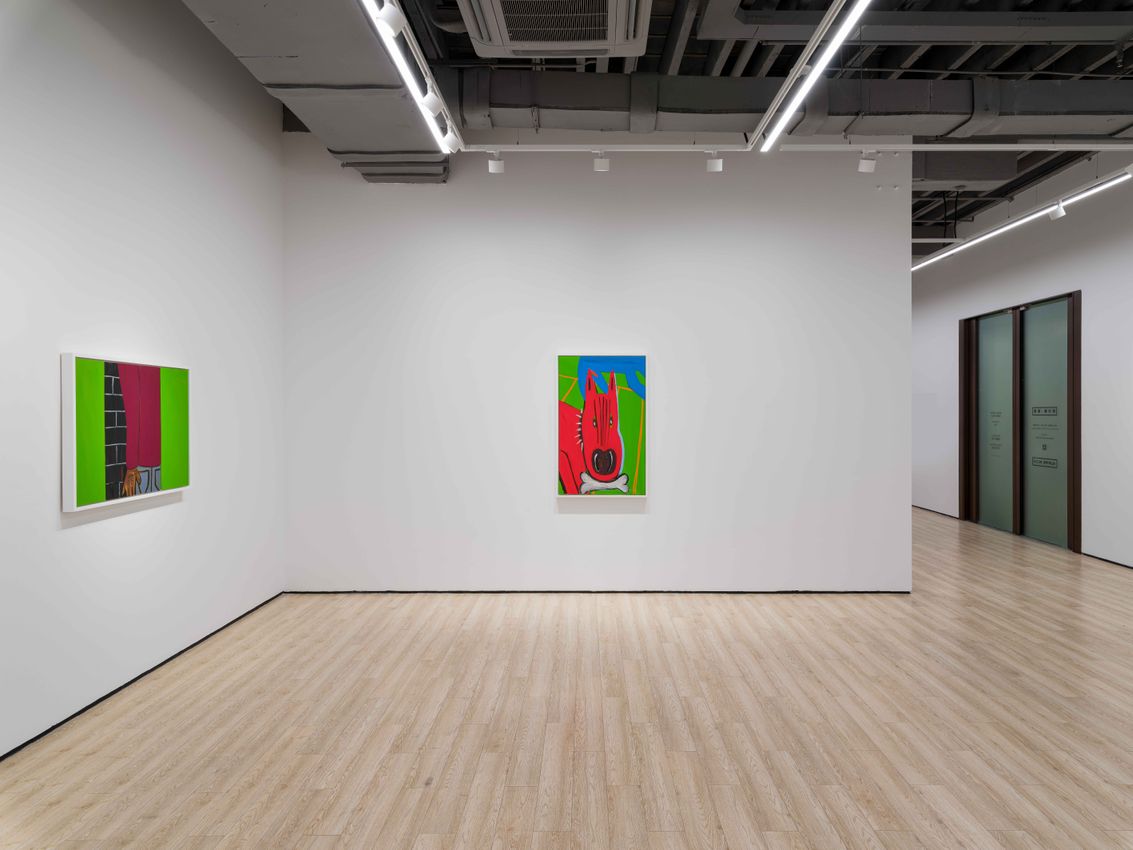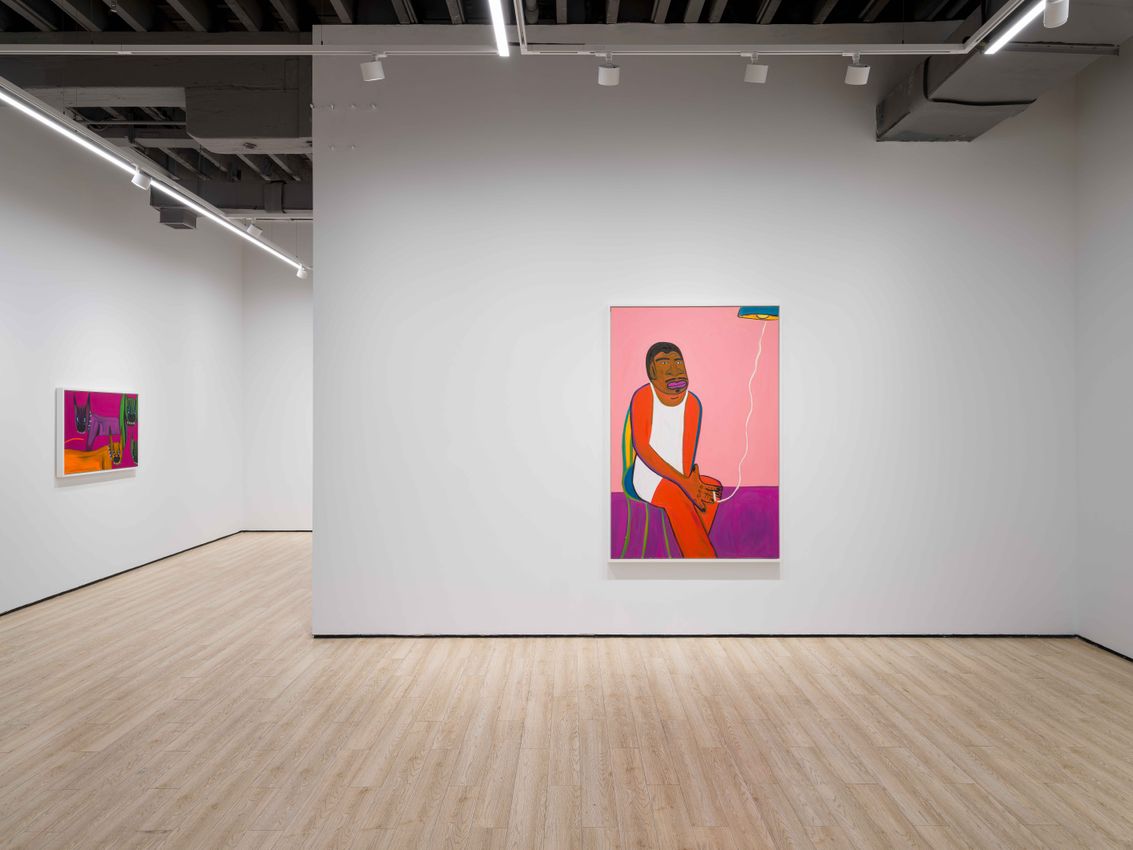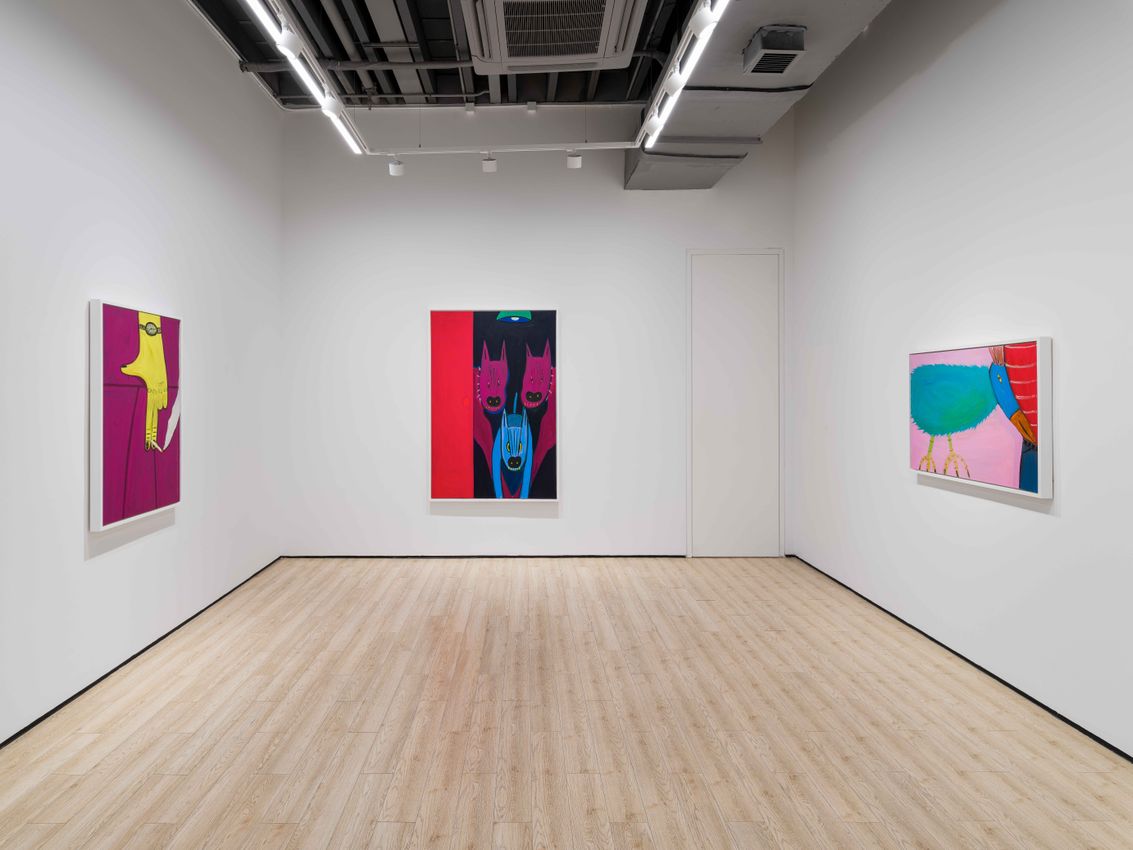
Almine Rech Shanghai is pleased to announce Marcus Jahmal’s fifth solo exhibition with the gallery, on view from February 2 to March 9, 2024.
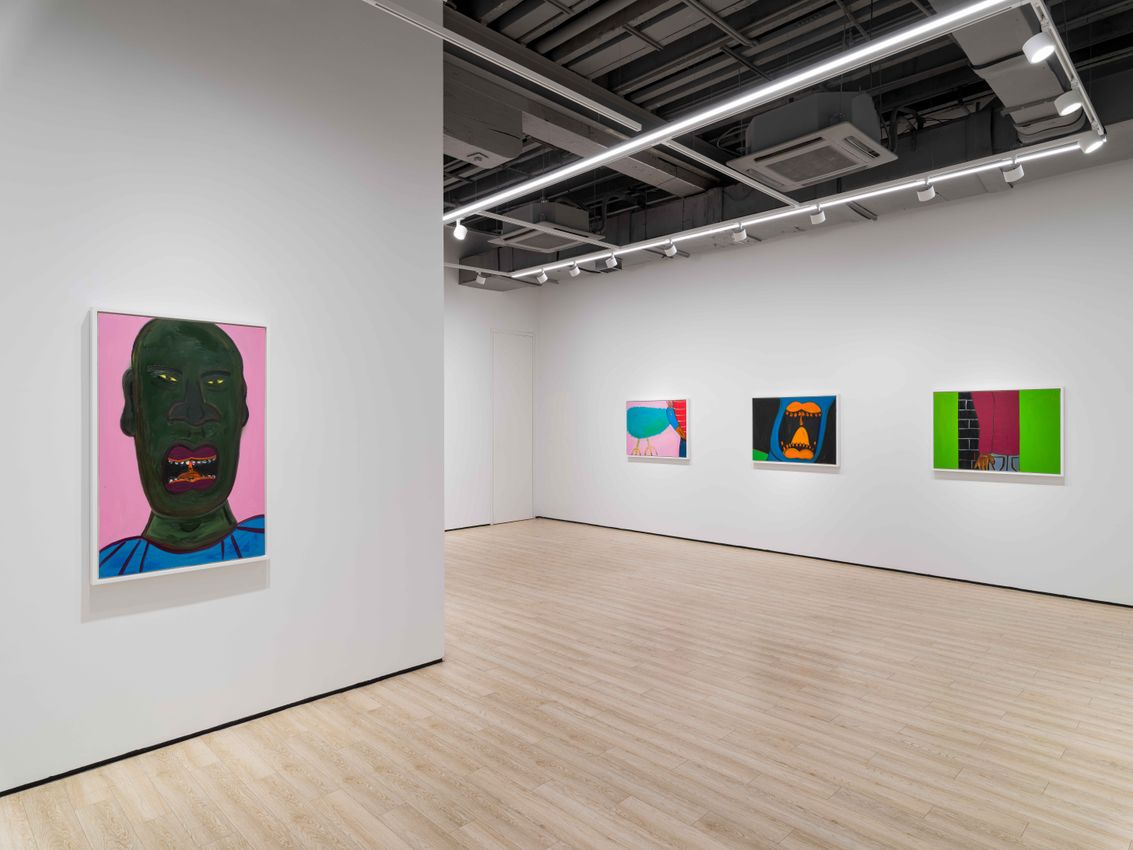
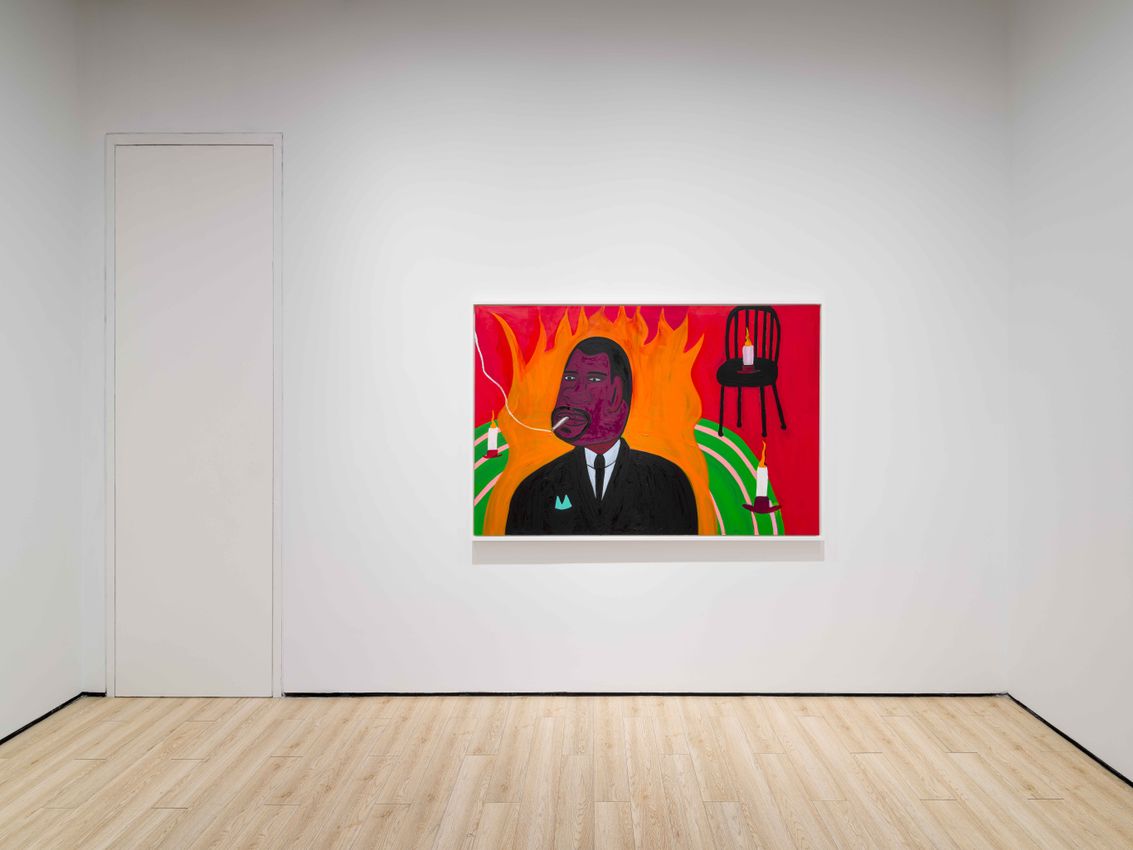
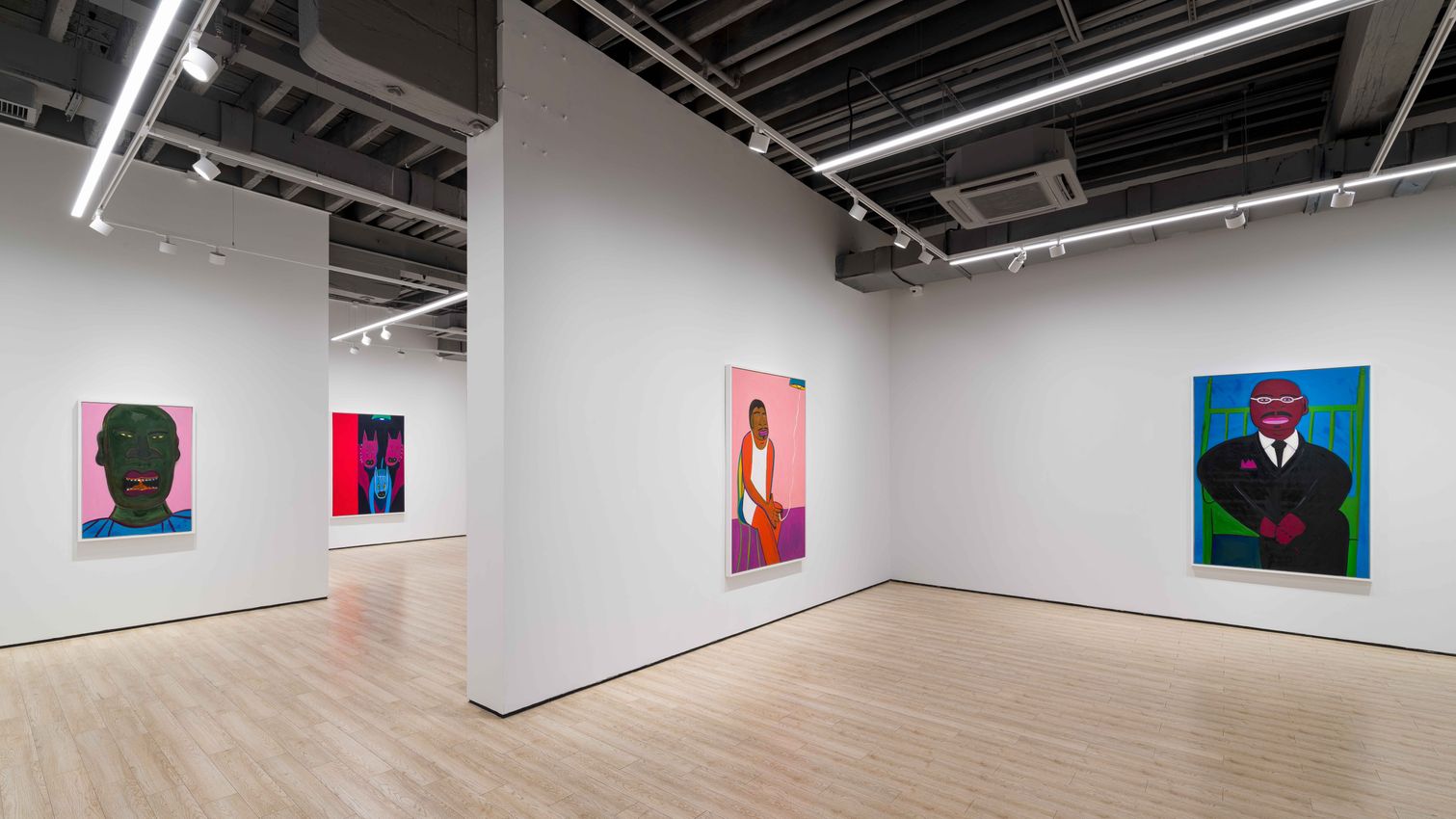
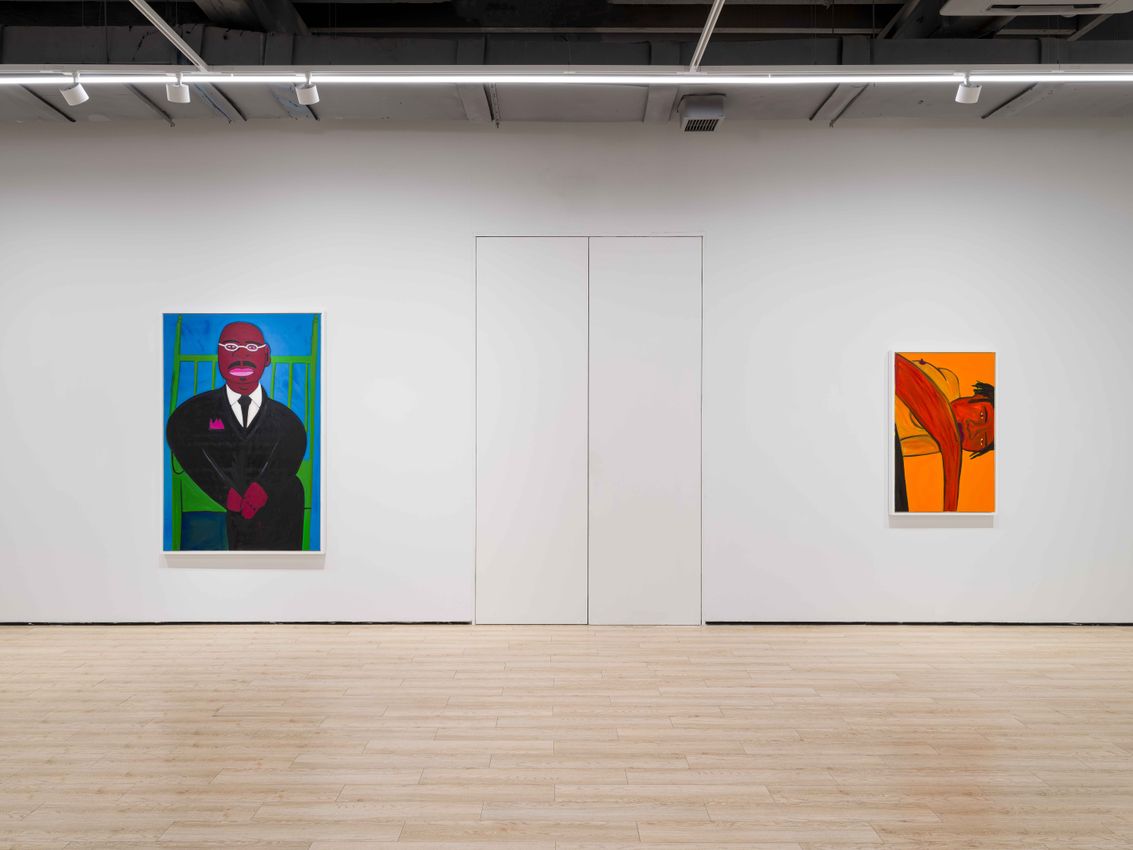
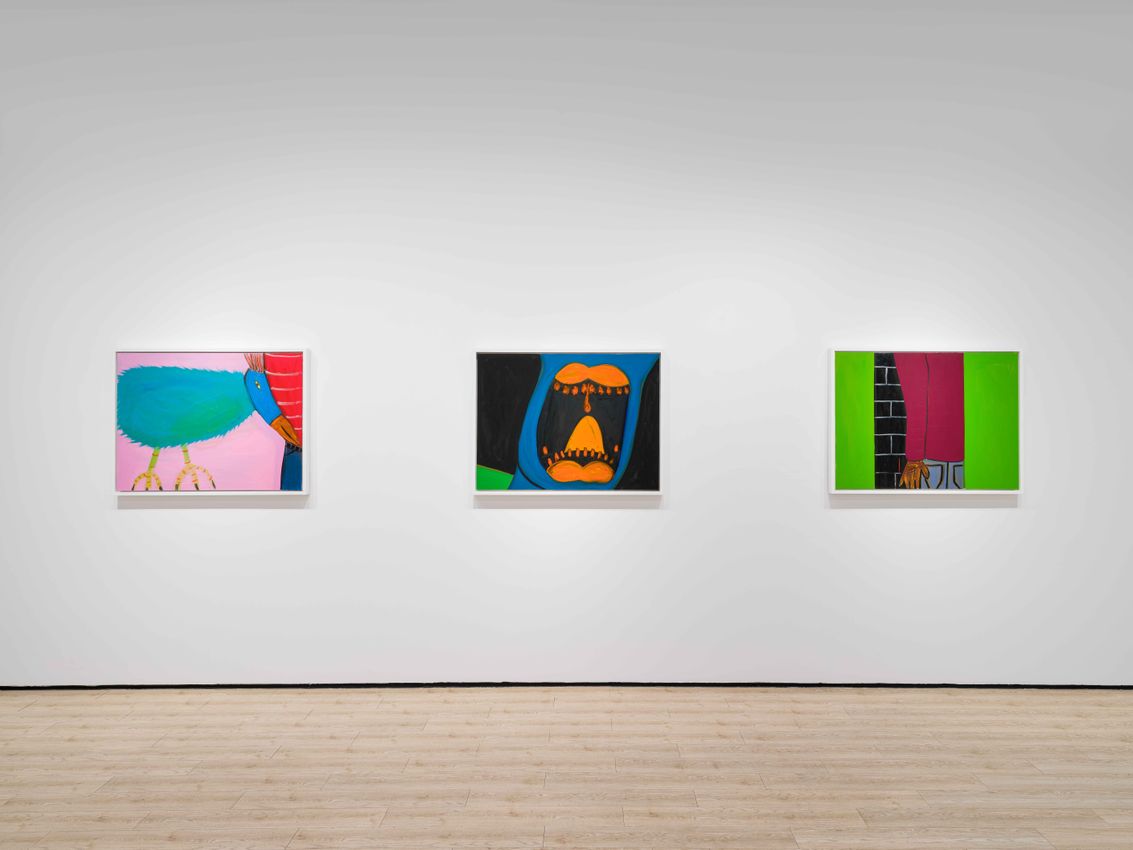
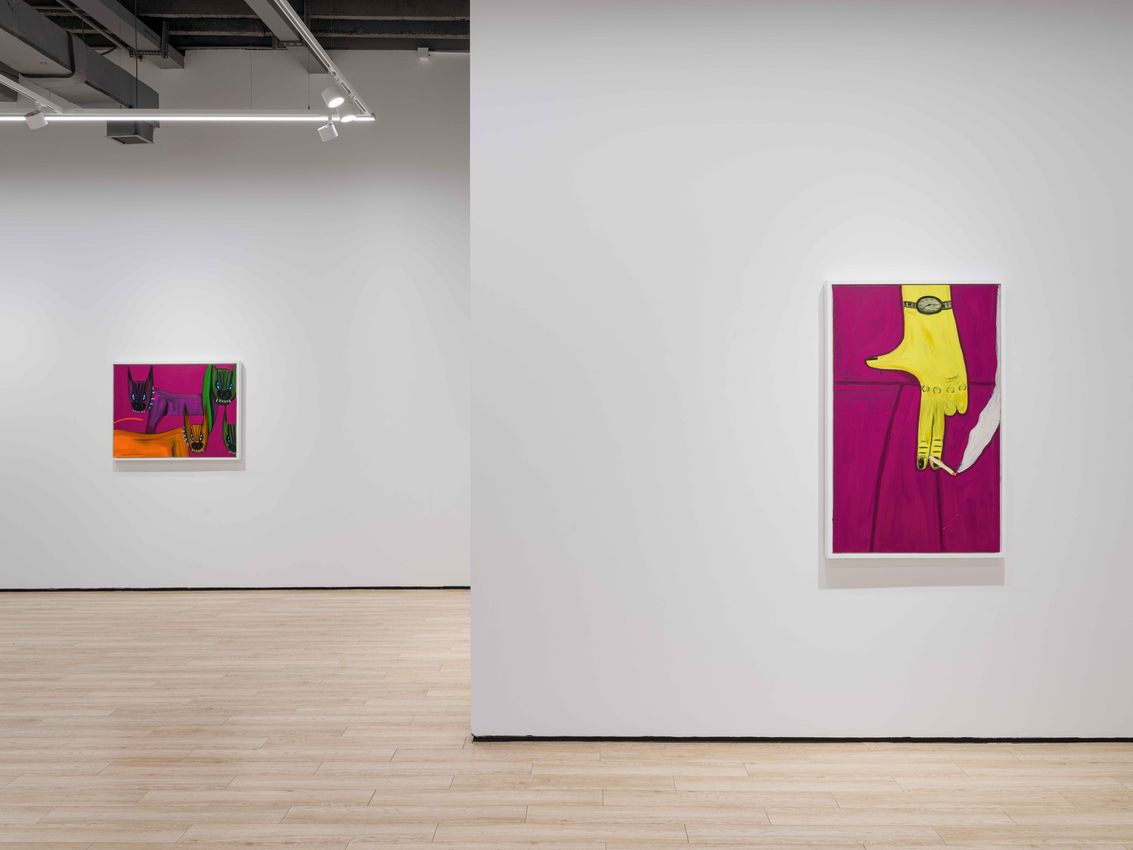
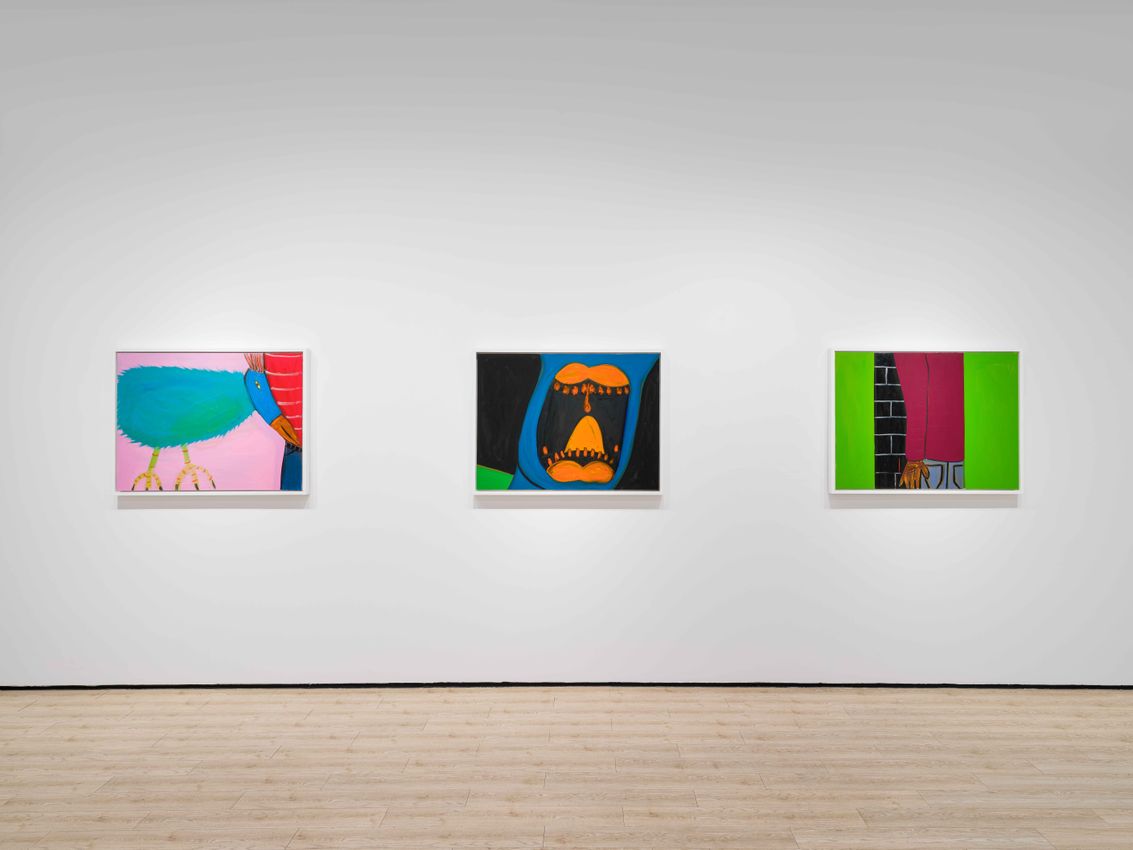
When Marcus Jahmal informed me, not long after our visit at his Brooklyn studio,that his forthcoming exhibition would be titled Fragments, my mind ineluctably leapt to thenarrator’s refrain in Donald Barthelme’s 1966 short story See the Moon?: “Fragments arethe only forms I trust.” Trust may be a stretch, but counterposed against the slick fictionsof totality, linearity, and enclosure, fragments feel truer to the ways in which meaningoften comes to us: in pieces, more readily navigable by associative, recursive, and oneiriclogics than linear ones. Fragments comprises 13 flat, graphic, closely cropped paintings,each of which is a fragment of an earlier painting by the artist, akin to a slivered dream.Flouting the contemporary art market’s aversion to the recent past, Jahmal revisited hisown work from the last two years, lingering on surreal tableaux in which lone figures andanimals preside over perspectivally screwy interiors in intense hues. He zoomed in onslices of these pictures and filtered them through the lens of the present—the presentmoment, the present painter—to make them anew, intuitively shifting his palette (ascumbled maroon wall there is a fleshy Guston-esque pink here) and evocatively swappingout symbols (a skull there is a man here).
Fragmented body parts are recurrent motifs, drawing attention to the persistentfact of the crop. In Screamer (2023–24), the chasm of a howling mouth, its pronounceduvula and lancelike teeth rendered in an electric orange, is set against an inky backdropthat stretches the silent scream into a setting; the painting originated in Rage (2022), aportrait of a man shrieking in a red expanse as the noxious ground slides away from himon a diagonal. Dino Bird (2023–2024) features the titular avian, its soft body flush with blue,pressing its chela-like beak into a figure’s striped sleeve. This oddly intimate piece—alongwith a portrait of a man’s hunter green face, titled Rage (2023–2024)—sprang from _Bird Man_(2022–23), a painting based on a photograph of Pablo Picasso, who famously fragmentedthe body to break with pictorial convention. Picasso isn’t the only iconic artist referencedand remixed in the self-taught painter’s show; Hand of Guston (2023–24), depicting ayellow hand against a maroon ground, nods to Philip Guston’s painting The Line (1978), inwhich a hand—God’s? Guston’s?—extends toward the earth with a piece of chalk, readyto draw the world into being. Here, the chalk is supplanted by a cigarette, and smoking doubles as a form of making—a gesture that likewise appears in Midnight Smoke (2023–24) (based on Evening Smoke [2022], presumably from a bit earlier in the night), in whichthe plume of smoke from a man’s cigarette charts a line from his hand to a lightbulb.
While motifs like smoke and skulls have historically reappeared across Jahmal’scanvases, with Fragments he enters a lineage of artists who expressly cite or copythemselves, whether to reflect on earlier works or trouble notions of originality andauthenticity. (Relevant precedents include Andy Warhol’s colour inversions of his iconicPop Art pieces, Georg Baselitz’s mature ‘remixes’ of his famous subversive compositions,and Christopher Wool’s works based on silkscreened photographs of previous paintings.)The artist’s interest in themes of fragmentation and repetition—frequent bedfellows,as evinced by fragmentation’s multiplying effects and the copy’s capacity to shatterthe original—can be traced back to his 2016–17 exhibition Metavisions, which includeddepictions of mirrors that cut up, distorted, and repeated domestic space. Here, Jahmaluses repetition to generate difference, exploring the ways in which doubling and versioningcan give rise to new meaning. How does an image change, or stay the same, when it ispartitioned or replicated? Might there be something about a painting that is fundamentallyindivisible or unrepeatable? In the charged space opened by these questions, the piecesin Fragments gather.
Press release courtesy Almine Rech. Courtesy Cassie Packard.


Marcus Jahmal is an artist based in Brooklyn, New York. His paintings depict domestic scenes and landscapes built from memory and imagination. In his images, which are both theatrical and quietly intimate, Jahmal showcases exuberant brushwork and his particular strengths as a colourist. As the art critic Roberta Smith wrote in the New York Times, Jahmal’s ‘main love is colour, which he uses stunningly, but he exploits everything–space, surface, colour, image–to create various incongruities.’ The reds, oranges and other vibrant hues featured in his compositions create a symbolist language connected to the artist’s subconscious and dreams. Jahmal collects his ideas through a practice of automatic drawing, moving intuitively through images he pulls from life or art history. From these drawings, he assembles a cast of objects, mixing his everyday experience with the modern and the myth. Read together, these motifs form a surreal environment with recognisable figures that suggest the complexities and invisible relationships within prosaic life. Jahmal’s work has been exhibited in New York, Chicago, Miami, Tokyo, Japan, and throughout Europe.


Almine Rech opened its doors on April 1st, 1997 in the 13th arrondissement in Paris. The gallery was founded on an axis of California Minimal, Perceptual art and Conceptual art, representing artists such as James Turrell, John McCracken and Joseph Kosuth.

A respected voice in contemporary art discourse.
Focusing on ambitious storytelling and insightful art-world commentary. Ocula Magazine publishes in-depth interviews, critical essays and timely analysis on the artists, exhibitions and ideas driving the global art world.
Learn more about Ocula Magazine
Showcasing the best of the art world.
Ocula partners with galleries from around the world to highlight their artists, artworks and exhibitions. Gallery membership is by application and invitation, with each member vetted by an independent panel.
Learn more about Ocula Membership

Specialises in the sale of major artworks.
Led by a team with deep ties to the world’s leading auction houses, galleries and collectors. Ocula’s advisory team offers bespoke services to high-net-worth clients from around the world who are looking to acquire the best of contemporary and modern art.
Learn more about our team and services