




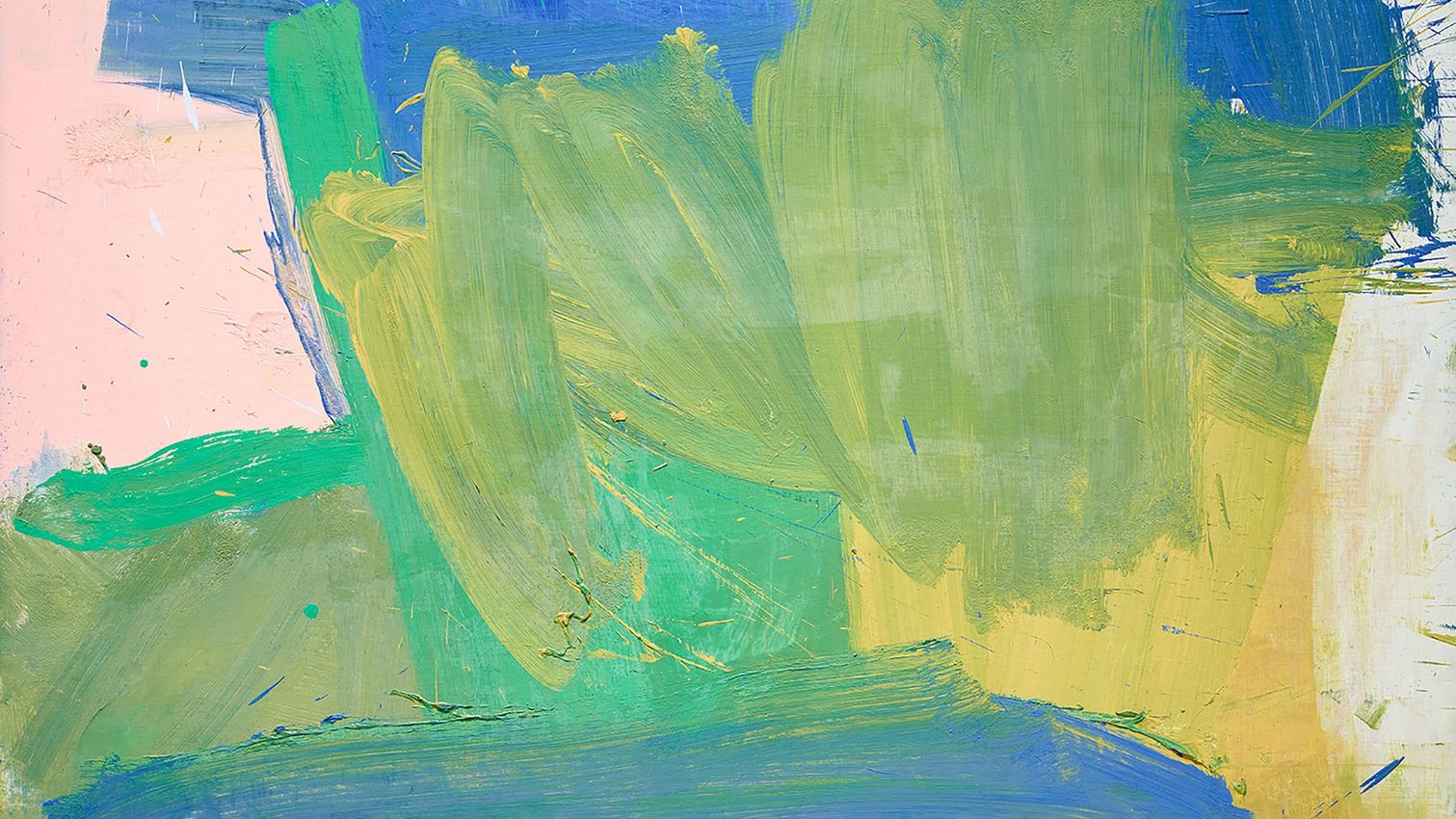
WILLEM DE KOONING
1904-1997, NetherlandsWillem de Kooning was a pioneering Dutch American artist whose visceral, gestural paintings helped define Abstract Expressionism in post-war America.
A key figure in contemporary art history, de Kooning’s work bridges figuration and abstraction in ways that remain influential in both modern and contemporary art discourse.
Early Years
Born in 1904 in Rotterdam, the Netherlands, de Kooning was apprenticed to a commercial design firm in his teens and studied at the Rotterdam Academy of Fine Arts and Techniques. In 1926, he emigrated to the United States as a stowaway, eventually settling in New York City. There, he became part of a dynamic circle of artists, including Arshile Gorky and Franz Kline, and immersed himself in both commercial design and painting. He gained U.S. citizenship in 1962 and spent much of his life between New York City and East Hampton, Long Island.
By the 1940s, de Kooning was deeply embedded in the New York art scene and associated with the emergence of Abstract Expressionism—America’s first major avant-garde art movement.
Willem de Kooning Artworks
Willem de Kooning’s artworks are known for their dynamic brushwork, powerful physicality, and ambiguous blending of abstraction and figuration. His paintings often centre around the human form—especially the female figure—but treated with fierce spontaneity and painterly aggression.
What characterised de Kooning’s early works?
De Kooning’s early paintings reveal the influence of European modernists such as Pablo Picasso, Henri Matisse, and Arshile Gorky. These works, often dark in palette and focused on the male figure, explore the interplay of line and mass. A seminal work from this period is Seated Woman (1940), where de Kooning introduces fragmented, anatomical forms that echo both Cubist construction and Surrealist distortion.
By the mid-1940s, he was producing abstract compositions such as Pink Angels (c.1945), where fragmented limbs and floating forms seem to wrestle within the picture plane. These works anticipate his later transition into full-scale abstraction while retaining a psychological tension grounded in the human body.
What defined the Woman series (1950–53)?
The Woman series marked a critical turning point. Works like Woman I (1950–52), now in the Museum of Modern Art, New York, shocked audiences with their aggressive brushwork and unsettling portrayals of the female figure. These paintings combined elements of classical portraiture with raw abstraction, creating a visual language that was simultaneously confrontational and magnetic.
De Kooning’s women are not passive muses but active, complex presences. This series, which includes Woman II (1952) and Woman and Bicycle (1952–53), was instrumental in establishing de Kooning as a key figure of Abstract Expressionism. It also sparked debate around the depiction of women in modern art.
How did de Kooning develop abstraction in the 1950s and 60s?
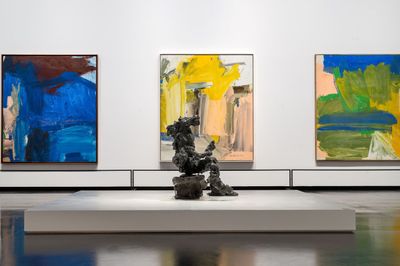
In the years following the Woman series, de Kooning returned to abstraction with renewed vigour. Works such as Composition (1955) and Police Gazette (1955), which sold for record-breaking prices decades later, showcase his ability to balance chaos and structure. These paintings are characterised by luminous colour fields, painterly gestures, and a dynamic sense of movement.
De Kooning’s studio practice was both physical and experimental. He often scraped down and reworked canvases repeatedly, embedding time and process into the very surface of the painting. During this period, his work extended into sculpture, translating his gestural sensibility into three dimensions.
What inspired de Kooning’s late works?
After relocating full-time to East Hampton in the 1960s, de Kooning’s surroundings began to deeply influence his work. His palette became lighter, and his brushstrokes more fluid, reflecting the rhythms of the landscape. Paintings such as Untitled XVII (1976) and Untitled XXV (1977), completed during a prolific period in the 1970s, are among his most celebrated late abstractions.
In the 1980s, despite a diagnosis of Alzheimer’s disease, de Kooning continued painting with assistance. The works from this period—often untitled—are marked by sweeping lines, simplified forms, and an ethereal quality. Critics remain divided on these final canvases, though many see them as a graceful resolution to a lifetime of exploration.
How has Willem de Kooning influenced contemporary art?
Willem de Kooning helped establish gesture as a central element of modern painting, using the brush as an extension of the body—sweeping, scraping, layering—to redefine painting as an act of physical and emotional expression. His influence spans generations, seen in contemporary artists like Cecily Brown and Amy Sillman. De Kooning’s legacy also endures through continued institutional and market presence. His works remain fixtures in major museum collections and exhibitions, while Interchange (1955) reportedly sold privately for over USD 300 million.
Awards and Accolades
- Presidential Medal of Freedom, USA (1964)
- Praemium Imperiale Award for Painting, Japan (1989)
- Elected to the American Academy of Arts and Letters
Exhibitions
Willem de Kooning has been the subject of both solo exhibitions and group exhibitions at important institutions.
Solo Exhibitions
- Willem de Kooning and Italy, Gallerie dell’Accademia, Venice (2024)
- de Kooning: A Retrospective, Museum of Modern Art, New York (2011)
- Willem de Kooning: Late Paintings, The Menil Collection, Houston (1995)
- Willem de Kooning: The Figure: Movement and Gesture, Morgan Library & Museum, New York (1993)
- Willem de Kooning, Centre Pompidou, Paris (1984)
- Willem de Kooning: Drawings, Paintings, Sculpture, Whitney Museum of American Art, New York (1983)
- Willem de Kooning, Solomon R. Guggenheim Museum, New York (1978)
- Willem de Kooning, Stedelijk Museum, Amsterdam (1968)
- Willem de Kooning: Paintings, Tate Modern, London (1968)
Group Exhibitions
- Abstract Expressionism, Royal Academy of Arts, London (2016)
- Century of the Child: Growing by Design 1900–2000, Museum of Modern Art, New York (2012)
- The Art of the Real: USA 1948–1968, Museum of Modern Art, New York (1968)
- Abstract Expressionists and Imagists, Solomon R. Guggenheim Museum, New York (1961)
- De Kooning, Gorky, Pollock, Guggenheim Museum, New York (1962)
- Action Painting, Walker Art Center, Minneapolis (1955)
- The New American Painting, Museum of Modern Art, New York and European tour (1958–59)
- 13 Americans, Museum of Modern Art, New York (1946)
Critical Reception
De Kooning’s practice has been covered in leading magazines including Ocula, The New Yorker, and The New York Times.
Ocula | 2025


Explore Willem De Kooning's Exhibitions






Willem De Kooning in Ocula Magazine









Explore and Follow Artists Shaping Contemporary Art
A respected voice in contemporary art discourse.
Focusing on ambitious storytelling and insightful art-world commentary. Ocula Magazine publishes in-depth interviews, critical essays and timely analysis on the artists, exhibitions and ideas driving the global art world.
Learn more about Ocula Magazine
Showcasing the best of the art world.
Ocula partners with galleries from around the world to highlight their artists, artworks and exhibitions. Gallery membership is by application and invitation, with each member vetted by an independent panel.
Learn more about Ocula Membership
Specialises in the sale of major artworks.
Led by a team with deep ties to the world’s leading auction houses, galleries and collectors. Ocula’s advisory team offers bespoke services to high-net-worth clients from around the world who are looking to acquire the best of contemporary and modern art.
Learn more about our team and services