





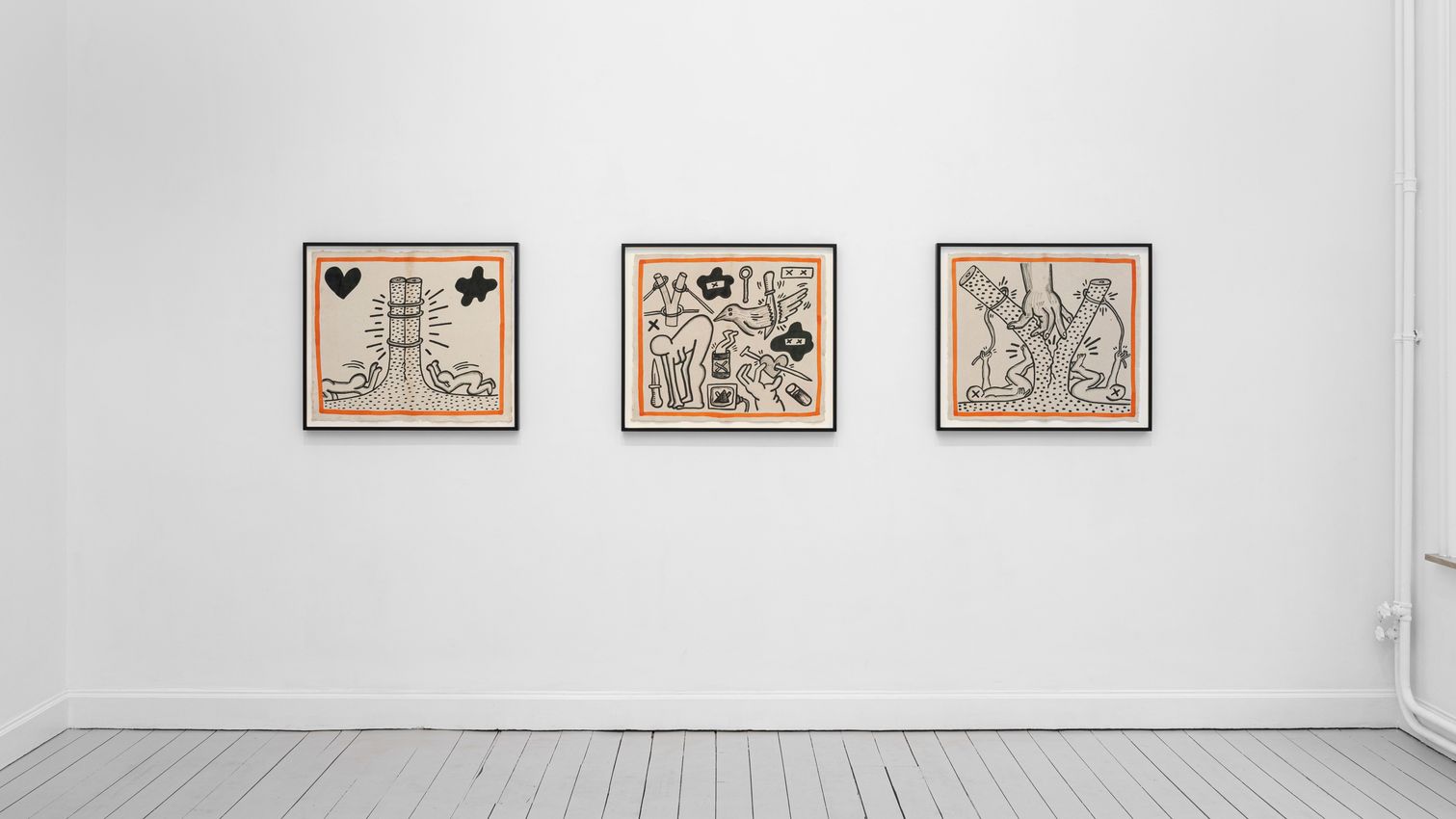
KEITH HARING
1958-1990, United StatesKeith Haring was an influential American Pop artist known for cartoon-like paintings, drawings, and murals typified by bold lines and direct messages. His short-lived career spanned just the 1980s but has a far-reaching legacy.
Early life
The Pennsylvania-born artist spent time studying and developing his art in Pittsburgh before moving to New York in 1978. Haring came to the city on a scholarship to the School of Visual Arts, where he experimented with collage, installation, performance, and video. At the same time, he maintained a firm commitment to the drawing practice he began in his childhood, inspired by popular cartoons of Walt Disney and Dr Seuss.
Quickly swept up in the vibrant, experimental East Village art scene, Haring mingled amongst uninhibited and innovative compatriots like Jean-Michel Basquiat and Kenny Scharf. Situated outside of the conventional gallery and museum system, the East Village scene emerged from backstreets, subways, clubs, and alternative art spaces such as P.S. 122 and Club 57, where Haring held exhibitions.
Keith Haring - artworks and style
As a figure of American 20th-century contemporary art, Keith Haring is important because, alongside artists such as Basquiat and Scharf, he brought a new energy to the art of painting in the 1980s, reinvigorating the increasingly marginalised medium with elements of graffiti and popular culture.
What references are present in Keith Haring’s works?
Haring’s influences also included older artists like Jean Dubuffet, Pierre Alechinsky, William S Burroughs, and Christo. In addition to valuing their individualism, Haring was greatly moved by the participatory nature of Christo’s work, which showed that art could reach all people, not just the elite.
Why are Haring’s Subway Drawings significant?
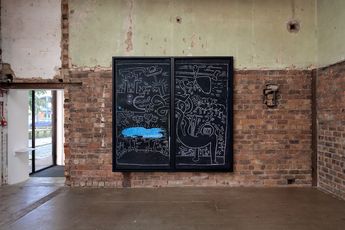
The aforementioned influences are present in the hundreds of subway drawings Haring made between 1980 and 1985, in which rhythmic chalk lines cover stations’ matte black advertising boards. Making graffiti on city subways, Haring turned New York’s subway systems into his artistic ‘laboratory’.
Recurring motifs in Haring’s work
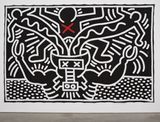
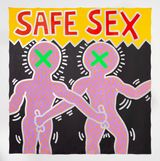
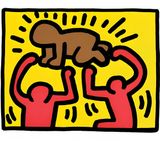
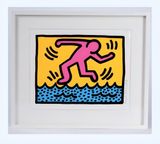
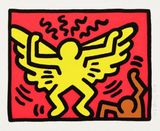
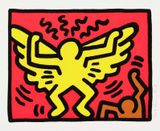
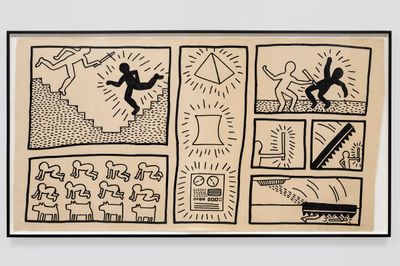
From his subway works, Haring developed motifs such as the iconic Keith Haring hearts, barking dogs, UFOs, and glowing babies. His dancing figures and graphic lines became defining elements of his work.
Keith Haring’s later career development and rise to fame
As Haring’s reputation grew, he caught the attention of the Tony Shafrazi Gallery in 1982. This partnership catapulted Haring’s career into the spotlight of the art world, leading to numerous solo and group exhibitions. His distinctive style, rooted in his experiences as a street artist, quickly gained recognition beyond the confines of city subways.
By the mid-1980s, Haring had exhibited in international biennials, designed a billboard in New York’s Times Square, and created an eye-catching advertising campaign for Absolut Vodka. Haring even created watch designs for Swatch.
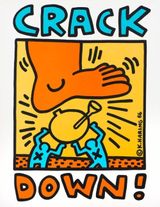
Compelled to create art that reaches an audience beyond the art elite, Haring made many public works throughout his career. An iconic example, especially since its restoration, is the Crack is Wack (1986) mural in East Harlem, which Haring made in response to the crack cocaine epidemic sweeping the poorer neighbourhoods of New York. In the same year, he painted a section of the Berlin Wall at the invitation of the Checkpoint Charlie Museum.
Passing and Legacy
Haring’s art can be found in public spaces worldwide, but the artist’s burgeoning career, which exploded in the 1980s, was sadly cut short. Keith Haring died from AIDS-related complications in 1990 at the young age of 31.
Keith Haring’s art legacy continues to be felt inside and outside of the gallery, from internationally popular Keith Haring clothing—including Keith Haring hoodies, T-shirts, and caps—to the work of the Keith Haring Foundation, which preserves and circulates his work while supporting not-for-profit organisations that assist children and HIV/AIDs-related causes.
Keith Haring’s exhibitions
Keith Haring has held numerous solo exhibitions across the globe. Notable exhibitions include:
- Keith Haring and Japan: Pop to Neo-Japonisme, Nakamura Keith Haring Collection, Kobuchisawa (5 February 2017–31 January 2018)
- Keith Haring, Tate Liverpool (14 June–10 November 2019)
- Keith Haring, Amsterdam Notes, Stedelijk Museum, Amsterdam (26 May–5 November 2023)
- Keith Haring, Art Is for Everybody, The Broad, Los Angeles (27 May–8 Oct 2023)
Haring’s work has been included in group exhibitions at The Museum of Modern Art, New York; National Art Museum of China, Beijing; P.S.1, New York; Tate Modern, London; and the Whitney Museum of American Art, New York.
Website
For updates on the artist, the Keith Haring Foundation website can be found here.
Keith Haring FAQs
Why is Keith Haring important in contemporary art?
Keith Haring is a key figure in 20th-century contemporary art, known for revitalizing painting in the 1980s with elements of graffiti and popular culture. His bold, cartoon-like style and public artworks made art more accessible, blending street culture with fine art.
What are Keith Haring’s most famous artworks and motifs?
Haring’s most recognisable motifs include radiant babies, barking dogs, and dancing figures, often outlined in bold lines. His Crack is Wack mural (1986) and his subway chalk drawings helped define his legacy, bringing socially engaged art to public spaces.
How did Keith Haring’s Subway Drawings impact his career?
Between 1980 and 1985, Haring created hundreds of chalk drawings on New York subway stations’ black advertising boards. These works acted as his ‘laboratory,’ allowing him to develop his signature style while gaining public attention before his rise to international fame.
Where can I see Keith Haring’s art today?
Keith Haring’s artworks are displayed in major museums like MoMA, Tate Modern, and The Broad. His public murals can also be found worldwide, and his influence lives on through the Keith Haring Foundation, which preserves his work and supports social causes.
Michael Irwin | Ocula | 2024

View Keith Haring's Artworks


























Explore Keith Haring's Exhibitions







Keith Haring in Ocula Magazine










Explore and Follow Artists Shaping Contemporary Art
A respected voice in contemporary art discourse.
Focusing on ambitious storytelling and insightful art-world commentary. Ocula Magazine publishes in-depth interviews, critical essays and timely analysis on the artists, exhibitions and ideas driving the global art world.
Learn more about Ocula Magazine
Showcasing the best of the art world.
Ocula partners with galleries from around the world to highlight their artists, artworks and exhibitions. Gallery membership is by application and invitation, with each member vetted by an independent panel.
Learn more about Ocula Membership
Specialises in the sale of major artworks.
Led by a team with deep ties to the world’s leading auction houses, galleries and collectors. Ocula’s advisory team offers bespoke services to high-net-worth clients from around the world who are looking to acquire the best of contemporary and modern art.
Learn more about our team and services