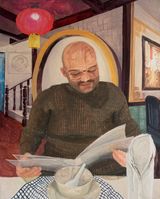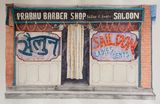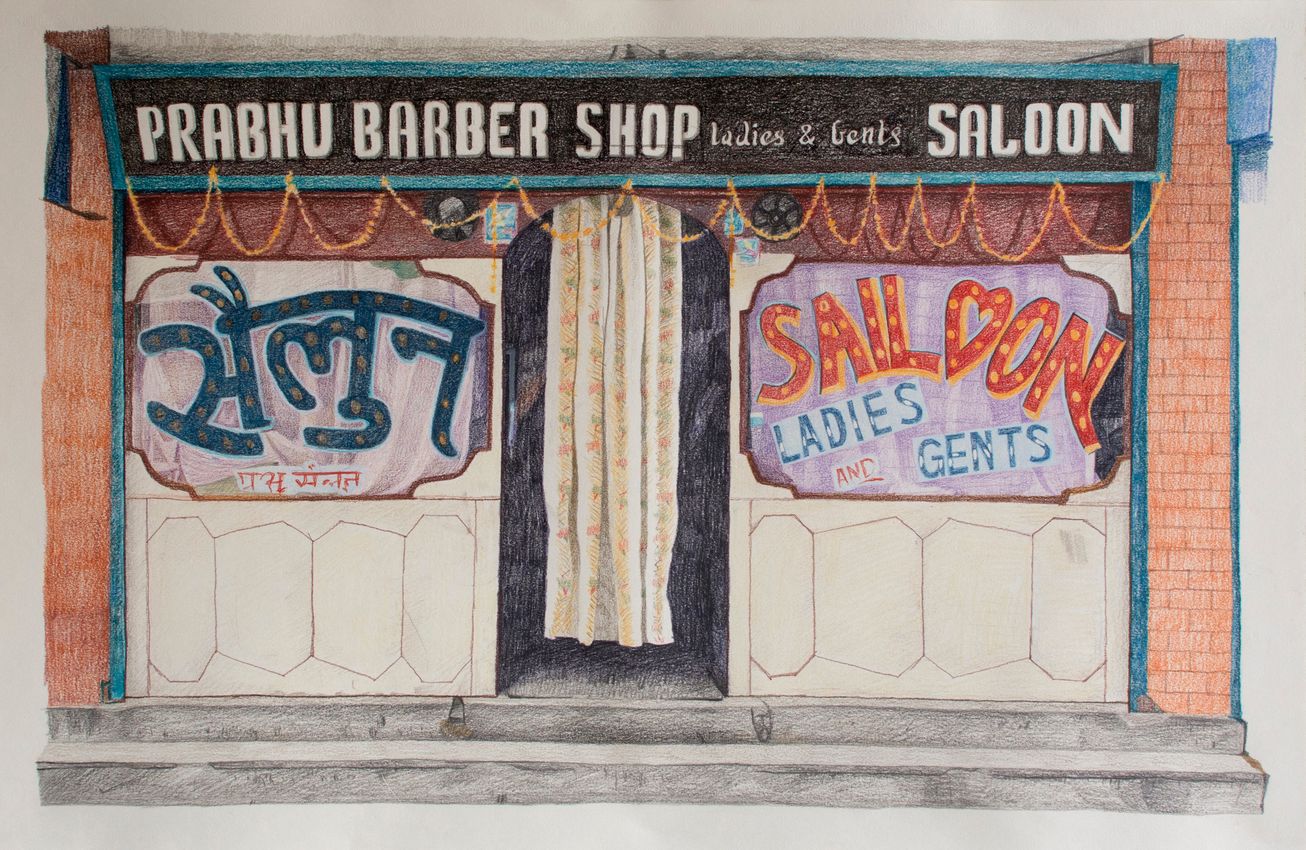
In dialogue with On Earth We’re Briefly Gorgeous, Jhaveri Contemporary presents Fiza Khatri, Sailoon and other Stories. Working in oil, Khatri tenderly and frankly documents her day- to-day encounters and the parameters of queer acceptance and performance. Her painterly vignettes are a generous invitation into the close-quarters of her world.
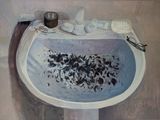
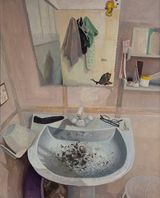
The Sink takes us to the corner of her tiled bathroom. Beneath shelves of familiar toiletries a ceramic sink leans forward from the wall. It’s speckled with cuttings of Khatri’s hair. The soft fluffy tufts, that leave their trace for days to come, are the debris of her self-administered transformation. For Khatri, constructing her hair is an act of empowerment and ownership. Her short, razor-cut style jars with a well-established South Asian lexicon of femininity that values luscious, painstakingly grown and manicured locks, and conversely the annihilation of body hair. Big Sink similarly refutes this hair conservatism. With a ritualistic undertone, the white bowl strewn with accoutrements, speaks of her personal index of beauty. Served up from a low perspective, the scene equally toys with notions of purity and hygiene. Painted so that we peer into the dark clippings, Khatri plays into sensitivities around loose strands of hair.
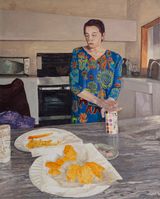
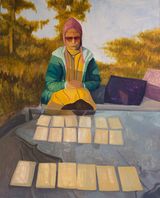
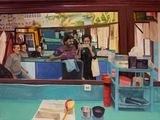
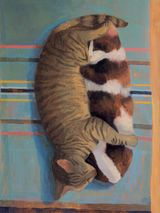
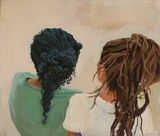
There is a more convivial summons in Heartbreak Pakoras. Khatri pushes towards us a plate of crisp, oily snacks and offers up a seat at a plasticky table in (Queen of) Ming Court. This hospitality is, however, limited. Her steely characters cut short any further engagement, their attention directed elsewhere. In Iva’s Spread our companion is engrossed in a set of tarot cards anticipating her fate. Umair gazes through us while in Two Heads a couple of women turn their backs meeting us with their tussled hair. These inner moments of her family life replete with glimpses of much adored pets like Spark and Bite are guarded. Khatri’s selective vision for her viewer and the protective streak reflect the importance of preserving the queered spaces she has so meticulously carved.
Dr. Cleo Roberts-Komireddi
Jhaveri Contemporary was formed in 2010 by sisters Amrita and Priya with an eye towards representing artists, across generations and nationalities, whose work is informed by South Asian connections and traditions. The gallery’s dedication to original scholarship, engendered through its carefully crafted shows, is one of the many ways it distinguishes itself. Entwined with this philosophy is another guiding principle: showcasing the heterogeneous practices of long-celebrated luminaries as well as emerging talents, often in generously interrogative conversations. With a focus on mining lesser-known art histories, Jhaveri Contemporary facilitates dialogue between artists, curators and historians to add to the wider field of art. Estates served by the gallery include Mrinalini Mukherjee and Anwar Jalal Shemza.

A respected voice in contemporary art discourse.
Focusing on ambitious storytelling and insightful art-world commentary. Ocula Magazine publishes in-depth interviews, critical essays and timely analysis on the artists, exhibitions and ideas driving the global art world.
Learn more about Ocula Magazine
Showcasing the best of the art world.
Ocula partners with galleries from around the world to highlight their artists, artworks and exhibitions. Gallery membership is by application and invitation, with each member vetted by an independent panel.
Learn more about Ocula Membership

Specialises in the sale of major artworks.
Led by a team with deep ties to the world’s leading auction houses, galleries and collectors. Ocula’s advisory team offers bespoke services to high-net-worth clients from around the world who are looking to acquire the best of contemporary and modern art.
Learn more about our team and services