



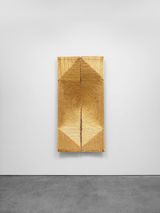
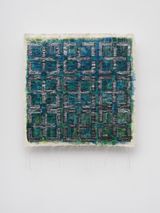
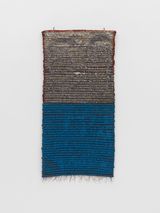
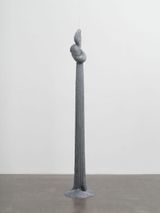
For the latest exhibition in East Hampton, Lisson Gallery is pleased to present a selection works by Olga de Amaral. In advance of her first major show with the gallery in New York (at 508 West 24th Street, November 2–December 18, 2021), the solo presentation in East Hampton features four of Amaral’s three-dimensional sculptural forms made from fibre. The Colombian artist has developed her own tools and techniques, woven strips of wool, linen, horsehair and cotton that create visual expanses, often adding a painterly application of gesso, acrylic and gold leaf. Working not only on the floor or the wall, Amaral carves up interiors with her hanging tapestries, creating floating formations that invite viewers to experience space in a new way.
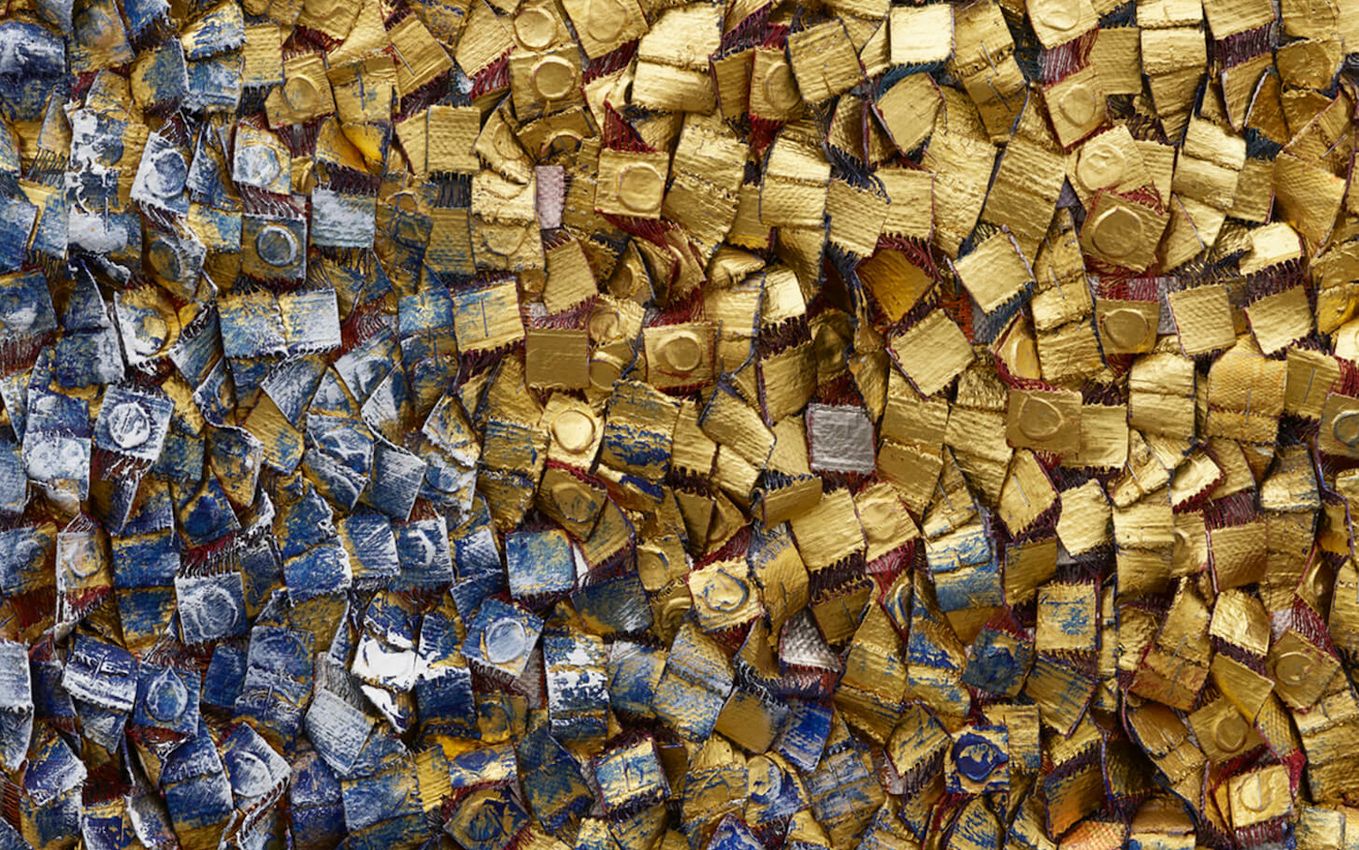
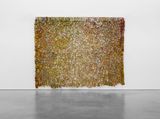
The exhibition comprises works of varying sizes, including the vibrant, wall-based sculpture Ombrío 18 (2015). The dynamic tapestry exemplifies Amaral’s delicate weaving method, which connects hundreds of painted linen patches that manifest a deeply layered image-object of sizeable proportions. As with many of Amaral’s works, pieces from the Ombrío series are illuminated by the shimmering reflection of incorporated metallic elements such as gold and palladium leaf. The bidimensional plane, where the traditional act of painting has been rendered, has itself been cut and reassembled, creating a sculptural work that operates as a deconstructed painting. This self-reflexive interrogation of the painting medium imbues Amaral’s practice with a modernist flair while it simultaneously collapses modernism’s separation between ‘art’ and ‘craft’ through the artist’s demonstrated affinity for, and decades-long practice in, weaving and fibre art.
Even when working at a smaller scale, Amaral’s work veers away from the domestic in feel. In Pirámide B (2014), the work approaches monumental architectural proportions through the artist’s clear delineation of a pyramidal shape. Rather than a figurative or pictorial image of a pyramid, this work is a study in how the form and texture of two-dimensional material can lead to a suggestion of something wholly three-dimensional. Somewhere between a homage to the ancient objects crafted from gold and a mythical retelling of the rumours of El Dorado and the seven cities of gold, this panel recalls not only pre-Columbian architectural structures, but also the votive offerings of its indigenous inhabitants and the resplendent golden alters nestled in colonial churches in Bogotá and throughout Spanish America. This work is part of a small a series of Amaral’s ‘Pirámide’ works, some made in 2005–2007 and some in 2014, in which the orientation of the triangular planes shift around and recede into the iridescent surface, creating gestural and perspectival movement through space.
The Amaral presentation follows solo exhibitions at the gallery by Masaomi Yasunaga, Roy Colmer, Leon Polk Smith, Ceal Floyer, Laure Prouvost, Sean Scully and Ryan Gander. Lisson Gallery’s East Hampton space will continue its focused format featuring both influential, historical artworks and debuting new bodies of work in an experimental, intimate setting. An exhibition of work by Rodney Graham will be on view after the Amaral presentation, from September 9–26, 2021. The gallery is open to the public each Thursday through Saturday, from 11am to 6pm, Sundays from 12–5pm and Wednesdays by appointment.
Olga de Amaral spins base matter into fields of colour and weaves tectonic lines through space, unselfconsciously testing the borders between crafted object and the work of art. From the flat surfaces of tapestry through to resolutely three-dimensional sculptural forms made from fibre, the Colombian artist’s work spans more than 60 years, in turn reaching even further back to the spiritual qualities and ancient craquelure of medieval icon paintings or else the rigour and simplicity of the modernist grid, as if run through a loom. Developing her own tools and techniques, while relying on the hand for her strip-woven expanses of wool, linen and cotton, Amaral has also knotted reams of horsehair together and bolstered her fabric works through a painterly application of gesso or stucco, often highlighting the reverse, or foregrounding the edges. Working not only on the floor or the wall, Amaral carves up interiors with her hanging tapestries, creates floating formations from yarn or plastic, while following nature’s lead for outdoor works such as Hojarascas (Dried Leaves), begun in the 1970s, or working at architectural scale, for the creation of the six-story façade commission, El Gran Muro (The Great Wall), in 1976.


A respected voice in contemporary art discourse.
Focusing on ambitious storytelling and insightful art-world commentary. Ocula Magazine publishes in-depth interviews, critical essays and timely analysis on the artists, exhibitions and ideas driving the global art world.
Learn more about Ocula Magazine
Showcasing the best of the art world.
Ocula partners with galleries from around the world to highlight their artists, artworks and exhibitions. Gallery membership is by application and invitation, with each member vetted by an independent panel.
Learn more about Ocula Membership

Specialises in the sale of major artworks.
Led by a team with deep ties to the world’s leading auction houses, galleries and collectors. Ocula’s advisory team offers bespoke services to high-net-worth clients from around the world who are looking to acquire the best of contemporary and modern art.
Learn more about our team and services