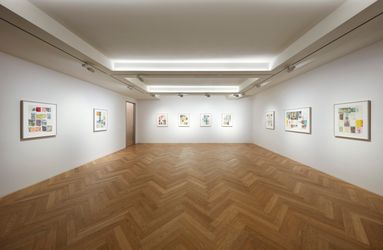
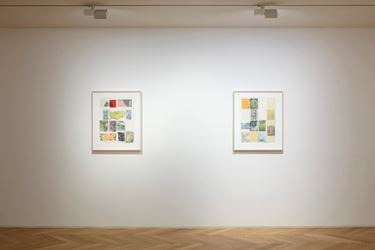
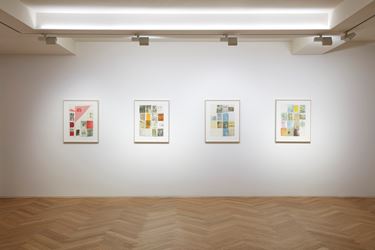
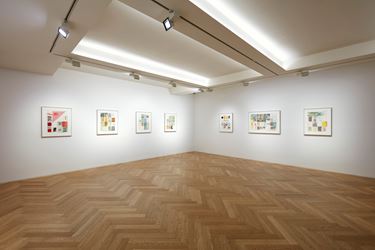
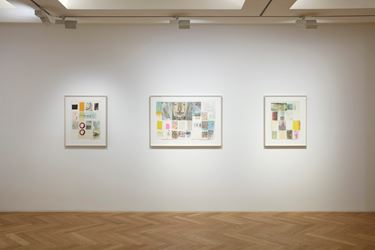
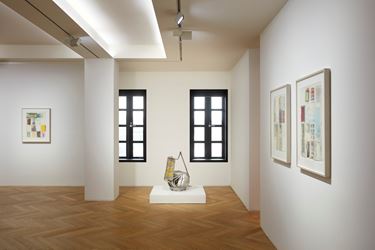
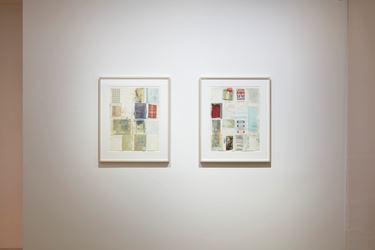
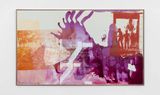
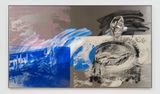
Pace Gallery presents a solo exhibition of never-before-exhibited works on paper by Robert Rauschenberg, whose unconventional approach to art anticipated and catalysed the Pop Art movement of the sixties. Building on Rauschenberg’s signature style of juxtaposing real-world images, sourced from magazines and newspapers, alongside found materials, such as fabrics and other everyday objects, these drawings examine a lesser known aspect of his artistic process: the grid format. These works, with their broken-down, appropriated images that are reassembled on grids, foreshadow the internet revolution of the late eighties.
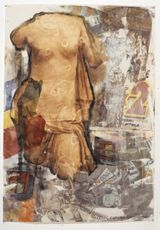
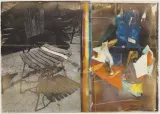
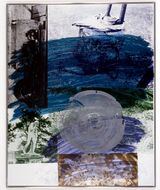
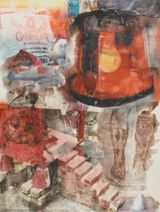
Discovered in June 2007 in Rauschenberg’s studio in Captiva, Florida, these rare drawings are composed of a wide-range of materials-solvent transferred images, fabric, watercolour, and pencil on paper-which are familiar to the artist’s work. What distinguishes this suite of drawings from Rauschenberg’s larger body of work is his introduction of a grid format. The grids in each drawing, which are lightly incised on 23-by-18-inch paper, serve as a launchpad for the artist. On top of the grids, we see Rauschenberg spontaneously building out the picture plane with photographic images, which are inverted, flipped, and mirrored, and with other, non-traditional materials such as fabric-a medium that he used prominently throughout his work. Similar images and motifs of everyday objects that Rauschenberg was drawn to throughout his lifetime, such as maps, chairs, shoes, animals, vehicles and other objects of movement, recur in this series.
While at other times, especially from 1983 forward, Rauschenberg used his own photographs in his work, all of the images that the artist sourced for this set of drawings were culled from printed media-Soviet Life, Scientific American, and Fort Myers News-Press, among other national and international news outlets. The use of a printing press for the application of his trademark transfer technique lends a uniquely mechanical connection to the sourcing of the images from mass media, thus masking the artist’s hand in the transfer process. This approach would become a key characteristic of his practice which he first began experimenting with during a trip to Cuba in 1952 and would embrace throughout the rest of his career. Through his use of the printing press to develop evenly transferred images, Rauschenberg was engaging with the history of mechanical reproduction, which would enable the dissemination of a single image in multiples and drastically alter the course of the 20th century.
To further enliven these drawings, Rauschenberg made gestural marks on top of the overlaid photographs through the use of watercolour and acrylic and added pencil strokes. Equally important are the areas of the grid that he left blank, which create a dialogue between absence and presence on the plane. Nonetheless, with the application of grids, these drawings attest to Rauschenberg’s disregard for the limits of parameter in his work. Emblematic of the rapid technical changes of the 20th century, these works offer a glimpse into a particular window of time in modern history and further blur the distinction between art and life, a central theme in understanding Rauschenberg’s comprehensive oeuvre.


Over 60 years, Robert Rauschenberg pushed the boundaries of art, working in a huge range of mediums including painting, print, photography, performance and sculpture. His work became known during the height of Abstract Expressionism, and he challenged this movement’s dominance.


A respected voice in contemporary art discourse.
Focusing on ambitious storytelling and insightful art-world commentary. Ocula Magazine publishes in-depth interviews, critical essays and timely analysis on the artists, exhibitions and ideas driving the global art world.
Learn more about Ocula Magazine
Showcasing the best of the art world.
Ocula partners with galleries from around the world to highlight their artists, artworks and exhibitions. Gallery membership is by application and invitation, with each member vetted by an independent panel.
Learn more about Ocula Membership

Specialises in the sale of major artworks.
Led by a team with deep ties to the world’s leading auction houses, galleries and collectors. Ocula’s advisory team offers bespoke services to high-net-worth clients from around the world who are looking to acquire the best of contemporary and modern art.
Learn more about our team and services