



Press Release

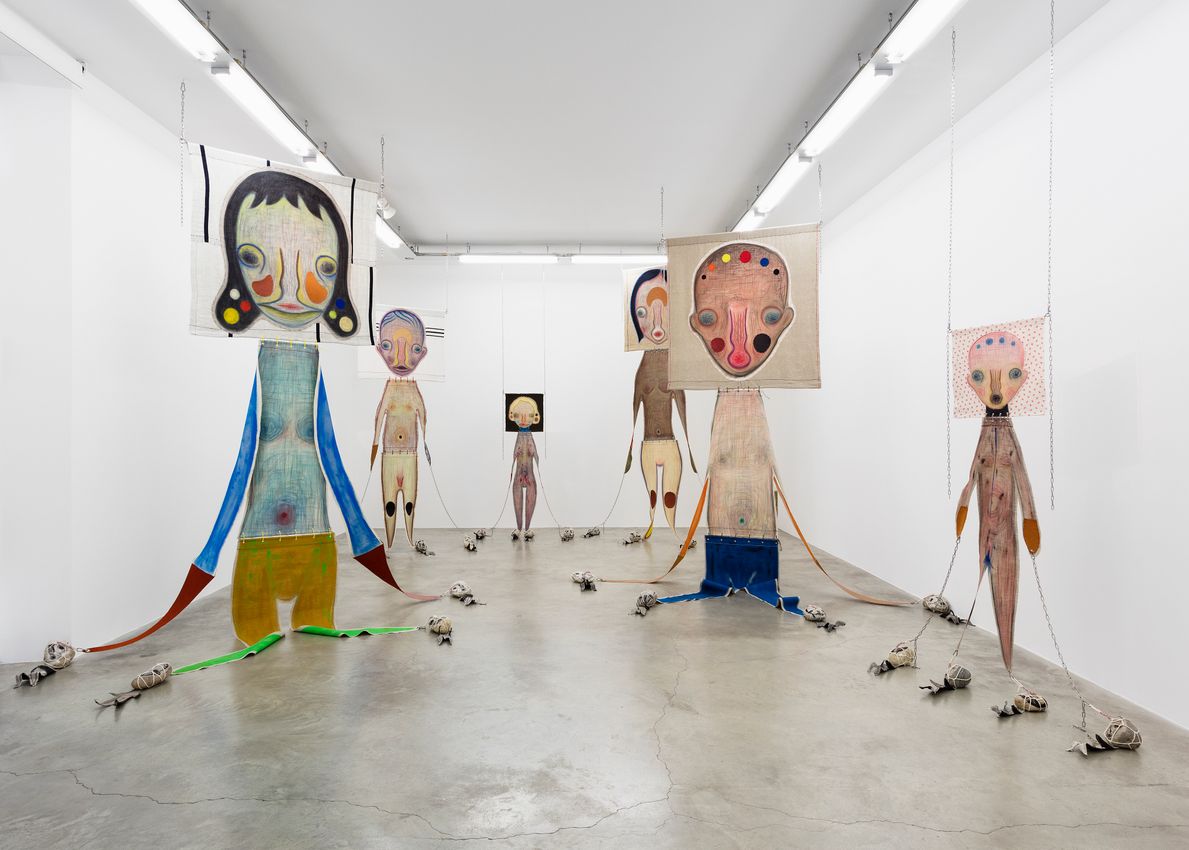
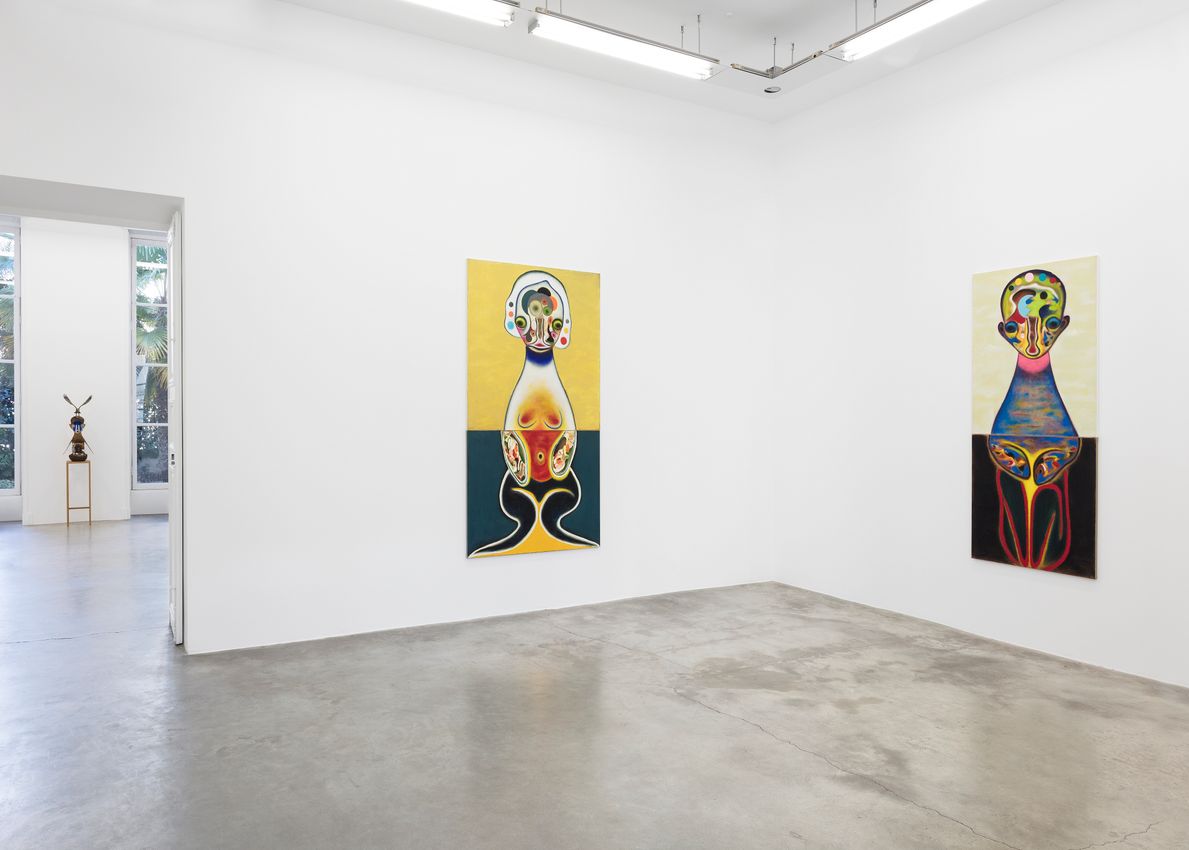
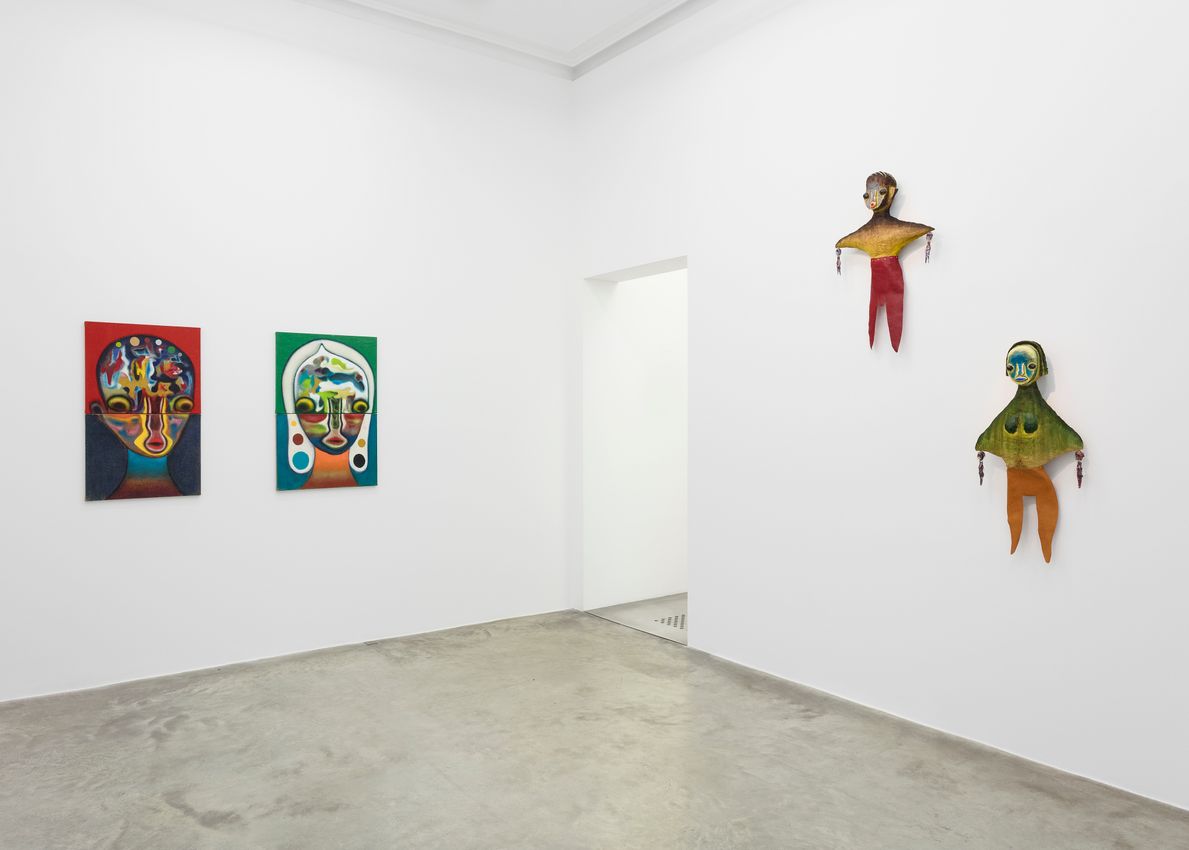
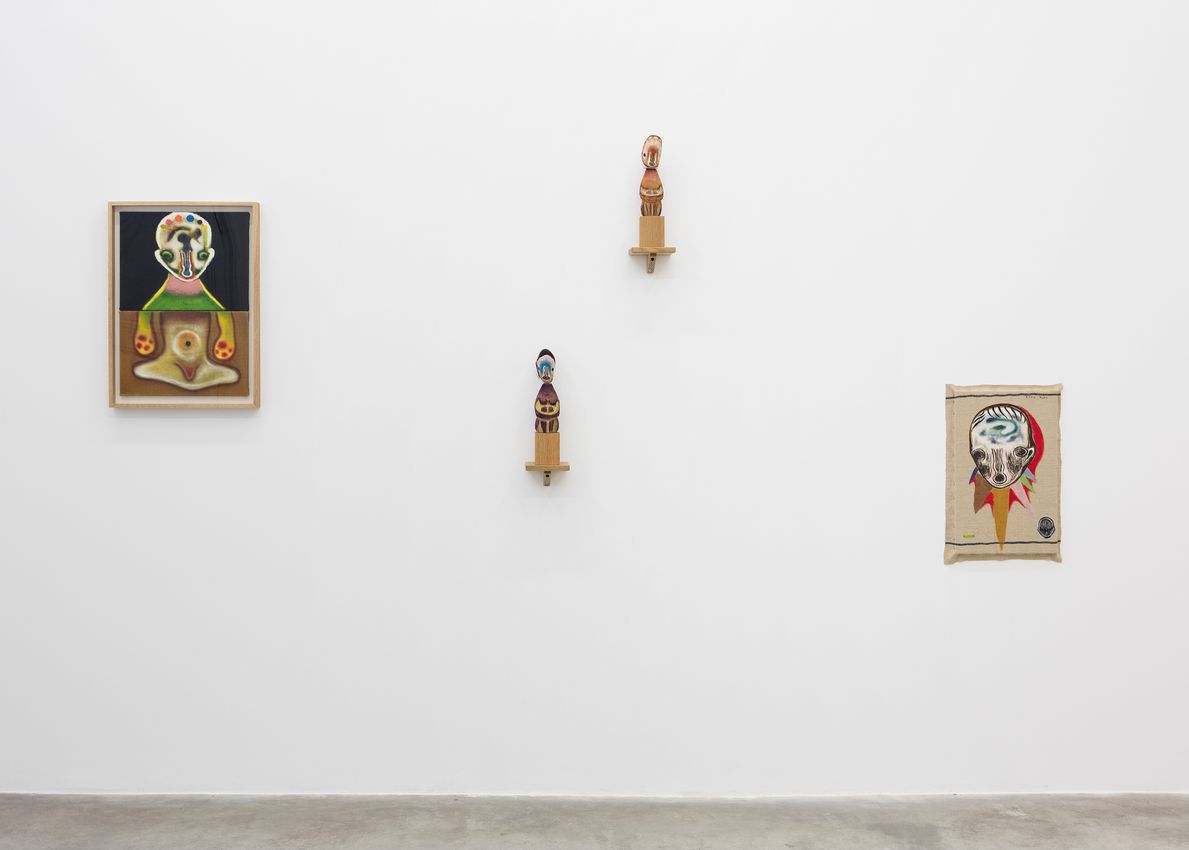
For his second exhibition at the gallery in Paris, Izumi Kato has brought together an assembly of strange creatures so diverse that it seems as though an entire macrocosm has been summoned to bear witness to the complexity and beauty of the worlds he explores. The Japanese artist presents here a diversity of forms and techniques that testify to the complexification of the supernatural pantheon that he has been developing for almost two decades. A world that viewers may have got to know, but whose enigma remains intact. Marked by diversity, this latest generation—his creatures appear to be so embodied that it is impossible to speak of a series—may surprise viewers by seeming to be more alive than ever. Nevertheless, the ethologist will still have as much difficulty identifying and analysing their motivations and behaviour because, true to themselves, they are only putting in an appearance, like apparitions.

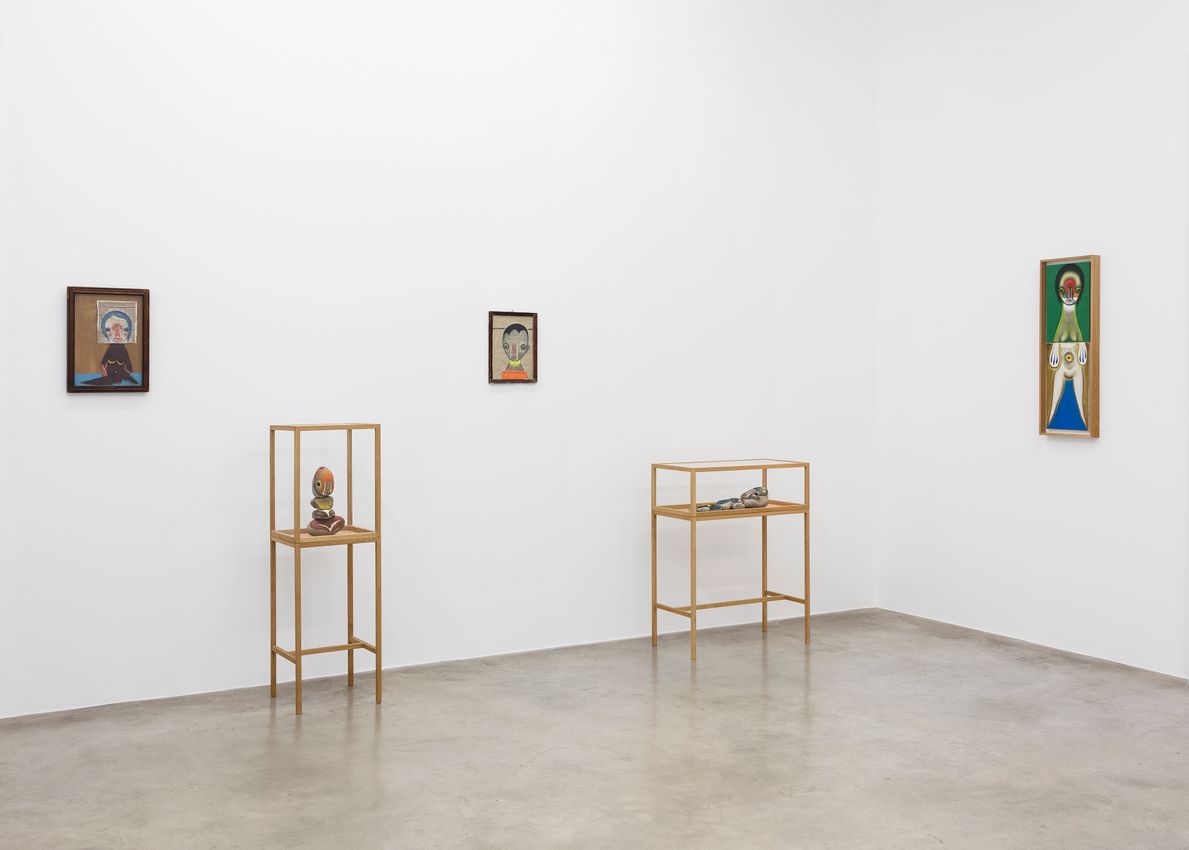
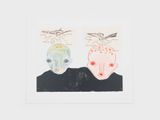
And yet we have so much to learn from them. Whether they emerge from rocks or blocks of wood, or whether they float in space, a raw sensuality and a quiet, almost benevolent—at worst, indifferent—strength emerge, which compel curiosity among viewers. Their natural forms and organic materiality seem to radiate an energy that viewers can benefit fromthrough their simple presence. The naturalness of the attitudes and forms, the absence of the impact of gravity and time offer a spiritual lesson and a remedy for anguish. Humour and childhood dominate more than ever, because the superimposition of materials accentuates the discrepancies between bodies and faces, and some assemblages are reminiscent of exquisite corpses or construction games. A number of creatures seem to make fun of us or to want to teach us a lesson, especially in those compositions arranged like roughly framed classical portraits and which appear to allude to art history. While the portraitists of our modernity—Manet, Gauguin, Modigliani and many others—tried to capture that raw and essential element in their models by defying mimesis, the creatures of Izumi Kato seem to have understood everything and to contemplate us with that strength that comes from the feat of their creator to have been able to unite, without constraint, body and mind. This inner peace is all the more fascinating on the scale of the exhibition as all these individuals seem to constitute a harmonious society rich in diversity. Perhaps this is another lesson Izumi Kato’s creatures can teach us.

When describing the work of Izumi Kato (born in 1969, Shimane Prefecture, Japan), the first thing that inevitably comes to mind are large-eyed humanoid forms with natural protuberances, in wood, canvas, or soft vinyl. On first impression, his proliferation of strange creatures, with their variable sizes, the curious fact that none of them have feet, seem to belong to aliens. It is difficult to say whether they are hostile or benevolent. Anyone who has seen John Carpenter’s fascinating 1988 film They Live may have flashbacks—not necessarily pleasant ones—of its extra-terrestrial creatures, their skeletal faces and bulging eyes.

Even as the work by this Japanese artist is exhibited across the world,the fascination for his little anthropomorphic figures remains somewhatmysterious.

Kato seems to want to free himself from all constraints, so that his own creativity is his only limit. It makes sense, then, that he has always been interested in art brut. In its spontaneity, its obliviousness to the codes of art history, art brut shares with his painting a simple but essential diktat: freedom. Technical freedom, to start with, as found in the portraits of Jean Dubuffet, with whose work a number of parallels could be developed here. Without holding himself to standards of excellence or quantifiable results, Kato seeks above all to freely express form and colour. He seeks to sculpt the figures in his paintings so naturally and simply that he ends up forgetting his brushes and using his own fingers.

In nearly twenty-five years of ar-tmaking, Kato’s work has gone through several gradual and regular shifts, manifesting no brusque turns but instead undergoing a slow change in composition and subject, technique and palette. Yet (perhaps surprisingly) his work is incredibly coherent, the result of Kato’s slow, precise evolution, a calibrated set of phases.

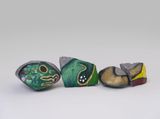
Kato’s work is paradoxically homogenous, which is rather remarkable given the range of techniques that he uses, and his constant obsession with experimentation. This struggle for formal renewal has nothing to do with lassitude or pressure from bored critics; rather, it resembles the attitude of a shaman trying to identify all the different incarnations of the same idea, energy, or being; or of an entomologist eager to discover all the families of the same species. We have already considered the spiritual kinship among Kato’s creatures and the deep influence on the artist of ancestral cultures, embodied by Japanese and proto-Japanese tradition. In animist thought, each natural element can be the repository or the embodiment of a spirit or, more precisely, each element in the universe can be a spirit. Under this influence, Kato seems to seek to identify them and pay them homage, in all their forms. Recent researches by the artist have further enriched his ideas, and it is unfortunately impossible to list each of his technical and formal inventions here, whether it be the drawings on outdoor bricks done in situ, or stones, assembled as though by chance, on which he has painted the bodies of creatures, as though he were revealing kami (spirits who are strongly present in Japanese culture and venerated in Shintoism) that had always been there.

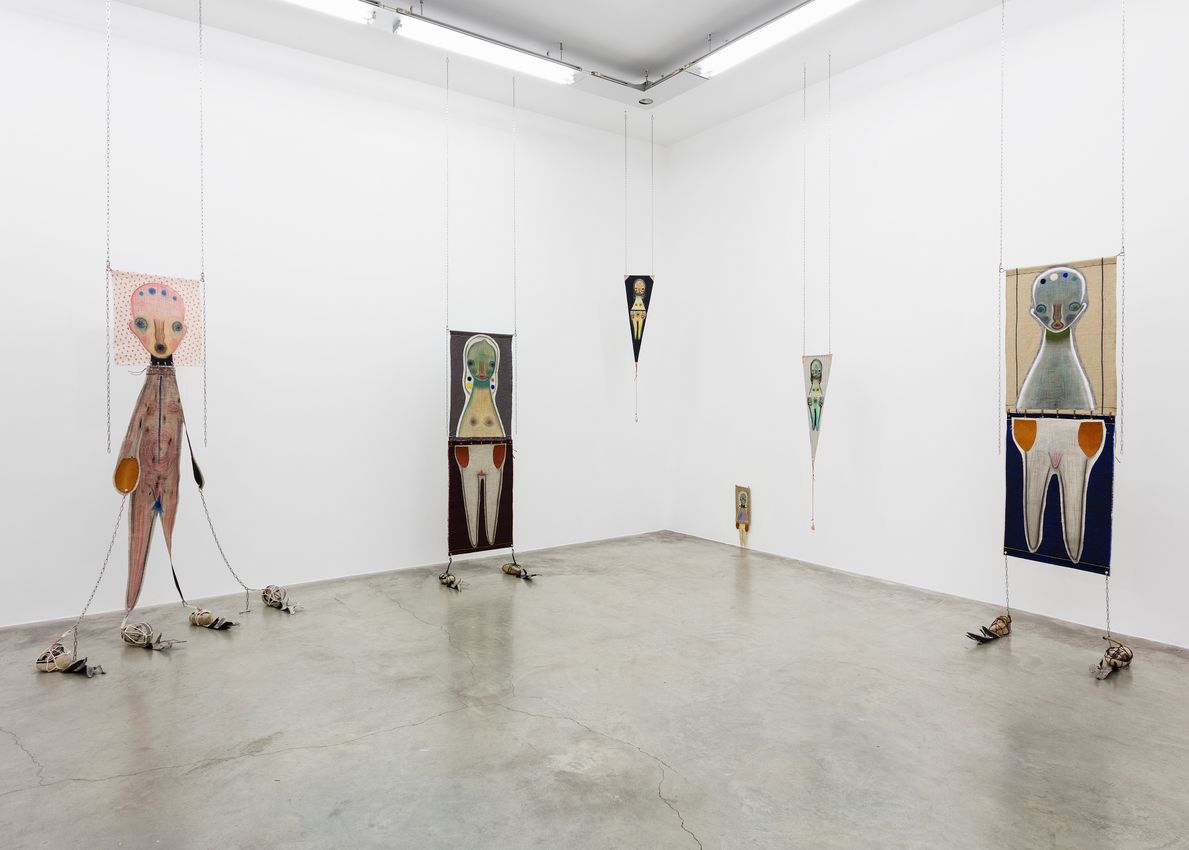
It is interesting to consider one of the most recent developments in Kato’s work. In his new series he has included fabrics in his sculptures, especially since his shows at the Red Brick Art Museum in Beijing, and very recently, at the Fundación Casa Wabi in Puerto Escondido (Mexico). There he borrowed the Mexican technique for weaving bags of cactus fiber, and assembled them with other traditional techniques, delighting in the differences between the ancient textile printing traditions of Mexico and Japan. These figures are again always either essentially feminine or masculine, but the artist mixes up the ages, forming kinds of families, in order to explore, perhaps, a form of universalism. This new form of creation has generated surprising silhouettes that hang in the air or are anchored to the ground by weights, entering into a new dialogue with space, and among themselves. To a certain degree, he even seems to make them disembodied, as if to strengthen their spiritual duality and their belonging to our world, but also to the beyond, and perhaps the infra-world.

Over the last few years the public has become familiar with these creatures, has learned to tame them and sometimes even to interact with their peaceful strength and their possible benevolence, while taking care to respect them, to tame them. Without letting them speak, or even see, Kato allows these beings to exude intense emotions, notably by their postures and through the connections that are created between the viewer and these sculptures, resulting on occasions in a kind of strange vibration that makes them polarizers of energy. It is perhaps this indefinable exchange that bestows on them an aura outside time and space.

Text by Matthieu Lelièvre. Courtesy Perrotin.

Read More

Installation Views

About the Artist

Izumi Kato was born in 1969, in Shimane, Japan. He graduated from the Department of Oil Painting at Musashino University in 1992. He now lives and works between Tokyo and Hong Kong. Since 2000’s, Kato has garnered attention as an innovative artist through exhibitions held in Japan and across the world. In 2007, he was invited to the 52nd Venice Biennale International Exhibition, curated by Robert Storr. Children with disturbing faces, embryos with fully developed limbs or ancestor spirits locked up in bodies with imprecise forms–the creatures summoned by Izumi Kato are as fascinating as they are enigmatic. Their anonymous silhouettes and strange faces with absent features are above all simple forms and strong colours. Their elementary representation, an oval head with two big, fathomlessly deep eyes shows no more than a crudely figured nose and mouth. Bringing to mind primitive arts, their expressions evoke totems and the animist belief that a spiritual force runs through living and mineral worlds alike. The aura that they exude seems to manifest the first movement of life while the intensity of their expression gives us access to a knowledge of man founded less on reason than on intuition. Embodying a primal, universal form of humanity, these magical beings invite viewers to identify themselves as if looking in a mirror.

View Artist Profile

Also Exhibiting at Perrotin

About the Gallery

Emmanuel Perrotin founded his first gallery in 1989 at the age of 21. He has opened since then over 17 different spaces, with the aim of continuing to offer increasingly vibrant and creative environments to experience artists work. He has worked closely with his roster of artists, some since more than 25 years, to help fulfil their ambitious dreams and projects.

View Gallery Profile
Address
76 rue de Turenne
Paris
France
Opening Hours
Tuesday – Saturday
10am – 6pm
(1)
Paris 76 rue de Turenne
Perrotin
76 rue de Turenne, Paris, France
+33 1 42 16 79 79
http://www.perrotin.com

Opening hours
Tuesday – Saturday
10am – 6pm
The art world in focus
