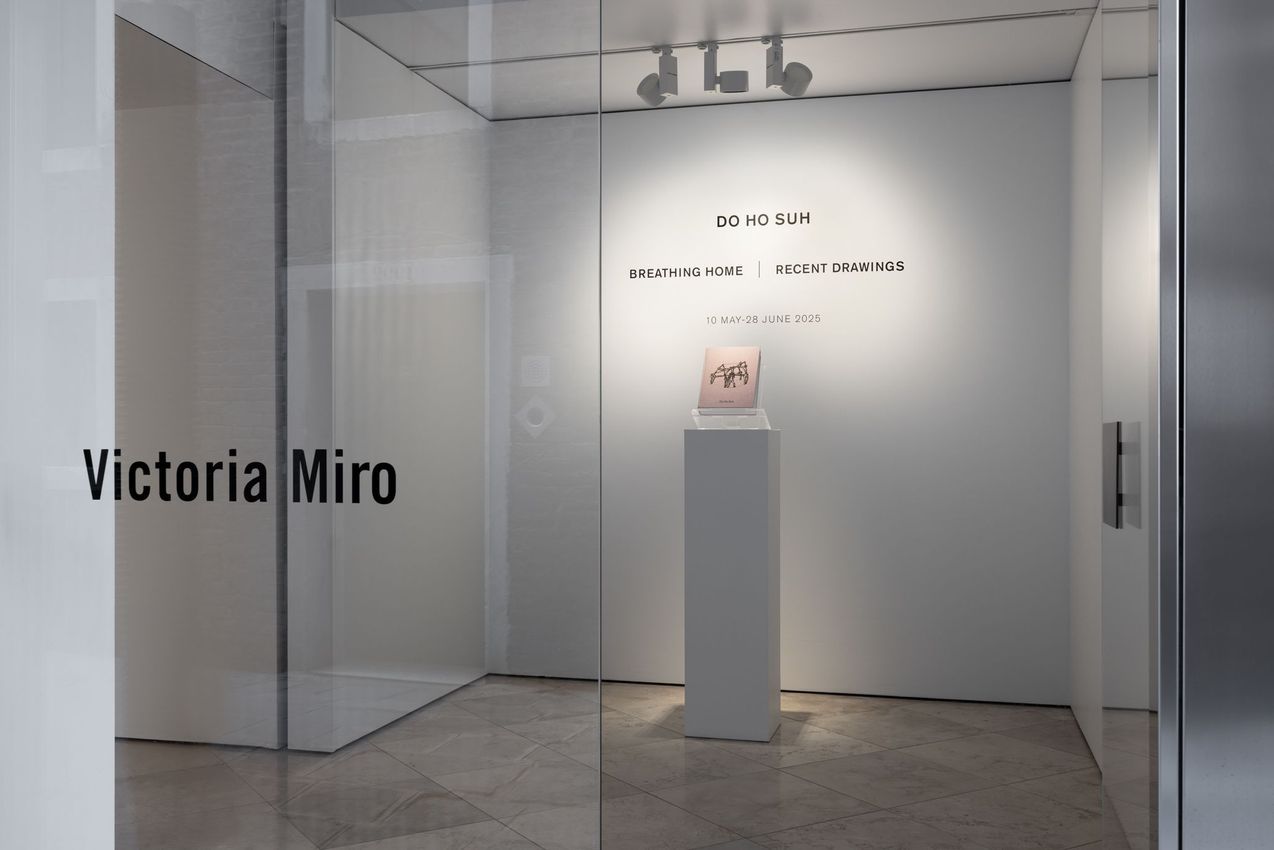
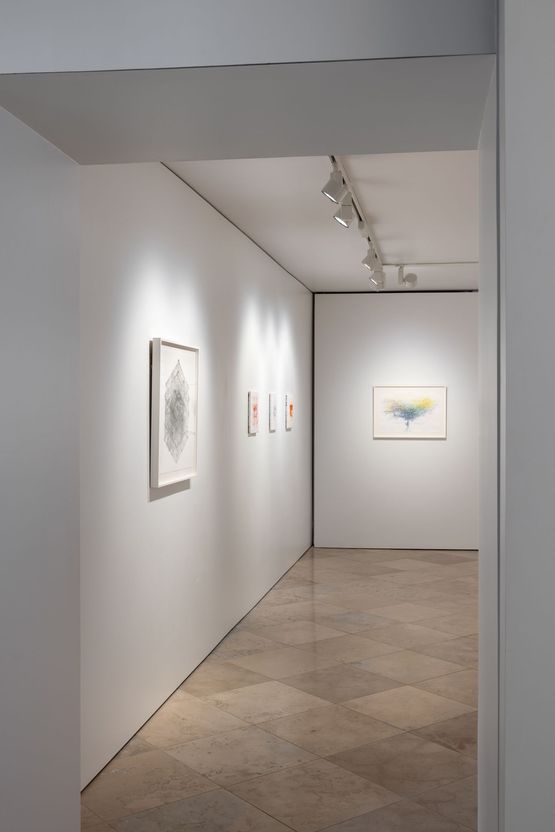
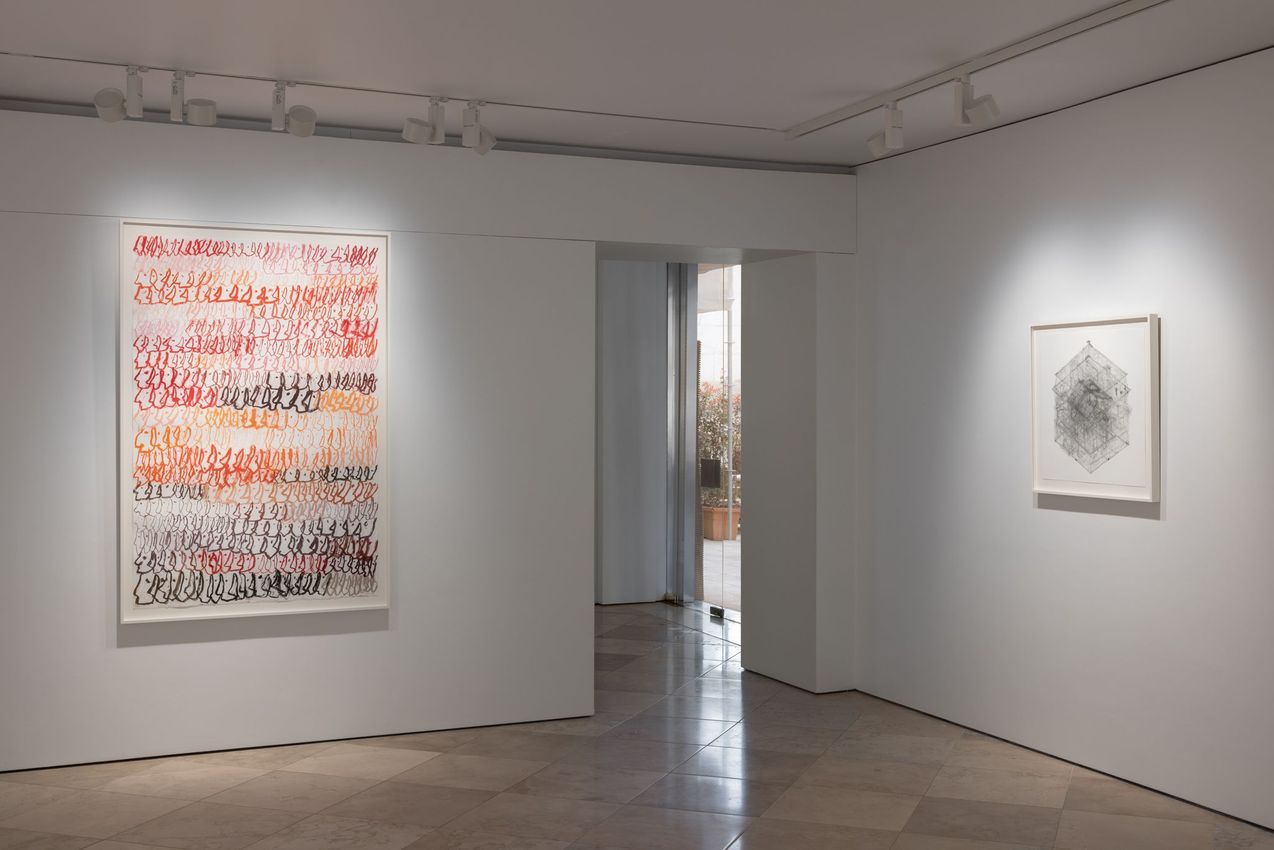
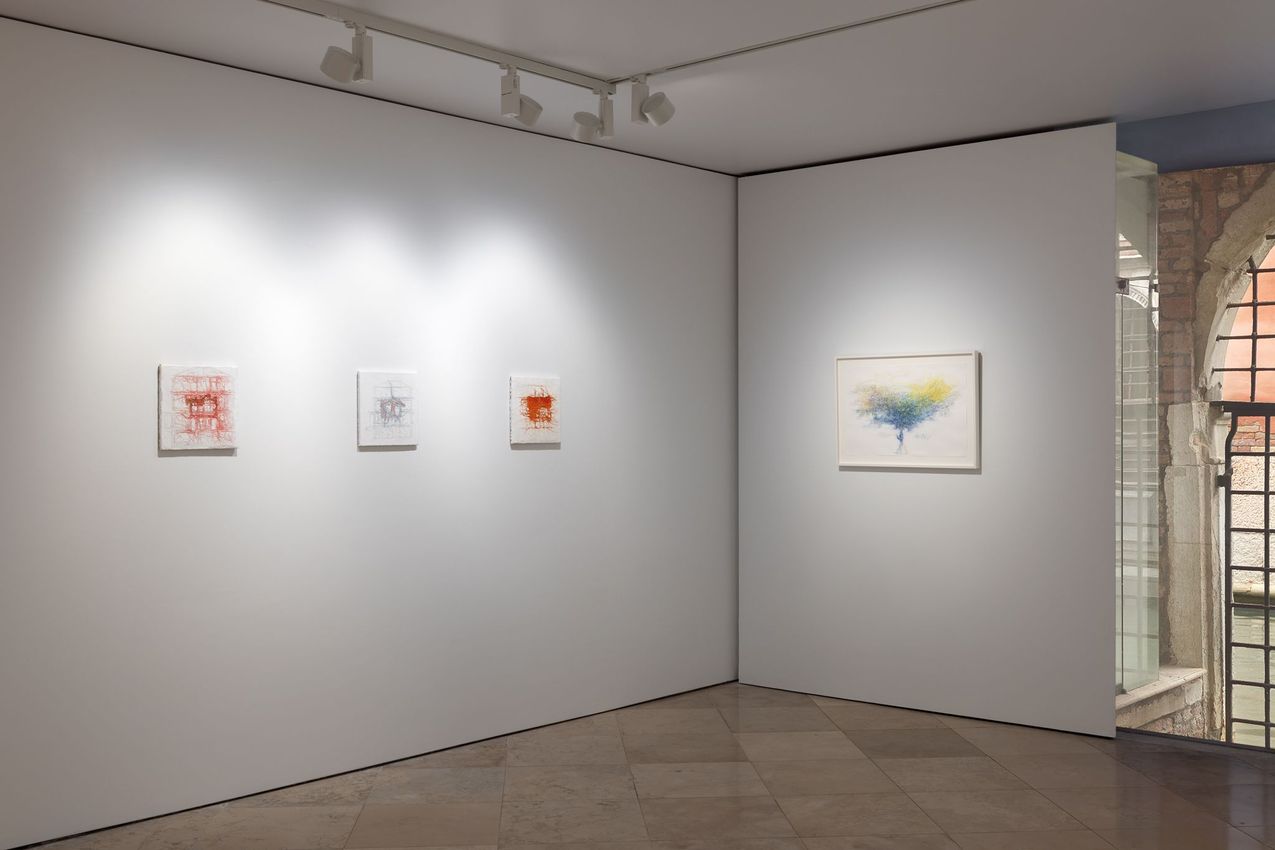
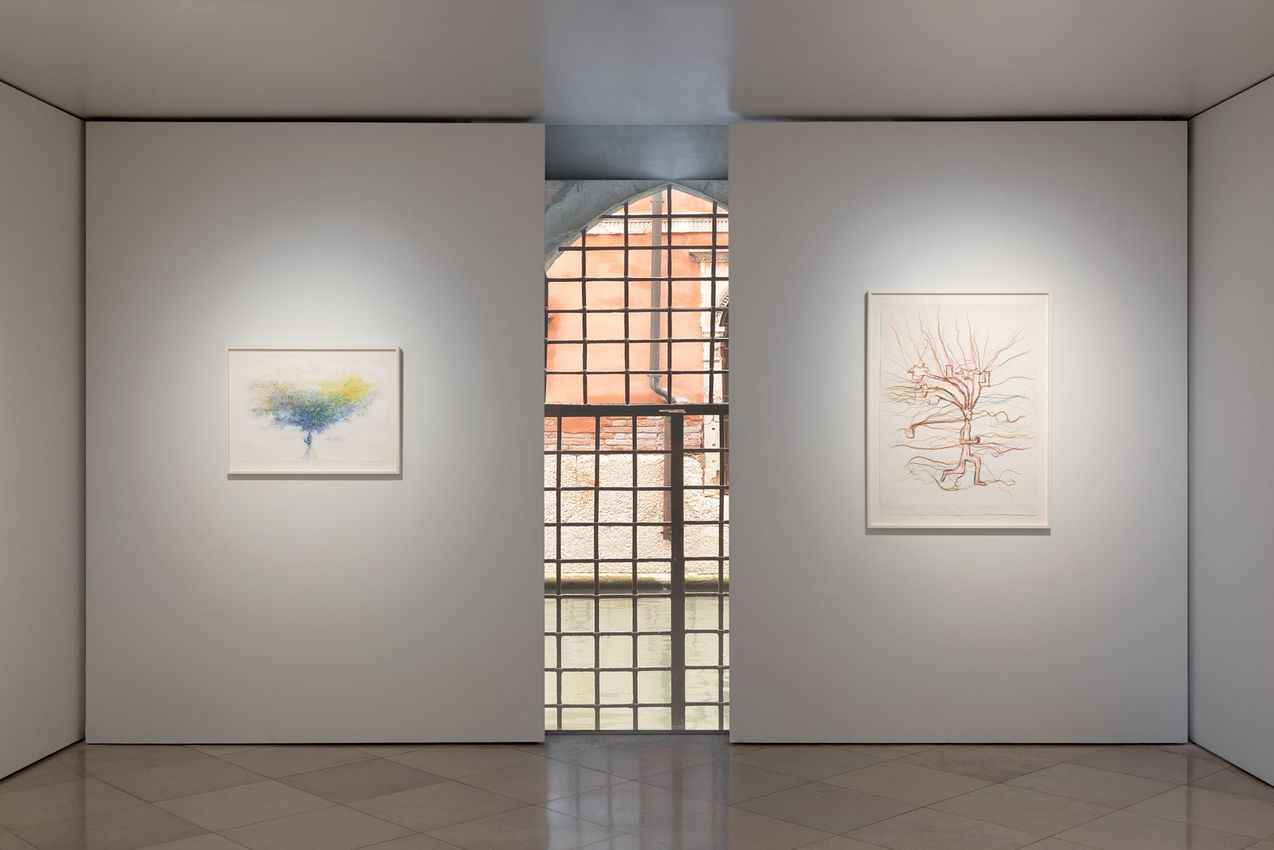
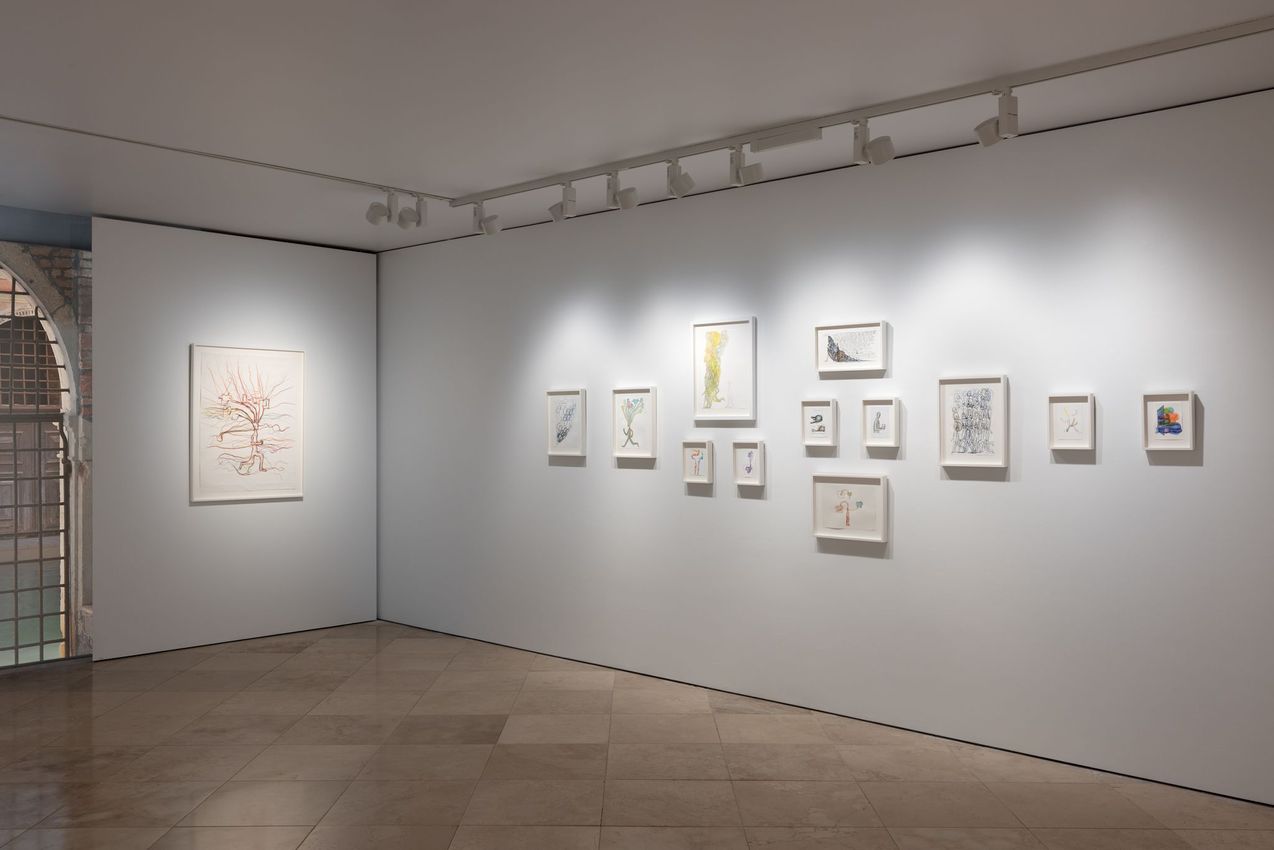
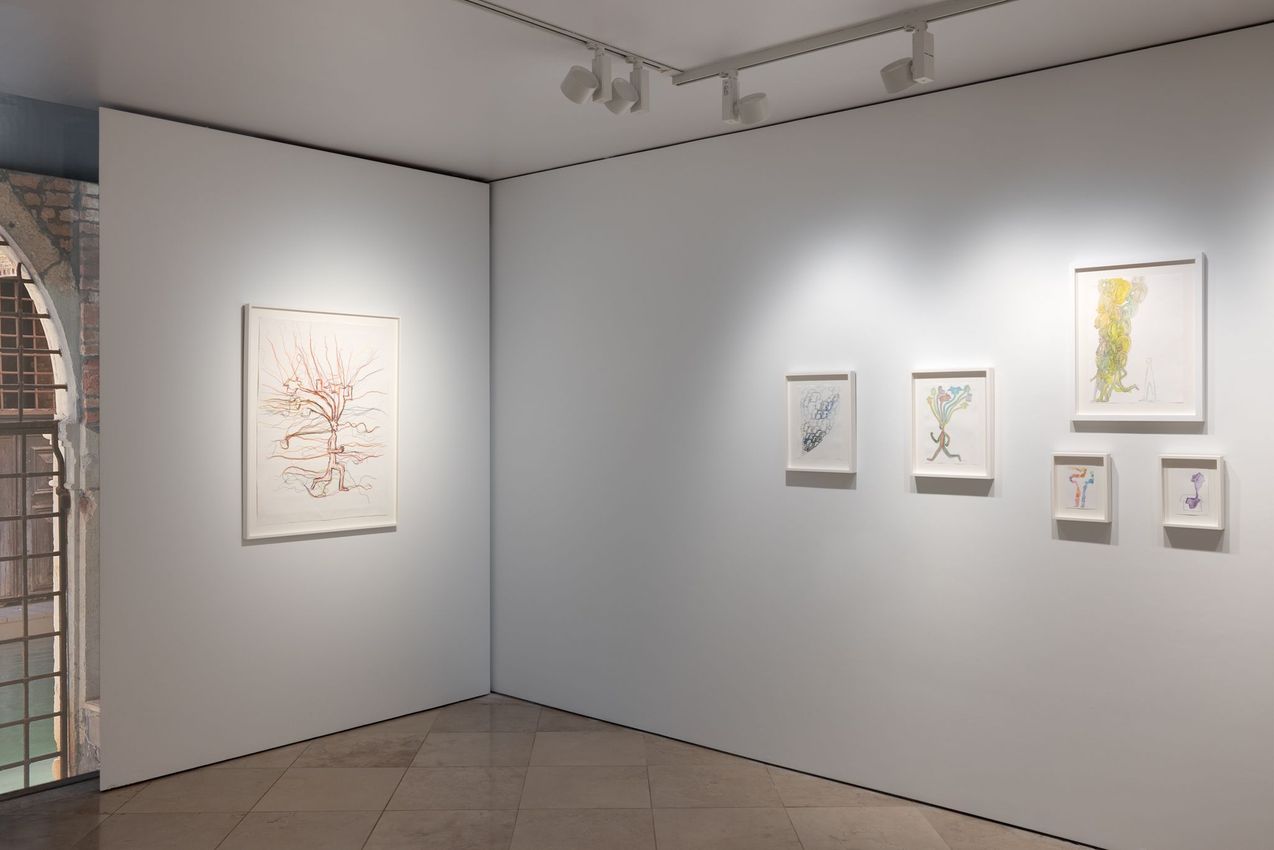
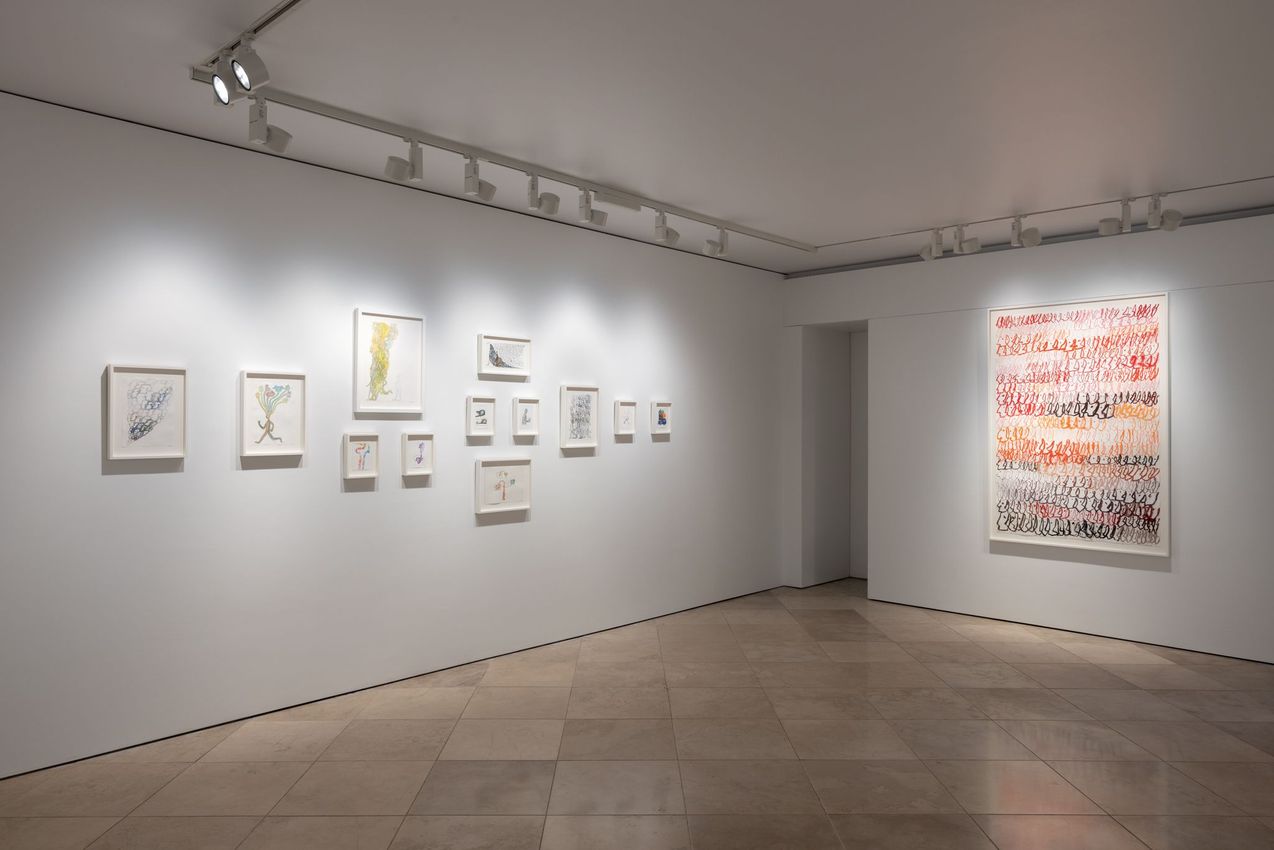
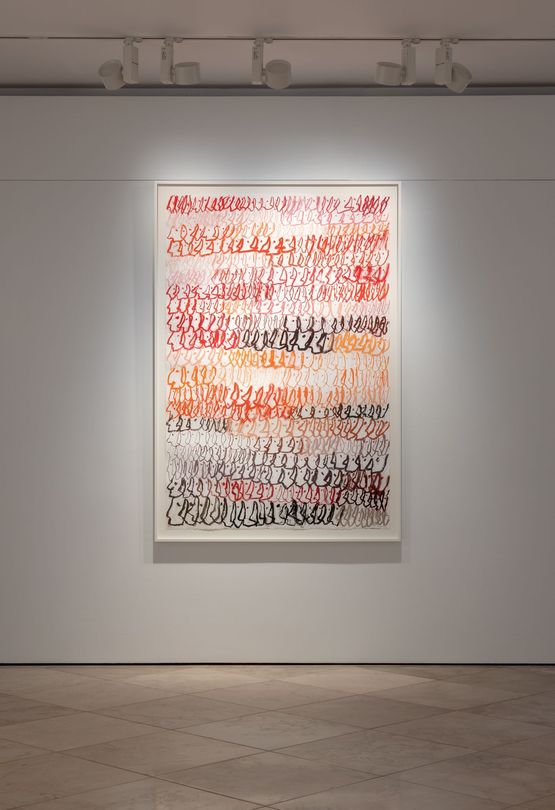
Victoria Miro is delighted to present an exhibition of recent drawings by Do Ho Suh. Highlighting the foundational role and varied forms that drawing plays in Suh’s art, the exhibition features a range of his works on paper, including drawings completed in graphite, watercolour and pigment marker, as well as his unique ‘thread’ drawings, all completed over the past year.
‘Drawing is my way of working through the psychology of my practice. A lot of these works are meditations on ideas that have followed me throughout my life - they speak to the core of my work and thinking. And in some cases, they are more literal meditations - drawing is very bound up in breathing and chanting practices for me.’ - Do Ho Suh
Across his career, Do Ho Suh’s engagement with drawing has been as manifold as it has been consistent. From simple sketches in pencil and watercolour to complex ‘thread’ drawings, in which cotton thread is embedded in handmade paper - newly conceived on a small scale - this exhibition showcases his collaborative methodology, innovative techniques and experimental use of materials, foregrounding the expansive role of drawing in his art.
Both generative and reflective, for Suh drawing functions variously: as a point of inception for the germination of new ideas; as a way of progressing themes and concepts to become distinct bodies of work; as a means of harnessing the processes and techniques that are employed in his celebrated one-to-one scale architectural sculptures. Suh’s sketchbooks play a crucial role in shaping his work, serving as both laboratory and journal. Their pages offer a place to draw, explore and extrapolate while expanding and illustrating the philosophical, speculative and seemingly impossible ideas at play.
Since architecture has been a continuous presence and protagonist in his art, Suh’s attention to the various modes of representation used in architectural practice – plans, perspectives and elevations – and how these can be adapted and modified from their technical origins to unlock their expressive potential, is an inevitable focus.
Suh’s Scaled Behaviour works are crafted in automated dialogue with machine, created through a complex process using the scripting language of architectural modelling programmes. The resulting forms, labyrinthine yet intimate, acknowledge the roles of both the digital and the analogue in their production and also encourage us to think of vascular systems or the flow of blood, continuing Suh’s alignment of architecture and the body.
At his most introspective and direct, other works reveal the artist looking inwards at himself and also outwards – to raise pragmatic questions about boundaries and interconnectedness, where individual lives start and end, where and when home exists, and how past, present and future are interlinked. Several works are titled Karma – which Suh explores in an expanded sense to consider relationships between belongings, objects and people.
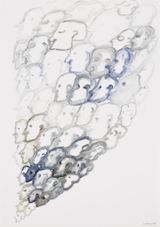
Suh’s Spectator drawings are evocative, intricate drawings which capture the connection between individuals and the whole by creating a continual portrait in unbroken line. In this series, Suh uses a combination of delicate line work and layered textures to depict repeated abstract faces. The drawings represent the process of the artist’s conscious mediative breathing, with each uninterrupted mark the duration of Suh’s breath.
Together, the works on view can be considered as chains in Suh’s career-long consideration of home as both a physical structure and a lived experience, the transitional moments in his own life and the passages – physical or philosophical – that transport individuals through various stages of their lives. In works on paper, Suh’s ideas have found a consistent vehicle of expression, with often the biggest question posed in the smallest sketch.
‘Drawing is my way of working through the psychology of my practice. A lot of these works are meditations on ideas that have followed me throughout my life - they speak to the core of my work and thinking. And in some cases, they are more literal meditations - drawing is very bound up in breathing and chanting practices for me.’ - Do Ho Suh
Across his career, Do Ho Suh’s engagement with drawing has been as manifold as it has been consistent. From simple sketches in pencil and watercolour to complex ‘thread’ drawings, in which cotton thread is embedded in handmade paper - newly conceived on a small scale - this exhibition showcases his collaborative methodology, innovative techniques and experimental use of materials, foregrounding the expansive role of drawing in his art.
Both generative and reflective, for Suh drawing functions variously: as a point of inception for the germination of new ideas; as a way of progressing themes and concepts to become distinct bodies of work; as a means of harnessing the processes and techniques that are employed in his celebrated one-to-one scale architectural sculptures. Suh’s sketchbooks play a crucial role in shaping his work, serving as both laboratory and journal. Their pages offer a place to draw, explore and extrapolate while expanding and illustrating the philosophical, speculative and seemingly impossible ideas at play.
Since architecture has been a continuous presence and protagonist in his art, Suh’s attention to the various modes of representation used in architectural practice – plans, perspectives and elevations – and how these can be adapted and modified from their technical origins to unlock their expressive potential, is an inevitable focus.
Suh’s Scaled Behaviour works are crafted in automated dialogue with machine, created through a complex process using the scripting language of architectural modelling programmes. The resulting forms, labyrinthine yet intimate, acknowledge the roles of both the digital and the analogue in their production and also encourage us to think of vascular systems or the flow of blood, continuing Suh’s alignment of architecture and the body.
At his most introspective and direct, other works reveal the artist looking inwards at himself and also outwards – to raise pragmatic questions about boundaries and interconnectedness, where individual lives start and end, where and when home exists, and how past, present and future are interlinked. Several works are titled Karma – which Suh explores in an expanded sense to consider relationships between belongings, objects and people.
Suh’s Spectator drawings are evocative, intricate drawings which capture the connection between individuals and the whole by creating a continual portrait in unbroken line. In this series, Suh uses a combination of delicate line work and layered textures to depict repeated abstract faces. The drawings represent the process of the artist’s conscious mediative breathing, with each uninterrupted mark the duration of Suh’s breath.
Together, the works on view can be considered as chains in Suh’s career-long consideration of home as both a physical structure and a lived experience, the transitional moments in his own life and the passages – physical or philosophical – that transport individuals through various stages of their lives. In works on paper, Suh’s ideas have found a consistent vehicle of expression, with often the biggest question posed in the smallest sketch.
In exquisitely made works, Do Ho Suh explores contemporary arrangements of space and the unstable boundaries of its categorisation along lines of individuality and collectivity, physicality and immateriality, mobility and fixity. Influenced by his peripatetic existence – leaving his native South Korea to study and live in the United States, he has more recently moved between New York, Seoul and London – an enduring theme of the artist’s practice is the connection between the individual and the group across global cultures. The multiplicity of individuality is tested through meditative processes of repetition: whether interlinked along a lattice of fishing nets, amassed into monumental tornado-like forms, absent from ranks of empty uniforms, or present in every yearbook photo taken at the artist’s high school over 60 years, the artist uses the reproduced human figure to explore sensitively, and with spectacular formal effect, the ways in which personal space inherently extends into the collective sphere.

Since Victoria Miro founded her eponymous gallery in Cork Street, Mayfair, in 1985, the gallery has grown to represent over 40 artists and estates. With a reputation for presenting ground-breaking artworks from around the world, Victoria Miro has exhibition spaces in Mayfair and Wharf Road in London, and a further gallery space in Venice.

A respected voice in contemporary art discourse.
Focusing on ambitious storytelling and insightful art-world commentary. Ocula Magazine publishes in-depth interviews, critical essays and timely analysis on the artists, exhibitions and ideas driving the global art world.
Learn more about Ocula Magazine
Showcasing the best of the art world.
Ocula partners with galleries from around the world to highlight their artists, artworks and exhibitions. Gallery membership is by application and invitation, with each member vetted by an independent panel.
Learn more about Ocula Membership

Specialises in the sale of major artworks.
Led by a team with deep ties to the world’s leading auction houses, galleries and collectors. Ocula’s advisory team offers bespoke services to high-net-worth clients from around the world who are looking to acquire the best of contemporary and modern art.
Learn more about our team and services