





Marc Spiegler on the Implications of Positioning ‘Art as an Asset’
Amid a prolonged market downturn, former Art Basel director Marc Spiegler warns the financialisation of art is ‘triply dangerous’ and calls for a return to art’s intrinsic values. Save to My OculaIn a recent article for Business of Fashion, former global director of Art Basel Marc Spiegler warned that the art market is losing out by framing art as investment.
His comments come as the global market contracts to $57.5 billion (USD)—smaller than its 2009 inflation-adjusted value despite years of speculative growth and sustained drops in market activity—along with four gallery closures and two fair cancellations in the past month.
Art’s treatment as a financial asset has tied its value to market prices and exposed it to volatility. Economist Clare McAndrew cites tariffs and political shifts as key factors to the current downturn.
Based on feedback Spiegler received, the sentiment is shared among insiders who face the challenge to convey art’s enduring value in a financial system that incentivises short-term rewards and amid a shift to faster modes of engagement, online and offline.
As Spiegler wrote, discussions of art’s value have shifted from its intrinsic qualities to its merit as an investment vehicle. It’s a move that has fuelled speculation, rapid resales, and the rise of art funds operating like hedge funds, backed by lenders like UBS and Citibank.
Spiegler told Ocula the financialisation of art is ‘triply dangerous’, citing financial losses, galleries spending time on speculators over long-term patrons, and people coming to the art world for art who get distracted by the discourse of investment.
Speculation harms the market in many ways—it distorts the trajectory of young artists, sidelines thoughtful patrons, and reduces the value of art to spreadsheet metrics that don’t always add up, as seen from the string of bubbles and crashes since the 1960s.
Recent market turbulence appears to support Spiegler’s warnings, with lenders issuing rare margin calls on art-backed loans this spring according to a Financial Times report.
Despite existing warnings, this mindset has persisted. According to Deloitte’s 2023 survey, 83 percent of collectors under 35 view art as an asset (versus 44 percent of older collectors).
Spiegler said this reflects market conditioning, rather than an inevitable development.
‘Younger collectors saw these older collectors talking about art in this Wall Street way and thought, okay, that is what a great collector is—someone who flips [art] at auctions.’
His proposed alternative emphasises cultural capital over financial returns, and a rebrand of art art as ‘Instagrammable, sapiosexy pleasure’ for people who ‘get excited about culture, complex ideas, access to artists and the possibility of signalling all of that’.
Spiegler pointed to collectors like Shane Akeroyd, who hosted a private performance by artist Tarek Atoui during Art Basel Hong Kong, as examples of ‘experience economy’ engagement.
‘People will spend six figures on a yacht week,’ he said. ‘Why not art?’
‘The moment you position art as an asset, you kill what makes it valuable long-term,’ Spiegler said, citing the loss of art’s social, intellectual, and inspirational qualities.
While a return is no small task, Spiegler suggests it is mostly a matter of will. ‘Galleries must rethink narratives—what stories to tell, how to position art beyond price tags, how to build communities’, he said.
Asked about roadblocks, Spiegler had none to list: ‘They just need to do it.’
The question, perhaps, is whether art market participants will pay the cost of short-term profits to preserve art’s long-term relevance. —[O]
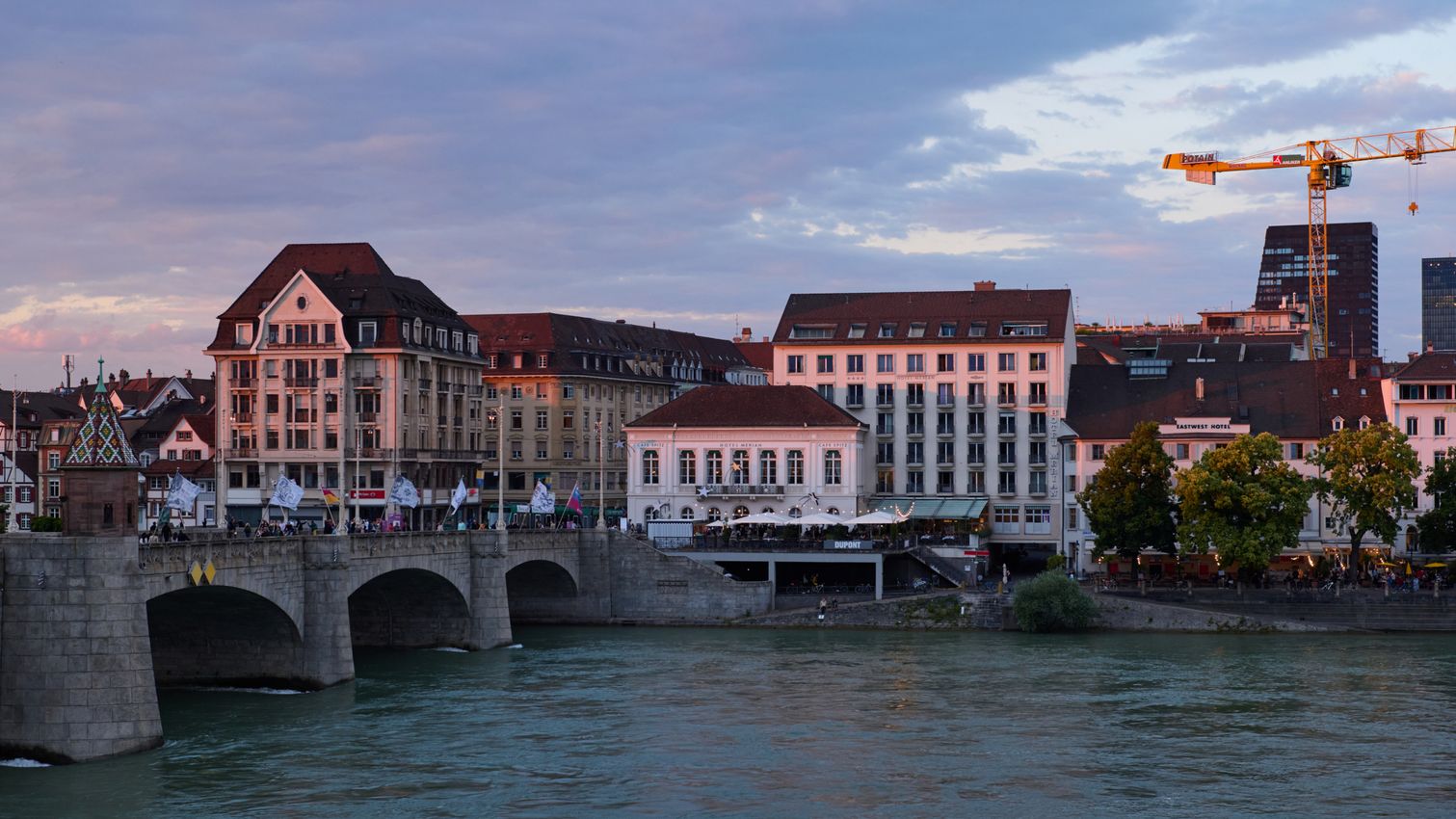
Main image: The Mittlere Brücke in Basel. Courtesy Art Basel.



A respected voice in contemporary art discourse.
Focusing on ambitious storytelling and insightful art-world commentary. Ocula Magazine publishes in-depth interviews, critical essays and timely analysis on the artists, exhibitions and ideas driving the global art world.
Learn more about Ocula Magazine
Showcasing the best of the art world.
Ocula partners with galleries from around the world to highlight their artists, artworks and exhibitions. Gallery membership is by application and invitation, with each member vetted by an independent panel.
Learn more about Ocula Membership
Specialises in the sale of major artworks.
Led by a team with deep ties to the world’s leading auction houses, galleries and collectors. Ocula’s advisory team offers bespoke services to high-net-worth clients from around the world who are looking to acquire the best of contemporary and modern art.
Learn more about our team and services