






The art world in focus
Subscribe to our newsletter for news and insights on artists, galleries and exhibitions.

Cao Fei finds fertile ground in China’s transformation as she mines the metaverse for a chance to connect.
In 1978, the year artist Cao Fei was born, Deng Xiaoping became paramount leader of the People’s Republic of China, ushering in a new era. Two years later, Cao’s hometown, the southern city of Guangzhou, became part of China’s new special economic zone and situated just across the border from Hong Kong, quickly grew into a hothouse for rapid development.
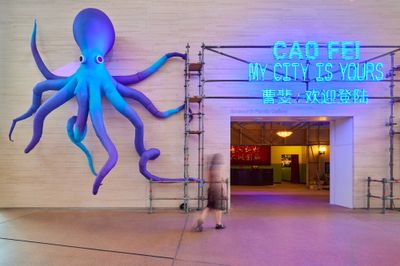
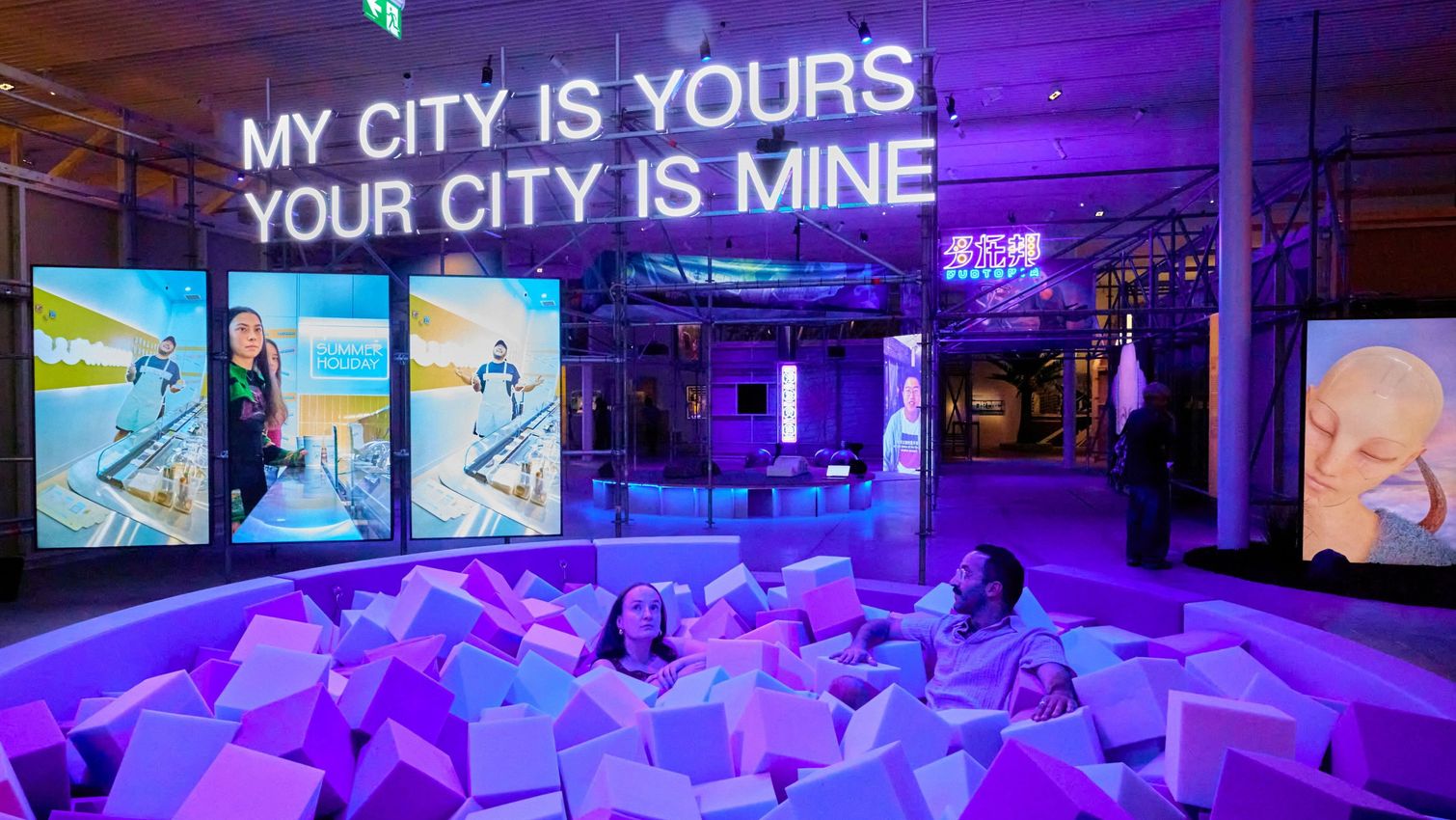
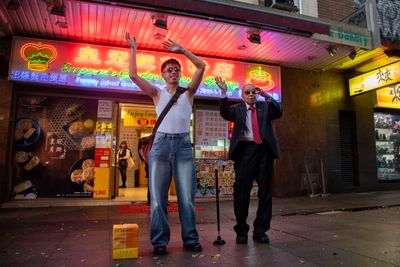
Cao Fei:My City Is Yours, at the Art Gallery of New South Wales in Sydney (30 November 2024–13 April 2025), mines the excitement and rupture of this boom. Designed by Cao and the Hong Kong-based Beau Architects, it reflects the artist’s wish to site her work within a space that reminds her of the energy of her current home of Beijing, a city under continuous construction. Viewers meander through a series of zones, beginning in the ‘cinema precinct’ in a room featuring the art-deco reception desk of the now-demolished Hongxia Theatre in Beijing, which was home to Cao’s studio for five years, and exiting via Goodbye, Marigold (2024), an installation that reincarnates Sydney’s much-loved and now-closed Marigold restaurant, complete with original chandeliers, mirrors, and dim-sum carts salvaged by the artist.
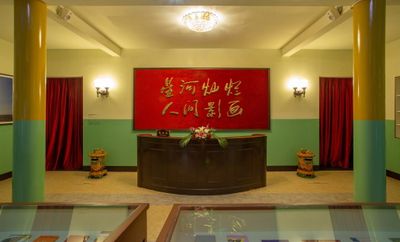
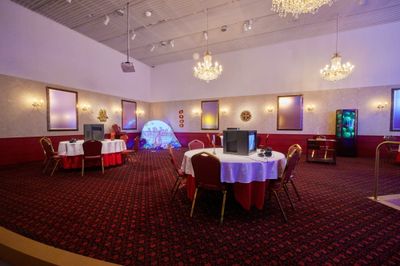
The exhibition showcases a selection of key works made over a 20-year-period, as well as several new gallery commissions. Cao’s groundbreaking engagement with early Internet and gaming platforms is on view in works such as RMB City (2007–2012), a city built by Cao within the online platform Second Life—home of the artist’s avatar China Tracy—while more recent forays into the metaverse can be seen in Oz (2022), which presents a new avatar for the artist: an androgenous figure, half-human half-machine, with a shaven head and octopus tentacles for legs.
Once at the vanguard of contemporary art’s engagement with new digital technologies, the pace of development through the first two decades of the 21st century now lends some of Cao’s earlier works a somewhat retro, low-tech feel. She tells me, when we speak at the opening of the exhibition in Sydney, ‘Sometimes I am quite afraid of the new technology ... it is impossible for me to get control of AI, VR technology. I’m more interested in how technology influences the experience of the audience, our emotions; how technology changes our lives rather than the technology itself.’
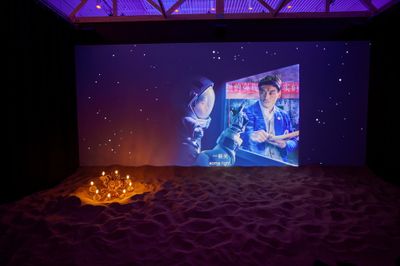
A suite of works centred on the Hongxia Theatre has its own inbuilt nostalgia. On an ATM from the theatre foyer, Cao’s film Hongxia (2019) plays, with local factory workers from the 1970s talking about the collaboration between China and the USSR in the production of computers, as well as about the theatre and the neighbourhood before development razed local landmarks. In a darkened room with a several rows of original seating from the theatre, Cao’s film Nova (2019) tells a sci-fi love story between Chinese and Russian computer scientists, which culminates in the loss of their son to the metaverse after an experiment goes wrong.
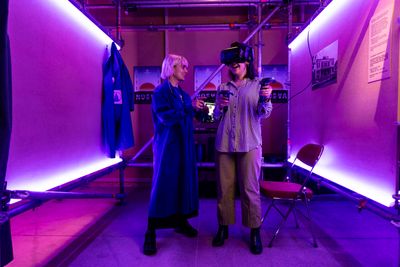
For The Eternal Wave (2020), visitors can don VR headgear and travel on a 12-minute journey through various zones, including the cinema interior and scenes from Nova‘s storyline. The work’s beguiling immersion enables viewers to experience the liberation of the mind untethered from its body and temporal reality. As I drift past a couple kissing covertly in the computer-filled aisle of a control room, then find myself in the movie theatre seated beside a beautiful woman who speaks to me in whispers, these visions from another dimension and time—it could be the past, but which or whose past remains unknown—feel both entirely plausible and completely dreamlike.
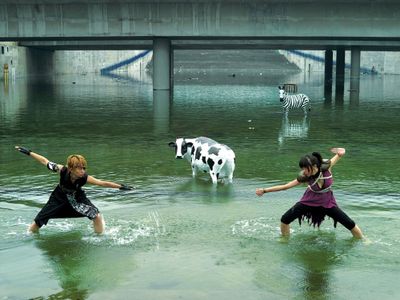
Cao uses her media to create distance while finding common ground between our realities and the fictive worlds she engages us in; there is enough that is ‘real’ in her narratives to allow her audiences to relate, and for the artist to expose social dislocation and dysfunctional environments. Her work reflects a generation engaged with technology but also alienated by it; the fully costumed teen participants of Cosplayers (2004) act out their favourite anime and manga heroes’ action sequences not online but somewhat incongruously in the urban spaces of Guangzhou, before returning despondently home to a father watching TV or a mother sewing clothing in a cramped apartment.
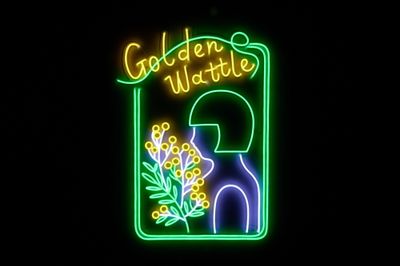
Cao’s interest in creating in-between spaces and connections for audiences to experience her work takes a different cast in the installation Golden Wattle (2024), a memorial and portal to her sister, Cao Xiaoyun, also an artist, who passed away in 2022. The installation displays work by Xiaoyun, a long-time resident of Sydney, alongside correspondence between and interviews with her family in China. The distance and connection in this work is not between audience and media but between Xiaoyun and her family, as well as between the sister cities of Guangzhou and Sydney.

Several of Cao’s works highlight the emptiness of consumerism, the rise of social disconnection, and the loss of community. For the film Whose Utopia (2006), made during a residency at the OSRAM (Siemens) light-bulb factory in Foshan, southern China, she intervened in the mind-numbing, repetitive work of the factory employees, offering them the opportunity to make art and to connect with each other. Scenes of their work lives are spliced with images of the same workers living out their passions—as a ballerina, say, or a guitarist—on the same factory floor. In La Town (2014), Cao shows us a polluted, corrupt, and decaying city, where the only inhabitants seem to be zombies and sex workers. Her use of tiny plastic toy figures to act out a Bruegelian nightmare gives this hellish neon world a theatrical edge.
I ask Cao whether the difference or distance between her imaginary worlds and our ‘real’ one has decreased or increased as technology has become more sophisticated: ‘Before, in 2007–08, I really believed I [was] visiting virtual reality. When you join your gaming platform or virtual community, that is virtual reality. Now, you have your iPhone and so many devices, it’s more like a tool; you don’t have imagination, it’s more realistic, it’s easy to tell the difference. Things are moving so fast that we have lost the attractiveness of technology. It’s not like in the beginning, where it was confused, a dream reality, virtual. Now, this generation knows what is real; it’s all real.’ —[O]
A respected voice in contemporary art discourse.
Focusing on ambitious storytelling and insightful art-world commentary. Ocula Magazine publishes in-depth interviews, critical essays and timely analysis on the artists, exhibitions and ideas driving the global art world.
Learn more about Ocula Magazine
Showcasing the best of the art world.
Ocula partners with galleries from around the world to highlight their artists, artworks and exhibitions. Gallery membership is by application and invitation, with each member vetted by an independent panel.
Learn more about Ocula Membership
Specialises in the sale of major artworks.
Led by a team with deep ties to the world’s leading auction houses, galleries and collectors. Ocula’s advisory team offers bespoke services to high-net-worth clients from around the world who are looking to acquire the best of contemporary and modern art.
Learn more about our team and services


