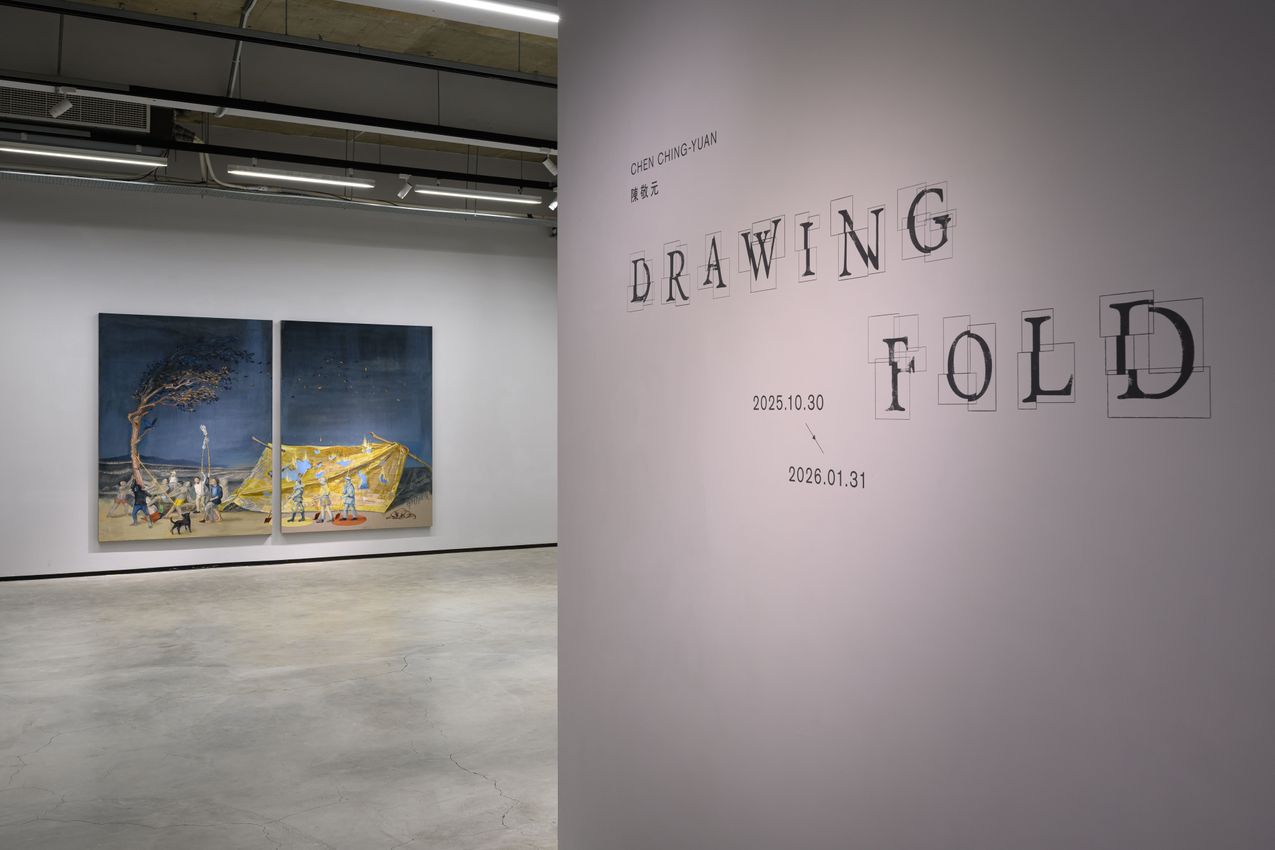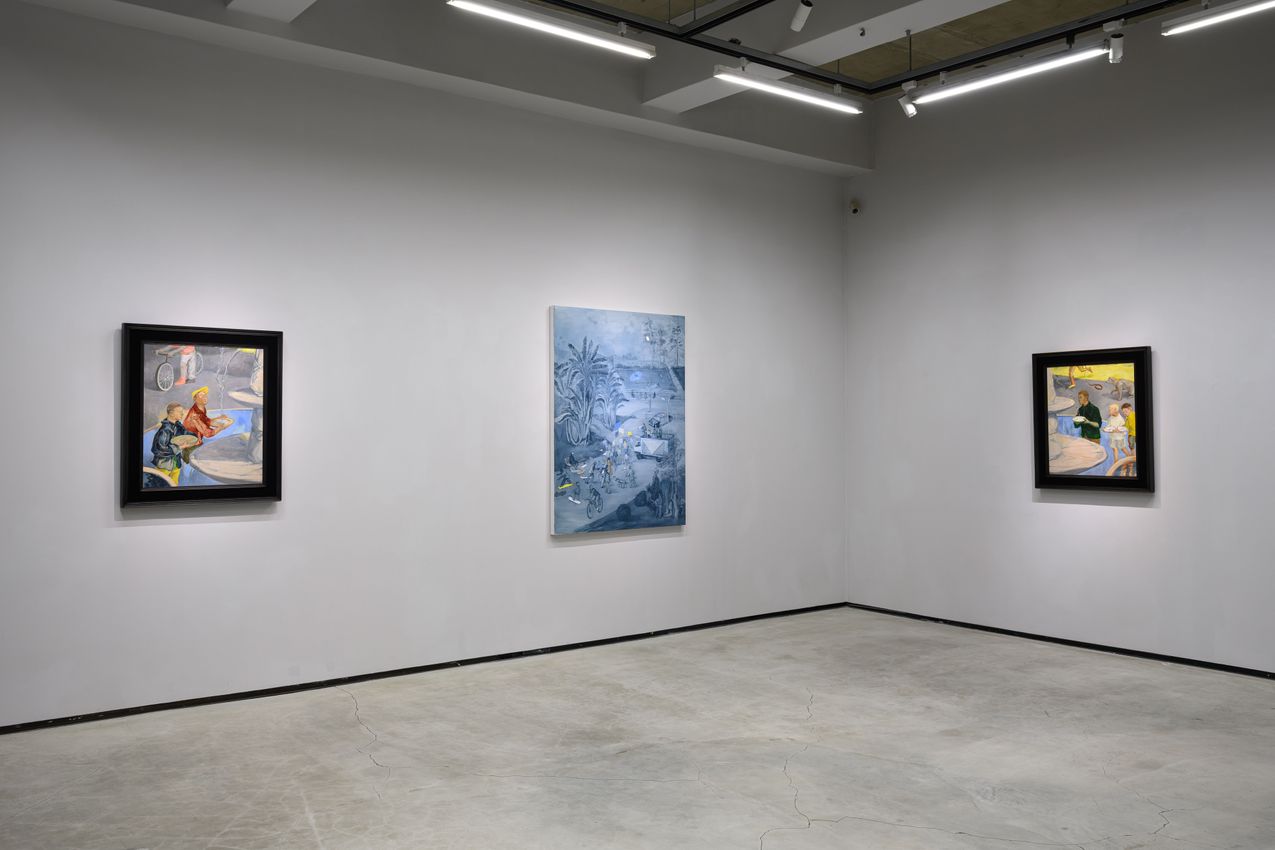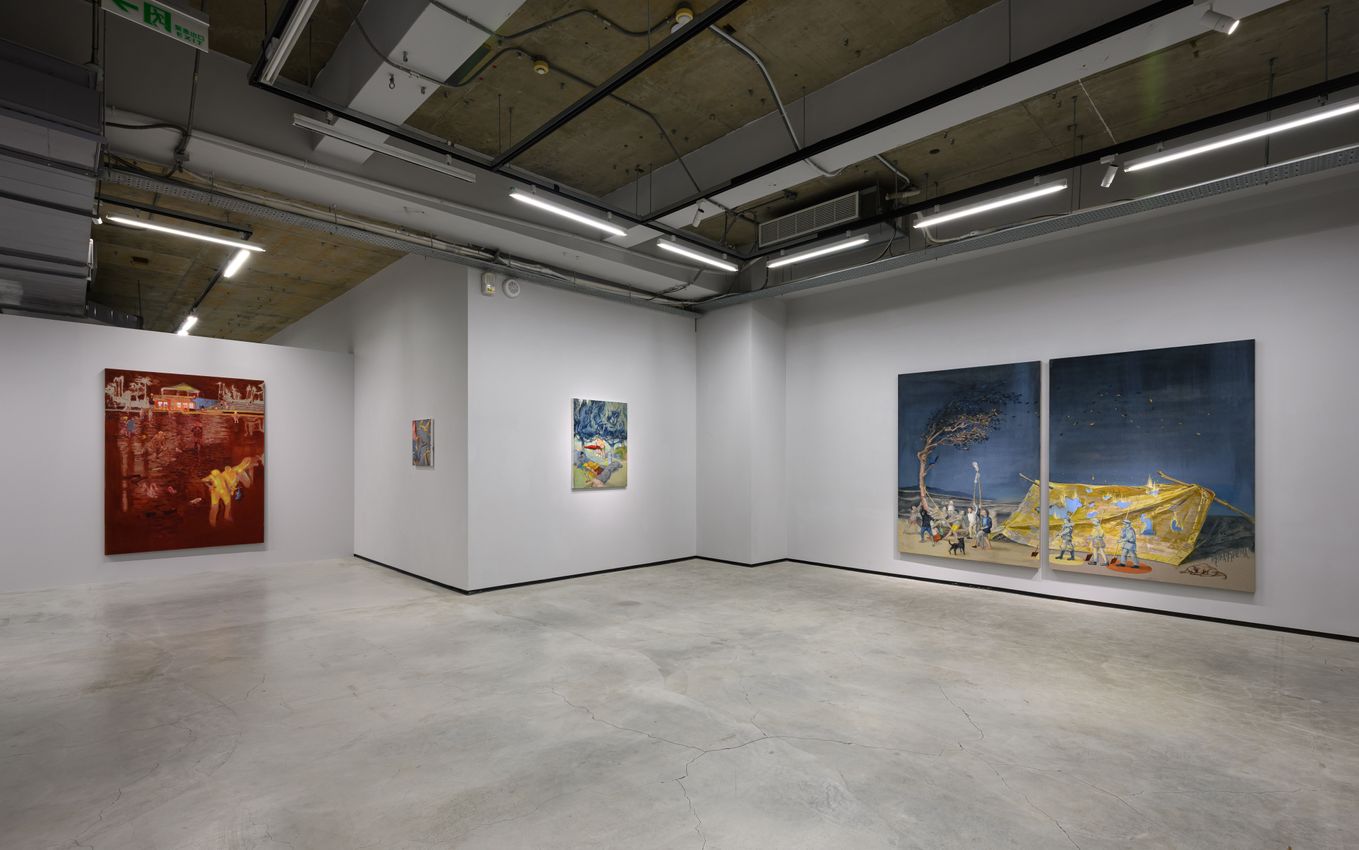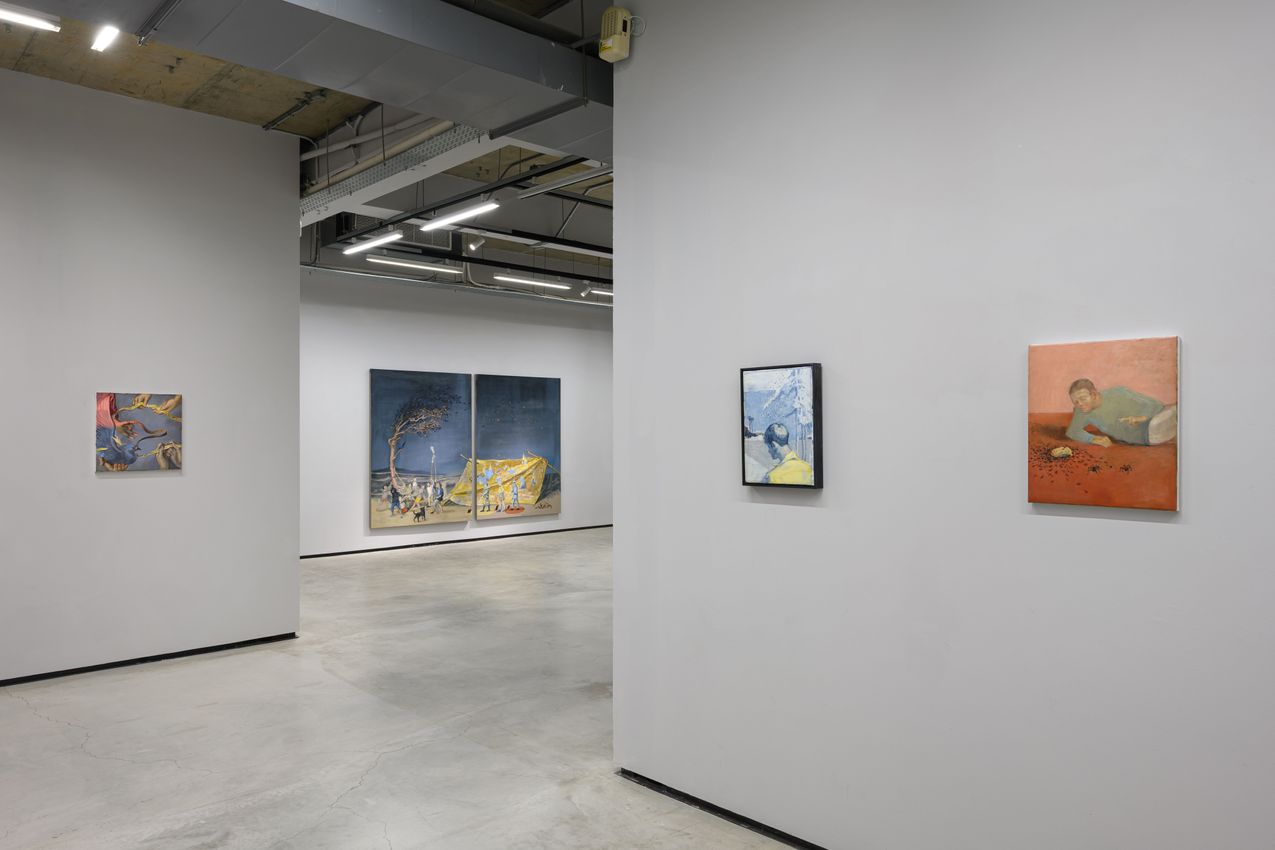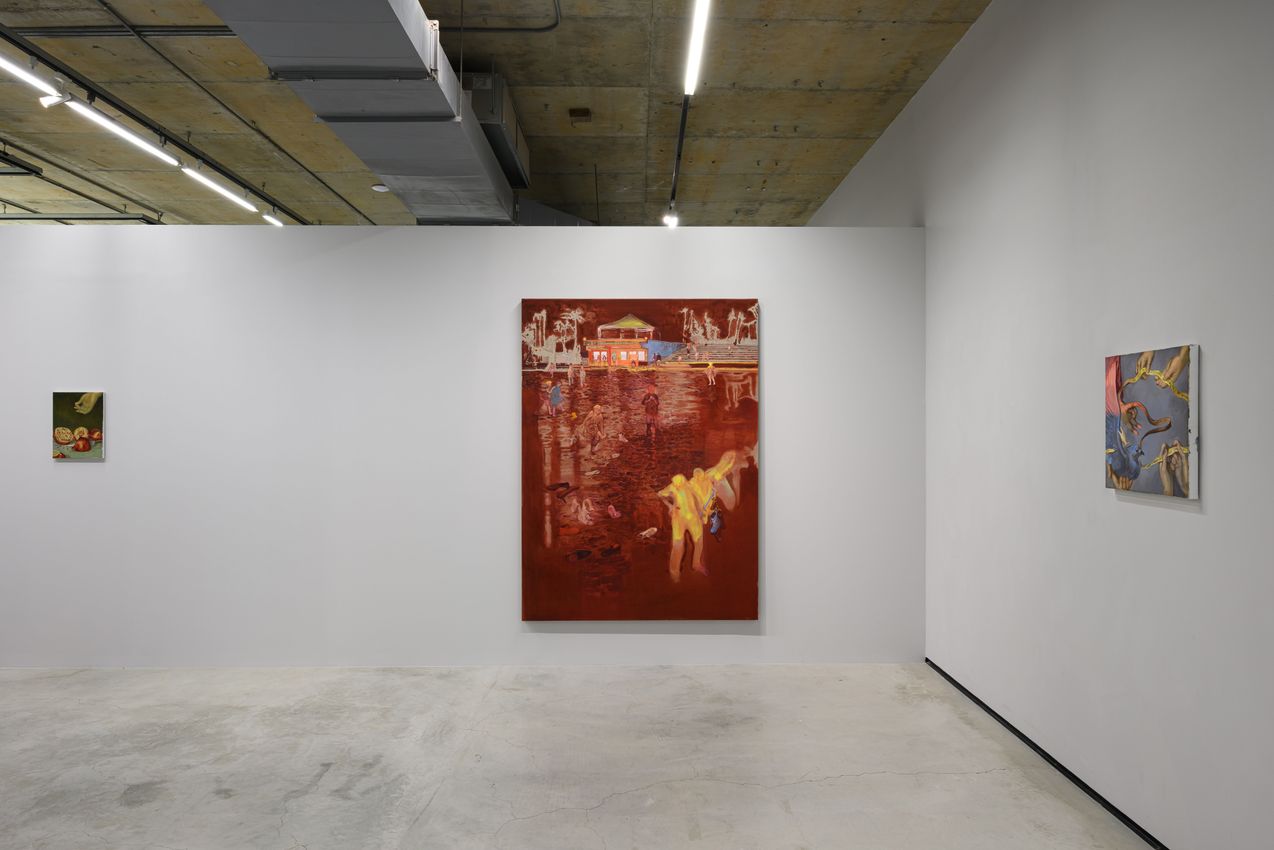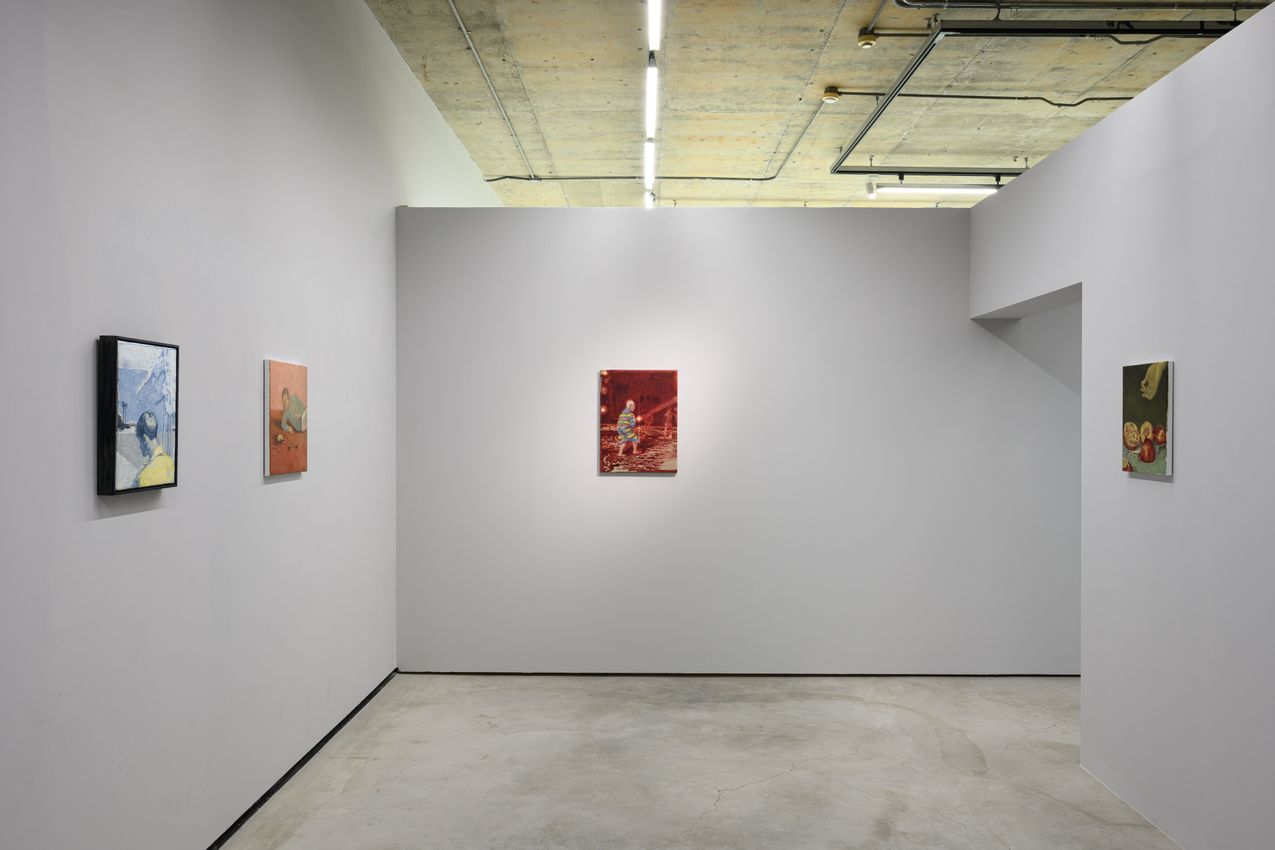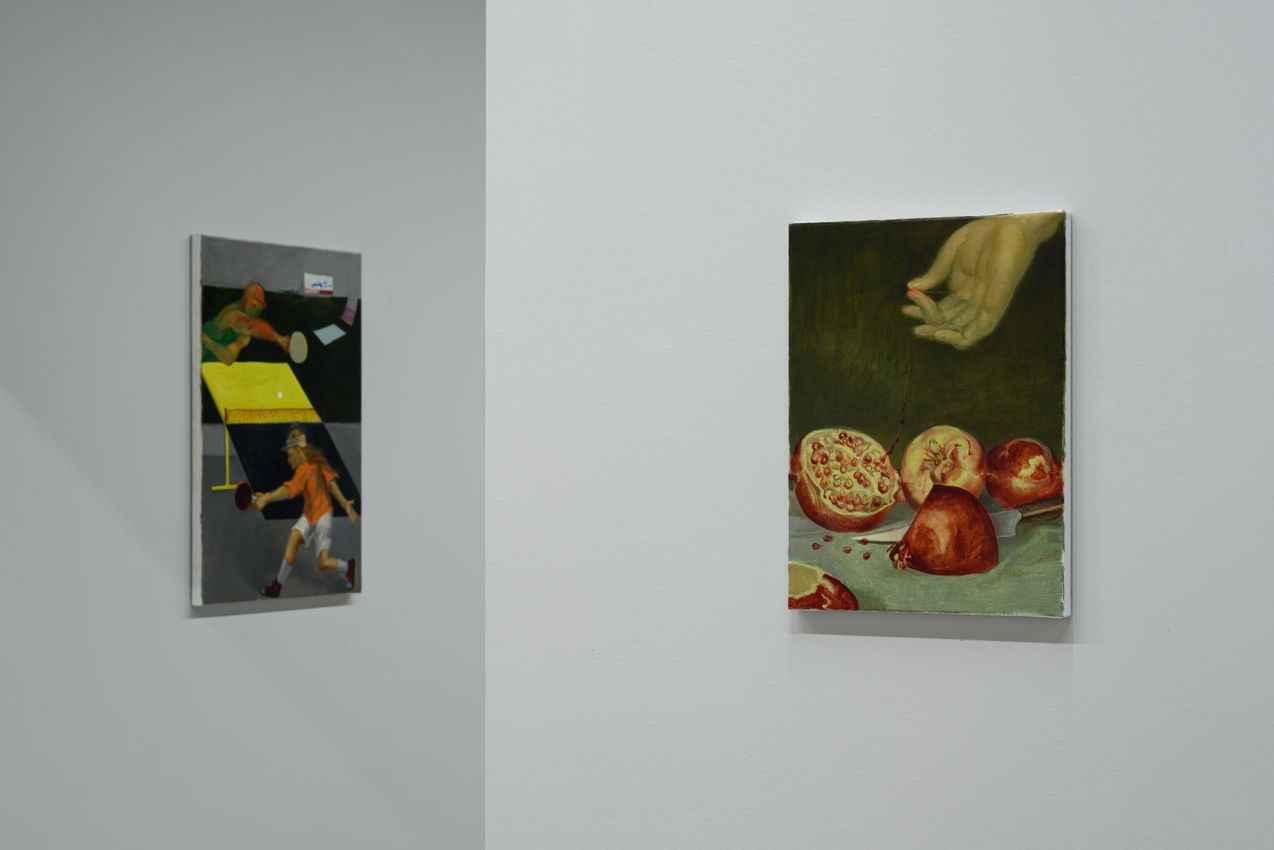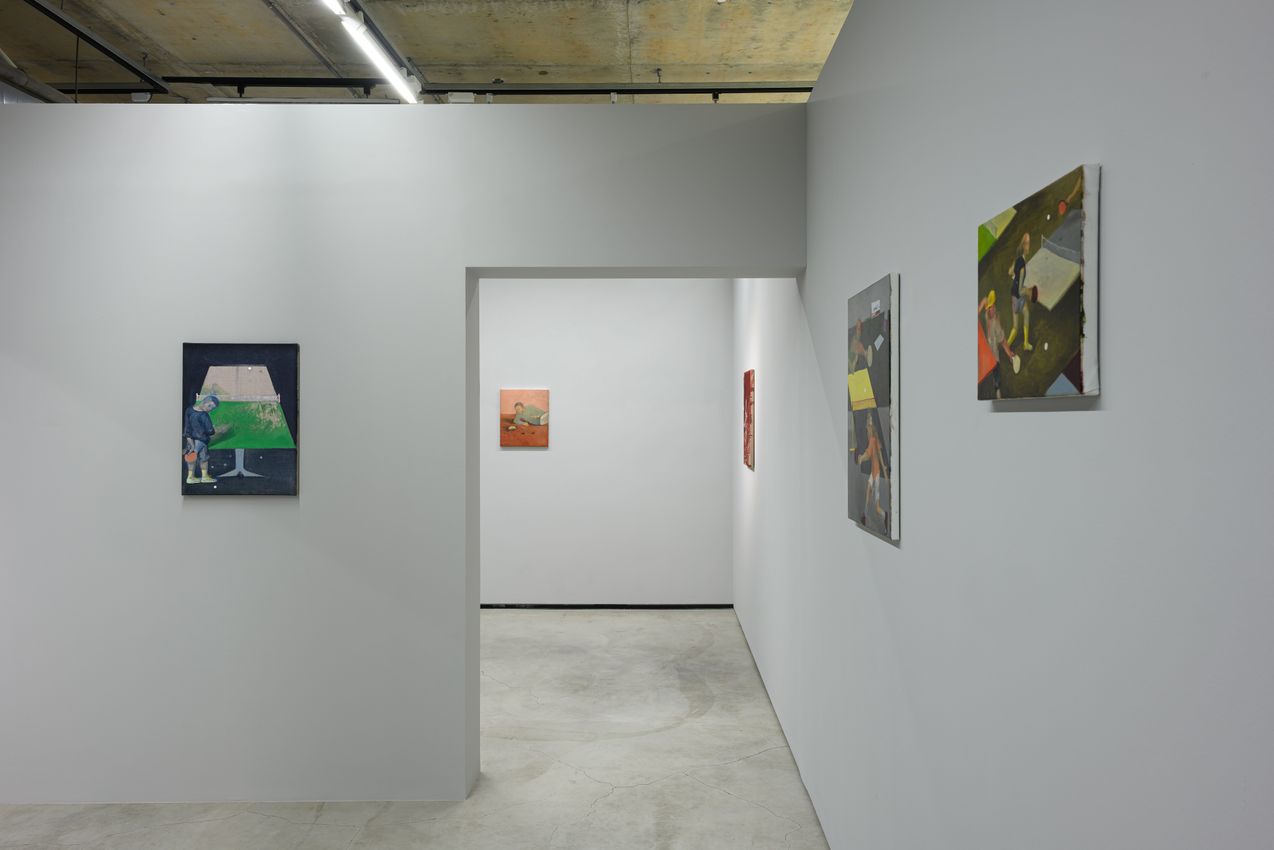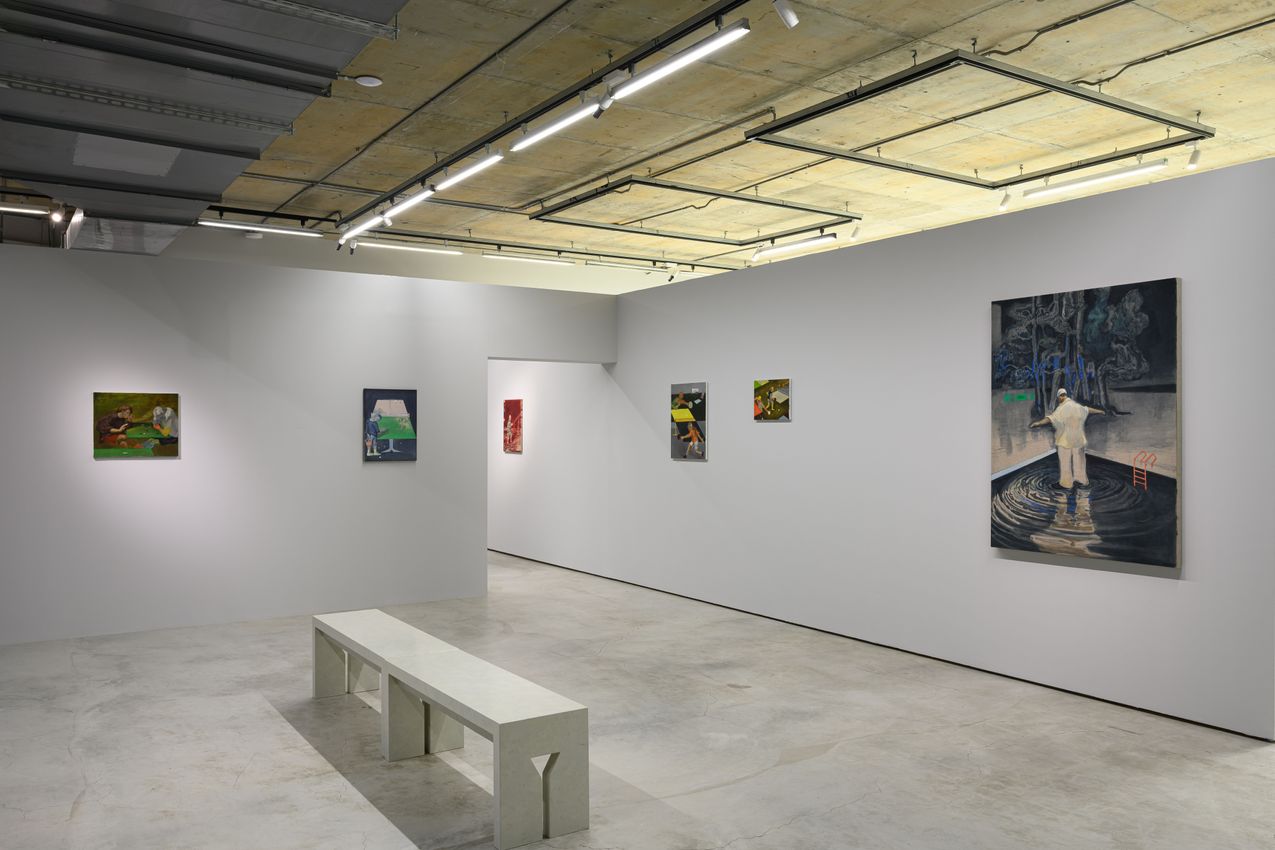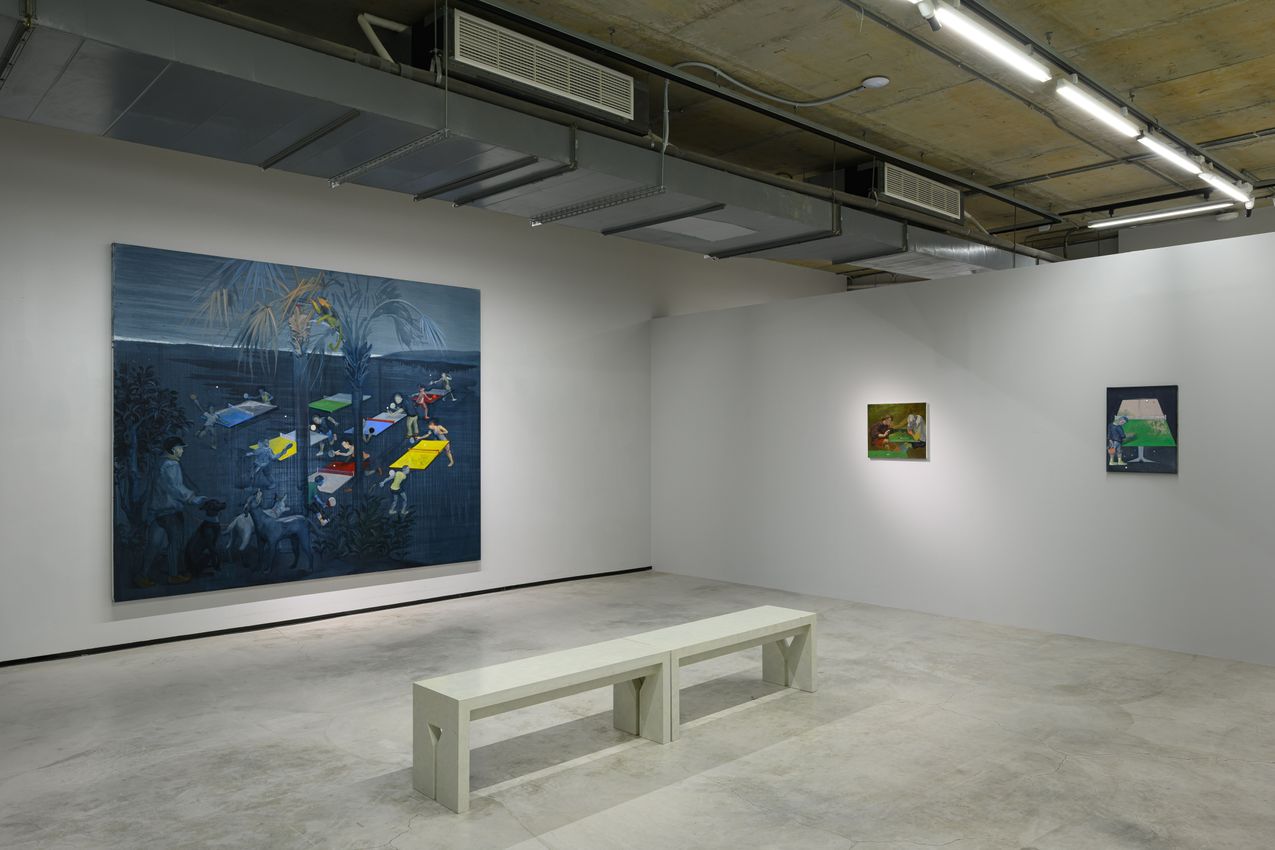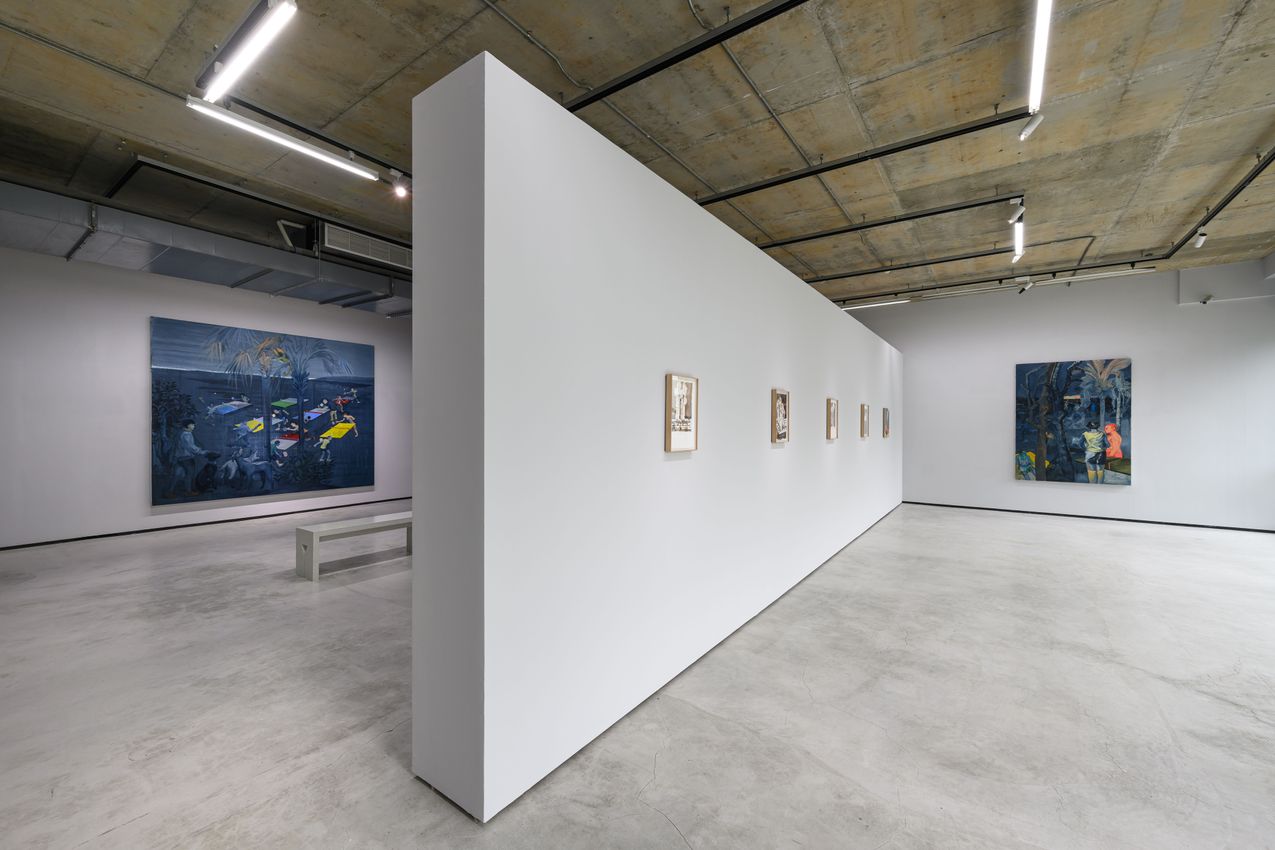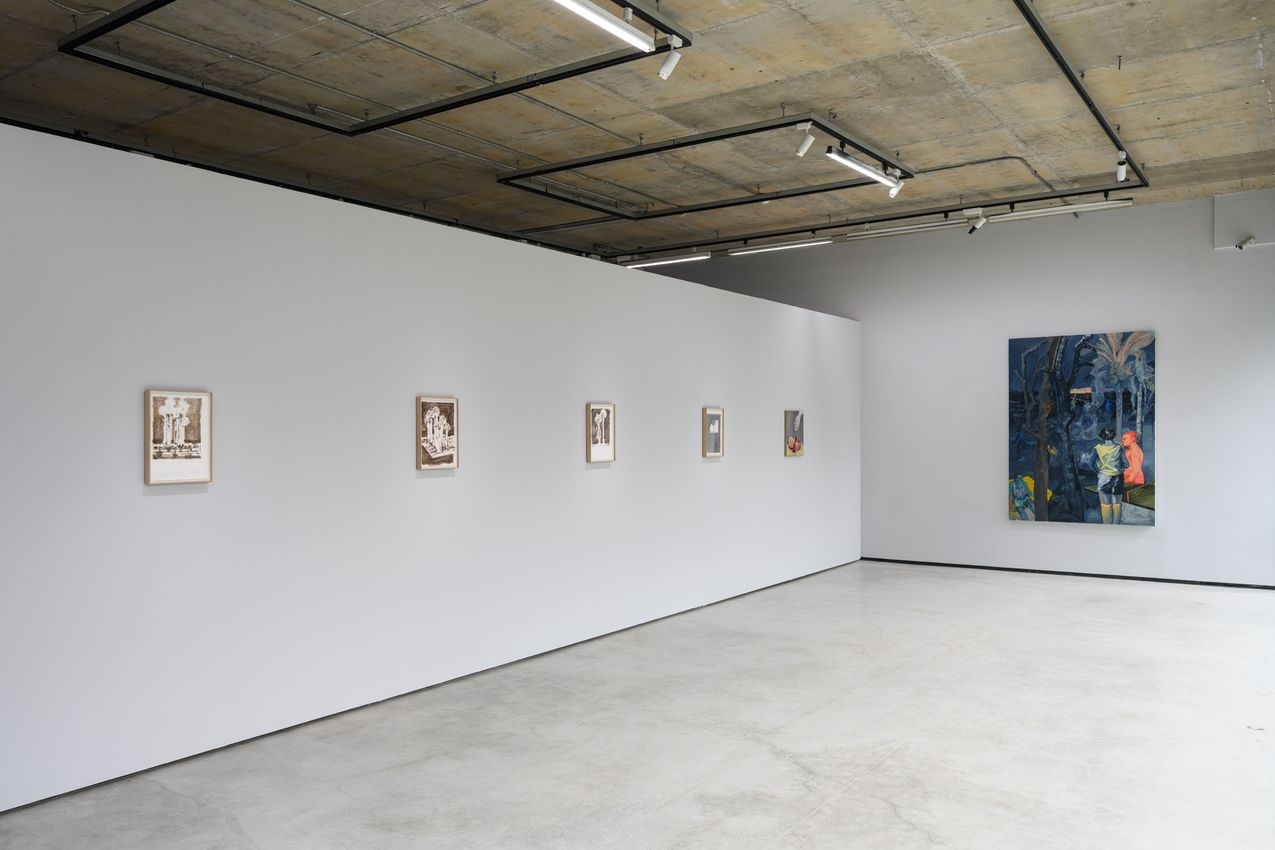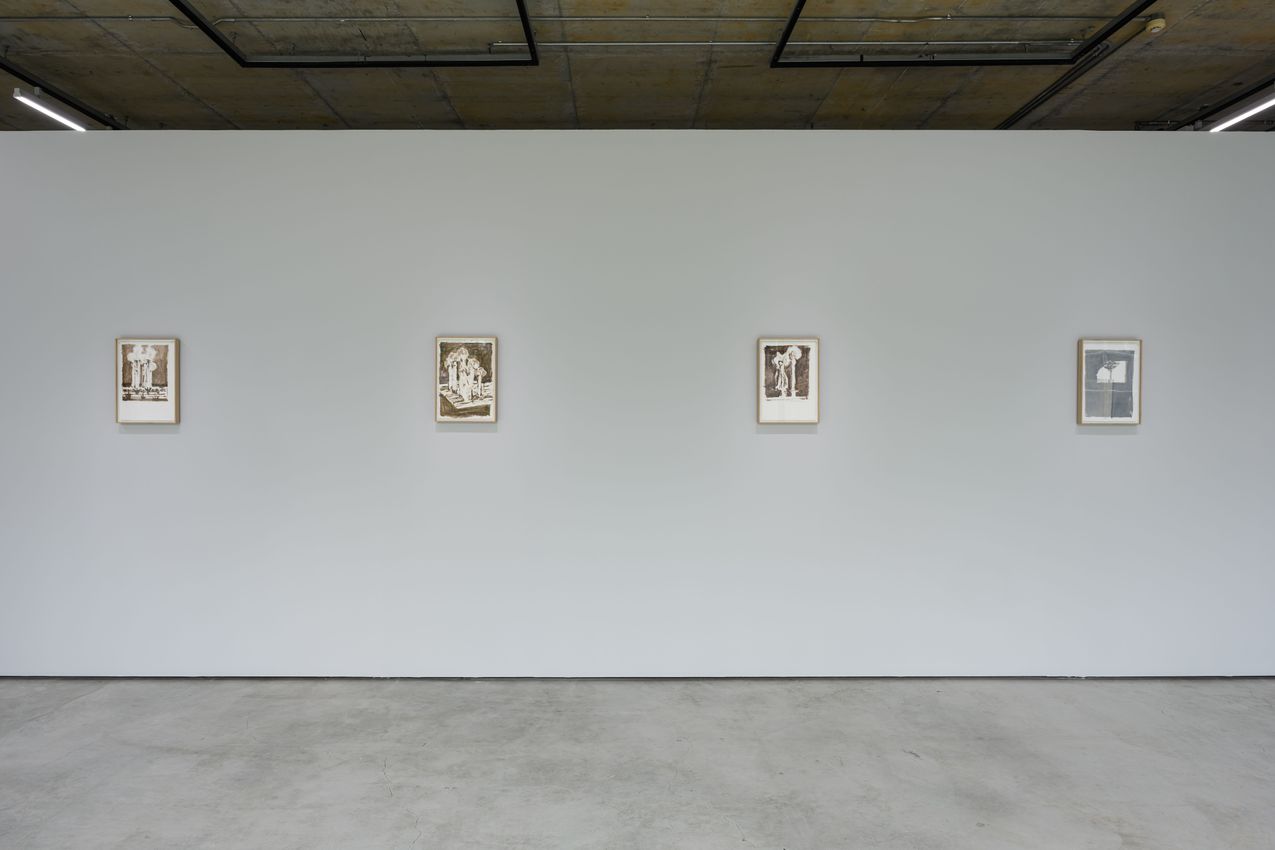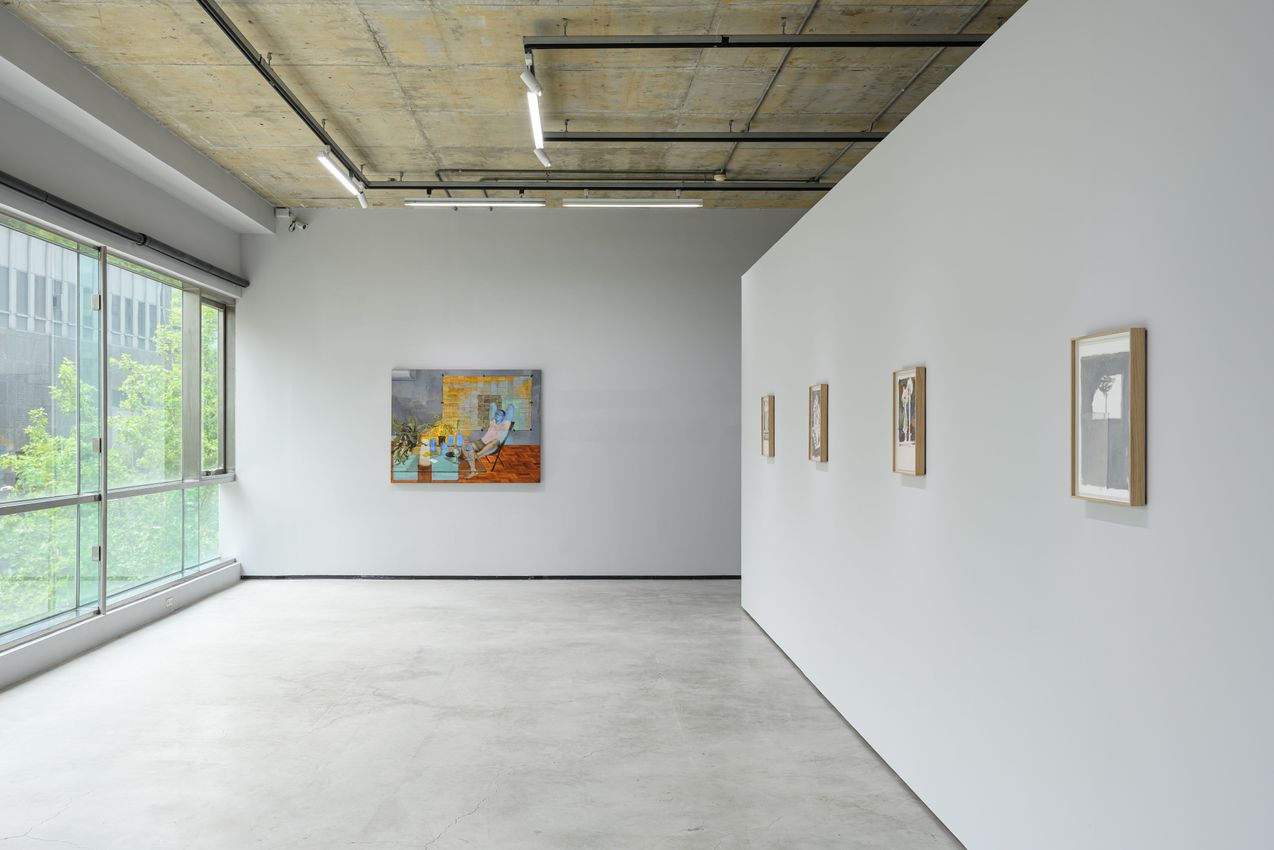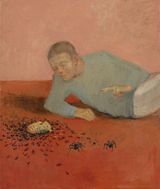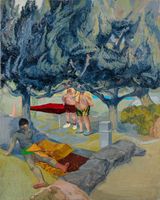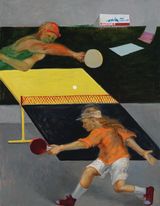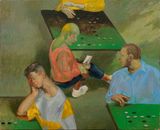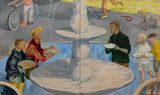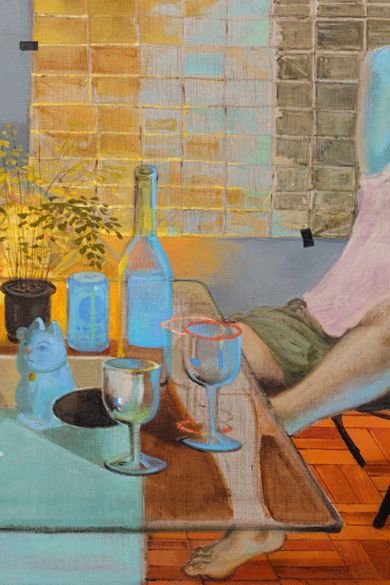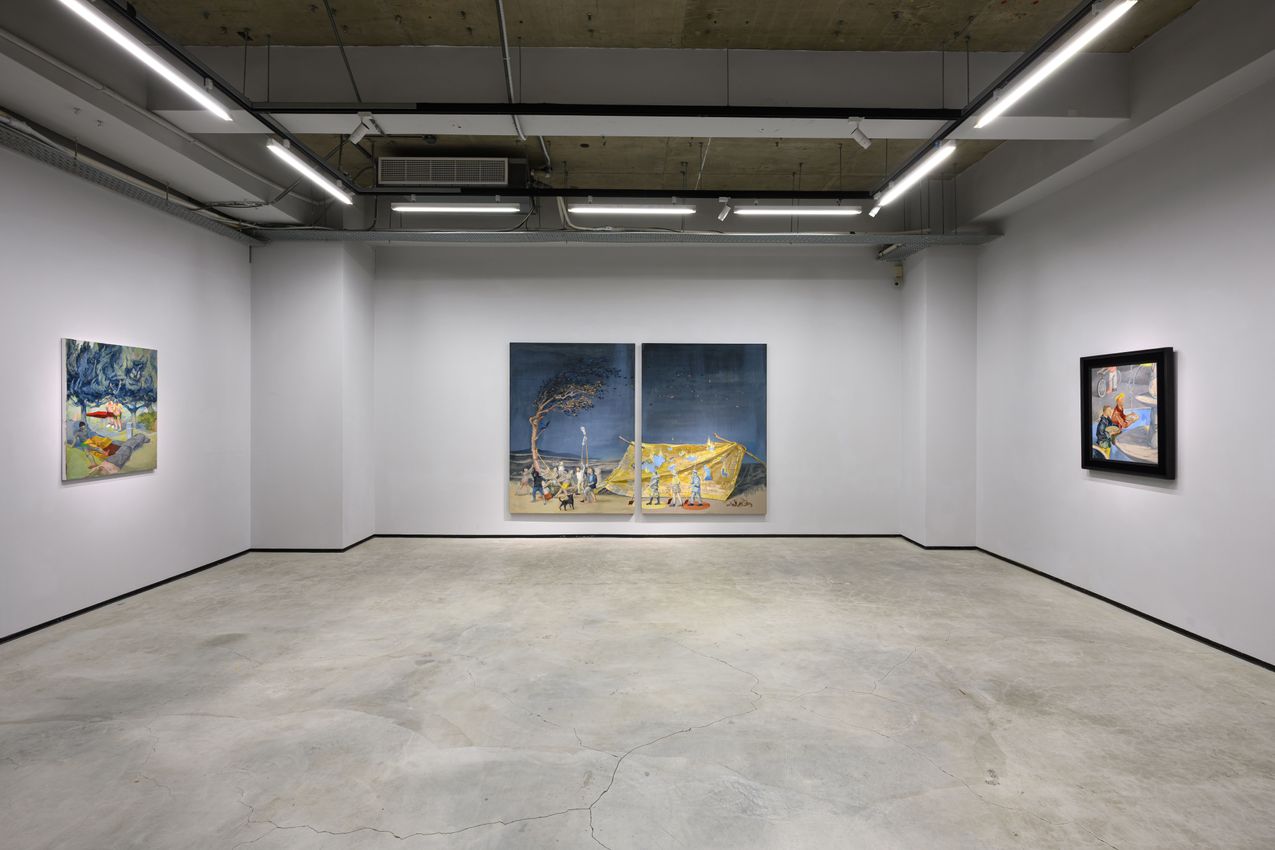
About Chen Ching-Yuan. About his paintings. About those utterances and resistances that traverse the terrain between personal memory and collective consciousness—or, at times, simply observe a given moment with a distant, austere gaze. Chen’s practice is devoted to articulating a visual language and form that painting alone can accommodate. Through the co-construction of brushwork and line, animated by his singular sense of color, his work delicately renders what hovers between clarity and uncertainty, presence and absence. It is within this zone of ambiguity that his paintings forge a unique vocabulary of narrative and space—one that vibrates at the threshold between abstract perception and representational reality.
The vocabulary of painting—or rather, its linguistic dimension—has, under the embrace of formalist proponents, become a cornerstone of contemporary artistic development. Art is no longer confined to the univocal narrative of documentation and record-keeping; instead, it draws upon the presence of significant form within aesthetic experience. In time, this understanding was further shaped by Roland Barthes’s semiotic theories, ushering in a new mode of engaging with art as a system of reading. In the contemporary moment, shaped by postcolonial theory and identity politics, “artistic language” has been reconfigured as a renewed site for power, cultural identity, and contextual inscription. With deliberate compositional choices, the artist constructs a chromatic order that emerges from personal sensibility. These singular blocks of colour and trace elements are unified into coherent meaning—allowing painting to communicate how the individual experiences the overwhelming current of the world, how memory operates in the haze of reality, and how objects of the present might be imbued with abstract signification. Painting thus becomes a grammar that bridges the imaginary and the real.
For Chen, capturing emotion and perception through scenographic sketching—framing figures within their ambient environments—forms the distinctive core of his painterly vocabulary. His canvases invite viewers to focus not on overt narrative, but on the subtle undercurrents that ripple beneath the surface of everyday life. The exhibition title Drawing Fold serves as a self-reflexive inquiry into this language of painting. The term drawing emphasizes the act of making, encompassing not only the material traces of oil pigment but also the continuous processes of inscription, revision, and erasure. Fold refers to creases and contours, yet it also evokes the ideas of enclosure and collectivity.
In this context, the artist regards painting as an act of folding—imbuing it with the active force of enfolding. Through the opening and closing of lines, he gathers and embraces light, the body, and emotion, transforming composition into a vessel for affect and narrative. The power of unfolding, however, resides with the viewer. One may enter Chen’s work through the sensual immediacy of the image—the interplay of pale yellow, indigo, and slate blue, or the nuanced modulation of light and shadow. These formal elements alone offer a richly satisfying visual experience. But if, in the act of sustained looking, one begins to sense the emotional registers the artist seeks to convey—exaltation or solitude, resonance or silence—then the image gradually develops, revealing a palette not merely of color, but of the psyche.
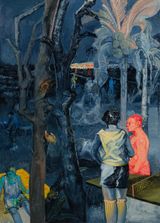
Drawing Fold thus emerges as a compelling double valence. On one level, it can be read literally—as “folded drawing”—which directly reflects a core element of Chen’s painterly language: layering. His paintings often originate from bodily experience and sensory encounters—silhouettes of time, overlapping memories, fleeting traces glimpsed from a train window—all transmuted into marks upon canvas. His sustained attention to trace manifests through stratified brushstrokes. In the Night Walking series, this technique evokes not only the intimacy and haze of nocturnal space, but also the ephemeral imprints left on skin and spirit—echoing memory’s own fluidity and uncertainty.
The continual revisions and overpaintings in his process mirror the mind’s dissolution and recomposition of scenes under shifting emotional stimuli. Moments of memory are layered again and again, eventually compressed into a single frame—details blurred, yet impressions indelible. This method forges an intimate unity between form and content, rendering the pictorial surface an embodiment of the memory mechanism itself.
The second layer of meaning in Drawing Fold is that of “the crowd beneath painting.” Chen’s work has long harbored a deep attentiveness to society and the masses. From early portraits of protestors shaped by his experience in social movements, to the Square series depicting crowds from an overhead perspective, the artist continually asks: How is the individual inevitably swept into the current of history? And how does singular identity slowly dissolve—or vanish altogether—within the overwhelming narrative of the crowd?
In these works, he carries forward his early preoccupation with light and classical imagery. The paintings are suffused with an atmosphere that intertwines mystery and naturalism, where dramatic lighting is used not for nostalgic ornamentation, but to expose the metaphors that dwell in the depths of the composition. The light here is not bright and celebratory, but carries a tragic shadow, or a sorrow as diaphanous as silk. This grammar of light and shadow reflects his enduring attention to the crowd, while also touching upon the silent yet taut tension between the individual and the multitude.
With the same striking sense of color and meticulously rendered light, Chen’s visual language has gradually evolved—from its early inflections of classical intensity and surrealist resonance toward a sensibility now more grounded in the real and the documentary. Yet the emotions that dwell beneath his subtly ambiguous atmospheres remain as sincere and affecting as ever. Drawing Fold, then, is not merely a record of the myriad forms of human existence; it is a mode of inscription—of memory, of sentiment, of the delicate and unspoken— that resonates with the artist’s enduring pursuit: to present a language and form that only painting can make manifest.


Chen Ching-Yuan received his M.F.A. in 2013 from the School of Fine Arts of the Taipei National University of the Arts. In recent years, Chen Ching-Yuan attempts to capture through his painting the subtle sensibility that weaves through literature, mythology, and history in different cultural contexts. The artist’s unique compositions coalesce into a constellation of images where the absence of the temporal element and the fragmentation of meaning elicit unexpected narrative parallels between the artist’s imaginary worlds and the essence of humanity.
A respected voice in contemporary art discourse.
Focusing on ambitious storytelling and insightful art-world commentary. Ocula Magazine publishes in-depth interviews, critical essays and timely analysis on the artists, exhibitions and ideas driving the global art world.
Learn more about Ocula Magazine
Showcasing the best of the art world.
Ocula partners with galleries from around the world to highlight their artists, artworks and exhibitions. Gallery membership is by application and invitation, with each member vetted by an independent panel.
Learn more about Ocula Membership

Specialises in the sale of major artworks.
Led by a team with deep ties to the world’s leading auction houses, galleries and collectors. Ocula’s advisory team offers bespoke services to high-net-worth clients from around the world who are looking to acquire the best of contemporary and modern art.
Learn more about our team and services