





WOLFGANG TILLMANS
b. 1968, GermanyWolfgang Tillmans is a German contemporary artist known for expanding the possibilities of photography through experimental prints, immersive installations, and images that move between intimate portraiture, abstraction, and social documentary.
Working across photography, video, sound, and installation, Tillmans explores how images shape personal experience, queer culture, and global politics, while questioning how photographs are made, reproduced, and displayed. Recipient of numerous awards ,including the Turner Prize and Hasselblad Award, Tillmans lives and works between Berlin and London and exhibits with leading contemporary art galleries and museums worldwide.
Early life and education of Wolfgang Tillmans
Wolfgang Tillmans was born in 1968 in Remscheid, in the Bergisches Land region of western Germany. He grew up in Germany before moving to England, where he studied at The Bournemouth & Poole College of Art and Design between 1990 and 1992, focusing on photography and print-based media.
After early years in Hamburg and London, he developed an international practice based between major centres of contemporary art in Europe and North America. Tillmans has since established long-term bases in London and Berlin, maintaining studios that support his photographic, video, and music work, as well as his non-profit platform Between Bridges.
Wolfgang Tillmans artworks and style
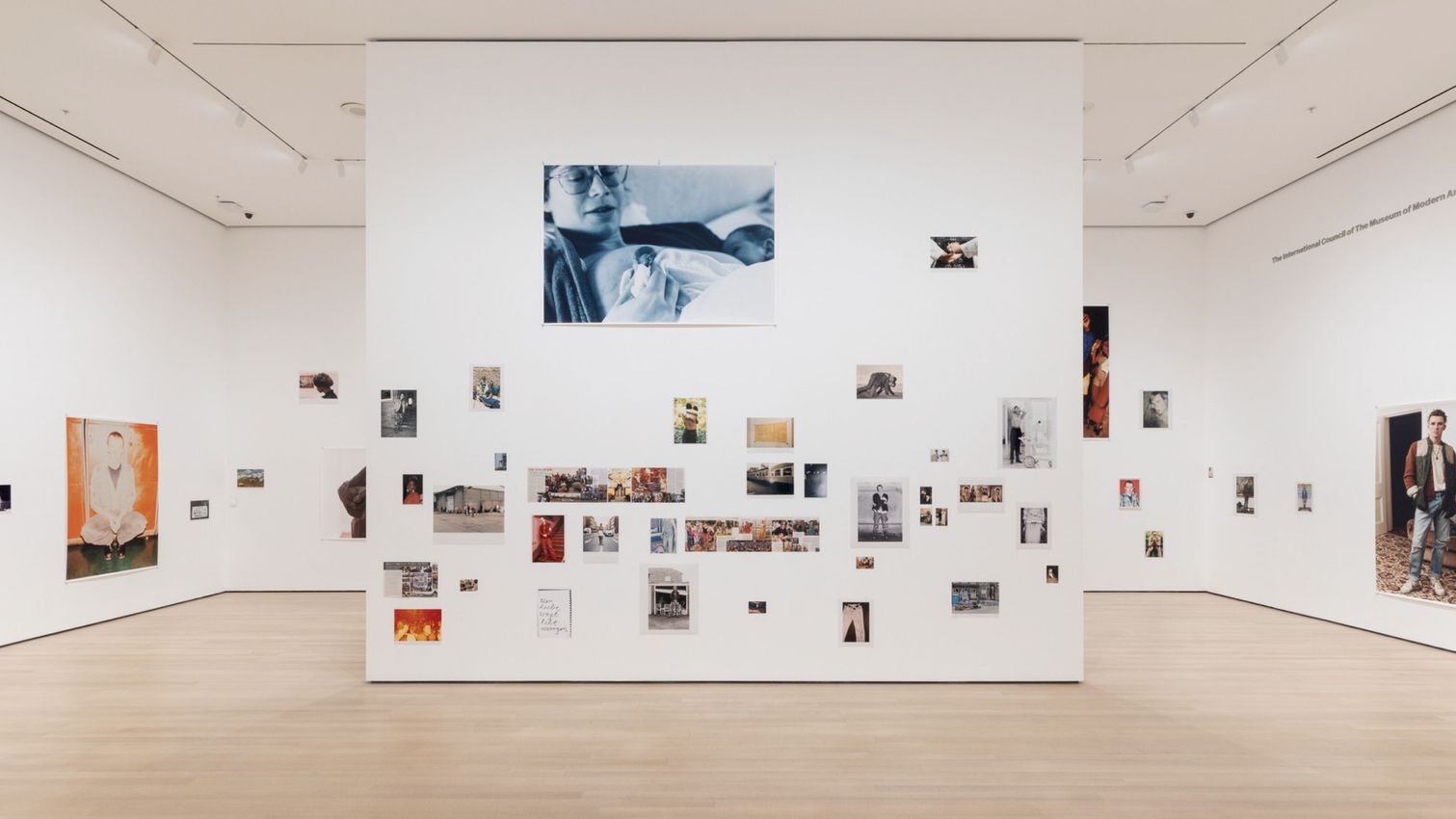
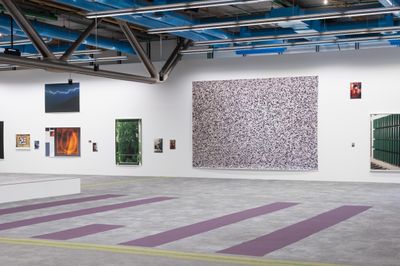
Wolfgang Tillmans’ artworks range from apparently casual snapshots and still lifes to large-scale abstractions, sculptural prints, video installations, and sound works that challenge how photography can function in contemporary art. He is known for a non-hierarchical approach to display, installing unframed prints, photocopies, magazines, and framed works together in dense wall constellations that treat the exhibition space as a single visual composition.
Early works and developments, 1980s–1990s
Tillmans’ debut exhibition in 1988 consisted entirely of images made with monochrome laser-copying technology, a body of work he regards as his first serious engagement with image-making, predating his use of the camera. He has repeatedly returned to photocopy-based works since then, exploring the relationship between surface, depth, and the material qualities of reproduced images.
In the early 1990s, while living in London, his photographs appeared in style and culture magazines such as i-D and Interview, where his seemingly relaxed, snapshot-like images of friends and club goers—including his Europride 1992 series—came to be seen as documents of a flourishing queer culture. Although often described as a chronicler of London’s queer and club scenes, Tillmans has emphasised the staged aspects of many photographs, noting how he consciously directed locations, clothing, and poses while masking the constructed nature of the scenes.
In 1993, his exhibition with Galerie Buchholz at Buchholz & Buchholz in Cologne filled a compact 3 × 3 metre space with C-prints, photocopies, and magazine spreads, inviting viewers to consider parallels between different modes of photographic reproduction and distribution. This show marked a decisive move toward installation-based practice, later highlighted when Galerie Buchholz reconstructed the presentation at Frieze London in 2016.
Mature practice and key series, 1990s–2010s
After moving to New York in 1994, Tillmans developed installation methods that placed unframed photographs, inkjet prints, and ephemera—such as postcards and magazine pages—directly on gallery walls, often from floor to ceiling. These site-responsive displays treat the exhibition as a meta-composition, bringing together portraits, still lifes, landscapes, aerial views, and images of the sky, such as the ‘Concorde Grid’ (1997) series, in unexpected juxtapositions.
In 1998, Tillmans presented abstract photographs made from darkroom accidents and experiments on colour-negative paper, which he developed into a sustained investigation of the chemical and material basis of photography. These works, often cameraless, explore colour, surface, and chance, expanding his practice beyond conventional representation and positioning photographic paper as an active sculptural material.
By 2012, Tillmans had shifted fully to digital photography, using high-definition images to respond to the information-dense visual environment of the 21st century. Across his oeuvre he has also worked with moving image, from the video installation Lights (Body) (2000–2002), filmed in an empty nightclub, to directing the music video for the Pet Shop Boys’ single Home and Dry and producing his own music projects released via Between Bridges.
Recent projects and ongoing themes, 2020s–
Since the 2020s, Wolfgang Tillmans has consolidated his position through major institutional surveys and ambitious new bodies of work that address technology, global networks, and political responsibility. The large-scale retrospective To look without fear opened at The Museum of Modern Art in New York in 2022 and then travelled to the Art Gallery of Ontario in Toronto in 2023 and the San Francisco Museum of Modern Art in 2024, presenting around 350 works across photography, video, and installation.
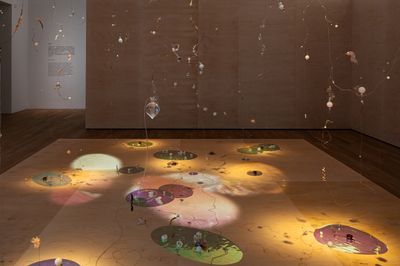
In 2025, the Centre Pompidou in Paris invited Tillmans to create Rien ne nous y préparait – Tout nous y préparait (Nothing could have prepared us – Everything could have prepared us) as the final exhibition before the museum’s multi-year renovation, occupying the vacated Public Information Library (BPI) as a vast, site-specific installation. That same year, the Albertinum in Dresden presented Weltraum (Space), focusing on work made since 2022 that traces the physical and social infrastructures of technology and AI companies across places such as San Francisco, Hong Kong, Taiwan, and Mongolia.
Also in 2025, Haus Cleff in Remscheid—Tillmans’ hometown—hosted a major solo exhibition that unfolded across 33 rooms, expanding his investigation of spatial installation and local context. In early 2026, Regen Projects in Los Angeles opened Keep Movin’, the artist’s ninth solo exhibition with the gallery, bringing together new photographs, videos, sculptural installations, and a fresh iteration of his Truth Study Center project, which addresses the production and contestation of truth in contemporary media.
Beyond exhibitions, Tillmans continues to pursue politically engaged work, notably through his non-profit project space and foundation Between Bridges, founded in 2006 in London and later relocated to Berlin, which supports art with strong social and political commitments. In 2016 he designed and freely distributed anti-Brexit posters, T-shirts, and campaign images ahead of the UK’s EU referendum, underscoring his belief that artists can act as amplifiers of civic and democratic values.
Awards and honours of Wolfgang Tillmans
- 2015, Hasselblad Foundation International Award in Photography, Gothenburg, Sweden.
- 2009, Kulturpreis der Deutschen Gesellschaft für Photographie, Germany.
- 2000, Turner Prize, Tate Britain, London, United Kingdom—the first time the award was given to a photographer and to a non-British artist.
- 1995, Ars Viva Prize of the Association of Arts and Culture of the German Economy, Germany.
Exhibitions of Wolfgang Tillmans
Wolfgang Tillmans has exhibited extensively in contemporary art museums and galleries across Europe, the Americas, and Asia, with major survey exhibitions consolidating his influence on photography and installation art. His institutional exhibitions span early solo shows in Europe to large-scale retrospectives and site-specific projects in New York, Toronto, San Francisco, Paris, Dresden, and Remscheid.
Select solo exhibitions
- 2026, Wolfgang Tillmans: Keep Movin, Regen Projects, Los Angeles, United States (new photographs, video works, sculptural installations, and expanded Truth Study Center).
- 2025, Rien ne nous y préparait – Tout nous y préparait (Nothing could have prepared us – Everything could have prepared us), Centre Pompidou, Paris, France (site-specific exhibition occupying the Public Information Library as final project before renovation).
- 2025, Weltraum, Albertinum, Staatliche Kunstsammlungen Dresden, Dresden, Germany (museum exhibition focusing on works produced since 2022 around technology, AI, and global infrastructures).
- 2025–2026, Ausstellung in Remscheid, Haus Cleff, Remscheid, Germany (major solo show spanning 33 rooms in the artist’s hometown).
- 2025, Build From Here, Maureen Paley, London, United Kingdom (gallery exhibition exploring new photographic works in dialogue with previous series).
- 2022–2024, Wolfgang Tillmans: To look without fear, The Museum of Modern Art, New York; Art Gallery of Ontario, Toronto; San Francisco Museum of Modern Art, San Francisco (touring survey of approximately 350 works across photography, video, and installation).
- 2017, Wolfgang Tillmans: 2017, Tate Modern, London, United Kingdom (large-scale exhibition spanning portraits, abstractions, and political works).
About this profile
This profile on Wolfgang Tillmans was prepared for Ocula using verified sources including major museums, galleries, and the artist’s official website, and edited to align with Ocula’s editorial guidelines.
Wolfgang Tillmans FAQs
Who is Wolfgang Tillmans?
Wolfgang Tillmans is a German contemporary artist known for innovative photography, installation, and video works that range from intimate portraits and still lifes to abstract images and large-scale exhibitions in major museums worldwide. Born in 1968 in Remscheid, he rose to prominence in the early 1990s through photographs of youth and queer culture in London, developing a practice that treats exhibitions as holistic visual environments.
What type of art does Wolfgang Tillmans make?
Wolfgang Tillmans makes photography-based art that includes portraits, landscapes, still lifes, abstractions, and installation-based constellations of images, alongside video and sound projects. His work moves between everyday observation and experimental darkroom or digital processes, often questioning how images circulate and how they shape perceptions of intimacy, politics, and technology.
Where does Wolfgang Tillmans live and work?
Wolfgang Tillmans lives and works between Berlin, Germany, and London, United Kingdom, maintaining studios that support his photographic, video, and music practice. He also has long-standing relationships with institutions and galleries in cities such as New York, Los Angeles, Paris, and Remscheid, reflecting the international scope of his exhibitions.
What are key exhibitions by Wolfgang Tillmans?
Key exhibitions by Wolfgang Tillmans include To look without fear at MoMA, the Art Gallery of Ontario, and SFMOMA (2022–2024), and Rien ne nous y préparait – Tout nous y préparait at the Centre Pompidou in 2025. Other major exhibitions include Weltraum at the Albertinum in Dresden, Haus Cleff in Remscheid, and the 2026 solo show Keep Movin’ at Regen Projects in Los Angeles.
What awards has Wolfgang Tillmans received?
Wolfgang Tillmans received the Turner Prize in 2000 at Tate Britain, becoming the first photographer and first non-British artist to win, and the Hasselblad Award in 2015. Earlier honours include the Ars Viva Prize and the Kulturpreis der Deutschen Gesellschaft für Photographie, recognising his influence on contemporary photography.
Where can I see work by Wolfgang Tillmans?
You can see work by Wolfgang Tillmans in museum collections such as the Centre Pompidou in Paris, The Metropolitan Museum of Art and The Museum of Modern Art in New York, the Museum of Contemporary Art Chicago, the Stedelijk Museum Amsterdam, and Tate in London. His photographs and installations also appear in regular exhibitions at contemporary art galleries including David Zwirner, Galerie Buchholz, Maureen Paley, and Regen Projects, as well as in institutional exhibitions worldwide.
How does Wolfgang Tillmans work with installation and display?
Wolfgang Tillmans is known for installation strategies that place unframed photographs, inkjet prints, photocopies, and ephemera directly on the wall in dense, site-specific arrangements. He treats the exhibition as a single composition, hanging works at varied scales and heights to create visual rhythms that echo how images are encountered across magazines, screens, and daily life.
Is Wolfgang Tillmans involved in political or social projects?
Wolfgang Tillmans is actively involved in political and social projects, notably through his non-profit foundation and exhibition platform Between Bridges and his pro-EU campaigning around the 2016 UK referendum. He has described the artist as an ‘amplifier’ of social causes, and his Truth Study Center works and public campaigns address information, democracy, and the conditions under which images are believed.
Ocula | 2026

Works at Galerie Buchholz


Recently Exhibited



Exhibiting Elsewhere


Works Elsewhere












Wolfgang Tillmans in Ocula Magazine








Explore and Follow Artists Shaping Contemporary Art
A respected voice in contemporary art discourse.
Focusing on ambitious storytelling and insightful art-world commentary. Ocula Magazine publishes in-depth interviews, critical essays and timely analysis on the artists, exhibitions and ideas driving the global art world.
Learn more about Ocula Magazine
Showcasing the best of the art world.
Ocula partners with galleries from around the world to highlight their artists, artworks and exhibitions. Gallery membership is by application and invitation, with each member vetted by an independent panel.
Learn more about Ocula Membership
Specialises in the sale of major artworks.
Led by a team with deep ties to the world’s leading auction houses, galleries and collectors. Ocula’s advisory team offers bespoke services to high-net-worth clients from around the world who are looking to acquire the best of contemporary and modern art.
Learn more about our team and services