





PABLO PICASSO
1881-1973, SpainPablo Picasso’s influence on 20th century art is profound. He continued to innovate throughout his career, playing with colour, form and style—notably Cubism and Neoclassical. His artistic practice spanned painting and drawing, sculpture and ceramics.
Early Years
Pablo Picasso was born in 1881 in Málaga. His father—the artist Don José Ruiz y Blasco—taught him to paint and draw, and his artistic talent was recognised at a young age. He studied at the Barcelona School of Fine Arts and then the Real Academia de Bellas Artes de San Fernando in Madrid. However, young Picasso preferred to spend time in the Prado Museum looking at works by Diego Velázquez, El Greco and Francisco Goya.
Pablo Picasso: Artworks
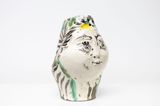
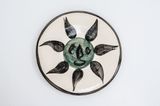
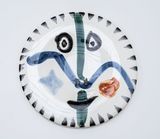
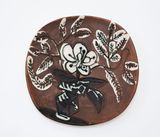
Pablo Picasso was always innovating, adopting new materials and techniques and working across mediums including oil paint, drawing, collage, ceramics, set design, printing and sculpture. Alongside Georges Braque, Picasso is seen as one of the inventors of Cubism.
- Picasso’s Blue Period (1901–1904) saw the artist using mostly blue and blue-green paint to depict sombre subject matter including prostitutes and beggars. It has been claimed that the Blue Period began following the death by suicide of Picasso’s friend Carlos Casagemas. Works from this period include The Old Guitarist (1903–1904), Le Gourmet (The Greedy Child) (1901) and Femme Assise (Melancholy Woman) (1902–1903).
- The Rose Period, between 1904–1906, saw the artist add pink tones to his colour palette and move his subject matter into happier themes, including clowns and carnival performers. Garçon à la Pipe (Boy with a Pipe) (1905) depicts an adolescent with flower garlands around his head and a pipe in his left hand.
- As the first decade of the 1900s progressed, Picasso became increasingly influenced by Iberian and African art. Les Demoiselles d’Avignon (1907) used mask-like faces and depicted the women using geometric shapes, laying the groundwork for Cubism. He also began to introduce collage into his works, such as 1912’s Still Life with Chair Caning.
- After the First World War, Picasso produced neoclassical pieces (Peasants Sleeping, 1919, the Vollard Suite etchings (1930–1937)) and also Surrealism-influenced works including 1925’s Three Dancers. A move into more political art is probably best represented by the powerful anti-war mural Guernica (1937).
Select posthumous exhibitions
- The Metamorphoses of Guernica, Musée National Picasso-Paris (2026)
- Late Picasso, Kunsten Museum of Modern Art, Aalborg (2026)
- Theatre Picasso, Tate Modern, London (2025)
- Picasso: Printmaker, British Museum, London (2024)
- Picasso, the Foreigner, Palazzo Reale, Milan (2024)
- Picasso: Seven Decades of Drawing, Acquavella Galleries, New York City (2021)
- Picasso 1932, Tate Modern, London (2018)
- Picasso: The Mediterranean Years (1945–1962), Gagosian, London (2010)
- Picasso and the Masters, Grand Palais, Paris (2008)
- Matisse Picasso, MoMA, New York City (2003)
- Pablo Picasso: Retrospective, Art Focus Galerie, Zurich (2000)
- Picasso and the Age of Iron, Solomon R Guggenheim Museum, New York City (1993)
- Picasso. Portraits of Jacqueline, Fundación Juan March, Madrid (1991)
- Je Suis Le Cahier: The Sketchbooks of Picasso, Art Institute of Chicago (1987)
- Museum Collection: Mirò and Picasso, MoMA, New York City (1983)
- Picasso: Oeuvres reçues en paiement des droits de succession (Works received in payment of inheritance taxes), Grand Palais, Paris (1979)
- Salut à Picasso, Jacques Damase Gallery, Brussels (1975)
Select Exhibitions for Celebration Picasso 1973–2023
- Picasso in Fontainebleau, MoMA, New York City (2023)
- Picasso Celebration: The Collection in a New Light, Musée Picasso Paris (2023)
- Picasso Sculptor. Matter and Body, Museo Picasso Malagà and Guggenheim Museum Bilbao (2023)
- Picasso’s Wish. The Ceramics That Inspired the Artist, Museo del Disseny de Barcelona (2023)
- Fernande and Françoise, Kunstmuseum Pablo Picasso Münster (2022)
Further Reading
- Artist profile page at Ludorff
- Unofficial Pablo Picasso website
- National Museum Picasso-Paris
- Museu Picasso Barcelona
Pablo Picasso FAQs
Did Picasso steal the Mona Lisa?
No, but Picasso and the poet Guillaume Apollinaire were both suspects when the Mona Lisa was stolen from the Louvre in 1911. Picasso did have a pair of stolen statues from the museum in his possession, but the Mona Lisa was pinched by Vincenzo Peruggia, a former Louvre employee who hid in a broom cupboard one night and simply took the picture off the wall when the museum had closed.
Did Picasso curate his own retrospective?
Yes—in a highly unusual move for the time, Picasso staged a solo show in 1932 at the Galeries Georges Petit in Paris that looked back at his career. He arranged all the artworks (even bringing along his own pot plant) out of chronological order and without dates. The exhibition then moved to the Kunsthaus Zurich.
Was Picasso a writer?
Yes, in 1941 he wrote the surrealist play Desire Caught by the Tail, which was first performed as a reading by a cast including Simone de Beauvoir and Jean-Paul Sartre. He also wrote a lengthy prose poem, The Burial of the Count of Orgaz, between 1957 and 1959.
Were Picasso and Matisse rivals?
The two artists were professionally competitive, but were also great friends. They saw each other frequently, and often enjoyed heated arguments.
Ocula
Works at Beck & Eggeling International Fine Art




Recently Exhibited

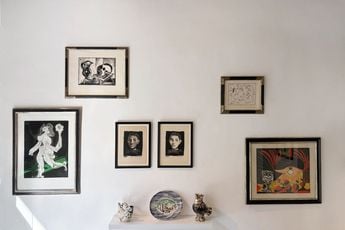


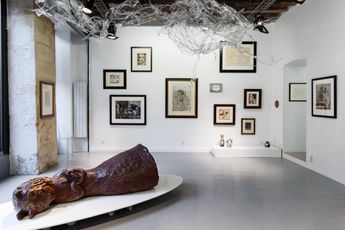
Exhibiting Elsewhere

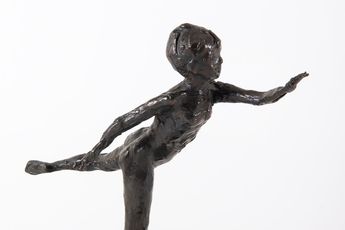
Works Elsewhere




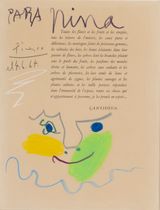
31.3 x 24.3 cm
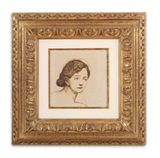
55.5 x 48 cm (incl frame) Bailly Gallery Request Price & Availability








Pablo Picasso in Ocula Magazine








Explore and Follow Artists Shaping Contemporary Art
A respected voice in contemporary art discourse.
Focusing on ambitious storytelling and insightful art-world commentary. Ocula Magazine publishes in-depth interviews, critical essays and timely analysis on the artists, exhibitions and ideas driving the global art world.
Learn more about Ocula Magazine
Showcasing the best of the art world.
Ocula partners with galleries from around the world to highlight their artists, artworks and exhibitions. Gallery membership is by application and invitation, with each member vetted by an independent panel.
Learn more about Ocula Membership
Specialises in the sale of major artworks.
Led by a team with deep ties to the world’s leading auction houses, galleries and collectors. Ocula’s advisory team offers bespoke services to high-net-worth clients from around the world who are looking to acquire the best of contemporary and modern art.
Learn more about our team and services