




DONALD JUDD
1928-1994, United StatesArguably one of the most well-known American post-war artists, Donald Judd was an influential sculptor and critic regarded as an important figure of the Minimalist art movement. He is best known for his ‘stacks’ of square and rectangular boxes made from industrial materials.
Early Years
Born in Missouri in 1928, Judd moved to New York, where he studied painting at the Art Students League of New York before completing his graduate studies in philosophy and art history at Columbia University. In 1959, Judd began writing articles for Art News and would later work for Arts Magazine and Art International.
Best known today for his sculpture, Judd began his art practice as an abstract painter. He soon transitioned to sculptural work in the 1960s, culminating in his ‘stacks’. In 1968, he moved to Marfa, Texas, where he purchased a five-storey home and studio that became his hub as his art career developed.
Donald Judd Artworks
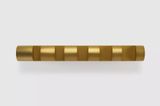
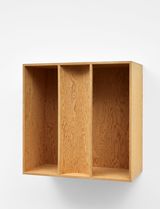
Best known for his hollow plexiglass, metal, and wood rectangular and square boxes, Judd’s art disrupted artistic conventions by relying on industrial materials and processes to produce his work.
Stacks
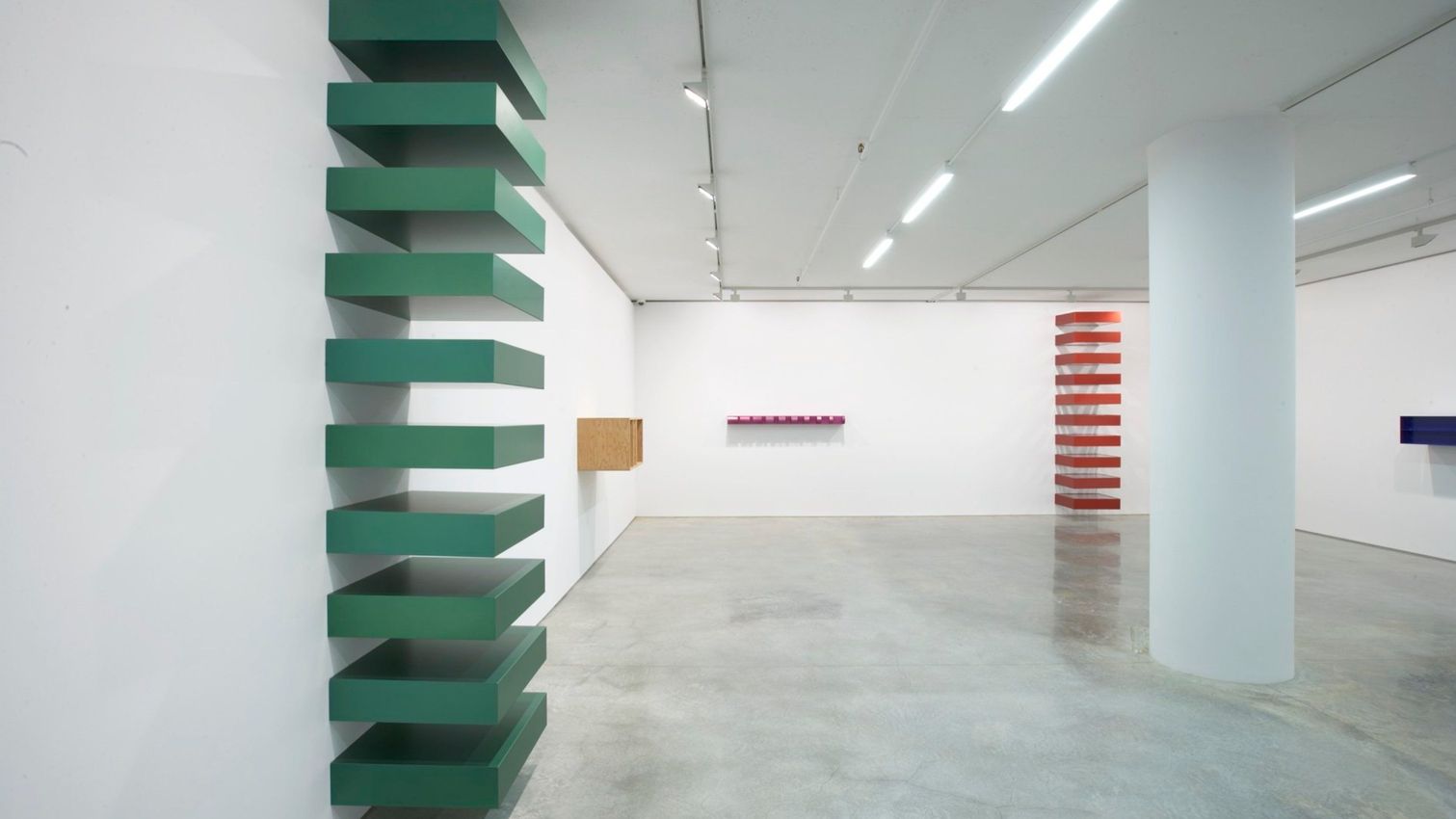
The artist’s transition from sculpture to painting culminated in his ‘stacks’—sets of rectangular cubes that protrude from the wall in vertical columns hung evenly from floor to ceiling. These were made from industrial materials like Iron, steel, and plexiglass. From the mid-1960s, Judd employed professional sheet metal fabricators to construct these works.
Untitled (90-7 Bernstein) (1990) is one such work comprising ten boxes of red anodised aluminium and transparent plexiglass. Made of industrial materials, Judd’s ‘stacks’ demonstrate his foundational interest in the formal properties of colour, material, form, and space.
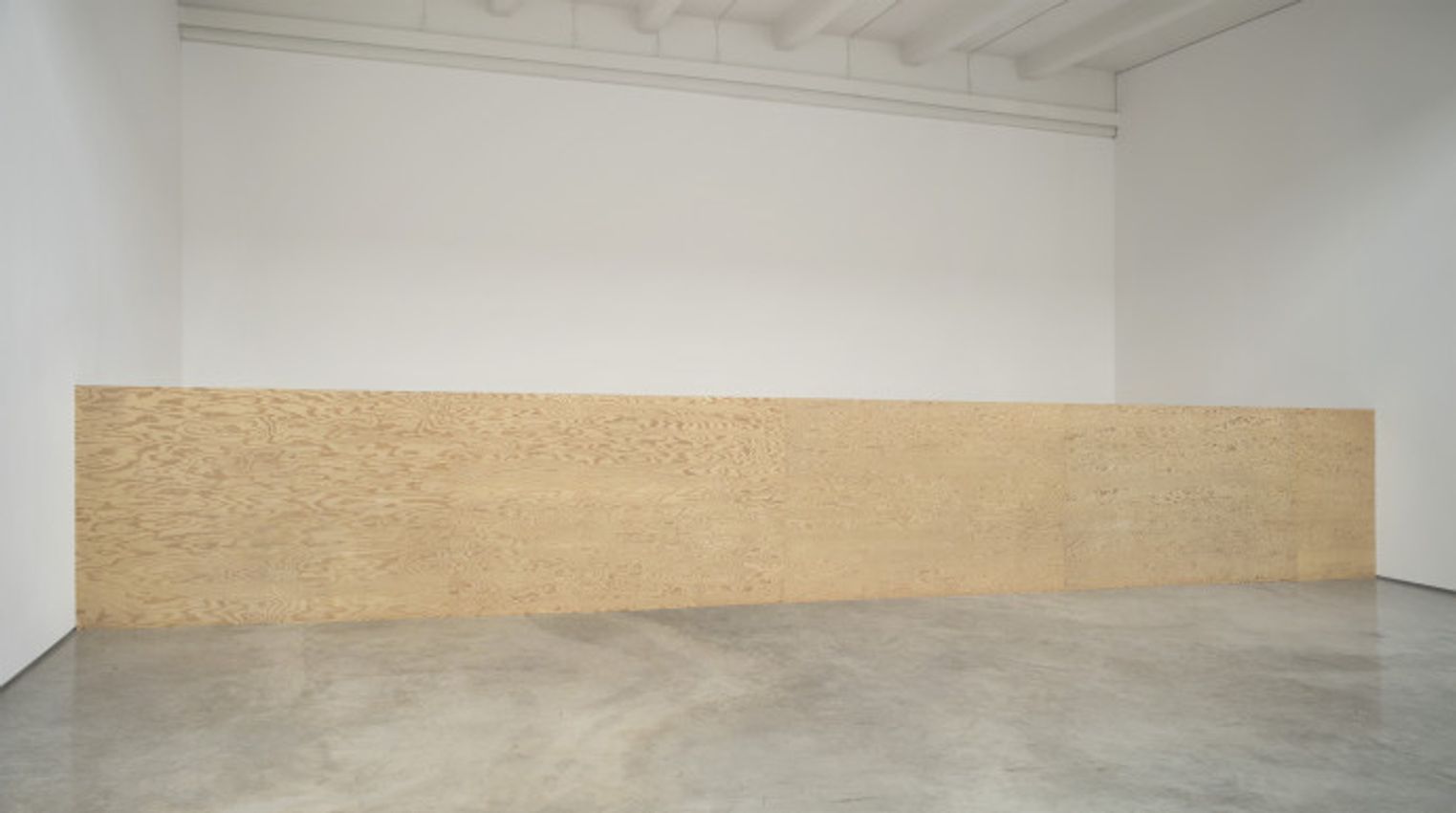
Other formats, which Judd developed simultaneously such as his ‘Progressions’–a horizontal equivalent–and freestanding box-like forms, follow these same minimalist and industrial design principles as his ‘Stacks’. He continued to build on this foundation in sculpture until his passing in 1994.
Judd described his works as ‘the simple expression of complex thought.’ Such complex thought was also manifested in the essays the artist produced throughout his life. His still widely referenced seminal essay, ‘Specific Objects,’ published in Arts Yearbook 8 in 1965, proposed a painting-sculpture hybrid that reflected his development in thinking about the two media and the similar process of conceptual expansion contemporaneously occurring for his peers.
Architecture and Design
Pertinent to Judd’s practice was how a sculpture could exist in a space and how viewers could navigate around it. This interest in spatial dynamics extended to an innovative architecture and design practice.
In the late 1960s, the artist designed small shelters in Baja, California, which influenced his later designs for buildings in Marfa and Europe.
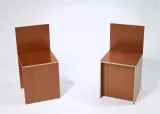
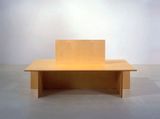
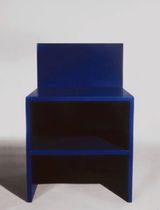
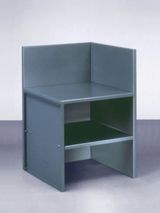
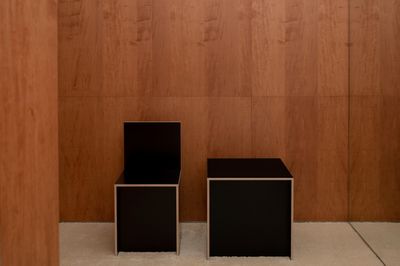
In the 1970s, he also began designing furniture for his various residences. Pieces such as Corner Chair 15, created in 1984, make clear that the artist brought his sculptures’ angularity and refined craftsmanship to the other spheres of his practice as well.
Prints
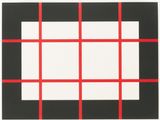
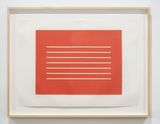
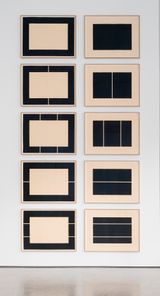
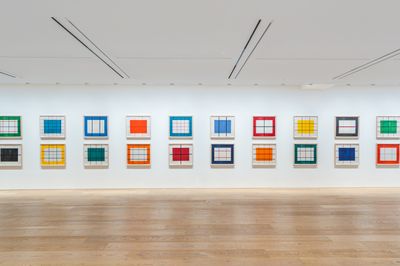
Judd’s later woodcut prints, made from 1988 to 1992, reflect the minimalist approach to shape, colour, and line taken in his sculpture. They comprise simple geometries, colour rectangles run through with thin horizontal and vertical lines and bars of colour.
Donald Judd Exhibitions
Donald Judd has been the subject of numerous international solo and group exhibitions. Solo exhibitions include:
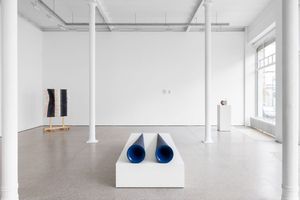
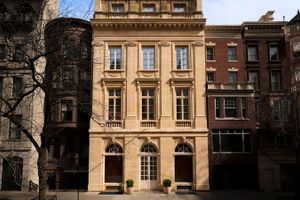
- Donald Judd, Gagosian, New York (2023)
- Donald Judd, Thaddaeus Ropac, Salzburg (2021)
- Judd, The Museum of Modern Art, New York (2020)
- Obdurate Space: Architecture of Donald Judd, The Center for Architecture, New York (2017)
- Donald Judd, Los Angeles County Museum of Art, Los Angeles (2013)
- Donald Judd, Tate Modern, London (2004)
- Donald Judd: 1960–1991, The Museum of Modern Art, Saitama, Japan (1999)
- Kunst + Design: Donald Judd, Museum Wiesbaden, Wiesbaden, Germany (1993)
Group exhibitions include:
- Difference and Repetition, Gagosian, Paris (2025)
- Go Back to The Future, Espace de l’Art Concret, Mouans-Sartoux, France (2021)
- From Gesture to Form, Peggy Guggenheim Collection, Venice (2019)
- Primary Structures, Museum für Moderne Kunst, Frankfurt (2017)
- Sculpture After 1945, Musees Royaux des Beaux-Arts de Belgique, Brussels (2013)
- Art in America: 300 Years of Innovation, National Art Museum of China, Beijing, China (2007)
- Abstract Sculpture in America, 1930–70, Musée du Québec, Quebec City (1992)
Website
The Donald Judd Foundation website can be found here.
Donald Judd FAQs
Who was Donald Judd?
Donald Judd (1928–1994) was an American artist and critic closely associated with Minimalism, though he rejected the term. He is widely recognised for his ‘specific objects’—three-dimensional works that emphasise material, form, and spatial clarity without symbolic content. Judd’s practice extended beyond art into architecture, design, and writing, and he remains a pivotal figure in contemporary art.
What is Donald Judd’s most famous work?
Among Judd’s most iconic works is the series known as ‘stacks’—vertical arrangements of identical, wall-mounted units made from materials like aluminium and Plexiglas. Another significant work is the installation of 15 untitled concrete works (1980–1984) at the Chinati Foundation in Marfa, Texas, which exemplifies his commitment to permanent, site-specific installations.
What influenced Donald Judd’s art?
Judd’s art was influenced by his background in philosophy and art history and his experiences as an art critic. He was particularly interested in creating works that existed as complete objects, free from metaphor or illusion. His writings, especially the essay ‘Specific Objects’ (1965), articulate his vision of art that prioritises real space and materials over representation.
Why did Donald Judd reject the term ‘Minimalism’?
Although often labelled a minimalist, Judd rejected the term because he felt it was too restrictive and did not accurately describe his work. He preferred to focus on the specific qualities of his objects, such as their materials, dimensions, and spatial relationships, rather than fitting into a predefined movement.
What is the Chinati Foundation?
The Chinati Foundation is a contemporary art museum founded by Donald Judd in Marfa, Texas. Established to preserve and present large-scale installations by Judd and other artists, the foundation embodies his vision of art integrated with architecture and the surrounding landscape. It is a testament to his commitment to permanent, site-specific works.
Hazel Ellis | Ocula | 2025

Explore Donald Judd's Exhibitions On Now


















Donald Judd in Ocula Magazine








Explore and Follow Artists Shaping Contemporary Art
A respected voice in contemporary art discourse.
Focusing on ambitious storytelling and insightful art-world commentary. Ocula Magazine publishes in-depth interviews, critical essays and timely analysis on the artists, exhibitions and ideas driving the global art world.
Learn more about Ocula Magazine
Showcasing the best of the art world.
Ocula partners with galleries from around the world to highlight their artists, artworks and exhibitions. Gallery membership is by application and invitation, with each member vetted by an independent panel.
Learn more about Ocula Membership
Specialises in the sale of major artworks.
Led by a team with deep ties to the world’s leading auction houses, galleries and collectors. Ocula’s advisory team offers bespoke services to high-net-worth clients from around the world who are looking to acquire the best of contemporary and modern art.
Learn more about our team and services