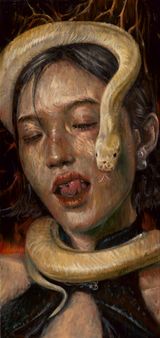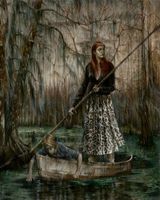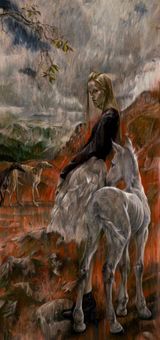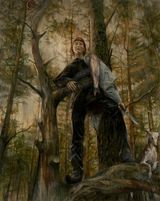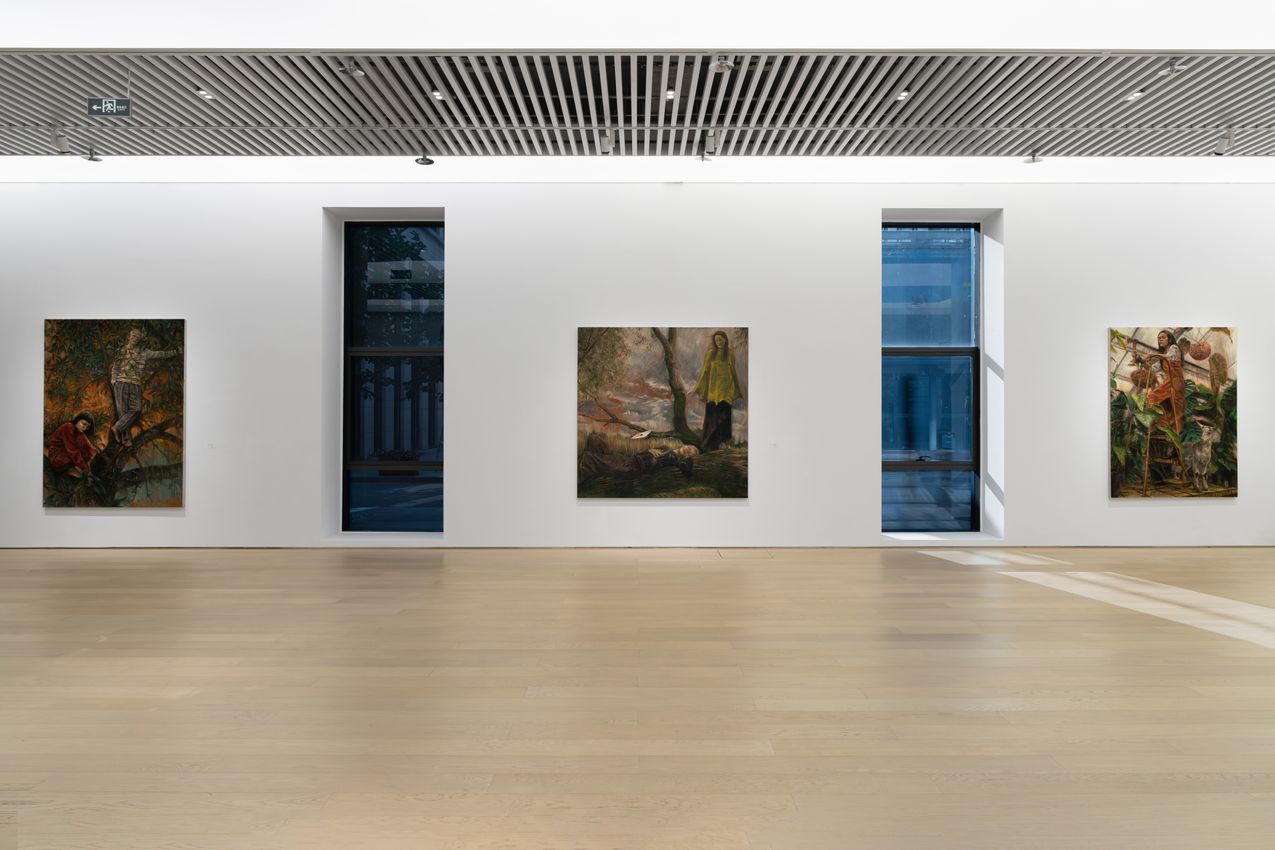
Tang Contemporary Art is pleased to announce the opening of Yang Yifan’s solo exhibition, The Long Night Washes Over the Greenhouse, on September 12 at 4:00 p.m. at the gallery’s Beijing headquarters. Curated by Han Yali, the exhibition marks the artist’s latest major solo presentation at Tang Contemporary Art, following Twin Shadows: Su Yuming × Yang Yifan, a two-person exhibition held at the gallery last year.
The long night is not a synonym for darkness. It is a prolonged expanse of time that drifts over the greenhouse in a coiling mist, then sinks slowly down the invisible inner walls of glass. Damp stains linger on the walls; branches and leaves hold droplets that have yet to fall; fabric presses close to the body. Flowers and fruits ripen one after another in the warm air, exuding an almost cloying sweetness just before they begin to rot; vines spill over their supports, and shadows seep into skin and the flesh of fruit—and into all that remains unspoken between one person and another. This humid romanticism belongs to the temporality of young life: it is an “absent presence,” a condition in which the individual, enduring the fragmentation of identity and the suspension of meaning within a dim and oppressive landscape, still—through the act of gazing and the body’s coiled reserve of strength—holds fast to a self that has not yet vanished.
In the works presented here, the painted figures are entangled with greenhouses, dense forests, ferryboats, curtains, animals, and fruits, together constituting a scenic relation shot through with perception, desire, confusion, and dispersion—an unresolved morphology of absence of mind. This is precisely the underlying tonality of the affective-narrative dimension in Yang Yifan’s practice: consciousness is momentarily suspended, while the body remains here. Admittedly, this emptiness does not push the figures into utter nothingness. On the contrary, it is in the wandering gaze, the lowered arms, and the nearly frozen postures that a will not yet extinguished becomes visible: they climb ladders, grip tools, touch plants, reach out to pick, clasp animals to themselves, or simply remain beside another sleeper. These gestures renounce heroic resistance, yet they also refuse to serve as testimony to submission. Small, slow, and often arrested just short of completion, they nonetheless allow the body to leave its weight within the landscape that continually erodes it.
At the same time, animals and fruits further extend this psychological landscape. The goat carries connotations of sacrifice, survival, vulnerability, and labor—standing now among rotting wood and orchids, now beneath a greenhouse ladder, where it forms an obscure working relation with the axe-bearing woman. A spotted rabbit perches on a young girl’s shoulder, becoming another projection of her inner self, while birds and taxidermied deer heads drift somewhere between life, display, and the gaze. Yang Yifan compresses into the greenhouse the nature that Romanticism directed toward the faraway, while preserving the concrete textures of these living beings: fur, weight, body warmth, vigilance, and the impulse to nestle close. The animals become echoes of relation and self; the fruits become the material evidence left behind the material traces of desire—apples and lemons bitten into, sliced open, scattered, or left beside a hand paused in the act of picking. Bite marks, juice, pits, and stems on the verge of snapping lend temporary shape to desires that cannot be fully articulated. Together, they form a tidal flat lying between the figures and the space they inhabit: at times submerged by the darkness of its surroundings, at times revealing traces of life. It is the repeated confirmation of the self’s fragments—a silent yet tenacious bond sustained between person and space, person and other, and person and self.
As the long night washes over the greenhouse, the plants keep spreading, the fruits slowly overripen, and the animals remain nestled beside their human companions. So the cycle continues: the “long night” is not an ending, but a transition that has not yet reached dawn—a protracted weightlessness endured by young lives that have yet to find a point of support. They have no clear shore and no dependable shelter; they lean against tree trunks, beds, and the hulls of boats, their gazes drifting into the distance, wordless with one another yet nestling close. This is a romanticism particular to Yang Yifan: it does not arise from the call of the faraway, but from the capacity for perception one retains when there is nothing left to rely on—carrying dampness and warmth, and a tenderness that can never quite arrive.


Tang Contemporary Art was established in 1997 in Bangkok, later establishing galleries in Beijing and most recently Hong Kong. Tang Contemporary Art is fully committed to producing critical projects and exhibitions to promote Contemporary Chinese art regionally and worldwide and encourage a dynamic exchange between Chinese artists and those abroad.

A respected voice in contemporary art discourse.
Focusing on ambitious storytelling and insightful art-world commentary. Ocula Magazine publishes in-depth interviews, critical essays and timely analysis on the artists, exhibitions and ideas driving the global art world.
Learn more about Ocula Magazine
Showcasing the best of the art world.
Ocula partners with galleries from around the world to highlight their artists, artworks and exhibitions. Gallery membership is by application and invitation, with each member vetted by an independent panel.
Learn more about Ocula Membership

Specialises in the sale of major artworks.
Led by a team with deep ties to the world’s leading auction houses, galleries and collectors. Ocula’s advisory team offers bespoke services to high-net-worth clients from around the world who are looking to acquire the best of contemporary and modern art.
Learn more about our team and services