




JEAN DUBUFFET
1901-1985, FranceJean Dubuffet was a radical painter, printmaker and sculptor, determined to break down many of the barriers between high and low art in his search for the authentic or genuine. Dubuffet explored unusual materials in his innovative visual practice and tirelessly promoted art brut (outsider art).
Life and interests
Highly influential as a writer on peripheral forms of art-making, Dubuffet generated considerable interest in untutored art practices hitherto considered repulsive, childlike, medically therapeutic or for prison inmates, opening up new fields of research into image production and eventually new markets—a development he would later parody. Yet for all his success and influence in the art world, he came to his artistic practice late in life—in his early 40s. Up until then he ran a wholesale wine business.
Style and technique
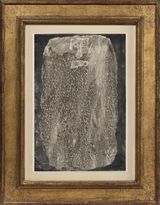
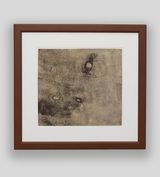
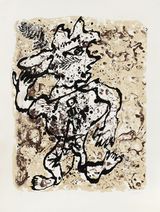
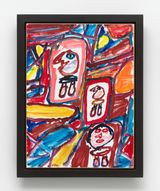
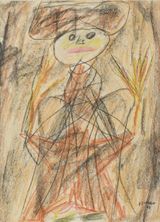
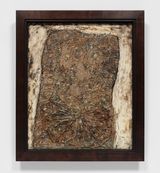
Regarding clumsy paint application, inaccurate draughtsmanship and muddy, disturbingly faecal-like textures—created by mixing oil paint with sand, tar and straw, and embedding detritus—as positive attributes, Dubuffet’s ideas were very unusual, though often not entirely new. They grew out of his dislike of meticulous craftsmanship and refined intellectualism, an interest in children’s art and a wish that his works look worn, scratched and battered. He despised the precious and exalted. He saw the unrestrained, raw, instinctive and violent as positive, valuable and oddly innocent. He was also attracted to the work of Dr Hans Prinzhorn, who studied the art of the mentally ill.
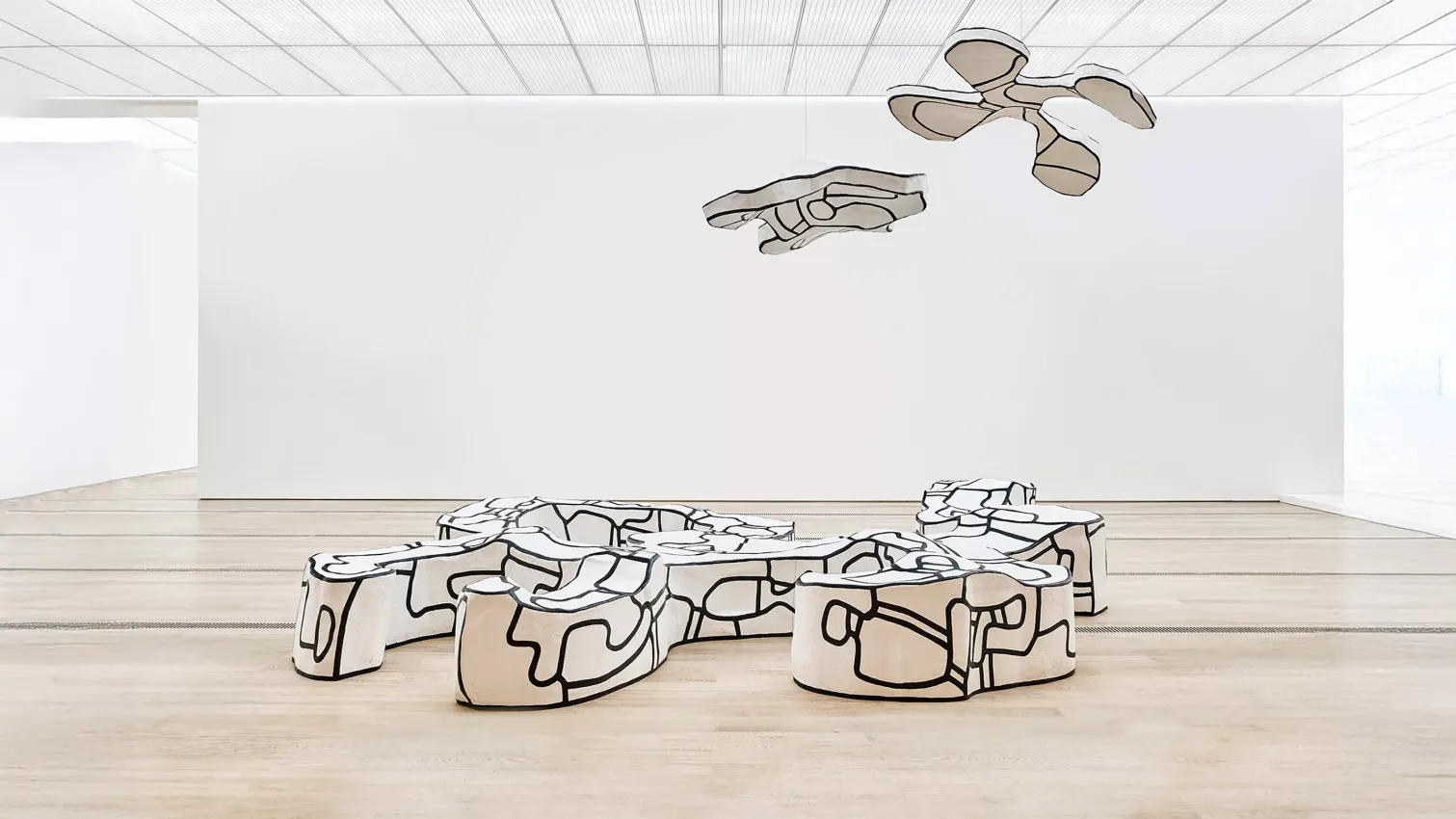
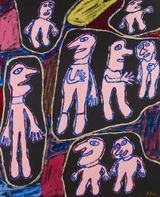
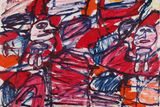
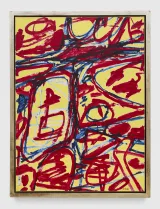
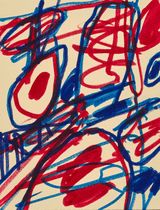
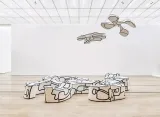
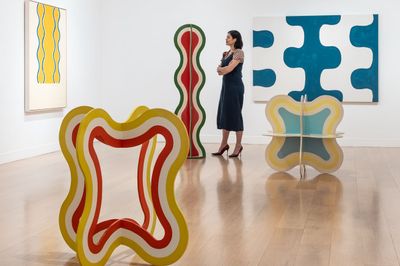
An inveterate exhibition-maker popular in North America and Europe, Dubuffet championed anti-bourgeoisie, anti-academy culture and non-professionalism with several styles, though he is best known for using red and blue, and compressed, organic, wobbly shapes on polystyrene. Later in his career he worked in fibreglass and resin in black and white. For most of his career, he concentrated on portraits of ordinary people, farm animals and mundane household objects.
From 1946 on, Dubuffet was represented by and showed regularly at the Pierre Matisse Gallery in New York, where he became unexpectedly popular and maintained a high profile. He was inspired by Algerian tribal art and made several trips to the Sahara.
Exhibitions
Dubuffet presented acclaimed exhibitions at Musée des Arts Décoratifs, Paris (1960); The Museum of Modern Art, New York (1962); Art Institute of Chicago (1962); Palazzo Grassi, Venice (1964); Tate, London (1966); Stedelijk Museum, Amsterdam (1966); and Solomon R. Guggenheim Museum, New York (1966).
Notable recent solo exhibitions include:
- Jean Dubuffet, The Hourloupe Cycle, Pace Gallery, New York (2025)
- Paysages et lieux de promenade, Galerie Lelong & Co. Paris (2022)
- Jean Dubuffet, Ardent Celebration, Guggenheim-Bilbao, Bilbao (2022)
- Jean Dubuffet, Brutal Beauty, Barbican Center, London (2021)
- Dubuffet Drawings, Hammer Museum, Los Angeles (2017)
Group exhibitions include:
- Reverse Alchemy, Pace Gallery, Berlin (2025)
- Master Drawings, Galerie Gmurzynska, New York (2025)
- Freeform, Jean Dubuffet, Simon Hantaï and Charlotte Perriand, Timothy Taylor Gallery, London (2018)
A book of his writings, Prospectus et tous écrits suivants (Prospectus and all subsequent texts), was published in 1967. Retrospectives include: Museum Morsbroich, Leverkusen (1957); Akademie der Künste, Berlin (1980); Museum moderner Kunst, Vienna (1980); Josef Haubrich Kunsthalle, Cologne (1981); and Centre Pompidou, Paris (2001).
Jean Dubuffet FAQs
Who is Jean Dubuffet?
Jean Dubuffet (1901—1985) was a French artist known for pioneering the concept of Art Brut (or ‘raw art’), which celebrated the untrained creativity of outsiders, including children and psychiatric patients. His radical approach challenged conventional aesthetic values and sought to redefine what art could be.
What is Jean Dubuffet’s most famous work?
Among his most iconic works is Jardin d’émail (1974), part of the immersive architectural environment at the Kröller-Müller Museum in the Netherlands. His sculptural ensemble Group of Four Trees (1972) in Lower Manhattan is another widely recognised public work.
What influenced Jean Dubuffet’s art?
Dubuffet was profoundly influenced by art made outside traditional institutions, including the work of psychiatric patients. He was also inspired by graffiti, children’s drawings, and the textures and rhythms of the urban landscape.
What is ‘Art Brut’ and how is Jean Dubuffet connected to it?
Art Brut refers to art created outside the bounds of official culture. Dubuffet coined the term and built a major collection around it, now housed in Lausanne. He championed this raw creativity as more genuine and unfiltered than academic art.
Where can I see Jean Dubuffet’s artworks?
His works are held in major museum collections worldwide, including the Centre Pompidou in Paris, MoMA in New York, and the Art Brut Collection in Lausanne. His public sculptures can also be found in cities such as Paris, New York, and Chicago.
Ocula | 2025

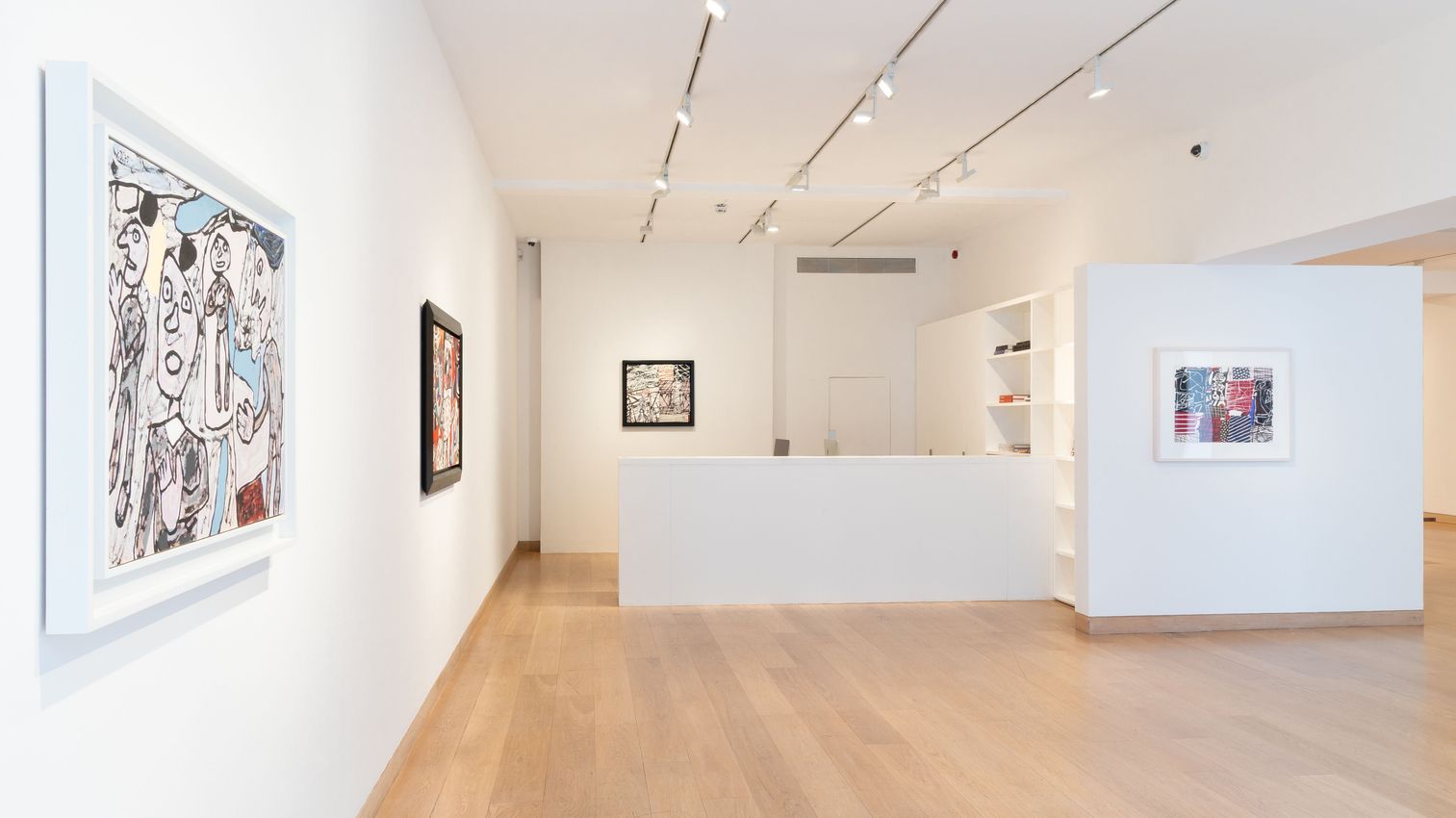
Explore Jean Dubuffet's Exhibitions On Now






View Jean Dubuffet's Artworks

























Explore and Follow Artists Shaping Contemporary Art
A respected voice in contemporary art discourse.
Focusing on ambitious storytelling and insightful art-world commentary. Ocula Magazine publishes in-depth interviews, critical essays and timely analysis on the artists, exhibitions and ideas driving the global art world.
Learn more about Ocula Magazine
Showcasing the best of the art world.
Ocula partners with galleries from around the world to highlight their artists, artworks and exhibitions. Gallery membership is by application and invitation, with each member vetted by an independent panel.
Learn more about Ocula Membership
Specialises in the sale of major artworks.
Led by a team with deep ties to the world’s leading auction houses, galleries and collectors. Ocula’s advisory team offers bespoke services to high-net-worth clients from around the world who are looking to acquire the best of contemporary and modern art.
Learn more about our team and services