





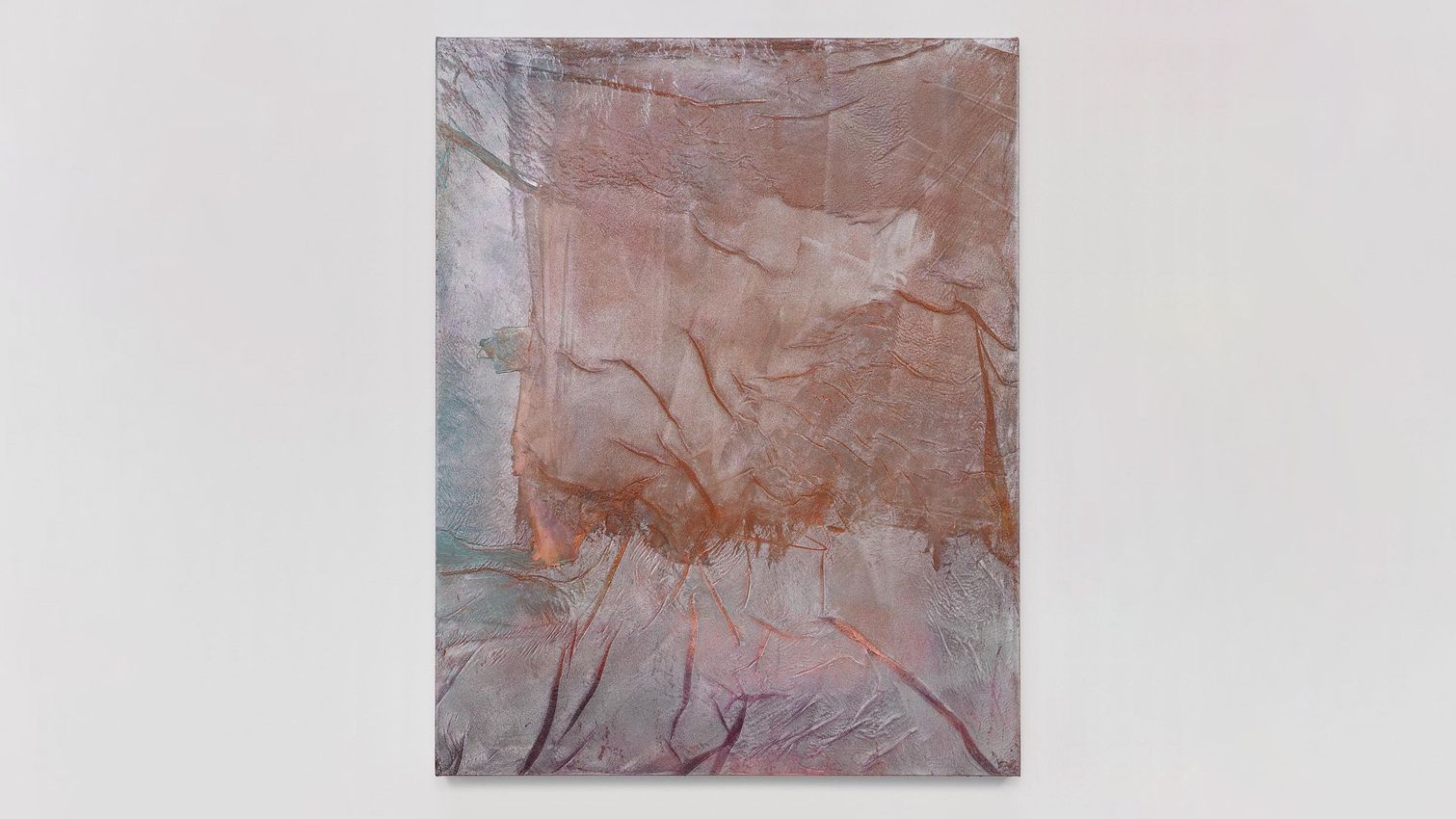
RUDOLF STINGEL
b. 1956, ItalyRudolf Stingel is an Italian contemporary artist renowned for his conceptually rich, process-based artworks that challenge traditional perceptions of painting and its materials.
Early Years
Born in Merano, Italy, in 1956, Rudolf Stingel relocated to New York in the late 1980s, where he continues to live and work. With no formal academic training beyond brief studies in Vienna, Stingel carved a singular path in the art world, embracing both Minimalist and conceptual strategies early in his career. His background as a self-taught artist significantly informs his boundary-defying practice, which explores authorship, authorship, and the tactile encounter between artwork and viewer.
Artworks
Rudolf Stingel’s artworks merge conceptual art with material experimentation, employing unconventional surfaces and inviting physical interaction.
Instructions and DIY Monochromes (1989)
Stingel’s early career was marked by a radical gesture: publishing a manual titled Instructions, which outlined how to create one of his silver monochrome paintings using industrial materials—spray paint and gauze—on canvas. This act was both tongue-in-cheek and deeply subversive, undermining the romantic idea of artistic genius by suggesting that anyone could replicate his works. These reflective, textured paintings became synonymous with Stingel’s name, establishing him as a conceptual artist who engages painting as a process of deconstruction and replication.
Carpeted Installations (1990s–2010s)
Throughout the 1990s, Stingel expanded his practice into large-scale environmental installations by carpeting gallery floors and walls with richly patterned rugs. By covering spaces in Persian-style or orange hotel carpeting—most famously at the Venice Biennale in 2003—Stingel transformed the gallery from a neutral container into a site of total aesthetic immersion. These installations, which blend interior design and contemporary art, both elevate and disrupt expectations of what qualifies as an artwork, suggesting that context and ornamentation are essential components of meaning.
Celotex Panels and Participatory Walls (2000s)
A defining moment in Stingel’s career came with his use of Celotex insulation panels—foil-backed boards typically used in construction. Installed across gallery walls, these panels invited viewers to inscribe their own marks, drawings, and graffiti into the soft surface. First shown in the 2007 retrospective at the Museum of Contemporary Art Chicago and later at the Whitney Museum of American Art, these works blurred the line between creator and observer, transforming the gallery into a participatory artwork. Over time, the accumulated inscriptions became palimpsests of audience interaction, collapsing distinctions between vandalism and artmaking.
Photorealism and Portraiture (2005–present)
Beginning in the mid-2000s, Stingel introduced a radically different aesthetic: black-and-white photorealist oil paintings based on vintage photographs, found imagery, and self-portraits. Rendered with astonishing precision, these paintings include haunting portraits of fellow artists such as Franz West and melancholic images of Stingel himself, confronting themes of memory, ageing, and existential reflection. His series of self-portraits, such as the brooding Untitled (After Sam) (2006), has been celebrated for its meditative power and introspective depth. Despite their classical appearance, these paintings continue Stingel’s interest in reproduction and the dissolution of authorship, as many were executed by assistants based on photographic sources.
Exhibitions
Rudolf Stingel has been the subject of both solo and group exhibitions at important institutions. A selection of important exhibitions is provided below.
Solo Exhibitions
- Rudolf Stingel, Fondation Beyeler, Basel (2019)
- Rudolf Stingel, Palazzo Grassi, Venice (2013)
- Rudolf Stingel. Live, Neue National Galerie, Berlin
- Rudolf Stingel: Paintings 1987-2007, Museum of Contemporary Art, Chicago, Chicago; Travelled to: Whitney Museum of American Art, New York (2007)
- Plan B, Walker Art Center, Minneapolis. Travelled to Grand Central Terminal, New York (2004)
- Home Depot, Museum für Moderne Kunst, Frankfurt (2004)
- Rudolf Stingel, Museo di Arte Moderna e Contemporanea, Palazzo delle Arbere, Trento (2001)
Group Exhibitions
- Luogo e segni, Punta della Dogana, Venice (2019)
- We Are Here: I am You, Museum of Contemporary Art, Chicago (2017)
- Lifelike, Walker Art Center, Minneapolis (2012)
- Fresh Hell, Palais De Tokyo, Paris (2010)
- Singular Forms (Sometimes Repeated): Art from 1951 to the Present, The Solomon R. Guggenheim Museum, New York (2004)
- Dreams and Conflicts: The Viewer’s Dictatorship, Venice Biennale 2003, 50th International Art Exhibition, Venice (2003)
Critical Reception
Stingel’s work has been widely covered in leading art publications including Artnet, Frieze, and The New York Times.
Rudolf Stingel FAQs
What did Rudolf Stingel show at the Venice Biennale?
At the 2003 Venice Biennale, Rudolf Stingel presented a striking installation that transformed the interior of the Palazzo Grassi using an ornate red-and-gold carpet applied across the floors and walls. This immersive environment blurred the boundary between artwork and architecture, inviting viewers to reconsider notions of decorative surface and artistic context. The work exemplified Stingel’s interest in materiality, repetition, and the disruption of traditional exhibition formats. His presentation remains one of the Biennale’s most memorable installations of that decade.
What materials does Rudolf Stingel use?
Rudolf Stingel is renowned for his innovative use of unconventional materials in contemporary art. These include industrial insulation panels (Celotex), synthetic carpets, Styrofoam, gold leaf, oil paint, tulle, and spray paint. His choice of materials is conceptually driven, often reflecting ideas about authorship, temporality, and viewer participation. From photorealist canvases to participatory wall surfaces and architectural interventions, Stingel’s art materials transform everyday or industrial substances into powerful, reflective artworks that redefine the boundaries of painting and installation.
Where can I see Rudolf Stingel’s work?
Rudolf Stingel’s artworks are held in major public collections worldwide, including the Museum of Modern Art in New York, Centre Pompidou in Paris, and the Art Institute of Chicago. His work is regularly exhibited at leading contemporary art galleries such as Gagosian and Sadie Coles HQ. Institutional retrospectives have been staged at the Whitney Museum of American Art and Museum of Contemporary Art, Chicago. Visitors can also view his art through museum exhibitions, gallery shows, and prominent international art fairs.
Ocula | 2025










Explore and Follow Artists Shaping Contemporary Art
A respected voice in contemporary art discourse.
Focusing on ambitious storytelling and insightful art-world commentary. Ocula Magazine publishes in-depth interviews, critical essays and timely analysis on the artists, exhibitions and ideas driving the global art world.
Learn more about Ocula Magazine
Showcasing the best of the art world.
Ocula partners with galleries from around the world to highlight their artists, artworks and exhibitions. Gallery membership is by application and invitation, with each member vetted by an independent panel.
Learn more about Ocula Membership
Specialises in the sale of major artworks.
Led by a team with deep ties to the world’s leading auction houses, galleries and collectors. Ocula’s advisory team offers bespoke services to high-net-worth clients from around the world who are looking to acquire the best of contemporary and modern art.
Learn more about our team and services