





Nine Solo Shows to See in Hong Kong, Spring 2025
We profile nine unmissable solo exhibitions in Hong Kong, from Louise Bourgeois at Hauser & Wirth to Sin Wai Kin at Blindspot Gallery. Save to My Ocula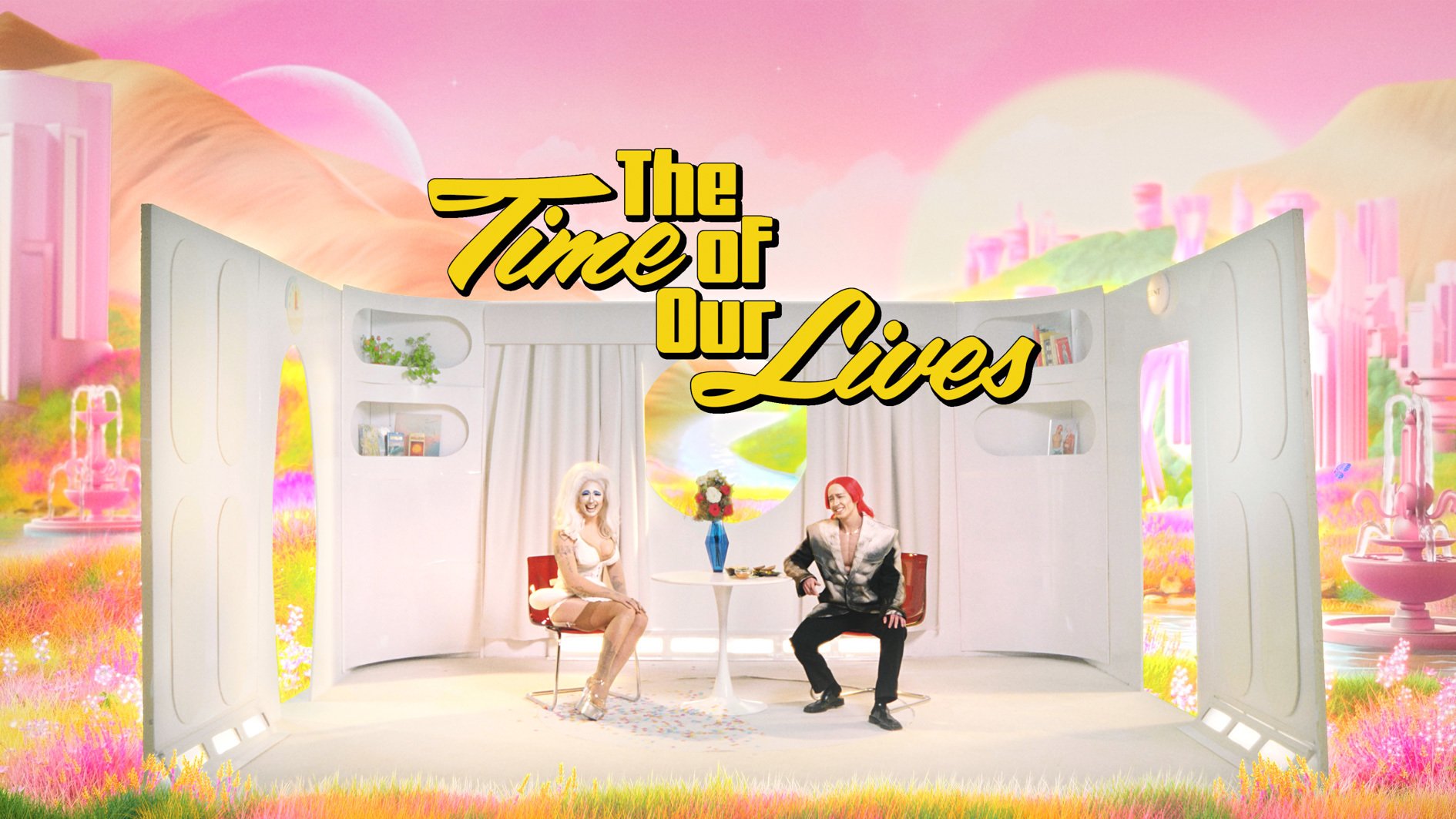
As Art Basel Hong Kong opens its doors, the city further solidifies its position as one of the top contemporary art capitals. Ocula profiles nine unmissable solo exhibitions that showcase the diverse talent across Hong Kong‘s galleries, from Louise Bourgeois’ evocative sculptures at Hauser & Wirth to Sin Wai Kin‘s innovative multimedia installation at Blindspot Gallery.
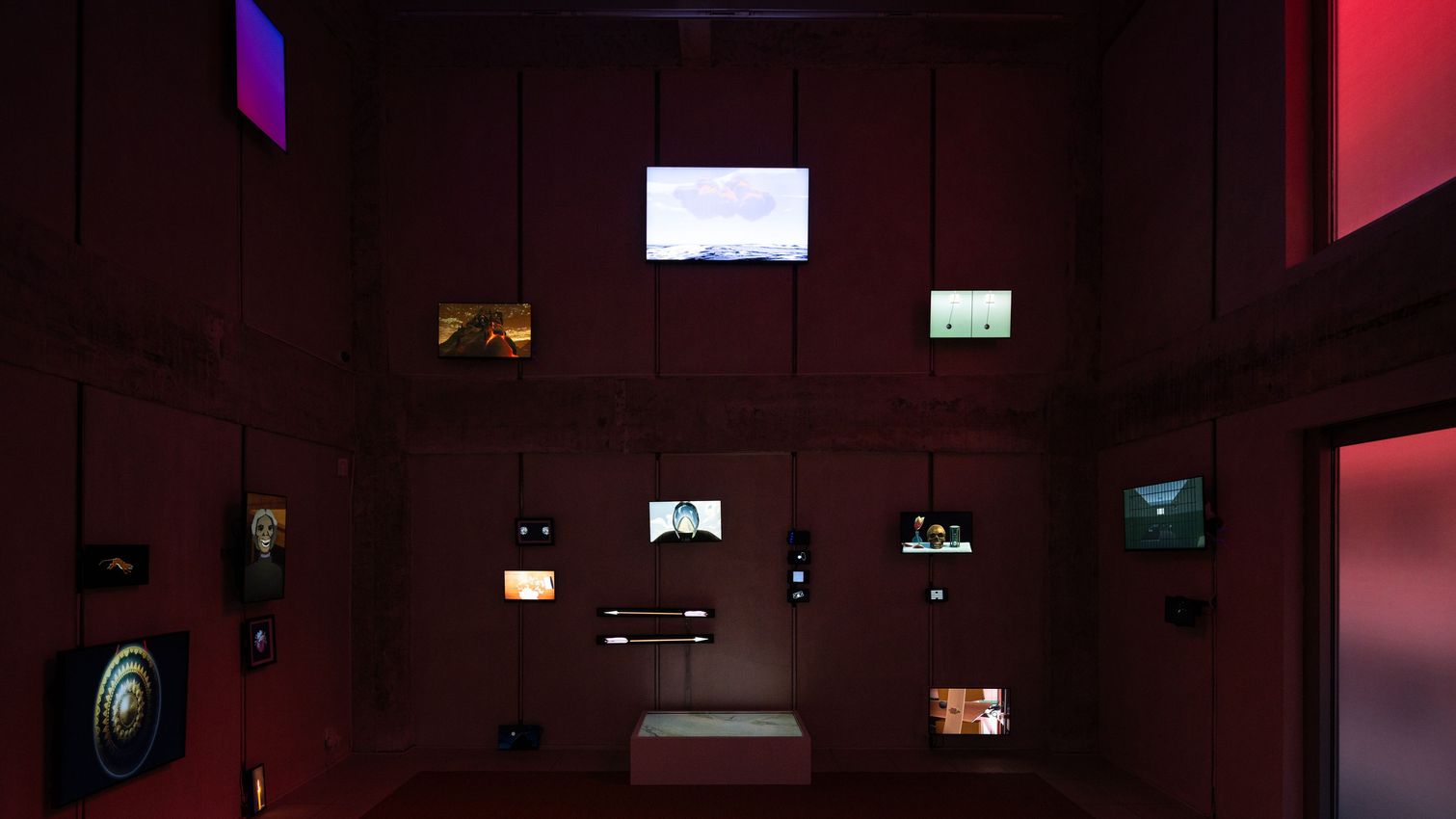
1. Ho Tzu Nyen: Three Stories: Monsters, Opium, Time
Kiang Malingue, 10 Sik On Street, Wanchai
20 March–13 May 2025
Why: A three-floor journey that threads Buddhist cosmology, through monsters, opium, and timekeeping.
Singaporean artist Ho Tzu Nyen has transformed Kiang Malingue’s three-storey gallery into a captivating journey through realms, time, mythology, and histories. Presenting three bodies of Ho’s work, the show references the Buddhist concept of trailokya, the three realms of existence—underworld, earth, and heaven.
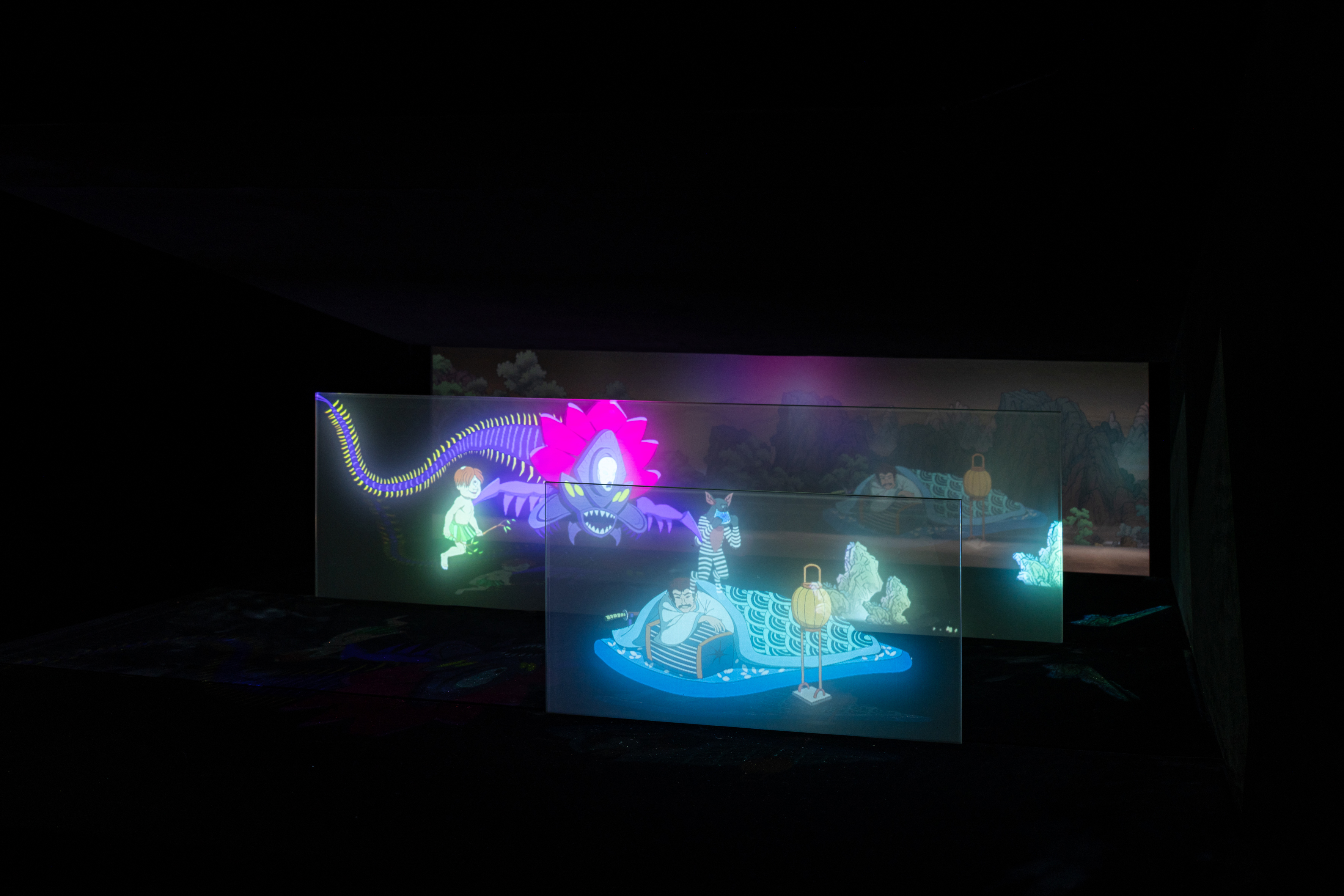
On the ground floor, presented in darkness, is a two-video installation from Ho’s project Night March of Hundred Monsters (2021–ongoing) which merges the yokai (monsters, demons, or spectres) of Japanese folklore with the country’s history of imperialism. In the second story, O for Opium, Ho presents an ambrosial, phantasmagorical portrait of opium and its trade, combining archive and cinema footage with a smokey animated index of objects.
The exhibition culminates in the third floor with the multichannel, moving-image work Timepieces (2023), which unfolds across 43 screens. This hypnotic installation blends ancient timekeeping traditions with contemporary digital aesthetics, creating a kaleidoscopic meditation on the nature of time. Timepieces was first shown at Ho’s recent mid-career survey Time and the Tiger at the Singapore Art Museum and has since travelled to several international venues.
Ho’s exhibition at Kiang Malingue coincides with the presentation of his AI-generated animation Night Charades (2025) on the M+ Facade from 22 March to 29 June 2025.

2. Sopheap Pich: Cambodian Metal
Axel Vervoordt Gallery, 21/F, Coda Designer Centre, 62 Wong Chuk Hang Road
22 March–24 May 2025
Why: Elegantly engineered sculptures that extend Pich’s language of rattan and bamboo into recycled metals and glass.

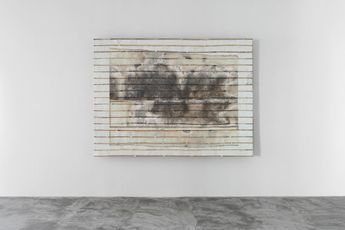
Sopheap Pich is renowned for his large-scale sculptures crafted from humble yet poignant materials. Born in Battambang in 1971, Pich’s artistic practice is deeply shaped by his personal history—his childhood during the brutal Khmer Rouge regime, his studies in the United States, and his eventual return to Cambodia. While Pich gained recognition for his use of organic materials like rattan and bamboo, his latest exhibition sees him expand into industrial materials such as corrugated aluminium and glass.
This exhibition—Pich’s first with Axel Vervoordt Gallery—presents a new group of 12 works. Using recycled aluminium, found rice pots salvaged from around his Phnom Penh studio, enamel, and soot, Pich has created a series of abstract wall reliefs. These works are modernist in appearance yet figurative in their evocation of the corrugated roofs that that characterise Cambodia’s urban and rural landscape.
Accompanying the wall reliefs are organic forms created from glass, bamboo, and copper. Among them is Silent Restraint (2025), a striking hanging sculpture resembling lungs. Pich initially enrolled in medicine before earning an MFA in painting, and this background seems to inform his meticulous approach to material and form. Crafted from bamboo strips bound with copper and incorporating blown-glass elements, the piece suggests both fragility and resilience.
3. Richard Hawkins: The Garden of Loved Ones
Empty Gallery, 18–19/F, Grand Marine Center, 3 Yue Fung Street, Tin Wan
23 March–24 May 2025
Why: Innovative use of collage and video reinterpret cultural tropes.
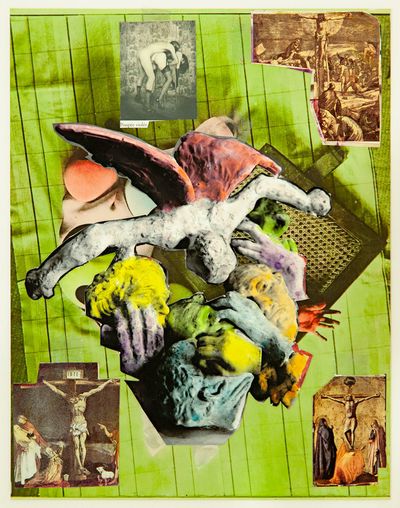
Richard Hawkins is a Los Angeles-based artist known for his eclectic and provocative body of work that spans various mediums, including collage, painting, and sculpture. Hawkins’ art is characterised by its exploration of themes such as art history, pop culture, celebrity, sexuality, and difference, often filtered through the lens of his identity as a queer artist who came of age during the AIDS crisis.
The exhibition at Empty Gallery is a culmination of Hawkins’ long-standing engagement with Japanese culture and aesthetics. The show features new films, collages, and sculptures that delve into the complex interplay of cultural exchange, desire, and sexuality.
A highlight of the exhibition is video collages that draw inspiration from the scrapbooks of Tatsumi Hijikata, the pioneering Japanese choreographer who devised the avantgarde dance form of butoh. Hawkins’ fascination with Hijikata’s work is not new; he has previously explored the choreographer’s influence in his ‘Ankoku’ collages, which both translate scrapbook pages and channel Hijikata’s voice as a ‘poetic guide’.

4. Sin Wai Kin: The Time of Our Lives
Blindspot Gallery, 15/F, Po Chai Industrial Building, 28 Wong Chuk Hang Road
24 March–10 May 2025
Why: A thought-provoking exploration of identity and performative art through innovative video works.
Toronto-born, London-based artist Sin Wai Kin is known for their use of speculative fiction across drag performance, moving image, writing, and printmaking. Sin, who was nominated for the Turner Prize in 2022, continues to gain international recognition with exhibitions at prestigious venues, such as Tate Modern and the Venice Biennale. Concurrently with this solo show, their video work Reality War (2025) is featured at M+ as part of the exhibition Picasso for Asia: A Conversation.
At Blindspot, Sin Wai Kin presents three new video works alongside face wipes imprinted with the makeup designs of their characters. In The Time of Our Lives (2024), Sin creates an engaging tableau where time and space work differently. References are pulled from Cantonese opera and Taoist fables through to drag and popular culture, and recombined in a framework that draws upon theories of general relativity and quantum physics. In so doing, the characters slip in and out of dimensions, oscillating between times, dreams, and reality.
5. Sarah Sze
Gagosian, 7/F Pedder Building, 12 Pedder Street, Central
25 March–3 May 2025
Why: See the spatial brilliance of Sze’s work first-hand.
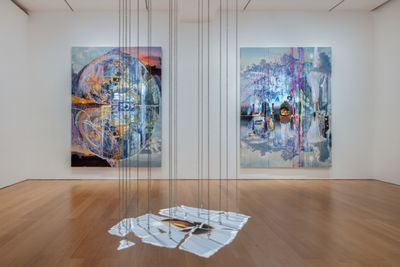
It is surprising that it has taken this long for an artist of Sze’s clout to have a first solo exhibition in Hong Kong. Having represented the United States at the 55th Venice Biennale in 2013—and enjoyed regular, large-scale institutional showings ever since—Sze is best known for her intricate installations that use everyday objects to create complex compositions, often playing with space and scale. In recent years, she has delved more deeply into painting and the show at Gagosian encompasses mixed wall-based works, as well as an installation of hanging sculptures from her ‘Fractured Image’ series.
The exhibition reflects the artist’s interest in exploring the image-saturated reality of contemporary life, as well as our relationship with everyday space, where macro and micro elements are given equal weighting. Paintings, such as Forever Now (2025)—depicting a bird soaring over a craggy landscape in which a wolf roams—combine gestural brushstrokes, descending drips, coloured tape, and torn paper with printed images to create compositions that confuse the digital and the analogue. Her sculptures, on the other hand, consist of fragmented shards of printed images suspended by metal chains into re-assembled jigsaw like compositions.
In an interview with newspaper South China Morning Post, Sze explains the exhibition was inspired by an earlier visit to Hong Kong, where the dramatic convergence of hills, water, and metropolis made a lasting impression. Sze remarked, ‘Everything in Hong Kong is piled up against each other, which is what I love about it. The boundaries are entirely mixed’. —a description that neatly echoes the layered, fragmentary logic of her installations and paintings in the show.
6. Louise Bourgeois: Soft Landscape
Hauser & Wirth, H Queen’s, 80 Queen’s Road, Central
25 March–21 June 2025
Why: A comprehensive exploration of Bourgeois’ enduring themes through rarely seen works spanning five decades.

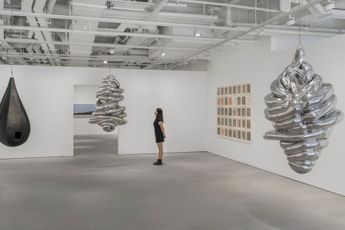
Louise Bourgeois: Soft Landscape presents an exceptional selection of the artist’s works, spanning from the 1960s to 2008, showcasing Bourgeois’ mastery across various media from monumental sculptures to evocative works on paper.
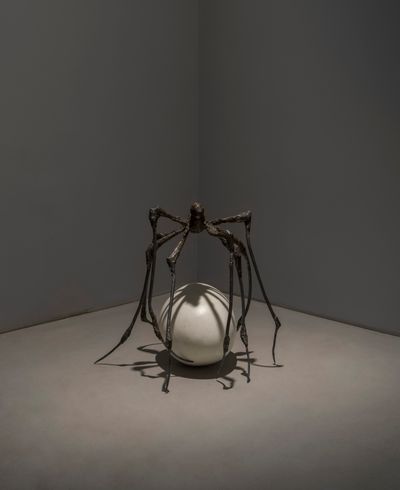
Two large-scale pieces make their Asian debut: Spider (2000), a haunting steel and marble creation, and Mamelles (fountain) (1991), a provocative three-metre-long bronze installation. The former exemplifies Bourgeois’ iconic arachnid motif, its delicate legs supporting an oversized marble ‘egg’ in a portrait of maternal contradictions. Mamelles (fountain) presents a series of breast-like forms, from which water trickles, suggesting a meditation on femininity, nurture, and the cyclical nature of life.
The Hong Kong exhibition arrives shortly after the landmark retrospective at Tokyo‘s Mori Art Museum, Louise Bourgeois: I Have Been to Hell and Back. And Let Me Tell You, It Was Wonderful, which featured more than 100 works spanning seven decades of her career. For audiences in Hong Kong, Soft Landscape offers an intimate glimpse into the breadth of Bourgeois’ oeuvre, underscoring the artist’s ability to transform personal trauma into universal narratives.
7. Lynne Drexler: The Seventies
White Cube, 50 Connaught Road, Central
26 March–17 May 2025
Why: Vibrant compositions of a rediscovered Abstract Expressionist, whose unique style blends nature, music, and modernist influences.


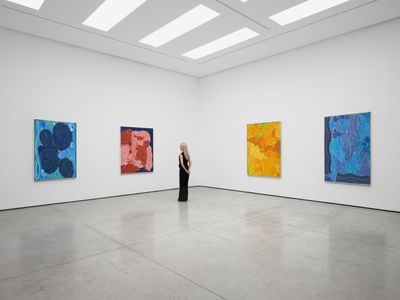
Lynne Drexler‘s Asia debut unveils a suite of works that capture a transformative decade in the American artist’s career. A second-generation Abstract Expressionist, Drexler studied under Hans Hofmann and Robert Motherwell in 1950s New York, where she absorbed the principles of Abstraction and the dynamism of the city’s avantgarde. By the 1970s, however, Drexler had moved beyond these influences, incorporating elements of Pointillism and Fauvism into her work while drawing increasingly from nature and music. This period marked a turning point for Drexler, as she crafted a distinctive visual language that married mosaic-like patterns with exuberant colour harmonies.
Drexler was an opera enthusiast who sketched during the performances she attended at Carnegie Hall in New York, and her works from this period often translate auditory experiences into visual rhythms, creating compositions that appear to quiver with vitality. In Untitled (1974), for instance, jewel-toned shapes coalesce on the surface of the canvas, each brushstroke imbuing the work with pulse-like movement. As two of the artist’s friends, Ann Hughey and Helen Francies, observed in ‘On Island’, an essay republished on Ocula, Drexler’s passion for opera was not merely a pastime but a sustaining force throughout her life—a quality that resonates in the lyrical vibrancy of her paintings.

8. Sasaoka Yuriko: Animale
PHD Group, Goose Neck Bridge, Wan Chai
22 March–24 April 2025
Why: A young gallery’s ambitious programme and a vivid, politically edged meditation on working animals.
PHD Group, a rising force in Hong Kong’s contemporary art scene, will this year make its debut at Art Basel Hong Kong with a multi-sector presence featuring presentations by gallery artists Michele Chu, Christopher K. Ho, and Sasaoka Yuriko. The latter is also the subject of the gallery’s current show at its space in Wan Chai, located in a renovated 1970s rooftop clubhouse on the top floor of a commercial building.
Sasaoka is an Osaka-born artist who received her MFA in oil painting and pursued a doctorate in media art from Kyoto City University of Arts. In her practice, Sasaoka explores the ambiguous relationship between humans and the natural world through installations that reveal Surrealist, immersive landscapes often drawing inspiration from animism, masquerade, theatre, puppetry, and Osaka’s comedy traditions.
Her solo exhibition, Animale, encompasses an immersive video installation that challenges anthropocentric perspectives by investigating the historical roles of animals in society—from fables and pets to their use in political diplomacy and labour. The impetus for the work began with the story of Wojtek, a Syrian brown bear who became a symbol of resilience during World War II but later expanded to encompass other working animals whose histories the artist explored in residencies and projects in Berlin, Edinburgh, and Japan.
9. Wang Xin: Soul Light Legacy Plan
DE SARTHE, 26/F, M Place, 54 Wong Chuk Hang Rd, Wong Chuk Hang
22 March–17 May 2025
Why: An immersive exhibition that dances with technology.

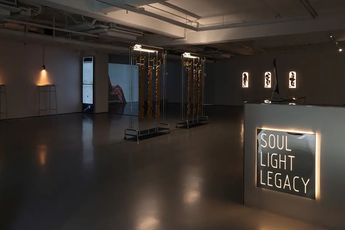
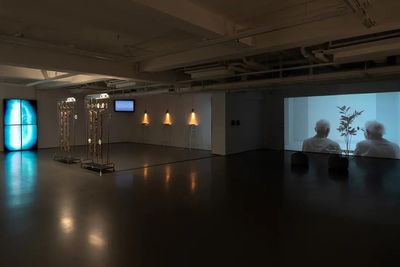
For her latest DE SARTHE showing, Wang Xin has transformed the gallery into a fictional tech start-up showroom, blurring the lines between art installation and futuristic product display. Consciousness Upload Terminal (2025) invites viewers to interact with a sleek, pod-like structure that purportedly captures and stores human consciousness, raising questions about the nature of self and the ethics of technological immortality.
Wang’s artistic practice is uniquely informed by her training as a certified hypnotist. In 2014, she worked with Imago Kinetics to establish the 8HZ Hypnosis Lab at Imago Kinetics’ Art Center in Hangzhou, an ongoing project focusing on spontaneous inner vision through hypnosis-based methods. This unusual combination of hypnosis and art allows Wang to explore the boundaries of consciousness and perception in her work. —[O]
Main image: Sin Wai Kin, The Time of Our Lives (2024) (film still). Two-channel video. 28 min. Initiated by Accelerator and co-produced with Kunsthall Trondheim, Canal Projects, and Blindspot Gallery, supported by Vince Guo. Courtesy the artist and Blindspot Gallery.





A respected voice in contemporary art discourse.
Focusing on ambitious storytelling and insightful art-world commentary. Ocula Magazine publishes in-depth interviews, critical essays and timely analysis on the artists, exhibitions and ideas driving the global art world.
Learn more about Ocula Magazine
Showcasing the best of the art world.
Ocula partners with galleries from around the world to highlight their artists, artworks and exhibitions. Gallery membership is by application and invitation, with each member vetted by an independent panel.
Learn more about Ocula Membership
Specialises in the sale of major artworks.
Led by a team with deep ties to the world’s leading auction houses, galleries and collectors. Ocula’s advisory team offers bespoke services to high-net-worth clients from around the world who are looking to acquire the best of contemporary and modern art.
Learn more about our team and services