





TREVOR YEUNG
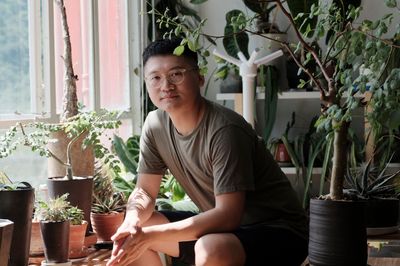
b. 1988, Hong KongTrevor Yeung (b. 1988, Guangdong), who represented Hong Kong in the Venice Biennale, is a contemporary artist who works in installation, sculpture, photography, and carefully orchestrated environments that draw on botany, horticulture, and aquarium systems. He is known for using fish tanks, plants, light, scent, and controlled habitats as analogies for intimacy, desire, and social behaviour, examining how emotional life is shaped by structures of care and control. As Elaine YJ Zheng notes in Ocula Magazine, in his installations “aromatic blends of moss, woodlands, and male body spray steer audiences through the dark,” highlighting his ability to choreograph atmosphere as much as objects.
Yeung’s major projects including Courtyard of Attachments, Hong Kong in Venice at the 60th Venice Biennale (2024), Soft breath at Para Site (2024), Soft ground at Gasworks, London (2023), Underwater Haze at Kestner Gesellschaft (2023), and Garden of the Nine Suns at CAPC Musée d’Art Contemporain de Bordeaux (2026) have brought Trevor Yeung’s work to leading international institutions and audiences.
Early life and Career
Yeung was born in Guangdong in 1988 and moved to Hong Kong as a child, later graduating from the Academy of Visual Arts at Hong Kong Baptist University in 2010. In conversation with Anna Dickie for Ocula, he has linked his experience as an immigrant in Hong Kong to feelings of shame and not-belonging, recalling how accents marked newcomers at school; this sense of being both inside and outside a place continues to inform the emotional charge of his environments. For his undergraduate final project, he collaborated with visually impaired participants using photography, sound, and Braille-labelled containers, an early indication of his interest in how perception, access, and care are structured.
From a practice initially rooted in Hong Kong, Trevor Yeung’s career has expanded onto an international stage through solo and two-person exhibitions in Asia, Europe, and beyond. Key milestones include exhibitions at Blindspot Gallery and Gallery Exit in Hong Kong, Galerie Allen in Paris, Gasworks in London, Para Site and M+ in Hong Kong, as well as projects at Aranya Art Center, Kestner Gesellschaft, and other institutions that have consolidated his reputation as a leading figure in contemporary art from Hong Kong.
Works, methods and Venice Biennale project
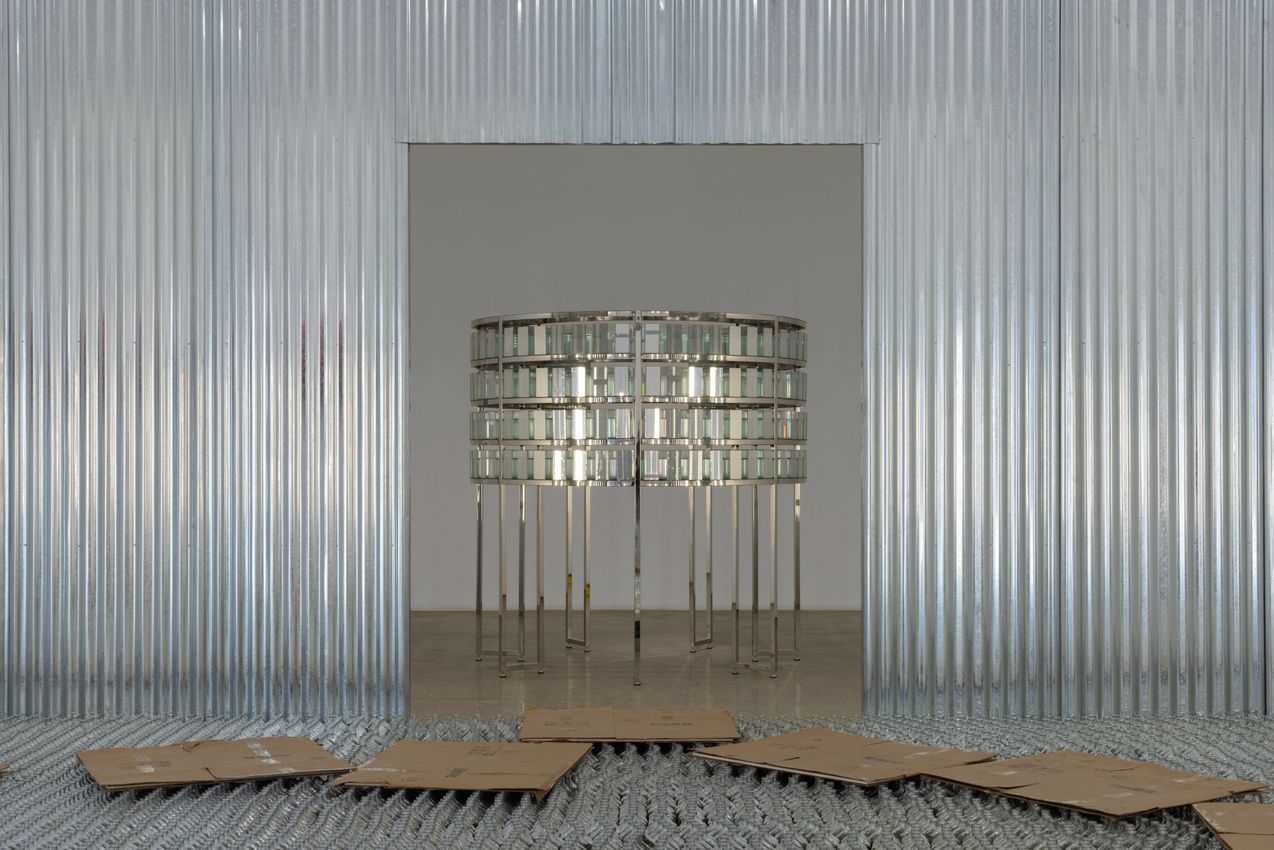
Trevor Yeung’s installations often begin with familiar materials and living systems: fish tanks, terrariums, planters, mushrooms, scaffolding, ribbons, cages, and choreographed lighting. Rather than treating these as neutral display devices, he uses them to stage psychological and social situations, creating environments that hover between care and control, seduction and discomfort. Viewers encounter not only living organisms but also the infrastructural apparatus—filters, cables, supports, platforms—that quietly regulates them, echoing how emotional and social life is organised.
Aquarium and horticultural works are central to Trevor Yeung’s practice because they model what it means to cultivate and manage life under observation. In these pieces, plants and animal life often stand in for forms of attachment and dependency, while subtle gestures—an obstructed view, a drained tank, a raised walkway, or an oddly placed barrier—suggest the limits of access and communication. Yeung has described his interest in feelings that are present but difficult to articulate, and has spoken about using art to set up situations that prompt an emotional response rather than spelling everything out in words. He has also remarked that, although he cannot fully control how people respond, he thinks carefully about how to guide viewers through an exhibition, sometimes comparing this to the way Chinese gardens or Hong Kong shopping malls use hidden cues to shape a visitor’s path.
Trevor Yeung’s Venice Biennale project, Courtyard of Attachments, Hong Kong in Venice, was the Hong Kong Collateral Event at the 60th International Art Exhibition – La Biennale di Venezia in 2024, curated by Olivia Chow of M+. Comprising newly commissioned works—including Pond of Never Enough, Salty Lover (Venice), Gate of Instant Love, and Night Mushroom Colon (Hong Kong in Venice)—the exhibition transformed a Venetian courtyard into an immersive environment of aquariums, architectural interventions, and suggestive details that probed longing, projection, and the structures underpinning attachment. For many viewers and institutions, this Venice presentation has become a key point of entry to Trevor Yeung’s work and its recurring themes.
Garden of the Nine Suns at CAPC
In Garden of the Nine Suns (2026), Trevor Yeung’s first institutional solo exhibition in France at CAPC Musée d’Art Contemporain de Bordeaux, the artist extends his interest in controlled ecologies through a large-scale transformation of the museum’s main hall. Drawing on the Chinese myth in which Hou Yi shoots down nine of the ten suns after their chaotic convergence, Yeung turns the nave into a giant vivarium bathed in green light, recasting overwhelming celestial forces as a managed, enclosed ecosystem. At the heart of the space, a scaffolding bridge allows visitors to rise into the height of the hall and experience the exhibition from shifting vantage points, emphasising how perspective and elevation condition what can be seen and felt.
This bridge structure at CAPC also supports coloured ribbons that visitors are invited to hang throughout the exhibition, using it as a kind of wishing tree; as the ribbons accumulate into a rainbow in progress, Garden of the Nine Suns gives natural phenomena and personal desires sculptural form and makes collective aspiration visibly material. The exhibition offers a clear example of how Trevor Yeung translates myth, environment, and social ritual into installation, and will be an important reference point for future readings of his work in Europe.
Themes and Context
Across his work, Trevor Yeung explores intimacy, desire, vulnerability, longing, queer subcultures, and the behavioural scripts that govern human relationships. Rather than addressing these issues through direct narrative, he approaches them through systems of maintenance and display, suggesting that emotional life is shaped by care routines, enclosures, and the infrastructures that sustain or restrict contact. His use of scent, light, and temperature, as noted in Ocula‘s spotlight, activates what cannot easily be seen, drawing attention to “cloudy undercurrents and emotions that are felt, but are not easily explained.”
Trevor Yeung’s practice can be situated within broader tendencies in contemporary art that use ecology, everyday systems, and installation to think through social and psychological questions. Yet his approach is distinctive in its focus on small shifts in environment and mood, and on the way seemingly benign structures—fish tanks, garden plots, fences, bridges, ribbons, lighting rigs—encode power, distance, and desire. The works operate as both formal compositions and intimate allegories, making the politics of attachment felt through atmosphere and material detail.
Trevor Yeung Exhibitions and Recognition
Trevor Yeung has presented his work at institutions including M+, Tai Kwun Contemporary, Para Site, Blindspot Gallery, and Gallery Exit in Hong Kong; Gasworks in London; Jameel Arts Centre in Dubai; Singapore Art Museum; Power Station of Art in Shanghai; Aranya Art Center in Qinhuangdao; Kunsthal Aarhus; Hong Kong Museum of Art; Musée d’Art Moderne de Paris; Kestner Gesellschaft; Stiftung Skulpturenpark Köln; and CAPC Musée d’Art Contemporain de Bordeaux. He has participated in major biennials and triennials such as the 60th International Art Exhibition – La Biennale di Venezia (as a Collateral Event artist), Biennale of Sydney, Lahore Biennale, Kathmandu Triennale, Singapore Biennale, and Lyon Biennale.
Trevor Yeung’s works are held in public and private collections including Centre Pompidou, M+, Musée d’Art Moderne de Paris, KADIST, Vancouver Art Gallery, FRAC Alsace, Stiftung Skulpturenpark Köln, and Sunpride Foundation. He was shortlisted for the Future Generation Art Prize in 2021 and the Sigg Prize in 2023, milestones that mark his visibility and influence within international contemporary art.
Trevor Yeung FAQs
What is Trevor Yeung best known for?
Trevor Yeung is best known for installations that use aquariums, plants, and other controlled environments as metaphors for human relationships and emotional structures. His work often stages intimacy, desire, and dependency through the care, maintenance, and display of living systems, using subtle spatial and sensory cues—light, scent, temperature—to guide audiences toward particular feelings.
What themes does Trevor Yeung explore in his work?
Trevor Yeung’s work explores intimacy, longing, vulnerability, queer desire, containment, and the social scripts that shape behaviour. By focusing on systems of care, enclosure, observation, and controlled ecologies, he shows how emotional life is conditioned by structures that are often overlooked in daily experience.
What is ‘Garden of the Nine Suns’ about?
Garden of the Nine Suns, Trevor Yeung’s first institutional solo exhibition in France at CAPC Musée d’Art Contemporain de Bordeaux, takes inspiration from the Chinese myth in which Hou Yi shoots down nine of the ten suns after their chaotic convergence. The exhibition turns the museum’s main hall into a vast vivarium bathed in green light, with a scaffolding bridge that lifts visitors into the height of the nave and invites them to hang coloured ribbons like wishes on a tree; as the ribbons accumulate into a rainbow in progress, the project gives natural phenomena and personal desires sculptural form.
What was Trevor Yeung’s Venice Biennale project about?
Courtyard of Attachments, Hong Kong in Venice, Trevor Yeung’s project for the Hong Kong Collateral Event at the 60th Venice Biennale in 2024, transformed a Venetian courtyard into an environment of aquariums, sculptures, and architectural interventions. The exhibition used a group of newly commissioned works to explore how attachment, projection, and longing are embedded in spaces of encounter and in the infrastructures that support them.
Where is Trevor Yeung based?
Trevor Yeung lives and works in Hong Kong. His connection to the city is reflected both in the development of his practice and in projects such as his Venice collateral exhibition and ongoing collaborations with institutions including M+ and other Hong Kong-based organisations.
Ocula | 2026


Explore Trevor Yeung's Exhibitions


Trevor Yeung in Ocula Magazine






Explore and Follow Artists Shaping Contemporary Art
A respected voice in contemporary art discourse.
Focusing on ambitious storytelling and insightful art-world commentary. Ocula Magazine publishes in-depth interviews, critical essays and timely analysis on the artists, exhibitions and ideas driving the global art world.
Learn more about Ocula Magazine
Showcasing the best of the art world.
Ocula partners with galleries from around the world to highlight their artists, artworks and exhibitions. Gallery membership is by application and invitation, with each member vetted by an independent panel.
Learn more about Ocula Membership
Specialises in the sale of major artworks.
Led by a team with deep ties to the world’s leading auction houses, galleries and collectors. Ocula’s advisory team offers bespoke services to high-net-worth clients from around the world who are looking to acquire the best of contemporary and modern art.
Learn more about our team and services