





Strong Showing for Korean Art Amid Subdued Opening Days at Frieze Seoul

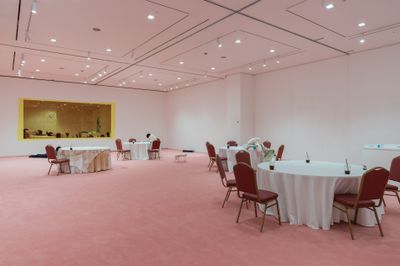
Gagosian (above), placed unnamed but “significant” works from its solo presentation of Damien Hirst with “notable collections”. Gagosian, Frieze Seoul 2026. Photograph: WeCap Studio. Courtesy of Frieze.

Amid the busiest week in South Korea’s art world calendar, sales during the opening days of Frieze Seoul were somewhat muted. Wednesday’s biggest wins both went to Thaddaeus Ropac, where Adrian Ghenie’s Figure with Funerary Stele (2026) sold for €1.1 million and Antony Gormley’s HOLD (2024) for £750,000.
The founder of the eponymous gallery described it as a “strong start to the fair”, citing “swift sales” to largely Korea-based collectors. “It’s fantastic to see how Seoul Art Week has matured across the city, with the impressive institutional developments and the calibre of museum exhibitions,” Ropac said.
Indeed, across the first fair of the autumn season—and in a market still in the midst of a hesitant correction—there was a strong showing for Korea’s own artists, galleries, collectors and (according to several galleries) its institutions.
Seoul-based Gallery Hyundai sold multiple works by Kim Tschang-yeul, best known for his paintings of water droplets, for between $180,000 and $1.1 million, and parted with works by the avant-garde multidisciplinary artist Seung-taek Lee for between $170,000 and $700,000.
Meanwhile Kukje Gallery, also based in the South Korean capital, sold Ha Chong-Hyun’s mixed media work Post-Conjunction 21–512 (2021) for $253,000–$303,600—just one of several prominent sales for members of the Dansaekhwa (monochrome painting) movement of which Ha, now 91, was a key figure. The gallery also sold fellow Dansaekhwa artist Park Seo-Bo’s Ecriture No. 220611 (2022) for $250,000–$300,000.
Interest in the movement was also seen at blue chip galleries, with White Cube selling a further two Park works: the mixed media Ecriture No. 221121 (2022) fetched $300,000, and Ecriture No. 070909 (2007) sold for $190,000.
There were sales for established international names, too. Pace Gallery sold Lee Ufan’s With Winds (1987), an early painting from his celebrated Winds series, and David Hockney’s Life (2012), a work on paper from the artist’s digital practice, for undisclosed sums.
David Zwirner reported “significant” sales, including a 1942 painting by Giorgio Morandi and a 1983 painting by Alice Neel, while Hauser & Wirth placed “key works” from Louise Bourgeois and Jenny Holzer, among others, for between $185,000 and $600,000.
James Green, associate partner at David Zwirner, described Korea as possessing strong buying power and a “sophisticated collector base”, while Hauser president Marc Payot praised the fair’s “discerning audience”.
Zwirner also sold a new painting by Lucas Arruda—price undisclosed—to a museum in Asia, while Hauser noted “significant interest” from collections across the region. Gagosian also placed unnamed but “significant” works from its solo presentation of Damien Hirst with “notable collections”, including an “important museum within Asia”.
Lehmann Maupin, meanwhile, sold Calida Rawles’ Feel Our Blues That Go Back And Black (2026) into a “prominent Asian foundation” for between $200,000–$300,000. Founder Rachel Lehmann said the gallery placed “a significant number of works on the preview day, with the majority acquired by Asian clients, reflecting the continued resilience and depth of the market in the region”.
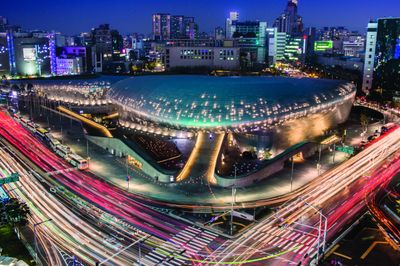
Frieze’s final—at least for the time being—edition at Coex, ahead of its move to Dongdaemun Design Plaza next year, was a notably busy one, with many fair-goers seemingly hailing from within Korea. Crowds were particularly taken with David Zwirner’s booth, where a large flower sculpture by Yayoi Kusama, who died last week, was on display.
Kusuma’s work, however, was not as omnipresent at Frieze as Hockney’s was in Basel in June, with the British artist having died less than a week before the Swiss fair began. The dizzying sales of Art Basel have not been repeated in Seoul, but the Korean fair’s results leave room for cautious optimism as we look ahead to London and Paris.




A respected voice in contemporary art discourse.
Focusing on ambitious storytelling and insightful art-world commentary. Ocula Magazine publishes in-depth interviews, critical essays and timely analysis on the artists, exhibitions and ideas driving the global art world.
Learn more about Ocula Magazine
Showcasing the best of the art world.
Ocula partners with galleries from around the world to highlight their artists, artworks and exhibitions. Gallery membership is by application and invitation, with each member vetted by an independent panel.
Learn more about Ocula Membership
Specialises in the sale of major artworks.
Led by a team with deep ties to the world’s leading auction houses, galleries and collectors. Ocula’s advisory team offers bespoke services to high-net-worth clients from around the world who are looking to acquire the best of contemporary and modern art.
Learn more about our team and services