






Six Highlights of Frieze Seoul 2024

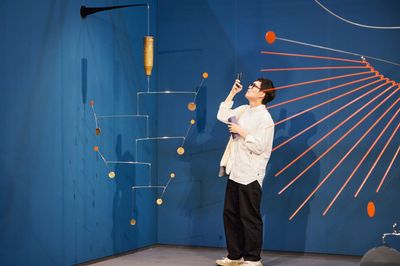
Sojung Jun, Syncope (2023). Installation view: Frieze Seoul 2024: Focus Asia (4–7 September 2024). Courtesy Barakat Contemporary, Seoul.
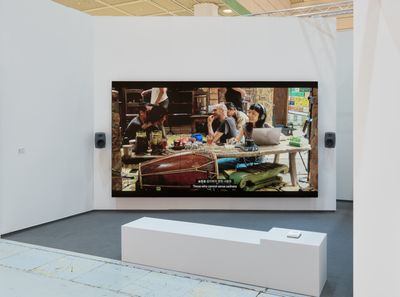
Sojung Jun at Barakat Contemporary: Best Film Presentation
Barakat Contemporary at Focus Asia highlighted the award-winning work Syncope (2023) by Korean artist Sojung Jun. The half-hour film begins as a travelogue following two performers: a third-generation Korean gayageum [traditional Korean musical instrument] player born in Japan, and a performer who left France to pursue gamelan [traditional ensemble music of Indonesia] after a personal derailment. Their journeys are a premise for the artist to explore a series of aural and visual imaginings, with the historical Trans-Siberian Railway as an overarching anchor. The masterfully executed montage plays out like an improvised dance, where fleeting, sensual moments from everyday life extend into virtual realms, tinged with the echoes of history embedded in the railway’s legacy.

Kingsley Gunatillake at Blueprint12: Best Focus Asia Presentation
In a sea of vibrant colours and lighthearted works, the sombre paintings and book-based sculptural works by Sri Lankan artist Kingsley Gunatillake—presented by New Delhi gallery Blueprint12—stood out with compelling gravitas.
Gunatillake’s ‘Protest’ series (2024) is a striking exploration of violence, memory, and resistance in relation to the burning of the Jaffna Public Library in Sri Lanka in 1981. Miniature figures of protestors, cast from copper, are staged on charred, cut, and scarred books, while some books are embedded with bullet shells, serving as both art objects and historical witnesses.
Gunatillake’s paintings are equally powerful. Each mark is charged with emotional weight, and textures shift between rough and delicate, mirroring the tension between control and chaos.
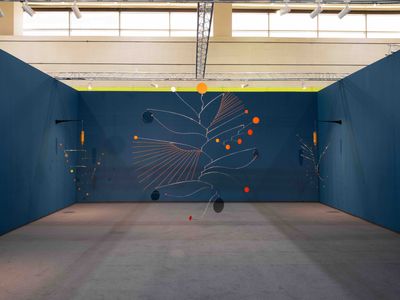
Galerie Quynh: Most Adroit Booth
Tuan Andrew Nguyen transformed the fair’s booth format into a genre of its own, making it one of the most impressive artistic gestures at Frieze Seoul. It’s no surprise that it earned Galerie Quynh the Frieze Seoul Stand Prize. From a distance, Nguyen’s hanging sculptures (all 2024)—anchored by the central Broken Sun and others titled after the 57mm ballistic shells found in the province of Quang Tri—could easily be mistaken for the work of Alexander Calder.
This visual echo is no accident; Nguyen previously created a fictional reincarnation of Calder in his film, The Unburied Sounds of a Troubled Horizon (2022). However, upon closer inspection, these modernist forms reveal themselves as unexploded bombs, repurposed into instruments of healing. Intermittent sounds of staff members striking the works, a deliberate directive from the artist, further cut through the bustling fair environment, adding a layer of auditory impact to the display.
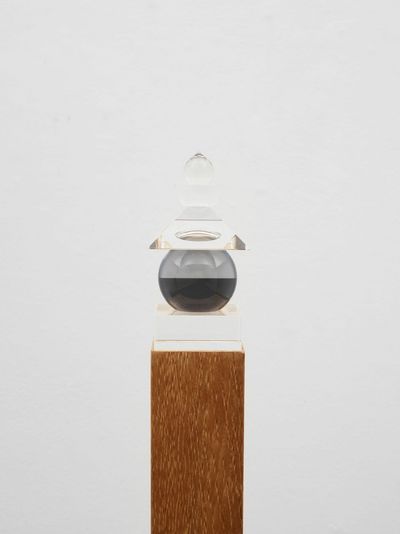
Lisson Gallery: Best Backroom
Treasures are sometimes discretely displayed in the backroom of a booth. In an interior room of the Lisson stand, an unexpected sculpture by Hiroshi Sugimoto was presented with a more recognisable large-scale photographic print by the artist.
Sugimoto’s print emerged from his ‘Optiks’ series (2009–ongoing), which the artist creates by isolating sections of visible, spectral light using a prism. He often refracts the light using a mirror in the darkroom to make a light-based rendition of an abstract painting. In this case, the result is a vibrant colourscape of black fading into electric blue.
Sitting opposite the large print was the sculpture by Sugimoto entitled Five Elements 415, Celtic Sea, St. Agnes (1994/2012). Made up of a stack of geometric, optical glass shapes placed atop of a tall, thin wooden plinth, its composition is influenced by the traditional Buddhist pagoda design. Buddhism is an important influence on Sugimoto’s practice, and the different shapes of the piece relate to the elements of earth, water, fire, wind, and emptiness, the last of which is signified by a droplet form. Enshrined within the sculpture is a miniature black-and-white edition of Sugimoto’s ‘Seascapes’, with the distinct horizon line splicing the composition in half. As you move around the sculpture, the image morphs and changes with the light, disappearing completely at one point.
Also in the booth were two works by American artist Lucy Raven—also small and unassuming but nicely positioned next to Sugimoto’s experiments in light. Raven’s work, Particles 06 (2023), is composed of fluorescent ink dots on black paper in a smoke plexiglass frame and relates to the artist’s ongoing interest in exploring the form and function of the moving image, along with the myths of the American West. A large-scale work by the artist is currently showing in the Gwangju Biennale.
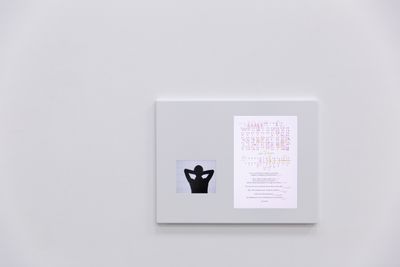
TKG+: A Booth of Subtle Mastery
Amidst the array of flashy artworks at the fair, one unassuming lightbox in the booth of TKG+ drew my attention. Depicting nothing more than a white corner of the artist’s studio, Joyce Ho‘s Studio corner (2024) is a subtle homage to Bruce Nauman, setting the tone for the Taipei gallery’s understated yet impactful presentation. In another work by Ho—a video titled Artist statement (2024)—the artist smiles at the camera, delivering an introduction to her practice while dressed in professional attire.
Accompanying the video is a printout of the artist’s statement, marked up with extensive handwritten notes that detail pauses, rhythms, and movements, adding a layer of absurd, self-reflexive humour. Also showing is Ho’s House keeping (2024), a large-scale installation comprising tiered fabric arranged with repetitive precision.
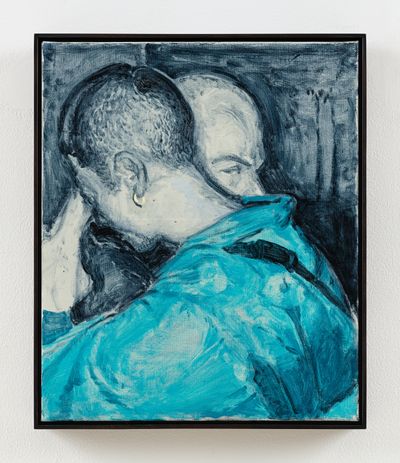
TKG+ has promoted Taiwanese experimental art since 2009, and Ho’s playful collection of works indeed brought a mischievous charm to Frieze Seoul. Complementing Ho’s works were Amol K Patil’s tactile, visceral organic forms, while the nocturnal allure of Chen Ching-Yuan‘s ‘Night Walking’ (2024) painting series offered a compelling contrast to the abstract forms and fluorescent colours prevalent throughout the fair.
ROH and Whistle: Best Shared Booth
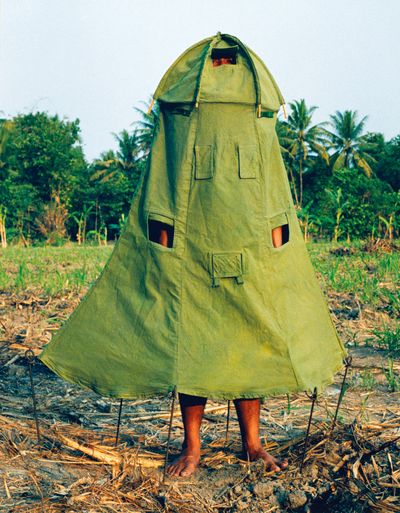
ROH (Jakarta) and Whistle (Seoul) each presented five artists in a shared booth under the theme of Reflections. The centrepiece was Mella Jaarsma‘s Refugee Only (2003), best described as a wearable tent with an inventory of essentials for life on the road, among them a hair brush, toothbrush and toothpaste, mirror, and instant foods. At the time Jaarsma sought to respond to humans’ vulnerability to displacement as the result of natural disasters; seen today, Jaarsma’s work invokes ongoing wars, refugee crises, and mass displacement.
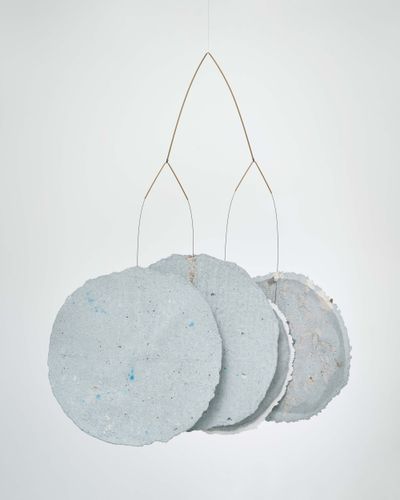
Materials and forms also reflect one another in the joint booth, maintaining a considered balance in the space. Hyun Bhin Kwon‘s fragmented stone wall pieces closely mirror the dimensions of Syaiful Garibaldi’s painting In Between #25 (2024) on the adjacent wall, while Jiieh G Hur‘s hanging installation, 11 - 11 Blue (2024), mimics the weighty materiality of Kwon’s work with paper.
Main image: Sojung Jun, Syncope (2023). Installation view: Frieze Seoul 2024: Focus Asia (4–7 September 2024). Courtesy Barakat Contemporary, Seoul.




A respected voice in contemporary art discourse.
Focusing on ambitious storytelling and insightful art-world commentary. Ocula Magazine publishes in-depth interviews, critical essays and timely analysis on the artists, exhibitions and ideas driving the global art world.
Learn more about Ocula Magazine
Showcasing the best of the art world.
Ocula partners with galleries from around the world to highlight their artists, artworks and exhibitions. Gallery membership is by application and invitation, with each member vetted by an independent panel.
Learn more about Ocula Membership
Specialises in the sale of major artworks.
Led by a team with deep ties to the world’s leading auction houses, galleries and collectors. Ocula’s advisory team offers bespoke services to high-net-worth clients from around the world who are looking to acquire the best of contemporary and modern art.
Learn more about our team and services