


The art world in focus
Subscribe to our newsletter for news and insights on artists, galleries and exhibitions.


Kimberley Moulton, a Yorta Yorta woman, is an influential curator whose work foregrounds First Nations knowledge and cultural practice. She is the adjunct curator of Indigenous art at London’s Tate Modern, senior curator for Melbourne’s RISING arts festival, and most recently, she led the 2025 TarraWarra Biennial.
Presented at the TarraWarra Museum of Art in the picturesque Yarra Valley outside Naarm/Melbourne, the TarraWarra Biennial was first launched in 2006 as an experimental platform for identifying new directions in Australian art. Under Moulton’s curatorial vision, the current edition, running until 20 July 2025 and featuring 22 artists and makers, draws attention to restorative approaches and cross-cultural connections.
The Biennial’s title, We Are Eagles, references a powerful 1938 speech by Yorta Yorta leader Pastor Sir Douglas Nicholls, delivered on the Day of Mourning, which marked 150 years since the colonisation of Australia. In his address, Nicholls demanded equal rights and an end to colonial oppression, declaring, ‘We do not want chicken feed … we are not chickens; we are eagles’.
Ocula invited Moulton to introduce works by four artists reflective of the exhibition’s concepts.

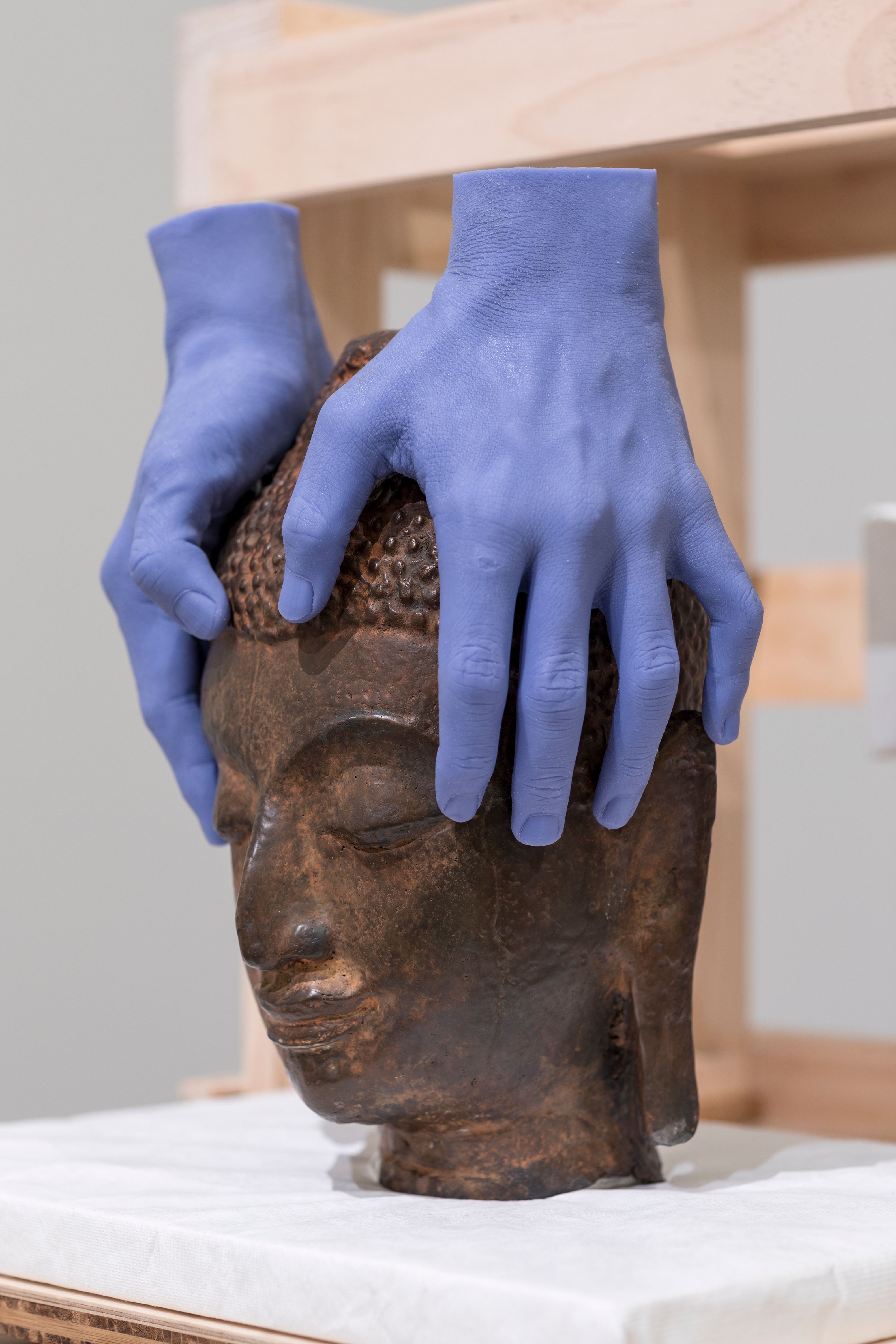
The sculptural works of Nathan Beard expand on the artist’s research into Thai cultural belongings located in the collections of Western institutions. 1952,1215.1, 1952,1215.4 and 1963,1016.12 feature replicas of bronze Buddha heads that represent unique styles of traditional Thai art (U-Thong, Lopburi and Ayutthaya), spanning from the 13th to the 16th centuries, which entered the collection of the British Museum in the mid-20th century.
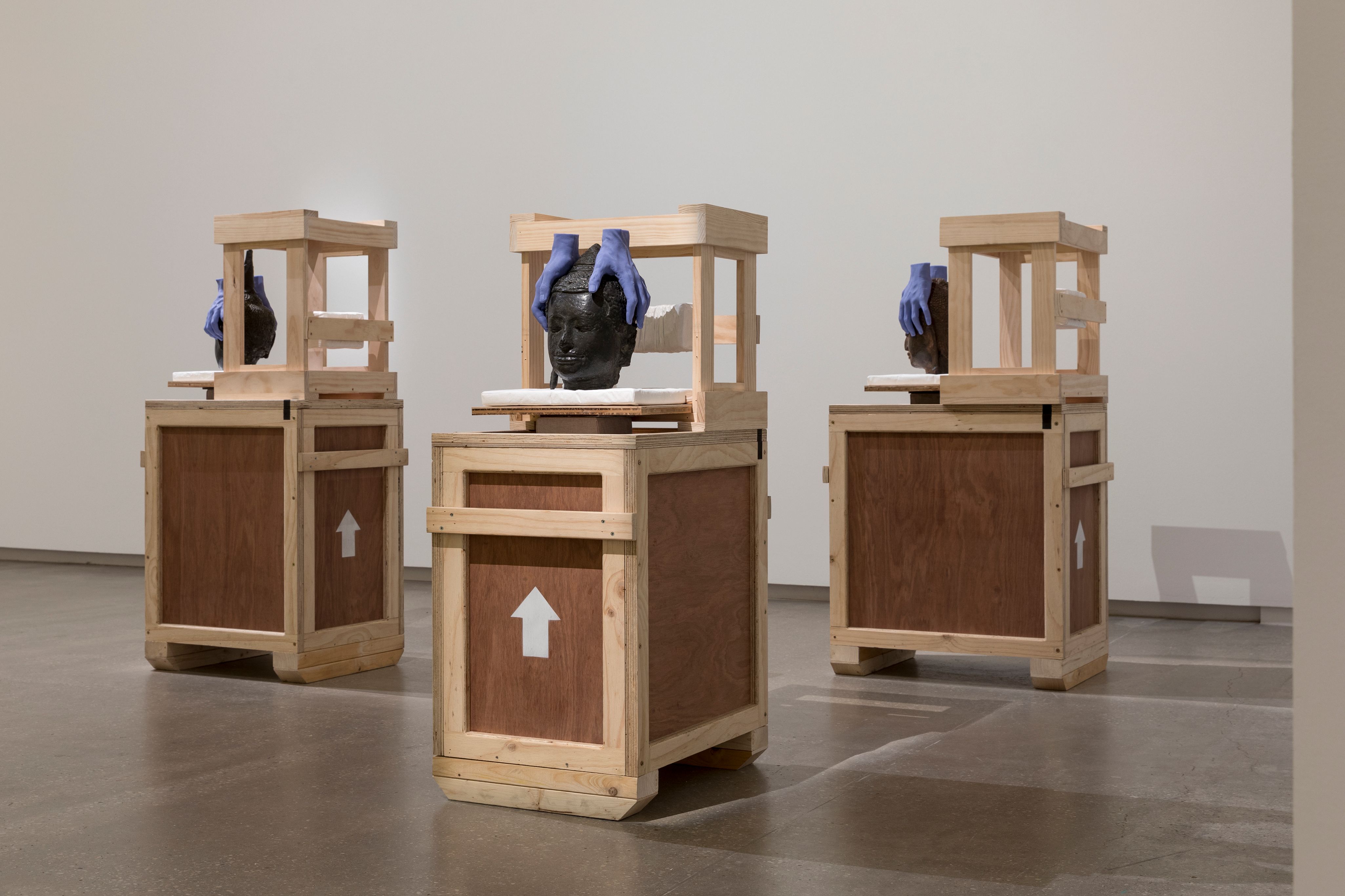
Nathan commissioned scans of the objects and then fabricated new bronzes at a foundry in Nakhon Pathom province, specialising in the production of Buddhist sculptures and antique forgery. This layered process of reproduction also interrogates the complexity of access to collections and the way in which new technologies can both provide access when geographically removed from the institution that holds them and hinder the possibility of return.
These reproductions are mounted on functional crates and stillages specifically designed to resemble museum-grade storage containers. The bronze forms emerge and suggest an active contrast of being either in the process of being packed away or unpacked, drawing attention to the sterile conditions in collection viewing spaces. Each head is tenderly caressed by silicone casts, a medium for which Nathan is renowned; the casts here are of the artist’s hands performing Thai massage techniques. These works are a form of self-determined and insurgent repatriation. They act as a portal to the historical material, and with the addition of the silicone hands care is being activated in an act of love to disrupt a history of possession.
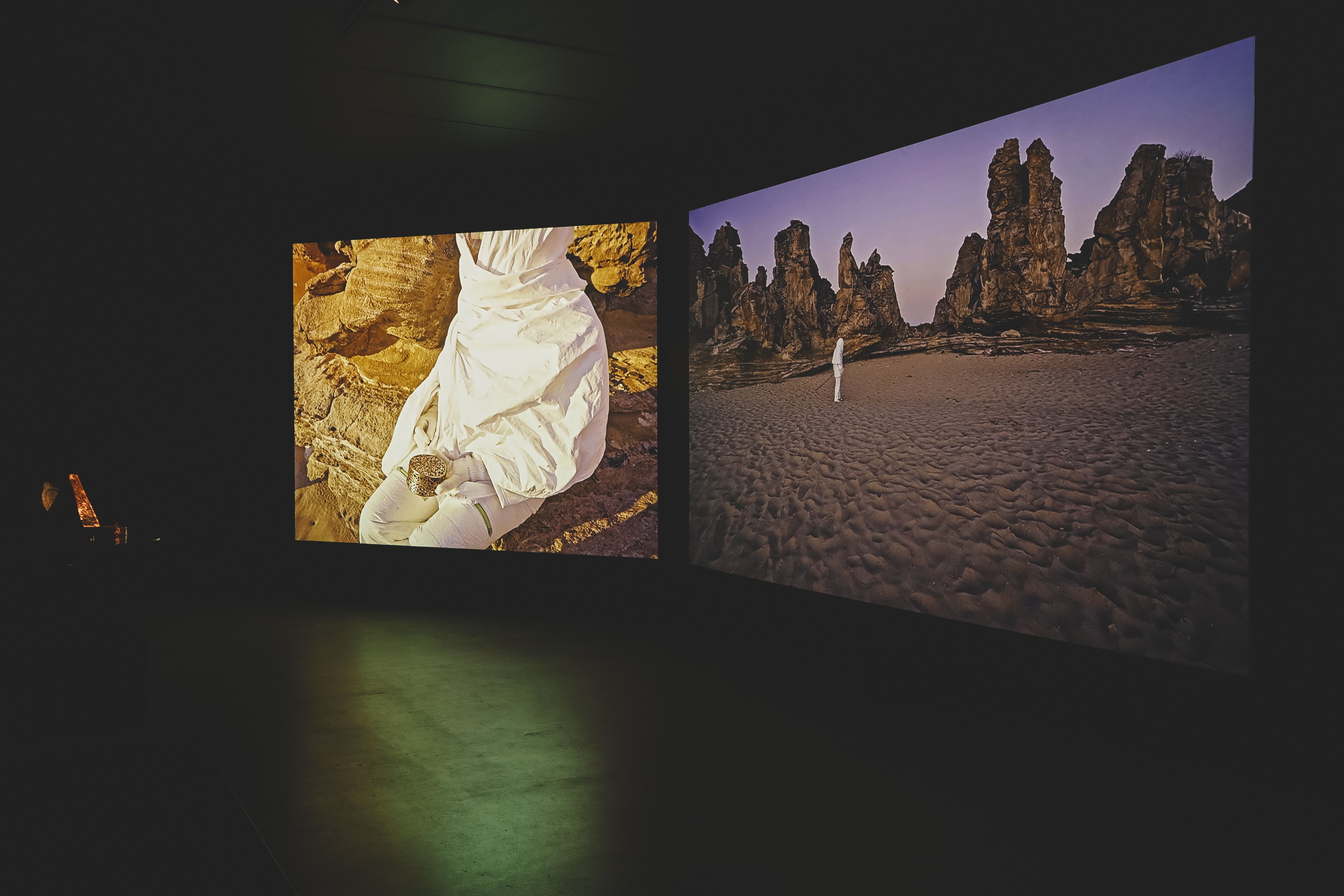
The night sky and ideas of return and navigation thread throughout We Are Eagles. Shireen Taweel’s Pilgrimage of a Hajjanaut is an exploration of speculative futures and embodied Islamic faith and science which looks to both the pilgrimage of the Hajj (the Islamic pilgrimage to Mecca) and ideas of space travel and navigating the cosmos. This body of work has been developed after years of research by the artist into 9th to 16th century Arabic celestial navigation devices which had the latitude of Mecca inscribed on them. These were used for travel and pilgrimage to sacred places in the Muslim world.
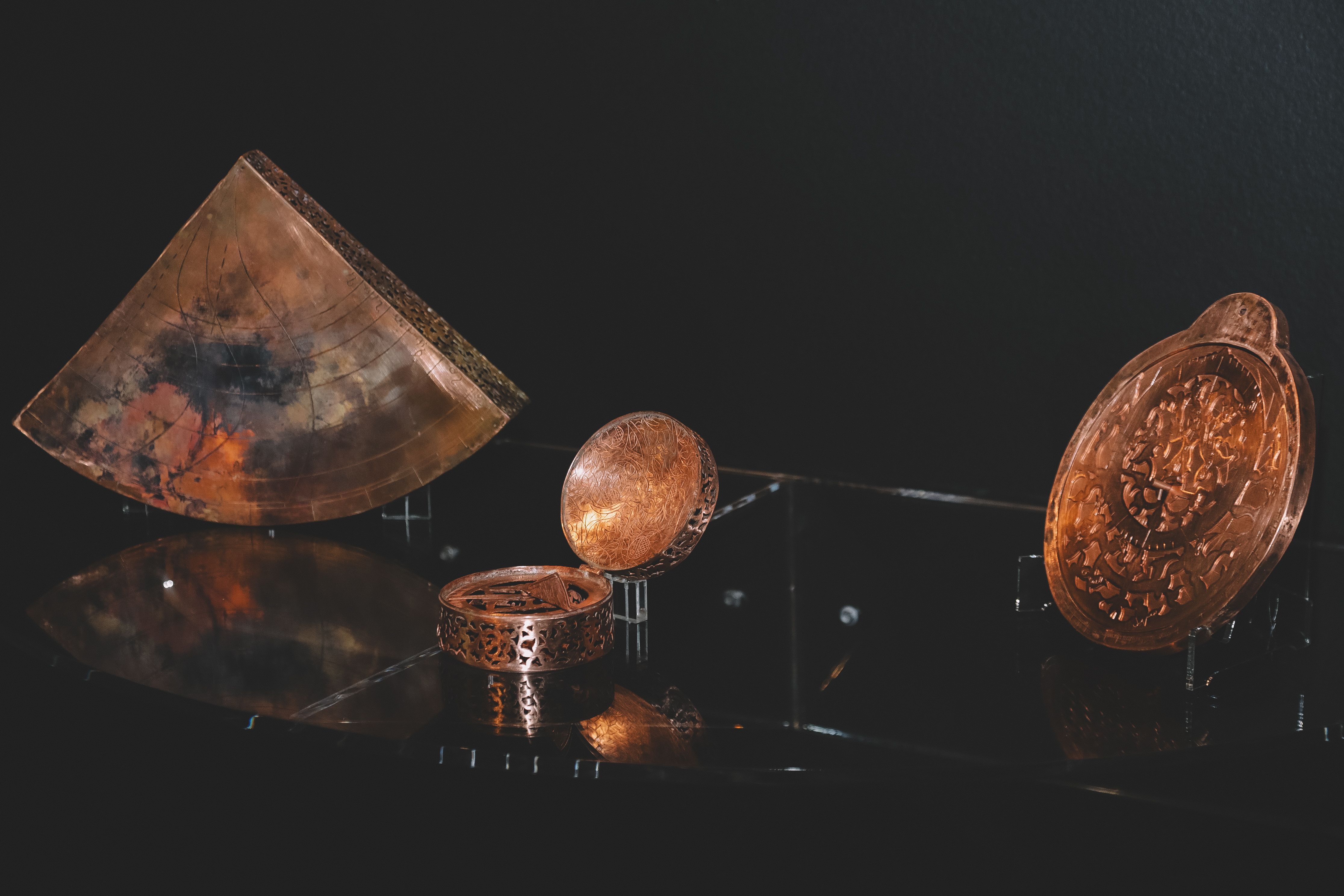
Working across the materiality of copper, film and print, Shireen created the Hajjanaut character, who is played by the artist in her three-channel film sharing the journey of a Muslim woman in speculative space. The film details the pilgrimage across Aotearoa New Zealand and Australia that the artist took to create the work, which imagines a speculative future of space travel. This work is informed by Shireen’s positionality of growing up in Australia as a Lebanese person and by what it might be to undertake a form of Hajj which also could translate to being ‘off earth’. The pilgrimage Shireen undertook with her partner and daughter covered a total of 5364 nautical miles, navigated by using her handcrafted celestial navigation instruments. The artist also created a new form of celestial map-making technique for the pilgrimage, shown through her copper etchings of the Southern Hemisphere celestial constellations.
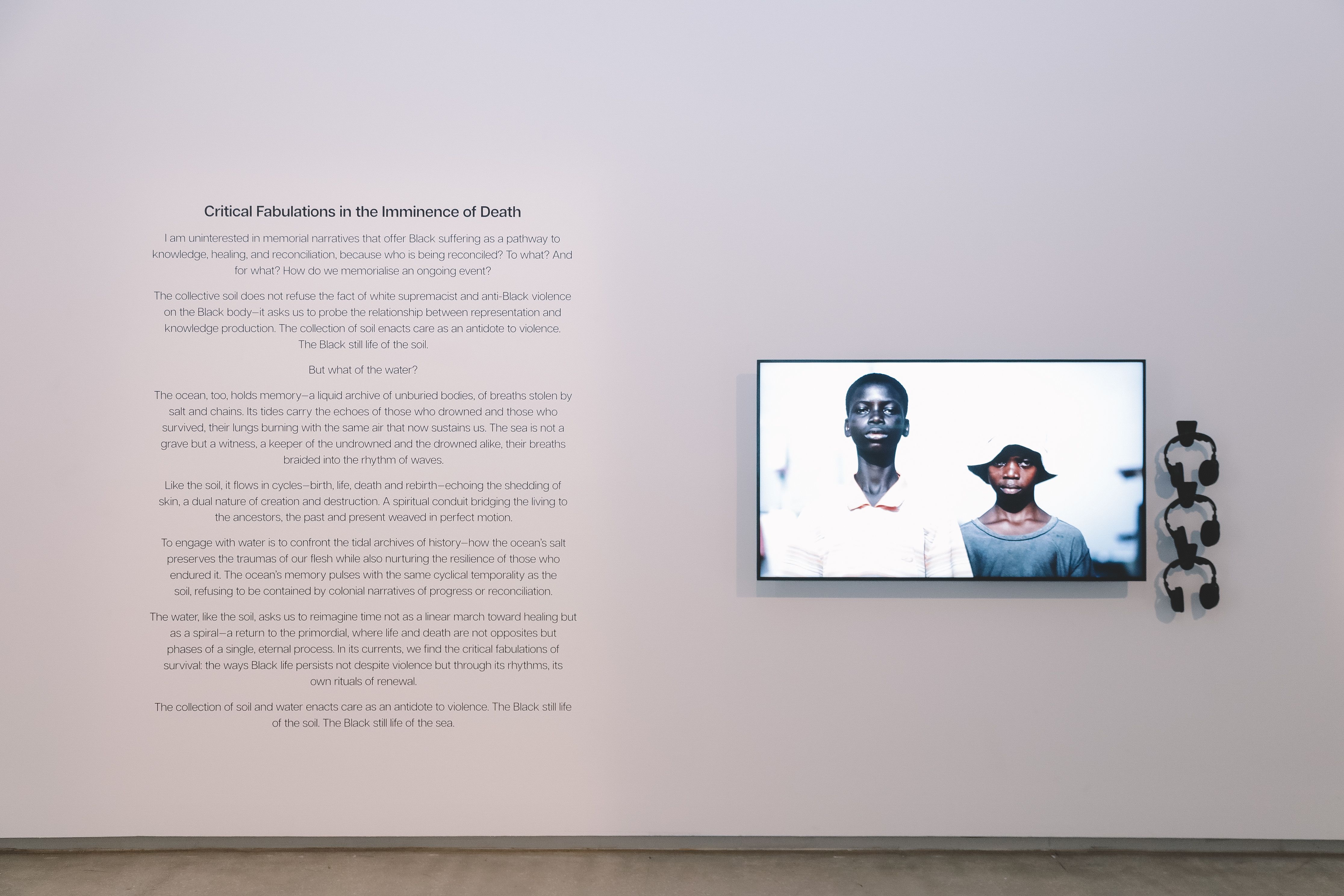
The role of water in cultural stories, renewal and as channels for movement and migration reappear throughout the exhibition. wani toaishara’s installation Critical Fabulations in the Imminence of Death features a poem and multilayered film that speak to dualities of self-determined representation and what is fabricated, interrogating the space between image and knowledge production through the practice of refusal. The inclusion of water in wani’s work ties to his culture as a Ba Shi person from the Great Lakes region, an Indigenous nation in the Eastern Democratic Republic of Congo.
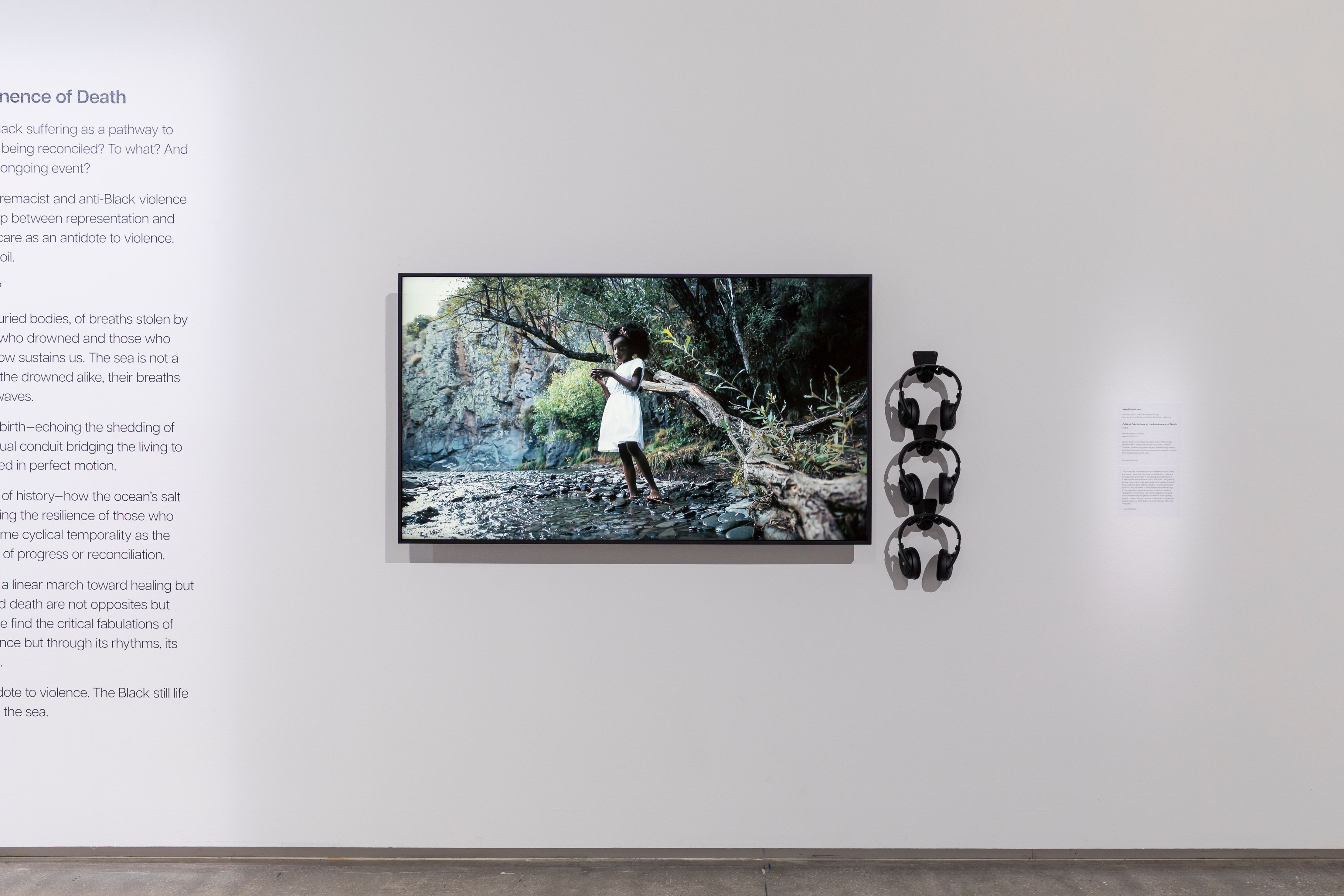
The practice of refusal embedded in his work is a refutation of the status quo of racism and oppression of people of colour as maintainable and a rejection of anti-Black violence being normalised. wani weaves imagery of saltwater waves and tender moments of love between his family and communities with personal family archives of the sometimes-fatal river crossings in the east Congo that his family have had to make to escape violence. Sadly these are waters that he has recently lost family members to. wani builds a narrative of uncomfortable tensions, of representation and the way in which water acts as a ‘liquid archive’. His film shares a resolute Black gaze, the power of family, of children and community solidarity in survival, a survival that is not centred in violence but in the communities’ rituals of renewal and resurgence against oppression.
Moorina Bonini’s Matha (Canoe) explores cultural practice, ceremony, and Aboriginal ways of being. Made of sand and branches, this installation acts as a conceptual canoe—a vessel of memory, language, and cultural continuity. Referencing Yorta Yorta Woka (Country), the sand bears an imprint suggestive of a canoe and a scar tree—the trace of a biyala (red gum tree) from which bark has been removed—echoing the Ancestral practice of canoe-making.
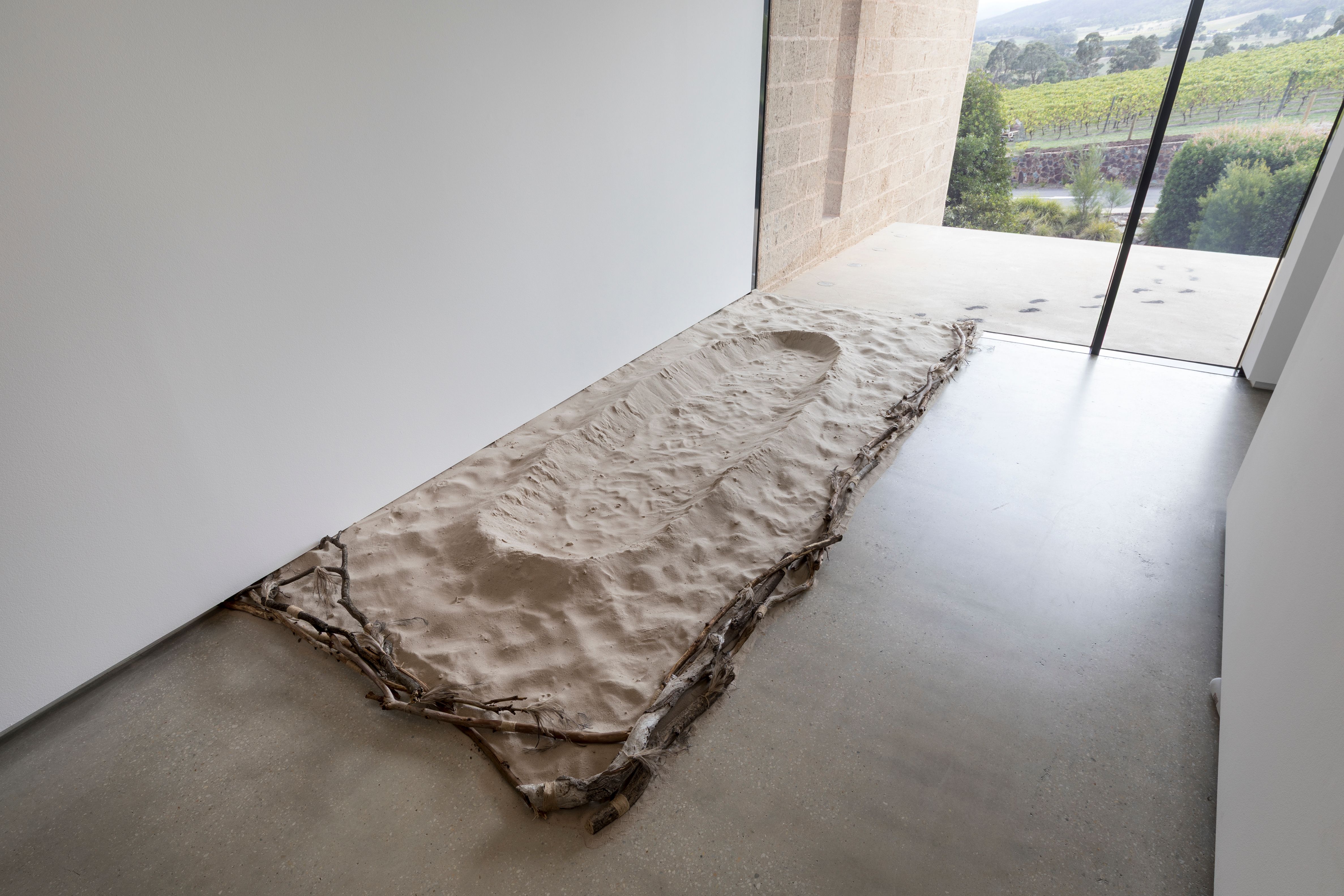
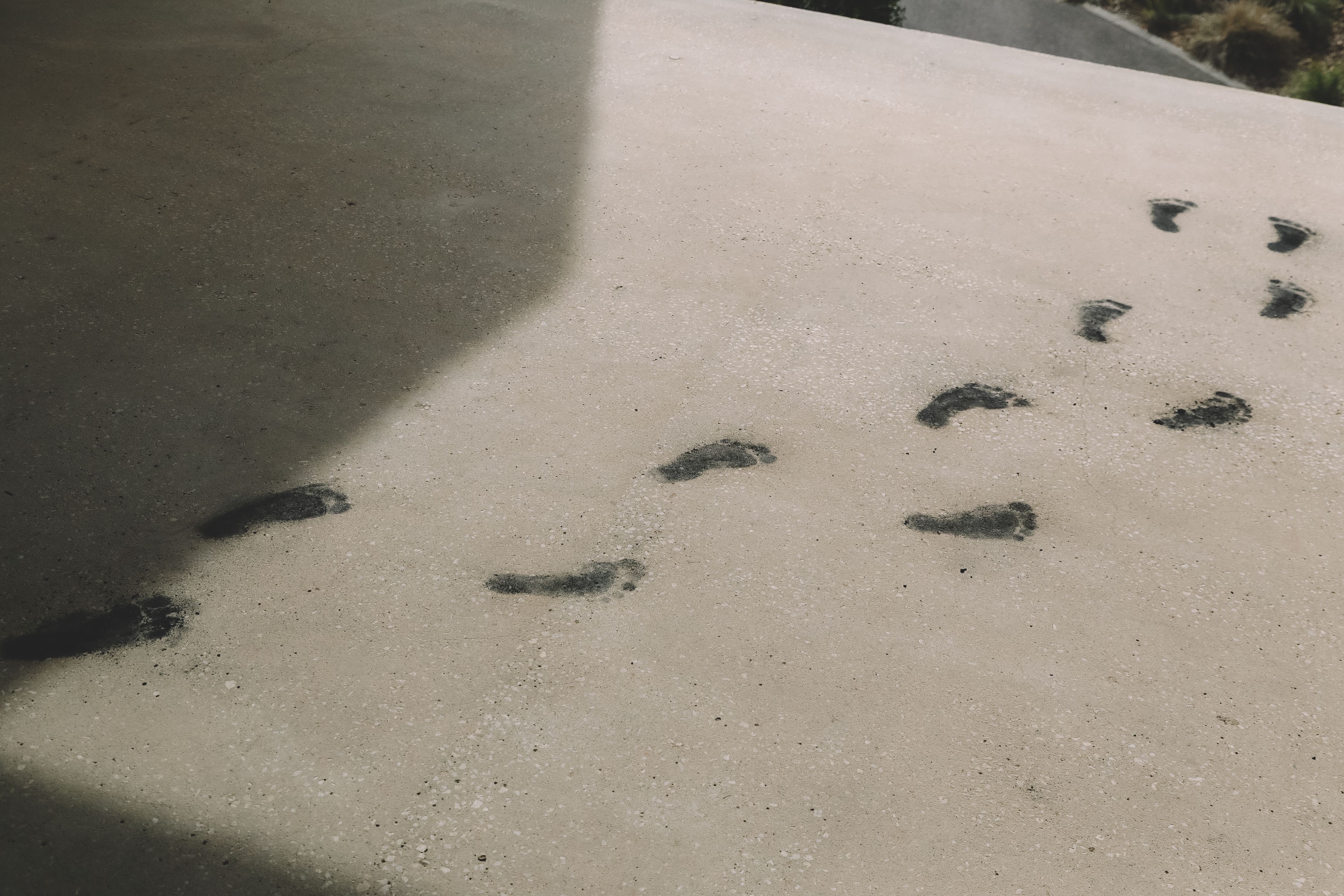
This scar speaks to the enduring knowledge systems of the Yorta Yorta people, for whom the crafting of a matha is both for practical use and of cultural and ceremonial significance. By inverting the scar within the sand, the work situates itself in Indigenous time—a time where past, present, and future coexist and where knowledge is continually practised and embodied.
Accompanying the installation is a sound work that incorporates a farewell song sung in English yet layered with Aboriginal knowledge passed down through generations of the artist’s family. This hymn, known by many from Cummeragunja—the mission where Moorina’s family lived—carries many meanings.
Interwoven with the hymn is a poem in the Yorta Yorta language honouring Aboriginal Matriarchs as knowledge-holders, protectors and storytellers. Sung by the artist’s family, this collaborative storytelling reaffirms the power of Aboriginal women’s voices in cultural practice and contributes to the ongoing revitalisation of language and ceremony. —[O]
A respected voice in contemporary art discourse.
Focusing on ambitious storytelling and insightful art-world commentary. Ocula Magazine publishes in-depth interviews, critical essays and timely analysis on the artists, exhibitions and ideas driving the global art world.
Learn more about Ocula Magazine
Showcasing the best of the art world.
Ocula partners with galleries from around the world to highlight their artists, artworks and exhibitions. Gallery membership is by application and invitation, with each member vetted by an independent panel.
Learn more about Ocula Membership
Specialises in the sale of major artworks.
Led by a team with deep ties to the world’s leading auction houses, galleries and collectors. Ocula’s advisory team offers bespoke services to high-net-worth clients from around the world who are looking to acquire the best of contemporary and modern art.
Learn more about our team and services