





YAYOI KUSAMA
b. 1930, JapanYayoi Kusama is a Japanese artist whose immersive, polka‑dotted environments and ‘Infinity Mirror Rooms’ have made her one of the most widely recognised and visited artists in the world. Working across painting, sculpture, installation, performance, film, and writing, she has developed a distinctive visual language of dots, nets, and repeating organic forms that connect microscopic and cosmic scales.
Kusama is best known for her ‘Infinity Net’ paintings (1958–ongoing), the ‘Accumulation’ soft sculptures, and mirrored environments such as Infinity Mirror Room—Phalli’s Field (1965) and Infinity Mirrord Room – Let’s Survive Forever (2017), which have toured globally to record‑breaking audiences. Major institutions, including Tate Modern, M+ in Hong Kong, the National Gallery of Victoria in Melbourne, and the Yayoi Kusama Museum in Tokyo, have presented large‑scale surveys of her work.
Early Life and Development
Born in Matsumoto, Japan, in 1929, Kusama grew up in an affluent but troubled household and has spoken about a controlling mother and distant father, as well as childhood hallucinations of patterns covering her surroundings. She studied nihonga painting at Kyoto Municipal School of Arts and Crafts in the late 1940s, but quickly grew dissatisfied with its formal hierarchies and conservative aesthetics. Seeking a more experimental context, she began corresponding with Georgia O’Keeffe in the mid‑1950s for advice on entering the New York art world, then left Japan for the United States in 1957–58 with a portfolio of work and limited resources.
In New York, Kusama embedded herself in the downtown avant‑garde, exhibiting in artist‑run spaces and engaging with Pop art, Minimalism, and performance. Her early breakthrough came with the ‘Infinity Net’ paintings, first shown in 1959 at Brata Gallery, in which dense, hand‑painted arcs of white or coloured paint cover large monochrome grounds, suggesting both obsessive labour and endless spatial fields. Through the 1960s she expanded into large‑scale installations, soft sculpture, and provocative ‘happenings’, including public performances that addressed sexuality, pacifism, and the Vietnam War, which attracted significant media attention but not always financial stability.
Key works, series and methods
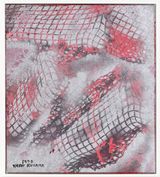
Repetition, accumulation, and self‑obliteration sit at the centre of Kusama’s practice. The ‘Infinity Net’ series, begun in the late 1950s and continued throughout her career, translates her reported hallucinations of proliferating patterns into canvases where small, looping brushstrokes extend to the edges, dissolving the distinction between figure and ground. These works have been read in relation to Minimalism’s serial structures and Abstract Expressionism’s all‑over compositions, but they also mark a personal strategy for managing anxiety by transforming intrusive visions into controlled, rhythmic mark‑making.
Kusama’s ‘Accumulation’ Series
Yayoi Kusama’s artwork often refers to the repetition of form, which offers her solace from the traumas she has battled since her youth. As a young girl, Kusama recalls her mother asking her to spy on her father, and she has described the phallic forms in her ‘Accumulation’ series, begun in 1962, as an act of reconciliation with her childhood fears. The ‘Accumulation’ series comprises soft sculptures made of found furniture covered in sewn, white phallic forms. Later, Kusama expanded these works into entire rooms, such as Compulsion Furniture (Accumulation) (c.1964), which featured phallus-covered furniture filling a room. These installations from the 1960s were precursors to the infinity rooms she is best known for today.
Kusama’s use of mirrors and ‘Infinity Rooms’
In 1965, mirrors appeared for the first time in Kusama’s work with Infinity Mirror Room—Phalli’s Field (1965), in which mirrored chamber multiplies a floor covered in dotted, stuffed forms into seemingly endless fields. This work established the template for her later ‘Infinity Mirror Rooms’, immersive environments where lights, spheres, or spotted objects are reflected ad infinitum, placing the viewer’s body inside a repeating, disorienting visual system. Recent installations such as Infinity Mirrored Room – Filled with the Brilliance of Life (2011/2012) and Chandelier of Grief (2016–ongoing) have become social media phenomena, but they also continue Kusama’s long‑standing inquiry into perception, mortality, and the dissolution of the self into pattern.
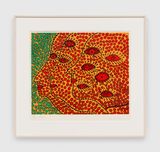
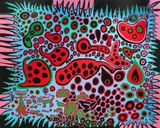
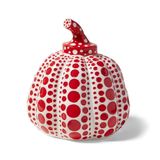
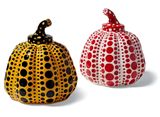
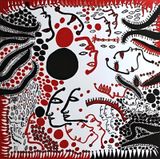
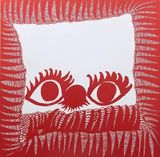
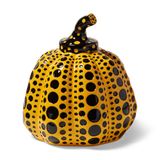
Alongside these environments, Kusama has sustained a prolific painting practice, particularly since the 2000s, producing brightly coloured canvases populated by eyes, pumpkins, flowers, and abstract biomorphic shapes. Her pumpkin motif, which appears in both paintings and monumental sculptures, draws on childhood memories of fields in Nagano and has become one of her most recognisable signatures, balancing playfulness with a sense of anthropomorphic presence.
Themes, mental health and context
Kusama has consistently framed her work as a means of coping with psychological distress, describing herself as an ‘obsessional artist’ and speaking openly about hallucinations and anxiety. After a period of exhaustion, financial pressure, and limited recognition in New York, she returned permanently to Japan in the early 1970s; in 1977 she voluntarily took up residence in a psychiatric hospital in Tokyo, where she continues to live while maintaining a studio across the street. Rather than retreating from public life, she has turned this arrangement into a disciplined working structure, producing paintings, sculptures, novels, and poems that extend her themes of self‑obliteration, infinity, and the merging of self and environment.
Her practice intersects with multiple art‑historical currents, including Pop art’s engagement with commercial imagery, Minimalism’s serial repetition, and the psychedelic aesthetics of the late 1960s, while retaining a distinct perspective shaped by her experience as a Japanese woman navigating mostly Western art circuits. Since the 1990s, major retrospectives and international exhibitions—such as her representation of Japan at the 45th Venice Biennale in 1993—have repositioned her as a key figure in postwar global art, influencing younger generations of installation and performance artists.
Exhibitions, public works and recognition
From the 1990s onward, Kusama’s exhibitions have drawn unprecedented crowds, contributing to what has often been described as a global ‘Kusama phenomeno’. Blockbuster surveys such as Yayoi Kusama: 1945 to Now at M+ in Hong Kong (12 November 2022–14 May 2023), Yayoi Kusama at NGV International, Melbourne (15 December 2024–21 April 2025), and Yayoi Kusama: A Retrospective, A Bouquet of Love I Saw in the Universe at Gropius Bau, Berlin (23 April–15 August 2021) have presented her career from early wartime drawings to recent installations. Tate Modern’s long‑running exhibition Yayoi Kusama: Infinity Mirror Rooms (18 May 2021–28 April 2024) offered London audiences rare, extended access to Infinity Mirrored Room – Filled with the Brilliance of Life and Chandelier of Grief, underscoring the enduring demand for these works.
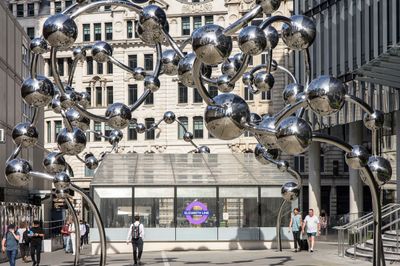
The dedicated Yayoi Kusama Museum, which opened in Tokyo’s Shinjuku ward in 2017, further cemented her status, rotating displays of paintings, sculptures, and archival materials that trace her evolving approach to repetition and self‑obliteration. Her permanent public sculptures, especially large pumpkins and biomorphic, dot‑covered forms, are installed across Asia, Europe, and North America. The yellow‑and‑black Pumpkin (1994) on Naoshima became an emblem of the island’s art scene before being damaged by a typhoon in 2021, while Infinite Accumulation (2024), a 10‑metre‑tall serpentine sculpture outside London’s Liverpool Street Station, translates her polka dots into linked arches that frame the new Elizabeth line entrance.
Kusama has been represented around the world by galleries including Victoria Miro, David Zwirner and Ota Fine Arts and has received numerous honours, among them Japan’s Order of Culture in 2016. Her works belong to major museum collections worldwide, and she is frequently cited as one of the highest‑grossing female artists in the global art market, with Infinity Net paintings and important installations achieving strong auction results.
In 2018, the documentary Yayoi Kusama: Infinity, directed by Heather Lenz, was released, tracing the artist’s career as a testament to perseverance in the face of adversity.
Yayoi Kusama FAQs
What is Yayoi Kusama best known for?
Yayoi Kusama is best known for her polka‑dot imagery, Infinity Net paintings, and immersive Infinity Mirror Rooms that use mirrors, lights, and repeating forms to create seemingly endless spaces. These installations, which place visitors inside fields of reflections and patterns, have generated long queues at museums worldwide and helped make her one of the most visible contemporary artists.
How has Yayoi Kusama’s life influenced her art?
Kusama has described experiencing hallucinations of patterns and dots since childhood, and she channels these visions into repetitive motifs across paintings, sculpture, and installation. Her voluntary residence in a psychiatric hospital in Tokyo since the late 1970s has provided a structured context for a prolific studio practice that treats art‑making as a way to externalise and manage psychological intensity.
What are Kusama’s Infinity Mirror Rooms?
Infinity Mirror Rooms are immersive installations in which mirrored walls and ceilings multiply lights, sculptures, or dotted forms to create the sensation of endless space. Works like Infinity Mirror Room—Phalli’s Field (1965), Infinity Mirrored Room – Filled with the Brilliance of Life, and Chandelier of Grief invite visitors to step into Kusama’s vision of self‑obliteration within infinite reflections.
Where can I see Yayoi Kusama’s work?
Kusama’s work can be seen in major museums and galleries worldwide, including Tate Modern in London, M+ in Hong Kong, the National Gallery of Victoria in Melbourne, and the dedicated Yayoi Kusama Museum in Tokyo. Her public sculptures, such as Pumpkin on Naoshima and Infinite Accumulation at Liverpool Street Station in London, are permanently installed in outdoor sites across Asia and Europe.
Where can I see Yayou Kusama’s sculptures?
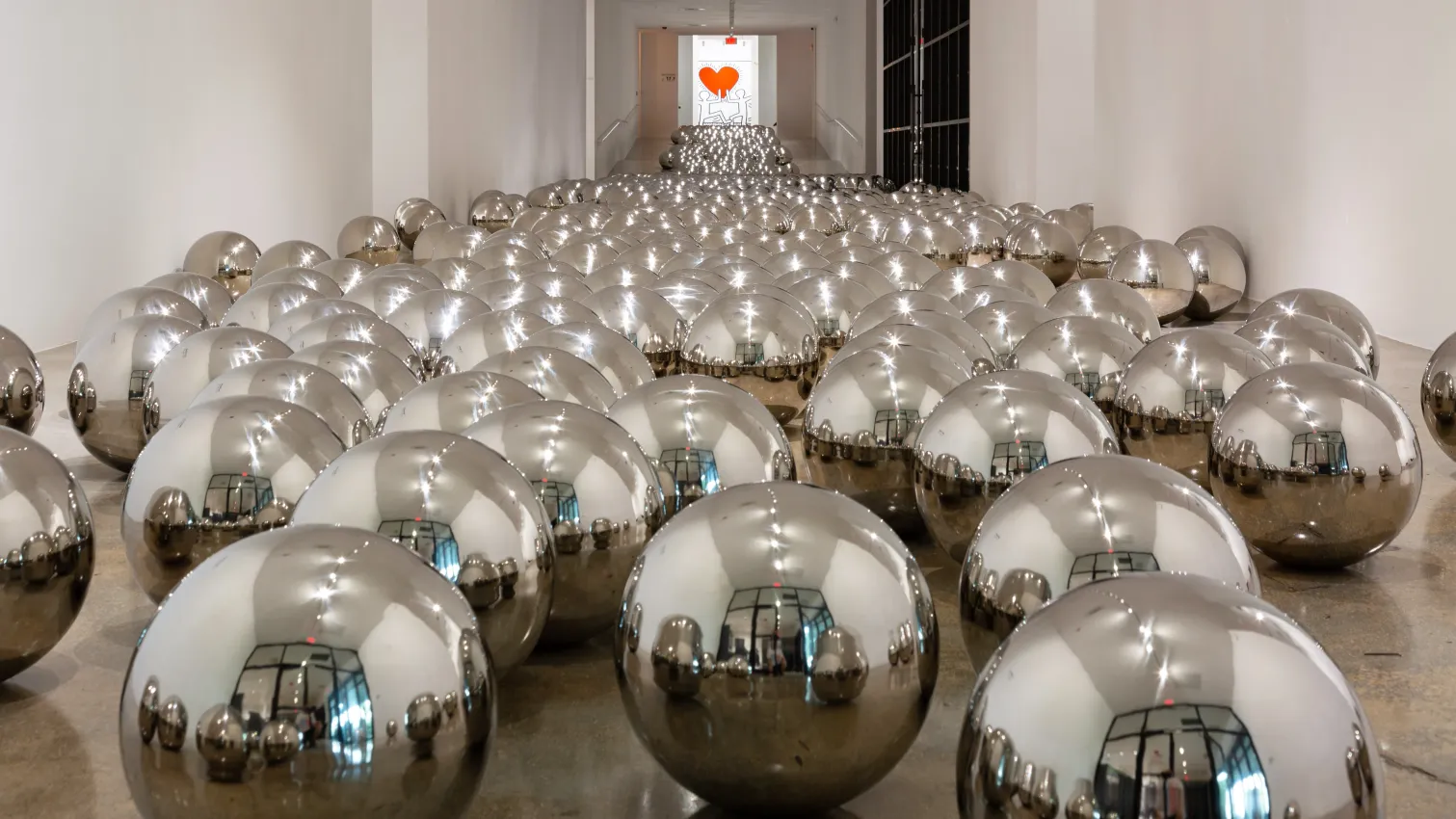
Yayoi Kusama’s vibrantly coloured sculptures can be found in numerous locations around the world. Notably, her yellow-and-black Pumpkin (1994) in Naoshima, Japan, was swept away by Typhoon Lupit in August 2021. In 2024, a towering 10-metre-tall sculpture by Yayoi Kusama, reminiscent of her iconic dot paintings and the reflective spheres of Narcissus Garden, was unveiled outside Liverpool Street Station in London.
What is Yayoi Kusama’s Pumpkin sculpture about?
Kusama’s pumpkin motif, which appears in both paintings and large bronze sculptures, stems from childhood memories of vegetable fields and her fascination with the pumpkin’s organic, patterned surface. Works like the yellow‑and‑black Pumpkin (1994) in Naoshima and the monumental Pumpkin (2024) in London’s Kensington Gardens combine humour and monumentality, turning a familiar object into a symbol of resilience, comfort, and playful excess.
Hazel Ellis | Ocula | 2025

Explore Yayoi Kusama's Exhibitions On Now

























Yayoi Kusama in Ocula Magazine









Explore and Follow Artists Shaping Contemporary Art
A respected voice in contemporary art discourse.
Focusing on ambitious storytelling and insightful art-world commentary. Ocula Magazine publishes in-depth interviews, critical essays and timely analysis on the artists, exhibitions and ideas driving the global art world.
Learn more about Ocula Magazine
Showcasing the best of the art world.
Ocula partners with galleries from around the world to highlight their artists, artworks and exhibitions. Gallery membership is by application and invitation, with each member vetted by an independent panel.
Learn more about Ocula Membership
Specialises in the sale of major artworks.
Led by a team with deep ties to the world’s leading auction houses, galleries and collectors. Ocula’s advisory team offers bespoke services to high-net-worth clients from around the world who are looking to acquire the best of contemporary and modern art.
Learn more about our team and services