





Mark Rappolt on ArtReview’s Power 100
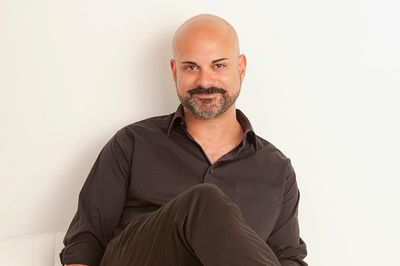
Mark Rappolt. Courtesy the editor.

Editor-In-Chief Mark Rappolt spoke with Ocula about the process of pulling the list together, touching on the list’s implicit understanding of power, the selection committee’s shifting composition, and its 2024 selection, which saw Sheikha Hoor Al Qasimi take the top place.
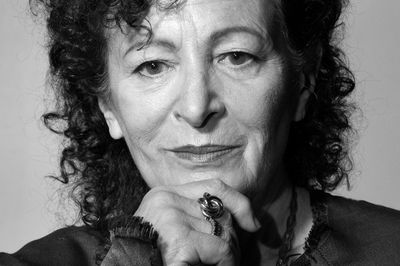
Other art world personalities that made this year’s ranking include relational aesthetic artist Rirkrit Tiravanija, cultural historian Saidiya Hartman, British film director Steve Mcqueen, the artist collective Forensic Architecture, and artist Nan Goldin, who was first in 2023.
When did you start as Editor-in-Chief at ArtReview, and how many Power 100s have you been involved with now?
I joined ArtReview as editor in 2006 and have been involved to various extents since then.
The list intends to reflect many different kinds of powers—including financial, social, and aesthetic influence, which you have mentioned. How do you think the balance between them, the list’s implicit understanding of power, has evolved over its 23 editions?
I guess what’s at stake is how we choose to value art, and this changes all the time. Sometimes, it is economic, sometimes social, sometimes political. You might draw from this year’s edition that there is a demand that art interact more directly with the ‘real world’. This demand is not just with causes relating to social or environmental justice, but also in terms of access to art—a zone awash with privilege and bias despite the ways in which we can often kid ourselves.
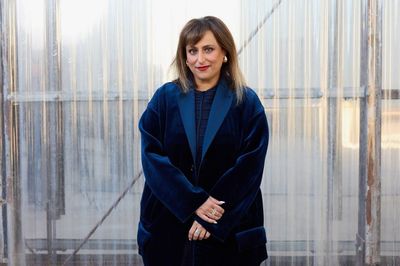
Hoor Al Qasimi tops this year’s list, and she certainly is active (curator of Sharjah Biennial in 2023, Aichi Triennale in 2025, and 2026 Biennale of Sydney, etc.). What makes her powerful?
Al Qasimi can claim to belong to nearly every constituent sector of the art world—albeit, these days she’s not really known for her painting. Plus, she’s royalty. The global presence you mentioned is reflected in her home institution’s programming, which has featured survey exhibitions of South African multimedia icon William Kentridge, Brazilian painter Antonio Dias, and Pakistani artist and Women’s Action Forum co-founder Lala Rukh, not to mention the annual March Meeting conference.
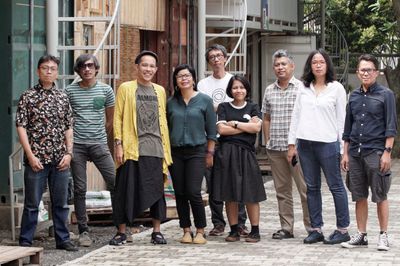
For this 2025 edition, Al Qasimi appointed an all-female curatorial team that includes many leading lights among curators operating in the context of the global majority, including Sri Lanka’s Natasha Ginwala, Indonesian curator Alia Swastika, Bahraini-Singaporean artist Amal Khalaf, New Zealand artist Megan Tamati-Quennell, and Turkish curator Zeynep Öz.
Moreover, in the context of an art world rife with cancellations and boycotts—coming from every direction—and generating a culture of fear, Al Qasimi remains one of the few voices still prepared to use the platform art (and royal privilege) affords them to express their opinions directly. She keeps discussions that most people allow to fade away firmly in the spotlight, whether these concern the current carnage in Palestine and Lebanon or those suffering from other conflicts across the globe.
Additionally, Al Qasimi serves as president of the International Biennial Association and The Africa Institute in Sharjah. She is also on the advisory board of Ashkal Alwan in Beirut, Khoj International Artists’ Association in New Delhi, and Darat al Funun in Amman.
I understand the list is compiled by around 40 individuals. How has this mix evolved over time, and what types of new expertise or perspectives have you brought in to strengthen it?
The panellists are based in different geographies or sectors of the art world and report on how power looks from where they sit. In some cases, they are also focused on particular mediums.
Over time, the panel has grown more global and with that the different perspectives have increased. There is less consensus (on who is number one, for instance) but perhaps this also demonstrates the limits of globalisation (and the marketing processes that accompany that) and that we live in a time of multiple art histories rather than one.
To what extent is the list a reflection of where ArtReview and the selection team want power to reside, as opposed to where it currently resides?
We try to ensure it’s not, however tempting it is to do otherwise. The panel’s composition ensures that. If it was about desires, the list would most likely be different. That said, we are also aware that we are in an era in which if you repeat something often enough people begin to treat it as a fact.
Given the success of Power 100, why do you think power has been captivating for art audiences, as opposed to creativity or emotional impact?
I think people have increasingly become aware that there are politics and power dynamics behind what and who gets to be seen. If this is true of our societies, it’s also true of their art. —[O]
Main image: Mark Rappolt. Courtesy the editor.




A respected voice in contemporary art discourse.
Focusing on ambitious storytelling and insightful art-world commentary. Ocula Magazine publishes in-depth interviews, critical essays and timely analysis on the artists, exhibitions and ideas driving the global art world.
Learn more about Ocula Magazine
Showcasing the best of the art world.
Ocula partners with galleries from around the world to highlight their artists, artworks and exhibitions. Gallery membership is by application and invitation, with each member vetted by an independent panel.
Learn more about Ocula Membership
Specialises in the sale of major artworks.
Led by a team with deep ties to the world’s leading auction houses, galleries and collectors. Ocula’s advisory team offers bespoke services to high-net-worth clients from around the world who are looking to acquire the best of contemporary and modern art.
Learn more about our team and services